
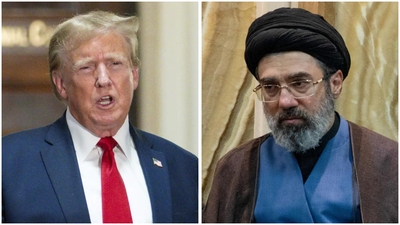

Gulf of doubt: Despite missiles flying, an agreement between America and Iran is said to be close.
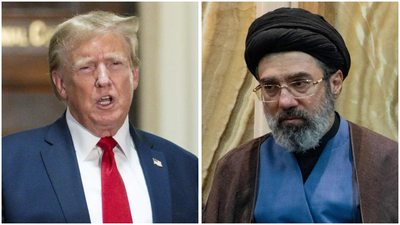
TOI correspondent from Washington: Just hours after verbal clashes and fresh attacks in and around the Strait of Hormuz between the US and Iran, both sides are reported to have once again reached a diplomatic breakthrough.According to Axios, US and Iranian negotiators have agreed to a draft memorandum of understanding to extend the fragile ceasefire and open a 60-day negotiating window focused primarily on Iran’s nuclear program in exchange for economic relief. But the proposed deal is still awaiting final approval from President Donald Trump. Trump wants “a few days” to consider it, according to officials cited in the report.The proposed arrangement would be the clearest signal yet that Washington and Tehran both recognize the limits of military escalation after months of naval warfare, sanctions, air strikes and economic disruption that have roiled global energy markets and exhausted countries near and far.Under the emerging framework, the ceasefire will remain in place formally while unrestricted commercial shipping through the Strait of Hormuz will resume. The US Navy will gradually lift its blockade operations, Iranian harassment of shipping will cease, and both sides will begin negotiations on sanctions relief, frozen Iranian funds, and humanitarian access to Iran.The nuclear issue – the central trigger for war – will remain at the forefront of the agenda during the 60-day negotiation period. Iran will reportedly commit to not developing nuclear weapons while discussions will continue on uranium enrichment, stockpiles and monitoring mechanisms. Iran has not confirmed any of these claims, Axios reports.The military escalation comes as President Trump again mixes threats with diplomacy in the way that has become characteristic of the conflict. During a Cabinet meeting, Trump threatened Oman – historically one of Washington’s most trusted mediators with Tehran – warning that Muscat would “behave” or face consequences, after reports emerged that Omani officials were exploring mechanisms to help manage commercial traffic through the Strait of Hormuz.At the same time, Trump publicly insisted that the strait would soon be fully reopened and repeatedly suggested that Iran now understood that the US would maintain heavy military pressure indefinitely if necessary.Contradictory messages – tension one hour, diplomacy the next – have become a defining feature of the war and a growing source of frustration for countries in Europe, Asia and across the Gulf. For countries like India, Japan and South Korea, the Hormuz disruption has become a strategic nightmare.Tanker insurance costs have soared, shipping schedules remain in disarray and governments are scrambling for alternative energy supplies, while privately urging Washington and Tehran to back off.The economic consequences are now reaching ordinary Americans as well. Gasoline prices across the US are at $4.50 a gallon (about Rs 1.15 a litre), adding to fresh political pressure ahead of the midterm elections in November, although Trump said he was not particularly worried about the elections.Republican strategists privately acknowledge voters’ growing fatigue with a conflict that was initially presented as a short campaign to force Iranian concessions but has instead evolved into a war of naval blockades, drone strikes and repeated confrontations at one of the world’s most important energy chokepoints.Yet Trump himself appears to be engaged in a display of patience rather than compromise, insisting that Iran is under severe military and economic stress and that “negotiations are on smoke.”Iran, for its part, is betting that Trump lacks the patience for a protracted conflict and rising domestic political costs. This may now be the decisive calculation of the war: not which side can win outright, but which side can endure the pain longer.Even the emerging MoU reflects that reality. It is less a peace treaty than a mutual truce — an acknowledgment that both powers may need a temporary respite from a confrontation that has disrupted global trade, destabilized energy markets and raised the ever-increasing threat of a broader regional war.