

India’s England T20I collapse explained: Gautam Gambhir, Shreyas Iyer and the bigger picture
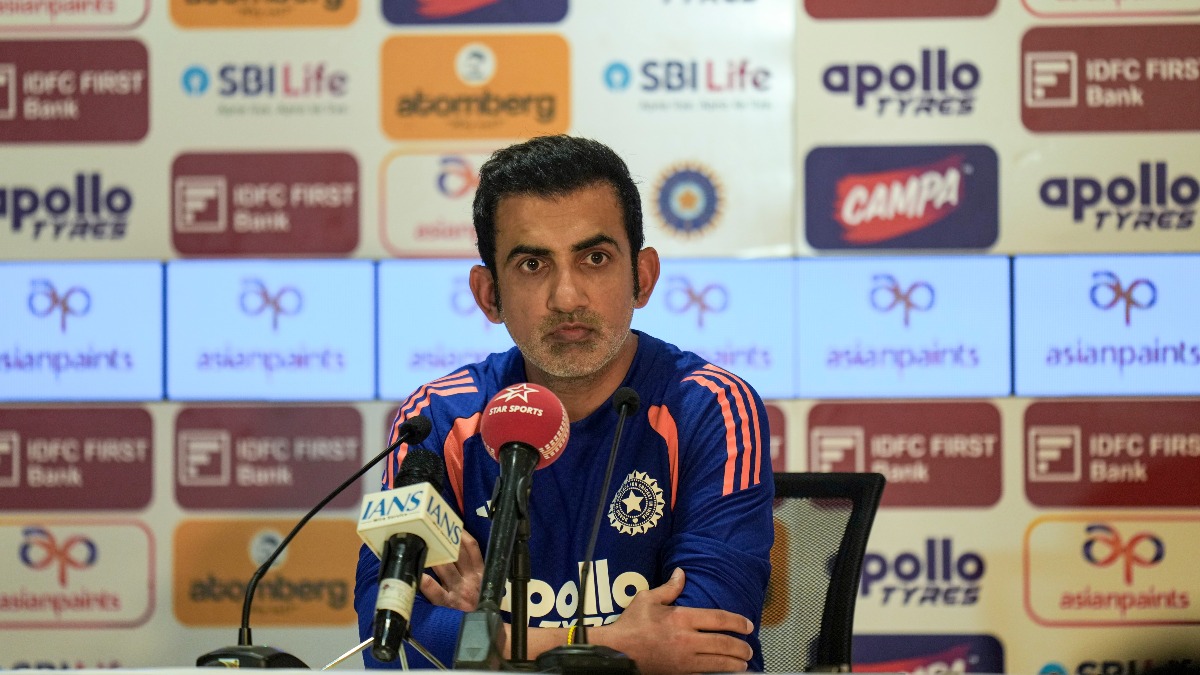
As India’s cricket team concluded its fixtures in Bristol on Thursday, captain Shreyas Iyer sat down for a long chat with head coach Gautam Gambhir. What was said cannot be known for certain, but the intensity of it, the calmness, the lack of body language suggests that the two men were in deep thought after their team’s fifth defeat in six matches.
It has been a scrappy tour, unlike any performance by India’s white-ball team in recent memory. For the first time since 2018/19, India has lost two consecutive T20 series. For the first time in many years, India were thrashed as if they were not in the competition to begin with.
There was a need to think about it.
The first defeat of the tour against Ireland in Belfast was a shock. Others set off alarm bells. Newly appointed captain Shreyas Iyer admitted that India were underprepared, not realizing how far Ireland had come.
The third game, the first of the England series, was washed out due to rain, so there was nothing to read about it. The fourth ended in defeat. Fifth, the 125-run defeat at Trent Bridge confirmed that this is no longer a difficult situation but a crisis.
IND vs ENG Highlights, 4th T20I
India were bowled out for 76, their second-lowest T20I score in history, behind the score of 74 against Australia in 2008, and their fastest ever dismissal in the format. Not a single batsman reached 20.
Shreyas Iyer said after the Trent Bridge defeat that it is not possible for India to sink any further. Seventy-six all out was as bad as it could be.
He was wrong.
Two days later, India lost again at the County Ground in Bristol. Harry Brook’s England chased down the target of 159 runs in just 13.5 overs, a clear echo of England defeating India in the 2022 T20 World Cup semi-finals.
That semi-final is often talked about because it was the moment when the direction of India’s white-ball cricket changed. Deadweight was cut, players were reinvented and the team adopted a modern batting template. The hard work paid off in the form of consecutive World Cup wins and India, in short order, became the most ferocious T20I team in the history of the format.
That success generated so much confidence that Indian cricket sacked its World Cup-winning captain and handed over the reins to Shreyas Iyer, a capable cricketer who had not played for the national team for almost two years.
But we are here. Five losses in six matches in the new cycle, and India are in freefall. The batsmen are not performing well, bowling plans change from match to match, and the confidence that was justified in dismissing a World Cup-winning captain now feels like it was never earned before.
How did we get here?
To answer this, remember that summer in England exactly a year ago, which also had India worried for a different reason.
There was also a new captain in that series. After India’s Border-Gavaskar Trophy hopes were dashed in Australia, Shubman Gill was handed the Test captaincy. Gill’s team fought hard but went 1–2 in the final Test at the Oval due to a number of questionable calls from the team management. On the final morning, England needed only 35 more runs with four wickets remaining. Then Mohammed Siraj created magic forever and India somehow leveled the series.
Siraj’s spell not only saved the series. It changed the conversation. Questions that should have been asked about selection, preparation, tactical changes disappeared. Gambhir survived. The investigation faded away. Indian cricket moved forward, at least on paper, neither wise nor in bad shape.
Siraj was not there after a year. No one pulled off a miracle when India needed a rescue in the crucial moments of the T20I series. And this time, the same strategic confusion that befell 2025 had no place to hide. India went 0-3 after four matches, having been comprehensively beaten by the same team that had crashed out of the World Cup semi-finals just a few months earlier. What once went unpunished has now been fully exposed.
Is Gautam Gambhir responsible for the downfall of India?
India’s main failure in both series was its inability to adapt. The batting group continued to use the same method regardless of the demanding surface, and with so many batsmen cut from the same cloth, the team had no answer whenever the ball did anything in the air or off the seam.
Instead of looking at testing spells and working on strike, the batsmen kept swinging across the line, a plan that failed in Ireland and again in England.
That, more than anything, was a failure of preparation. At Bristol, England repeatedly targeted short straight boundaries, lapping balls that weren’t worth lapping, and Harry Brook did just that, turning good balls into boundaries.
In Ireland, by Iyer’s own admission, India had not taken into account the dimensions of the ground, with the captain saying that the venue was “not round enough”, leaving his batsmen guessing as to which part of the ground to target.
This is as devastating as it gets.
But whose job was it to solve that puzzle before the ball was thrown? Is a team not being prepared for these exact conditions, which they have visited for years, exactly to the coach’s brief? Boycott once told Gambhir on air in this country that he was “rubbish”, that he could not play cricket in England. This was about his batting in 2014. Twelve years later, when India are losing on these same grounds, the term can no longer apply only to their batting.
Former India cricketers Anil Kumble and Varun Aaron tried to make sense of the wreckage after Bristol, and their conversation revolved around the same uncomfortable questions:
- Why was two-time T20I centurion Tilak Verma dropped from his natural No. 3 spot?
- What exactly is Shivam Dubey’s role in this batting unit? Does he need speed protection? Is Akshar Patel a better option in his place? Where does he really fit in?
- What is the cricketing logic behind India’s apparent preference for left-handed batsmen?
- Why has the bowling attack changed in almost every game? Why not assign five bowlers to Shreyas Iyer and ask him to bowl based on them?
- And why is Washington Sundar in this eleven? What is the need for a second all-rounder, when a specialist batsman or bowler chosen for the conditions could have served the team better?
These are not questions that a well-informed team management should still be fielding two series in a new cycle. They are raising questions about whether the team management had any definite plan to begin with.
injustice has been done to india
The T20I in Bristol was a tough match. India’s batsmen, wary of falling wickets, made a conservative start against an attacking attack. But this batting group was never designed to play that way, and that’s not where its strength lies.
England had every batsman, Shreyas Iyer, cornered and falling while searching for a way out. Batting at No. 6, Tilak Verma could hardly get into the phase where he had to accelerate from the first ball. he could not. This is not his game at all.
It was Iyer’s own conviction that took India to 158, but it was never enough against Brook and Salt.
Later, Iyer called it a changeable team and asked to be patient, insisting that it will all come together eventually.
This will probably happen. India will return to flat surfaces, runs will come back and most of these questions will quietly go away. They usually do this. But England have now had Gautam Gambhir’s tactical blind-spots exposed twice a year, once hidden by some miracle, once exposed without any miracle, and until those blind-spots are addressed, there is no reason to expect a different result the next time the circumstances are unfavourable.
Last year, Mohammed Siraj had overcome the cracks with an extraordinary spell. This time there was no Siraj to save Gautam Gambhir from his own team management.
– ends