

Rare 1000-year-old Quran manuscript unveiled in Saudi Arabia world News
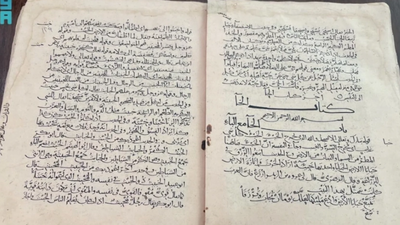
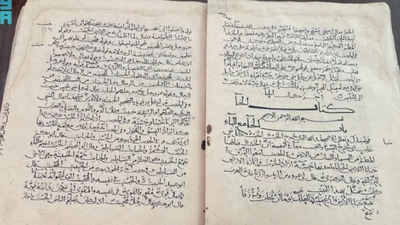
A rare manuscript written nearly a millennium ago has surfaced in Saudi Arabia, offering a detailed glimpse of early Quran scholarship. The discovery not only highlights the depth of classical Islamic studies but also draws renewed attention to the vast collection of rare texts preserved for academic research.manuscript, title “Gharib Al-Quran” (Rare Terms in the Quran), was unveiled by the King Abdulaziz Public Library. It was written by the prominent early scholar Abu Ubaydah Ma’mar ibn al-Muthanna and dates to the 4th century. This work is unpublished and is considered an important contribution to the field of Quran science. Physically, the manuscript consists of 23 folios, each measuring 17 by 22 centimeters. It is written in clear Andalusian script, while the names of the surahs are inscribed in Kufic script, reflecting a mixture of classical calligraphic traditions.The Library’s extensive collection places this manuscript in a much larger historical context. It contains a diverse range of rare Quranic exegetical works spanning several centuries. is one of these I’rab al-Quran wa Maanih By Abu Ishaq al-Jazzaj, written in the 5th century AH, and Tawil Mushkil Al-Quran By Ibn Qutaybah al-Dinwari, with a copy of the 7th century AH. The collection also includes parts of Tafsir al-Tabari (Jami al-Bayan fi Tafsir al-Quran) by al-Tabari, copied in the sixth century AH and consists of 77 folios. Another notable work, Fee Maani Al-Quran wa Tafsirih Written by Abu Bakr Muhammad al-Naqqash, it consists of 113 pages and dates to the 7th century AH.In total, the heritage collection contains more than 185 rare manuscripts dedicated to the interpretation of the Quran. As well as these, there are hundreds of additional texts covering various Quranic sciences, including grammar, linguistic analysis, methods of recitation and verse exegesis. These manuscripts are systematically classified into four main areas: interpretation (tafsir), recitation and tajwid, Quranic science, and Quranic manuscripts or mushāf. Within the explain category alone, collection features work as follows Lubab al-tawil fi maani al-tanzil, al-taysir fi al-tafsir By Omar Al-Nasafi, Hall Al-Ishakalaat Fi Faham Ba’d Al-Ayat of the 12th century AH (17th century CE), Al-Bahr al-Madid fi Tafsir al-Quran al-Majid by Ahmad Ibn Ajiba, and Maalim al-tanzil By Al-Baghawi. Other important texts include Tafseer Al-Jalaaleen, Al-Durr al-Masun fi ‘Uloom al-Kitab al-Maknun, Al-Durr al-Manthoor fi al-Tafsir Bil-MathoorAnd Al-Jawahir al-Hisan fi Tafsir al-QuranWith a number of specialized manuscripts addressing the linguistic, grammatical and exegetical dimensions of the Quran.through the unveiling of Gharib Al-QuranThe library has strengthened its broader purpose of displaying rare cultural properties including manuscripts, documents, photographs, coins and artefacts. The Institute aims to open new avenues of engagement with heritage while supporting systematic academic research. By preserving and presenting these materials, it seeks to make historically important works more accessible to scholars and deepen the study of Quranic science across generations.