Nietzsche said free will is a lie but in 2026 it is a vibe

Nietzsche said free will is a lie but in 2026 it is a vibe
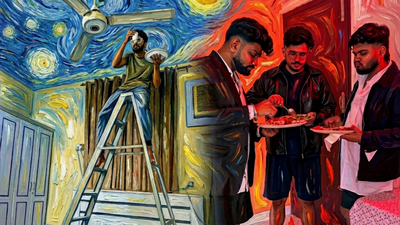
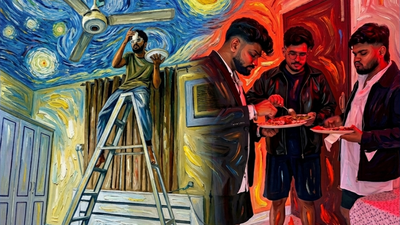
What does it mean to have free will in 2026?Why are young people across the world filming themselves eating lunch on ladders, rearranging their homes into fake hotel suites, or doing completely irrational everyday activities simply because they can?And how did a 19th-century philosopher who believed human beings were never truly free become strangely relevant to a generation raised by algorithms, lockdowns, surveillance and social media?Across social media, thousands of young users are posting videos under captions such as “POV: You suddenly realise you have free will”. The intent is to carry out the daily mundane activities in deliberately impractical but harmless waysVideos of people climbing the maintenance ladder while having lunch just to finish the meal in the air or other laying out buffets of the same meal just to recreate a wedding vibe have become a well-participated trend.What looks like unserious internet humour has almost become an emotional reaction to a world that feels increasingly controlled by economics, technology, politics and invisible systems.In a time when algorithms predict behaviour, governments shape consumption habits during crises and social media constantly influences thought patterns, free will is no longer viewed as a stable philosophical truth. For the new generation, it has become a feeling, a performance and, in many ways, a vibe.

From philosophy to TikTok rebellion

Long before social media transformed rebellion into short-form content, German philosopher Friedrich Nietzsche had already questioned whether free will existed at all.In his 1886 work Beyond Good and Evil, Nietzsche argued that human beings do not make choices in the pure, independent way they imagine. Instead, he believed people are shaped by instincts, conditioning, emotions, physiology and social structures that operate beneath conscious awareness. According to Nietzsche, free will was less a spiritual truth and more a psychological sensation.“The will is not only a complex of feeling and thinking, but it is above all an emotion, and in fact the emotion of the command,” Nietzsche wrote.In simple terms, Nietzsche believed people experience freedom when one desire inside them defeats another. A person feels powerful not because they escaped cause and effect, but because they managed to overpower competing impulses within themselves.That framework unexpectedly mirrors the current internet trend.A person eating lunch on a ladder is not operating outside social conditioning. Rather, they are experiencing the thrill of temporarily defeating the instinct to behave normally. The action itself may be meaningless, but the feeling attached to it is emotionally real.

A generation shaped by crises and control

This modern obsession with “performative autonomy” is emerging at a time when many young people feel their actual control over life has sharply decreased.The Covid-19 pandemic left a lasting psychological mark on an entire generation. Lockdowns suddenly restricted movement, social gatherings and everyday behaviour. Basic actions such as travelling, meeting friends, or simply being outside became matters of public regulation. As trainee clinical psychologist Yukta Sharma puts it, “Free will feels less like “I can do anything I want” and more like: “With all the limitations that the world is placing on me, what are things that I can still choose to do happily and not feel guilty or ashamed or wrong about doing and find satisfaction and joy, without offending anybody in?”,” as she adds that these were the very things that shaped the generation’s response to the Covid-19 lockdown.And while many accepted these measures as necessary for public health, Suyog Shetti, 26, recalls resisting social pressure during the Covid pandemic.“I think people still have free will,” Shetti maintains. “People’s own fear and self-consciousness are what hold their free will back. Like during Covid, I didn’t take the vaccine. Although everyone was telling me to, I felt some scam was happening and thought the whole situation was a tool being used to push the vaccine on us.”

Pop culture and collapse of certainty

Popular culture has started reflecting this anxiety in increasingly direct ways.Indian comedian Kenny Sebastian has repeatedly explored the absurdity of human behaviour through observational comedy. His routines often focus on how people unconsciously follow social scripts in relationships, public spaces and daily interactions.Fantasy-comedy series Good Omens also explores similar philosophical territory. Based on the novel by Neil Gaiman and Terry Pratchett, the show questions whether human beings genuinely possess agency or merely act within systems controlled by larger cosmic structures. Throughout the story, characters constantly struggle between obedience, fear and moral independence.Meanwhile, neuroscientist and author Sam Harris has become one of the most influential contemporary voices arguing that free will does not exist at all.Harris believes human thoughts arise from prior neurological and environmental causes that individuals never consciously chose. According to his framework, understanding the illusion of free will can actually become liberating. Instead of obsessively blaming themselves for every impulse, mistake or emotional reaction, people can develop greater self-awareness and compassion.For many young adults overwhelmed by the constant self-improvement culture, this perspective feels strangely comforting.The modern economy constantly tells people they are fully responsible for their success, productivity and happiness. At the same time, those same individuals are navigating unstable job markets, impossible housing costs, digital addiction and algorithmic manipulation. The contradiction creates emotional exhaustion.As a result, the idea that “free will is limited” no longer sounds depressing to many young people. Instead, it feels realistic.

What young people think free will means today

That realism becomes clearer when listening to how young adults themselves describe freedom.

The pragmatic view

For 26-year-old Kamal Mishra, free will exists, but only within practical limitations.“Free will is not absolute independence, but maximum ownership of one’s choices,” Mishra explains. “Free will is like having your own shop, where you are not bound by anyone else’s control, order, or dependency and you make your own decisions. But yes, you will have to open that shop to earn a living.”Mishra’s comparison reflects a broader generational compromise. Young adults may desire independence, but they also recognise that survival still depends on participating in economic systems they cannot fully escape.

The sceptical view

Others are far more sceptical.Aanshi Kanaujia, 25, believes modern information culture has deeply compromised individual thought.“I believe free will is a golden cage,” she says. “Most of our will is influenced by people, and rarely do individuals have their own mind. Yes, it is polarised to a great extent, especially in this era of unstoppable information consumption, where our will and thinking are systematically borrowed from someone else. Yes, there are some doing their own mind, but that’s not a big number. The question is: Is your thought of free will truly yours?”Her argument reflects growing concerns around algorithmic influence.Social media platforms increasingly curate what users watch, buy, believe and discuss. Recommendation systems shape political opinions, aesthetics, humour and even emotional reactions. As these systems become more sophisticated, distinguishing personal desire from manufactured preference becomes increasingly difficult.

The fatalist view

For some, this has produced outright fatalism.“Free will does not exist; it’s just an illusion,” says 26-year-old Sumant Singh. “Everything depends entirely on the situation, and that same situation decides our will. Overall, nothing is ‘free.’ My thoughts might sound a bit extreme, but I feel this is the ultimate reality.”Singh’s view reflects a generation raised amid repeated crises.Many people currently in their mid-to-late twenties entered adulthood during economic uncertainty, climate anxiety, political polarisation and a global pandemic. The belief that individuals fully control their destinies feels increasingly disconnected from lived reality.

The restrained view

Yet not everyone believes freedom has disappeared entirely.Some young adults argue that free will survives in smaller forms.Chirag Thakur, 27, describes free will as the pause between impulse and action.“I think free will is like any other power or impulse that you have, which is often restrained by your mind which is, of course, a necessity,” Thakur states. “Without the mind as the charioteer, it would be like an aimless chariot, which can be chaotic and quickly turn into a disaster. In any ‘free will’ decision, the pause that makes you think about whether to do it or not is the real free will. And of course, this can change with changes in region, society, and circumstances.”His interpretation aligns closely with modern mindfulness practices, where awareness itself becomes a form of agency.Rather than viewing freedom as unlimited action, many younger people now define it as conscious interruption. In a world designed to trigger instant reactions, the ability to stop, reflect and resist impulse feels increasingly valuable.

The structuralist view

At the same time, conversations around free will are also becoming deeply political.Srabastee Biswas, 25, argues that freedom is unevenly distributed and shaped heavily by class, gender and social privilege.“Free will is not absolute, total independence,” Biswas argues. “It is more like what one creates out of the given resources and only where access is allowed to choose for themselves. If we take a feminist point of view, that space has never been equal. Gender roles, safety concerns, and economic gaps, especially for women and marginalized people, have always created a narrower lane of acceptable choices.”Biswas believes recent years have exposed just how fragile autonomy can be.“When we look at our generation, we’ve witnessed massive backtracks of individual rights, from the stripping away of bodily autonomy and reproductive freedom to economic crises and a massive surge in digital surveillance. This reveals how incredibly fragile it truly is. When the state deprives people of basic rights and autonomy, so-called free will becomes a luxury accessible only to the privileged class. For many of us, practicing free will isn’t just picking what we want, it’s questioning the central belief of what we were told to want.”Her comments reflect a broader shift in how younger generations discuss freedom.For previous generations, free will was often framed as personal ambition or individual achievement. For many Gen Z adults, however, freedom is increasingly understood through systems of power. Access to safety, money, healthcare, privacy and rights now determines how much autonomy someone can realistically exercise.

The commercial view

The role of technology in shaping behaviour remains one of the strongest recurring concerns.Riddhi Jain, 25, believes modern consumer culture actively narrows independent thought.“We don’t move by free will,” Jain reflects. “In my opinion, it’s like the more choices we are presented with, the more our actual free will is limited. We are not just influenced; we are rather controlled by brands and conditioned to think about things in a very specific, curated way.”Her observation reflects what psychologists often call the paradox of choice.While digital platforms offer endless options, many users ultimately end up following highly predictable patterns shaped by advertising, trends and algorithmic recommendations.Ironically, this has also made small acts of irrationality feel emotionally significant.Choosing to behave inefficiently, absurdly or unpredictably becomes a way of resisting optimisation culture. In a world obsessed with productivity, branding and measurable outcomes, doing something pointless simply because it feels amusing can feel deeply personal.

The subversive view

At the opposite end of the spectrum, some young adults believe the greatest act of autonomy today may simply be disengagement.“Our generation grew up with algorithms, lockdowns, trends, and constant chaos deciding things for us,” says 25-year-old Anurag Krishna. “So honestly, maybe real free will today is me choosing not to answer this question at all… which I almost did out of pure freedom.”That quiet refusal captures the exhaustion sitting beneath many contemporary conversations about agency.Young adults today are constantly asked to perform opinions, maintain online identities, produce content, optimise careers and remain permanently visible. In such an environment, withdrawal itself can feel rebellious.

The rise of micro-rebellions

This is precisely why the internet’s strange “free will” trend resonates so strongly.The videos are not revolutionary in any traditional political sense. Nobody is overthrowing governments by eating noodles on ladders or pretending their bedroom is a five-star resort.Yet these acts matter symbolically because they interrupt predictability.Algorithms thrive on patterns. Modern institutions thrive on compliance. Consumer economies thrive on habit. Absurd behaviour momentarily breaks those systems, even if only emotionally.In that sense, Nietzsche’s philosophy has accidentally found new life online.He believed free will was never pure freedom. It was merely the sensation of command, the emotional experience of asserting one desire over another.Today’s generation appears to have transformed that insight into cultural practice.They may fully understand that algorithms influence them, capitalism constrains them and crises shape their futures. They may even agree that absolute autonomy is impossible.But instead of responding with complete despair, many are choosing irony, absurdity and micro-rebellion.The result is a generation that no longer treats free will as a grand philosophical certainty.Instead, free will has become something smaller, stranger and more emotional.It is the pause before reacting.It is the decision to log off.It is refusing to optimise every second of existence.It is questioning inherited desires.And sometimes, it is climbing halfway up a maintenance ladder with a plate of lunch in hand simply to remind yourself that, despite everything, you can still choose to do something completely pointless.For Nietzsche, free will may have been an illusion.For Gen Z, the illusion itself has become the experience.

Source link

BAN vs PAK, 2nd Test, Day 1 Report: Liton Das’ century saves Bangladesh after Pakistan’s pace attack rattles the top order

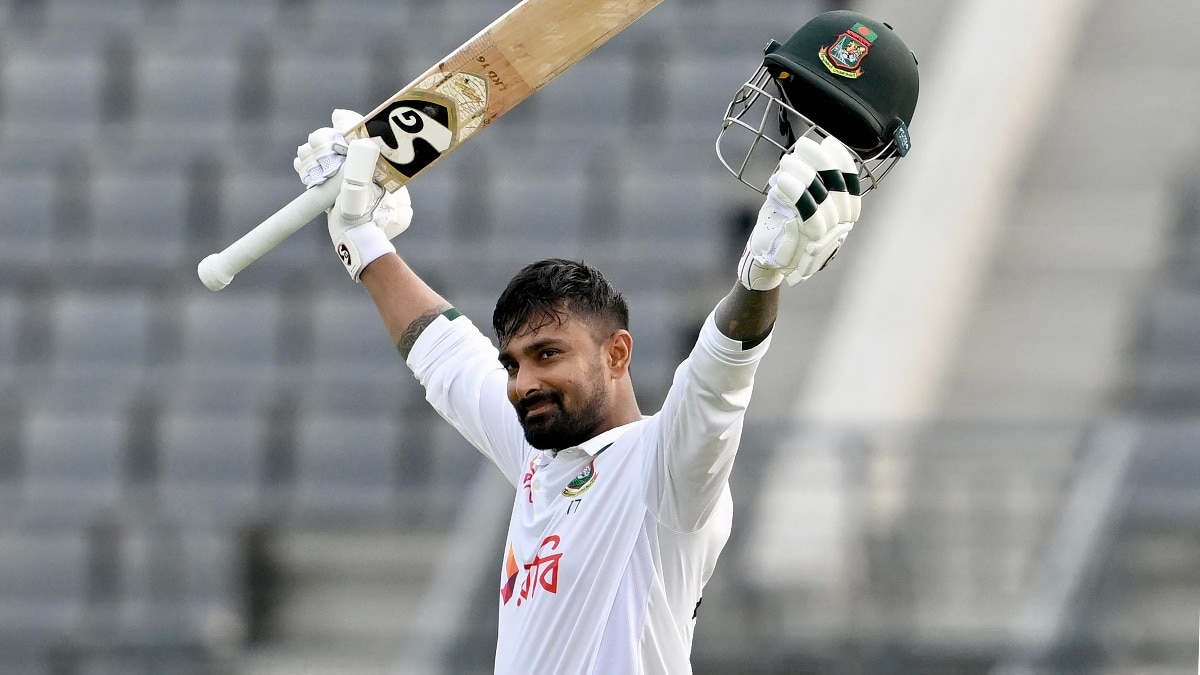
Bangladesh national cricket team wicketkeeper-batsman Liton Das scored a brilliant counterattack century to rescue his team after being dismissed early on the opening day of the second and final Test against Pakistan national cricket team on Saturday.

Liton scored 126 runs off just 159 balls with 16 fours and two sixes, as Bangladesh were bowled out for 278 after a poor start in their first innings.

Pakistan then negotiated safely six overs before stumps, scoring 21 runs without loss and trailing by 257 runs at the end of play.

Apart from Liton, no Bangladesh batsman managed to cross the 30-run mark, underscoring the pressure created by Pakistan’s disciplined pace attack throughout the day.

Bain vs Pak. Second Test: Highlights from day one

Khurram Shahzad, who was brought into the team in place of Shaheen Shah Afridi, bowled brilliantly for Pakistan and took 4 wickets for 81 runs. Experienced fast bowler Mohammad Abbas provided excellent support and took 3 wickets for 45 runs.

Hasan Ali, who suffered an injury early in the innings after falling awkwardly in his opening over, later returned to the field and took 2 for 49, including the prized wicket of Liton Das.

Pakistan got off to a great start after captain Shan Masood won the toss and decided to bowl first. Abbas dismissed Mahmudul Hasan for zero on the second ball of the innings.

Debutant Tanzeed Hasan coped with the pressure briefly with a lively innings of 26 runs. The left-handed batsman played some attractive strokes, including a cover drive off Abbas, before also defeating Khurram Shahzad.

However, Tanjeed gave a return catch to Hasan Ali in the eighth over. While completing the catch, Pakistan’s fast bowler got injured and had to be immediately taken off the field.

Tanzeed’s dismissal ended a 44-run partnership with Mominul Haq, who was bowled by Shehzad for 22, leaving Bangladesh at 63 for 3.

Bangladesh captain Nazmul Hossain Shanto, who came into the match after scores of 101 and 87 in the first Test, tried to stabilize the innings along with the experienced Mushfiqur Rahim. But Abbas broke the stand by dismissing Shanto for 29 runs.

Khurram Shahzad then started another collapse by dismissing Mushfiqur Rahim for 23 and Mehdi Hasan in quick succession, reducing Bangladesh to 116 for 6.

At that stage, Liton Das launched a remarkable rescue effort.

The wicketkeeper-batsman stitched a valuable 60-run partnership with Taijul Islam for the seventh wicket and gradually shifted the momentum back in favor of Bangladesh.

Liton completed his half-century in 93 balls before accelerating brilliantly. He brought up his sixth Test century off 135 balls with a brilliant backfoot punch through cover and received applause from the crowd.

His aggressive approach ensured that Bangladesh remained competitive despite frequent setbacks.

After this, Pakistan openers Azan Awais and Abdullah Fazal performed safely in the last overs of the day and remained unbeaten on 13 and 8 runs respectively.

Pakistan’s leading batsman Babar Azam has also returned to the team for the second Test after missing the opening match due to a left knee injury.

– ends

published by:

Kingshuk Kusari

Published on:

May 17, 2026 01:40 IST

Source link

Dwyane Wade’s wife Gabrielle Union breaks silence on losing opportunities in Hollywood despite huge success

Dwyane Wade’s wife Gabrielle Union breaks silence on missing out on opportunities in Hollywood despite huge success.

(Image via Getty Images)

Dwyane Wade, NBA legend, and his wife, gabrielle unionThey have been married to each other for over a decade now after their first marriage ended.While Dwyane Wade and Gabrielle Union live quite a comfortable and lavish life with their daughter, Kaavia Wade, they remain completely private about her.

Dwyane Wade’s wife Gabrielle Union reveals how she survived after working in Hollywood, as she stands by him.

Over the past few years, the NBA legend’s wife, renowned actress Gabrielle Union, has often spoken out about the discrimination she has faced in Hollywood.In 2023, in a heartfelt interview with Who What Were, Gabrielle Union reflected on her career, saying, “In the beginning, I had a strong belief that if your movies were number one at the box office, your career would change, and you would have all these opportunities. The world would be your oyster…”The ‘Bring It On’ actress further added, ‘And then every film of mine started at number one, yet somehow my life became difficult. You could be on all the it-girl lists and be labeled as a genius at getting fucked up fast, and you’re worse off than before.The “Being Mary Jane” alum continued, “Many people in this industry feel like we are somehow interchangeable. And one’s career cannot move slowly in the direction that feeds their creative souls. I saw it firsthand and don’t need to see it again.”While Gabrielle Union has been actively working for over two decades, she has often spoken about how she has lost many roles due to discrimination.Despite everything she has faced in her career, the popular actress has inspired billions of people as she has made her mark in Hollywood through her hard work.Interestingly, a few months ago, when Gabrielle Union’s late father was in memory care, she had also spoken about how she did not have the option of doing independent films due to some financial issues.For now, Gabrielle Union recently headed to the Met Gala as she continues to process grief after losing her father to dementia last month.

Source link

Redditor shares one year’s experience of living in India after spending 12 years in America

'I realized something': Redditor shares experience of one year living in India after spending 12 years in US
A Redditor shared his experience of living in India for a year after living in the US for 12 years.

Deciding to return to India after spending years abroad is always difficult as there are many aspects to consider. No two people’s situations are ever the same, but NRIs share tips and insights on social media channels that can help others in a similar predicament. One Redditor shared his experience living in India for a year after returning in 2025, and many social media users found the takeaway relevantThe Redditor lived in the US for 12 years but suddenly decided to return to India due to his mother’s health. “I took the decision to return suddenly. I remember my father telling me about my mother’s health problems and I was so overwhelmed with grief that I booked my return ticket for February 15, 2025, and 3 months later, I was in India,” the Redditor said.“In hindsight, I should have planned my move well in advance. My initial thought was to hire a CA after returning to India – I should have hired a CA before returning to India. I also came to know about several forms like W8BEN that have to be filed with US banks after returning to India.”

अमेरिका से भारत लौटने पर एक Reddit पोस्ट<u></u>t.” msid=”131145511″ width=”” title=”A Reddit post on returning to India from the US.” placeholdersrc=”https://static.toiimg.com/photo/83033472.cms” imgsize=”” resizemode=”4″ offsetvertical=”0″ placeholdermsid=”47529300″ type=”thumb” class=”” src=”https://static.toiimg.com/photo/msid-131145511/a-reddit-posuut-on-returning-to-india-from-us.jpg” data-api-prerender=”true”/></p>
<p>A Reddit post on returning to India from America.</p>
</div>
</div>
<p><span class=“I was lucky to get a job within 2 weeks of reaching here. But it took me 6 months to get my Aadhaar (my salary was initially withheld due to not having Aadhaar) and I got it only after meeting the BLO officer,” the post said.The Redditor said, “My mother has now fully recovered. I’m glad I was there for her when she needed me the most. But now that I’ve spent a year in India, I’ve realized something: I don’t want to live in India permanently. I’m once again applying for jobs abroad (not in the US but somewhere else).”Many users shared their mixed experiences of coming back to India – with many wanting to explore Europe or Australia instead of choosing between India and the US.

Source link

Anti-terrorist search operation launched in Poonch district of Jammu and Kashmir

जम्मू-कश्मीर के पुंछ जिले में आतंकवाद विरोधी तलाशी अभियान शुरू किया गयाJammu and KashmirOfficials said suspected terrorists, who are believed to be active in the area, are being traced in Poonch district. The operation comes days after an infiltration attempt was foiled in Mankot area of ​​Mendhar tehsil on May 12, in which an infiltrator was killed. Army and police teams conducted massive search operations at more than five locations across the district as part of anti-terrorism measures, officials said. Security has also been tightened in entire Poonch after the infiltrator was killed in Krishna Ghati sector near the Line of Control (LoC). Additional check posts have been set up, while vehicles are being rigorously checked. According to PTI report, officials also said that there are unconfirmed reports suggesting the possible presence of a high-profile foreign terrorist in the valley, although no official confirmation has been issued yet.
Source link

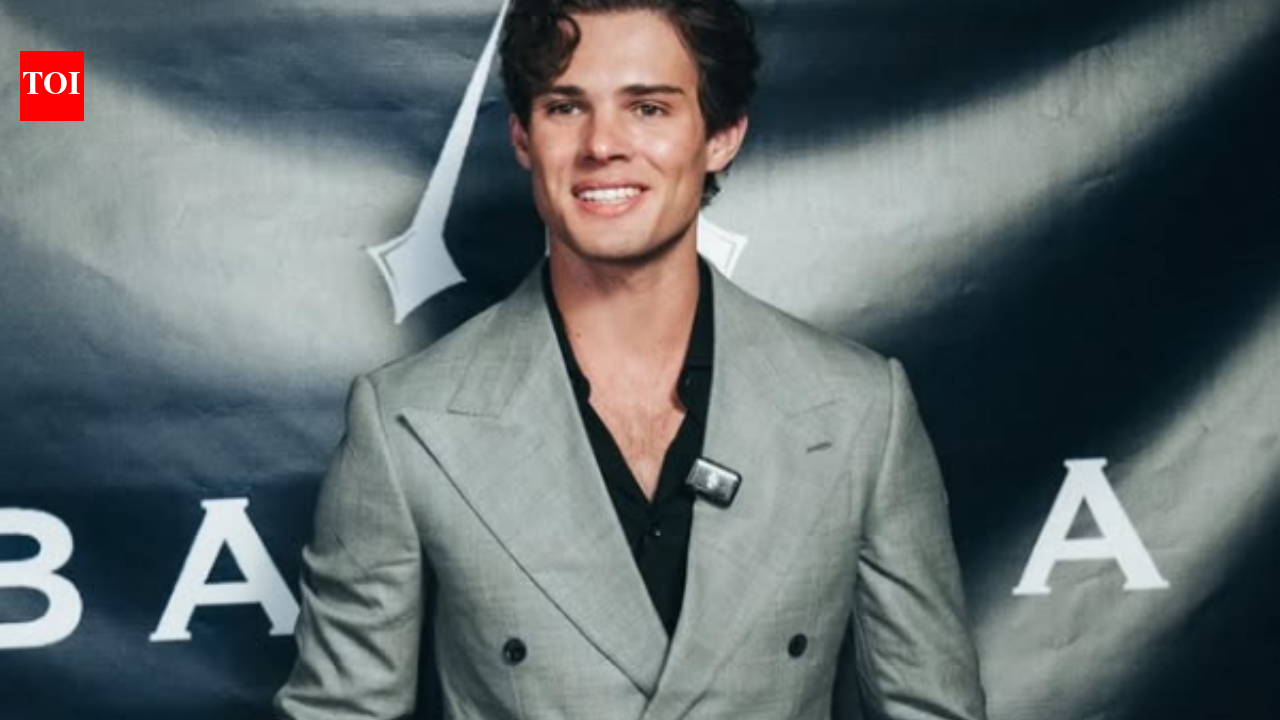
There are jokes on the Internet that the clavicular was “put in the mouth” by the judge during a court appearance.

इंटरनेट पर चुटकुले हैं कि अदालत में पेशी के दौरान न्यायाधीश द्वारा क्लैविक्युलर को “Mogged” Influential person during the hearing.Word “Mogged” Looksmaxing is popular internet slang used in communities. This usually means that one person appears more dominant, confident, or attractive than the other person. Since Clavicular made its online fame around “luxmaxing,” Many viewers found it ironic that people online believed that the judge pressured him during his court appearance. The clips quickly spread across social media platforms, turning the court moment into a viral meme discussion.

Fans say clavicular was “mogged” by judge during Miami hearing

The court appearance came after Clavicular and fellow influencer Andrew Morales pleaded no contest Friday in connection with an alleged alligator shooting incident in the Florida Everglades. Both men were sentenced to six months’ probation and ordered to complete firearms and wildlife safety courses as well as 20 hours of community service.Soon after the video of the hearing came online, social media users filled the comment sections with jokes. One viral comment read, “You’re laughing? Clavicular was framed by a Miami judge and you’re laughing?!?” Another comment read, “Judgemogging is a thing now.” Another user wrote, “Oh crap, the judge is even hotter than that.”Reactions spread quickly as Clavicular became widely known online for publicity “luxmaxing,” A trend where people try to improve their appearance in extreme ways. Peters has previously spoken out publicly about using unhealthy methods to stay slim, which has made her a controversial figure online.The legal case itself stems from a March incident in the Everglades. Officials said the influencers were seen in a video allegedly shooting at a crocodile from an airboat. Prosecutors later charged him with unlawful possession of a weapon in a public place.In short, although the Miami hearing ended without a trial, the Internet focused less on the legal outcome and more on the unexpected viral joke that the judge made with a clavicle in the courtroom, completely stealing the spotlight.

Source link

4 Indians arrested in extortion-kidnapping case in Canada, policeman says he has never seen such a case before

4 Indians arrested in extortion-kidnapping case in Canada, policeman says he has never seen such a case before
Calgary Police are searching for a fifth suspect, Gagandeep Singh, and have released his photo.

A man was kidnapped but he was not the target. The kidnappers took the man to the house of his friend who was the real target. The first man was just a bait to get the second man out of his house, which did not happen. The failed kidnap-extortion attempt ended in the release of the first person and the police were called and all the drama that unfolded in Calgary, Canada stunned the police as they had never seen such an elaborate plan before. The kidnappers and the targets are all from the city’s South Asian community, he said.Four people have been arrested and a fifth person has been charged. The incident is of 6th May.The suspects first attacked the man at gunpoint at an Edmonton residence between 6:30 and 7:30 p.m. and threatened to kidnap him. They then drove to Calgary to the next victim’s home where additional suspects were waiting.The kidnappers asked the first man to call the second man who was their intended target. He refused and police said he was attacked again.The second man and his wife, fearing for their lives, attempted to leave their home but the suspects threatened them with firearms. They went back inside and called the police.The suspects drove the man back from near his home early the next morning. He also called the police.Calgary Police Superintendent Jeff Bell said the man suffered minor injuries, but it was “obviously a very traumatic situation for him and it will take him some time to recover mentally and physically.”Police arrested two people during a traffic stop on the night of the alleged kidnapping, and arrested two more people on May 12.

None of the suspects are Canadian

Although all of the suspects are from Calgary, none of them are Canadian. Daksh Gautam, 25, Taranvir Singh, 24, Pradeep Singh, 24, and Akashdeep Singh, 18, are all charged with kidnapping with a gun, unlawful imprisonment, assault and assault with a weapon.Police are searching for Gagandeep Singh, 29, of Calgary, who is wanted on warrants for kidnapping with a firearm, assault with a weapon, assault and unlawful imprisonment. Police say he has a tattoo of a woman on his right arm and a blue and red eagle on his left arm.Their immigration status varied and included expired work visas, or refugee claimant status. A privately manufactured firearm, sometimes referred to as a “ghost gun”, was seized as part of the investigation.Bell said this is the first time Calgary police have seen an alleged extortion-related kidnapping like this. “This is a significant increase in the violence in extortion incidents that we have seen so far in Calgary,” he said.

Source link

NC government bows down after BJP’s opposition, promises to ban liquor in Jammu and Kashmir

बीजेपी के विरोध के बाद झुकी एनसी सरकार, जम्मू-कश्मीर में शराबबंदी का वादा

BJP leaders and workers outside the police station protesting demanding ban on liquor in Srinagar.

Srinagar: A day after the BJP protested outside the residence of Chief Minister Omar Abdullah demanding complete prohibition in the Kashmir Valley, the ruling National Conference (NC) softened its stand on the issue and promised to ban the sale and consumption of liquor in Jammu and Kashmir.Omar and NC President Farooq Abdullah had earlier rejected calls for a liquor ban in the UT.However, on Saturday, NC chief spokesperson and MLA Tanveer Sadiq said, “Liquor will be banned in Jammu and Kashmir and the NC government will do it.” Responding to questions from media persons on BJP’s threat to launch a hunger strike to press for their demand, he said, “despite BJP’s drama on this issue”, the NC government will take a decision soon.The party now appears to be on the backfoot, even as spokespersons and senior functionaries said it was not the NC government that had come up with the current excise policy, which had allowed setting up of liquor shops across Jammu and Kashmir.NC spokesperson Imran Nabi Dar said, “I think this issue will be debated, discussed and finalized in the next assembly session.” “Already several private members have brought bills demanding a liquor ban in the last session of the Assembly. These bills are likely to come up in the next session and a decision will be taken on them,” he said, hinting that the NC may support a private member’s bill on liquor ban.There was a change in stance after BJP’s protest on Friday. The party said it would launch protests from Qazigund town in south Kashmir to Karnah area along the Line of Control in the north if the NC government failed to act.The CM had earlier courted controversy as liquor shops were for people who were allowed to drink alcohol as per their religion and no one could be forced to drink alcohol against their will. Rejecting PDP’s criticism, he said that allowing the sale of liquor does not mean promoting its consumption.Farooq, also speaking, said his father Sheikh Mohammed Abdullah had also rejected then Prime Minister Morarji Desai’s call to ban liquor in 1977, as it would have generated substantial revenue. The NC president said that imposing prohibitory orders in Jammu and Kashmir will not stop smugglers from smuggling it from outside.The debate on liquor ban began after LG Manoj Sinha launched a 100-day campaign against drugs on April 11, following which the PDP and BJP demanded that it should be extended to the sale of liquor as well.

Source link

PU firing, 4 arrested for murder

PU firing, 4 arrested for murder
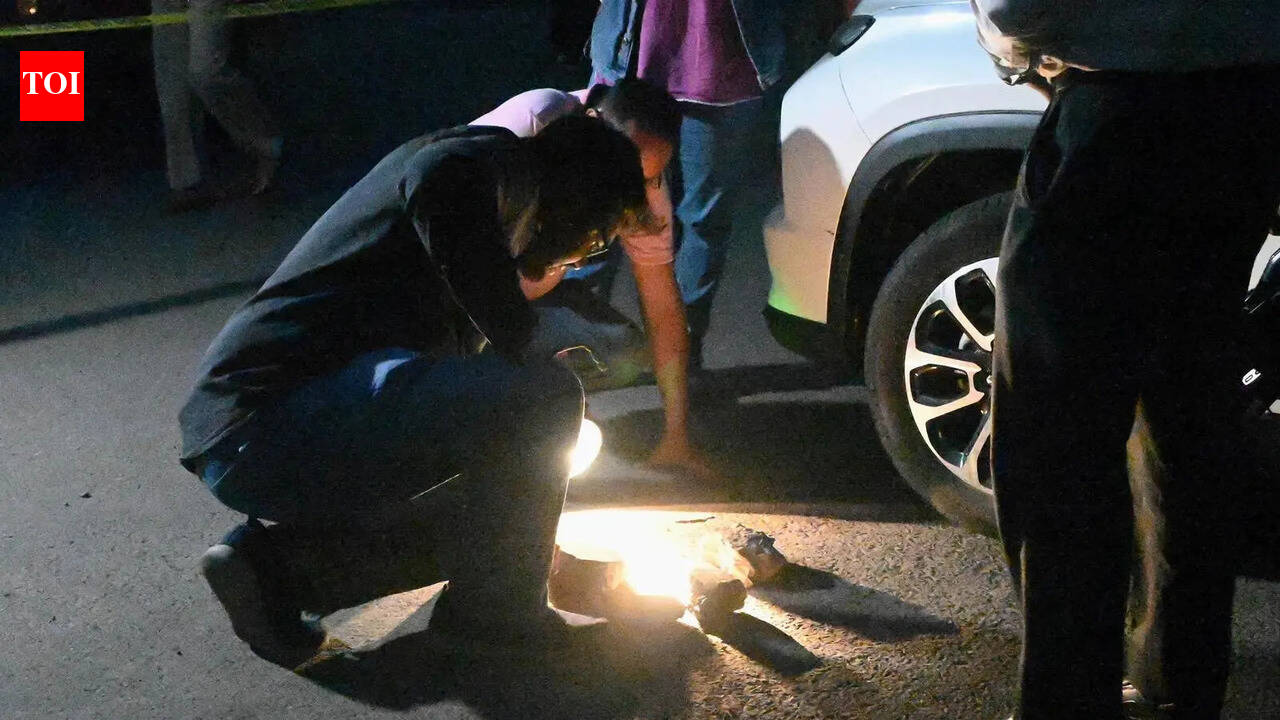
Gunshots fired at Panjab University, Chandigarh March 17, 2026: Firing was fired by unidentified persons at Panjab University, causing panic across the campus, police teams have launched a full-scale investigation to trace the culprits. Photo by Nitin Sharma

Chandigarh: The Operation Cell of Chandigarh Police has claimed to solve the Panjab University shootout case with the arrest of four people including the shooters. Police said the accused were also involved in two murders and a firing incident in different parts of Punjab. Police claimed to have seized three sophisticated pistols and 16 bullets from the accused – Gaurav alias Gola, Aryan, Rajat alias Gudda of Amritsar and Ravi Nijjar alias Kali, resident of Sirsa, Haryana.An operation cell team led by Inspector Harinder Singh Sekhon Gangster Shaganpreet and Donny Bal’s associate Aryan were arrested near a night club in Sector 26. An automatic pistol and four bullets were recovered from him. Later the police arrested Ravi Nijjar, Gaurav and Rajat and recovered two more pistols and 12 bullets.According to the police, the accused had planned to shoot at three night club owners and a real estate businessman in the city to extort money.Police said the accused were carrying out murders and shootouts on the instructions of foreign handler Donny Bal and his associate Shaganpreet for just Rs 5,000 and Rs 10,000 respectively. The accused were allegedly drug addicts who took to crime to obtain drugs.The accused revealed that Shaganpreet was in direct contact with them through encrypted social media applications.Police said the accused were involved in the firing incident at Panjab University, where unidentified assailants opened fire on SOPU student leader Jashanpreet Singh Jawanda in the parking lot of the Botany department. The attackers fled away after snatching the motorcycle at gunpoint from a passerby near the PU.The Bambiha gang had claimed responsibility for the attack in March.Police said that on March 17, on the instructions of Doni Bal and Shaganpreet, Aryan, Gaurav and Rajat had gone to PU to kill Jashanpreet Singh Jawanda.Box: Other cases in which he was involvedDuring interrogation of Gaurav, it was revealed that he along with Aryan and Sonu alias Shanga had done recce of a commission agent shop in Khanna on the instructions of gangster Shaganpreet.On March 25, Gaurav and Sonu opened fire at the shop.Police said Gaurav and others shot dead Gurpreet Singh ‘Gopi’ Nijjar, a key witness in the 2015 murder of gangster Sukha Kahlwan, on May 1, 2026.The accused also revealed that on March 25, 2025, Rajat, Aryan and Bobby had shot dead Amarjot Singh, a class 12 student, in Amritsar.Accused Bobby had provided automatic pistols and cartridges to the shooters.

Source link

39-year-old Indian man jailed in Australia, diagnosed with voyeuristic disorder

61 victims in 9 months: 39-year-old Indian man sent to jail in Australia, found to be suffering from voyeuristic disorder
An Indian man working as a massage therapist in Australia has been jailed for sexually exploiting 61 victims.

Sumit Satish Rastogi, 39, an Indian man in Adelaide, Australia, has been sentenced to 13 years and 10 months in prison after pleading guilty to 97 offences, including multiple charges of aggravated indecent assault and indecent filming, involving 61 victims.Rastogi was working in a massage parlor, although he was not qualified for this work. And he committed the crimes between October 2021 and July 2022 when he was arrested.According to ABC News, Judge Carmen Mateo detailed each of the 97 crimes Rastogi committed over nine months during his sentencing. “One way or another, you violated 61 women who were trusted, without suspicion, and entitled to safety, respect and dignity,” he said.“You abused her trust and treated her with a complete lack of dignity and respect when you touched her sexually and or took photographs, which knowingly captured parts of her body that she had a right to keep private and unpublished.“Your abusive conduct was routine and, at times, prolific.”

Crime made worse by confidence

The judge said that as Rastogi became more confident in filming women, his crimes became worse. “All of your conduct in sodomizing your victims was serious, but it became particularly serious when you developed the confidence to intervene inappropriately to get direct access to their underwear,” he said.“Each of the offensive images you took involved a gross breach of trust and were completely unacceptably exploitative and when you combine that conduct with physical sexual interference, your conduct takes on another level of humiliation and disgrace to your victims.“By June and July 2022, I will characterize your crimes against client victims as being out of control and showing no signs of restraint until caught.”The judge said he took into account Rastogi’s psychiatrist’s diagnosis that he had voyeuristic disorder. He said, “His opinion is that you meet the diagnostic criteria for voyeuristic disorder because over a six-month period you experienced concurrent and intense sexual arousal by randomly viewing semi-nude women.”“[He] Says that your voyeuristic disorder is a medically plausible explanation for your abusive behavior, but that it does not absolve you of responsibility for your conduct. “There is no suggestion that you were unable to control your conduct or that you were unaware of its wrongness,” the judge said.Rastogi will be deported from Australia after serving his entire sentence.

Source link