BJP fielded Suvendu in Bengal: In the first list in Bengal, BJP fielded Suvendu against Mamata. india news

In the first list in Bengal, BJP has fielded Suvendu in Mamata's stronghold.

Kolkata: Bengal opposition leader Suvendu Adhikari had indicated his intention to challenge TMC chief Mamata Banerjee in the CM’s home turf Bhabanipur, which has sent him to the Assembly thrice since 2011. On Monday, the BJP fielded him from both Bhawanipur and Nandigram, where he defeated Banerjee by 1,956 votes in 2021 – a result that was challenged in the Calcutta HC. 41 sitting MLAs have been retained in BJP’s first list of 144. BJP’s Bengal co-in-charge Amit Malviya wrote on Twitter, “This will be a fight till the end.” Veteran Dilip Ghosh in BJP’s list, 41 MLAs also get tickets Adhikari had switched from TMC to BJP in 2020, barely three months before elections next year. Among the new faces is Soumitra Chattopadhyay, a seventh-generation descendant of Vande Mataram author Bankim Chandra Chattopadhyay. Chattopadhyay will contest from Naihati, a town on the Hooghly river north of Kolkata, which is also the birthplace of Bankim Chandra. Veteran party leader Dilip Ghosh returned to his familiar turf in Kharagpur Sadar, a railway town about 120 km west of Kolkata in West Midnapore district. Ghosh had represented the constituency from 2016 to 2019 as a first-time candidate, defeating 10-time MLA Gyan Singh Sohanpal. Journalist-turned-politician Padma Bhushan awardee and former Rajya Sabha member Swapan Dasgupta will contest from Rashbehari in South Kolkata. Kolkata Municipal Corporation councilor Sajal Ghosh has been fielded from Baranagar, an industrial suburb north of Kolkata, while actor Rudranil Ghosh will contest from Shibpur in Howrah district. The list retains 41 sitting MLAs, including assembly chief whip Shankar Ghosh, who will contest re-election from Siliguri in North Bengal. Three former MLAs – Jitendra Tiwari from Pandabeswar in West Bardhaman district, Samarendranath Ghosh from Karimpur in Nadia district, and Saikat Panja from Manteshwar in East Bardhaman district – are also in the list. The list includes 11 women, among them Agnimitra Paul from Asansol South in West Bardhaman district, Malti Rava Roy from Tufanganj in Cooch Behar district and Chandana Bauri from Saltora in Bankura district. The professionally diverse slate includes 23 teachers, six lawyers, five doctors and three retired servicemen. The list also includes three spiritual figures – Utpal Maharaj, Swami Mangalanand Puri, and Nikhil Banerjee. Former state president of the Kurmi community Rajesh Mahato, who joined the BJP a few weeks ago, will contest from Gopiballavpur, a tribal-dominated constituency in Jhargram district. Mahato has long campaigned for Scheduled Tribe status for the Kurmi community and inclusion of the Kurmali language in the Eighth Schedule of the Constitution.

Source link

After Bengal Chief Secretary and Home Secretary, Election Commission replaces DGP, Kolkata CP. india news

After Bengal Chief Secretary and Home Secretary, Election Commission replaces DGP, Kolkata CP

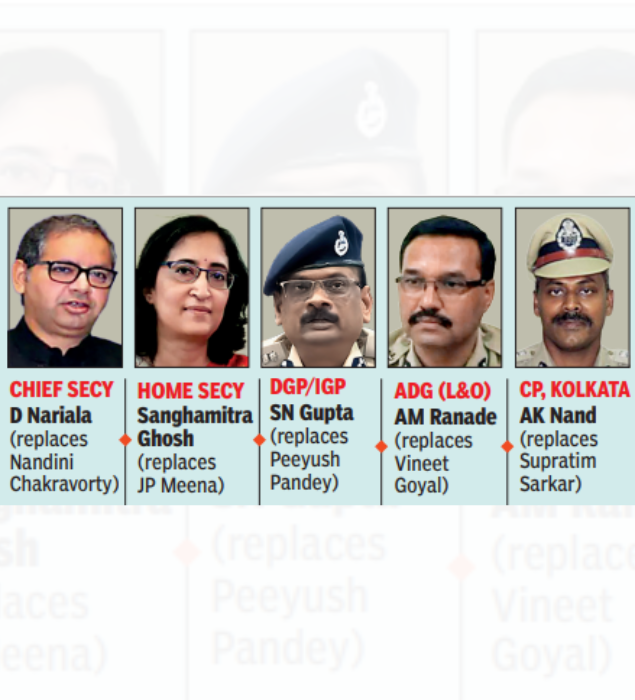
New Delhi/Kolkata: A day after replacing the Bengal Chief Secretary and Principal Secretary (Home) of its choice, the Election Commission on Monday also replaced the DGP and Kolkata Police Commissioner, among others. Hours after announcing the assembly election schedule for Bengal along with three other states and one Union territory, the Election Commission late on Sunday removed Bengal Chief Secretary Nandini Chakraborty and replaced her with 1993-batch IAS officer Dushyant Nariyala. Principal Secretary (Home) Jagdish Prasad Meena was replaced by 1997 batch IAS officer Sanghamitra Ghosh. Chakraborty took over as Chief Secretary on January 1 and was the first woman to be appointed to the post in West Bengal. She was also the first woman Home Secretary of the state. This is the first time that the top bureaucrat of West Bengal has been changed before the elections. On Monday, the Election Commission ordered another reshuffle, removing DGP Piyush Pandey and replacing him with 1992 batch IPS officer Siddh Nath Gupta. 1996 batch IPS officer Ajay Kumar Nand has been appointed in place of Kolkata Police Commissioner Supratim Sarkar. The Election Commission’s overriding powers to transfer officials directly engaged in the conduct of elections come from Article 324 of the Constitution, which places the entire election machinery in the election-holding State or Union Territory under its “superintendence, direction and control”. The 2021 Assembly and 2024 Lok Sabha elections in Bengal also saw transfers of DGPs and senior officials identified as “too close to the party in office”.

.

“CEC Gyanesh Kumar had assured at the Election Commission’s press conference on Sunday that the elections in Bengal will be violence-free and peaceful. In pursuit of this objective, the Election Commission has appointed/transferred senior police officers, including the DGP and the Kolkata Police Commissioner,” an Election Commission official told TOI. Sources have indicated that more transfers will be made at the district level in the coming days in consultation with Bengal’s special observer NK Mishra.Also making changes to the crucial post of ADG and IGP (Law and Order) – with a direct role in preventing political clashes and violence as well as ensuring judicious deployment of security forces for election security – the Election Commission has appointed 1995-batch IPS officer Ajay Mukund Ranade in place of Vineet Goyal. Natarajan Ramesh Babu, a 1991 batch IPS officer, was ordered to be posted as DG Correctional Services. In its order, EC made it clear that these officials have been barred from all work related to Bengal elections. Changes in policing during election season are not unprecedented. Ahead of the 2019 Lok Sabha elections, the Commission had appointed Rajesh Kumar as Kolkata Police Commissioner, replacing Anuj Sharma. Since the 2016 assembly elections, Bengal CM Mamata Banerjee has brought back the transferred officers to their previous posts after the elections are over.

Source link

CARA asks states to ensure access to records of old adoptees seeking information about their origin India News

CARA asks states to ensure access to records of older adoptees seeking information about their origins

New Delhi: In view of the difficulties faced by adult adoptees in seeking information about their origin through the “Root Search” process prescribed under the Adoption Rules 2022, the Central Adoption Resource Authority has asked States and Union Territories to ensure that all physical and digital records are safely preserved and transferred to the designated authority or institution, and make appropriate arrangements for long-term preservation of records to facilitate root search by future adopters. Go.“The safeguarding, maintenance, or lawful transfer of such records should be strictly ensured to prevent denial or obstruction of root search or access to records by older adoptees or other legitimate stakeholders,” CARA said in the Office Memorandum on Policy Clarification regarding Safeguarding, Maintenance, and Transfer of Records of Children and Adopted Children for future reference and root search purposes.CARA says “It has been observed that problems are arising in cases where older adoptees approach the relevant authorities for origin tracing, as envisaged under Regulation 47(2) of the Adoption Regulations, 2022 and the requisite records are not available with the concerned institution.”The authority says it has been observed that in some cases, records are unavailable because the concerned Specialized Adoption Agency (SAA) or Child Care Institution (CCI) has been closed, deregistered, merged, or its functions have been transferred to another institution, leading to records being lost or misplaced.In this background and to ensure uniformity in implementation, Member Secretary and CEO, CARA Bhavana Saxena reiterated in the memorandum that “the obligation to maintain, preserve and secure records of children and adoptees will continue irrespective of the operational status of the SAA or CCI”.States and Union Territories have been asked to ensure that “all physical and digital records are securely preserved and transferred to the designated authority or institution, and appropriate arrangements are made for long-term preservation of records to facilitate root tracing by older adopters in future”.

Source link

‘Baseless’: Center rejects Iran report demanding return of 3 tankers seized by India in exchange for safe passage to Hormuz | india news

Three destroyers of the Indian Navy quietly secured oil tankers passing through the volatile Hormuz

New Delhi: A central government source on Monday dismissed as “baseless” a report which claimed that India and Iran had discussed the release of three ships seized by New Delhi in return for ensuring safe passage of ships through the Strait of Hormuz. The source also rejected claims that the ships were owned by Iran.“This report is baseless. There have been no discussions of this nature between Indian and Iranian officials. In any case, the three ships are not Iranian-owned,” the source said.

Three destroyers of the Indian Navy quietly secured oil tankers passing through the volatile Hormuz

Earlier, a Reuters report said Iran has asked India to release three seized tanker ships in return for ensuring safe passage of India-bound ships through the Strait of Hormuz amid the ongoing Gulf crisis caused by the United States and Israel’s attacks on Iran. The report quoted sources as saying that Iran’s ambassador to India met Foreign Ministry officials on Monday to discuss the matter. In February Indian coastal authorities seized three oil tankers reportedly sanctioned by the United States. The ships were stopped off the Mumbai coast and taken for investigation on suspicion of being involved in illegal oil trade.The so-called “shadow fleet” ships – Stellar Ruby, Asphalt Star and Al Jafzia – were seized on 6 February.Iran has said the Strait of Hormuz cannot be used to launch attacks on Tehran and indicated that the movement of ships through the strategic waterway could be subject to certain conditions. Iranian officials said ships would be allowed to pass only under special circumstances, due to what they described as insecurities created by Israel and the United States, adding that Iran’s armed forces monitor the route and would prevent it from being used for military action against the country.Since the beginning of the US and Israeli attacks on Iran in late February, Tehran has launched retaliatory attacks across the region, including targeting ships attempting to transit the strait. Three Indian sailors died in these incidents, while another is missing.

Source link

Parliamentary panel highlights digital infrastructure, cyber capacity gaps in MeitY expenditure review india news

संसदीय पैनल ने MeitY खर्च की समीक्षा में डिजिटल बुनियादी ढांचे, साइबर क्षमता की कमी को चिह्नित कियाThese comments are part of the “Twenty-fourth Report of the Standing Committee on Communications and Information Technology” on the ministry’s demands for grants, which was presented in Parliament on March 16.The committee said that “allocation of more funds to the ministry can help in empowering citizens, promoting inclusive and sustainable growth of electronics, IT and ITES industries and promoting digital governance to ensure a secure cyber space.”According to the report, MeitY’s budget estimate for 2026-27 is Rs 21,632.96 crore, while the budget estimate for 2025-26 is Rs 26,026.25 crore. The ministry told the committee that part of the cut reflects the discontinuation of the production linked incentive (PLI) component for large-scale electronics manufacturing, the tenure of which is expiring on March 31, 2026.The Committee also noted that the difference between the Budget Estimates and the Revised Estimates in 2025-26 was attributable to lower expenditure during the first half of the financial year and delays in executing agreements under semiconductor manufacturing projects. The ministry told the panel that semiconductor manufacturing projects are “highly complex, technology-intensive” and approved companies have to meet prescribed conditions before fiscal assistance is released, resulting in delays in agreements.The report also highlights implementation challenges in several programs, including interoperability gaps in e-governance systems, cybersecurity and privacy risks, and capacity constraints in digital infrastructure projects. It asked the Ministry to address these issues and update the Committee on progress.On cyber security and digital security, the Committee sought an update on the creation of additional posts in the Indian Computer Emergency Response Team (CERT-In) and recommended strengthening of the Data Protection Board to improve safeguards for personal data and address incidents of cyber fraud and digital scams.The committee also asked the ministry to ensure that funding shortfall does not impact the functioning of the National Informatics Center (NIC), which provides the core digital infrastructure for government platforms. It also recommended expanding digital public services with stronger local-language support to improve digital inclusion.The report also discussed the implementation trajectory of the IndiaAI mission, saying variations in allocation partly reflect the dynamics of the program’s rollout after its approval in March 2024. According to the ministry, the initial phase focused on institutional setup, consultation and operational guidelines before scaling up activities in research, ecosystem development and international collaboration.Among future initiatives, the panel suggested using the increased funding under the National Knowledge Network to establish a blockchain-based national digital research repository aimed at enabling secure knowledge sharing between research institutions.The report recommends expanding digital literacy programs in rural and tribal areas and strengthening the IT ecosystem in underperforming states, including the Northeast, to support more balanced growth in India’s digital economy.

Source link

West Bengal elections: Left Front announces first list of 192 candidates. india news

West Bengal elections: Left Front announces first list of 192 candidates

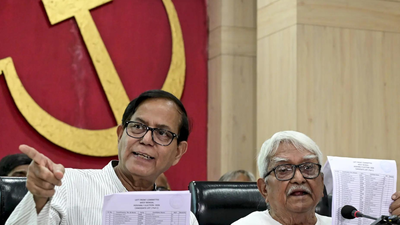
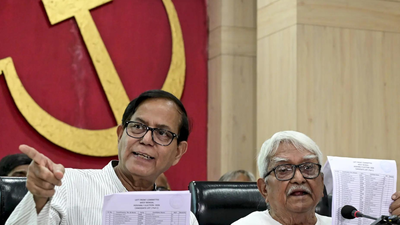
New Delhi: The Left Front on Monday released its first list of candidates for the upcoming assembly elections, fielding leaders like outgoing Rajya Sabha MP Vikas Ranjan Bhattacharya and CPI(M) central committee member Meenakshi Mukherjee.Of the 192 seats, CPI (M) will contest 142, Forward Bloc (21), RSP (13), CPI (14), RCPI (1) and MCP (1).Bhattacharya will contest from Jadavpur constituency in South Kolkata, while Mukherjee, the young face of the Left Front, will contest from Uttarpara in Hooghly district.Mukherjee was fielded from Nandigram in the 2021 elections and finished third behind BJP’s Suvendu Adhikari and Trinamool Congress supremo Mamata Banerjee.Left Front has also fielded Sabina Yasmin from Kaliganj.Yasmin’s six-year-old daughter Tamanna was killed in an alleged homemade bomb blast at a victory rally during the counting of votes in the by-election in June last year, which was won by the TMC.Left Front president Biman Bose said candidates for the remaining seats would be finalized and announced within three to four days.Announcing the 192 candidates at a press conference here, Bose said, “This time the fight is against the neo-fascist forces in the country, the autocratic activities in our state and the hardships caused to the people due to these.”“We will also fight to revive leftist politics and strengthen leftist forces in the state,” he said.Saying that women candidates have been fielded in 28 constituencies, Bose said, more women will be nominated for the remaining seats.CPI(ML)-Liberation and Indian Secular Front (ISF) will field candidates as allies, Bose said, adding that apart from these, some independents and important names will also be included in the Left Front’s list.The ISF, which contested the 2021 assembly elections in a seat-sharing arrangement with the Left Front, won one seat – Bhangar in South 24 Parganas. PTIThe upcoming election is being seen as a battle of survival for the CPI(M)-led front in West Bengal, which ruled the state uninterrupted for 34 years till 2011 and failed to win a single seat in the 2021 assembly elections.Assembly elections will be held in the state on 23 and 29 April and counting of votes will take place on 4 May.

Source link

Aviation Minister told Rajya Sabha, Indigo gave Rs 163.9 crore in travel coupons. india news

Aviation Minister told Rajya Sabha, Indigo gave Rs 163.9 crore in travel coupons

New Delhi: Compensation worth Rs 163.92 crore has already been paid in the form of travel coupons to passengers affected by the mass cancellation of flights by IndiGo in early December, Civil Aviation Minister K Rammohan Naidu informed the Rajya Sabha on Monday.Responding to supplementary questions during Question Hour, he said more than 3.6 lakh customers were affected by the incident and Rs 43.8 crore has been distributed so far as compensation after the ticket verification process. Nadu assured that the government is taking several necessary measures to ensure that such incidents do not happen again. Hundreds of flights operated by IndiGo were canceled in the first week of December due to shortage of pilots after the expiry of Flight Duty Time Limitation (FDTL). The government blamed the airline for lack of adequate planning in implementing the second phase of FDTL norms. This gave the airline a one-time exemption from implementing the norms. Responding to a specific question on the IndiGo crisis, the minister said the civil aviation ministry is consulting airlines on a daily basis before implementing the new norms. He said, “But even after this has happened, we are still taking more precautions so that such a situation does not happen again.”Saying that the ministry is engaged with the airline to ensure greater compensation to passengers, Nadu said the airline has also extended coupons or travel coupons worth Rs 10,000 as a gesture of care. “For this, Rs 163.9 crore has already been distributed to the passengers. And more, if they can verify their travel timings at that specific time,” Naidu said.Regarding the IndiGo incident, the minister said that DGCA is in constant touch with the airlines. “This was a typical example where the new FDTL norms came into force and it was the airlines that had to look at their internal operations and say if FDTL is going to be implemented, how many more pilots do we need and how will we route the crew rostering so that operations are not impacted,” Naidu said. Naidu said, “In these three months alone, IndiGo has appointed more than 246 pilots… We have also brought 10% operations to IndiGo. Therefore, several necessary measures have been taken so that such an incident does not happen again.”

Source link

Congress leader Kharge raised LPG crisis in Rajya Sabha, government hit back on ‘politics on shortage’. india news

Congress leader Kharge raised LPG crisis in Rajya Sabha, government hit back on 'politics on shortage'

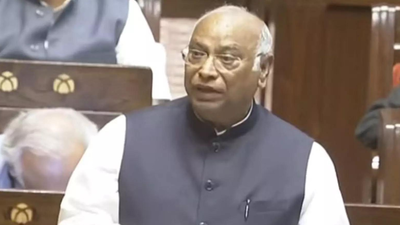
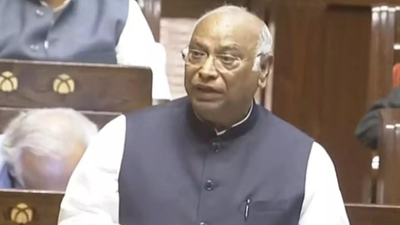
New Delhi: Leader of Opposition in Rajya Sabha Mallikarjun Kharge on Monday raised the LPG crisis arising out of conflict in West Asia and asked why the government did not plan in advance for LPG imports or make alternative arrangements despite being aware of regional tensions. “If the government was aware of regional tensions then why did it not make alternative arrangements? Why was the opposition not taken on board for a coordinated response to public concerns.” Why is the government not taking any measures to stop hoarding and black marketing of LPG? This crisis not only exposes our mismanagement but also our weak domestic and foreign policy.”Kharge’s presentation, which lasted more than the 3 minutes given to each member during Zero Hour, drew a sharp reaction from House leader J.P. Nadda, who accused the opposition of creating chaos and indulging in politics over the LPG shortage instead of standing with the government as it manages a situation not of India’s own making but entirely caused by international developments. Reminding Kharge of Petroleum Minister Hardeep Puri’s earlier statement in the Lok Sabha on the LPG situation, Nadda reminded that Congress MPs had not even listened to him. Nadda claimed that a Congress leader himself was caught hoarding LPG. Earlier, Kharge said the LPG crisis has created panic across the country, which has adversely impacted restaurants, hostels and commercial establishments besides poor, middle class families. Recalling that India imports LPG to meet 60% of its domestic needs, he said 90% of these imports are through the Strait of Hormuz. “Both availability and price stability of LPG have become a matter of serious concern...MSMEs and commercial users are facing problems in securing LPG refills. It is worrying that some establishments have closed operations while some are paying up to Rs 5000 per cylinder.”Pointing to Puri’s claim that there is no shortage of LPG, Kharge alleged that the ground reality is different. “When India was issuing advisories to its citizens in Iran warning of the deterioration in the situation, it should have also warned of the adverse impact on vital sea lanes and energy supplies. We should have been prepared accordingly. The government was aware of the impending situation in the Strait of Hormuz. Therefore, if advance planning and alternative arrangements for LPG imports had been made, we would not have had to face this crisis,” he said.

Source link

President Murmu will celebrate 5 billion meals of Akshaya Patra on completion of 25 years of its establishment. india news

President Murmu to celebrate 5 billion meals of Akshaya Patra as it completes 25 years of establishment

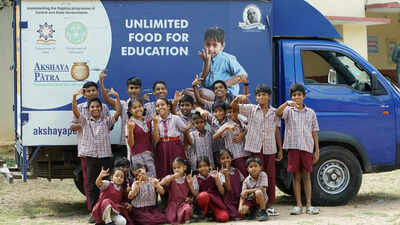
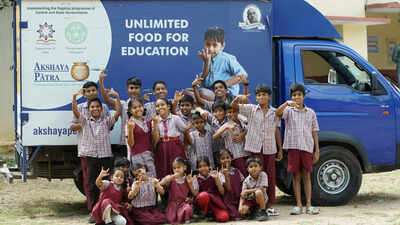
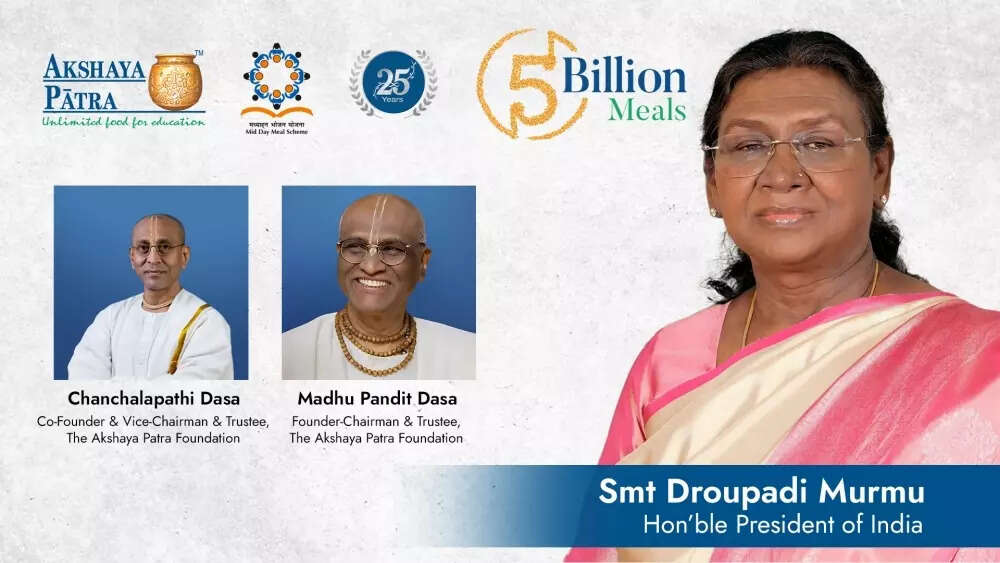
As Akshaya Patra Foundation prepares to serve its 5 billionth meal with the President on March 17 Draupadi Murmu In commemoration of this milestone, the moment marks an important chapter in one of the largest school feeding programs in the world. What started with serving meals to just 1,500 people from the ISKCON temple in Bengaluru in 2000 has grown into a nationwide initiative that now feeds more than 2.35 million children every day. In this conversation, Shri Madhu Pandit Dasa, Founder-Chairman of Akshaya Patra Foundation, discusses the 25-year journey of the organization and its work in supporting school nutrition programs across India. He reflects on the partnership with governments under the PM Poshan Programme, the role of technology in scaling up large-scale food operations and initiatives such as the Morning Nutrition Program that seek to strengthen the link between nutrition, education and long-term child development.1. With Draupadi Murmu Akshaya Patra Foundation set to serve its 5th billion meal on March 17, how important is this milestone for the organization and how much impact has it achieved so far?The milestone of 5 billion meals is a profound moment not only for Akshaya Patra, but also for India. When we started cooking meals for 1,500 people at the ISKCON Bangalore temple in 2000, we couldn’t even imagine where we would be 25 years later. As we celebrate 25 years of serving children, each of the 5 billion meals we serve represents our commitment to a world where no child has to choose between food and education; Instead, they have the best of both.It is an honor for us to have the President of India Draupadi Murmu ji celebrating this historic milestone as our chief guest. Their presence is a powerful affirmation that ensuring the nutrition and well-being of India’s children is a national priority. The milestone of 5 billion meals is a testament to what is possible when compassion meets commitment.We are also grateful to the Education Minister, Dharmendra PradhanFor agreeing to be our guest of honor for this event.2. The Foundation has recently introduced a morning nutrition plan. What gap does this initiative aim to address and how widely has it been implemented so far?The Morning Nutrition Program is in line with our commitment to ensure that no child is deprived of education due to hunger. We have seen that many children come to school hungry. By implementing the program, we strive to address this nutritional gap.A child who starts the school day nourished can truly make the most of the educational opportunity. The Morning Nutrition Plan is our commitment to making this a reality. We are currently implementing the Morning Nutrition Program in six states, reaching 8 lakh children, and are working to scale this initiative to more locations.3. With millions of meals prepared daily, what processes are in place to ensure food safety, nutritional balance and quality control at each stage?At Akshaya Patra, we combine scale with systems that ensure high standards of hygiene, sustainability and efficiency. A key element is automation, which includes equipment such as rice washing machines, dal cooking systems, vegetable cutters and chapati making machines that reduce manual handling and enable large quantities of food to be prepared with uniform quality.We operate under strict Standard Operating Procedures (SOP) that govern procurement, storage, preparation and packaging. Raw materials are quality checked upon arrival and food safety protocols are followed during the cooking process. Regular internal audits and monitoring help maintain compliance with hygiene and nutrition standards.Technology-enabled monitoring systems help track production, ingredient usage and daily food requirements, ensuring operational efficiency and reducing wastage. Furthermore, scientifically designed menus ensure that the food meets nutritional guidelines while reflecting local tastes.Finally, a well-organized logistics system supported by specially designed food delivery vehicles ensures that freshly prepared meals reach schools on time while maintaining quality and safety.4. The organization works closely with many state governments under the mid-day meal programme. How do these partnerships shape your operations on the ground?Our partnerships with the Government of India and State Governments are the foundation of what we do. Under the visionary leadership of our Prime Minister, Narendra ModiPM Poshan Program continues to strengthen the link between nutrition and education.As the implementing partner of PM Poshan, the partnership provides us with the reach, mandate and a significant portion of the funding required for operations. The government provides us with the policy framework, maps schools and supports food cost contributions. We bring to the table the operating model, technology, trained workforce and additional funding raised from corporate partners and individual donors. So the government provides support in policy, grants and other critical areas, while Akshaya Patra focuses largely on food preparation, logistics and quality assurance. It is this shared commitment that allows us to plan, invest and work with confidence at the grassroots level.

-

5. As the conversation around nutrition and education becomes more interconnected, how does Akshay Patra see its role in supporting the holistic development of children beyond addressing hunger?A hungry child cannot concentrate, absorb and certainly cannot aspire. A healthy child is more likely to attend school regularly and concentrate better on learning. When we provide food, we are not just addressing hunger. We are creating the conditions for learning and growth… so that a child can imagine the future.And for girls, the impact is intergenerational. A nurtured, educated girl brings up a nurtured, educated family. In that sense, our work is not limited to just food. It’s about human potential.We have also designed and implemented initiatives that go beyond food to support the holistic development of children. These include the Giving Every Dream a Chance initiative, which mentors children in pursuing their fields of interest, and the scholarship program, which provides students with financial assistance for higher education.6. The organization has expanded significantly in the last 25 years. What were some of the key milestones or changes that helped drive this growth?Our 25-year journey has witnessed many milestones.The first time was in 2003, when the Government of India took the historic decision to invite NGOs as implementing partners in the Mid Day Meal (MDM) scheme. This laid the foundation for us to operate at a scale that we could not have achieved independently.Our partnership with state governments enabled the program to expand across all geographies and reach children in different regions of the country. These partnerships have been critical in tailoring our operations to local needs while maintaining consistency in food quality and delivery.Another important driver of growth has been taking advantage of technology and operational innovation. The development of large-scale, technology-enabled kitchens and robust supply chain systems has allowed us to serve nutritious food efficiently, safely and at scale, helping us reach more children every year.The support of corporate partners and individual donors has also played a vital role in our journey. Their contributions have enabled kitchen infrastructure creation, operational expansion, and program innovation, strengthening the public-private partnership model that underpins our work.Akshaya Patra’s work has been recognized through awards such as the Gandhi Peace Prize, National Award for Child Welfare, Nikkei Asia Awardsand BBC Global Food Champion Award, among others1. Our systems and processes have become case studies at leading universities such as Harvard University, Stanford University and London Business School. We celebrated our 4 billion meals milestone at the United Nations Headquarters in New York in 20242. We are fortunate to have the President with us to mark the 5 billion meals milestone and 25 years on March 17. National and international awards and recognitions along with encouragement from such eminent leaders have significantly strengthened the credibility of the organization.Such examples have raised the visibility of school food issues, strengthened stakeholder confidence and enabled us to strengthen partnerships and reach more children over time.7. Technology and innovation have become central to improving large-scale social initiatives. How has Akshay Patra integrated these elements into its kitchen and supply chain systems?Technology and innovation play a vital role in enabling us to deliver food at scale with efficiency and sustainability. Every day, our kitchens prepare meals for 2.35 million children with precision and consistency, ensuring each meal meets nutritional standards. Our semi-automatic kitchens use large rice and dal vessels and high capacity roti making machines, which enable us to prepare large quantities of food efficiently while maintaining hygiene and consistency. In logistics, we use route optimization and fleet management tools to ensure on-time delivery to thousands of schools.Our aim is to serve every child with the same quality and care every day. Technology and innovation help us make this possible.8. Looking ahead, what are the Foundation’s priorities for the next phase of growth in India and potentially on the global stage?We strive to reach more children and strengthen nutrition delivery. To this end, we intend to design and implement initiatives that complement the midday meal programme. For example, the Morning Nutrition Program ensures that children start the school day nourished and ready to learn. Similarly, the School Rejuvenation Program creates safe and clean spaces where children can get their food. We will continue to strengthen partnerships with governments, institutions and philanthropic supporters to maintain and expand the reach of the programme.Our aim is to support broader efforts to address classroom hunger and improve access to education around the world through knowledge sharing and collaborative partnerships. In 2024, we collaborated with Kenya-based non-profit, Food4Education, as a knowledge partner to share insights on kitchen operations and scaling strategies3. We will continue to build such partnerships and share our operational learnings and scalable models with other countries to explore school feeding initiatives on a larger scale.Inspired by the success of Akshaya Patra, the World Food Movement was launched last year to take the idea of ​​large-scale nutrition programs beyond India. The initiative aims to support students and communities globally so that children can learn with energy and communities can grow with respect.Reference: Disclaimer – The above content is non-editorial, and TIL disclaims any and all warranties, express or implied, relating to it, and does not guarantee, endorse or necessarily endorse any content.

Source link

‘My idea of ​​parliamentary democracy has been attacked’: Deve Gowda writes letter to Sonia Gandhi; ‘Too much disruption’ flags in Parliament | india news

'My idea of ​​parliamentary democracy has been attacked': Deve Gowda writes letter to Sonia Gandhi; 'Too much disruption' flags in Parliament

New Delhi: Former Prime Minister and Rajya Sabha MP HD Deve Gowda wrote a letter on Monday Congress MP Sonia Gandhi He expressed concern over the incident, describing it as “anarchy” inside Parliament and its premises. In his letter, Gowda shared that he was “deeply troubled” by the developments in Parliament, for which he held the opposition parties primarily responsible. The former PM also said that extreme disruption has been witnessed in Parliament in recent times.“I am deeply troubled by a certain anarchy being introduced inside the Parliament and in its larger premises, mainly by the opposition parties, without thinking,” Gowda wrote.He cautioned that such actions could have cascading effects on democratic institutions. He said, “I am not sure you imagine the consequences of such uncontrolled activity and spread of negative energy. I honestly feel, it can extremely damage the foundation of our democracy and leave a mark of indelible bitterness.”Gowda said that he had initially refrained from writing because he hoped that the situation would resolve itself. He said, “I was not very confident about writing to you at first because I thought things would improve with time. But, I’m afraid I don’t see any signs of improvement.”The former prime minister urged Sonia Gandhi to intervene, appealing to her seniority and experience in the opposition ranks. He wrote, “I do not want to degrade anyone, or diminish anyone’s role or enthusiasm. But I urge you, who are the eldest in the opposition, to take advantage of your political experience and maturity and talk to your party leaders and others.”Gowda also reflected on his long political career, saying he had spent most of his public life in the opposition. He wrote, “You know that I started my career at the grassroots level of our democratic institutions and overall spent 65 years of my life as an MLA and MP. This may be the last parliamentary session of my life.”He also said that Parliament has witnessed extreme disruption in recent times. “Incidents of sloganeering, placarding and name calling have increased in Parliament in recent times. There has been an attitude of non-seriousness, which has attacked my idea and construct of Parliament and parliamentary democracy,” Gowda wrote.He said Gandhi may ask opposition leaders to reconsider their approach towards protests in Parliament. “You can probably ask them not to harm themselves, their cause and their political future in the long run,” Gowda said.Emphasizing that protests are a legitimate part of parliamentary democracy, Gowda said they should be conducted in a way that “does not destroy what we have built together over more than 75 glorious years”.

Source link