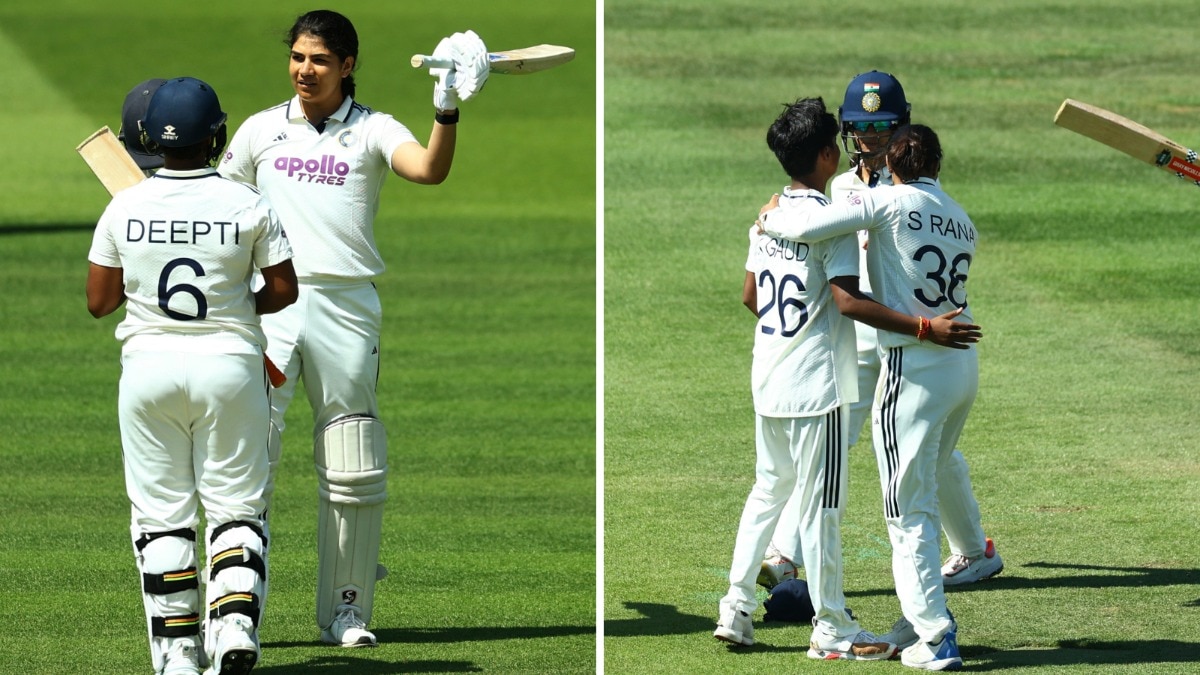
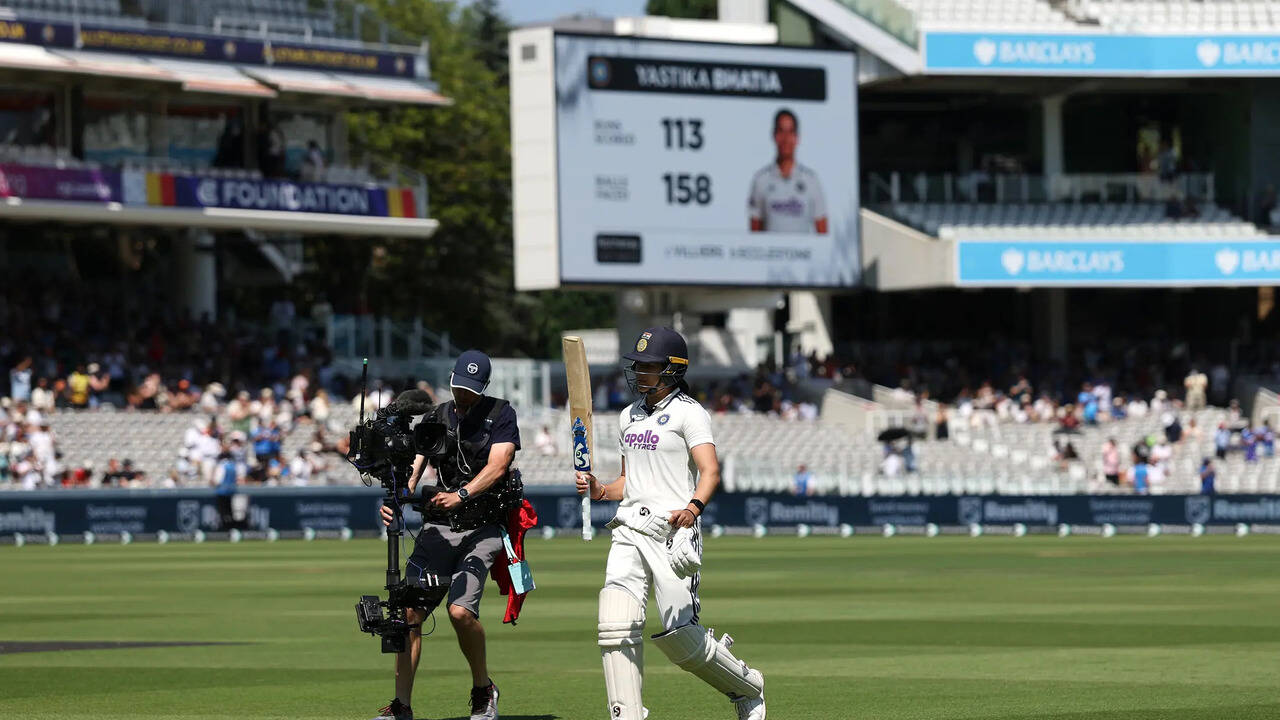
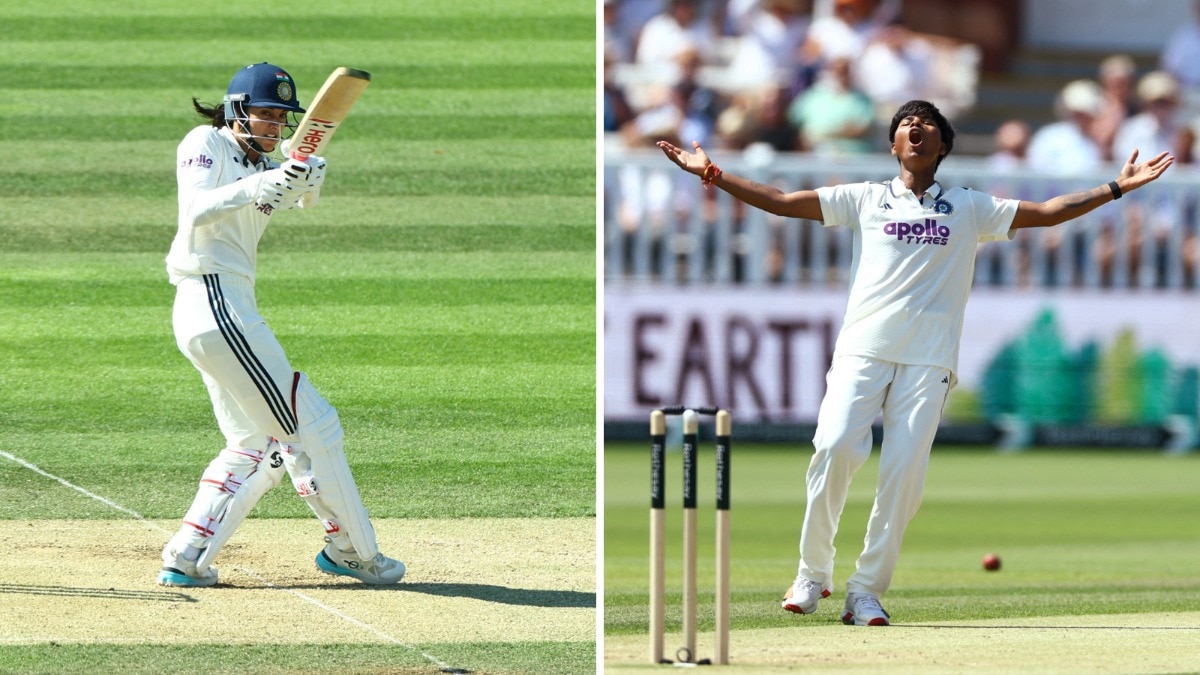
Yastika Bhatia became the first woman to score a Test century at Lord’s as India tightened their grip on a historic one-off women’s Test against England on the third day, before Kranti Goud led the charge with a devastating new-ball spell that sent the hosts to defeat.
Thanks to Bhatia’s brilliant inning of 113 runs in 158 balls, India declared the innings at 341 runs for seven wickets in its second innings, giving England a challenging target of 457 runs. At stumps, the home team was 130 for six, still needing 327 runs with only four wickets remaining.
The left-handed batsman started the day on 39 runs and produced one of the best innings of her career by playing brilliant strokes with patience. She reached her half-century with a trademark straight drive and continued to use her legs confidently against the spinners before scoring a historic century, etched her name in Lord’s history.
Richa Ghosh then carried the innings forward with an unbeaten 50 off just 52 balls, forcing India to declare the innings just before tea.
Needing to chase the record, England’s hopes suffered an immediate blow when Goud hit a four off the very first ball of the innings. Tammy Beaumont’s farewell international innings ended on a disappointing note as the fast bowler bowled a ball that turned sharply back and disturbed her stumps.
Goud continued to take advantage of the favorable conditions and struck again when Heather Knight’s final international Test innings ended on 13, caught by Richa Ghosh at short leg.
Sayali Satghare matched Goud’s intensity at the other end, trapping Maya Boucher LBW on a dramatic return ball. England found themselves in trouble at 34 for four as India’s fast bowlers picked up the pace during the evening session.
Amy Jones offered resistance with an unbeaten 52, while Maddy Villiers made 26 during a struggling 67-run partnership for the sixth wicket that delayed India’s march to victory.
The partnership was eventually broken by another sharp moment in the field when Richa Ghosh completed an excellent catch at silly point to dismiss Villiers.
India in command
Earlier in the day, India lost the wickets of Smriti Mandhana (70), Jemimah Rodrigues (3) and captain Harmanpreet Kaur (16), but Bhatia ensured the visitors never lost control.
After repeatedly questioning the Indian middle-order, England spinner Sophie Ecclestone took five wickets, while Lauren Bell impressed with disciplined seam bowling.
However, this day firmly belonged to India. Bhatia’s history-making century set the stage before Goud and Satghare dismantled England’s top order, making the visitors favorites to pull off a famous victory on the final day in the first women’s Test at Lord’s.
India batsman Yastika Bhatia (Photo by Stu Forster/Getty Images)
Yastika Bhatia’s record-breaking maiden century took India Women to the brink of a historic first Test win at Lord’s after a dominant third day, but the bowlers restricted England to 130/6 in pursuit of an impossible target of 457.Just four wickets away from creating history at the Home of Cricket, Harmanpreet Kaur’s side ended the day firmly in control despite spirited resistance from the lower order of Amy Jones and Mady Villiers.
Yastika created history in the house of cricket
Starting the third day with a good first innings lead, India continued to pile on the runs despite England enjoying a better opening session with the ball. Lauren Bell dismissed Smriti Mandhana (70) early before also dismissing Jemimah Rodrigues. After this, Sophie Ecclestone trapped Harmanpreet Kaur LBW, due to which England made a brief comeback in the match.However, Yastika Bhatia remained unfazed. Displaying remarkable composure and brilliant strokeplay, the left-handed batsman scored her maiden Test century and became the first woman to score a Test century at Lord’s. Her memorable innings of 113 runs off 158 balls also became the highest score by an Indian woman in the third or fourth innings of a Test match.England spinner Sophie Ecclestone fought tirelessly to complete her fourth five-wicket haul in the women’s Test, but India remained dominant due to a lack of support at the other end.
Richa Ghosh provides late night fireworks
After Bhatia’s departure, wicketkeeper-batsman Richa Ghosh brought new momentum to the innings by attacking the England bowlers with a quickfire 50 not out from 52 balls. With India’s lead exceeding 450, captain Harmanpreet Kaur declared the innings at 341/7, giving England a mammoth target of 457 runs to survive or chase.
Indian fast bowlers destroyed England’s top order
India’s bowlers wasted little time in consolidating their hold on the contest.Debutants Kranti Gaur and Sayali Satghare produced another brilliant spell with the new ball and dismissed openers Tammy Beaumont and Maia Boucher within the first four overs. Beaumont’s dismissal also marked the end of her international career, while former captain Heather Knight, who was playing her final Test before retirement, was later dismissed by Kranti Goud and received a guard of honor from the Indian team as she walked out.England’s problems worsened when Sneh Rana beautifully bowled Nat Sciver-Brunt before Sayali breached Ellis Capsey’s defence, reducing the hosts to 59/5.
Jones, Villiers delay the inevitable
When India looked set to seal the match on the third evening, Amy Jones and Mady Villiers displayed a determined performance. The two made a strong partnership of 67 runs, which frustrated the Indian attack and kept England’s hopes alive for some time.The stand was eventually broken in spectacular fashion as Richa Ghosh took a brilliant close-in catch at silly point off the bowling of Sneh Rana to dismiss Villiers. Jones continued his resistance, scoring a serious half-century, but England still ended the day in deep trouble at 130/6, needing 327 runs with only four wickets remaining.
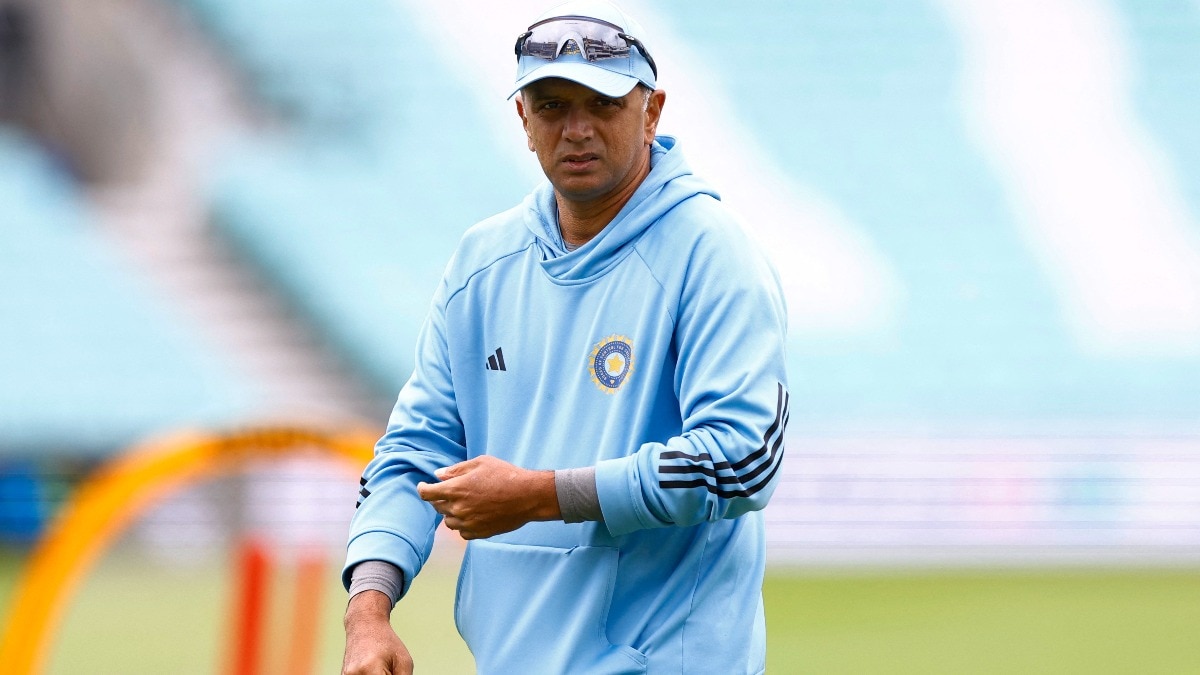
Former India head coach Rahul Dravid has emerged as one of the contenders to replace Brendon McCullum as England’s Test coach after the New Zealander was relieved of his duties following the team’s poor performance in the longest format.
According to a report in the Daily Telegraph, Dravid is among the shortlist of candidates that also includes former England coach Andy Flower and former England spinner Richard Dawson.
McCullum’s four-year tenure as England’s Test coach ended after the team’s 2–1 home series defeat to New Zealand. The England and Wales Cricket Board (ECB) said it believes the time is right to make a change ahead of next year’s Ashes, although McCullum will remain as head coach of England’s ODI and T20I teams.
Dravid in the mix
The report describes Dravid as an attractive candidate due to his astute coaching style and extensive experience across all formats.
The 53-year-old inspected one of the India’s most successful recent stagesGuiding the team to the 2024 T20 World Cup title and the 2023 World Test Championship final. His work with the India senior team and age-group teams has earned him widespread praise for player development and long-term planning.
However, reports state that Dravid is not keen to return to a full-time coaching role.
Rahul Dravid may only be tempted to become the coach of the Test team. (Image: Reuters)
The Daily Telegraph reported, “Dravid has no desire to take up coaching full-time, but the England Test job would give him the chance to stay at home longer and help keep his favorite format of the game alive. At the very least, England should assess his interest.”
other candidates
former zimbabwe captain andy flowers It is understood that he is one of the strong contenders for this role. Flower remains England’s most successful coach in the modern era, leading the team to three Ashes series wins and the No. 1 Test ranking.
Richard Dawson, currently the head coach of Glamorgan, remains controversial in county cricket despite earning a reputation as a tactically astute coach.
The names of Sri Lanka great Kumar Sangakkara, England Lions coach Andrew Flintoff, Pakistan head coach Mike Hesson and former Australia coach Justin Langer are also being considered as England begin the search for a new Test coach ahead of the crucial Ashes cycle, the report said.
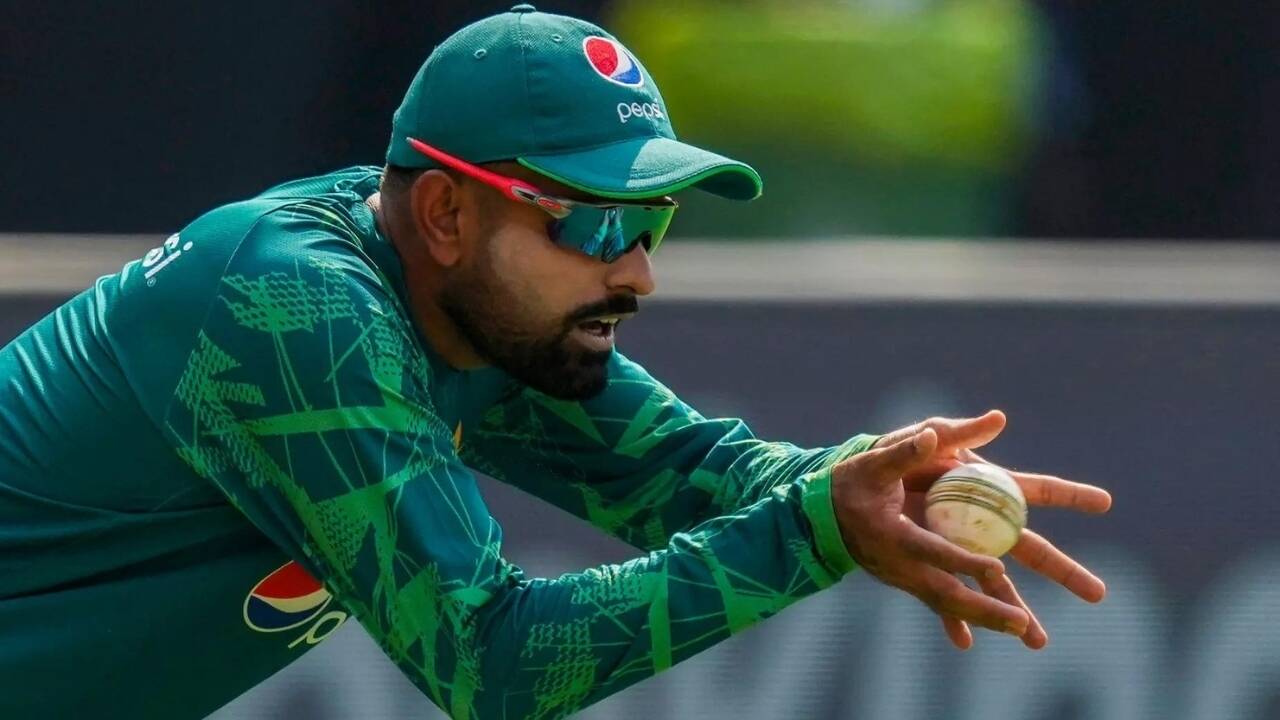
Pakistan’s Babar Azam during a practice session before the ICC Men’s Cricket World Cup 2023 match between India and Pakistan at the Narendra Modi Stadium in Ahmedabad. (PTI photo)
Pakistan fielding coach Shane McDermott has resigned ahead of the team’s upcoming tours of West Indies and England, ending his tenure in the post for almost a year.News agency PTI quoted sources as saying that McDermott will not travel with the team for any tour.It is expected that PCB may appoint Mansoor Amjad in his place. Amjad has worked as a fielding coach with Pakistan Shaheens and Under-19 team.“Mansoor Amjad, who has been the fielding coach of Pakistan Shaheens and Under-19, is likely to replace McDermott,” PTI quoted a source as saying.Pakistan are scheduled to leave for the West Indies on Monday for a two-Test series before traveling to England for a three-Test series.PCB has not given any reason for McDermott’s resignation. His exit is the latest in a series of foreign coaching staff leaving Pakistan cricket without any official explanation.In recent years, trainer and physiotherapist Cliff Deacon left his role, while former head coaches Gary Kirsten and Jason Gillespie also resigned.McDermott joined Pakistan in 2025 after replacing Mohammad Masroor as the national team’s fielding coach. His first assignment was Pakistan’s three-match T20I series in Bangladesh in July 2025.Before joining Pakistan, McDermott worked as an assistant fielding coach with Bangladesh for three years and spent three years in a similar role with Sri Lanka.In the last few years, many foreign coaches, trainers and physiotherapists have been coming and going in Pakistan cricket. One of the most notable exits came in 2019, when Steve Rixon resigned after differences with the board.The Pakistan men’s team has also changed several fielding coaches since Mickey Arthur’s first tenure as head coach, when improving fitness and fielding became a major part of the team’s approach.
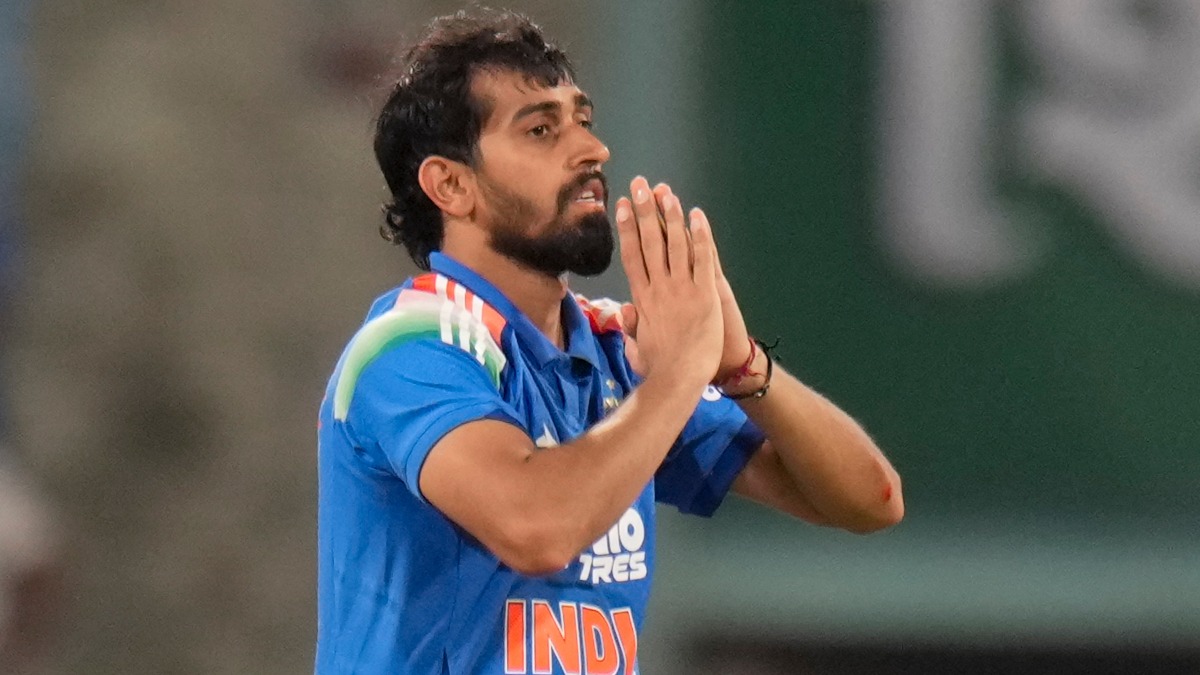
India’s white-ball plans have suffered a significant blow after a double blow to their bowling department during the closing stages of the Twenty20 International series against England at Trent Bridge. With fast bowler Harshit Rana and spinner Varun Chakravarthy both ruled out with hamstring injuries, the Board of Control for Cricket in India (BCCI) has named Prince Yadav and Ravi Bishnoi as immediate replacements for the upcoming assignments in England and Zimbabwe.
The injuries occurred during a grueling third T20 match in Nottingham. Rana reported sudden onset of restlessness In his right hamstring. Subsequent diagnostic scans revealed a Grade 1 hamstring injury, automatically ruling him out of the upcoming three-match One Day International series against England. Rana will return to India to report directly to the BCCI Center of Excellence (CoE) for structured rehabilitation and assessment.
In a stroke of bad luck, mystery spinner Varun Chakravarthy also suffered a similar trouble during the same match, experiencing sudden discomfort in his left hamstring. His MRI scan presented a more serious diagnosis, confirming a grade 2 hamstring injury. Following advice from medical experts, Chakraborty has been ruled out of the upcoming T20I tour of Zimbabwe. Like Rana, he will go straight to the CoE to begin his recovery process.
The selection committee led by Ajit Agarkar has moved quickly to fill the vacancies. Prince Yadav has been given a big chance, he has been included in place of Rana in the ODI team against England. The Delhi fast bowler has been in strong recent form, catching the selectors’ attention with a 16-wicket campaign for Lucknow Supergiants in the IPL before playing in the recent home ODI against Afghanistan and T20I in England.
Meanwhile, veteran leg spinner Ravi Bishnoi has replaced Chakravarthy for the T20Is in Harare. Bishnoi has been recalled to the squad just days after being dropped from the playing XI for the third T20 match, which was a direct result of a poor performance at Old Trafford, where he conceded 60 runs in four boundary overs.
The squad amendments come at a crucial juncture. The England ODI team, captained by Shubman Gill and featuring experienced Rohit Sharma and Virat Kohli, will try to regain its rhythm before the first match at Edgbaston. Shreyas Iyer will serve as Gill’s vice-captain for the 50-over phase, before taking over the full captaincy reins for the T20 side that travels to Zimbabwe later this month.
India would like to end its losing streak on the UK tour. On Saturday, England secured a 4-0 series win over India, ousting them from the top of the T20I rankings.
India’s updated squad for England ODI: Shubman Gill (C), Rohit Sharma, Virat Kohli, Shreyas Iyer (VC), KL Rahul (WK), Ishan Kishan (WK), Washington Sundar, Axar Patel, Shivam Dubey, Kuldeep Yadav, Jasprit Bumrah, Prasidh Krishna, Arshdeep Singh, Gurnoor Brar, Prince Yadav.
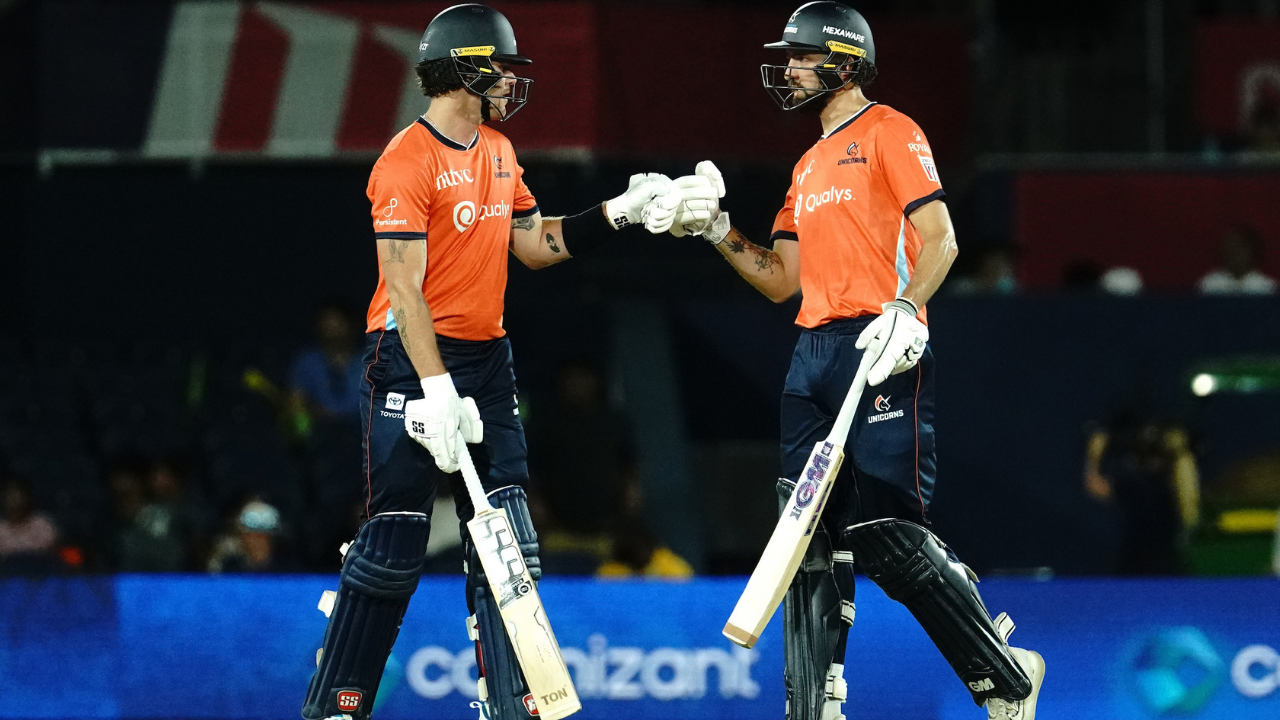
San Francisco Unicorns topped the Major League Cricket standings and booked their place in the semi-finals in a thrilling chase of 191 against Seattle Orcas thanks to a sensational late strike from Hasan Khan.With 47 runs needed from the last four overs, the contest was still tied before Hasan decisively turned it in the Unicorns’ favour. The left-handed batsman made an unbeaten cameo and hit consecutive sixes on Tanveer Sangha before getting out. marcus stoinis The chase was completed in style with a sequence of six, four, four and six in the next over.The win not only clinched San Francisco’s spot in the semi-finals but also ended Seattle’s hopes of reaching the playoffs.Earlier, while chasing the target, Unicorns were playing comfortably at 99 runs for 1 wicket after 10 overs. finn allen Set the tone with another aggressive innings, racing towards a half-century with his trademark leg-side hitting, while Matt Short provided solid support.However, the momentum changed after Allen’s dismissal. Jasdeep Sangha adjusted his line after two wides and unleashed an aggressive stroke to short, with Stoinis taking a sharp catch at cover to remove the opener. It was an eventful evening in the field for the Australian, who first took a brilliant overhead catch at mid-on to dismiss Luan-Dre Pretorius.Despite having the wicket in hand, San Francisco slowed down considerably during the middle overs and managed only 32 runs between the end of the 11th and 16th overs. Short, who rose from 27 off 20 balls to 35 off 31 balls during that period, struggled to maintain the scoring rate before chasing down the target with back-to-back boundaries. His dismissal briefly tilted the tie in Seattle’s favor before Hasen mounted a decisive counterattack.Seattle’s bowlers were also felt by the absence of the tournament’s leading wicket-taker Otniel Bartman, who left the competition due to other commitments. Dasun Shanaka was another notable absentee.Earlier, Seattle bounced back nicely after slipping to 34 for 3. Matthew Britzke Shimron Hetmyer led the fight with a brilliant innings adding 65 runs in just 32 balls. Bretzke hit four sixes and three fours, with an inside-out six off Aaron Hardy being the highlight of his innings.Hetmyer’s tenure ended when Xavier Bartlett completed an excellent catch at long-on, hitting a powerful shot out of the air. Both Bartlett and Hetmyer looked stunned after seeing the catch, with the batsman leaning on the pitch in disbelief.
Do you believe Otniel Bartman’s absence affected Seattle’s ability to secure a win?
After this Bretzke made another important partnership with Stoinis. The South African brought up his half-century off just 24 balls, but Stoinis took time to get going and scored just 11 runs from his first 13 balls. Peter Siddle finally broke the situation by dismissing Britzke, while Ali Shaikh was run out on the very next ball.Stoinis scored 49 off 35 balls with the help of Cameron Gannon, who hit consecutive sixes off Hardy, helping Seattle score 190.Nevertheless, Britzke later admitted that his team had weakened.At the half stage, he believed Seattle were “30 runs short”, a prediction which ultimately proved accurate as the Unicorns met the target to top the table.San Francisco will now join the Los Angeles Knight Riders, MI New York and Washington Freedom in the playoffs.
Alexander Zverev finally buried his Grand Slam demons at Roland Garros last month, but an even tougher test awaits him at Wimbledon. Standing between the German and a second consecutive major title are world No. 1 and defending champion Jannik Sinner, who have turned their rivalry into one of the most one-sided contests on the ATP Tour.
Zverev reaches Center Court chasing another piece of history Becomes the first German since Boris Becker to win a Grand Slam titleDefeated Flavio Cobolli in a thrilling five-set French Open final. After carrying the tag of the best player for years without ever winning a major, the 29-year-old now has a chance to become the first man in the Open era to win another major the very next year after his first Slam win.
Yet, unlike Paris, where she faced a Grand Slam finalist for the first time, Sunday’s challenge promises to be far more difficult. Over the past two seasons Sinner has not only emerged as the dominant force in men’s tennis, but he has also enjoyed almost complete control of his rivalry with Zverev.
The Italians have beaten the Germans in each of their last nine meetings, which has turned what was once a close battle into a tough mental hurdle. More notably, Sinner has not dropped a set in any of their last six meetings, winning 14 consecutive sets against Zverev in the Wimbledon finals.
Sinner in another Wimbledon final
Can Jannik Sinner win back-to-back titles at Wimbledon? (Reuters photo)
If there were any doubts over Sinner’s form following the heart-breaking defeat in Paris, the defending champions have answered them with a bang at the All England Club.
The 24-year-old gave arguably his most complete performance of the fortnight in Friday’s semi-final, Beating seven-time Wimbledon champion Novak Djokovic 6-4, 6-4, 6-4. Sinner served 16 aces, hit 40 winners and, surprisingly, faced only one break point in the entire match.
The straight sets victory was even more impressive considering Djokovic’s run to a record 15th Wimbledon semi-final. The Serb survived a marathon quarterfinal of five hours and 15 minutes against Felix Auger-Aliassime, the longest quarterfinal in Wimbledon history, but found himself overwhelmed by Sinner’s relentless baseline game and clinical serving.
Sinner’s reach to his second consecutive Wimbledon final has underlined why he remains the man to beat on grass. With each passing round, the defending champion is looking sharper, calmer and more comfortable on the surface that brought him glory a year ago.
For Zverev, the numbers read grim. It’s hard enough to recover from nine consecutive losses; The fact that Sinner has not won a single set during that run increases the scale of the challenge awaiting the German.
Can Zverev snap the streak?
Zverev’s journey to his first Wimbledon final has been impressive. The third-seeded German produced his best tennis performance on grass and booked his place in Sunday’s title clash with a straight-sets victory over British wildcard Arthur Ferry in the semi-finals. Her fast serve and aggressive groundstrokes proved too much for the home favourite.
The timing could hardly have been better. Freed of the burden of chasing that elusive first Slam, Zverev appears to be playing with a new confidence and clarity. His powerful serve and willingness to attack make him a natural fit on grass when everything clicks.
But Wimbledon presents a challenge similar to the one he faced in Paris. Roland Garros pitted him against an inexperienced Koboli in his first major final; The Central Court will not provide any such facility. Beyond the net stands the reigning champion and world No. 1, who has repeatedly found answers to Zverev’s questions.
Papi’s dominance extended beyond the scoreline. Their recent meetings have highlighted the Italian’s ability to absorb Zverev’s power and redirect it with gusto, particularly through his backhand. Time and again, whenever the pair have shared the court, the top seed has looked physically fresh and tactically a step ahead.
For Zverev, Sunday’s final is about more than adding another trophy to his cabinet. It’s a chance to prove that his success at Roland Garros was not a one-off and that he belongs with Sinner and Carlos Alcaraz at the pinnacle of men’s tennis.
However, ending a nine-match losing streak against the world’s best player could prove to be the toughest challenge of his career.
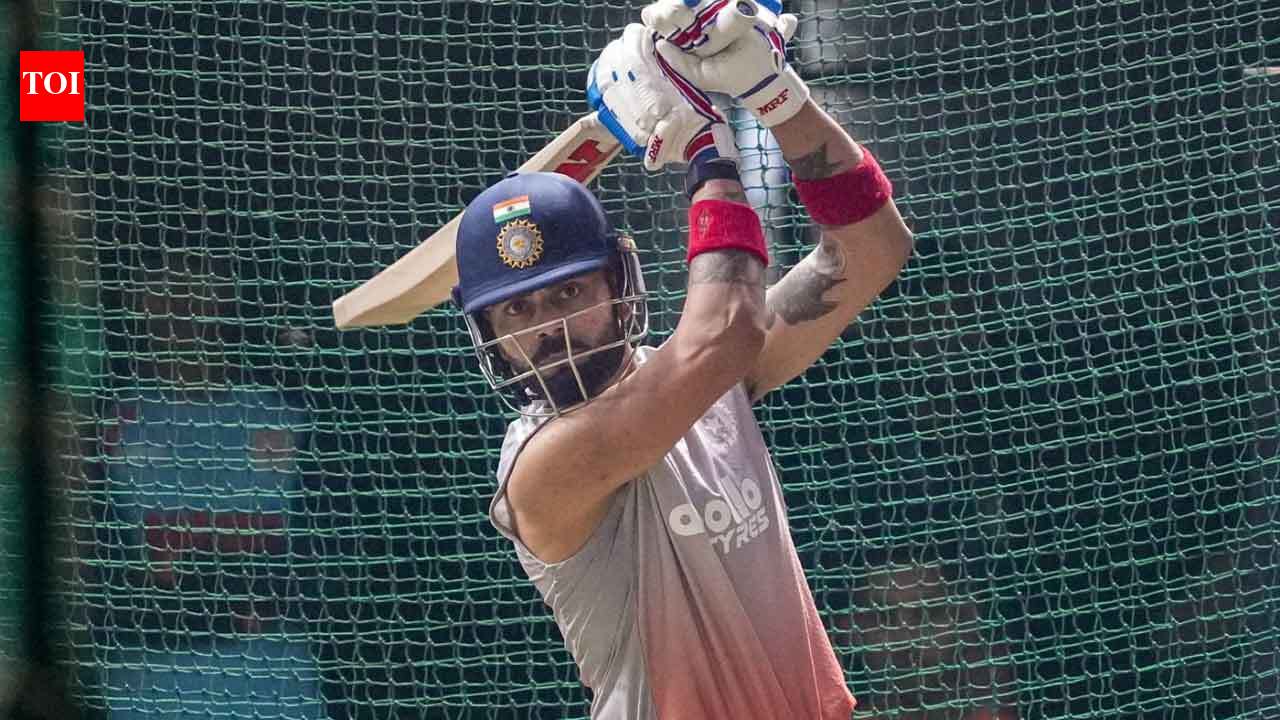
TimesofIndia.com in Birmingham: Virat Kohli Spent nearly 30 minutes in a one-on-one animated discussion with the ODI captain Shubman Gill India began preparations for the three-match series against England with their first training session at Edgbaston on Saturday.The lengthy conversation appeared to revolve around batting plans for the series, with Kohli offering inputs on shot selection, strategy and how to deal with England’s bowling attack in the three matches starting on July 14. The senior batsman was seen demonstrating different strokes and discussing possible scoring options with Gill, before the pair departed after a two-hour session which included fielding practice and batting in the nets.With the rest of the Indian squad in Southampton for the fifth and final T20 match against England – a match which India ultimately lost by 56 runs and a disappointing 0–4 defeat in the series – only seven members of the ODI squad trained in Birmingham.Kohli, Gill, Rohit Sharma And KL Rahul were the batsmen involved in the session, while Jasprit Bumrah, Kuldeep Yadav and Gurnoor Brar led the bowling group. India also utilized the services of local net bowlers, including two spinners and a fast bowler, to replicate various match scenarios.Kohli and Rohit looked particularly fluent during their time at the nets. Kohli, in particular, displayed a range of strokes, confidently driving down the ground, executing paddle sweeps and playing his trademark flicks down the leg side well. Bumrah and Brar consistently tested the batsmen by hitting the deck hard and gaining bounce, ensuring an intense opening session.Kuldeep also had a long spell, while the local spinners provided additional variety to the batsmen in preparation for English conditions.India’s support staff, including fielding coach T Dilip, spin-bowling coach Sairaj Bahutule and throwdown specialist Dayasagar, oversaw the training session as the visitors began fine-tuning their preparations.The ODI series now gives India a chance to recover after a disappointing performance in the shortest format. After a 0-2 defeat in the T20 series in Ireland, the team reached England and lost badly 0-4.India will begin the ODI series at Edgbaston on July 14 before traveling to Sophia Gardens in Cardiff for the second match on July 16. The series will conclude at Lord’s on July 19.
Fast bowler Kranti Goud’s first five-for and Smriti Mandhana’s unbeaten half-century helped India Women tighten their grip after a strong performance on the second day of the one-off Test against England at Lord’s, taking the visitors closer to a famous victory.
At stumps, India were 154 for 1 in their second innings, taking their total to 269 runs after bowling out England for 170 in reply to the first innings score. With nine wickets still in hand and two full days left, India are firmly in control on the third day.
The day belonged to Kranti Gaur, whose aggressive spell of 5 wickets for 37 runs demolished England’s batting line-up and ensured that the hosts could never recover despite a spirited stand from the middle order.
After removing Tammy Beaumont late on the opening day, Goud wasted little time on Saturday, striking in her second over of the morning when Maia Boucher edged past wicketkeeper Yastika Bhatia.
Her extraordinary wicket came soon afterwards when Alice Capsey was beaten with enough movement to cause her off stump to fall back.
Sayali Satghare trapped former captain Heather Knight LBW to reduce England’s score to 47 for 4, after which captain Nat Sciver-Brunt and Amy Jones took the innings forward.
The pair added 84 runs for the fifth wicket, with Jones scoring a brilliant half-century and Sciver-Brunt providing solid support as England threatened to erase India’s first-innings lead.
However, India responded strongly after lunch. Sneh Rana broke the partnership by dismissing Jones for 52, before Goud returned to wrap up the lower order, completing his first five-wicket haul in red-ball cricket. Satghare and Rana took two wickets each, as England lost their last five wickets for just 33 runs.
Mandhana’s height is tall
With a lead of 115 runs in the first innings, India started their second innings with discipline and authority, led once again by Smriti Mandhana.
The left-handed batsman remained unbeaten on 69 runs in 124 balls and after his half-century in the first innings, played another composed innings which kept the England bowlers under constant pressure.
Mandhana and Shafali Verma gave India an ideal start by adding 88 runs for the first wicket. While Shafali was the more aggressive of the two, making 33 before being dismissed by Sophie Ecclestone to substitute fielder Emma Lamb, Mandhana opened the innings with trademark elegance.
His cover drive was a highlight of the innings, while a six straight off Ecclestone highlighted his growing confidence.
After this, Yastika Bhatia along with Mandhana further disappointed England, the pair made an unbroken partnership of 66 runs for the second wicket, taking India safely to the stumps.
With a lead of 269 runs, nine wickets in hand and batting conditions still favourable, India will resume on day three with their sights set on achieving a target well beyond England’s reach and a memorable Test win at the home of cricket.
India vs England (Photo by Dan Istiten/Getty Images)
England sealed a 4-0 T20I series win over India with a 56-run win in the fifth and final match in Southampton on Saturday. Jos Buttler played a brilliant inning of 131 runs in 64 balls, while captain Harry Brook remained unbeaten on 95 runs, helping England post a mammoth score of 257/3 after being invited to bat first. India struggled with the bat but could only manage 201/8, giving England a clean sweep in a memorable series.England lost Phil Salt early, but Buttler and Brook took complete control with a record 233-run partnership for the second wicket – the highest partnership for any wicket in men’s T20I history. Buttler hit 12 fours and eight sixes to post his career-best T20I score, while Brook missed out on a century after scoring an unbeaten 95 off just 45 balls.The performance of India’s bowlers was forgettable. Akshar Patel gave 63 runs in four overs, Prince Yadav gave 60 runs, while debutant Suryansh Shedge gave 39 runs in three overs. Due to England’s aggressive batting, there was very little chance of a comeback for the visiting team.Chasing 258 runs was always a difficult task. Ishan Kishan scored 56, while Tilak Verma made a quickfire 53, but neither innings was enough to threaten England’s total.The defeat meant that India lost the five-match series 4–0 after the opening game was washed out due to rain. It also ended India’s 1,601-day stay at the top of the ICC men’s T20I rankings. Under new captain Shreyas Iyer, India have now suffered six defeats, with the team struggling to find consistency during the tour.England, meanwhile, looked sharp in all departments throughout the series, with Buttler and Brook leading the way in the final to end a one-sided contest in emphatic fashion.