Five dogs rescued from circus in Chhattisgarh district after joint raid by PETA India and police. raipur news

Five dogs rescued from circus in Chhattisgarh district after joint raid by PETA India and police

Raipur: Five dogs, which were allegedly being used illegally to perform in a circus in Chhattisgarh’s Sakti district, were rescued on Monday following the joint intervention of an NGO PETA India and the district police. The action was taken after video footage purportedly showed Indian Spitz dogs being asked to perform at Jyoti Circus, which had recently camped at the Dabhra fair in the district. According to PETA India, the dogs were being used without performing animal registration certificates, mandatory under the Prevention of Cruelty to Animals Act.A video from the circus shows dogs placed on individual plastic chairs inside the performance area while a ringmaster directs them through gestures and commands. Four dogs were reportedly forced to walk on their hind legs during this act.PETA India said that five dogs were handed over during the intervention and will now be rehabilitated and put up for adoption.Kiran Ahuja of PETA India said, “Animals used in circus performances are subjected to unnatural, stressful training, constant travel and are kept in cages or chained when not in use.” Immediate assistance was provided by Sakti SP Prafulla Thakur due to which rescue was possible.He also urged the circus to surrender any remaining dogs or other animals allegedly kept for display.Animal rights groups have long argued that circus animals face harsh living conditions, inadequate care, and coercive training methods. PETA India said that several inspections and investigations in the past have pointed to cruelty in animal circuses, including confinement, lack of proper veterinary care and repetitive behavior associated with stress.The group has advocated mechanical alternatives to live animals in circuses, noting that some circus operators have already shifted to non-animal acts.The police have not yet registered a case against the circus management in this matter.


Source link

Richest candidates in Tamil Nadu elections: Tamil Nadu elections: AIADMK’s Lima Rose Martin declares assets worth Rs 1,049.5 crore, becomes richest candidate in the state | trichy news

Tamil Nadu elections: AIADMK's Lima Rose Martin declared assets worth Rs 1,049.5 crore, becomes the richest candidate in the state

Trichy: AIADMK candidate Lima Rose Martin, wife of lottery businessman Santiago Martin and contesting from Lalgudi assembly constituency in Trichy district, has declared her total assets of Rs 1,049.5 crore in her election nomination papers. He is the richest candidate in the Tamil Nadu elections, surpassing all the Chief Minister candidates of the state. The 58-year-old female candidate, who passed class VI from a government higher secondary school in Thiruvadanai near Ramanathapuram district, has declared her income of Rs 9.8 crore for the financial year 2024-25.

Watch

Tamil Nadu Elections 2026: MK Stalin vs AIADMK – Will victory be the X-factor?

Her husband Santiago Martin, whose annual income during the same period was Rs 11.3 crore, is known to have donated to several political parties in the country. The annual income of this affluent couple’s son, Jose Dyson Martin, was estimated at Rs 19.5 crore.Lima, a resident of GN Mills in Coimbatore, has declared her movable assets at Rs 139.6 crore, while her husband Martin’s movable assets have been declared at Rs 3,262 crore. The 159-page election affidavit lists the value of the AIADMK candidate’s immovable assets at Rs 909.9 crore and her husband Martin’s immovable assets at Rs 887.3 crore.Lima Rose has invested its shares in many sectors including real estate, merchandise, gaming and hotel services. In a striking similarity with TVK leader and actor-politician Vijay, who is contesting the TN Assembly elections, AIADMK’s Lima and her husband own three TVS XL mopeds. The Lima has only three cars to its name, Hyundai Creta, Mahindra Thar and Maruti Dezire. Her husband owns a Lexus LX 570, BMW 530d and a 1991 registered Maruti car. His son Jose Dyson Martin owns three Royal Enfield bikes. Lima Rose’s real estate assets are in Coimbatore, Madurai, Trichy, Tiruppur and Sivagangai districts. The candidate owns agricultural land in Singhola village, about 40 km north of New Delhi, and Nedumbassery in Ernakulam, Kerala. There are four pending criminal cases registered against him.

Source link

Nearly 80% of breast cancer biopsies turn out benign – new imaging tool promises clearer diagnosis and fewer biopsies

लगभग 80% स्तन कैंसर बायोप्सी सौम्य निकलती हैं - नया इमेजिंग उपकरण स्पष्ट निदान और कम बायोप्सी का वादा करता हैUnnecessary biopsies are associated with potential harms, including increased anxiety, complications from the procedure, and medical costs. Despite advances in breast imaging, breast biopsy remains the only definitive way to determine whether a suspicious lump is cancerous.My work as an engineer focuses on improving imaging technology to detect and diagnose cancer. Breast cancer grows when the tumor forms new blood vessels and consumes more oxygen. This makes examining blood vessels and oxygen levels potential biomarkers that could improve breast cancer diagnosis.Diffuse optical tomography, or DOT, is an imaging technique that uses near-infrared light to measure total blood hemoglobin concentration and oxygen levels – key indicators of tumor activity – in a breast lump. Patients do not require injections of contrast dyes to make the image clearer.My team and I found that combining ultrasound with DOT can improve the accuracy of breast cancer diagnosis and reduce unnecessary breast biopsies. Ultrasound provides information about the structure of a breast lump, while DOT provides information about its function, and together these data can improve the diagnosis of breast cancer.Improving breast ultrasound with DOT —————————————————– In our study, we imaged 226 patients recommended for routine breast biopsy using our new hand-held imaging technique, which combines ultrasound with diffuse optical tomography. These patients had either breast cancer or a benign lump, and their final diagnosis was confirmed by biopsy.Radiologists initially evaluated each patient using standard imaging methods such as ultrasound and mammography. They then reviewed additional information from the DOT images. Importantly, the radiologist and engineer were unaware of the biopsy results when determining the diagnosis.We observed significant biological differences between cancerous and benign tumors. Cancerous lesions had significantly higher hemoglobin levels and significantly lower oxygen levels compared to non-cancerous tissues. More aggressive cancers showed higher hemoglobin concentrations and lower oxygen levels than less aggressive tumors.When radiologists were able to review DOT measurements, biopsies of benign tumors decreased by approximately 25%. The false-negative rate was 1.8%, which is in line with medical guidelines that recommend monitoring rather than immediate biopsy.The future of breast cancer screening and diagnosis —————————————————— Breast cancer is the most common cancer in women worldwide. Nearly 2.3 million new cases and 670,000 deaths were recorded in 2022. If these rates continue, researchers estimate there will be approximately 1.1 million breast cancer-related deaths in 2050.More accurate, non-invasive diagnostic tools could not only reduce unnecessary biopsies but also lead to more accurate and efficient diagnoses. In addition to ultrasound, researchers have also explored combining other imaging techniques with DOT, including X-ray mammography, 3D mammography, and MRI.However, DOT systems combined with mammography and MRI are more difficult for routine use in the clinic than ultrasound. My team is working to further refine our technology, including incorporating AI tools to help process the imaging data.Reducing avoidable procedures can help maintain a patient’s quality of life and reduce health care costs. I believe that these reforms can collectively have a meaningful and far-reaching impact on patient care and the broader health care system.


Source link

‘Ramayana’: Nitesh Tiwari teases Yash’s Ravana will not be a traditional villain; Says ‘he had a lot more’

'Ramayana': Nitesh Tiwari teases Yash's Ravana will not be a traditional villain; Says 'he had a lot more'

director Nitesh Tiwari Fans are counting down the days to the release of his epic’Ramayana‘, starring Ranbir Kapoor And Yash is in the lead role. As the first part of the film franchise is set to release on Diwali 2026, the director highlighted the portrayal of its main rival, Ravana. Nitesh Tiwari on Yash’s RavanaWhile promoting the film in Los Angeles, director Tiwari, in a conversation with Collider, said that his main antagonist, played by Yash, will be presented with more depth and complexity rather than a one-dimensional villain. When asked if Ravana would be portrayed as a traditional villain, he shared, “There were many aspects to his life. He was a great warrior, a skilled musician, a scholar, a philanthropic king, a great Shiva devotee. So there was more to him than just being a black character.”Nitesh Tiwari on the search for RavanaThe filmmaker emphasized that highlighting these details of his life serves a deeper purpose in the film’s story. He further explained, “Why it’s important for us to showcase all these parts and aspects of his life, because there’s a very important lesson hidden in them. You can have all these great qualities, but if you’re ruled by vengeance and if you’re driven by ego, you know what the end results are going to be. So there’s a great lesson that’s hidden there.”Release date of ‘Ramayana’Ramayan, which stars Ranbir in the role of Lord Ram and Sai Pallavi as Sita, is being projected as a large-scale retelling of the ancient epic, blending visuals with emotions. The six-hour long film will reportedly be divided into two parts, with Part 1 releasing on Diwali 2026 and Part 2 releasing on Diwali 2027.

Source link

‘IITian Baba’ Abhay Singh gets married: Who is his wife Pratika?

'IITian Baba' Abhay Singh gets married: Who is his wife Pratika?
IITian Baba, Abhay Singh, who shot to fame at Mahakumbh 2025 for his blend of distinguished education and penance, has quietly married Pratika, an engineer from Mangaluru. The couple, who met about a year ago, got married on Mahashivratri and are now planning to start ‘Shree University’ to integrate spiritual practices and knowledge.

Abhay Singh, or IITian Baba, was one of the most sought-after names in the world of spiritual seekers and viral sensations ahead of Mahakumbh 2025. His unique story, combining elite education with tenacity, went viral online, making him an online sensation for his choice in life after being educated at IIT Bombay.And once again, he is in the headlines again, not for his unusual theories and beliefs about the universe, but because he quietly got married on Mahashivratri and the pictures with his wife went viral.

'IITian Baba' Abhay Singh got married, who is his wife Pratika?

Mahakumbh 2025 fame ‘IITian Baba’ Abhay Singh gets married, meets wife Pratika (Photo: X/@shivanshp007)

Who is IITian Baba’s wife? Copy of?

Pratika, an engineer from Mangaluru, Karnataka, shares Abhay’s tech roots. They reportedly connected at Sadhguru’s Adiyogi Ashram in Coimbatore about a year ago, possibly after the Mahakumbh, based on shared life values ​​and outlook. In a media statement quoted by ABP News Live, Abhay said he lives a “very simple, minimalist life” in Dharamshala, Himachal Pradesh.The couple got married at the Aghanjar Mahadev Temple on Mahashivratri on February 15, 2026, followed by a court marriage on February 19. On 6 March, he went to Jhajjar to meet his parents and handle bank business, where a crowd gathered who were astonished to see ‘Baba’s’ bride. The viral clip showed him signing documents and spending time in his father’s chamber, where Abhay was dressed in saffron robes.Pratika remains calm and praises Abhay as “simple, honest and sincere” in social media reports.

Who is ‘IITian Baba’ – Abhay Singh?

Abhay is a resident of Sasroli village of Jhajjar, Haryana. He cracked JEE Mains in 2008 with an All India rank of 731, earning a place at IIT Bombay for Aerospace Engineering from 2008–2012, followed by a master’s degree in design. ​​After stints in New Delhi and Canada, where he reportedly earned about Rs 3 lakh monthly or 36 LPA in an aerospace firm, he returned to India, taking up spirituality. The winter in Shimla, Mussoorie and Dharamshala influenced changes in his plans about life.He rose to fame at the 2025 Mahakumbh, where he was interviewed in ascetic garb, sparking a debate on science versus soul.His father, lawyer Karan Grewal and former president of the Jhajjar Bar Association, shared in an NDTV interview: “Our family wants Abhay to return home. But after achieving so much, it is not easy for him to come back. After this he decided to become a monk.He was always interested in spirituality. I was in touch with him till six months ago. After that, he blocked me and all communication with me. I heard that he was in Haridwar and I wanted to meet him but could not go and now it has gone viral in the media.Abhay’s YouTube channel on spirituality attracted early supporters, including his future wife.

What are the future plans of this couple?

Abhay told NDTV India that they are working on “Shri University” to unify spiritual practices, reconnect people with knowledge and promote Sanatan Dharma under one roof.

Source link

‘Give him time to integrate with the team’: Fleming on Samson cricket news

'Give him time to join the team': Fleming on Samson
Sanju Samson of Chennai Super Kings during a practice session. (PTI photo)

Bengaluru: New Zealand legend Stephen Fleming Has largely been the guiding force of the franchise from the dugout. Since taking over as head coach in 2009, he has overseen both high and low title-winning seasons. However, the last two seasons have tested the five-time champions, with consecutive failures to reach the playoffs and increasing scrutiny over auction strategy and team selection.Go beyond limits with our YouTube channel. Subscribe now!Fleming believes that the team is in a transitional period. Involvement of star wicketkeeper-batsman sanju samsonA key figure in India’s T20 World Cup triumph, he is part of that rebuild, although the opening batsman has managed just 22 runs in three matches. Fleming, however, backed him to do well. “It’s difficult when you’ve been at a franchise for a while and even though he probably feels pretty comfortable, there’s still an element of that bond and he’s going through the process of bonding with this team. There’s a little bit of work off the field that we’re doing to make the bond a little bit stronger but that’s OK,” Fleming said.

Source link

Priyadarshan breaks silence on the allegation of stealing Satyajit Ray’s Bengali song in ‘Bhoot Bangla’: ‘Nothing wrong’ hindi movie news

Priyadarshan breaks silence on allegations of stealing Satyajit Ray's Bengali song in 'Bhoot Bangla': 'Nothing wrong'
Filmmaker Priyadarshan addressed claims of plagiarism for his upcoming film ‘Bhoot Bangla’. He clarified that the use of a phrase from Satyajit Ray’s ‘Gopi Gine Bagha Byne’ was just a common word, ‘ghost’, and not a melodious imitation. Priyadarshan stressed his deep respect for Ray and explained that the lyrical choice was relevant to the title and theme of the film. Read further to know in detail.

film producer Priyadarshan Abhinit is all set for the release of his upcoming film ‘Bhoot Bangla’ Akshay Kumar. At the film’s trailer launch event on Monday, the director reacted to the reported use of an expression from the song ‘Bhooter Raja Dilo Bor’ in his upcoming horror drama.

Priyadarshan’s reaction allegations of plagiarism

The song ‘Ram Ji Bhala Karein’ from ‘Bhoot Bangla’ contains the hook line of the song ‘Bhooter Raja Dilo Bor’ from the National Award winning Bengali film ‘Gopi Gain Bagha Byne’. Satyajit Ray. Responding to the allegations of plagiarism, Priyadarshan said, “I respect him (Satyajit Ray) a lot, he is one of the gurus from whom I learned cinema. Second, the word you are saying is a ghost. Now, if I ask you, how many songs are the word ‘Deewana’ used in Indian cinema? That means only the first person, who used the word ‘Deewana’, has the right to use it.” It’s just a word. We can’t use, if someone uses two lines, everyone can use, but the tune has nothing to do with the song.As reported by IANS, the filmmaker further shared, “The lyricist has written those lines, and that’s why we were so confident that there is nothing wrong in it, and there is a reference to it because the film is ‘Bhoot Bangla’, and you should also understand that there is a previous film called ‘Bhoot Bangla’. Naturally, that title has been repeated now. So these things are repeated; there is nothing wrong in it. I respect Satyajit Ray like the God of Indian cinema. I do.

More information about ‘Bhoot Bangla’

Directed by Priyadarshan, the film stars Akshay Kumar, Paresh Rawal, Tabu, Rajpal YadavJishu Sengupta, Asrani, Mithila Palkar, and Rajesh Sharma.This film will be released in theaters on 16 April 2026.

Source link

Hasina non-existent in our political scenario: Dhaka

Hasina non-existent in our political scenario: Dhaka

Dhaka: Former Prime Minister Sheikh Hasina Ahead of Foreign Minister Khalilur Rahman’s two-day “goodwill visit” to India starting on Tuesday, Dhaka on Monday said Bangladesh no longer has any relevance in the political scene. Bangladesh has requested the extradition of Hasina, who fled to India on August 5, 2024, amid protests against her government.“This is a new relationship between Bangladesh and India. There is nothing like Hasina’s Awami League in Bangladesh now. Hasina is non-existent. She died politically a long time ago,” Humayun Kobir, adviser to the Bangladesh prime minister on foreign affairs, told reporters after a meeting between Prime Minister Tariq Rahman and Indian High Commissioner to Bangladesh Prannoy Verma. Stressing the importance of strengthening people-to-people ties with India, “moving away from one-man-centric relations”, he said continued openness and candid dialogue between the two sides could help address “many long-term challenges”.In his meeting with Rahman, in which Khalilur was also present, Verma told the Bangladesh Prime Minister that India was keen to rebuild ties with Dhaka with a “forward-looking approach”. Verma also stated that “India intends to work closely with the government and people of Bangladesh by adopting a positive, constructive and forward-looking approach and on the basis of mutual interest and mutual benefit.”

Source link

She quit her high-paying job after learning this about her employer: Red flags to look out for in corporates

She quit her high-paying job after learning this about her employer: Red flags to look out for in corporates

Even after several months of deliberations, the resignation did not come. It came quickly, almost suddenly, and despite what most would consider a dream proposal. His salary is twice as big as his previous salary. A role that promised growth. A company that, on paper, seemed progressive. And within a few days nothing felt right. It wasn’t workload. These were not people. These were not even expectations. This was something much more subtle and much more disturbing. Cameras.Not the usual security cameras placed on corners or entry points. These were different. These were designed to observe, measure and explain human behavior at a microscopic level. They monitored eye movements. They monitored blinking patterns. They quietly collected data on how attentive employees were at any given time. And that was enough for him. She left.When observation turns into monitoringThe story, shared by a career coach @Simon_Ingariquickly gained popularity online—not because people were surprised that someone quit, but because of why he did so. This raises many uncomfortable questions. Employers today have access to increasingly sophisticated technology. Tools that measure keystrokes, track screen time, analyze communication patterns, and now—even study biological signals like blinking. The rationale is often simple: better data leads to better performance management. But this incident reveals another aspect. When every movement is monitored, work stops feeling like work. It starts to feel like a test you didn’t agree to take. Experts argue that such systems don’t just monitor productivity – they reshape behavior. Employees begin to act not naturally, but strategically. They make a show of “being productive” rather than actually focusing on meaningful output.A decision that sparked debateWhat makes this matter more shocking is the response of the leadership. The company’s CEO reportedly did not see any problem in the system. If seen from the management perspective, it makes sense. In-depth analysis of employee behavior can play a role in increasing productivity. And needless to say, this will lead to better accountability.But not everyone liked that approach. Critics say the issue isn’t related to cameras — which are already in most offices anyway. But it’s about intention. If a company feels the need to measure how many times a person blinks, what does that say about how it views its employees? As the discussion spread, many professionals began to question whether such practices were the future of work – or a step too far. false illusion of dream jobOutwardly the employee’s decision may seem quite illogical, but in fact it says a lot about his attitude towards the company and its employees. But this story highlights a deeper truth: Compensation alone doesn’t define a good job.A role may provide financial rewards and yet fail to provide psychological security. In fact, high-paying jobs can sometimes hide deeper issues. The promise of money can delay difficult questions:Do I feel respected here?Am I confident in doing my job?Can I work without constant monitoring?In this case, the answers became clear very quickly. And when they did, the salary didn’t matter. psychology of seeingThis is why surveillance in the workplace leads to strong reactions. Humans behave differently when they know they are being monitored. This isn’t just anecdotal – it’s backed by decades of psychological research.Constant monitoring can lead to the following results:

  • increased stress and anxiety
  • lack of creativity
  • low intrinsic motivation
  • sense of loss of autonomy

Instead of promoting productivity, it often creates pressure to appear busy rather than actually be effective. In extreme cases, it can even drive people away—which is exactly what happened here. The irony is hard to ignore: A system designed to improve performance cost the company a valuable rent.trust vs controlEssentially, this story is not about the camera. It’s about philosophy. Some organizations work on trust. He believes that if employees are given autonomy and clarity they will deliver results. Others work on control. He believes that performance must be continuously measured to ensure performance. Technology has made the second approach easier than ever. But easier doesn’t always mean better.Career experts argue that excessive monitoring can be counterproductive. Many jobs that require creativity, knowledge-based roles, problem-solving abilities and deep thinking cannot be measured or controlled by ‘tools’. You can measure time. You can measure activity. But measuring thinking – the kind that leads to real breakthroughs – is far more complicated.Widespread changes in workplace expectationsThis incident is not alone. This reflects a broader change in the way people think about work. Today’s professionals—especially young ones—are increasingly prioritizing:

  • Flexibility
  • autonomy
  • Objective
  • mental well-being

Salary still matters, but it is no longer the only factor. In fact, stories like this show that people are willing to give up good job opportunities if the work environment is not in line with their values. The old adage that “money is everything” is slowly losing its power. This situation is a good example of a common mistake that modern businesses make: over-optimization. Companies sometimes use tools without thinking about how they will affect people in the pursuit of efficiency. What starts out as a harmless metric, like tracking attention, can turn into something much more intrusive. And when that happens, workers don’t feel as if they’re being monitored. They feel diminished—just data points, patterns, and metrics. The change may be small, but its impact is big. Because once people feel like they’re not supposed to be working people, they’ll likely stop caring about their job.Why he decided to leave and it’s a lesson for everyone The employee in this story had to make a decision that was based on one question: What kind of place do I want to work? She could have stayed there. She could change. She could bear the pain and focus on money. But he did not do so. Instead, she decided to put something less concrete, but arguably more important, at the top of her list: her sense of independence and dignity. And that choice is what influenced so many people. This story teaches us one thing: technology alone cannot make a great place to work. Tools can help you get more done, but they can’t replace trust. If companies rely too heavily on surveillance, they risk making their workplaces feel more like prisons than places where employees can live on their own. And it becomes difficult to keep people in these types of places.After all, skilled workers have choices. And this case shows that they are willing to walk away from even high-paying jobs if those jobs offer something that money can’t buy.more important questionsAs technology in the workplace continues to improve, things like this will likely happen more often. This makes me think about an important question: just because you can measure something doesn’t mean you should. At this time, there is no single answer. But for one employee, the answer was clear enough to leave a good job and start working elsewhere. And in doing so, he may have exposed a truth that many people are just beginning to see: A job that pays well just to watch you blink can be very expensive.

Source link

KMVN gas manager dies, colleagues cite ‘work pressure’ india news

KMVN gas manager dies, colleagues cite 'work pressure'
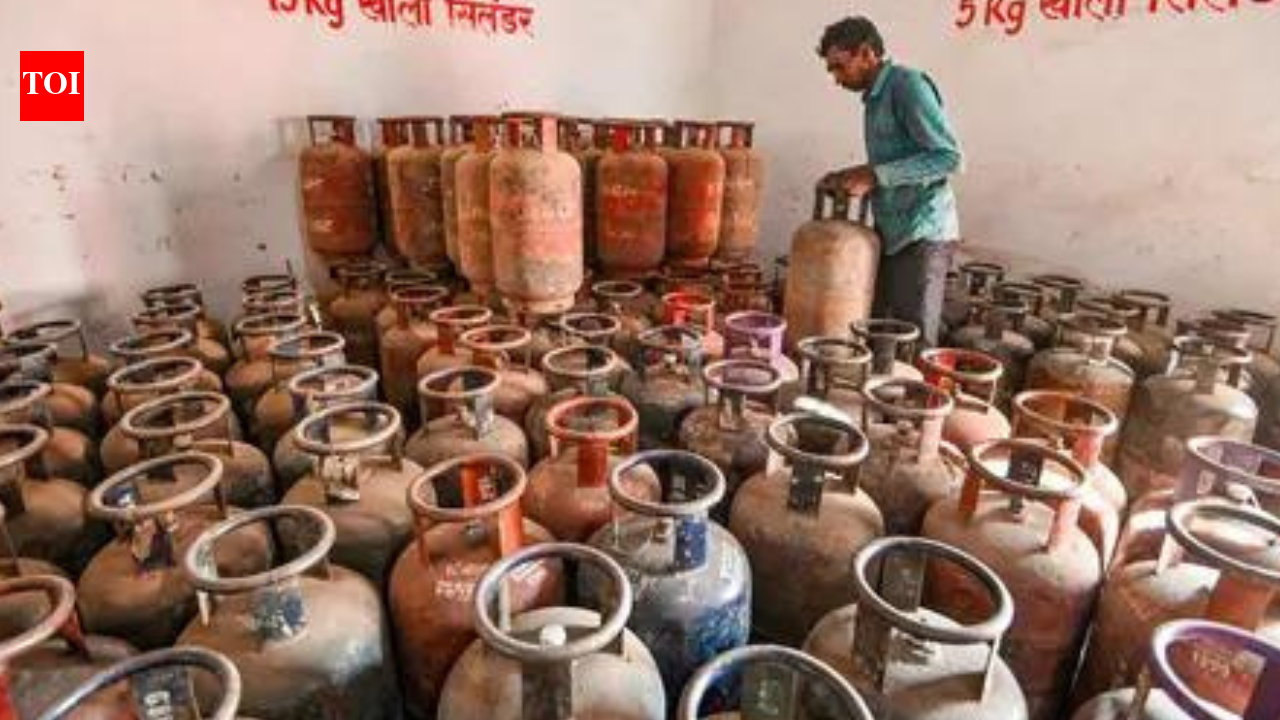
Representative image (IANS)

Pithoragarh: A 55-year-old manager of Kumaon Mandal Vikas Nigam (KMVN) gas agency in Champawat district died after returning from work on Sunday evening. His colleagues at the gas agency claimed that he consumed the poisonous substance because he could not cope with the work pressure due to the prevailing conditions in the country due to the conflict in West Asia. However, the family members denied this and said that the cause of death will be known after the postmortem report comes. On Monday, some KMVN employees went on strike and did not distribute cooking gas at some places in Kumaon. Co-workers claimed that the victim, Dayal Singh Rawat, had recently told his friend that “he was having a physical and mental breakdown due to too much work pressure and was facing heat from consumers and administration alike.”SP Rekha Yadav said that his death will be investigated. “Rawat’s family members did not say anything about consuming poison,” Yadav said. Rawat’s brother-in-law Rajendra Singh Bora told TOI on Sunday that he looked normal when he came home from work. Bora said, “He called me around 6.30 pm on Sunday evening and told me that he was going to the hospital to discharge his maternal uncle, who had undergone gall bladder surgery. Both returned after an hour. Rawat soon complained of uneasiness and asked his family to take him to the hospital, where he died.”Champawat police station in-charge BS Bisht said, “The district hospital informed us about Rawat’s death. The body was handed over to the family after postmortem, the report of which is awaited.”KMVN Pithoragarh gas manager Usha Rana said Rawat’s death was not due to work pressure, though she admitted that gas distribution workers are under pressure due to the current situation. This story was carried forward from the page 1 story in the newspaper. We have added it below for your reading convenience.‘Work pressure’: Gas agency MGR ends his lifeA 55-year-old manager of Kumaon Mandal Vikas Nigam Gas Agency in Champawat, Uttarakhand died after returning from work on Sunday. His colleagues at the gas agency claimed that he consumed poisonous substances because he could not handle the work pressure.

Source link