How to protect your money when the rupee is falling?

How to protect your money when the rupee is falling?

For a retail investor, the impact depends on what they hold and why the rupee is weakening in the first place.

The rupee is falling and your investment portfolio is at risk. India may be a fundamentally strong growth story, but you may get negative returns on your investments right now. As the US-Iran conflict impacted the economy dependent on fuel imports, the currency witnessed a sharp decline, requiring continued intervention by the RBI.Is the rupee’s depreciation impacting your investment returns? What should investors do to protect their portfolio in the current scenario? The first thing to understand is that basically, a falling rupee does not have a direct impact on your investments.However, it indirectly affects the performance of your investments through its impact on the economy, growth, inflation and others. A weak rupee increases the cost of imports, which could lead to inflation and impact interest rate policy. For a retail investor, the impact depends on what they hold and why the rupee is weakening in the first place.

What impact can falling rupee have on your portfolio?

As Nirav R Karkera, head of research at W by Grow, points out, for home equities, the impact is not uniform. Export-oriented companies, IT services, pharma and other businesses with dollar revenues may get some benefits. Import-heavy sectors, dollar-cost companies, or businesses taking foreign currency loans may come under pressure. A weaker rupee could also make Indian equities less attractive for FPIs as their dollar returns diminish, and this could increase volatility at a time when global risk appetite is already weak. Carcera says the main channels for fixed income are inflation and interest rates. If rupee weakness drives imported inflation through oil, commodities or other inputs, it could limit the RBI’s scope for rate cuts and make long-term debt more vulnerable.

So what should you do?

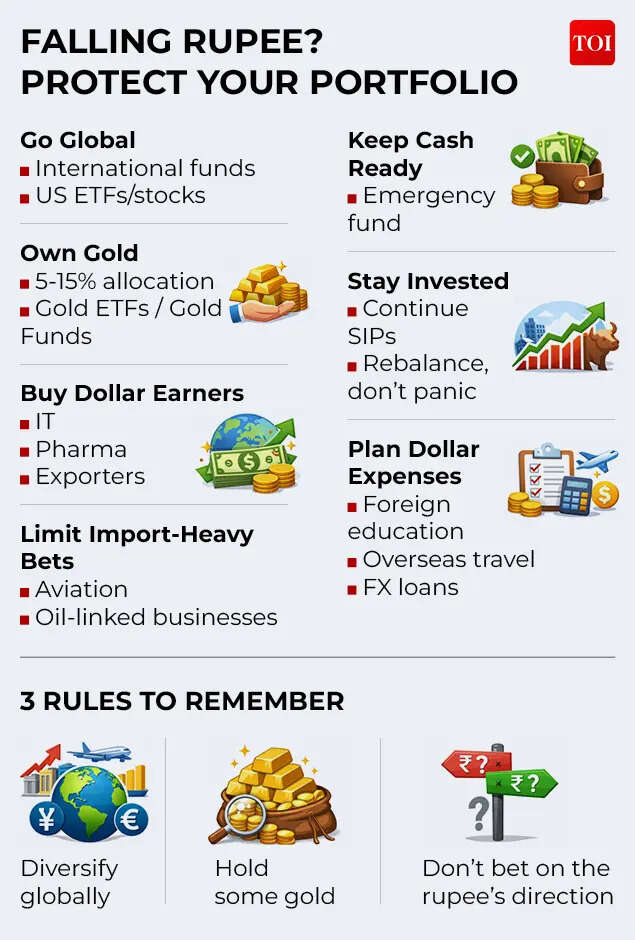
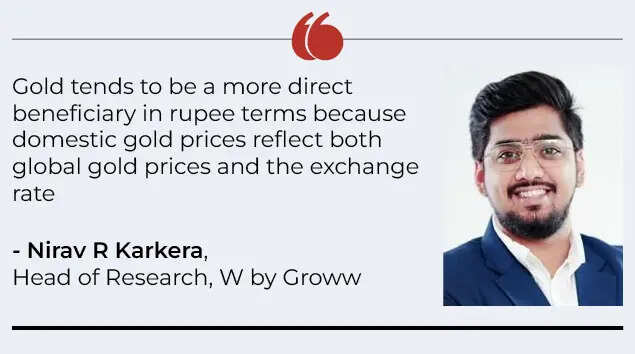
Many lessons can be learned for portfolio allocation and diversification amid global economic turmoil. Experts and financial planners TOI spoke to had some general tips to share:continue SIPdon’t chase currency movesExperts believe that one of the biggest mistakes investors make is taking drastic portfolio decisions after the rupee falls. Instead of panic-driven reactions, stay calm, invested for the long term. don’t ignore goldAt such times, gold acts as a portfolio insulator. With a falling rupee, gold has historically acted as a hedge during currency weakness, inflation and geopolitical uncertainty. Simply put, when the rupee weakens, domestic gold prices often get an additional boost from currency movements. Experts recommend adopting the digital route – ETFs, mutual funds – instead of physical gold.Nirav R Karkera points out that gold is a more direct beneficiary in rupee terms as domestic gold prices reflect both global gold prices and exchange rates. In the current environment, gold is also being supported by global risk aversion and central bank diversification. Karkera told TOI that gold should still be treated as a portfolio hedge and not a return guarantee.But Mukesh Kumawat, director, Anand Rathi Wealth Ltd, cautions. During these uncertain times, gold has traditionally served as a safe asset, however, with speculative activity, it has turned into a volatile asset in recent times. Therefore, while gold is an important portfolio diversifier, it should not be treated as a primary wealth producer.
Security of your portfolio

own some global assets like US stocksWhat the falling rupee does is that when it is converted back into rupees it automatically increases the value of foreign investments. Investors may consider allocating a portion of their equity exposure to international funds, ETFs or global stocks. For example, experts say US-focused funds can provide a natural currency hedge.Rohit Shah, financial planner, tells TOI that for most long-term investors, 15-25% in international assets is a reasonable range. The exact number should depend on goals (such as foreign education or retirement), risk profile, and overall portfolio size. “This allocation should be done gradually over time rather than making a big change after a sharp fall in the rupee. The idea is not to bet against India but to ensure that some portion of the money is in hard currencies and global businesses,” he told TOI.Nirav Karkera cautions: International exposure should be viewed first as diversification, and only then as currency hedge. International equities and dollar assets can benefit from rupee depreciation when translated back into rupees, but investors should remember that currency gains can be offset if the underlying asset performs poorly. So, the rupee is an important variable, but it should not become the sole reason for investment.
.

Export-Import Dynamics – Look for companies that benefit from rupee depreciationBe it IT services, pharmaceuticals or others – export-facing sectors become beneficiaries of the falling rupee. A significant portion of their revenues come from foreign markets and are earned in foreign exchange.On the other hand, experts say sectors facing pressure due to import dependence can be avoided. Higher import costs could impact profitability if companies cannot pursue growth.“A weaker rupee generally helps dollar-pegged assets. Foreign equity funds may also gain in rupee terms. On the other hand, many Indian companies face higher input costs on imports, which could hurt margins and sentiment. Over time, export-oriented businesses may gain competitiveness, while import-heavy sectors may struggle. Rupee weakness has been quite common over the decades; “The key is to plan around it and not try to predict every move,” says Rohit Shah.Mukesh Kumawat says when it comes to equities, export-oriented sectors like IT, pharmaceuticals and specialty chemicals may benefit from higher rupee earnings, while import-oriented sectors may face margin pressure due to rising input costs. Debt instruments, ETFs are in focusDebt instruments are not directly affected by rupee depreciation, however, a weaker rupee could contribute to higher inflation, pushing up interest rates and bond yields in the near term. Mukesh Kumawat says that this may create near-term instability in long-term debt funds.“On the other hand, foreign funds like international funds/ETFs can help investors benefit from the appreciation of foreign currencies and underlying asset performance against the rupee,” he says.Maintain Adequate Emergency SavingsA weak rupee could boost inflation by increasing the cost of imported goods, fuel and travel. Therefore, it would be wise to keep some emergency funds with you. Also, as experts have suggested – it is important to review your foreign exchange liabilities such as overseas education schemes, foreign currency loans and international travel commitments.

basic investing lessons

Analysts and experts are clear on one aspect: the falling rupee should not be seen as a single investment signal. Investors should consider that currency movements are often driven by temporary factors such as geopolitical events, oil price fluctuations, capital flows and global risk sentiment.
.

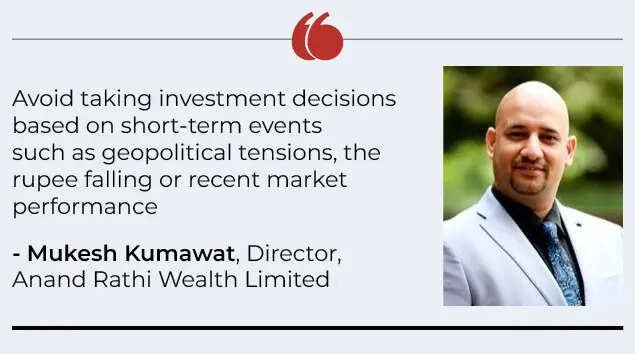
“If we look at the historical data of currency movements during geopolitical conflicts it is usually limited and temporary, in major conflicts since 1990, the average depreciation of the rupee during war periods was about 3 to 4% and in extreme cases like the Libyan civil war, the rupee weakened by about 10%, but eventually it recovered and over time, it has more impact on economic growth, inflation, capital flows, forex than just geopolitical events. “Will be driven by domestic macroeconomic fundamentals such as reserves and policy actions,” says. Mukesh Kumawat of Anand Rathi Wealth Limited.“Investors are suggested to avoid making investment decisions based on short-term trends and instead, are recommended to start building a strategy-based portfolio by diversifying 80:20 across equity and debt. And for equity exposure, investing in actively diversified equity funds helps to gain exposure across sectors, segments, and reduces the concentration risk associated with the performance of any one segment, and helps to ride out market cycles. Does,” he added.Experts urge investors to resist panic-driven investment decisions. Financial planner Rohit Shah says, “A very weak rupee will impact overseas education and travel costs the most, so more allocation to those goals may be required. Domestic equity returns may be muted or volatile for some time. It is a good idea to review asset allocation, stress-test your plan for flat or falling markets and check if you have enough “dry powder” in safe assets to weather the shock and deploy calmly when the opportunity arises.”Acknowledging that a move towards 100 would be psychologically important for the rupee, Nirav Karkera said this should not lead to panicked portfolio decisions.“The first step is to understand why the rupee is weakening. If the move is driven by a stronger dollar, oil prices, geopolitical risks or temporary FPI outflows, the portfolio reaction will be different from a situation where the weakness is driven by domestic macro tensions. “The reason matters more than just the rate,” Karkera tells TOI.For now, investors should focus on portfolio preparedness rather than forecasting. This, he added, means maintaining adequate liquidity, avoiding excessive concentration in long-term debt, maintaining some allocation to gold as a hedge and using international assets only where they fit into the long-term asset allocation.He advises, “Investors with known dollar expenses should not wait for the last minute. They should consider meeting those needs gradually through a planned and sequenced approach. Investors with only rupee liabilities should not rush into dollar assets as the currency is approaching a round number.”(Disclaimer: The recommendations and views given by experts on the stock market, other asset classes or personal finance management tips are their own. These opinions do not represent the views of The Times of India.)

Source link

3-year-old child kidnapped from Jamshedpur market rescued in Bengal, childless couple arrested. jamshedpur news

Three-year-old child kidnapped from Jamshedpur market rescued in Bengal, childless couple arrested

Jamshedpur: A three-year-old girl, who went missing from the crowded Sakchi market while she was shopping with her parents, was rescued from West Bengal’s Purulia district almost a fortnight later, police said on Wednesday. A childless couple has been arrested for child kidnapping.The accused, identified as Abdul Jasim alias Lakhan (42) and Afsana Begum (30), residents of Kapali in Seraikela-Kharsawan district, were produced in the court and remanded to judicial custody.The girl, Afreen, went missing from Sakchi market on May 26, following which a massive search operation was launched. Her father Mohammad Imtiaz, resident of Hayat Nagar of Dimna Basti, had lodged a complaint at Sakchi police station on the day of her disappearance.Acting on the instructions of SSP Piyush Pandey, the police formed a Special Investigation Team (SIT) under the leadership of DSP to trace the child. The investigators scanned footage from around 50 CCTV cameras in and around the market area, besides collecting technical and human intelligence inputs and interrogating several suspects.This success was achieved after the police reached Pusti village under Jhalda police station area of ​​Purulia district. SP (City) Lalit Meena said that the child was rescued after a raid was conducted on Tuesday and the couple was arrested.During interrogation, the accused allegedly confessed that they were childless for the last 10 years and had taken advantage of the crowd to abduct the girl from a crowded market area.Police have seized two mobile phones from the accused. Later, the girl was reunited with her parents after the necessary formalities were completed.(With inputs from PTI)

Source link

Divyanka Tripathi, Vivek Dahiya reveal that their newborn twins are very different from each other; They say, ‘How can it be that two new people are so different from birth?’

Divyanka Tripathi, Vivek Dahiya reveal that their newborn twins are very different from each other; They say, 'How can it be that two new people are so different from birth?'

Divyanka Tripathi and her husband Vivek Dahiya, who were recently blessed with twins, are thoroughly enjoying the phase of becoming parents. Divyanka recently shared adorable details about the contrasting personalities of her newborn twin sons. He also told that despite being born together, brothers and sisters are completely different from each other.The actress, who keeps sharing updates about her life through her YouTube vlogs, recently gave fans a glimpse of her life as a new mother. Divyanka spoke about how her twin sons have very different personalities and how they surprise her with their unique qualities every day.Talking about her twins, Divyanka said, “My darling babies look so good when they sleep. It seems nothing happened at night. There are a lot of false alarms. I am still understanding him, what is his nature, what is his mood. I want their sleeping, eating and drinking timelines to match. Dono are very different.” (My dear children look so cute while sleeping. It seems as if nothing happened during the night. There are a lot of false alarms. I am still getting to know his nature and mood. I want them to have the same sleeping, eating and feeding schedule. These two are very different. )He also expressed surprise at how different they were, saying, “How can it be that two new people come into your house and are so different from birth?” (How is it possible that two new people have come to your house and are so different from each other since birth?)After this, Divyanka described the personality of both the children and called the elder one T1 and the younger one T2.“Our T2 is an attention magnet. He gets attention automatically. And our T1 is just like an elder brother. T1 is like Shri Ram.” (Our T2 is an attention magnet. He automatically attracts everyone’s attention. And our T1 is just like a big brother. T1 is like Shri Ram.)Elaborating further, she said, “He just takes the feed and rests. He will feed on time and won’t even disturb me.” (He just takes his food and relaxes. He eats on time and doesn’t bother me at all.)Divyanka further said about her younger son, “And this is our T2 brother. After some time, he starts mischief. He needs feed and falls asleep as soon as he takes the feed.” (And this is our T2 brother. He starts being naughty after some time. He wants his food and often falls asleep while eating.)Let us tell you, Divyanka Tripathi and Vivek Dahiya recently welcomed twin sons in the month of May. After 10 years of marriage, the couple became parents of twins. Divyanka announced her pregnancy by launching her YouTube channel and she has been sharing pictures from her motherhood journey with fans through social media and vlogs.

Source link

Sonakshi Sinha shares heart-touching vacation video with Zaheer Iqbal, quotes Shah Rukh Khan’s iconic dialogue.

Sonakshi Sinha shares adorable vacation video with Zaheer Iqbal, quotes Shah Rukh Khan's iconic 'Pyaar Dosti Hai' dialogue
Mumbai, June 10 (IANS) Actress Sonakshi Sinha has shared a heart-touching video with her husband Zaheer Iqbal.

Actress Sonakshi Sinha has shared a heart-touching video with her husband. zaheer iqbal.Along with the clip, the ‘Akira’ actress referenced Shah Rukh Khan’s iconic dialogue, “Pyaar dosti hai”, highlighting the bond of friendship and love that defines their relationship. Taking to Instagram, Sonakshi posted a video in which she and Zaheer are seen enjoying every moment of their holiday. The clip shows the couple having fun together and enjoying the ride to the fullest.For the caption, the ‘Dabangg’ actress wrote, “A wise man once said…love is friendship.”Yesterday, Sonakshi Sinha released a playful video in which she was seen sitting by the pool before Zaheer playfully pushes her into the water. While sharing this funny video, he wrote, “Nowhere is safe.”To note, “Pyaar Dosti Hai” is a memorable dialogue spoken by Shah Rukh Khan’s character Rahul Khanna in the 1998 hit “Kuch Kuch Hota Hai”. This line beautifully captures the essence of love inherent in friendship and has become iconic for an entire generation.Earlier this month, Sonakshi celebrated her 38th birthday in the UK with Zaheer Iqbal and close friends. Sharing glimpses of the celebration on social media, she thanked fans and wrote, “Thank you all for all the love on my birthday, I enjoyed it in real time and it was the best!!! 02.06.2026.”Zaheer Iqbal also celebrated Sonakshi’s birthday with a social media post. She shared a collection of photos and videos from the ceremony, capturing memorable moments from the special day. The glimpses showed the actress celebrating with Zaheer and his close friends.He captioned the post, “I love you my birthday girl.”Let us tell you that Sonakshi Sinha tied the knot with Zaheer Iqbal on June 23, 2024. The couple opted for an intimate registered wedding ceremony at Sonakshi’s Mumbai home, which was attended by only close friends and family.

Source link

Did NTA tamper with NIFT Result 2026? Students allege irregularities in scorecard, attendance irregularities

Did NTA tamper with NIFT Result 2026? Students allege irregularities in scorecard, attendance irregularities

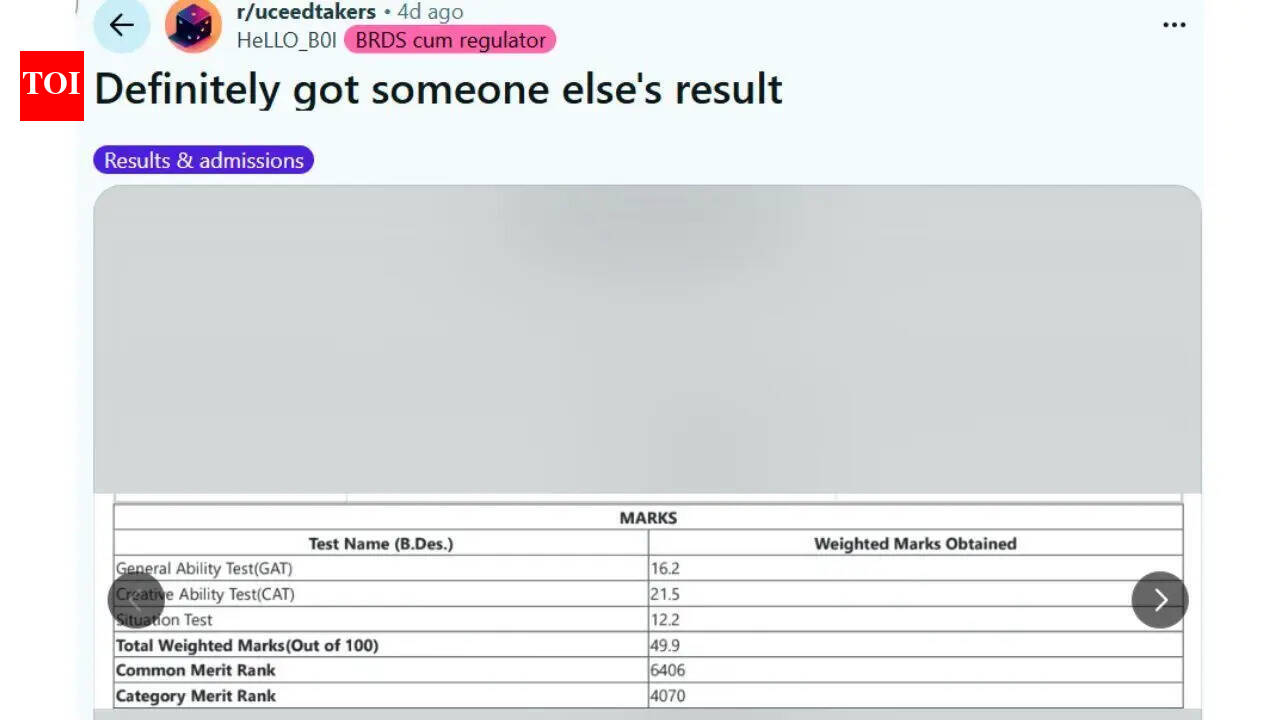
National Testing Agency (NTA) is once again facing criticism as a section of candidates appearing in the National Institute of Fashion Technology (NIFT) entrance exam 2026 have alleged irregularities in their results.NIFT 2026 final results for undergraduate and postgraduate programs were declared on June 3. Soon after the results were released, students started sharing posts on Reddit and other social media platforms claiming that their marks, rankings and attendance records did not match their actual performance in the exam. The complaints being widely discussed online include alleged errors in situation test marking, unexpected CAT and GAT scores, attendance mismatches and concerns over biometric verification processes.Many students claimed that they received unusually low situation test scores despite performing well. Others alleged that their GAT scores did not match the calculations based on the official answer key released by the NTA. One candidate claimed, “I had 733 AIR in UCEED, 35/100 in NID prelims. How did I get 6000+ rank in NIFT? I am not saying that I deserve to get less than 100 rank, but I am definitely able to get below 1500. My result has definitely been messed up by NTA. They were saying some technicalities a few days before the result. There were difficulties.”Social media posts have also highlighted cases where candidates who appeared for the exam were allegedly declared absent, while some candidates who did not appear reportedly received marks on their scorecards. “I took the drop for NIFT and still got 7k+ rank,” wrote a Reddit user.Students have further alleged that biometric identification and photo verification was either not done properly or skipped at some examination centres. The concerns have led many candidates to demand a review of the attendance records and score calculations. Students are also seeking clarification from both NIFT and NTA regarding the alleged discrepancies.This controversy has come at a difficult time for NTA. The agency is already under intense scrutiny after NEET UG 2026 was canceled following the investigation of alleged paper leak. As of now, NTA has not issued a public response on specific allegations regarding NIFT 2026 scorecard, attendance records or biometric verification.

Source link

Lavani, drag and drama: Pune Satrang Utsav celebrates quirky stories. pune news

Lavani, drag and drama: Pune Satrang Utsav celebrates quirky stories
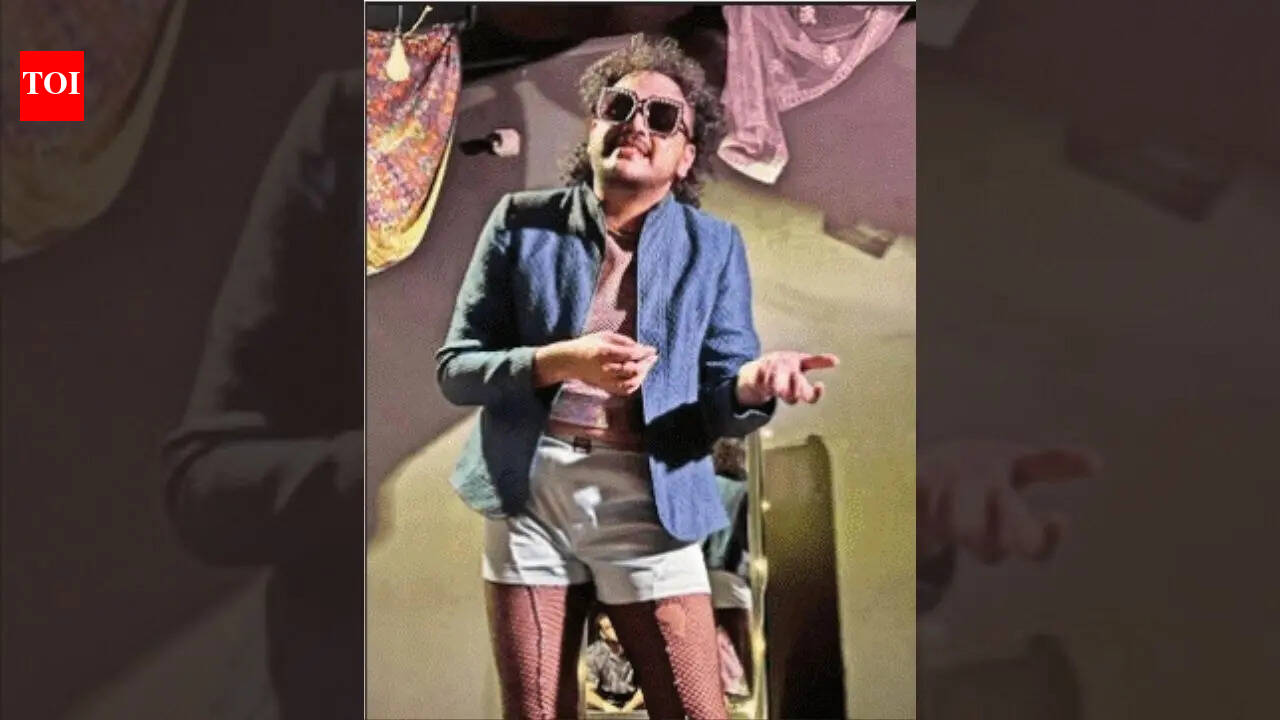
Scenes from Ahon Guptu’s drag drama ‘Item’ (Photo Credits: Nayanthara Majumdar)

Pune: For six days this June, Shriram Lagoo Rang-Akaash will become a space for quirky storytelling, performance and dialogue as Satrang Mahotsav 2026 will bring together theatre-makers, dancers, drag artists and writers from across India.Running from 16 to 21 June, the festival presents a packed program of plays, workshops, panel discussions and performances exploring queer lives and experiences.Productions range from traditional Lavani and contemporary dance to drag, devised theatre, and experimental performances, reflecting the breadth of artistic practices within India’s LGBT community.According to festival director Deepa Dharmadhikari, every playwright, director and choreographer participating in the festival identifies as queer, representing a wide spectrum of gender identities and sexual orientations.Dharmadhikari said, “The festival has been created without institutional or corporate sponsorship. We are crowdfunding through the community because we wanted it to be a festival that is for, by and with the gay community.”The schedule includes “Romeo Ranjha”, “Jisman Ton Paar”, “Where’s SSS?” Such production is included. , “Colorful Lavani”, with workshops, drag performances and Lavani traditions.The play “Dirty Laundry 2.0,” directed and co-written by Gurleen Arora, was created in response to an art exhibit featuring queer artists, and has now been reimagined for the stage with a new cast that includes transgender and non-binary artists.Arora said, “We wanted to examine what home means to gay people and how they navigate relationships within domestic spaces. The play asks how much the gay experience has changed over the last 100 years, and how much remains surprisingly familiar. While today’s gay communities have greater visibility and access to resources, there can also be a deep sense of isolation.”“Item”, directed by Ahon Guptu, blends theatre, drag, dance, music and audience interaction. This production traces the journey of a drag artist as she reflects on identity, belonging and self-discovery.Guptu said, “The show moves between different moments of a person’s life. Each performance ended with a conversation with the audience because asking questions and creating a safe space for dialogue is central to the project.”

Source link

Real estate businessman shoots dead his second wife in Hyderabad. hyderabad news

Real estate businessman shoots second wife dead in Hyderabad
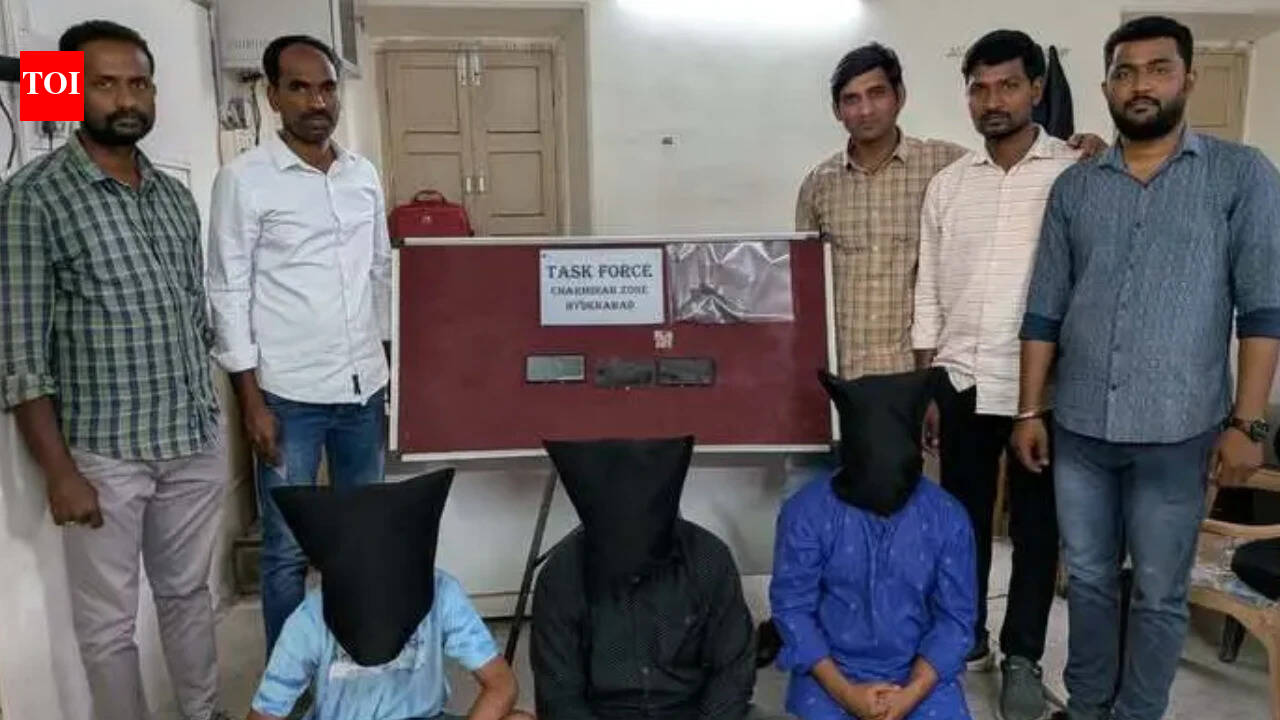
Police caught the accused

Hyderabad: A real estate businessman shot dead his second wife at their house in Malkajgiri in the early hours of Wednesday. The accused was arrested three months ago with an illegal gun when he was preparing to murder the victim.Accused D Arun Kumar, 48, a real estate businessman from Maruti Nagar in Malkajgiri, has two children from his first wife. Since his first wife was ill for a long time, Arun separated from her and married her sister Nishita Rani alias Nisha Rani five years ago.However, tension arises between Arun and Rani as she doubts his loyalty.After repeated disputes, Rani started living separately. Dissatisfied with Rani’s conduct, Arun decided to kill her and, using his contacts, obtained a country-made firearm from Munger in Bihar in March.While he was plotting to kill Rani with the illegal firearm, Charminar Task Force police, in coordination with Amberpet police, arrested Arun along with his associates, Mohammad Abbu, 26, a paan shop owner from Yapral and Mir Muzammil Ali Khan, 23, a student from Yakutpura, on March 9, 2026, at Ali Cafe X Roads in Amberpet.Police seized a country-made pistol, six live cartridges and a two-wheeler from their possession. Amberpet Inspector T Kiran Kumar said, “We have produced the accused in the court and they have been sent to judicial custody. Arun spent more than 40 days in remand.”Police have not yet filed a chargesheet in the case as the alleged arms suppliers have still not been arrested.Meanwhile, late on Tuesday night, Arun contacted Rani and asked her to come to his house to talk about family issues. Police said that during the meeting, Arun opened fire on Rani in the early hours of Wednesday and she died on the spot.Police suspect that Arun was with another accused at the time of the murder. After the incident, both the accused fled from the spot. Malkajgiri police launched a search operation to nab them. Rani’s body was sent for post-mortem and a case of murder was registered.

Source link

Bandra Waterfront redevelopment gains momentum, may emerge as major luxury housing hub. mumbai news

Bandra Waterfront redevelopment picks pace, may emerge as major luxury housing hub
AI image is used for representational purpose only

MUMBAI: A wave of large-scale redevelopment is gathering momentum on Bandra’s waterfront, with industry estimates suggesting that more than 140 acres of land could be transformed into a premium residential and mixed-use district over the next decade.According to a report prepared by Lighthouse Luxury and CRE Matrix, the proposed waterfront corridor, dubbed “Bandra Bay” by developers and consultants, is expected to have a phased redevelopment of approximately 8 million square feet of real estate, with an estimated development potential of over ₹1 lakh crore.The emerging micro-market is being driven by redevelopment projects, proximity to the Bandra-Kurla Complex (BKC) and a series of infrastructure projects in the Mumbai Metropolitan Region. Industry estimates indicate that BKC could add approximately 7 million sq ft of Grade A office space over the next five years, potentially driving demand for premium housing in the surrounding areas.The region is also expected to benefit from major connectivity projects including the coastal road network, metro expansion, Atal Setu, Mumbai-Ahmedabad Bullet Train Corridor and airport-related transport infrastructure. Better connectivity between Bandra, BKC, South Mumbai and other business districts is seen as a key factor supporting redevelopment activity.Among the biggest projects planned in the area is the redevelopment of Nargis Dutt Nagar, which is being carried out by Godrej Properties in partnership with ORA Group and RC Group. The project is estimated to have a revenue potential of approximately ₹10,000 crore and will be developed in phases.Urban planners and real estate consultants say large-scale redevelopment presents a rare opportunity to create modern residential communities in a city where developable land remains scarce. However, they caution that the long-term success of the emerging district will depend on timely implementation of redevelopment plans, delivery of supporting infrastructure and sustained demand in the housing market.Market observers say strong demand remains in established luxury locations such as Carter Road and other seaside areas, but future growth in Mumbai’s premium housing segment may come from urban districts led by rapid redevelopment.The report’s authors drew parallels with waterfront developments such as Marina Bay in Singapore and Dubai Marina in Dubai, arguing that investment in infrastructure and mixed-use planning could reshape underutilized urban land over time.Speaking at the launch of the report, Sumesh Mishra, Founder, Lighthouse Proptech, said the waterfront corridor is attracting increasing interest from developers, investors and home buyers due to its location and redevelopment potential.Maharashtra minister Ashish Shelar had earlier described the Bandra-BKC catchment area as an area capable of developing into a modern urban district, integrating infrastructure, culture and economic activity.MHADA vice-chairman and CEO Sanjeev Jaiswal said the redevelopment under the cluster development framework was aimed at improving roads, open spaces and connectivity while supporting planned urban growth. “Planned under the cluster development framework, Bandra Bay is more than a real estate initiative. It is a blueprint for urban renewal integrating wide roads, open spaces and future-ready connectivity,” he said.

Source link

Hardik Pandya to miss Afghanistan ODIs due to low-grade quadricep sprain cricket news

Hardik Pandya to miss Afghanistan ODI due to low-grade quadricep sprain
India’s Hardik Pandya (PTI photo)

TimesofIndia.com in Mullanpur: hardik pandya Will miss the upcoming three-match ODI series against Afghanistan due to a low-grade quadriceps sprain. It is understood that the premier all-rounder’s fitness was at peak and he had been training rigorously at the BCCI Center of Excellence since June 2. He was scheduled to join the Shubman Gill-led team in Dharamsala on June 11, but a late setback will force him to stay in Bengaluru for at least two more weeks.“It has been a very late setback. He has suffered a mild, mild quadriceps sprain, which has caused some discomfort. It is not long-term, but the medical staff has advised him to avoid any strain or weight lifting for the next few days. Hardik will be in Bengaluru and will be consulting the COE physio and trainers during his recovery phase,” a BCCI official told TimesofIndia.com.It now remains to be seen whether the thinktank selects a replacement for the 32-year-old, who was set to make a comeback in the format after more than a year. The team management has already been informed. Some members of the ODI squad are scheduled to join the team in Mohali on Wednesday and will have an optional training session at the IS Bindra Stadium before leaving for Dharamshala on Thursday.

Source link

Reliance and Meta to develop AI-enabled data center in Jamnagar

Reliance and Meta to develop AI-enabled data center in Jamnagar

New Delhi: Reliance Industries Ltd on Wednesday signed a contract with Meta Platforms, Inc. for a data center project in Jamnagar, Gujarat. Announced a partnership with RIL, positioning RIL as a single-window solution provider for hyperscale AI infrastructure in India. RIL will develop a 168 MW capacity data center within two years, with the option of scaling up. This will be the first build-to-suit data center capacity in India for Meta to lease capacity from the facility, marking an important milestone in Meta’s global infrastructure expansion and deepening its strategic partnership with Reliance that spans connectivity, commerce and AI innovation.Mukesh D Ambani, CMD, RIL, said: “This partnership with META is a transformative moment for India’s digital infrastructure. The construction of India’s first build-to-suit data center for a global technology leader of Meta’s scale reflects India’s readiness to be at the forefront of the global AI revolution. At Reliance, we are committed to building world-class digital infrastructure that will power the next generation of AI innovation – not just for India, but for the world. Jamnagar will become a landmark destination for hyperscale AI computing, and we are proud to partner with Meta to make this vision a reality.Mark Zuckerberg, Founder and CEO of Meta, said: “We are proud to work with Reliance to build our first AI-enabled data center in India. This world-class facility in Jamnagar will help us scale our AI infrastructure globally while deepening our long-term investment in India’s economy.”The data center will serve Meta’s global infrastructure, supporting its core business and AI computing needs, underscoring India’s growing role in the digital and AI ecosystem around the world. Under the agreement, RIL will provide comprehensive end-to-end services across the entire lifecycle of the data center – from design and construction to ongoing management of utilities, renewable energy supply, network connectivity and fully managed operational services.RIL said in a statement that the data center will be powered by renewable energy and cooled by desalinated seawater. This partnership is in line with the priorities of the Government of India that designates data centers as strategic national infrastructure and introduces a long-term policy framework to attract global AI infrastructure investments in India.

Source link