


‘MAGA is super stupid’: Indian man dupes Republicans with AI-generated model, makes thousands of dollars

AI-generated model ‘Emily Heart’ created by 22-year-old Indian
A 22-year-old aspiring orthopedic surgeon from India said he received some financial help from his parents, but most of it went towards examination fees and medical licensing costs. With plans to eventually move to the United States after graduation, he began looking for ways to make extra money online.The man used the pseudonym Sam to protect his identity and future immigration prospects. He experimented with several online income streams, including creating YouTube shorts and selling study materials to other medical students. None of them made much money.In an interview with Wired magazine he said he then started creating AI-generated influencers on Instagram using Google’s Gemini and Image tools. At first, he posted generic images of a “hot girl”, but said content failed to gain popularity. According to Sam, he asked Gemini for advice and was told that it was harder to compete in the general influencer-dominated space, and that niche audiences performed better.

AI suggests MAGA men are easier to target
He said the system suggested targeting the “MAGA/conservative segment”, calling it a “cheat code”, and claimed that such audiences are more active on social media and spend more money. Google has denied this, saying that the model is designed to provide neutral feedback.Next, Sam created an AI model named Emily Hart, a supposed American nurse with a typical conservative lifestyle and interests like religion, firearms, and country living. The character’s posts revolved around pro-Christian, pro-gun, anti-woke, and anti-immigration messaging, which he said helped the account grow rapidly. It was inspired by American actresses Jennifer Lawrence and Sydney Sweeney.They posted content daily that was designed to attract engagement, including slogans and political statements that would appeal to American conservative culture. The strategy turned the account into a viral success in just a few weeks.Sam claimed that the Instagram account rapidly gained thousands of followers and some videos got millions of views. They later monetized the traffic through subscription platforms and merchandise sales, earning a few thousand dollars per month. Instagram initially failed to label the content as AI-generated, allowing it to expand further before the account was ultimately removed for “fraudulent” activity.

‘Arrest first, plan later’: Lawyer of arrested Indian-origin Texas woman Meenu Batra says Trump 2.0 is using legal loophole

Her lawyer Deepak Ahluwalia said that Meenu Batra has never been called to the ICE office in the last 26 years.
Since the Department of Homeland Security considers Meenu Batra an illegal alien from India, her lawyer Deepak Ahluwalia said no due process was followed in the arrest of Batra, a legal interpreter who has been working in the US since 1992. In an interview with CNN, Ahluwalia said that Meenu Batra had not been asked to appear at any ICE office in the last 26 years and suddenly without any prior notice, she was arrested at an airport while she was traveling for work. DHS said Batra came to the United States illegally at an unknown date and location and was granted a final order of removal in 2000.Ahluwalia said Batra was granted a stay of deportation, which meant he could not be deported to India. But Trump 2.0 added a loophole that if a person cannot be removed to their home country, they can be deported to a third country, Ahluwalia said. But the administration has not revealed what they plan to do next as they make arrests first and plan later. Ahluwalia explained that when a person is granted status that means he or she cannot be removed from the country from which he or she came, he or she can remain in the U.S. unless DHS files a case in the same court that granted relief to reopen the case. This happens only when there is a serious case against the person.Another possibility is that DHS may request to reopen the case, citing changed circumstances in that country. But DHS did not follow these proper procedures in Meenu Batra’s case. Ahluwalia said the administration is doing this in many cases where they are trying to take people to a third country.The lawyer said DHS cannot send Batra to India but did not say where they plan to send him.Meenu Batra, 53, came to America in 1991 after her parents were murdered in India. She spent most of her life in America, married, gave birth to four children, and continued to work as an interpreter, knowing Hindi, Urdu, Punjabi and English. He was arrested at Harlingen International Airport on March 17 and has been in ICE custody since then.

A mysterious German skull found in 1973 was once thought to be a Neanderthal hybrid; The truth revealed by the new study. world News

In 1973, a partial human skull was found in Hannofarsand, Germany, during archeological work. It had no obvious cultural objects nearby, making initial classification difficult. At first glance the bone looked unusual. Its shape had features that resembled partly Neanderthal and partly modern humans. That observation led some researchers to suggest a possible hybrid origin between Neanderthals and Homo sapiens. This idea attracted attention because both species are known to overlap in parts of Europe and the Middle East. Over time, the interpretation changed as new dating methods and analyzes were applied. What once seemed like a rare hybrid case now appears to be somewhat more common within modern human diversity.
hanofersand skull discovery of the frontal bone and early neanderthal hybrid written
According to the scientific report titled, Morphological analysis of a modern human frontal bone from Hanaufersand, GermanyThe fragment was of a frontal bone, which was found in northern Germany. It was not the entire skull, only a portion of the upper part of the forehead. The context became unclear due to the lack of surrounding artifacts. No equipment. No buried objects. Just bones.At that time researchers had limited material to work with. He focused on shape and structure. The specimen showed features that seemed unusual compared to typical modern human skulls from the same period. Preliminary studies described the bone as a mixture of Neanderthal and Homo sapiens features. This timing appears to have been favorable to early assumptions about interbreeding between the two groups. Radiocarbon dating at one stage put the specimen at about 36,000 years old. That period corresponds to known contact between Neanderthals and modern humans.Because of this, the idea of hybrid took hold. This was not an absurd claim at that time. Interbreeding is well established in genetic evidence today. Small percentages of Neanderthal DNA are still present in most non-African human populations.
New dating evidence completely rewrites the timeline
Subsequent analyzes changed the picture substantially. More sophisticated dating methods revealed that the bone is much younger than previously thought. According to estimates it is 7,500 years old. By that time, Neanderthals had already been extinct for thousands of years. No direct overlap existed anymore. A hybrid origin became unlikely on the basis of time alone.Instead this specimen fits into the Mesolithic period, a stage of human history marked with tool use and social structures developed by modern Homo sapiens populations living across Europe.
3D analysis confirms bone belongs to modern human variety
A recent study applied three-dimensional comparative techniques. The bone was measured and compared with a large dataset of Neanderthal and modern human skulls from different periods.The results placed the Hanofersand frontal bone firmly within modern Homo sapiens diversity. Not intermediate. Not mixed. Within the range of normal human skull variation.The researchers noted that the first impressions of “Neanderthal-like” traits may have come from its shape appearing slightly unusual compared to some reference specimens. But that variation also exists in modern populations, including medieval and Holocene skulls.
Genetic evidence confirms ancient hybridization between species
Neanderthals and modern humans interbred in the past. Genetic evidence clearly supports this. This probably occurred in many areas, especially in the Middle East about 100,000 years ago, and later in parts of Europe. Mixed traits have existed in some populations for thousands of years. Fossil remains found at some cave sites indicate a possible mixture of cultural and biological characteristics.Nevertheless, those cases date from a time period long before the discovery of the Hanofersand. By the time this frontal bone was formed, Neanderthals did not exist. During the Mesolithic period the population landscape throughout Europe shifted entirely to Homo sapiens groups.

$97 million liquor fraud scheme: UK national sentenced to 10 years in US for defrauding 140 people worldwide

A United Kingdom citizen has been sentenced to 10 years in prison in the United States for his role in a multimillion-dollar fraud scheme that defrauded investors into financing a fake fine wine business.James Wellesley, also known by the aliases “Andrew Fuller” and “Andrew Templer”, was sentenced in federal court in Brooklyn. He was also ordered to forfeit $1 million, with compensation to the victims to be determined at a later date.Wellesley was convicted of wire fraud conspiracy involving a fraudulent investment operation that defrauded more than 140 victims worldwide of more than $97 million.In announcing the sentence, U.S. Attorney Joseph Nocella Jr. said, “Unlike a good vintage that gets better with time, the defendant will spend years in prison to reflect on his fraudulent wine scheme. James Wellesley set out to inspire investors around the world to invest millions of dollars in lies.”FBI officials said James tarnished the reputation of a prestigious wine industry: “James Wellesley swindled nearly $100 million from investors by pretending to be an executive broker for the finest wine collections. Wellesley tarnished the reputation of a prestigious industry as well as the trust of his customers. The FBI continues to stop fraudulent schemes that steal from victims’ wallets.”The fraud ran from June 2017 to February 2019. During this period, Wellesley and his co-conspirator Stephen Burton operated through a company called Bordeaux Cellars, presenting it as a legitimate wine investment business.He told investors that the company arranged loans between wealthy wine collectors and investors, using expensive wine as security. Investors were promised regular interest payments, and Bordeaux cellars would keep the wine safe.However, prosecutors said these claims were not true. Wealthy borrowers did not exist, and wine was never actually put up as security. Instead, the money from the new investors was used to pay off earlier investors and for personal expenses.Victims initially received “interest payments”, allowing many to reinvest their money. In reality, these payments were funded by fresh investor cash rather than actual returns.Of the more than $97 million raised, only $14 million was returned to investors before the scheme collapsed, bringing losses to more than $83 million.Wellesley’s co-conspirator Burton pleaded guilty to racketeering conspiracy and money laundering conspiracy in July 2025 and is awaiting sentencing.
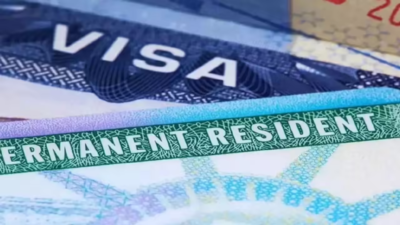
New update on Indian-origin man who changed name to live in US: Judge cancels Gurdev Singh Sohal’s citizenship
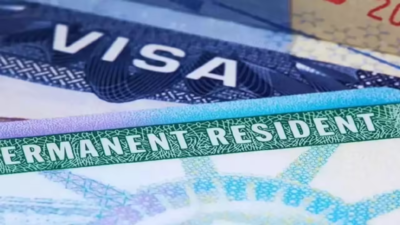
An Indian man became a US citizen by changing his identity in 2005 but was caught through fingerprints in 2020.
The Justice Department had filed a civil denaturalization complaint against an Indian-origin man who changed his identity to obtain US citizenship. A federal judge has ruled in favor of the DOJ and ordered him to revoke the citizenship of a man he said committed immigration and identity fraud.Gurdev Singh Sohal, also known as Dev Singh and Buta Singh Sundu, became a naturalized US citizen in 2005. After living in the US continuously for 3-5 years on a Green Card, a person becomes a naturalized citizen of the US.But Sohal was ordered deported in 1994 when he went by his first name, Dev Singh. Instead of leaving America, he took on a new identity, new date of birth, new date of entry into the United States, and became Sohal with an entirely new background. Sohal was naturalized under a new and assumed identity. Sohal concealed his prior immigration history under the Dev Singh identity in any of his immigration applications or proceedings under the new identity.In 2020, fingerprint analysts confirmed that the two were the same person.On April 13, the court found that Sohal obtained his US citizenship illegally because his unlawful acts by concealing his prior identity made him unable to show that he had inherently good moral character.“This case demonstrates the strength and commitment of this Administration to ensure the sanctity of American citizenship,” said Assistant Attorney General Brett A. Shumate of the Justice Department’s Civil Division. “The collaboration between the Department of Justice and the Department of Homeland Security reflects a strong partnership to protect the country from immigration and identity fraud.”Sohal’s case was the ninth denaturalization action since January 20, 2025, when the department filed it.
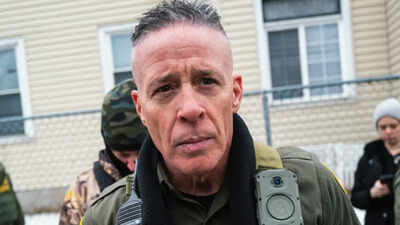
‘Make it harder for them to live and reproduce’: Greg Bovino says there are 100 million illegal people in the US and ‘they all need to go’
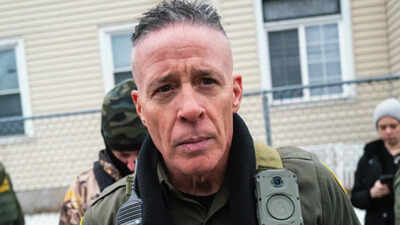
Greg Bovino was removed from his post in January following a controversial incident involving the deaths of two US citizens during a federal operation.
A former US Border Patrol commander has called for sweeping immigration measures, saying life should be made so difficult for undocumented immigrants that they are forced to leave the country.Greg Bovino, who recently retired, made controversial comments in a video interview in which he claimed that current anti-immigration enforcement efforts are not strong enough. He said, “We need an increase of DHS agents in all major cities. We need to make it so difficult for them to live, work, reproduce, do anything in the United States that they have no choice but to self-deport.”He also rejected the focus on targeting serious criminals, warning that it sends the wrong message. “They should have incentives to self-deport. Saying we are targeting ‘the worst people’ is signaling to most illegals that they are safe from deportation,” Bovino said.Going further, he claimed that the scale of undocumented immigration is much larger than publicly available statistics. “There’s still a lot of work to be done… They all need to go. We’re talking about potentially 100 million people who are still living here illegally.”Bovino previously played a key role in early immigration actions under President Donald Trump, overseeing operations in blue cities including Los Angeles, Chicago and Minneapolis. He was later reassigned to California following a controversial incident in January in which two US citizens, Renee Nicole Good and Alex Pretty, were killed by ICE agents.He retired at the end of March, after which his access to official government social media accounts was revoked. However, he has been active online through a personal account.In recent days, Bovino courted controversy for publicizing a blog post in which he was praised as “Commandant Greg Bovino” and his policies were described as “support for mass deportation.” The article was written under the name “Federale”, an anonymous person associated with extremist online content.The account that authored the article had a history of posting racist and anti-Semitic content, including praise of Adolf Hitler and use of offensive profanity. The anonymous author is linked to platforms associated with white nationalist views, the Daily Beast reports.This adds to Bovino’s earlier criticism. He has previously been accused of using offensive language about colleagues and appeared in a government video that criticized some of the imagery compared to Nazi symbolism.

76% of UK universities report decline in Indian student numbers as international enrollments fall 31% ahead of new visa rules World News

Enrollment of Indian students at UK universities has fallen, new data shows, with stricter visa rules leading to a wider decline in international postgraduate admissions.A survey by British Universities International Liaison Association found that 70% of UK universities reported fewer international students joining courses in January 2026, with total enrollments down 31% compared to the same period last year.The decline is also reflected in Indian students, with 76% of universities reporting lower enrollments from India. Similar patterns were seen across South Asia, where 82% of universities reported a decline in student numbers from Pakistan, where numbers fell by an average of 75%, while 65% reported a decline from Bangladesh. These markets are seen as higher risk under the evolving visa framework.The findings show that universities are already adjusting their recruitment strategies ahead of strict compliance measures. Nearly a third of institutions have restricted recruitment in certain countries, while 58% have strengthened credibility checks or interview limits. In a similar proportion higher deposits or stricter financial requirements have been introduced to reduce the risk of visa refusal.According to BUILA’s press release, from June, the UK government will introduce a traffic light system to assess universities’ compliance with visa rules. Institutions must keep visa denial rates below 4% to maintain a “green” rating. Those placed in the “amber” category will not be allowed to increase their international student numbers, raising concerns about future growth and competitiveness. Nearly half of the universities surveyed are expected to receive at least one non-green rating under the new system.Despite stringent internal controls, universities report continuing challenges in visa processing. Nearly 60% said they had seen higher than usual UK visa and immigration refusal rates during the January entry period. Additionally, 41% flagged delays and issues with interview scheduling, while more than a third raised concerns about inconsistent or unclear reasons for rejection, even if applicants meet expected standards.The sector has warned that these trends could discourage genuine students and affect the UK’s global position in higher education. Andrew Bird, president of BUILA, said: “The UK already operates one of the toughest student visa compliance regimes in the world, and our members fully support protecting its integrity. But the government keeps changing the goalposts.”He said: “If introduced as currently proposed, the new system risks significant reputational damage to our world-leading higher education sector. It could deter genuine students from applying.”BUILA has urged the government to refine the proposed system, including using “amber” ratings as a warning rather than a trigger for sanctions, and to improve transparency in visa decisions with clearer reasons for refusal and better early-warning signals for universities.

Indian man living in US on student visa convicted of defrauding elderly man by posing as federal employee

An Indian man living in the US on a student visa has been convicted of a major scam targeting elderly people.
Venkateswara Chagamreddy, a 27-year-old Indian man living in Texas on a student visa, has been convicted in Delaware County of defrauding a 79-year-old Vietnam veteran. In August 2025, the elderly man called a phone number he believed was Microsoft support. He was told that criminal activity had been detected on his computer and that a federal official would contact him to provide further advice.Another person called him, posing as a federal officer, and gave him the wrong badge number. The fake federal officer told the victim that his identity had been stolen and provided to criminals, resulting in him being “investigated” and his identity used to commit a federal crime.The victim was told that his money should be transferred to gold and deposited in the Treasury Department. The victim complied and handed over a large amount of gold to the fake officer.When the victim was contacted again for more money, he reached out to a family member who told him that he was being defrauded and that no government department would ask for gold from any individual. This time, Chagamareddy came to collect the package and was arrested. Evidence presented to the jury revealed that he had $500 in cash, a cell phone, and 23 ounces of gold in the vehicle.
Who is Venkateswara Chagamareddy? What is his gold scam?
While a big gold scam racket has already come under the radar of law enforcement, investigators said Chagamreddy was working with another co-conspirator. He was a courier man as he traveled across the states to pick up packages from victims. For example, when he was arrested, his messages proved that he had been in contact with several elderly victims. He even flew from Austin to North Carolina where he picked up the gold and then handed it over to a co-conspirator.On his trips, he would provide status updates, location, fuel levels to the co-conspirator.When he was arrested, Chagamreddy told law enforcement that he was in the United States on a student visa and was at risk of deportation after being suspended from school. He said that he had recently gone out of the state to join a different college and when he returned, the gold was in his vehicle.
Congressman Riley: Big Tech likes this system: Congressman Riley writes to DHS to end OPT; Claims 450,000 jobs were ‘stolen’ from Americans
Congressman Riley Moore urged DHS to end the OPT, STEM OPT Extension, and CPT programs.
GOP Congressman Riley M. Moore has written to new DHS Secretary Markway Mullin to eliminate the OPT, STEM-OPT and CPT programs to save jobs for American graduates. He is not the first person to raise the demand amid the ongoing H-1B controversy, but he detailed how these programs allowing foreign students to enter the workforce make a mockery of Congress’s original intent. The Congressman said, “At a time when new graduates are entering one of the most challenging job markets in recent history, it is troubling that corporations and universities continue to exploit nonimmigrant worker programs that replace American workers with foreign workers.”“For years, Big Tech lobbyists have quietly worked with the previous administration to turn ‘practical training’ programs into a backdoor pipeline for cheap foreign labor. They also urge DHS to secretly rewrite the OPT rules to avoid the H-1B cap intentionally imposed by Congress. “This regulatory trickery not only makes a mockery of Congress’s clear intent for the student visa program, but gives powerful corporations exactly what they want: an unlimited supply of low-wage, tax-advantaged workers to displace America’s own talent,” Riley wrote.
What are OPT, OPT Extension and CPT?
OPT (Optional Practical Training) is a temporary work authorization for F-1 students in the US that allows students to work in a job related to their studies for practical experience. Its validity is 12 months.STEM students get a 24-month extension on their one-year OPT.CPT (Curriculum Practical Training) is work authorization that is part of an academic program. Unlike OPT, it can be done only during the course. It is university approved and many people choose it when they get status in the US.Riley Moore said these programs are a good deal for foreign students to get practical training but over time they have become a bridge between temporary student visas and long-term H-1B status.Describing how the programs evolved, Moore said, “Since 1947, government programs have existed to provide opportunities for foreign students to gain experience, such as brief internships. But in 1992, the Bush administration quietly transformed those programs into the modern OPT, allowing foreigners to live and work in the US for a full year.”“By 2007, the H-1B visa limit was limiting Microsoft’s access to cheap foreign labor. At a dinner party in 2007, a Microsoft lobbyist proposed to DHS Secretary Chertoff that the H-1B problem could be solved by extending the OPT period. It worked. The 2008 Chertoff rule extended STEM OPTs to 17 months without any public notice or congressional approval. Nearly Eight years later, the Obama administration extended the OPT again, bringing the total period of stay in the US after graduation to 36 months,” he said, adding that about 450,000 foreigners hold jobs that should be held by Americans.He said, “Big Tech loves this system. Foreigners accept low wages. They can’t hold down jobs or ask for promotions. And almost every one of them is exempt from Social Security and Medicare taxes, saving billions.”

Claudia Glam: “There was a man involved in a fight”: Claudia Glam affair comes to light as friend Lala reveals hidden tension with Rieluke

The online storm over Claudia Glam’s tragic London incident has taken a new turn, as a close friend is coming forward with a version that challenges viral speculation. In a region where rumors spread faster than facts, LALA’s statement attempts to slow things down and focus on what she claims is a deep, long-standing conflict. Her account comes at a time when social media has been flooded with theories, many of them pointing to jealousy or a romantic fallout.Instead, LALA insists that the truth is much less sensationalist and far more rooted in history. Speaking in a video, she clarifies that she is not relying on old information. Her connection to Claudia, she says, gives her a first-hand view of events actually unfolding. At the same time, she chooses restraint, noting that she is only sharing limited details out of respect for the bereaved and those affected.
Claudia Glam’s friend LALA breaks silence, denies viral claims realuke Conflict
According to LALA, tension between Claudia Glam and Gabrielle Carrington, known online as RIELLEUK, didn’t erupt overnight. He claims the situation began with a small but impactful moment when Claudia unfollowed RIELLEUK on social media. What happened next, they allege, were messages and unresolved conflicts that quietly arose over time.LALA strongly refutes one of the most discussed theories online. “There was a man involved in a fight,” she says, “which is not true.” In his view, that narrative gained popularity because it is easy to sensationalize and easier still to misinterpret. She says that some people may be inserting themselves into the story and changing it to make it more dramatic.What he said points to a bigger problem with viral incidents. When there is not enough information, people make assumptions to fill in the blanks. In this case, LALA says the truth is more complex and less newsworthy. She says that the fight was not due to a sudden emotional outburst, but due to increased tension.As conversations are ongoing on various platforms, officials are yet to confirm the official reason. The investigation is still ongoing, so there is room for both caution and clarity. LALA’s story serves as a reminder that not every viral story tells the whole story.