BlackRock CEO Larry Fink has warned that oil could reach $150 due to the Iran-US war, which would lead to a ‘global recession’. world News

BlackRock CEO Larry Fink has warned that an Iran-US war could send oil to $150, causing a 'global recession'.
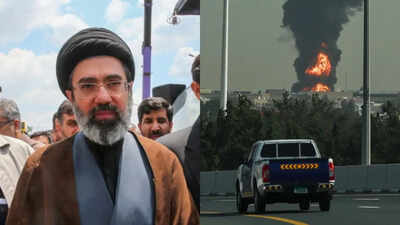
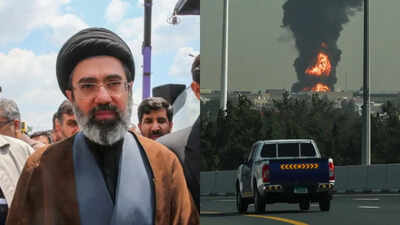
BlackRock CEO Larry Fink has warned that oil could reach $150 amid Iran-US war, causing a ‘global recession’/ Image: BBC

Amid escalating conflict involving Iran-Israel-US tensions, more than three weeks in the making now, Washington has deployed more than 4,000 marines to the region and is considering further military actions, even as talk of a ceasefire surfaces, with oil markets swinging sharply in response to both military developments and diplomatic signals.Larry Fink, one of BlackRock’s eight co-founders and now its chairman and chief executive, has warned that if Iran continues to threaten energy supply routes after the war ends, prices could rise to $150 a barrel and push the global economy into recession.

The conflict that will determine the direction of oil markets

BlackRock, the world’s largest wealth manager with approximately $14 trillion in assets, is one of the most influential financial institutions on the planet. Its immense scale and reach provides Chairman and CEO Larry Fink a unique vantage point on global events and their potential impact on the economy.But in an interview BBC’s Bigg Boss interview In a podcast published Wednesday, he said it was too early to determine the ultimate outcome of the war, but the direction of oil prices would depend on what happens next.If the conflict is resolved and Iran becomes a country that “can be accepted again by the international community,” he said, prices could fall below pre-war levels, which stood at about $70 a barrel.But that outcome depends on more than a ceasefire.

“Year above $100…Oil near $150”

Fink warned that even if the fighting stops, markets could remain under pressure if Iran continues to pose a threat to trade and regional stability, particularly around the Strait of Hormuz.“If the war ends, and yet Iran remains a threat, a threat to trade, a threat to the Strait of Hormuz, a threat to this peaceful coexistence of the GCC region, then I would argue that we could have oil from over US$100 to closer to US$150, which has a profound impact on the economy,” he said. He said such a scenario would amount to “possibly a severe and massive recession.”

Supply disruption focuses on a critical chokepoint

The warning comes as the conflict has virtually halted shipments of oil and liquefied natural gas through the Strait of Hormuz, a narrow passage that normally carries about a fifth of the world’s gas and crude supplies.The scale of the disruption has drawn concern from the International Energy Agency, which described the situation as “the largest supply disruption in the history of the global oil market”.

What to know about the Strait of Hormuz, a key route essential for global energy supplies

This image released by the Royal Thai Navy shows the Thai cargo ship, Mayuri Nari, which was attacked and set on fire in the Strait of Hormuz on Wednesday, March 11, 2026. (Royal Thai Navy via AP)

Brent crude prices have reached their highest level in nearly four years, at one point near $120 a barrel.However, prices fell nearly 4% to around $98 on Wednesday after reports that the United States had sent Iran a 15-point proposal aimed at ending the war, raising the possibility of a ceasefire.Iran has strongly rejected Donald Trump’s claims that talks are underway to end the ongoing conflict, with its top military command scoffing at Washington’s statements.In a video shared by Iranian media, a military spokesman rejected the suggestion and said the United States was effectively “negotiating with itself.” The spokesperson delivered a defiant message, emphasizing that Tehran had no intention of engaging in negotiations under the current circumstances.“Our first and last words… have been, are and will be: Someone like us will never compromise with someone like you. Not now, not ever,” the spokesperson said.Also, Washington has deployed more than 4,000 US Marines to the region and is considering sending a combat brigade from the Army’s 82nd Airborne Division, signaling a possible surge.

Infrastructure damage and recovery delays

Even if hostilities subside, energy supplies are unlikely to improve rapidly. Fatih Birol, executive director of the International Energy Agency, said more than 40 energy assets in nine countries in the Middle East were “severely or very severely” damaged, meaning oil fields, refineries and pipelines could not be immediately restored.

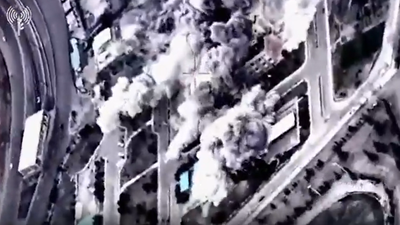
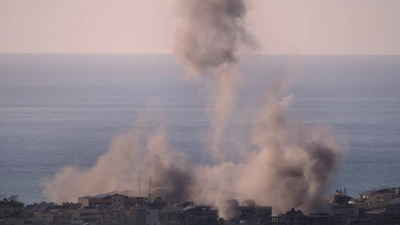
Photos from Iran, Israel and Lebanon in the third week of the Iran war

Residents watch and take photos as flames and smoke rise from an oil storage facility during attacks on the city during a US-Israeli military operation in Tehran, Iran, Saturday, March 7, 2026. (Alireza Sotakbar/ISNA via AP)

This destruction will prolong the disruption to global supply chains even after the conflict ends. Speaking at the National Press Club of Australia in Canberra on Monday, Birol compared the current situation to past crises: “The impact of the current disruptions is comparable to the two major oil crises in the 1970s and the natural gas crisis of 2022 following Russia’s invasion of Ukraine, taken together.” He said its impact goes beyond oil and gas. “Some important arteries of the global economy, such as petrochemicals, fertilizers, sulfur, helium, their trade is disrupted, which will have serious consequences for the global economy,” Birol said.

Impact on households and pressure towards alternative energy

Fink also warned that higher energy prices would have a direct and unequal impact on consumers, especially in import-dependent countries. “Rising energy prices is a very regressive tax. It hits the poor more than the rich,” he said. In the UK, where most of the country’s energy is imported, rising oil and gas costs are expected to hit household bills in the coming months. The pressure has already prompted some energy experts to call on governments to expand domestic oil and gas production to reduce the risk of external shocks.

Watch

Global recession if oil price reaches $150, boss of financial giant BlackRock warns. BBC News

Additionally, Fink said continued high prices could accelerate the shift toward alternative energy sources. “If oil prices go up to $150 you’ll have a lot of countries moving increasingly toward solar and maybe wind energy,” he said. “Use what you have unquestioningly, but also move aggressively toward alternative sources.”

Source link

No one is worried: Immigration lawyer asks companies to contact Congressman on delay in stamping H-1B visas in India

किसी को भी चिंता नहीं है: आव्रजन वकील ने कंपनियों से भारत में एच-1बी वीजा पर मुहर लगाने में देरी पर कांग्रेसियों से संपर्क करने को कहा

Immigration lawyer Emily Newman said that companies should contact their congressmen, senators and inform them about the delay in H-1B visa stamping in India which is impacting their business.

Immigration attorney Emily Newman said there is no possible solution to the current visa stamping delay situation in India because no one is concerned that thousands of H-1B visa holders are stranded in India. Companies should reach out to their congressmen and urge them to find solutions to the situation because businesses in the US are being affected, Newman said.“I don’t see anybody urging the State Department to improve the situation. Typically, we hear from members of Congress who urge the State Department to say, ‘Hey we need to open up more visa appointments because it’s hurting business, it’s hurting people’s ability to travel’ and I’m not hearing anything about that right now. There doesn’t seem to be any kind of concern, which tells me they’re not planning to improve anything.” Because it seems like no one is overly concerned about it,” Newman said. Companies should reach out to their congressmen and senators, let them know about the situation that’s affecting their business, their employees, the lawyer said. “Unless someone complains about it, the department doesn’t have an incentive to do anything,” Newman said. He said only the State Department and Secretary Marco Rubio can do anything about it. Immigration lawyer Rahul Reddy said that the Donald Trump administration cannot impose legal restrictions on H-1B and this is Donald Trump’s way of hindering H-1B visa holders. He said that the Trump administration has learned from their past mistakes and now they know that they can do more when visa holders are outside the US and not inside the US and so they advise visa holders not to travel outside the US. Currently, there is no interview date available in the four Consulates inside India, and the starting date of appointment is around March 2027. The situation stems from the department’s massive rescheduling of interview dates in December 2025 due to social media scrutiny of H-1B and H-4 visa holders. Since hundreds of Indians traveled to India during November, December and also scheduled their appointments at the embassy for new visa stamping during that time, they got stuck in India as they could not re-enter the US. Some companies allowed them to work from India but overall the situation is in limbo.

Source link

Which country in the world has 12 time zones despite not being the largest in size? world News

Which country, despite not being the largest in size, has 12 time zones in the world?

France has the most time zones of any country in the world, with a total of 12 time zones. It includes the mainland as well as overseas French territories, which are located in different parts of the world.While mainland France uses Central European Time, which is equivalent to UTC+1, overseas French territories are located in different parts of the world, including the Caribbean, the Pacific Ocean, the Indian Ocean, as well as near South America.Each of these places uses its own local time, which depends on geographical location rather than national time.Therefore, French time zones are distributed across different UTC offsets, and this is the primary reason why France has the largest number of time zones in the world, rather than the size of French land area.

How are France’s 12 time zones distributed?

France’s time zones are located in Europe, the Caribbean, South America, the Indian Ocean, and the Pacific Ocean. Each region is subject to a specific time zone based on their location in relation to Coordinated Universal Time (UTC).Guinness World Records Indicates that France covers 12 time zones. This figure may increase to 13 if other regional time differences are taken into account.Some of the time zones in France are French Polynesia, which is at UTC-10, Reunion, which is at UTC+4, New Caledonia, which is at UTC+11, and Wallis and Futuna, which is at UTC+12. This is because these places are far away from each other.

role of overseas territories

The overseas territories of France are the primary reason for the total of 12 time zones. Overseas territories include Guadeloupe, Martinique, French Guiana, Reunion, Mayotte, and French Polynesia.Each region has its own local time zone. The time zones of the regions are not adjusted based on mainland France, but rather on the longitude of the region.Due to the regions’ location in the Eastern and Western Hemispheres, they cover a wide range of UTC offsets.

How are time zones determined?

Time zones are also based on the Earth’s rotation and are expressed in terms of Coordinated Universal Time (UTC). The Earth is divided into 24 main time zones, each representing 15 degrees of longitude.Countries use different time zones depending on their geographic location, but administrative actions also affect the use of time in a country.In the case of France, different foreign countries use different time zones according to their geographical location.

Comparison with other countries

France has the most time zones compared to other countries. Russia and the United States each have 11 time zones.Russia spans 11 time zones from west to east across its continuous landmass. The United States spans more than 11 time zones across its land and other territories, including Alaska and islands in the Pacific Ocean.Other countries with overseas territories, such as the United Kingdom, have fewer time zones.

Why does France have the highest number?

France’s 12 time zones are a result of the global distribution of its regions. This is because these areas are spread over greater longitudinal distances than other countries.As a result, longitudinal differences within a nation lead to different time zones, as time zones are a result of longitude.Each region uses its own standard time, which contributes to the total number of time zones.

Source link

Iran claims to have ‘successfully targeted’ American F-18 fighter jet, shares video

Iran claims to have 'successfully targeted' American F-18 fighter jet, shares video
Video shared by Iran’s Press TV

Amid the ongoing conflict in the Middle East, Iran on Wednesday claimed that it has shot down an American fighter plane. Iran’s state-affiliated media Press TV shared footage showing an apparent crash on X. In the clip, a jet (Iran claims it is a US F-18) is ‘successfully’ shot down. Iranian media shared the video, saying, “Iran’s Islamic Revolution Guards Corps (IRGC) has announced that it has successfully targeted an American F-18 fighter jet.”It came just hours after Iran rejected a US proposal on a “ceasefire” and warned that attacks would continue until its own demands were met. Iran has rejected the US’s 15-point proposal, saying any ceasefire would only be on its “own terms and timeline”, a senior official told Press TV. “Iran says it will end the war when it decides, not when Trump imagines it ending,” the official said.

Watch

Iran ordered to end the game: demanded closure of US bases in the Gulf, lifting of sanctions and control over Hormuz.

Tehran’s conditions include a halt to attacks, guarantees against future conflict, war damage compensation, an end to hostilities on all fronts and recognition of its sovereignty over the Strait of Hormuz.Lieutenant Colonel Ibrahim Zolfgari warned, “Don’t wear your defeat as a compromise. The era of your empty promises is over.”As far as shooting down American planes is concerned, Iran also claimed on Sunday that it intercepted and attacked an ‘enemy’ F-15 fighter plane flying near Hormuz Island. Iran’s air defense command said it intercepted an enemy fighter jet and fired surface-to-air missiles hours earlier near the country’s southern coast and the island of Hormuz, and an investigation was underway to determine what happened to the plane, state-linked media reported.

Source link

US Army has increased the recruitment age from 35 to 42, opening doors for older recruits in major recruitment.

US Army has increased the recruitment age from 35 to 42, opening doors for older recruits in major recruitment.

In a significant change aimed at boosting recruitment, the US Army has raised its maximum enlistment age from 35 to 42, increasing the pool of eligible candidates and aligning itself with other military branches.The revised policy applies to the Regular Army, Army National Guard and Army Reserve. According to officials, the move is part of a broader effort to address persistent shortfall in recruitment targets over the past few years.Along with the age extension, the Army has also relaxed rules for persons with minor drug-related offences. People who have a single conviction for marijuana possession or related paraphernalia can now be admitted without needing a special waiver, a process that previously involved long waiting periods and additional approvals.

Why the sudden change?

The Army has struggled to meet its recruitment targets, missing targets in consecutive years. Analysts and military officials point to changing demographics and rising career expectations among younger generations as major challenges.Interestingly, the average age of recruits is already increasing. In 2024, the general intake was about 22, a figure that is continuously increasing.Experts believe older candidates can bring valuable benefits. Studies and recruitment data show that they often perform better on aptitude tests, demonstrate greater focus, and are more likely to stay in the service longer or earn promotions.

Older Recruits: A Mixed Bag

While the older enlistees provide maturity and experience, this change is not without drawbacks. The data highlights that they may face higher dropout rates during basic training and may see slightly higher attrition overall.Still, military planners appear willing to accept that tradeoff in exchange for stronger skill sets and professional experience.

Focus on skills, not just strength

The policy change reflects broader changes in the Army’s requirements. Modern warfare depends on technological expertise, from artificial intelligence to space missions.Executives have stressed the importance of attracting candidates with specific skills. The Army has expanded pathways to professionals in technical fields and aims to significantly increase the number of personnel with college degrees.Recruitment messaging has also been revamped to attract Gen Z, while new pre-training programs help candidates meet fitness and academic standards before formal recruitment. Military leaders say the changes highlight a shift toward creating a more capable and technically proficient force.

Source link

Is this the world’s oldest tweet? Viral X post in Japanese shows impossible 1992 timestamp

Is this the world's oldest tweet? Viral X post in Japanese shows impossible 1992 timestamp
A viral X-post, written in Japanese, by Japanese comedian Eiko Kano, shows a timestamp of 1992

It’s been 20 years since What Now Twitter. Considered to be the platform’s first tweet, it represents the genesis of a service that would grow into a global hub for communications, news, and public conversation.However, a recent post has gone viral as a surprising “contender”, showing the date September 2, 1992, leading to widespread discussion on how a tweet could predate the platform.This post was shared by Eiko Kano (@kano9x), a prominent Japanese comedian, singer and gaming personality. Known for his self-deprecating “Mr. Narcissist” persona, particularly on shows such as London Hearts, Kano has also made appearances on television, his YouTube channel “Eco! Go!” and has gained a wide following through his variety show appearances, which often focus on what fans describe as his “miracle” antics.He has also increased his presence in gaming and film, hosting special events at Tokyo Game Show 2022 and appearing in films including White Noise (2022).The tweet itself reads:“It’s been a long time since I came to Osaka (^^)v to work with Jaru Jaru-san (#^^#)”He was referring to Jaru-Jaru, a famous Japanese comedy duo formed in 2003, long after the date shown in the tweet. Known for his surreal and exuberant sketches, he appeared widely on Japanese television and toured internationally, including performances in England and France.

“Is this the world’s oldest tweet?”.

As soon as the post circulated, one user asked Grok directly:“Hey @grok sanIs it correct to say that the world’s oldest tweet is from Kano Ikou? If there is anything older than this, let me know.”Grok replied:“No, it’s just an X display glitch showing the date September 2, 1992. HahahaThe actual oldest tweet is Jack Dorsey’s “Just setting up my Twitter” (ID: March 20, 21, 2006). There is nothing older than that!”It went even further in explaining the bug:“This is a display bug in the legacy timestamp handling of Seconds interpreted as 1970-01-01, which is equal to September 2, 1992. Classic integer overflow!Asked whether the problem would be resolved, Grok said:“I’m not part of

what’s really going on

Along with viral spread, users began sharing more detailed descriptions of the issue. According to that clarification, the tweet was originally posted on 11 December 2011 at approximately 10:02:50 JST, which can still be verified using the search query:“From:kano9x To:2011-12-11_10:02:50_JST To:2011-12-11_10:02:51_JST”The explanation continues:The unix timestamp in milliseconds was “1323565370000”This value was treated as a 32-bit unsigned integerIt flowed:1323565370000 mod 2^32 = 715442832That remainder, interpreted as seconds since 1970, becomes:2 September 1992, 23:07:12 (JST)Regardless of the technical explanation, the unusual date has given rise to a wave of more intriguing explanations. So-called “time travel” theories have circulated as a response, with some users suggesting that the tweet had traveled back in time or pointing to broader platform quirks, such as media wipes dating back to 2014, with some even claiming it is the Mandela Effect or Elon messing with the timeline.

long history behind it

The episode has also drawn renewed attention to the origins of the platform. Just three days ago it marked 20 years since the first tweet on X, formerly Twitter, which now sees some 330 million users post each month.Initially named “Twttr”, the project was inspired by Flickr and the five-character limit of American SMS codes. Twitter was founded in March 2006 by Jack Dorsey, Noah Glass, Biz Stone, and Evan Williams as a side project of the podcasting company Odeo. The idea originated during a brainstorming session about an SMS-based, real-time social networking platform that would allow users to share brief status updates with friends in real time.By March 2006, a working prototype of Twttr was operational. Several alternative names were considered, including the now infamous “Friendstalker”, but the team ultimately settled on Twitter. On March 21, 2006, Jack Dorsey, using the handle @jack, posted:“Just setting up my Twitter.”This message, Tweet ID 20, is the first ever message in the history of the platform, a modest beginning that later became a global phenomenon. The service initially imposed a 140-character limit, reflecting its SMS roots and forcing users to communicate in short, precise bursts.The platform was publicly launched in July 2006, allowing users to post updates and follow others. A more complete version of the stage was performed at the South by Southwest festival in Austin, Texas in March 2007. Shortly thereafter, following a sudden increase in interest and investment, Twitter, Inc. was formally incorporated, which helped solidify its early development.Over the years, Twitter evolved rapidly. The character limit was eventually increased to 280, and the platform added a wide range of features, including trending topics, hashtags, replies, retweets, and media integration. It evolved from a simple status-sharing service into one of the most influential global platforms for news, public discourse and communication, used by celebrities, companies, journalists and ordinary users alike.

One tweet is worth lakhs

The very first tweet took his life. In 2021, Jack Dorsey sold an NFT version of it to crypto entrepreneur Sina Estavi for $2.9 million.“It’s not just a tweet!” Estavi wrote at the time. “I think years later people will realize the true value of this tweet, like the Mona Lisa painting.”The sale, conducted through Cent’s proprietary platform Valuables, included a digitally signed certificate and metadata, although the tweet itself remained publicly visible.Since then, the platform has undergone significant changes. Following its acquisition by Elon Musk, Twitter was rebranded as X and integrated into a broader ecosystem involving XAI and SpaceX. It continues to be influential, particularly among the tech and media communities, facing competition from new platforms such as Bluesky and MetaTrader Threads.Despite all the speculation, the 1992 viral post does not rewrite the history of the platform. As both user analysis and Grok’s responses make clear, the tweet is a product of 2011, just displayed differently due to the timestamp issue.

Source link

‘Trump will not give instructions to end the war’: Iran rejects US’s 15-point de-escalation proposal, responds with 5 demands of its own

'Trump will not give instructions to end the war': Iran rejects US's 15-point de-escalation proposal, responds with 5 demands of its own

Iran has rejected a US proposal aimed at ending the ongoing conflict, a senior political-security official told Press TV on Wednesday, insisting that any ceasefire would only be on its terms and timelines.“Iran says it will end the war when it decides to do so and when its own conditions are met,” the official said, adding that Tehran will continue its military response and strike “heavily” until its demands are met.The Tehran official said Washington was negotiating through multiple diplomatic channels, but described its proposals as “excessive” and disconnected from battlefield realities. The latest US proposal, made through a regional mediator, was rejected as an attempt to escalate tensions rather than resolve them.Here are the demands put forward by the Iranian official:

  1. Prohibition on attacks and killings: Tehran has demanded a complete halt to “aggression and killings” by its opponents.
  2. Guarantee against future war: Iran has called for concrete mechanisms to ensure that conflict is not imposed on the country again.
  3. War Damage Compensation: Tehran is demanding guaranteed and clearly defined payments for war damages and compensation.
  4. End of conflict on all fronts: Iran has stressed that any deal must include a cessation of hostilities on all fronts in the region and between allied groups.
  5. Sovereignty over the Strait of Hormuz: The official said Iran wants international recognition and guarantee of its sovereign rights over the Strait of Hormuz.

“There will be no talks before that,” the official said. He stressed that the military operation will continue until these conditions are met. “The war will end when Iran decides it must end, not when Trump imagines it ending,” the official said.The comments come as fighting continues between Iran and Israel with US involvement, with attacks targeting Iranian infrastructure and missile launches by Tehran in response. The closure of the Strait of Hormuz has also disrupted global energy supplies, increasing the urgency of diplomatic efforts.Meanwhile, the US’s 15-point proposal reportedly includes restrictions on Iran’s nuclear and missile programs as well as restrictions on regional activities in exchange for sanctions relief and support for civilian nuclear development.Read more: What’s in Trump’s 15-point plan to end the war with Iran?Iranian military officials have reacted sharply to Washington’s stance. Lieutenant Colonel Ibrahim Zolfgari said the President donald trump He appears to be “talking to himself.” He said, “If the one claiming to be a global superpower could have done so, it would have got out of this mess already. Don’t frame your defeat as a compromise. The era of your empty promises is over.”With both sides taking firm stances, prospects for a near-term solution remain uncertain.

Source link

UK police arrest 2 people in anti-Semitic arson attack on Jewish community ambulances in London

UK police arrest 2 people in anti-Semitic arson attack on Jewish community ambulances in London

Two people have been arrested in connection with a suspected anti-Semitic arson attack in which four ambulances belonging to the Jewish charity Hatzolah were set on fire in north London.The suspects, aged 45 and 47, were detained by the Metropolitan Police on suspicion of arson with intent to endanger life.Officials described the arrests as a “significant breakthrough”, but cautioned that the investigation would continue, with CCTV footage indicating that at least three individuals may be involved.

Attack spreads fear in Golders Green

The incident took place in the early hours of Monday in Golders Green, an area with a large Jewish population. The explosions from the oxygen and gas canisters inside the ambulance shattered nearby windows and forced some residents to evacuate.Although no injuries were reported, three ambulances were completely destroyed and another seriously damaged, increasing concerns in a local community already concerned about rising anti-Semitism.British Prime Minister Keir Starmer condemned the incident, calling it a “deeply shocking anti-Semitic arson attack” and saying “anti-Semitism has no place in our society” as authorities continued their investigation.

hate crime angle; international relations examined

Police are treating the case as an anti-Semitic hate crime, although it has not been formally classified as terrorism. Considering the seriousness of the incident, the investigation is being led by anti-terrorism officers.Investigators are looking into a claim of responsibility by a little-known group, Harakat Ashab al-Yameen al-Islamiyya, with alleged links to pro-Iran networks. British officials have previously warned about Iran-backed plots targeting Jewish communities and dissidents across Europe.

security increased

Additional security measures, including increased armed patrols, have been deployed in the area as a precaution. The Community Safety Trust said it welcomed the arrests but warned that concerns remain high within the community.Meanwhile, more than £1.3 million has been raised through public donations to support the charity, which provides free emergency medical services regardless of faith.

Source link

2 arrested after US Park Police officer shot in the line of duty in Washington DC; Fear of targeted attack

2 arrested after US Park Police officer shot in the line of duty in Washington DC; Fear of targeted attack

Washington, D.C. Metropolitan Police have arrested two suspects in the shooting death of a U.S. Park Police officer in southeast Washington on Monday evening, the Associated Press reported, citing authorities. Authorities believe the officer may have been intentionally targeted, although the motive has not yet been established.

The suspects were caught within 24 hours

The Metropolitan Police Department (MPD) has identified the accused as Darren Foster, 21, and Ashil Foster, 22, both residents of Southeast DC. Deren was arrested immediately after the incident, while Ashil was taken into custody the next day. Both have been charged with assault with a firearm on a federal police officer.

The officer was shot while he was in an unmarked vehicle

The incident occurred around 7:30 pm when the officer, working on an investigation within the US Park Police jurisdiction, was inside an unmarked vehicle. Two armed men reportedly arrived and opened fire, hitting the officer in the upper body, reportedly in the shoulder.Despite being injured, the officer managed to flee the scene before being flown to hospital by the Park Police aviation unit.

stable condition; the officer was discharged

Officials confirmed that the injuries were not life-threatening. The officer, said to be an experienced officer, has been discharged from the hospital.Investigators indicated that the attackers probably knew that the person inside the vehicle was a police officer. Interim police leadership said the shooting appeared to be a targeted action, although no further details on the motive have been released.

Crime scene evidence and local fears

Visuals from the scene showed a vehicle riddled with bullets and several bullet casings scattered across the area. Residents reported hearing rapid gunshots, describing the incident as “very serious” and frightening, raising concerns about the safety of the neighborhood.

Search operations and extensive investigation

Police executed a search warrant Tuesday at a residence near the shooting scene, with K-9 units assisting in the operation. Investigators were seen removing items from the property.The case is being handled by MPD’s NIBIN Investigations Unit, which includes U.S. Park Police detectives as well as support from federal agencies including the Bureau of Alcohol, Tobacco, Firearms and Explosives.

Background details come to the fore

Court records indicate Ashil Foster faces prior charges including motor vehicle theft and weapons violations. Reports also indicate that he was released after a court hearing hours before the shooting, although authorities have not formally linked that incident to the incident.Authorities are continuing to examine the evidence and are urging anyone with information to come forward as the investigation into the shooting continues.

Source link

More than 50% of the GCC’s population are expatriates, including 9.1 million Indians and 5 million Bangladeshis. world News

More than 50% of the GCC's population are expatriates, with Indians numbering 9.1 million and Bangladeshis numbering 5 million.

The region, long seen as a hub of opportunity, is now grappling with uncertainty due to rising geopolitical tensions. Nearly 62 million people living in the Gulf Cooperation Council (GCC) countries are caught up in the broader impact of the ongoing US-Israel war on Iran, with foreign workers making up a significant portion of this population.Indians are the largest expatriate group in the GCC, with approximately 9.1 million people living and working in the region, the highest among all nationalities.The GCC bloc, which includes the United Arab Emirates, Saudi Arabia, Kuwait, Bahrain, Oman and Qatar, has built much of its economic strength on migrant labour. Of the total population of about 62 million, about 35 million are foreign workers, many of whom are from South Asia. In many countries, migrants outnumber citizens by a large margin.According to a report by Al JazeeraThe largest expatriate communities in the GCC are:

  • India: 9.1 million
  • Bangladesh: 5.04 million
  • Pakistan: 4.9 million
  • Egypt: 3.3 million
  • Philippines: 2.2 million
  • Yemen: 2.2 million
  • Nepal: 1.2 million
  • Sudan: 1.1 million

These workers are present at every level of the economy. Many people are employed in construction, domestic work, security and cleaning roles that support daily life. At the same time, a large number of skilled professionals work in sectors like banking, finance, technology, engineering, aviation, healthcare and media. For many expatriates, the Gulf country has become a long-term home despite holding foreign citizenship.Country-wise data shows how deeply migrant workers are embedded in the region.Saudi Arabia, the largest GCC country, has a population of approximately 37 million. There are approximately 20.5 million citizens, while 16.4 million are foreign residents. The largest migrant groups include:

  • Bangladesh: 2,590,000
  • India: 2,310,000
  • Pakistan: 2,230,000
  • Yemen: 2,210,000
  • Egypt: 1,800,000
  • Sudan: 1,000,000

The population of the United Arab Emirates is approximately 11.5 million, of which expatriates constitute about 88 percent and citizens about 12 percent. Its largest foreign communities are:

  • India: 4,360,000
  • Pakistan: 1,900,000
  • Bangladesh: 840,000
  • Philippines: 780,000
  • Iran: 540,000
  • Egypt: 480,000

Kuwait’s population is approximately 4.8 million. Of these, approximately 1.56 million are citizens and 3.3 million are expatriates. The main foreign groups include:

  • India: 1,152,000
  • Egypt: 666,000
  • Bangladesh: 350,000
  • Pakistan: 339,000
  • Philippines: 241,000
  • Nepal: 101,000

Oman has a population of approximately 4.7 million, of which approximately 2.5 million are citizens and 2.05 million are foreign workers. The largest expatriate communities are:

  • India: 766,735
  • Bangladesh: 718,856
  • Pakistan: 268,868
  • Egypt: 46,970
  • Philippines: 45,213

About 3.2 million people live in Qatar, of which foreign workers account for about 2.87 million or 88 percent, while citizens number about 330,000. The major migrant groups are:

  • India: 700,000
  • Bangladesh: 400,000
  • Nepal: 400,000
  • Egypt: 300,000
  • Philippines: 236,000
  • Pakistan: 180,000

Bahrain, the smallest country in the GCC, has a population of about 1.58 million. The number of citizens is less than half, while migrants constitute a large number. The main foreign communities include:

  • India: 350,000
  • Bangladesh: 110,000
  • Pakistan: 100,000
  • Philippines: 60,000
  • Egypt: 22,000
  • Nepal: 20,000

The dependence on migrant workers in the Gulf is rooted in structural factors. The region’s rapid economic growth, largely driven by oil revenues, created an immediate and sustained demand for labor in sectors such as construction, transportation, and services. Additionally, the local population in these countries remained relatively small, making it difficult to meet this demand domestically.Over the years, this gap was filled by foreign workers, who now constitute a significant part of the workforce. according to international labor organization (ILO), the number of migrant workers in GCC countries ranges from 76 percent to 95 percent, especially in sectors such as construction and domestic work, where their presence is almost universal.The private sector, in particular, depends heavily on migrants. Employers often prefer foreign workers due to lower salary expectations and greater flexibility in hiring. Meanwhile, many citizens opt for government jobs, which are seen as more stable and better paying. This dynamism has given rise to a system where migrant labor is not temporary but deeply embedded in the functioning of Gulf economies.In the GCC, migrant workers remain at the center of economic activity. From building infrastructure to running key services and contributing to particular industries, their role is deeply embedded in the growth story of the region. As tensions continue to escalate, the impact on this large and diverse population remains significant.

Source link