


H-1B visa: ‘I know my H-1B rules’: Indian techie’s viral fight with Texas whistleblower over working in food truck

Indian techie’s fight with Texas journalist has gone viral as Sara Gonzalez accuses him of abusing his H-1B by ‘working’ in his wife’s food truck.
Texas journalist Sarah Gonzales, who rose to fame after claiming to have exposed H-1B scams in the state, went to confront an Indian techie, whom she said gave her indications that despite having an H-1B, the man was running a food truck business. Gonzales said this is a typical H-1B-H4 scam where an H-1B comes to the US and brings a dependent and then runs a business in the dependent’s name. Gonzales said Naveen Tummala’s H-1B was sponsored by Flexera Global Inc., but he was claiming to be the owner of the ‘Golkona Express’ food truck, which has several outlets in the DFW area. Gonzales said they have received tips that the man can be found working inside the food truck all day and posts videos of himself cooking, calling himself ‘Masterchef’ on Instagram videos. The video of the confrontation went viral as Naveen said that he was neither the owner of the food truck nor a chef, and he was at the truck to install the printer after his office work was over at 4 pm. The conversation turned aggressive when Gonzales asked the man why his wife, whom he claimed was the owner, was home and he was working at the food truck. The man said he was not working there and had come to fix something. “I just saw you take someone’s order,” Gonzales said, asking about the social media post. Naveen said he knows cuisine but is not a food truck chef, and he only helps his wife in her business. “I am derelict in my duty. I can’t help my wife, or what? Do you think I’m getting paid for this? I know my rules. I know my rights,” Naveen retorted. “Do you think business owners always stick to their business?” Naveen said this when he was pressed to explain his wife’s absence. The Indian then asked Gonzales to apologize for trespassing on his property and threatening him. Naveen said, “You can do whatever you want. You think it’s American. You guys do the same thing to everybody else. Go ahead and check your own backyard.” Gonzales said she did not understand his English. “You didn’t even let him speak. You were yelling at him!?!? How is this honest reporting!?!? What scam are you talking about!?!? H4 can own a business. Husband helping his wife!?!? What a scam!?! Why don’t you look at the Hispanic community in Texas!?!? Aren’t they already over 30%. Is there any reporting on them!?! Hassling the legal people or It’s honest to not report what’s happening in your own community when you don’t know anything about the visa process!?!?” A social media user said.
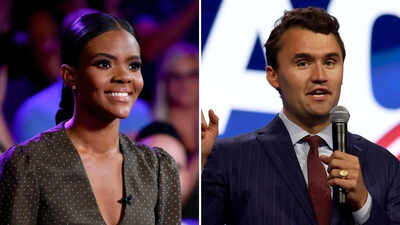
“Charlie’s Real Killer…”: Candace Owens Challenges Official Narrative, Says Tyler Robinson Is Not Charlie Kirk’s Killer
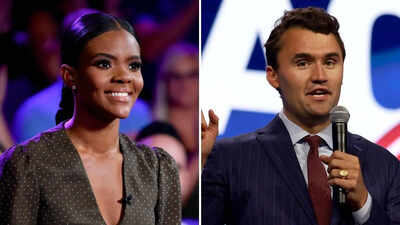
The debate continues regarding the death of charlie kirk Candace Owens has taken another sharp turn by doubling down on her controversial stance. Speaking on his podcast, Owens said he is “99.9% confident” that Tyler Robinson was not the gunman, pointing to a key forensic detail that has now entered the public conversation. According to recent legal filings, the bullet recovered during the autopsy could not be matched to the rifle allegedly belonging to Robinson.That one claim has reignited an already polarized case. At first, investigators thought Robinson was the prime suspect, but now Owens says it’s much more complicated. Her comments show that she not only doubts the official story, but rejects it outright. This has raised more questions about how the investigation has been handled.
Candace Owens challenges the official narrative and calls for a thorough investigation
Owens did not hold back when addressing the new developments, insisting that the case against Robinson is seriously flawed. He claimed to have spoken to sources close to the investigation and alleged that federal authorities may have built a misleading case.“There was an overwhelming amount of evidence that the feds set this kid up as an idiot. Everybody in town, all the local sheriff’s department, the SWAT team, they believe the feds came in and started lying… I’m talking to people who have direct knowledge, and they all believe the feds set it up… Why wouldn’t I testify for the defense? I want to find Charlie’s real killer. I don’t want to find some random kid. Want whoever they’re sticking it on,” she said.She went even further, expressing near certainty about Robinson’s innocence as the shooter.“I feel the exact opposite of Charlie Kirk’s wife. I feel almost certain that Tyler Robinson did not fire the shot… I would say I feel 99.9% certain that Tyler Robinson did not single-handedly shoot Charlie Kirk from the rooftop… I’m going to say 0.1% because I don’t know, you should never say 100%… I follow the facts, and Tyler Robinson did not do it. That rooftop But he’s not the only one with a gun, okay?”Owens also raised questions about other elements of the case, including alleged text messages and forensic findings involving the weapon. He argued that inconsistencies were constantly coming to light, urging critics to either provide details or remain silent.As Robinson’s legal team pushes for more time to review evidence before a preliminary hearing, the case now stands at a crossroads. Public opinion is increasingly divided, and Owens’ comments ensure that the conversation is far from over.
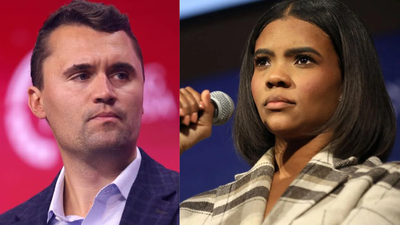
Candace Owens: Candace Owens recaps 33 references to Charlie Kirk murder, calls it cult involvement and darker story
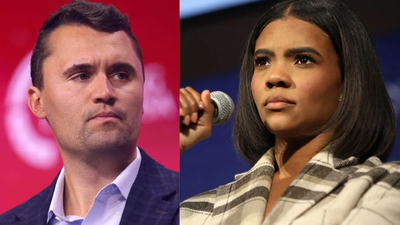
Candace Owens has spoken out again about the murder of Charlie Kirk, and this time she’s pointing to what she apparently calls hidden “signals.” On his latest podcast, he reacted to new developments, including a trial in Paris where 22 people are facing serious charges. The suspects are reported to have backgrounds in intelligence, law enforcement and business, as well as ties to Masonic lodges. Early on, Owens reiterated his earlier claim that there may be international involvement in the case. She said she had already raised questions about possible ties to French intelligence months earlier. Now, following reports about the Paris trial, he has again linked those claims to Freemasonry. However, his comments are unverified and not part of the official investigation shared by the authorities.
Candace Owens repeatedly points to “33” references, questions executives like Andrew Colvette, Spencer Cox and Kash Patel
Speaking on her podcast, Candace Owens focused heavily on one detail, the number 33. He said this number kept appearing in various updates related to the case, and he believes it is not a coincidence. He played clips to support his point. In one clip, Andrew Colvette talks about an incident that happened 33 minutes before Charlie Kirk’s death. In the second, officers including Spencer Cox and Kash Patel mentioned a “33-hour search” before the suspect’s arrest. Responding to these clips, Owens said:“Yeah, we get it. 33 33 33. Look, in my educated opinion, this is the clearest sign ever. Uh, alerting people who are into the cult that this was a hit that was made by the cult and for the cult.”
He also added another claim, linking the number to a Freemason lodge in St. George, Utah. According to him, the number of that lodge is 33, and he also told that 33 is the country code of Paris. These claims have not been confirmed by officials.
Candace Owens criticizes the evidence Tyler Robinson case Because court filings and Daily Mail reports raise new questions
Owens also reacted strongly to a new court filing involving Tyler Robinson, who has been charged with murder. According to a report in the Daily Mail, the defense has asked for more time and has expressed doubts over important evidence. The Bureau of Alcohol, Tobacco, Firearms and Explosives could not clearly match the bullet fragments to the rifle found near the scene, the filing said. Authorities previously claimed the rifle belonged to Robinson’s grandfather. Responding to this, Owens wrote:“Where are all my neocons who are ‘overwhelmed’ by the non-existent evidence against Tyler Robinson? … You should all be ashamed of yourselves. Hope the money was worth your soul.”She added another post saying:“And the other part no one wants to discuss – that about 7 sets of prints were found on the gun, which the bomb dogs did not find, which means it was not fired at all. Awesome.”At this time, Robinson has not entered a plea. He is expected to appear in court on April 17. Authorities have not confirmed Owens’ claims, and the investigation is still ongoing.
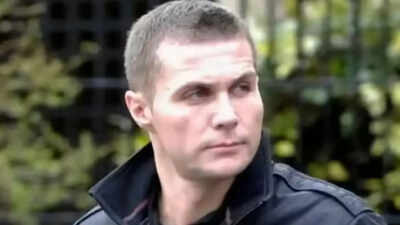
Scottish crime boss Steven Lyons to be deported to Spain days after arrest in Bali
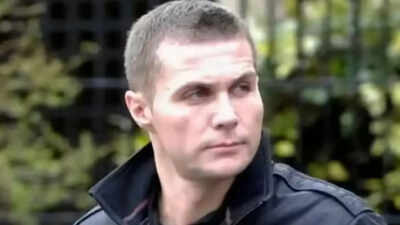
Steven Lyons, 45, one of Scotland’s most notorious gangland figures, is due to be deported to Spain after his arrest at Bali’s I Gusti Ngurah Rai International Airport on Saturday. Indonesian authorities said Lyons, who flew in from Singapore, was wanted in Spain on organized crime charges. drug traffickingMoney laundering, and a murder case from 2024.Lyons, allegedly the head of an international criminal organization operating throughout Europe and the Middle East, was taken into custody after being stopped by immigration officials. He is accused of using shell companies to launder money in Spain, Scotland, England, Dubai, Qatar, Bahrain and Türkiye.Lyons’ wife, Amanda Lyons, was also arrested in Dubai for alleged crimes in Spain, indicating that authorities are targeting the inner circle of the crime syndicate.Bali police chief Daniel Adityajaya said Lyons was the leader of a “large-scale international criminal organization involved in drug trafficking and money laundering”. The arrests follow co-ordinated raids in Scotland and Spain in collaboration with Europol, which resulted in a number of arrests and the seizure of assets.Lyons survived the 2006 shootings in Glasgow, which killed his cousin, and later relocated to Spain before settling in Dubai. He has links to the Dubai-based Kinahan crime group and has been involved in a decades-long feud with rival Scottish gangs.Authorities in Bali are continuing to search for Lyons’ two companions who came with him but remain at large on the island.

Australia’s ‘zombie tree’ is dying from a deadly fungal disease and scientists are racing to save it

In the heart of the rainforests of Australia, there is a newly discovered species of tree that has attracted the attention of scientists for its extremely unusual and dangerous feature. The newly discovered tree, named the “zombie tree”, is alive, yet unable to reproduce in the wild. The tree, named Rhodamnia zombiei, is unable to reproduce because it has been attacked by a highly contagious fungus. As a result, the tree becomes unable to produce flowers, fruits and seeds, bringing its existence to the brink of extinction. Still, the question is, can this species be saved before it completely disappears from the face of the Earth? It is not just trees, but the entire balance of nature.
What about Australia?zombie tree ‘
The term ‘zombie tree’ is used for a tree species called Rhodamnia zombiei, which is found in rainforest and was first discovered in Queensland in 2020. This tree was recently given this name by experts because although some trees are alive, they are unable to reproduce naturally.Research conducted by the University of Queensland found that repeated infections left trees ‘alive but unable to reproduce’, making it impossible for trees to develop the new growth needed to reproduce.For this reason, the species is considered functionally extinct despite the presence of some trees. Botanist Professor Rod Fensham described the trees, saying that, without any intervention, the trees are ‘living dead’.
myrtle rust : The fungal disease driving extinction
The main threat to zombie trees is a fungal disease called myrtle rust. This disease is caused by a fungus called Austropoucinia picidi. The disease targets the myrtle family of plants, which includes many indigenous Australian species such as eucalyptus and tea tree.Myrtle rust disease can spread rapidly through fungal spores, which can be spread by wind, insects, animals, and even humans. The disease then begins to affect the plant, causing yellow or orange spots to appear on leaves and young growth. This eventually causes the plant to no longer be able to produce flowers or seeds, causing the plant’s life cycle to stop.However, what has made things worse in Australia is that local plant species are not able to defend themselves against the disease. According to Professor Fensham, this means that these species, which include those in the myrtle family such as eucalypts and tea trees, have been termed “naive hosts” because they have not had time to develop resistance to disease.
Scientific efforts to save zombie trees
As scientists are faced with the problem of the accelerated decline of Rhodamnia zombie, they have come up with various solutions to prevent its extinction. One of the first solutions to be put into practice is to clone the few remaining trees. This will be done by planting cuttings in a controlled environment.There has also been research into treatments that will be able to protect trees from infection. This includes the use of fungicides as well as RNA-based treatments, which will be able to increase the tree’s ability to fight disease.Another solution to the decline of Rhodamnia zombie is to cultivate seedlings in controlled environments where the fungus is not active. The hope is that, over time, some of them will be able to become immune to the fungus, and thus be able to rejoin their natural habitat. This, as shown in ongoing studies, will be done to “grow disease-free seedlings in protected locations to ensure the future of the species”.“
Why does this matter beyond a species?
However, the zombie tree crisis presents us with a larger ecological issue. In fact, myrtle rust affects not just one species, but many species of the Myrtaceae family, and we have to think about the loss of biodiversity in Australia’s rainforests.Therefore, zombie trees present us with the impact of invasive species, which can threaten entire ecosystems, especially when native species have no defenses. In fact, it points to the challenges that have emerged in the wake of the effects of globalization and climate change, which have made it easier for diseases to spread.However, the fight to save zombie trees in Australia reminds us of the fragility of nature. While species are on the verge of extinction, science and innovation provide us with a sense of hope. The outcome of this race will, in fact, not only determine the fate of this unique species, but will also impact the way we choose to confront other ecological issues in the near future.

Florida Governor’s strong words against Cognizant on H-1B hiring bias case; NYU professor wins $8.4 million

A former Cognizant employee won $8.4 million in a lawsuit against Cognizant alleging hiring bias such that the company only gave preference to Indians and fired Americans.
A former employee of Cognizant Technology Solutions has gone to court accusing the company of biased hiring practices after he was fired from his job in 2016 after working for the company for a decade. Jean-Claude Franchitti said his dismissal came after the IT chief questioned the cheap labor model, as he observed that the company was preferring cheap labor from India. In 2016, he had a $350,000-a-year role, and he was fired. A federal jury in Manhattan sided with Franchitti and awarded us $8.4 million – a balance of $4.2 million for lost wages and an additional $4.2 million in punitive damages. Franchitti now teaches at NYU.Franchitti said he had signed several letters that were fraudulently used by Cognizant to help secure US visas for Indians. The letters certified that the employees would report directly to him at Cognizant’s New Jersey location, but he soon realized that the jobs listed in those letters did not exist and the employees would not be working under his supervision. He also alleged that Cognizant used to apply for L-1 and B-1 visas because H-1B was more expensive. And those who were in trouble with H-1B did not get the expected wages.He alleged that non-Indians were promoted less often and faced hostility by Indian employees.As he verbally questioned these practices, he claimed that he was removed without any prior notice or without being placed on the bench. Cognizant denied the allegations. Florida Governor Ron DeSantis reacted to the verdict and said he was pleased that Cognizant was held accountable. DeSantis said, “The lengths to which some of these companies go to discriminate against Americans in favor of cheap foreign labor is truly disturbing. Glad to see some accountability. But the easiest thing to do is eliminate the visas that provide the pathway to discrimination in the first place.”

What is conversion therapy? US Supreme Court strikes down Colorado law banning LGBTQ+ minors

In a historic 8-1 decision, the US Supreme Court on Tuesday struck down a Colorado law that banned psychiatrists from using “conversion” therapy aimed at changing an LGBTQ+ minor’s sexual orientation or gender identity, news agency Reuters reported.The court sided with Christian counselor Kelly Chiles, who argued that the law violated her First Amendment rights by restricting her ability to offer faith-based talk therapy to minors seeking help consistent with their religious beliefs.Justice Neil Gorsuch, writing for the majority, said that Colorado’s law “censors speech on the basis of viewpoint,” noting that Chiles’ therapy did not involve any physical intervention or medications. The ruling left open the possibility that the state could still prohibit extreme forms of conversion therapy, such as regressive physical practices, but it sent the case back to a lower court for further proceedings under strict free speech standards.The case highlights the tension between state authority to regulate health care and constitutional protections of free speech. Colorado argued that the law protects minors from harmful practices, while Chiles and his supporters argued that the ban prevented counselors from discussing certain values and goals with clients. The ruling could affect similar laws in more than 20 states that ban conversion therapy for minors.
what is conversion therapy
Conversion therapy, also called reparative therapy or “gay cure” therapy, attempts to change a person’s sexual orientation or gender identity. Methods may include talk therapy, prayer, or other interventions. Extreme practices involve physical harm, but most modern cases involve counseling sessions or faith-based guidance. Medical groups warn that these practices are ineffective and can cause permanent psychological damage.
Why did Colorado ban it?
Colorado passed a law in 2019 to protect minors from psychological harm. Licensed therapists are prohibited from trying to make LGBT youth heterosexual or conform to traditional gender roles. Supportive therapy, such as helping minors explore their identity or accept themselves, is allowed. Violations of the law can result in a fine of up to US$5,000.
Supreme Court’s decision and implications
The Supreme Court found that the law violated the protection of freedom of expression. Supporters of the decision say it protects counselors’ right to express certain viewpoints, while critics warn it could expose LGBTQ+ minors to harmful practices. Justice Ketanji Brown Jackson dissented, arguing that medical professionals who speak to minors should face stricter regulation than ordinary speech. The decision could lead to new legal challenges against similar bans in other states.
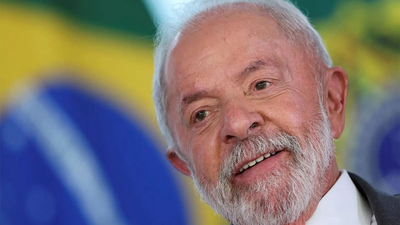
Brazil’s Lula names VP as running mate as opinion polls show he’s lagging
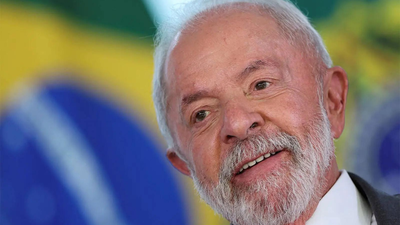
SAO PAULO: Luiz Inacio Lula da Silva on Tuesday named his vice president as his running mate in Brazil’s October election, as polls showed the veteran leftist president lagging badly behind his main rival.Lula, 80, will seek a fourth term as he faces Flavio Bolsonaro, the 44-year-old son of far-right former President Jair Bolsonaro, who is serving a 27-year prison sentence after being found guilty of plotting a coup against Lula.Recent polls show that Flavio Bolsonaro is in the lead and would have a tough fight with Lula if they face each other. Lula was ahead by 15 points in December.Lula’s vice president and running mate is Geraldo Alcmin, a moderate conservative and former rival of the president. They teamed up to take on the older Bolsonaro, who was in power at the time, in 2022. Apart from being the Vice President, Elkmin is also currently the Minister of Industry.“My colleague Alcmin will have to leave the ministry because he is again a candidate for vice-president,” Lula said in a public meeting with his cabinet. Dr Elkmin, 73, served four terms as governor of Sao Paulo, Brazil’s richest and most populous state. He ran for president twice as a candidate for the conservative Brazilian Social Democratic Party.In 2006 he lost the runoff election to Lula.On Tuesday, Lula told his cabinet a story about how in 1978 he won re-election as head of Brazil’s metalworkers union and told his family he would serve one last term, then return to domestic life.He joked, “Fifty years went by and I never did it.”A poll published on March 6 by Datafolha showed Lula with 46 percent of voters’ intention, compared to 43 percent for Bolsonaro, putting them in a draw as the difference falls within the margin of error.The younger Bolsonaro, who serves in the Senate, was appointed presidential candidate by his father after the Supreme Court sentenced Lula to 27 years in prison for conspiring to stay in power after losing a 2022 election to Lula.

Kristi Noem is devastated when husband Byron Noem is revealed to be a crossdresser who chats with erotic models online

Kristi Noem’s husband Byron Noem is revealed to be a crossdresser who pays models online to talk dirty.
As if Kristi Noem’s ouster as DHS secretary wasn’t enough, she now faces a major scandal involving her husband Byron Noem. Until a few weeks ago, Byrne was a cuckold because Kristi Noem’s alleged affair with Corey Lewandowski was an open secret in the administration. But now the Daily Mail has published an investigative report supported by photos and messages that reveals Byron Noem as a secret crossdresser who pays fetish models online. More worryingly, the report claims Byrne bragged about his wife in those online chats. The report also published a photo of Byrne wearing fake breasts and pink hotpants. The Daily Mail reviewed hundreds of messages where Byrne admitted his lust for “huge, huge ridiculous breasts”. Byrne did not deny having explicit chats with models or crossdressing but said he did not make any indiscreet comments about Kristi Noem. Brian responded, “Yeah, I didn’t make any comments that would cause that.” Kristi Noem’s spokesperson told the Daily Mail that she was deeply disappointed by the revelations. “The family was shocked by this. They ask for privacy and prayers at this time.”
Who is insurance mogul Byron Noem?
Byron Noem is a businessman, an insurance mogul, father of three, and Kristi Noem’s high school boyfriend. Kristi and Brian Noem met in high school, married in 1992, and share daughters Cassidy, 31, Kennedy, 29, and son Booker, 23. Byrne supported his wife when she faced criticism over her alleged affair and during her tenure at DHS.
Daily Mail investigation into the secret life of Byron Noem
Ben Ashford and Josh Boswell led the investigation, where they verified whether the photos they found were fake or AI-generated. But he claimed that experts have ruled out this possibility. The photos’ metadata shows they were taken on an iPhone set to early 2025 Central Time, which is consistent with Byrne’s South Dakota location. In his secret pursuits, Byrne often used the pseudonym ‘Jason Jackson’. A PayPal account belonging to ‘Jason Jackson’ regularly sent deposits of between $500 and $1,000 to the woman. The Daily Mail tracked down that particular lady and confirmed that ‘Jason Jackson’ had told her that he had a wife and family. He also said that he loves his wife. One woman told DailyMail that she once pocket-dialed Jason and was left with a voicemail saying: ‘Noam Insurance, leave a message’.
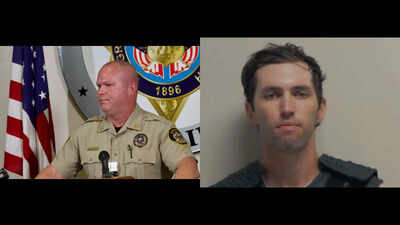
The sheriff who implicated Charlie Kirk’s murderer, Tyler Robinson, resigns. ‘Perfect coincidence’ between mismatched bullets?
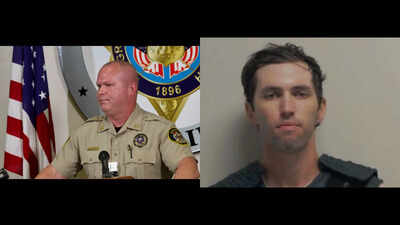
The sheriff who handed over Tyler Robinson, the alleged murderer of Charlie Kirk, suddenly resigns.
The sheriff who led to the arrest of Tyler Robinson in murder charlie kirk Suddenly resigned and announced his retirement. According to reports, Sheriff Nate Brooksby announced his resignation on Friday following anonymous complaints from individuals in Utah’s Washington County who were concerned about the operations of the Sheriff’s Office. His resignation, he said, put the issue of the complaint to rest as the complainant did not wish to pursue it further, leading to speculation on social media as to what might have happened. Speculation has intensified after new legal documents claimed that the bullet used to kill Charlie Kirk did not match the rifle found in Tyler Robinson’s possession. Conspiracy theories that Tyler Robinson was not the real killer and was simply made the scapegoat of the situation began to flourish once again, and now they are tied to Brooksby’s resignation, because Brooksby had helped Tyler Robinson turn himself in. Who is Brooksby? How is she related to Tyler Robinson?According to his campaign website, Brooksby, a lifelong resident of Washington County, Utah, worked at the Washington County Sheriff’s Office for 27 years of his career. A member of the Republican Party since the age of 18, he was elected to fill the remainder of Sheriff Corey Pulsipher’s third term in November 2021 and was sworn in the following month.After Charlie Kirk was shot and killed at the Turning Point USA event at Utah Valley University on September 10, 2025, Brooksby said he received a call from a retired deputy telling him he knew who killed Kirk. Robinson’s family had reached out to the retired deputy, whom they knew through the Church of Jesus Christ of Latter-day Saints, and asked him to help negotiate a peaceful surrender for Robinson.After Robinson turned himself in and was arrested, Brooksby said, “Part of the negotiation to get him to turn himself in was that we would treat it as delicate and soft as possible so that he would feel comfortable wherever he showed up in my office.”Former Congresswoman Marjorie Taylor Greene posted, “ATF couldn’t fight Tyler Robinson’s gunshot and sheriff resigned when news broke.” “Where are all my neocons who are “overwhelmed” by the non-existent evidence against Tyler Robinson? You should all be ashamed of yourselves. Hope the money was worth your soul,” Candace Owens who has been continuously claiming that Tyler Robinson was a coverup doubled down after getting shot.