


Kim Jong Un’s teenage daughter seen driving a tank during military exercises, sparking fresh succession talks – watch

This photo provided by the North Korean government shows its leader Kim Jong Un, front right, his daughter, reportedly named Kim Ju Ae, and other soldiers on a tank at a military training base in North Korea, Thursday, March 19, 2026.
Teenage daughter of North Korean leader kim jong un While undergoing army training under her father’s supervision, she drove a tank in their latest joint public appearance, fueling outside speculation that the girl was being groomed as Kim’s successor.The official Korean Central News Agency reported on Friday that Kim had inspected an offensive tactical exercise involving tank units and infantry troops a day earlier and called for complete combat preparations.Videos and images released by state media showed Kim’s daughter sticking her head out of the driver’s hatch of a moving, green tank, while her smiling father sat on top with three soldiers.Observers said the girl’s condition clearly showed she was driving an armored vehicle, her first such activity. But he said that operating modern tanks was not technically complex, especially when moving slowly for short periods of time.Lee Ilwoo, an expert at the Korea Defense Network in South Korea, said, “She just drove straight at a slow speed. Modern tanks are also easy to drive, and I think it was easier for her to drive because she was on flat ground.”The girl, reportedly named Kim Joo Ae and aged about 13, had accompanied her father to several high-profile military and other events since late 2022. North Korean state media called her Kim Jong Un’s “most beloved” or “respected” child and published footage and photos indicating the closeness of the two.He fired pistols and witnessed live-fire testing of multiple rocket launch systems during a recent tour of a light munitions factory. The girl had gone to Beijing with her father in September. During the New Year celebration he kissed her on the cheek.South Korea’s spy agency assessed last month that Kim Jong Un was close to declaring him his successor. Some experts disagreed with that assessment, citing Kim Jong Un’s relatively young age and highly male-dominated nature. north koreaThe power hierarchy of.The North Korean training came as the US and South Korea engaged in their annual military exercises which the North viewed as an invasion rehearsal. The US and South Korea ended their 11-day computer-simulated command post exercise on Thursday, but they are still continuing field training.(Input from news agencies)
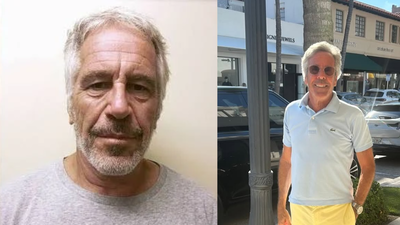
“I’m not Epstein, I’m Pete”: Florida look-alike breaks silence after viral I-95 video world News
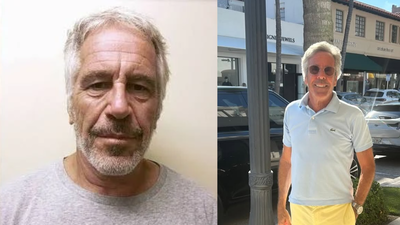
A Florida man has finally cleared up the illusion after a viral video led many to believe they saw a lookalike of the late Jeffrey Epstein on a highway. The short clip shows a man wearing sunglasses and a white hat driving a convertible in South Florida. It spread quickly online after being shared with the headline “Epstein is here in South Florida”, leading to widespread speculation.As the video received millions of views, people started discussing the similarity on social media. Some made fun of it, while others seriously questioned who the man was. After a few days of online discussion, the man in the video decided to speak out.id@undefined Captions not available.id@undefined Captions not available.In a podcast interview, he introduced himself as Palm Beach Pete and explained the situation. “I’m not Jeffrey Epstein, I’m Palm Beach Pete,” he said. Pete also revealed what really happened that day. He said he was driving on Interstate 95 to play tennis when someone suddenly filmed him. He added, “My video went viral because some people suddenly filmed me while I was driving on I-95.”Pete, a former Division 1 tennis player and gold medalist, said the sudden attention surprised him. His phone started “blowing up” soon after the video went viral. He also said that the condition has started to affect his daily life, as strangers now recognize him in public and ask for photographs.He shared that during a recent restaurant visit, people recognized him from the video and asked for photos. Something similar happened in a bar also. Despite the confusion and attention, Pete said he is taking it in good humor.The viral moment comes amid renewed online claims about Epstein, including comments from Prince Andrew’s former girlfriend Lady Victoria Hervey, who said in an interview with LBC radio that she believed Epstein may be alive and possibly in Israel. Additionally, an image claimed to show Epstein in Israel caused a lot of uproar online, but was later dismissed as AI-generated, leading to a wave of speculation. .

‘Rejected in two minutes’: Indian-origin student Bhuvana Chilukuri describes AI-led job screening after 100 rejections, calls it ‘brutal’

Bhuvana Chilukuri, a 20-year-old third-year business student of Indian origin, said artificial intelligence-powered recruiting has made the job search impersonal and harsh as she applied for more than 100 jobs and was rejected for every one before graduating from Queen Mary University in London this summer.“It’s robotic. It’s cruel,” Bhuvana Chilukuri told the BBC, adding, “There were moments when I applied and in less than two minutes I got a rejection, which is really horrible.”He said he believes very few, if any, of his applications have ever been seen by a human because companies are increasingly using AI to hire new employees.“The first step is AI screening your CV. You can get rejected very quickly at that stage. Then the next process will probably be AI video interviews,” Bhuvana said.Despite numerous work experiences and internships, she said she failed to find a job after graduation. He said his frustration was shared by many people his age, for whom the first rung on the career ladder seemed out of reach.Job vacancies nearly halved after the peak of the pandemic, while higher costs for employers and stronger rights for new hires made companies more reluctant to hire. When companies recruit, they increasingly turn to AI to help sort through large amounts of applications. According to recent data from LinkedIn, nearly 89% of UK recruiters said they planned to use more AI in the hiring process this year.Bhuvana said this meant logging onto recruitment portals, where she would video record her answers while looking at her own reflection before asking questions.“I feel like a robot, because you’re just watching yourself on the screen, and answering questions for about 20 minutes. You kind of get monotonous. You don’t talk to anyone and it takes away your personality. It’s quite sad,” she said.Dennis Machuel, CEO of Adecco Group, said the AI interview process can be discouraging. Adecco Group used AI in pre-screening of candidates.“People need to send an average of 200 applications to get a job offer,” said Dennis Machuel, CEO of Adecco Group, which uses AI in candidate pre-screening.“What AI brings is scale. Earlier, you would reach out to 50 people and out of that you take one, you would have 49 people who would be disappointed. Now, if you reach out to 500 candidates, you disappoint 499 people,” he said.Bhuvana said that she understands why companies use AI in recruitment and why some candidates themselves fight using it.“They’re getting a flood of applications. So I don’t blame them. But it’s getting to a point where students are becoming lazy. They say ‘If you’re going to screen with AI, I’m going to apply with AI.’ And they use AI to write their CVs. I don’t blame them either. Everyone is trying to figure it out,” she said.Law firm Mishcon de Reya said it turned to AI after receiving 5,000 applications for 35 roles in its last round of recruitment.“We’ve got more legal graduates, we’ve got fewer graduate roles, and we’ve got more candidates using AI to write more applications,” said Tom Wickstead, the company’s early careers manager.“So as an employer, we have this explosion of applications, and it’s hard to tell the difference between those applications,” he said.Wickstead said the firm trialled an AI chatbot developed by graduate careers adviser Bright Network, which screened candidates in the early stages and asked a series of questions in real time. He said the tool highlights parts of an application that may have been written by AI.Wickstead said the feedback so far from candidates was positive and AI recruitment tools could make the process fairer overall.“I don’t think any hiring process is free from bias,” he said. “So what AI has the ability to do is be much more consistent, much more fair than the old process.”He said human recruiters still interviewed candidates later in the process and made the final decision on hiring.“We’re exploring whether AI can make similar decisions, or even better, make more consistent decisions than humans,” he said.Bhuvana said that machines are no match for humans.She said, “I don’t trust AI, I think I will always trust a person. But it’s hard to get the opportunity to see that person.”Machuel said AI and humans need to work together to get the best results for potential employees and recruiting companies.“There is a need to incorporate AI smartness at the right time in the process, so that you can appreciate the efficiency of AI with people’s judgment and human touch,” he said. “This is the combination that will break this arms race.”

“I was the closest person to Charlie”: Candace Owens makes explosive claims about Charlie Kirk amid growing controversy

Candace Owens has started another online scandal with her comments about suspicious behavior of people close to her Kanye West. His statements have been rapidly circulated on social media and have drawn mixed reactions from supporters and detractors, placing him in doubt. What is most surprising is the confidence that Owens is able to convey in her descriptions, which highlights the fact that she is very close to the people she is writing about. She presents her arguments as a matter of personal experience rather than speculation; This has increased public criticism. As the debate heats up, audiences find themselves torn between her claims and the need for verifiable facts and the debate has become a broader debate on truth, impact and credibility.
Candace Owens doubles down on claims, sparking intense online debate
Owens’ comments have sparked widespread discussion, largely due to the detailed and personal tone she uses to explain her stance. She did not hold back, outlining her belief that key information had been hidden, suggesting a deeper story beneath the surface.Here Candace Owens said, “It’s my personal opinion that there was a deal. When I look at the evidence, when I look at everything, I see it when I see how duplicitous she was and I know Charlie didn’t know these things because I was there. I was the closest person to Charlie.”She continued, “When he was dating, he was just starting to date Erica. Well, no one spent much time with her or talked to her much. He didn’t know these things about Erica Kirk or that Erica Franz Fey was her name at the time. We didn’t know she was telling people that she knew people who were around Kanye when he sent out the tweet that something wasn’t right. We all know something isn’t right. And I’m just amazed at the people who are going to pretend like it’s all perfectly normal.”The power of his words has sparked a larger conversation about influence, perception, and credibility in high-profile circles. Critics say these types of claims require solid evidence, especially when they involve more than one person and their reputation. However, supporters say his proximity to the situation makes his claims more credible.Essentially, this ongoing debate reflects a tension that is common in today’s media. Personal testimony can be powerful, but it can also make people overly skeptical. With more people joining the conversation, the focus has now shifted to whether new evidence will emerge or whether it is still a battle of stories based on opinion and public perception.

1,300 years of Islamic history in one place: inside Saudi Arabia’s Othman bin Affan Mosque in Jeddah world News

Nestled among the narrow medieval streets in historic Jeddah, the Othman bin Affan Mosque offers a rare, layered look into the city’s past. Fresh excavations at the site have revealed more than 1,300 years of continuous history, linking early Islamic foundations to global trade routes and evolving architectural traditions, the Saudi Press Agency reports.
a foundation from the beginning islam And Jeddah rise of
The Othman bin Affan Mosque dates back to 33 AH (654 CE), making it one of the oldest archaeological and religious sites in Jeddah. Its historical significance is directly linked to Caliph Othman bin Affan, who designated Jeddah as the primary Islamic port. This decision turned the city into a major gateway for pilgrims to Mecca as well as a center of maritime trade.Situated along ancient paths and surrounded by traditional buildings, the mosque has been in continuous use for over 1,300 years. This uninterrupted use highlights not only its religious significance, but also its role in the everyday life of the city over the centuries.The mosque’s endurance reflects how Jeddah has evolved along with it, growing from an early Islamic settlement into a thriving port city that connects different regions of the world.
Layers of history in the major Islamic empires
Recent excavations have revealed that the mosque has several historical layers, each dating to the major Islamic periods. These layers confirm that the site remained active in:
- Umayyad Caliphate (661–750 CE/beginning 41 AH)
- Abbasid Caliphate (750-1258 AD)
- Mamluk Sultanate (1250–1517 CE/until 923 AH)
Overall, these periods extend from 41 AH (661 CE) to 923 AH (1517 CE), representing almost a thousand years of continuous development and use.During the Umayyad period, early coral-stone foundations and port-related development supported increasing numbers of pilgrims and traders. This was a time when Islamic rule expanded rapidly, spreading from Spain to India, and Jeddah began to establish itself as a major maritime centre.Under the Abbasids, often referred to as the Islamic Golden Age, the region saw advances in science, knowledge, and infrastructure. Evidence from the mosque, including glass lamps and aqueduct channels, suggests improvements in both mihrabs and water systems. These developments indicate that Jeddah was not only a trade center but also part of a broader intellectual and cultural network across the Red Sea.The Mamluk era brought further changes. The Mamluks, known for their military strength and control over trade routes, strengthened Jeddah’s fortifications. Discoveries from this period, including the import of ebony from Ceylon and ceramic fragments, point to increased commercial activity and long-distance trade. During this time the mosque developed as a flexible structure within a fortified and economically active port city.
Evidence of global trade and advanced engineering
One of the most important findings from the excavation is a sophisticated water system approximately 800 years old. The system reflects advanced engineering techniques used to manage water resources in coastal environments, indicating a high level of urban planning and technical knowledge.Equally remarkable are the rare ebony columns found in the mihrab. Scientific analysis has discovered these materials in ancient Ceylon, present-day Sri Lanka, providing clear evidence of Jeddah’s historical maritime trade ties in the Indian Ocean.The discovery of early Chinese porcelain among the thousands of artifacts recovered from the site has further strengthened this narrative. These objects confirm that Jeddah was part of a vast trade network connecting the Middle East to Asia.Overall, these findings show that the mosque was more than a place of worship. It serves as a point within a wider system of trade, travel and cultural exchange, reflecting the city’s importance on global maritime routes.
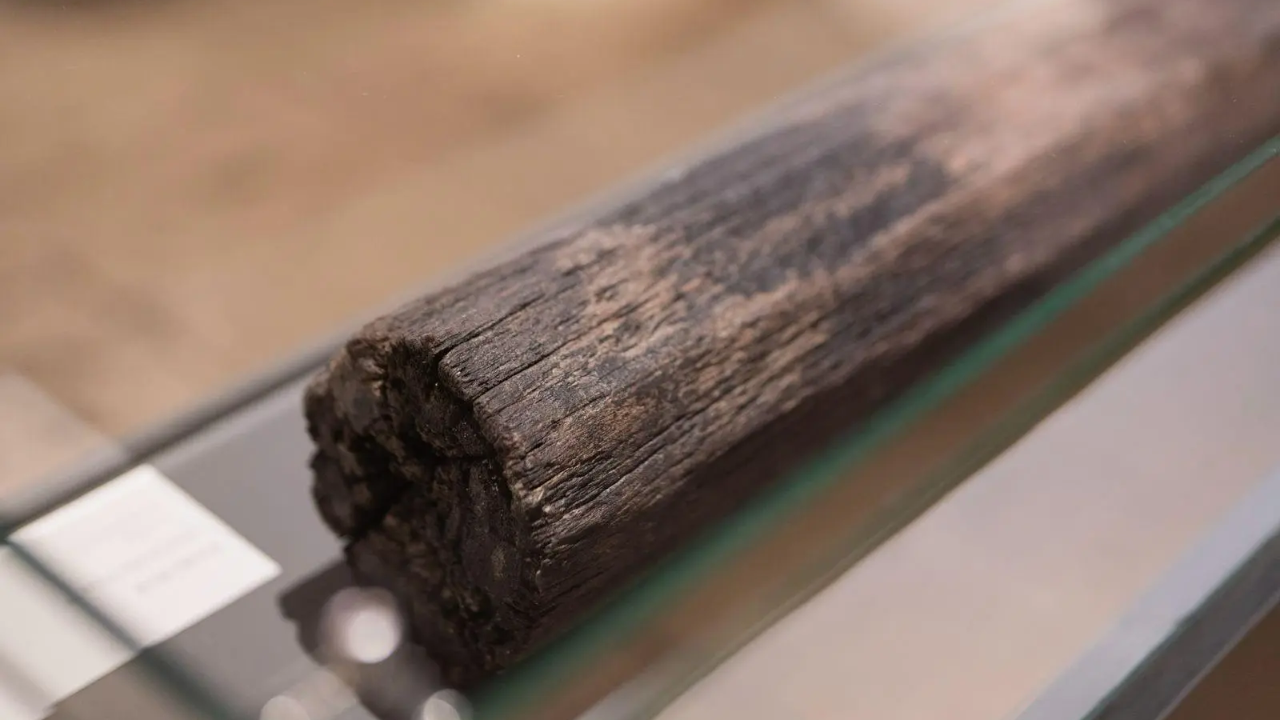
Ebony Pillar/Image: SPA
Architectural development in seven stages
The mosque has gone through seven distinct architectural phases, all of which are now digitally documented. This detailed documentation provides information on how the structure adapted over time in response to changing needs and influences.The construction techniques seen in these phases highlight traditional coastal construction methods, including:
- Use of coral stone as primary material
- Integration of wooden structural elements
- Design adjustments to suit humidity and coastal weather conditions
Each phase represents a stage in the mosque’s development, whether through expansion, repair or adaptation. These changes reflect both functional needs and the influence of different historical periods.Digital preservation of these stages ensures that the architectural history of the mosque is recorded in detail, allowing researchers and visitors to better understand its transformation over the centuries.
A living heritage site in modern Jeddah
Today, the Othman Bin Affan Mosque serves as both a place of worship and a cultural landmark. It has become a major destination on Jeddah’s cultural routes, attracting visitors interested in the city’s history and heritage.The site blends Islamic history with contemporary cultural activities, creating a space where the past is actively preserved while remaining relevant to the present. This approach supports broader efforts to preserve the architectural identity and historical heritage of the state.What makes the mosque particularly important is its continuity. It is not a relic that has been discarded or cast aside. Instead, it remains an active part of the city, carrying on a heritage dating back more than 1,300 years.
An ongoing story of faith, business and urban life
The discoveries at the Othman bin Affan Mosque offer a detailed account of the development of Jeddah. From its early days as a designated Islamic port to its role in global trade networks, the mosque reflects the city’s evolution over the centuries.From the coral stone foundation to the imported ebony and porcelain, each layer exposed adds to the story. It shows how religion, commerce and daily life merged in one place, shaping both the mosque and the city around it.In simple words, this place is a living record of history. It links early Islamic foundations with medieval trade routes and modern conservation efforts, making it one of the most important cultural and historical sites in Jeddah today.

What’s wrong with America’s morality? New Pew Research study reveals shocking insights into the American mind. world News

While the country’s leaders keep waging one war after another and people keep fighting over ideologies on X (formerly Twitter), a new Pew Research Center The study exposed the changing foundation of American morality. On March 19, 2026, the Center asked ‘What do Americans consider immoral?’ Released a research titled. Instead of focusing on the universal taboos of theft and murder, two surveys conducted in 2025 asked about the morality of 15 widely debated behaviors in society, ranging from the death penalty to viewing pornography. What the answers revealed was a nation that is deeply illiberal yet paradoxically divided.
united on fraud
In a rare moment of national consensus, Americans found a unique “villain”: having an extramarital affair. Nine out of ten American adults claimed that it is morally wrong for married people to have affairs. Of the 15 parameters used to evaluate America’s morality, fraud was the only thing the entire country agreed to condemn, considering other factors included the death penalty, beating children, marijuana use, gambling, and more.
Partisan divide: two different Americas
Another surprising insight into the research was the difference in morality between Republicans and Democrats in the country. In the Republican mindset, abortion (71%), homosexuality (59%), viewing pornography (65%), and getting divorced (33%) were morally wrong. However, Democrats viewed morality through the lens of social equality, rating the extremely wealthy (29%), beating children (35%), and the death penalty (48%) as morally wrong. In the survey, viewing pornography (52%), having an abortion (47%), homosexuality (39%), and getting divorced (23%) were considered morally wrong, reflecting a large consensus with the political leadership and showing how ideals at the top filter down to the bottom. Under the Trump administration, it appears the red pill was more widely taken than the blue pill.
crisis of confidence
Despite political rhetoric portraying a ‘Golden Age’, America’s internal social fabric appears to be coming apart. The survey revealed that Americans view each other with suspicion, distrust and are critical of their fellow citizens. Only 47% of Americans view other Americans as morally good, while 53% say the morality and ethics of their fellow Americans is “somewhat or very bad.” This makes the United States a global leader; In almost every other country surveyed in 2025, citizens were more likely to view their fellow residents as inherently good.
American men need an awakening
The research also highlights a friction point between the sexes, particularly around family and reproductive issues.Getting a divorce (28%), having an abortion (51%), and using in vitro fertilization to get pregnant (11%) were more likely to be considered morally wrong by men than women. About 43% of men also thought that homosexuality was morally wrong. However, according to him, gambling, drinking and watching pornography were morally correct. In contrast, 58% of women take a strong stance on viewing pornography, compared to 47% of men, calling it morally wrong. Currently, America is not only “becoming more liberal” or “moving to the right” but seems to be dividing into sections hidden under the guise of unity by a layered Republican fabric.
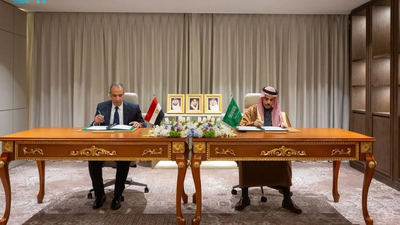
Saudi Arabia, Egypt sign deal to waive short-term visas for official passport holders. world News
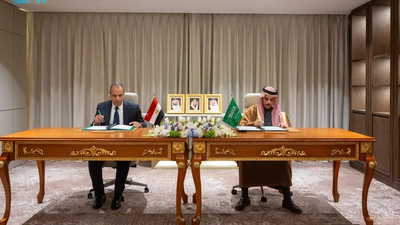
Saudi Arabia and Egypt have signed an agreement to exempt official passport holders from short-term visa requirements, with the aim of easing travel and strengthening cooperation between the two countries.The agreement was signed in Riyadh by Saudi Foreign Minister Prince Faisal bin Farhan and Dr. Badr Abdellatty, Egypt’s Minister of Foreign Affairs, Emigration and Diaspora. This applies to holders of diplomatic, special and service passports issued by both governments.Under the new arrangement, eligible travelers will be able to move between Saudi Arabia and Egypt without the need to obtain a short-term visa, simplifying procedures for official visits and events. This relaxation is expected to benefit government officials and representatives who frequently travel for diplomatic, administrative and institutional purposes.The agreement comes as part of ongoing efforts to strengthen relations between Riyadh and Cairo, reflecting a shared interest in deepening cooperation in a number of areas. By removing administrative barriers, both countries aim to facilitate seamless communication and coordination at official levels.The move also signals a broader commitment to enhancing bilateral relations, with both sides continuing to explore initiatives that support closer cooperation and more efficient exchanges between their institutions.
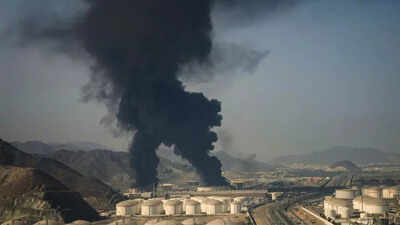
Iran continues to target energy sites: Major Kuwait oil refinery on fire again after drone attack
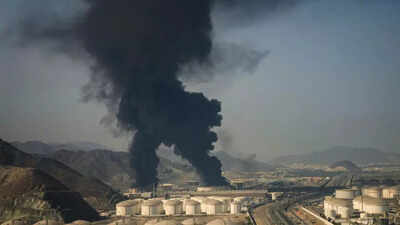
Kuwait said its Mina al-Ahmadi oil refinery was again targeted by Iranian drones on Friday, causing fires at several units. The same refinery was attacked a day earlier also.Friday’s attack came at a time when Eid al-Fitr was being celebrated in Kuwait. Officials said firefighters were working to bring the latest blaze under control, and there were no immediate reports of any injuries. The attack is part of a broader escalation as Iran has stepped up attacks on energy facilities in the Gulf following Israel’s bombing of its South Pars gas field earlier this week.
Although Trump said Israel would not launch more attacks, Iran’s attacks on oil infrastructure continue. On Thursday, Iran targeted liquefied natural gas facilities in Qatar and attacked Saudi Aramco’s SAMREF refinery in Saudi Arabia.Trump has also warned that the United States will respond if Iran continues attacking energy sites in the region. He said, “I do not want to authorize this level of violence and destruction because it will have a long-term impact on the future of Iran.”The conflict has disrupted oil flows through the Strait of Hormuz, a major global route for oil and gas. This has driven up energy prices and hit the economies of Asia, Europe and Africa, which depend on these supplies.
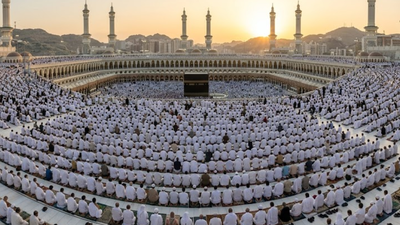
Eid Al Fitr 2026: Saudi Arabia announces prayer timings, check city-wise schedule. world News
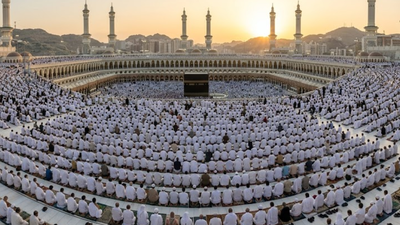
Saudi Arabia has announced Eid Al Fitr 2026 prayer times in its major cities, with authorities urging worshipers to arrive early and follow guidelines to ensure smooth and orderly celebrations. The Ministry of Islamic Affairs, Dawah and Guidance outlined the schedule of Eid prayers, which will be celebrated at different times across the kingdom depending on the local sunrise.
- Mecca – 6:39 am
- Medina – 6:40 am
- Riyadh – 6:12 am
- Dammam – 5:58 am
- Buraidah – 6:23 am
- Jai- 6:32 am
- Tabuk – 6:52 am
- Abha – 6:29 am
- Jazan – 6:29 am
- Najran – 6:22 am
- Al-Baha – 6:33 am
- Arar – 6:35 am
- Sakaka – 6:38 am
The ministry has advised worshipers to follow the rules of the mosque and the designated prayer venue, and highlighted the importance of arriving early to support better organization during the busy Eid period and manage crowds effectively. The announcement comes at a time when preparations for Eid Al Fitr have intensified across the kingdom, with officials extending greetings on the auspicious occasion and expressing hope that the good deeds of Ramadan will be acknowledged.
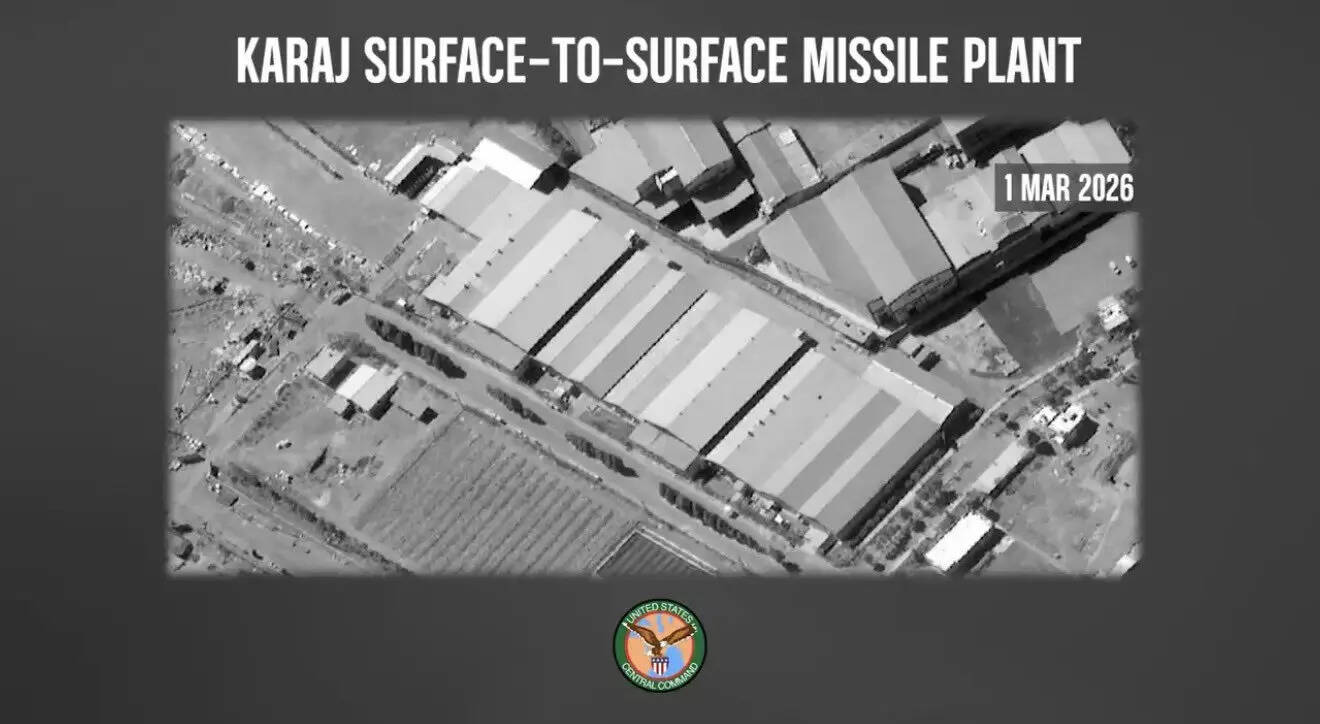
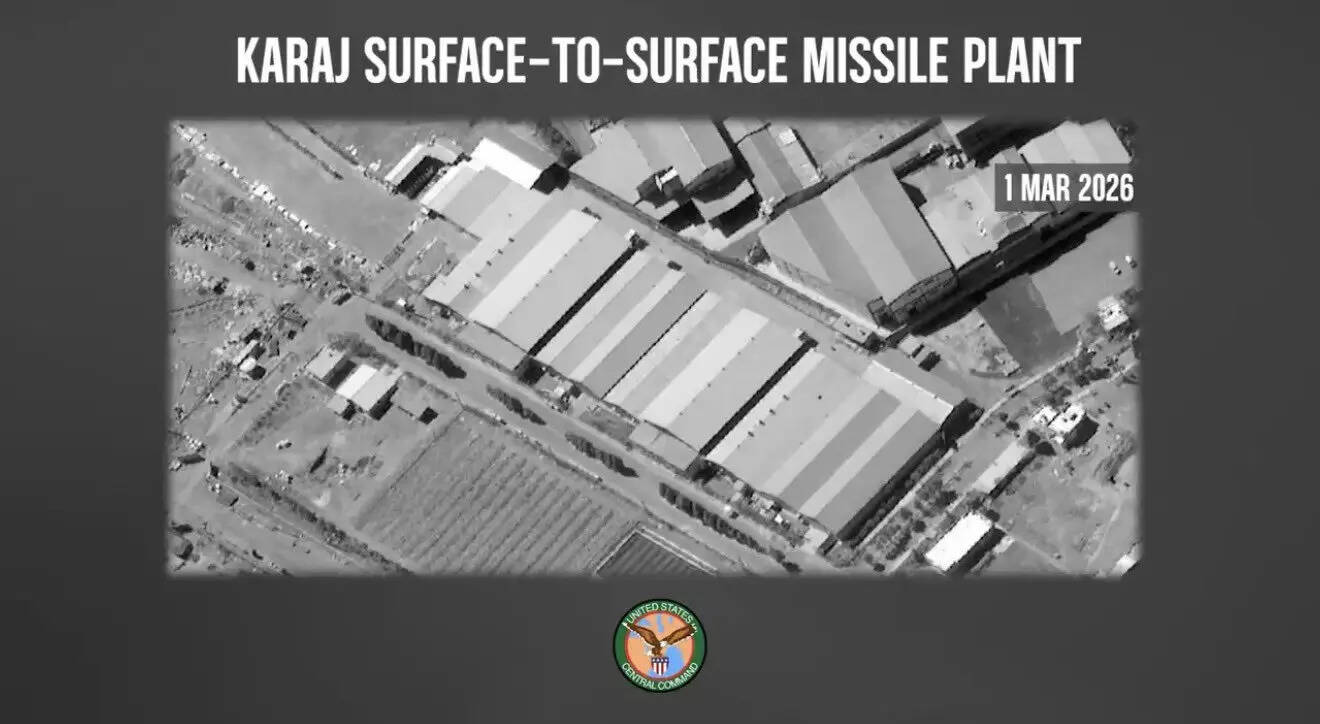
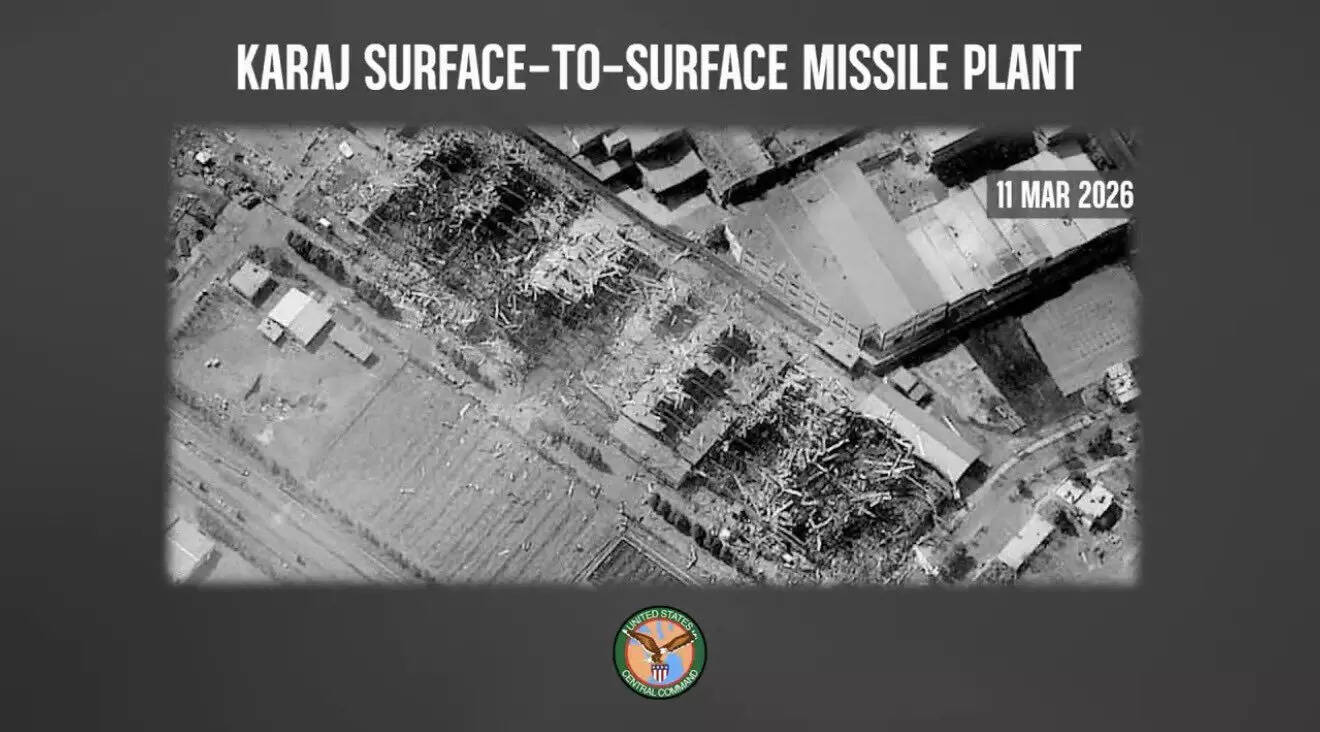
US attacks Iran’s Karaj surface-to-surface missile facility; Satellite photos show before and after the impact
The extent of the damage suggests that the facility is no longer operational. The attacks appear to have been precisely targeted, with no impact visible beyond the site in the available frames.
The development comes amid a broader US campaign against Iran that includes counter-proliferation strikes, maritime security operations and cyber and electronic warfare efforts, along with coordination with allies to destroy Iran’s fighting capabilities. As part of these operations, the US has also deployed B-1 bombers using 5,000-pound warheads to target threats to commercial shipping in the Strait of Hormuz.The strategic waterway, which handles about 20% of global oil shipments, has been affected by the ongoing conflict. Several countries, including the UK, France, the Netherlands, Italy and Japan, have expressed willingness to support efforts aimed at ensuring freedom of navigation in the area.Military assessments based on open-source data show that Iran’s missile launch capability has declined significantly since late February. According to Gulf News, estimates indicate cumulative launches of about 1,100 to 1,700 missiles, with an initial increase of over 400 on the first day, followed by a decline of 86–94% in early March and lower daily figures. Analysts say this reduction points to a “harassment-level” capability, with sporadic missile launches likely to be hampered by the low number of operational launchers and low production capacity. Continued American and Israeli air operations are seen as contributing to this decline.However, the risk remains. Iran is believed to maintain a diffuse network of facilities and capabilities, including proxy forces and cyber equipment, that can be used in a response below the level of conventional war.Meanwhile, Israel launched fresh strikes on Tehran early Friday after Iran fired missiles overnight. The Israeli military said its forces had “launched a wave of strikes targeting the infrastructure of the Iranian terrorist regime in Tehran”, without giving further details, AFP reported.Officials caution that these assessments are based on publicly available information and may be affected by the “fog of war”, meaning actual figures may differ. Nonetheless, current trends indicate a continued decline in Iran’s missile capabilities unless there is a cessation of hostilities.