Pro-Iran hackers hit US medical device giant Stryker in shocking cyberattack after Israel strikes

Pro-Iran hackers hit US medical device giant Stryker in shocking cyberattack after Israel strikes

Cyber War Explodes: Iran Hackers Target US Hospital Technology After Israel Strikes

A suspected cyberattack linked to pro-Iranian hackers has shaken the global healthcare technology sector after targeting Stryker Corporation, one of the world’s largest manufacturers of medical devices used in hospitals and operating rooms. A company statement reported the attack on the major US medical device maker, as it disrupted the company’s internal systems and wiped access to thousands of corporate devices worldwide.Investigators believe the intrusion may be connected to escalating geopolitical tensions between Iran, Israel and the United States, raising concerns that cyber warfare is becoming an increasingly common tool in modern conflicts. Cybersecurity experts warn the incident could represent a worrying shift: healthcare companies and critical medical supply chains may now be strategic targets in global cyber conflicts.

What happened in the Stryker cyberattack?

The cyberattack triggered a global systems outage across Stryker’s network infrastructure, disrupting access to internal systems for employees and contractors. Reports indicate that remote devices running Microsoft Windows, such as laptops and smartphones connected to company networks, were suddenly wiped or disabled. Employees reportedly noticed the emblem of “Handala,” a pro-Palestinian hacker group believed by several cybersecurity firms to have links to Iran, appearing on login pages across affected systems. While Stryker said it found no evidence of ransomware or malware, the company confirmed it was dealing with a “global network disruption” linked to the cyberattack and was working with cybersecurity specialists to assess the damage.The company, headquartered in Michigan, employs about 56,000 people worldwide and reported more than $25 billion in revenue in 2025, producing equipment ranging from orthopedic implants to robotic surgical systems. Since its technologies are widely used in hospitals and surgical centers around the world, the attack immediately raised alarms across the healthcare industry.

Why would pro-Iranian hackers target a medical device company?

Experts say healthcare manufacturers represent an extremely sensitive point in the global health system. According to cybersecurity analysts, disrupting companies that supply hospitals with surgical tools, implants and critical equipment can have ripple effects across healthcare systems worldwide.

Stryker cyber attack: Has Iran added a new dimension to the US-Iran war? Why Iran-linked hackers targeted $100 billion medical giant Stryker Corp as stock crashed 4.5%

Stryker cyber attack: Has Iran opened a cyber front in the US-Iran war? Why Iran-linked hackers targeted $100B medical giant as stock slid 4.5%

Dr Jeff Tully, a medical cybersecurity specialist and Associate Clinical Professor, University of California San Diego School of Medicine; Co-Director, UC San Diego Center for Healthcare Cybersecurity, has repeatedly warned that healthcare infrastructure is becoming increasingly attractive to cyber attackers. He has argued that modern hospitals rely heavily on interconnected technology and medical devices, creating new vulnerabilities if security systems fail.“Healthcare networks and medical devices are part of critical infrastructure,” Tully has said in discussions on medical cybersecurity. When compromised, disruptions can quickly affect patient care. Dr Tully is a leading researcher in medical cybersecurity and hospital infrastructure protection. His work focuses on vulnerabilities in connected healthcare systems and the risks posed by cyberattacks on medical devices and emergency services.Another reason healthcare companies are attractive targets is the value of healthcare data. Patient records and medical systems contain sensitive personal and financial information, making them highly valuable on black markets.

A new front in the Iran vs US–Israel conflict?

Many analysts see the cyberattack as a part of a broader cyber dimension of the geopolitical confrontation involving Iran, Israel and the United States. Experts have long warned that military conflict often spills into cyberspace. According to cybersecurity researchers, Iranian-aligned hacking groups frequently operate through proxy “hacktivist” networks rather than directly claiming responsibility for attacks.These groups target organisations linked to countries perceived as adversaries or supporters of opposing geopolitical blocs. The suspected involvement of the Handala hacker group fits this pattern. The group has previously claimed cyberattacks against Israeli organisations and entities across the Gulf region.

Hospitals on Alert as Iran-Linked Hackers Launch Cyberattack on US Medical Device Maker

Hospitals on Alert as Iran-Linked Hackers Launch Cyberattack on US Medical Device Maker

Cybersecurity analysts say that such attacks allow governments or affiliated actors to send political messages without escalating to direct military confrontation.

The rise of cyber warfare

The attack highlights the growing role of cyber operations in modern geopolitics. Cyber warfare is no longer limited to espionage or data theft. Increasingly, it involves disruptive attacks on infrastructure, including energy systems, transportation networks and healthcare services.Iran has previously been accused of large-scale cyber operations targeting global infrastructure. One notable example was Operation Cleaver, a campaign that reportedly targeted dozens of critical infrastructure organizations worldwide, including hospitals, airports, and energy companies. Meanwhile, cyber operations have also been used by Western governments. The famous Stuxnet malware, believed to have been developed by the United States and Israel, was used to sabotage Iran’s nuclear program more than a decade ago. These incidents demonstrate how cyber operations have become an established tool of geopolitical competition.

Why healthcare systems are vulnerable to cyber attacks

Healthcare infrastructure presents unique cybersecurity challenges. Modern hospitals rely on thousands of interconnected devices, from imaging machines and robotic surgical tools to wearable monitors and smart infusion pumps. Researchers warn that these Internet-connected medical devices create new security vulnerabilities.One study on medical device cybersecurity found that attackers can manipulate connected healthcare systems by injecting false data, altering device settings, or disrupting their operation entirely. Another analysis of medical imaging equipment found that cyber intrusions could potentially tamper with diagnostic machines or disable them during critical medical procedures.Cybersecurity specialists refer to these attacks as “medical device hijacking” or “medjack” in which hackers exploit vulnerabilities in connected hospital devices to gain access to broader networks. Such attacks could theoretically affect everything from hospital imaging systems to life-support equipment.

Hospitals are already under cyber threat

Cyberattacks on healthcare institutions are not new. In 2017, the WannaCry ransomware attack crippled hospitals and healthcare systems around the world, including Britain’s National Health Service. Hospitals were forced to cancel surgeries, divert ambulances, and revert to paper records after computer systems became inaccessible.Another example occurred in 2021 when a ransomware attack shut down IT systems across New Zealand’s Waikato District Health Board, severely disrupting hospital operations for weeks. These incidents demonstrate the real-world consequences of cyberattacks on healthcare infrastructure.

Could patient care be affected by cyber attacks?

So far, there is no evidence that the Stryker cyberattack directly disrupted hospital operations. However, experts warn that attacks on medical technology manufacturers can still have major downstream effects. Since companies like Stryker supply equipment used in surgeries, orthopedics and medical imaging, disruptions to their operations could potentially affect:

  • Device maintenance and updates
  • Software patches and cybersecurity fixes
  • Supply chains for surgical tools and implants
  • Technical support for hospitals

Cybersecurity researchers say that such disruptions could ultimately affect patient care if not quickly resolved.

Experts warn of growing cyber risk

Cybersecurity experts believe the attack may signal a broader shift toward cyber conflict targeting healthcare infrastructure. Analysts warn that geopolitical tensions could encourage hackers to target industries that are both economically significant and symbolically powerful. Healthcare fits both categories. John Hultquist, Chief Analyst, Google Threat Intelligence Group (formerly Mandiant Intelligence) had said, “State-aligned cyber actors often operate through proxy groups and hacktivists to conduct disruptive attacks while maintaining plausible deniability.” His statement comes from recent threat intelligence analyses by the Google Threat Intelligence Group on state-aligned cyber actors. Hultquist is one of the world’s most cited analysts on nation-state cyber operations, particularly those linked to Iran, Russia and China.His research frequently examines how geopolitical conflicts spill into cyberspace. His observations about state-aligned hackers operating through proxy or hacktivist groups are based on ongoing intelligence assessments published by cybersecurity firms and government reports over the past decade, especially 2018–2025 threat intelligence briefings on Iranian cyber operations. Threat intelligence analyses consistently describe how nation-state actors use loosely affiliated hacktivist groups to maintain plausible deniability, a strategy widely documented in cyber conflict research.As per Kevin Fu, Professor of Electrical and Computer Engineering and Director of the Archimedes Center for Medical Device SecurityOrganisation: Northeastern University, “Medical devices and hospital technology are part of critical infrastructure, and vulnerabilities in these systems could have serious safety implications for patients.” This attributes to the ongoing research and regulatory discussions on medical device cybersecurity during the late 2010s and early 2020s.Fu is one of the most prominent experts on medical device cybersecurity, advising governments and regulators on how to protect connected healthcare technology from cyber threats. He has made similar warnings repeatedly in policy discussions, FDA advisory roles and academic work since roughly 2018 onward, especially regarding medical device cybersecurity risks. His research and policy commentary emphasise that medical devices are part of critical infrastructure and must be protected from cyber threats, a concern echoed in healthcare cybersecurity research and regulatory discussions.Experts also warn that medical device manufacturers may not always prioritise cybersecurity to the same degree as other sectors such as finance or defence. Connected medical technologies are often designed primarily for clinical performance rather than cybersecurity resilience, leaving potential vulnerabilities.

The future of cybersecurity in healthcare

The attack on Stryker could accelerate efforts to strengthen cybersecurity across the healthcare sector. Governments and regulatory bodies have increasingly pushed medical device manufacturers to incorporate stronger security measures.These include:

  • Mandatory cybersecurity testing for medical devices
  • Continuous software updates and patching
  • Segmentation of hospital networks
  • Real-time threat monitoring systems

Experts say that protecting healthcare infrastructure requires cooperation between governments, technology companies, hospitals and cybersecurity firms.

Cyber conflict is becoming the “invisible battlefield”

Perhaps the most important takeaway from the incident is how cyber warfare is reshaping modern conflict. Unlike traditional military attacks, cyber operations can strike targets thousands of miles away, often without clear attribution. This makes them a powerful tool for states and politically motivated groups seeking to disrupt adversaries without triggering full-scale war.In the case of the suspected Iranian-linked cyberattack on Stryker, experts say the incident illustrates how critical civilian industries, especially healthcare, are increasingly caught in the crossfire of geopolitical cyber conflict. As tensions continue to simmer across the Middle East and beyond, cybersecurity analysts warn that incidents like this may become more common.For the healthcare industry, the clear message is that protecting hospitals and medical technology from cyber threats is no longer just a technical challenge, it is now a matter of global security.


Source link

Arctic sea ice: Arctic sea ice heading toward one of lowest winter peaks on record: report

Arctic sea ice heading toward one of lowest winter peaks on record: report
AI image (Image credit: OpenAI via ChatGPT)

Arctic sea ice is on track to record one of its smallest winter peaks since satellite monitoring began four decades ago, according to data reviewed by news agency AFP, raising new concerns about climate change and its geopolitical impacts.Data from the National Snow and Ice Data Center show that Arctic sea ice extent reached approximately 14.22 million square kilometers on March 10. If the current trend continues to peak winter temperatures later this month, this level could be one of the five lowest ever recorded.Sea ice forms when ocean water freezes during the winter and melts during the summer. However, the total amount of snow returning each winter has been steadily declining due to human-driven global warming.

Record-low risk winter extremes

Seamus McAfee said the situation could still change slightly, but current data shows the Arctic is approaching historically low winter limits.“But so far, it looks like this could be a very significant limit, probably one of, if not the lowest on record,” McAfee was quoted as saying by AFP.Last year, Arctic sea ice reached its lowest winter maximum on March 22, covering 14.31 million square kilometers, according to the NSIDC. Previous lows were recorded in 2016, 2017 and 2018.Samantha Burgess said the 2026 level was likely to fall within the five lowest years on record.Meanwhile, polar oceanographer Giles Garrick said the current winter was already among the “top three” lowest levels ever recorded.

arctic warming much faster than the global average

Scientists say the shrinking ice cover reflects a broader warming trend in the Arctic.The past three years have been the hottest globally ever as greenhouse gas emissions continue to rise. The Arctic is warming much faster than the rest of the planet.“Given that the Arctic is warming 3-4 times faster than the global average rate, we are likely to see continued Arctic warming, continued multi-year ice loss,” Burgess told AFP.Experts have also warned that the return of El Nino later this year could further increase global temperatures.Lower sea ice levels in winter may also accelerate melting during summer months.

Threat to ecosystem and wildlife

Although melting sea ice does not directly lead to sea level rise, unlike the melting of glaciers or ice sheets, scientists warn that the loss of frozen sea cover threatens fragile polar ecosystems.Species such as polar bears and emperor penguins depend on sea ice for breeding, hunting and survival.Shy Wolf warned that shrinking ice cover could signal deeper climate threats.“The sirens are sounding that we are heading towards a hothouse planet causing massive destruction around the world,” Wolf told AFP.“But Arctic warming, driven by fossil fuels, puts us all at risk. We are closer than ever to an irreversible tipping point that will forever change the world we know.”Despite the Arctic reaching a record low, Antarctica saw improvement as its sea ice extent approached normal summer averages after four years of significant lows, according to an NSIDC report.

Melting ice is reshaping geopolitics

In addition to environmental risks, Arctic ice loss is also reshaping global geopolitics.As the ice retreats, new shipping lanes and access to untapped mineral and energy resources may emerge across the region.Elizabeth Chalecki said the melting Arctic could turn the region into a disputed maritime zone.“From a geopolitical perspective, the melting of sea ice caused by climate change is turning the Arctic into the new Mediterranean: a shared marine resource surrounded by competing states,” he told AFP.Russia is already expanding its economic and military presence along the Northern Sea Route, while the United States and Canada may need to increase their activity in the region.Meanwhile, US President Donald Trump has previously expressed interest in acquiring Greenland, arguing that the Arctic region holds strategic importance amid growing competition with Russia and China.Scientists have warned that while new economic opportunities may emerge from melting ice, the environmental consequences could be far more severe if global emissions are not sharply reduced.

Source link

H‑1B Employer Data Hub goes offline, three years of records missing from USCIS website – when will it be back?

H‑1B Employer Data Hub goes offline, three years of records missing from USCIS website – when will it be back?

US government public database that shows which companies are hiring H-1B visa The employee is offline, and important search tools and recent data are missing.The H-1B Employer Data Hub was run by the U.S. Citizenship and Immigration Services (USCIS) and was used to analyze companies participating in the visa program.The site previously allowed users to search for H-1B petitioners by fiscal year, employer name, location and industry classification code. It also features an interactive map showing the concentration of H-1B employers across the US. Those search functions are now disabled, and the map interface has disappeared. Additionally, downloadable datasets for fiscal years 2024, 2025, and 2026 are missing. The pages that once offered these files are now labeled “Archived Content”, although they also show a “Last Reviewed/Updated” date of 07/01/2025. It is unclear when the files were stored and whether it is linked to technical issues.

When will it be back online?

A USCIS spokesperson told The Dallas Express via email, “We are aware that our various USCIS employer data hubs are currently experiencing technical difficulties. Our team is actively working to resolve the issue. We apologize for any inconvenience and appreciate your patience as we work to restore normal service.”The H-1B Employer Data Hub was launched to improve public access to information about the H-1B program. In a 2019 announcement, USCIS said the hub would allow the public to “search for H-1B petitioners by fiscal year (prior to FY 2009), NAICS code, employer name, city, state, or ZIP code”, allowing users to calculate approval and denial rates and identify which employers were using the visa program.USCIS said at the time that the purpose of the hub was to expand transparency around employment-based visa programs. On Facebook in 2019, the agency posted, “We have launched an H-1B Employer Data Hub to give you information about employers who are petitioning for H-1B workers. The Data Hub is part of our ongoing effort to increase transparency in employment-based visa programs.The disappearance of the hub’s functionality follows a report by The Dallas Express that examined which companies across Texas employ the most H-1B workers. Those reports analyzed concentrations of H-1B workers in major cities and identified employers responsible for the largest number of visa petitions.The H-1B program allows US employers to temporarily hire high-skilled foreign workers for roles such as technology and defense. Most of the visa programs are used by Indians and Chinese.

Source link

‘People don’t just come to ICE facility’: Big controversy over Sunny Naqvi’s ‘custody’ in Chicago, woman called ‘lying fraud’

'People don't just come to ICE facility': Big controversy over Sunny Naqvi's 'custody' in Chicago, woman called 'lying fraud'

A major controversy erupted after the federal administration refuted claims by Sunny Naqvi’s family members that he was detained for nearly 43 hours after arriving at the Chicago airport, although Naqvi is a US citizen. The Department of Homeland Security said the claims were completely false. Naqvi was sent for secondary inspection which delayed him by 90 minutes. And he was not detained or transferred to ICE for detention. After DHS’s claim, many social media users investigated Sunny Naqvi’s old cases and called him a lying fraud.

Ex-boyfriend accused of sexual harassment, assault

Citing old reports, he claimed that Naqvi was the same woman who was accused of intimidating and unlawfully restraining her in 2019. Her ex-boyfriend at the time complained that after their breakup, Naqvi had contacted her to remove a social media post on Reddit where the ex-boyfriend had posted something about a sexual harassment investigation involving Naqvi and a professor. Naqvi came to meet him along with another person and got the post deleted from his computer by showing him a knife.

‘Flawed, broken’: ICE whistleblower exposes Kristi Noem in fiery immigration crackdown hearing

Naqvi was later acquitted of intimidation as the court found many inconsistencies in what Naqvi said. This brings to light yet another case involving Naqvi, who has accused former University of Illinois professor Joseph Petrie of sexual harassment. Petrie claimed that his accuser had blackmailed him and he resigned.

Detained by ICE or not

Naqvi’s sister claimed that she was detained at O’Hare International Airport as she was returning from a trip along with five others. He was then transferred to an immigration facility in Broadview, Illinois, and then to the Dodge County Jail in Wisconsin. The family claimed this all happened between Thursday and Saturday and he was released from the Dodge County Jail on Saturday morning. She said her phone location showed up at an ICE facility, although federal authorities told family members she was not in custody. Cook County Commissioner Kevin Morrison defended the family’s side of the story and said authorities were lying because no due process was followed in detaining the American citizen. Dodge County Sheriff Dale Schmidt said that Naqvi’s family was lying because there was no record of Naqvi being taken into custody. Reed Showalter, a Democratic candidate for Congress from Illinois, said the administration was lying because he was with Naqvi’s family when he went missing. “I was on the ground for this entire thing. The scary thing is not just that this administration is disappearing people. But the entire time they were held in custody, the official story was that they had already been released. While Sunny was in Broadview IL, and her phone showed her location there, ICE claimed they never even saw any of the women. When he was released across the street from another ICE detention center in Juneau WI, they were claiming he was never detained. People don’t just show up to the ICE facility in Juneau WI, Showalter wrote.

Source link

CNN anchor says sorry for calling NYC bombing an attack targeting Mayor Zohran Mamdani

CNN anchor says sorry for calling NYC bombing an attack targeting Mayor Zohran Mamdani

CNN anchor Abby Phillip has issued an apology after sparking a major controversy after she suggested that the ISIS-inspired attack in New York City last Saturday was an attack against socialist Mayor Zohran Mamdani. “After the attempted terrorist attack against New York Mayor Zoharan Mamdani, two Republicans say Muslims don’t belong here and Speaker of the House Mike Johnson doesn’t actually say anything to condemn those comments,” Phillips said. The two Republicans mentioned by Phillips were Andy Ogles and Randy Fine. Investigators said the attack was targeted at anti-Islam protesters outside Mamdani’s Gracie Mansion. Amir Balat, 18, and Ibrahim Qayoumi, 19, were charged with providing material support to a designated foreign terrorist organization and using a weapon of mass destruction. Both of them are American citizens. Philip issued a correction, saying, “I want to correct what I said last night. The bombs thrown into New York City over the weekend by ISIS-inspired attackers were thrown into a crowd of anti-Muslim protesters and were not specifically targeted at Mayor Mamdani. Those words were misspelled and I did not catch it ahead of time. I apologize for the error.” CNN was put in a difficult position regarding the NYC attack as they had to remove a social media post that described the attackers as ‘teenagers’ enjoying the NYC weather. The now-deleted post read, “Two teens from Pennsylvania arrived in New York City on Saturday morning for a typical day enjoying the city during unusually warm weather.” “But in less than an hour, their lives will change drastically as the pair will be arrested for throwing a homemade bomb during an anti-Muslim protest outside the home of Mayor Zohran Mamdani. This is what we know so far.”CNN issued a clarification and said the post was removed because it failed to reflect the seriousness of the incident. CNN said, “A post about two men arrested for throwing homemade bombs outside the home of New York City Mayor Zohran Mamdani failed to reflect the seriousness of the incident, violating the editorial standards required by all of our reporting. So it has been removed.”

Source link

‘King of the World’ statue of Trump and Epstein in titanic pose appears near US Capitol

'King of the World' statue of Trump and Epstein in titanic pose appears near US Capitol
People take photos of protest art representing President Donald Trump and Jeffrey Epstein on the National Mall near the Capitol (AP Photo)

a statue depicting donald trump with a disgraced financier Jeffrey Epstein A protest was set up on the National Mall near the United States Capitol on Tuesday.The large statue, widely circulated on social media with the title “King of the World”, replicates the iconic pose from the 1997 film Titanic in which the film’s hero stands with his arms outstretched on the bow of the ship.A plaque attached to the base of the sculpture references the film, criticizing the alleged relationship between the two men. It read, “The tragic love story between Jack and Rose was built on luxurious travel, noisy parties and secret nude sketches.” “This memorial honors the bond between Donald Trump and Jeffrey Epstein.”Behind the statue, a row of banners displayed photos of Trump and Epstein along with the slogan “Make America Safe Again.”According to The New Republic, the installation is reportedly the latest protest artwork by an unknown activist group, Secret Handshake, the Independent reports. In September, the group erected another statue near the Capitol that depicted Trump and Epstein holding hands before it was removed by authorities.Secret Handshake has also staged other politically themed installations, including a sculpture mocking participants in the January 6 United States Capitol attack and a large reproduction of what was claimed to be a birthday letter Trump allegedly sent to Epstein.Scrutiny of Trump’s alleged past ties to Epstein has intensified since the United States Department of Justice began releasing documents under the Epstein Files Transparency Act, signed into law in November.Earlier this month, the Justice Department released additional documents that mention the 79-year-old president. Among them were three internal memos summarizing an FBI interview with a woman who alleged that Trump had sexually assaulted her. White House press secretary Carolyn Leavitt dismissed the claim as “completely baseless” and “supported by zero credible evidence.”Trump himself has repeatedly said he distanced himself from Epstein years before the financier’s arrest and has denied any wrongdoing, calling the controversy a political “hoax” instigated by Democrats.

Source link

‘Tragic love story’: Statue of Trump and Epstein in iconic 1997 Titanic pose seen in Washington DC

'Tragic love story': Statue of Trump and Epstein in iconic 1997 Titanic pose seen in Washington DC

A satirical statue depicting US President Donald Trump and convicted sex offender Jeffrey Epstein in poses inspired by the movie Titanic appeared on the National Mall in Washington DC on Wednesday.The sculpture was titled “King of the World” and featured figures representing Trump and Epstein standing on the bow of the ship, replicating the famous scene from the 1997 film in which the characters Rose and Jack stand at the front of the ship with outstretched arms. This statue is about 12 feet high and is painted with gold.This installation was created by anonymous artists known as “The Secret Handshake”. The group has previously placed other artwork referencing the relationship between Trump and Epstein on the National Mall.The statue was installed near the US Capitol area of ​​the National Mall and faces the Washington Monument. Several banners placed nearby showed photos of Trump and Epstein together as well as the slogan “Make America Safe Again.”A plaque attached to the sculpture contains satirical text referencing the romantic story of the Titanic. The inscription described a “tragic love story” built on “luxurious travel, noisy parties and secret nude sketches”, which has been compared to the alleged relationship between Trump and Epstein.People visiting the National Mall stopped to look at the statue and take photographs. The piece is one of several protest artworks by the same group focusing on Donald Trump’s past relationship with Jeffrey Epstein.Trump previously said he knew Epstein socially in Florida, but said the two had a falling out in the mid-2000s. She has also said that she had no knowledge of Epstein’s criminal conduct and pedophilia. Epsti, a financier convicted of sex-related crimes, died in prison in 2019 while awaiting trial on federal trafficking charges.The White House criticized this statue. A spokesperson suggested that the installation reflected political hypocrisy and questioned why similar artworks were not created about other Epstein-related figures.The National Mall has often been the site of protest art and temporary installations on political and social issues.

Source link

Have you been run over by a car and still alive? The strange physics behind the ironclad beetle

Have you been run over by a car and still alive? The strange physics behind the ironclad beetle

Have you ever crushed an insect with your feet and wondered why it keeps buzzing continuously? Now, imagine a car tire rotating right above it; Most creatures would be crushed, but not this devilish iron beetle. Research published in Nature finds that this unusual desert resident of the US southwest shrugs off forces that would flatten other insects, thanks to an exoskeleton stronger than steel. Scientists recently cracked the code by walking this little animal and peering inside with high-tech scans. Their findings have revealed a jigsaw-like armor that laughs despite crushing pressure, inspiring the future; Everything from bike parts to aircraft.

Why iron clad beetle Can avoid being run over by cars

Hailing from the dry scrublands of California and Arizona, the diabolical ironclad beetle (Phloedes diabolicus) cannot fly; It is a ground-hugger that has developed armor to protect itself from predators such as shrews and coyotes. Weighing only three grams, it has an exoskeleton that can withstand 100 Newtons of force of a car tire on dirt without buckling. “If a car tire ran over a beetle on a dirt surface, it would exert about 100 newtons of force,” said Pablo Zavatieri, a professor at Purdue University who led the team’s breakthrough study. Using only compressive steel plates, David Kiselas’ lab at the University of California, Irvine stretched one specimen to 150 newtons, 39,000 times its body weight, before any fractures occurred. Other ground beetles lost their existence on only half of it. “This devilish iron-clad beetle isn’t able to fly, so it’s adapted to living on the ground. It pretty much has to stand there and suffer,” Kiselas noted during experiments where the beetle survived two car overturns without any damage. CT scans revealed the secret: the elytra (stiff front wings fused into a shield) meet at a central suture similar to interlocking saw blades.

Scientists decode the jigsaw armor that protects ironclad beetles

Here’s the genius bit: Physics meets biology in a double-whammy defense. When crushed, those puzzle-pieces lock tightly into the blade suture, preventing them from coming loose like cheap Legos. The layers then collapse gracefully, shrinking just enough to absorb the energy without completely collapsing. “The suture works like a jigsaw puzzle. It connects the various exoskeletal blade puzzle pieces in the abdomen beneath the elytra,” Zavattieri described, after confirming the mechanism by simulations and 3D-printed replicas. This setup takes the force away from the weak neck, where most beetles snap. Only under extreme laboratory loads did it fail spectacularly, but real-world tires? no contest. The layered protein fibers of the elytra are rich in glycine and cross-linked just like a tough honeycomb, adding flex without brittleness. Kiselas’ team measured it to be only 105% tougher than aircraft aluminum standards in compression tests. “We had to test the folklore,” admitted Kiselas, laughing, about confirming roadkill myths with actual run-overs.

Ironclad Beetle Engineering Inspiration: From Bug to Bolt

Those who tamper with nature are only dreaming big. Zavatieri’s squad mimicked the suture in carbon-fiber fasteners, which were just as strong as metal fasteners, but far more flexible, bending before breaking. “This work shows that we may be able to move from using strong, brittle materials to using materials that can be both strong and tough by dissipating energy when broken. “Nature has enabled the devilish ironclad beetle to do this,” Zavatieri concluded in his Nature paper. Pictures of bike helmets or drone frames illustrate this Beetle’s clever trick, a kind of lightweight kit that folds right up in a jiffy, leaving you with no scratches. Kiselas’ team is a longtime expert in biomimicry (they worked on crazy mantis shrimp punches in a previous study), and now they’re eyeing a fix for planes, too: wing joints or torso pieces that block bird strikes. The beetle’s low metabolism means no energy is wasted in flight, all the energy is channeled into the shell. 35% protein, 35% chitin, and a mineral matrix that just keeps it in place with stiffness.Beyond mere laboratories, this story humbles us. In a world of predatory prey, evolution created a tank for this tiny creature, no technology required. Find one in the woods? Don’t drive over it, take your hat off to a survivor who is teaching us to build back tougher.

Source link

Swiss scientists say that this electronic device which we all throw away, has 450 mg of 22 carat gold hidden in it.

Swiss scientists say that we all throw away this electronic device in which 450 mg of 22 carat gold is hidden.

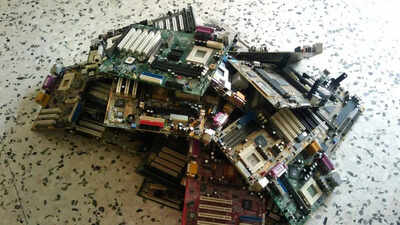
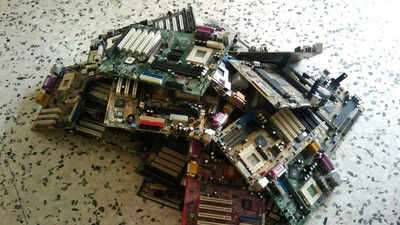
These days there is a belief all over the world that one should buy gold for future investment. All big investors will suggest buying gold as the best way to invest money. but scientist ETH Zurich (Swiss Federal Institute of Technology) have developed a sustainable method to restore 22 karat gold from electronic waste using proteins made from whey, a byproduct of the dairy industry. Swiss researchers successfully recovered 450 mg of 22 karat gold from 20 discarded computer motherboards. This special research conducted by scientists at ETH Zurich has been published in the journal advanced Materials.

How 20 discarded motherboards are hiding 22 carat gold!

According to a joint report by the United Nations Institute for Training and Research (UNITAR) International Telecommunication Union (ITU)The world will generate a record 62 million tonnes of e-waste in 2022. There is literally a mine of gold in these scraps. Electronic devices such as motherboards usually sell more expensive because of the use of gold in their connectors and circuit paths due to its superior conductivity and corrosion resistance. Researchers at ETH Zurich have confirmed in their study that by processing just 20 old computer motherboards, they can recover 450 mg of high purity, 22 karat gold. The number could be larger if the amount of discarded motherboards is high.

Whey to Wealth: Using Dairy Byproducts to Extract Precious Metals

The most incredible part of the Swiss research is the use of whey, a common liquid byproduct of the cheese making industry. Whey protein, traditionally considered a waste product, has been transformed by scientists into a highly efficient ‘protein sponge’ capable of extracting gold from discarded electronic scrap like motherboards.As cited by ETH Zurich (Swiss Federal Institute of Technology), researchers denatured whey proteins under high temperatures and acid to create tiny fibers, called amyloid fibrils. These nanometer sized fibers were freeze dried to make sponges. When this sponge is placed in a solution of a dismantled computer motherboard, it acts like a molecular magnet.

Profitable and green future e-waste recycling

The success story of Swiss researchers on the protein-sponge method signals a change in the way we look at global waste streams. By solving the extraction principle that high-purity gold can be recovered using organic materials instead of toxic chemicals, researchers have laid the foundation for a truly green and profitable circular economy. This study transforms e-waste from a growing environmental liability to a beneficial resource.

How is this discovery of 22 carat gold a win for the global economy?

According to an economic analysis provided by ETH Zurich, the value of the 450 mg of 22 karat gold recovered far exceeds the costs associated with its extraction. Furthermore, the cost of energy and raw materials is approximately 50 times less than the market value of the gold obtained. This profit-to-cost margin makes the technology highly attractive to scale up commercially, as it provides a faster and cheaper way to extract gold from deep earth ores.

Source link

NASA astronauts use AI and augmented reality for health and spacewalk on ISS Expedition 74

NASA astronauts use AI and augmented reality for health and spacewalk on ISS Expedition 74

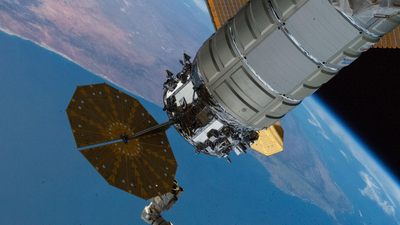
The 74 expedition members aboard the International Space Station (ISS) are preparing for an important spacewalk to advance microgravity research. NASA Flight engineers Jessica Meyer and Chris Williams prepared spacesuits in the Quest airlock, cleaned cooling loops and reviewed procedures for the March 18 extravehicular activity (EVA). They will perform kit modifications and install route cables for the seventh roll-out solar array, increasing ISS power capacity. Meanwhile, Jack Hathaway and ESA’s Sophie Adenot test EchoFinder-2, an AI-augmented reality ultrasound device in the Columbus module that autonomously scans organs to reduce reliance on Earth for distant missions. NASA further reported that Roscosmos astronauts Sergei Kud-Sverchkov and Sergei Mikaev monitored vascular health with sensors, while Andrey Fadeyev maintained the oxygen generator and water systems. Northrop Grumman’s Cygnus XL opens for re-entry into the Pacific via Canadarm2 on March 12, after delivering 11,000 pounds of cargo through September 2025. These efforts are a mix of maintenance and science, fueling the president’s deep space ambitions as part of the Artemis push. Live coverage across all NASA platforms begins at 6:45 a.m. EDT.

Spacewalk preparations on the international space station

NASA flight engineers Jessica Meir and Chris Williams are leading the charge for the upcoming spacewalk on March 18. Inside the Quest airlock, the two carefully cleaned the cooling loops on their spacesuits, refilled water components, and inspected the helmets to ensure everything worked flawlessly during the six-and-a-half-hour extravehicular activity (EVA). Their mission? To install a modification kit and route cables on the port side of the ISS for a future roll-out solar array, the seventh such array to boost the station’s power output. As posted on their This spacewalk highlights the ongoing upgrades keeping the ISS operational amid its aging infrastructure.Veteran astronaut Jessica Meyer, with her experience from previous EVAs, pairs seamlessly with Chris Williams, who has been adapting to station life since November. Their teamwork at the Quest Airlock not only prepared the hardware but also reviewed critical emergency procedures for the harsh vacuum of space. Augmented reality and AI in space health screeningInnovation is not just outside the station, it is thriving inside as well. Flight engineer Jack Hathaway of NASA and Sophie Adenot of the European Space Agency (ESA) conducted an augmented-reality-guided ultrasound scan using the EchoFinder-2 device in the Columbus laboratory module. They took pictures of each other’s abdomens and vascular systems, with AI analyzing the data to automatically identify the organs. An ESA report on the technology explains, “EcoFinder-2 opens the door to autonomous ultrasound using minimal training and low-tech hardware for space missions, reducing the reliance on Earth-based experts critical for future Mars trips where signal delays stretch up to 20 minutes. Adenote, on his first mission since February 2026, and Hathaway, a U.S. Navy captain with more than 2,500 flight hours, swapped roles to test the system’s reliability in weightlessness. Meanwhile, NASA’s blog further reports that Roscosmos astronauts Sergei Kud-Sverchkov and Sergei Mikaev monitored circulatory health with blood pressure cuffs and sensors on the forehead, fingers and toes. Data sent to the laptop helps doctors track microgravity’s effects on vascular systems, from fluid changes to possible clots. Flight engineer Andrey Fadeyev kept life support running, servicing the electron oxygen generator in the Zvezda module and purifying water tanks to protect the crew’s supplies.

Cygnus cargo spacecraft departing from the ISS

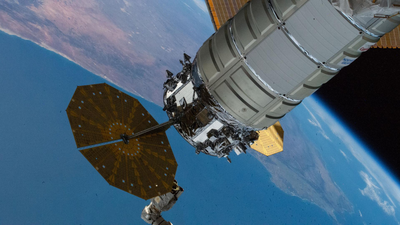
Northrop Grumman’s Cygnus XL cargo spacecraft is expected to undock on March 12, after a six-month stay beginning September 18, 2025. Loaded with trash and experiments, it will be grabbed by the Canadarm2 robotic arm from the Unity module and released for a fiery reentry over the South Pacific. The mission delivered more than 11,000 pounds of supplies, hardware and science payload under NASA’s Commercial Replenishment Service program. “Cygnus XL, operated by Northrop Grumman, is scheduled to depart the ISS on Thursday, March 12,” Space Coast Daily confirms, with live coverage beginning at 6:45 a.m. EDT on NASA+.Sophie Adenot will oversee Cygnus’ systems post-release, ensuring a smooth exit. This departure clears the docking port for future missions, maintaining the ISS’s role as a springboard for deep space ambitions.

Expedition 74 Crew: Pioneering Spacewalk

Expedition 74, running from December 2025, combines NASA, ESA and Roscosmos expertise for research in biology, physics and human physiology. From solar array upgrades powering the outposts of tomorrow to AI diagnostics paving the way for autonomous medicine, these activities captivate global audiences.As President Trump’s administration sets its sights on Artemis and beyond, the ISS remains Earth’s orbiting laboratory, where changes like turning on today’s solar arrays provide sustainable power for an expanded human presence in space. Watch the action live and witness history happening 400km above us.

Source link