‘Meta reached out to interview me the same week…’: US founder asks what happened to employee retention

'Meta reached out to interview me the same week...': US founder asks what happened to employee retention
An American entrepreneur claimed that Meta contacted him for a role in the same week that Meta laid off 8,000 employees.

Zach Wilson, an American entrepreneur, claimed on Wilson said he was sure at least one of those 8,000 people had the qualities for the role he was contacted for, but the company didn’t hire anyone.“Why do companies expect us to be loyal to them if they don’t even try to retain us when they have hundreds of billions of dollars at their disposal? It would be financially cheaper for them to retain one of those 8,000 people. It would also be cheaper emotionally for those who were let go,” Wilson wrote in his now-viral post.“How do these big tech companies expect people to put in their blood, sweat, and tears to work, while also saying, “Yeah, we’ll cut you off any minute.” I don’t know. The culture around AI and layoffs has become incredibly toxic,” he wrote.Meta announced the mass layoffs of its employees via an email, stating that the reduction in headcount was part of a “continued effort to run the company more efficiently” and thanking them for their contributions to Meta. On Wednesday, about 10% of Metra’s 78,000 employees began receiving notices informing them they were being laid off.“As previously shared, we have decided to reduce the number of employees as part of our continued effort to run the company more efficiently and allow us to recoup other investments we are making. Unfortunately, your role has been eliminated as part of today’s restructuring. Before sharing additional details, we want to thank you for your contributions to Meta. We appreciate the important role you have played in the company’s journey,” the notice in the mail reads. Before going into the details of tenure, holidays, severance etc. is stated.

Source link

Jobs smell: real anger about artificial intelligence at US graduation ceremonies

Jobs smell: real anger about artificial intelligence at US graduation ceremonies

Washington: For years, American commencement (convocation) speakers could safely rely on formulaic speeches featuring inspirational clichés, autobiographical struggles, and sermons exhorting new graduates to “dream big” and not be afraid of failure. In 2026, there is a new safety rail: Mention artificial intelligence at your own risk.Across the United States this early season, graduation ceremony speakers invoking AI have been greeted not with polite applause but with boos and ridicule. Former Google CEO Eric Schmidt was harassed after telling undergraduates at the University of Arizona that they would help shape the future of AI — an argument that landed awkwardly among students looking into an increasingly tough job market due to automation, layoffs and hiring freezes.At the University of Central Florida, graduates booed when real estate executive Gloria Caulfield declared that “the rise of AI is the next industrial revolution.” The reaction was so immediate that the startled speaker asked, “What happened?” Before attempting to continue the game. At Middle Tennessee State University, music executive Scott Borchetta also drew criticism when speaking about the impact of AI on the creative industries. Instead of optimism, many graduates heard something else: “Congratulations, your replacement is scalable.”Hungama is more than campus theatre. It reflects a broader American backlash against a tech system that is increasingly seen as enriching billionaires and hurting everyone else. While the elites promise growth and abundance, young graduates (and their parents) are worrying about electricity bills, water supplies and vanishing entry-level jobs. Anger is now spreading beyond campuses to suburbs, farmland and zoning-board meetings — especially around data centers, the giant warehouse-like facilities powering the AI ​​boom. Just outside Washington, DC, in Northern Virginia, nicknamed “Data Center Alley,” residents are battling a proposed server farm over noise, electricity use, land consumption and environmental impact. A similar movement has spread in Georgia, Arizona, Oregon, Texas and New Jersey.It’s become such a hot topic that President Trump himself faced questions on it on Wednesday, only to emphasize that “AI has been amazing, because right now we have by FAR more jobs in the United States than ever before, more people working,” before immediately turning to Iran. Billionaires – from chipmakers to cloud providers to venture capitalists – have promoted AI as the next transformative leap in human productivity. They are not completely wrong. AI promises medical breakthroughs, faster scientific research, personalized education, better logistics, greater efficiency, and potentially trillions in economic output. “AI exists and in many areas it is smarter than humans. We have to get used to the idea that it will replace humans in many areas,” says Lil Mohan, a professor who teaches a course on artificial intelligence at the University of Chicago’s Booth School of Business.Yet critics argue that the benefits are unevenly distributed. Graduates entering journalism, design, software engineering, law, marketing, or customer support now simultaneously hear that AI will create extraordinary productivity gains – and entry-level work may shrink as software can draft memos, generate code, summarize documents, or design graphics.Residents near proposed data centers meanwhile hear promises of innovation and tax revenue, but see ever-increasing energy demand, heavy water consumption, deindustrialized landscapes and relatively modest permanent job creation. Public skepticism towards AI has increased as communities question whether technological acceleration exceeds democratic consent. “This is a very natural reaction of the graduating class because there is some small truth to the decline in entry-level jobs,” says Aditya Balu, who graduated from Johns Hopkins University in 2019 and is now an operations analyst in an AI unit at the World Bank. Yet the story is not simply one of AI-optimism or techno-pessimism. There is also a warning often omitted from Silicon Valley keynote speeches throughout history: Change causes harm. They redistribute power. They create winners and losers. And when ordinary people believe that the billionaire class captures most of the profits while the community absorbs the disruptions, anger arises.Which might explain why America’s graduates are screaming.

Source link

Scientists find fossilized pollen that reveals a hidden Nile river used to build the Great Pyramid

Scientists find fossilized pollen that reveals a hidden Nile river used to build the Great Pyramid
The ancient Egyptians cleverly used a forgotten, high-volume Nile branch, the Khufu Branch, to transport huge pyramid stones. Image Credit: Chatgpt

If you’ve ever spent any time on TikTok or history subreddits, you’ve definitely seen wild theories about the construction of the Great Pyramid of Giza. Aliens, lost future civilizations, complex sound-wave levitation – people will believe anything rather than admit that humans have just discovered it.Given the modern scenario, the skepticism is justified to some extent. Today, the Great Pyramid rises from the sun-bleached desert four miles from the ferocious Nile River. It’s an engineering fever dream to imagine Bronze Age workers carrying 2.3 million stone blocks, each weighing more than two tons, across miles of scorching sand.But a major environmental success shows that we’ve been looking at the problem all wrong. The ancient Egyptians did not work hard; He worked more cleverly. They used a vast, forgotten water highway that ran just beneath the Giza Plateau.ancient green corridor under the sand4,500 years ago, the world was a different place under the rule of the pharaohs Khufu, Khafre and Menkaure. Giza was not a desert wasteland, but a busy port city on the port front.An international team of scientists literally delved into the history of the landscape to prove it. In a groundbreaking research paper published in Proceedings of the National Academy of SciencesThe researchers extracted fossil pollen from sediment cores deep beneath the modern Giza flood plain.By analyzing these microscopic ancient plants, the team created an 8,000-year history of the local environment. They found many marsh-loving plants and flowering river grasses that grow only in still, deep water. The data confirmed the existence of a long-lost, naturally occurring high-volume channel of the Nile, called the Khufu Branch, which flows right next to the pyramid construction sites.This was not a shallow bay. At the height of pyramid construction, the Khufu branch was operating at about 40% of its Holocene maximum capacity. Thus, it was so deep and wide that cargo boats could easily travel, there was a sea highway directly from the distant mines to the Giza plateau.

great pyramid

Scientific evidence shows that this ‘water highway’ flowed directly towards Giza, which proves that they did not work harder, but more wisely. Image Credit: Wikimedia Commons

Engineering with the flow of natureWhere the ancient Egyptians weaponized geography, instead of brutalizing human labor across miles of sand, they built a complex of ports and canals that connected directly to this natural river branch, creating a highly organized logistics hub.Environmental evidence is strengthened by the direct testimony of those who actually did the work. Another very impressive study looked at Merer’s JournalWhere researchers examined logbooks written on ancient papyrus found near the Red Sea.The logs are kept by a specialized inspector named Merer, and they describe the daily operations of a crew of about 200 men who took high-quality limestone blocks from the quarries of Tura directly to Giza. Merer gives a detailed description of the loading of the huge stones onto boats, their transport down the Nile and then through a network of artificial canals to the ‘Pool of Khufu’, a huge port complex fed by the Khufu branch.Rather than relying solely on muscle power, engineers likely used the Nile’s annual floods as natural hydraulic lift. They created deep water basins that filled in during high water season, so that heavy transport boats could float up to the base of the construction ramp.When the cosmic freeway ran drySo where did this great river highway go? The answer is gradual, worldwide changes in climate.The pyramids were built right at the end of the African Humid Period, when North Africa received much greater amounts of rainfall than today. Over centuries, small changes in the amount of solar radiation received by Earth gradually dried out East Africa.Due to the failure of rains and the continuous decrease in the water level of the Nile, the depth of the Khufu branch began to decrease. By the time King Tutankhamun ascended the throne centuries later, the waterway had greatly diminished. Ultimately, it dried up completely, due to centuries of blowing desert sand and changing agricultural needs.The disappearance of the river branch effectively sealed the pyramids in the deep desert, creating a geographical mystery that has baffled historians for generations. The ancient Egyptians did not need cosmic help to create the wonders of the ancient world. All they had to do was learn their local ecosystem, know river logistics like the back of their hand, and get a little help from nature at just the right time.

Source link

California hit-and-run: Indian man arrested by ICE after released by state, 4-year-old victim expected to survive

California hit-and-run: Indian man arrested by ICE after released by state, 4-year-old victim expected to survive
Indian man, Aman Kumar, arrested by ICE after being released by California in a hit-and-run case.

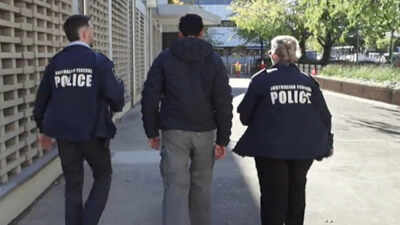
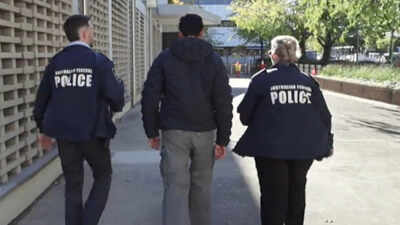
Immigration and Customs Enforcement arrested Aman Kumar, an Indian man who was charged in a hit-and-run case, for living in the US illegally and yet the state of California released him from jail. Aman Kumar was arrested in April after he fatally shot a four-year-old boy in Fresno, California on April 28, 2026. He was arrested the next day by the Fresno Sheriff’s Department and charged with aggravated hit and run: death or injury. The Department of Homeland Security claimed that California sanctuary politicians illegally released the criminal from prison, but ICE arrested Kumar on May 13 outside the California Superior Court, County of Fresno.“This monster, who almost killed a 4-year-old boy, has been charged with aggravated hit and run,” said Acting Assistant Secretary of State Lauren Biss. “Sanctuary politicians in California released this criminal illegal alien from prison back onto the streets. Thanks to the brave men and women of ICE law enforcement, this criminal illegal alien was arrested outside a criminal court. DHS is calling on Governor Gavin Newsom and his fellow California sanctuary politicians to stop the threat to American life by releasing criminals into our communities to commit more crimes and hurt more innocent people. Stop pouring in.”DHS claimed Kumar entered the United States illegally in California in 2023 and was released by the Biden administration.The hit-and-run occurred on April 28 at around 8 p.m. The four-year-old boy was playing on a swing set at home but wandered onto the road crossing his courtyard. Many drivers stopped to avoid hitting the child, but Kumar swerved into the bike lane in an attempt to bypass traffic and ultimately hit the victim. He stopped for a while and then walked away quickly. The boy was hospitalized and is expected to survive.“ICE did what FPD couldn’t do and put him back behind bars; he will now face immigration proceedings,” ICE said.

Source link

BMW falls into river in horrific car accident in New Jersey; The Indian-origin driver was arrested after fleeing the scene on foot.

BMW falls into river in horrific car accident in New Jersey; The Indian-origin driver was arrested after fleeing the scene on foot.
Zorawar S Kohli was charged after a fatal car accident in New Jersey. (Photo: Daily Voice New Jersey)

A major crash involving a BMW and a Land Rover on Route 80 East on the Hackensack River Bridge in New Jersey resulted in the BMW hitting a concrete barrier and falling into the river, while the driver escaped the scene on foot. Hackensack Fire Department crews responded to the scene and found several damaged vehicles and a submerged BMW in the river below.According to state police, the driver and passenger of the Land Rover suffered minor injuries and were taken to a local hospital. There is no report of anyone else being injured at the scene.Police identified the BMW driver as Zorawar S. Kohli, 32, of Englewood Cliffs. Reports said that after the accident, Kohli fled the scene on foot, but was found under a nearby train and arrested.According to state police, Kohli was charged with fourth-degree obstruction, fourth-degree resisting arrest by flight, two counts of assault by auto and multiple motor vehicle offenses. He was released pending his next court date. The submerged vehicle was later removed from the river by Brookside Towing, reports said.

Source link

5 Indian, 2 US businessmen: Inside the Indian call center operation that the FBI shut down for fraud

5 Indian, 2 US businessmen: Inside the Indian call center operation that the FBI shut down for fraud
The FBI shut down a call center operation in India that was defrauding senior citizens in the US in the name of technical support.

The FBI in Boston announced that they have shut down a call center operation in India after busting a major racket that also involved criminals from the US. The call center operation defrauded hundreds of elderly victims in the US and elsewhere out of millions of dollars through technical support scams. The FBI investigation said two senior US officials were part of it and, in fact, enabled it by turning a blind eye to widespread fraud.

Who are Adam Young and Harrison Gewirtz? What was the scam?

Adam Young, 42, of Florida, and Harrison Gewirtz, 33, of Las Vegas, operated a business, Ringba, that provided telecommunications-related services, including telephone numbers, call routing services, call tracking and call forwarding services, to customers they knew engaged in technical support fraud schemes. He has now pleaded guilty to a felony, in violation of federal law. He is scheduled to be sentenced on June 16, 2026.The investigation further revealed that call centers based in India used Young and Gerwitz’s business to route their “technical fraud” scheme calls and, in some cases, advised those fraudsters on ways to reduce complaints and prevent account terminations.

Indian part of the scam: Sahil Narang, Chirag Sachdeva, Abrar Anjum, Manish Kumar, Jagmeet Singh Virk

The investigation began in 2020 which led the FBI to India-based telemarketing fraudsters. Indian nationals Sahil Narang, Chirag Sachdeva, Abrar Anjum and Manish Kumar were convicted of charges related to India-based telemarketing fraud schemes that targeted Americans and defrauded millions of dollars, many of them vulnerable to the fraudulent schemes due to age or infirmity. The fifth person convicted in the same scam was Jagmeet Singh Virk.

Attention your computer has a virus

According to court documents, from approximately 2016 to 2022, Young, Gewirtz and others knew that some of their customers were engaged in tech-assistance fraud schemes. The schemes used misleading pop-up messages to convince computer users that their computers had been infected with a virus or malware. Victims were directed to call a phone number on a pop-up message or advertisement that connected victims to call centers, where they were persuaded to pay hundreds of dollars for unnecessary or fictitious technical-support services. In some cases, call center agents remotely accessed victims’ computers and obtained personal and financial information.

Young, Gewirtz discovered the fraud and became part of it

From 2017 to April 2022, after learning of their clients’ fraudulent schemes, Young and Gewirtz failed to report the schemes to law enforcement authorities. According to statements filed in court, the defendants received numerous complaints and inquiries from telephone providers and law enforcement regarding customers who engaged in technical support fraud. Despite that knowledge, he advised some of his clients on techniques that clients could use to avoid complaints from fraud victims and prevent account termination. Young and Gevirtz helped some of those clients buy and sell fraudulent calls among themselves.Young and Gewirtz themselves owned and operated a call center in Tunisia from 2016 to April 2022, where some employees engaged in technical-support fraud.“What the CEO and CSO of this well-known call tracking and analytics company did was extremely despicable. By their own admission, they knowingly profited from telemarketing and technical support scammers here and abroad who preyed on the elderly, exploited the vulnerable and robbed victims of their life savings and peace of mind. “Behind every prank call is a real person who is frightened, humiliated or financially broke,” said Ted Eidox, Special Agent in Charge of the FBI’s Boston Division.“Tech support scams cost Americans $2.1 billion last year, and Rhode Islanders reported losing at least $5.7 million. Let this be a warning: If you promote and support these criminal networks that prey on unsuspecting consumers, the FBI will pursue you relentlessly to make sure you are held accountable for the harm you helped cause,” Edox said. Said.Court documents further indicate that the two former CEOs directed employees to promote their company’s services to customers who engaged in technical-support fraud and, at times, introduced customers engaged in fraudulent activity to others who could support their fraudulent business.

Source link

University of Chicago: Why John D. Rockefeller called the University of Chicago his best investment world News

Why did John D. Rockefeller call the University of Chicago his best investment?
Industrialist John D. Rockefeller revolutionized philanthropy by making his donation to the University of Chicago conditional on demanding local financial buy-in. This strategic approach fostered accountability and community engagement, turning seed donation into a self-sustaining powerhouse.

The history of modern education in the context of architecture portrays the establishment of a research center for the elite as the automatic result of unbridled greed. It is easy to assume that when an industrial tycoon creates a university, he only needs to write big checks to build an institution for his ego.But this romantic view ignores the highly disciplined strategy required to transform a young institution into a self-sustaining powerhouse. Long before an academic center can attract elite thinkers or achieve global recognition, its founders must establish a rigorous system of financial accountability and community buy-in.When a key leader treats a multi-million dollar donation as conditional seed capital rather than a permanent handout, they create an operational culture designed to thrive independently.In an incredible display of institutional design that demolished traditional nineteenth-century philanthropy, industrialist John D. Rockefeller applied this exact corporate logic to the creation of the University of Chicago. Rather than acting as an open patron solely handling all structural expenses, the billionaire deliberately structured his initial financial support to force community participation.His commitment of $600,000 in 1889 was attached to a clear deadline, where he expected Chicago locals to contribute an additional $400,000 in a year’s time before releasing any of their funds.While popular stories often reduce the nature of this partnership to mere stories of casual philanthropy, the true success was in this structural benefit. Far from making the school merely a constant reminder of his personal fortune, the founder turned what would have been a mere windfall donation into a financial powerhouse that eventually grew to $35 million in total capital.Accountability through re-engineering capital loopsTo understand why a well-structured and conditional endowment provides greater lasting value than traditional unrestricted gifts, one must consider the specific organizational behavior it creates. Unlike traditional donations, which allow the institution’s administration to become complacent or overly dependent on a sole contributor, conditional capital requires that the university continue to build trust within its immediate community.Management will be forced to present their vision to the local community in order to raise similar funds, thus refining their educational mission and working process in the process. The discipline of doing so becomes a safeguard against organizational decline and ensures that the real needs of local people are behind any expansion initiative.It is precisely this kind of philosophy that has enabled us to retain the real meaning of Rockefeller’s famous remark about the school. According to historical records published in University of Chicago Alumni Magazine Special ExhibitionThe famous industrialist actually used these words at the quinquennial celebration of 1896 to remind everyone of their responsibilities.

harper_midway_chicago

Industrialist John D. Rockefeller built the University of Chicago using a smart financial strategy. He made his donation conditional, requiring local contribution. Image Credit: Wikipedia

It becomes clear from the key documents that there was no claim of ownership in his statement. Rather it was a statement concerning the excellent results of a very successful system of mutual risk-sharing. By establishing an endowment that would prevent him from controlling everything that happened at the university, the founder ensured that administration would be left to local trustees, transforming a small Midwest college into a research institution in a matter of months.long term benefits of independent governanceAnother important thing can be learned from all this. To make a positive impact on society and gain prestige, one needs more than a quick inflow of money. There is a need to create a fixed governance system that will exist independently of the original creator for centuries to come.When a private resource is absorbed into a highly accountable public service, it creates a vast reservoir of institutional credibility, which continues to attract high-quality staff, large research funding and future generations of talented academics.The enduring utility of this practical governance model is clearly detailed in the historical document compiled The University of Chicago Libraries is creating a long-term future exhibit. Archived data reveals how the infrastructure allowed the institute to rapidly transform into a world-renowned research center in less than two decades.Since early investments were typically tied to structural independence rather than individual branding, the new generation of funding institutions, such as the Rockefeller Foundation, could easily make multi-decade investments to build a medical school and further develop advanced social services training.By focusing on building institutional strength rather than creating their own legacies, such leaders create edifices that are surprisingly adaptable to the new challenges presented by the world at large. By viewing philanthropy as a risky investment in human potential rather than outright charity, this time-tested formula proves that the greatest achievement for any innovator is creating an organization greater than themselves.

Source link

UK student murder: ‘I was afraid he was going to stab me’: Sikh man claims self-defense in UK student murder trial world News

'I was afraid he was going to stab me': Sikh man claims self-defense in UK student murder trial

A 23-year-old Sikh man accused of fatally stabbing a university student in Southampton has told a court he believed the teen was about to use his ceremonial blade against him during a violent street struggle. Southampton Crown Court heard that Henry Novak, 18, of Chafford Hundred, Essex, died after a fight on Belmont Road on December 3 last year as he returned to his accommodation after a night out, the BBC reports.Vikram Digva denied the murder and denied carrying a knife in public.DeGwa told jurors the incident began shortly before 11.30pm when the pair passed each other on the sidewalk as he walked to pick up curry chips from a nearby car.“It looked to me like he was drunk,” the defendant said.“He rammed into me. I thought he did it on purpose.”DeGava said Novak then turned back and told him: “You could have gone a little further.”The court heard the argument escalated when the teenager allegedly used a racial slur and said: “Do you think you’re a bad guy? I’m from Essex. You don’t know what the people of Essex go through.”Jurors were shown footage recorded on a mobile phone after Novak allegedly began filming the defendant.“I went to block the phone. I have caught him too,” Digva said.“This is when he punched me.”He told the court that the confrontation became more aggressive when his turban was pulled off during the struggle.“As soon as I bent over, he started saying: ‘I’m going [expletive] You get up, I will kill you,” Digwa said.The defendant said he feared Novak would take his kirpan, a ceremonial Sikh blade worn in a sheath around his neck.He said, “I felt I had to do something because I was afraid he would attack me with my own saber.”The court had previously heard that the blade measured approximately 21cm.Degawa said he never intended to stab the teen in the chest and claimed he had only tried to push him away. “I’m sorry this happened,” he said, becoming emotional in court.Earlier in the trial, jurors heard that the first-year University of Southampton student had drunk alcohol before the incident, but was below the drink-driving limit.Prosecutors said a confrontation was not observed. Novak suffered five stab wounds or lacerations and after being injured he attempted to escape by climbing over a fence.The court also heard that police officers initially handcuffed the teen, but they discovered he had suffered fatal injuries.Digva, of St Denis Road, Southampton, admitted he did not immediately tell officers he had stabbed Novak because he was “scared”.His mother Kiran Kaur, 53, is also facing trial, accused of allegedly assisting a criminal by removing weapons from the crime scene. She denies the allegation.

Source link

Brighton beach deaths: ‘Beautiful light of our family’: UK Three women found dead on Brighton beach identified as sisters | world News

'Beautiful light of our family': Three women found dead on UK Brighton beach identified as sisters
Three women found dead on Britain’s Brighton beach have been identified as sisters.

Three women found dead in the sea off Brighton beach earlier this month have now been identified as sisters from London, police have confirmed.Jane Adetoro, 36, Christina Walters, 32, and Rebecca Walters, 31, all from the Uxbridge area, were found dead near Madeira Drive on May 13.Emergency services were called at around 5:45am after concerns were raised about a person in the water near the Black Rock car park. Later two more bodies were recovered nearby.Sussex Police said there is currently no evidence of criminality or third-party involvement, but detectives are continuing to make inquiries to establish exactly what happened, The Guardian reported, quoting police.Police believe the sisters may have entered the sea from the beach before getting into trouble. It is thought they were first seen near Brighton Palace Pier before heading towards Brighton Marina.Their father, Joseph, paid tribute to his daughters in a statement released through police.He said, “Jen, Christina and Becky were more than daughters to me; they were my joy, my strength, and beautiful lights that filled our family with happiness and love.”“Each of you was unique and precious in your own special way. Your smile brightened dark days, your laughter provided comfort and your presence made life more meaningful.”“Although your time on earth was short, the impact you made will live on in our hearts forever.”Police said hundreds of hours of CCTV footage has been reviewed, while officers continue to trace the women’s last movements around the beach area.Chief Superintendent Adam Hayes said officers would leave “no stone unturned” during the investigation.“The thoughts of everyone at Sussex Police are with the families of Jane, Christina and Rebecca following this devastating loss,” Hayes said.

Source link

Children across England will get free bus travel this August under a £100million government scheme. world News

Children across England to get free bus rides this August under £100million government scheme
Millions of children in England will benefit from free bus travel this summer / Image: File

Millions of children across England will be able to travel for free on local buses throughout August under a new government-backed scheme aimed at helping families cope with the rising cost of living.The scheme, announced by Chancellor Rachel Reeves, will allow every child aged five to 15 to ride for free on participating local bus services in England from August 1 to August 31. The government says the initiative is part of a wider “Great British Summer Savings” package, designed to ease pressure on household budgets during the school holidays.Officials estimate the scheme will cost more than £100 million and could save families significant sums of money during the busy summer holidays, especially when many parents are facing rising food, travel and energy bills.

Explained about free bus travel in England

Under the scheme, children aged five to 15 can travel unlimitedly on participating local buses throughout England without paying fares or registering in advance. The government confirmed that this offer will run for the entire month of August.According to the Treasury, a family with two children who make one return bus journey per week could save around £27 over the summer month, based on the current average child fare.Transport Secretary Heidi Alexander said the move would help families enjoy affordable days out, visit relatives and explore local areas during the school holidays without having to worry about transport costs.The scheme is expected to apply only to participating local bus operators in England and will not automatically include long-distance coach services or rail travel. Full details on participating services are expected closer to launch.

Support for UK families during the summer

The announcement of free travel comes as the government faces increasing pressure on the cost of living and fears global tensions could push prices higher later this year.As well as free bus travel, ministers also announced plans to suspend tariffs on more than 100 imported food products including biscuits, chocolate, dried fruit and nuts in an effort to ease pressure on supermarket prices.Prime Minister Keir Starmer said many families were still “feeling the squeeze” and described the measures as practical steps to help parents through the expensive summer holidays.Rachel Reeves said her “number one priority” is to protect families from rising costs and help families enjoy the summer despite ongoing economic pressures related to global instability and inflation concerns.

Regional Success Stories

The national rollout follows successful local transport schemes launched in parts of England and the wider UK.In the west of England, a similar “Kids Go Free” initiative reportedly provided around 1.4 million free trips during the school holidays after launching last year. Regional leaders said the program helped youth travel independently while reducing financial pressure on families.Elsewhere in the UK, Scotland already offers free nationwide bus travel for everyone under 22 through its Young Persons Free Bus Travel scheme. Wales is also running a £1 discount on fares for young travellers.Transport campaigners welcomed the English plan, arguing that cheaper public transport could improve access to education, leisure and job opportunities while encouraging more people to use buses rather than cars.

Public reaction to free bus rides

Online reaction was largely positive, with many parents describing the announcement as a welcome financial relief during the expensive summer holiday period. Some social media users said even short family trips by bus have become increasingly expensive in recent years.One Reddit user wrote that taking kids downtown by bus could be nearly three times more expensive than driving after fares and parking are considered. Others praised similar schemes in Wales and Scotland to help teenagers travel more independently.However, critics questioned why the scheme only applies during August rather than the entire school year, when many families face higher regular transportation costs. Some also raised concerns about whether already expanded local bus services could meet increased passenger demand during busy holiday weeks.Despite the debate, the initiative is one of the largest nationwide free public transport offers for children launched in England in recent years.

Source link