The ChudTheBuilder Bond Offer: The ChudTheBuilder Could Be Issued Following Report of a $1M Bond Offer From Crypto Casino “Duel”.

crypto casino

The Chuddbuilder may soon be released from jail after a surprise development in his ongoing legal case. A judge has revealed that a third party has stepped forward to pay his $1 million bond, which could allow him to get out of custody while the trial continues. The news spread quickly online, especially because of who is reportedly included in the offer. The case, which was already high-profile because of the serious allegations surrounding the courthouse shooting in Tennessee, has now gained even more attention.According to initial reports, the party interested in covering the bonds is a crypto gambling platform called Duel. This unexpected connection has made the legal update a major talking point on the internet. Many are now questioning why a gambling company would step up to finance the release of someone facing serious criminal charges. The situation has sparked debate over whether it is a marketing move, charity, or a publicity stunt. The court has not yet confirmed final approval of the bond payment.

ChudTheBuilder’s $1M bond offer tied to crypto casino “Duel” sparks online debate

The judge in the case said someone has come forward to cover the $1 million bond set for Chuddbuilder. Bond is not a punishment, but rather a financial guarantee that allows the defendant to be released while awaiting trial, as long as court rules are followed. Earlier reports suggested the bond amount could be even higher before being adjusted to $1 million.What makes this case unusual is the alleged involvement of Duel, a crypto casino site. Online users have reacted strongly, with many surprised that a gambling-related company could be linked to a criminal legal process. Some see this as a promotional stunt, while others believe it may simply be a third-party financial offer.Chuddbuilder, whose real name is Dalton Eatherly, is already facing serious charges related to the shooting incident outside a Tennessee courthouse. Due to the nature of the case, his bond amount was set very high.At this time, the court has not confirmed if the bond payment will be accepted in full or when a potential release could occur. The situation is evolving as more details emerge.In simple terms, this means that a crypto gambling company can pay out the money so that the fuckbuilder can get out of jail while waiting for his case to be over. Many people online are shocked and talking about it because it is so unusual.


Source link

US spy chief Tulsi Gabbard resigns under pressure from White House: report

US spy chief Tulsi Gabbard resigns under pressure from White House: report
Tulsi Gabbard (file photo/PTI)

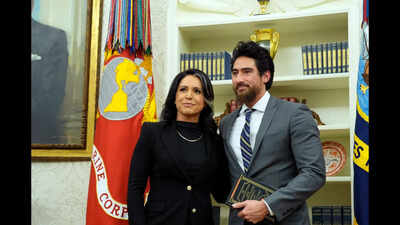
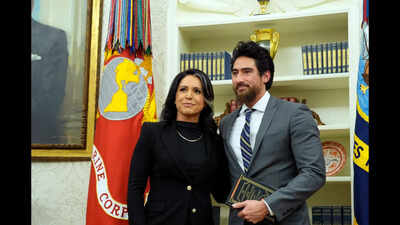
US Director of National Intelligence (DNI) Tulsi Gabbard announced Friday that she was stepping down from her post to support her husband, who was recently diagnosed with an “extremely rare form of bone disease.” cancerHe shared his resignation letter on X after Fox News first reported his decision to step down.Thanking Gabbard for her service, US President Donald Trump announced that Aaron Lucas will serve as interim Director of National Intelligence.“Unfortunately, after doing a great job, Tulsi Gabbard will be leaving the administration on June 30. Her wonderful husband, Abraham, has recently been diagnosed with a rare form of bone cancer, and she, appropriately, wants to be with him, nursing him back to good health as they currently fight a tough battle together. I have no doubt that he will soon be better than before,” Trump wrote on his Truth social platform.Meanwhile, Reuters reported that the White House had “forced” Gabbard to step down.There was already speculation that Gabbard might step aside from the Trump administration following the president’s decision to attack Iran, a move that reportedly sparked divisions within the administration.In March, Joe Kent, director of the National Counterterrorism Center, also resigned, saying he could not “in good conscience” support the war.During a congressional hearing in March, Gabbard attracted attention with her carefully worded comments, which stopped short of fully supporting Trump’s decision to attack Iran.He repeatedly dodged questions about whether the White House was warned about the potential consequences of the conflict, including Tehran effectively closing the Strait of Hormuz.In written remarks to the Senate Intelligence Committee, Gabbard said there had been no efforts by Iran to rebuild its nuclear capability after US strikes last year “destroyed” the country’s nuclear program.The statement appears to contradict the president, who has repeatedly argued that the strikes were necessary to stop an imminent threat from the Islamic Republic.

Source link

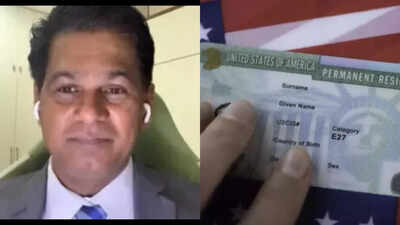
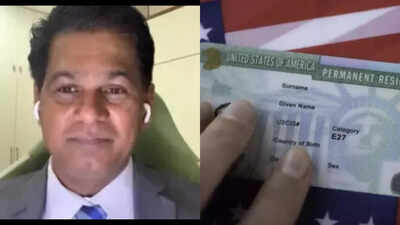
‘Go home’ for green card rule: Immigration lawyer Rahul Reddy explains what H-1B visa holders should do now

'Go home' for green card rule: Immigration lawyer Rahul Reddy explains what H-1B visa holders should do now
Immigration lawyer Rahul Reddy explains what H-1B visa holders applying for a green card should do.

The new green card rule that applicants cannot wait for their green cards in the US and must return to their country of origin has come as a blow, as 1.2 million legal immigrants have been waiting years to become permanent residents. Experts are waiting for more clarity on how USCIS will implement it, while many said the new rule will be challenged in court because it is against the law.Indian-origin immigration lawyer Rahul Reddy said that the rules have not changed and the law will not change but the method of deciding on the green card application has changed.What does USCIS say in the new rule?USCIS said people come to the US on a temporary visa and then apply for a change of status to become permanent citizens. While waiting for this to happen, they continue to live in the US. USCIS said this must stop. A person who wants to become a permanent resident of the United States must return to his or her home country and then apply for an immigrant visa.what changesFor decades, visa holders who came to the US legally and maintained their legal status the entire time could apply for a green card through ‘adjustment of status’.“For decades, the deal was this: If you followed the rules, maintained your status, got your I-140 approved, and waited your turn, your green card was essentially a sure thing through adjustment of status after your priority date turned on. The officer reviewing your file mostly asked, “Is this person eligible?” If yes, approved,” Reddy explained.“That deal is now in question. The new memo reminds officials that approving green cards from inside the United States is a favor, not a right. The official term is “discretionary” — meaning the official can’t say no even if you’re eligible. The memo doesn’t just remind them that they have this power. It actively encourages them to use it,” Reddy said.“The most worrying thing is how the memo views people on work visas. If you came to the US on an H-1B, L-1, or O-1, the government’s expectation – according to this memo – is that you will eventually go home. Not stay. Staying in the US rather than going back to your home country and applying at the US Consulate there to get a green card is something that officials should view in a negative light. Yes, the memo acknowledges that The H-1B and L-1 are allowed “dual intent.”“But then it says the allowance alone is not enough to get you approved,” Reddy explained.What should H-1B visa holders who want a green card do?Reddy said those who have already filed a green card application should consult their attorney and strengthen their case before USCIS raises questions. For those who are considering filing, the choice is difficult because ultimately they will have to return to their home country and apply from there, which is a slower and riskier path.I-140 approved? Can you live in America?There are many unanswered questions on the new memo. Many experts interpreted the memo to mean that it only applies to the ‘adjustment of status’ portion of the green card process which occurs only when your priority date becomes current and you are ready to file Form I-485. For this, one may have to go back to their home country, but people who have just filed I-140, which is the petition for a green card, will not have to leave the US. The priority date for India and China takes years to become operational and so there will be no immediate impact on these two countries but the USCIS memo did not clarify these specifics.

Source link

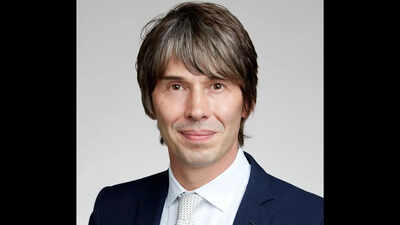
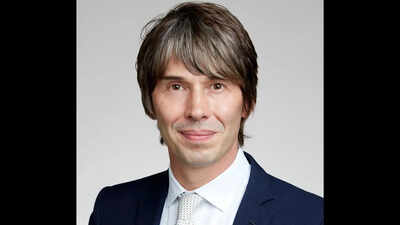
Quote of the Day by English physicist Brian Cox: “We explore because we are curious, not because we want to develop grander views or better widgets of reality.” |

Quote of the Day by English physicist Brian Cox:
Brian Cox (Image: Wikipedia)

There is something interesting about humans that appears very early in life. Children ask countless questions before they know anything about science, philosophy or technology. They ask where the stars go during the day. They ask why the color of the sky changes in the evening? They ask why birds fly, why the oceans seem endless and why the moon follows them during car rides. Most of these questions don’t start with a practical goal. No child is asking because the answer will make a machine or generate money. The question appears because curiosity itself exists.maybe that’s what makes it brian cox‘s words seem surprisingly honest. In a world where almost every activity is expected to justify itself through productivity, profit or utility, this quote reminds people of something simple. Humans explore because they want to know. Curiosity alone can be enough.Modern societies often value results. Research is often discussed through inventions, technology, and economic benefits. Searches are measured based on what they ultimately produce. Space missions are linked to technological advancements. Scientific studies are linked to practical applications. Even education is sometimes limited to employment opportunities and future salary.Yet history shows again and again that many of humanity’s most important discoveries began without immediate practical goals. People often searched because they wanted to understand something that seemed mysterious. Practical benefits sometimes appear much later, sometimes unexpectedly and sometimes in ways that no one had originally imagined.This may be one reason why this quote sticks in the mind after reading. It quietly suggests that curiosity has value even before the results are revealed.

Quote of the Day by Brian Cox

“We explore because we are curious, not because we want to develop grander views or better widgets of reality.”

What is the meaning behind Brian Cox’s quote?

At its core, the quote seems to say that exploration begins not because people already know where they will end up, but because they want to understand what they don’t yet know. Humans have a natural desire to go beyond familiar boundaries. Sometimes people travel because they wonder what exists beyond the places they have already visited. Sometimes scientists spend years studying questions without knowing whether useful answers will emerge. Sometimes people read books simply because they want to understand ideas that differ from their own.The interesting thing about curiosity is that it often comes before the purpose is clear. People rarely begin a journey with complete certainty about what they will discover. Someone learning music has no idea where that interest will lead years later. A student reading about astronomy may not realize that a small fascination can ultimately shape an entire career.Curiosity often starts with simple questions.Why does this happen?How does this work?What exists beyond what I already understand?Many important things start from there.This quote seems to challenge the modern habit of measuring value only through visible results. This shows that exploration does not always require immediate justification. Many times the desire to know becomes the reason.

The strange way curiosity changes life

Most people can probably remember becoming unexpectedly interested in something at some point in life. It may have started with a random documentary, conversation, book, or even a simple question that refused to disappear.The interesting thing about curiosity is that people rarely guess where it will take them.Someone watches television programs about planets and later studies physics. Another person develops an interest in wildlife after seeing animals during childhood trips. Someone else feels a fascination with history and ends up spending years learning about ancient civilizations.None of these journeys usually start with a thorough plan.People often imagine that life follows carefully laid out paths. The reality often looks different. Curiosity sometimes draws individuals in unexpected directions and opportunities that were previously invisible.This uncertainty is part of what makes exploration exciting.People move forward without fully knowing where they will end up.

Looking beyond the television screen to Brian Cox

Brian Cox became widely known for his ability to explain science in ways that seem accessible rather than intimidating. Many people who probably never opened advanced scientific textbooks watched his programs and suddenly found themselves thinking about stars, black holes, and the structure of the universe.One reason audiences often connect with him is that his approach does not present science as a collection of difficult formulas that exist far away from ordinary life. Instead, science begins to seem like an extension of general curiosity.Questions about the universe are really no different from everyday human behavior.People already ask questions naturally.People already wonder where things came from.People already look up at the night sky and think about things bigger than themselves.Science simply provides structure to questions that humans were asking long before modern laboratories existed.Perhaps this explains why curiosity remains such a powerful force. It feels deeply connected to human nature itself.

Curiosity has shaped history in unexpected ways

Many important discoveries throughout history began without clear practical goals. Scientists, explorers, and thinkers often pursued ideas simply because something seemed mysterious or incomplete.When early astronomers looked to the sky, they weren’t developing smartphone technology or navigation systems for modern transportation. They wanted to understand the activities they saw above them every night.When physicists discovered strange properties of matter, they couldn’t always predict where that knowledge would ultimately lead. Many discoveries later changed the technology in ways that no one had initially expected.The path between curiosity and experimentation is often indirect.People ask questions first.Answers come later.Practical uses sometimes emerge much later.This pattern has repeated itself throughout history.Perhaps curiosity works like sowing seeds. The person asking the question may not see the end result immediately, but something important begins to emerge as soon as curiosity is aroused.

Other famous quotes from Brian Cox

  • “We are the universe made conscious and life is the means by which the universe makes itself understood.”
  • “The universe is not only stranger than we imagined; it is even stranger than we imagined.”
  • “Science isn’t just for scientists.”
  • “For me, science is a way of thinking.”

Why these words still seem relevant today

The world today produces endless distractions vying for attention every day. People move quickly between information, headlines and actions and don’t always give themselves the chance to be curious about things that don’t have immediate utility. Questions are sometimes replaced by urgency.Maybe that’s why Brian Cox’s quote feels so fresh. It reminds people that curiosity has always been one of the defining characteristics of humanity. Man crossed the oceans because he wondered what existed beyond the horizon. They looked up to the stars because they wanted to understand what was above them. He studied nature because ordinary things seemed mysterious.Not every question leads directly to practical rewards, and not every journey yields immediately visible results. Yet curiosity has repeatedly shaped history as people asked questions before knowing where those questions would lead.Perhaps this calm thought lies beneath the quote. Exploration is not always motivated by certainty, profit or grand plans. Sometimes it starts with something much smaller and much more human. It starts with someone looking at the world and simply wondering what else might be out there.

Source link

‘I can’t in good conscience say…’: What did Tulsi Gabbard write about her husband in her resignation letter?

'I can't in good conscience say...': What did Tulsi Gabbard write about her husband in her resignation letter?
Tulsi Gabbard says her husband has been diagnosed with a rare form of bone cancer.

There was talk of Tulsi Gabbard’s exit in Washington for several days, as the DNI was missing in action for several weeks when the US attacked Iran. Gabbard’s deputy Jo Kent resigned from her post in March, making Gabbard’s imminent departure only a matter of time. On Friday the Director of National Intelligence submitted his resignation and did not mention anything about his ‘disagreement’ on the Iran war. Gabbard said her husband was recently diagnosed with a rare form of bone cancer, forcing him to step down from his duties.“Unfortunately, I have to submit my resignation effective June 30, 2026,” he wrote. “My husband, Abraham, has recently been diagnosed with an extremely rare form of bone cancer.”Tulsi Gabbard’s resignation letter read, “Abraham has been a rock to me during our eleven years of marriage – standing firm during my deployment to East Africa on a Joint Special Operations mission, through numerous political campaigns, and now during my service in this role. His strength and love have sustained me through every challenge. I cannot in good conscience ask him to face this battle alone while I remain in this demanding and time-consuming position.”“While we have made significant progress at ODNI – pursuing unprecedented transparency and restoring integrity to the intelligence community – I recognize that there is still significant work to be done. I am fully committed to ensuring a smooth and thorough transition in the coming weeks so that you and the tour team experience no disruption in leadership or momentum,” she wrote.

Who is Abraham Williams?

Abraham Williams is a freelance cinematographer and editor. He is Gabbard’s second husband as Gabbard was first married to Eduardi Tamayo in 2002 when she was 21. In 2015, Gabbard married Abraham in a traditional Vedic Hindu wedding. Tulsi Gabbard and Abraham met each other when Gabbard was campaigning for the House of Representatives in 2012. Abraham was a volunteer for a seat in the House of Representatives in 2012. Her mother, Anya Anthony, managed Gabbard’s district office in Honolulu.Abraham took several photographs that were used for Gabbard’s campaign.

Source link

Broad, absurd: Immigration expert, foreign-born founder react to new green card rule

Broad, absurd: Immigration expert, foreign-born founder react to new green card rule
USCIS has lifted a new green card rule that tells people waiting for a green card to leave the country and go back to their home countries.

New memo from USCIS that every immigrant must leave the US while they wait green card A massive uproar ensued as experts figured out what the new rules meant and what visa holders should do. The agency said a visa holder who is temporarily in the US and wants a green card must return to their home country to apply. The logic is this: a visa holder comes to the US temporarily, and the green card is for permanent residents, and so there is a conflict of intentions, and so people on the visa should not be allowed to stay in the US while waiting for a green card.

Top scientists will stop working and leave the country, Russian founder asks

Russian-born VC and founder Nick Davydov condemned the move and asked if it meant that every foreign-born scientist would have to close down their work and leave the country and wait for green cards in their native countries. “So everyone on an O1 or H1B visa has to stop working legally in the US, go back to their home country and wait for years of backlog? This includes top scientists from our universities, founders of billion-dollar companies. And this becomes even higher if we look at individual countries. Indians will have to wait for decades. The Russians have nowhere to go (there is no US embassy in Russia, hello?). “This is the worst imaginable way to disrupt important functions for the country and pretend that you are fighting some loophole,” Davydov said.Immigration expert James Blunt said that under this new policy, Melania Trump could also be asked to return to her country and wait for her green card. Blunt said, “USCIS is supposed to be the plumber maintaining the pipes of our immigration system. Instead, these guys are taking a hammer to the entire water line.”

Are H-1Bs exempt from the rule?

No, H-1Bs are not exempt from the new rule. The H-1B visa is considered a dual-intent nonimmigrant visa. The dual-intent part means that it is a temporary visa but a person with an H-1B visa may intend to immigrate permanently. But this does not exempt H-1B visa holders from the ‘go back to your country’ rule. USCIS noted in its memorandum that the adjustment of status is “extraordinary relief” and that “maintaining valid status in the dual intent category is not, in itself, sufficient to guarantee a favorable exercise of discretion.”Immigration lawyers said the rule will almost certainly be legally challenged because there is some ambiguity in the memo and it is not what Congress wanted when they started the H-1B visa program.Immigration lawyer Cyrus Mehta said USCIS is creating new rules to deny non-citizens from getting green cards. Mehta said, “Although adjustment of status under INA 245 is discretionary, it has never been interpreted as an extraordinary form of relief and USCIS is inventing a new standard to deny non-citizens from obtaining green cards in the US.”Adjustment of status is the process of applying for a green card from inside the US rather than leaving the country for a visa interview.

Source link

‘The West wants to impose homosexuality on the rest of the world’: Senegal PM makes shocking claim

'The West wants to impose homosexuality on the rest of the world': Senegal PM makes shocking claim

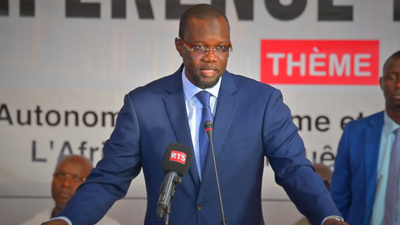
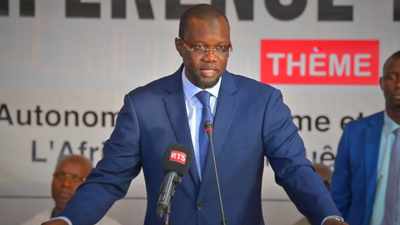
Senegal’s government has defended its strict anti-LGBTQ law amid growing criticism from international rights groups and activists, with Prime Minister Ousmane Sonko accusing Western countries of trying to “impose” foreign social values ​​on the country.Addressing lawmakers on Friday, Sonko condemned what he described as Western pressure on Senegal over homosexuality. “There is a kind of oppression there. There are probably eight billion human beings in the world. Eighty percent or more do not want (homosexuality),” he told parliament.Sonko said, “No Arab country will criticize us, nor any African country, but there is a center called the West… which wants to impose it (homosexuality) on the rest of the world.” “Because they have the means (and) control the media, (they) want to impose their order. The sovereign Senegalese people do not want these practices in Senegal.”The prime minister said Senegal had faced criticism abroad, especially from France, after the law was approved. “If they have chosen these practices, that’s their problem, but we have no lessons to learn from them, none at all,” he said.The comments come weeks after President Bassirou Diomaye Faye imposed a controversial new law that significantly increases penalties for gay relationships in the Muslim-majority West African nation. The law, passed by parliament by an overwhelming majority in March, has already led to dozens of arrests and sparked fierce debate inside Senegal and abroad.The amended law increases the prison sentence for those described as “acts against nature” – a term used to refer to same-sex relationships – to five to 10 years in prison from the previous one to five years’ prison sentence. It also provides for a prison sentence of three to seven years for anyone found guilty of promoting or financing homosexual relations.This law has created concern at the international level. UN rights chief Volker Turk described the law as “deeply worrying” and said it “goes against sacred human rights”. Earlier this month, a group of about 30 African-American figures writing in the French newspaper Liberation warned of a growing “climate of fear, hatred and violence” in Senegal since the law was passed.

Source link

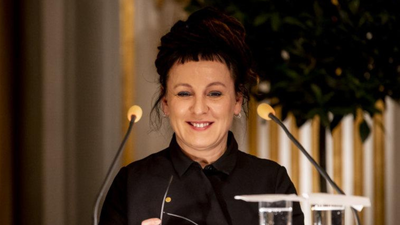
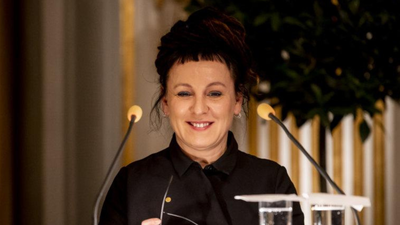
Nobel laureate Olga Tokarczuk comes under fire after revealing she used AI to develop ideas World News

Nobel laureate Olga Tokarczuk faces criticism after revealing she uses AI to develop ideas

Polish author Olga Tokarczuk, who won the 2018 Nobel Prize in Literature, has found herself at the center of a debate on artificial intelligence after comments she made at Impact’26 in Poznań were widely interpreted as an admission that she uses AI in her writing process. During the conversation, he described AI as a tool that can broaden creative thinking and help develop ideas. He also warned that the technology could produce factual errors. What started as a discussion about creativity and technology soon turned into a heated debate about the future of literature and the role of AI in artistic works. Tokarczuk later issued a clarification, saying that her upcoming novel was not written with AI and that she primarily uses the technology for brainstorming, developing ideas, preliminary research, and fact-checking.

What did Tokarczuk say about the use of AI?

According to Notes from Poland, Tokarczuk said he had purchased “the highest, most advanced version” of a language model and was often “deeply shocked” to see how much it expanded his thinking. She joked that she would sometimes throw ideas at the machine and ask, “Darling, how can we make this grow beautifully?”At the same event, he said that AI could help create a “symbiotic future” for writers and become an “asset of incredible proportions” in literary fiction.He also said that while writing his latest novel in Polish this autumn, he asked models what songs his characters might have danced to decades ago. Tokarczuk said that one suggestion included a wrong name, causing him to warn that users “need to be careful of hallucinations”.

Why did the reaction to the comments start?

The reaction was intensified by Tokarczuk’s status as one of Poland’s most acclaimed literary figures. As a Nobel laureate, his comments were far more significant than a casual interview. Notes from Poland reported that the comments were criticized by online commentators and some Polish writers.One of the strongest reactions came from another speaker at IMPACT’26, novelist Szczepan Twardok. In a Facebook post, he said he would have to “lose his mind” to use language models for literature. He compared entering into a relationship with a language model to “being married to a vibrator”.

Tokarczuk’s explanation

Following the backlash, Tokarczuk released a statement through his publisher and Lit Hub, saying that his comments were “misinterpreted”. She clearly said that she has not written her upcoming book using AI or with anyone else and that she has been writing alone for decades.She said she uses AI “as a tool that allows for faster documentation and fact-checking” and said she verifies information every time she uses it. Tokarczuk also stressed that none of his texts, including the novel coming out later this year, were written with AI other than “rapid preliminary research.”That clarification shifted the debate away from claims of AI-written fiction toward a broader question: How much help should writers seek from generative AI tools?

Do you think AI can increase creativity in writing?

a broader literary debate

This controversy reflects a larger debate in the publishing world. Some authors see AI as a research aid and brainstorming tool. Others also see limited use as a threat to authorship and artistic integrity.Tokarczuk’s comments touched a nerve as he presented AI as useful for creativity, while preserving traditional literature as a deeply human craft. During the same remarks, she said that she felt sadness for the fading era of solitary writing and believed that chatbots could not match a true literary voice.At the same time, writer Zymovit Szerek defended Tokarczuk and criticized the “moral outrage” surrounding his comments. He argued that people should be free to experiment with AI if they want.The Tokarczuk episode shows how quickly nuance can disappear once AI enters a conversation.

Source link

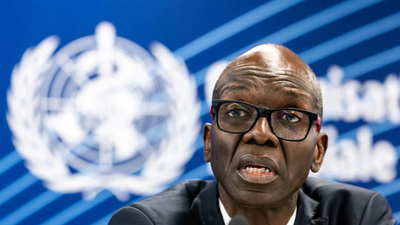
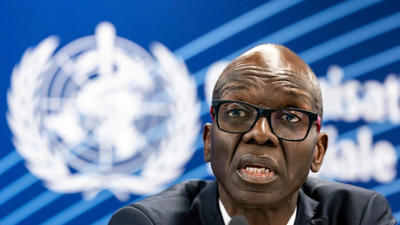
‘This would be a big mistake’: WHO Africa chief warns against underestimating Ebola virus threat in Congo, Uganda

'This would be a big mistake': WHO Africa chief warns against underestimating Ebola virus threat in Congo, Uganda

The World Health Organization’s Africa director on Friday warned against underestimating the risk posed by the ongoing Ebola outbreak in the Democratic Republic of Congo and neighboring Uganda, saying a single case could trigger widespread transmission outside the affected countries, Reuters reports.Speaking to Reuters in Geneva, Mohammed Yacoub Janabi said, “It would be a big mistake to underestimate this, especially for this strain, the Bundibugyo virus, (for which) we do not have a vaccine.”“So I would really encourage everyone, let’s help each other, we can get this thing under control,” he said.Janabi said the Ebola outbreak in Congo has received relatively limited international attention compared to this month’s hantavirus outbreak involving cruise ship passengers from 23 countries.“You just need one contact case to put us all at risk, so my wish and prayer is that we give (Ebola) as much attention as it deserves,” he said.Ebola is a serious and often fatal disease that is spread by direct contact with the bodily fluids of infected individuals, contaminated materials, or the bodies of people who have died from the infection. Symptoms include fever, body aches, vomiting and diarrhea. The outbreak has caused 160 suspected deaths out of 670 confirmed cases so far, according to data published by the DRC health ministry on Thursday. Two confirmed cases have also been reported in Uganda.Janabi declined to estimate how long the current outbreak might last, saying experts were still assessing the scale of the situation. He said the “hyperdynamic movement of people” made it difficult to fully predict the outbreak.He said efforts are underway to increase testing, strengthen infection prevention measures and improve community engagement.Referring to an incident in which Ebola treatment tents were burned following a dispute over a victim’s body, Janabi said authorities were “trying to fight both borders” – the virus and the spread of misinformation among local communities.He also said epidemiologists have not yet identified the first infected person linked to this outbreak.

Source link

Meet the plastic fighters: Three Indian teenagers win Earth Prize for creating tamarind solution that removes microplastics from water

Meet the plastic fighters: Three Indian teenagers win Earth Prize for creating tamarind solution that removes microplastics from water

What started as a question about polluted drinking water has now transformed three Indian teenagers into internationally recognized young innovators. Sixteen-year-old Vivaan Chhawchharia, Ariana Aggarwal and Avyana Mehta have been named Asia winners of The Earth Prize 2026 for creating ‘Plas-Stick’, a biodegradable solution that removes microplastics from water using powdered tamarind seeds. Inspired by visits to rural communities where families stored drinking water in shared containers without advanced filtration systems, the trio developed a low-cost method aimed at addressing growing concerns about invisible plastic pollution in drinking water.

Indian teen creates ‘Plas-Stick’ to fight microplastics

Plas-Stick is a biodegradable powder made primarily from tamarind seed waste and the team says it can help collect microplastics in water. According to the students, when mixed with contaminated water, the powder attracts microplastic particles and turns them into large clumps, which can then be removed using a handheld magnet.The idea emerged when students visited rural communities and observed how people stored and shared drinking water in large containers. During one such trip, seeing a child drinking from containers reportedly highlighted the issue of daily exposure to microplastics in areas where advanced filtration systems are unavailable.The team designed this invention as a low-cost and accessible alternative to complex purification systems. Because it uses biodegradable and locally available materials and does not require electricity or advanced infrastructure, the solution could potentially work in rural and low-resource communities.The students have also collaborated with professionals from the Indian Institute of Technology Guwahati and say the project has already reached more than 8,000 students and teachers through awareness and exposure programs.

Meet the plastic fighters: Three Indian teenagers win Earth Prize for creating tamarind solution that removes microplastics from water

Why are microplastics causing global concern?

Microplastics are extremely small plastic fragments, typically less than five millimeters in size, that form from the breakdown of larger plastics, synthetic fabrics, industrial waste, and packaging materials.Recent scientific studies have identified microplastics in drinking water, seafood, human blood, lungs, placenta, and even brain tissue. Researchers are still studying long-term health effects, but many scientists view microplastic contamination as a major emerging pollution challenge.Globally, more than 2.2 billion people still lack safely managed drinking water infrastructure, increasing reliance on stored water that may contain microplastic contamination.

winning the prithvi award

The Earth Prize is described by organizers as the world’s largest environmental competition and ‘ideas incubator’ for teenagers aged 13 to 19. Founded by The Earth Foundation in Geneva, Switzerland during the 2019 School Strike for Climate movement, the program supports youth-led sustainability projects through mentorship, educational resources, and funding opportunities.Now in its fifth year, The Earth Prize says it has reached more than 21,000 students in 169 countries and territories. Previous winners have reportedly acquired patents, corporate partnerships, and international media coverage.As Asia winners, three Indian students received $12,500 in funding to develop their project along with mentorship opportunities and international exposure. Seven regional winners are being announced globally across different regions including Asia, Africa, Europe, the Middle East and North America.Some viral social media posts falsely claimed that each student individually received $125,000. Official announcements from The Earth Prize confirm that the team collectively received a regional prize grant of $12,500.Public voting for the global winner is expected to begin via The Earth Prize website, with the final global winner to be announced on May 29.One of the most innovative aspects of the project is the use of tamarind seed waste. Tamarind seeds contain naturally sticky polysaccharides and binding compounds that can help attract and aggregate particles in water.By using agricultural waste instead of synthetic chemicals, students created a biodegradable and low-cost solution, while also demonstrating how locally available materials can contribute to environmental innovation.The team says it now plans to scale the project through decentralized production centers and expand access to rural communities across India.

Can the invention be used commercially?

Plas-Stick is still in the development phase and has not yet undergone large-scale independent scientific validation. The invention will require further testing before large-scale deployment.Experts will need to evaluate filtration effectiveness, long-term safety, scalability, water quality standards, and regulatory approval before it becomes commercially available.Nevertheless, the project has already attracted attention as an example of how young innovators are contributing practical ideas to major environmental challenges.

Source link