Breaking News
‘They can go home’: Australians condemn $1.2 million ‘Little India’ build in Melbourne | world News

'They can go home': Australians condemn $1.2 million 'Little India' build in Melbourne

Melbourne Council is to spend a whopping $1.2 million to establish a “Little India” in Docklands, with the hope it will become a “leading cultural precinct” in the city centre. The location was selected after the city spent $150,000 on a scoping study to identify a site as part of efforts to “put Mini India on the map”. Efforts had been underway since 2019 but the council struggled to find space as Indian businesses in the city were spread across several suburbs. Melbourne already has a Chinatown and Koreatown and also a small Indian cultural complex next to Dandenong railway station in the city’s south-east. Thus, the creation of a dedicated Mini India has not been welcomed by Australians online. One user pointed out on He wrote, “If we go to India, we will just have to get used to the Indian way of life. Australia will not be small there and it will not be tolerated either. I have no problem with Indians coming here, but they need to adopt the Australian way of life and our values.” “This is why this beautiful country is falling apart. Food prices, petrol now, national parks are closing left and right, and nightlife has been taken away from Australians for at least a decade now. Yet we are turning Australia into India with our tax money,” said another. “If people miss their homeland, they can go home and this applies to all people living in other countries. Politicians should not use the tax money of native country citizens to turn it into countries and cities that already exist on the planet,” one user condemned. Many netizens in the comments called for the migrants to either be assimilated into the country or deported, with no specific area created to accommodate them. “Australians don’t want a little India in our country. Why are Australians building and funding more cultural enclaves? We have spent millions if not billions just funding Indian community centres, temples, community projects, Indian festivals etc” wrote one, calling for mass deportation and emigration.Councilor Philip Le Liu, portfolio head of the City of Melbourne Creative and Arts Portfolio, revealed that the council was “taking big steps to make Little India a reality,” and this was part of a wider investment in culture and events. Under its $40M budget, the council is set to spend on projects, including:

  • $26 million on major events such as Moomba, Melbourne Fashion Week and New Year’s Eve
  • $2 million on ‘Light Up Melbourne’ project
  • $4.5 million on public art projects, including the Stolen Generation Market
  • $4.2 million for arts grants
  • $2.6 million to upgrade banner poles
  • $420,000 for new City Square Christmas decorations
  • $250,000 for new multicultural event stream
  • $200,000 on refurbishing business premises

According to noticer.com, the budget will be officially released on Tuesday and public consultation on it will be held from March 31 to April 28. The city’s mayor, Nick Reese, said, “We are revitalizing our streets, strengthening our cultural boundaries, and creating a city that feels brighter, safer, and more vibrant for everyone.”

Source link

NYC Mayor Zohran Mamdani joins Holi celebrations at Richmond Hill Phagwa Parade. world News

NYC Mayor Zohran Mamdani joins Holi celebrations at Richmond Hill Phagwa Parade

New York City Mayor Zohran Mamdani joined thousands of revelers in Queens to celebrate Phagwa, the Indo-Caribbean festival of Holi, and participated in a vibrant parade that brought color, music and tradition to the streets of Richmond Hill.Mamdani participated in the 38th annual Phagwa Parade on Sunday and celebrated the festival by marching with Hindu New Yorkers. Holi symbolizes the love between Hindu deities Radha and Krishna, and also marks the arrival of light, colors and spring.In a post shared on He said this year’s parade looks more vibrant than ever before and added that New York City is ready to welcome spring while wishing happiness and harmony for everyone.The parade began at Liberty Avenue and 133rd Street and proceeded west along Liberty Avenue before turning north at 124th Street. It then proceeded east on 97th Avenue and ended at Smokey Oval Park, also known as Phil Rizzuto Park, where celebrations continued after the parade with large community participation.Phagwa, the Indo-Caribbean name for Holi, attracts thousands of people to Liberty Avenue each year and holds deep significance for the Indo-Guyanese community. Rooted in Hindu tradition, the festival celebrates the victory of good over evil through the story of Prahlad and Holika, which is marked by Holika Dahan on the eve of the festival. The use of colors on the following day represents renewal, the arrival of spring and hope for a good harvest, showing its connection to the agricultural cycle and new beginnings.Over time, Phagwa has expanded beyond its religious origins in places such as Guyana, developing into a widespread national celebration celebrated in communities of various ethnic backgrounds. For Indo-Guyanese people, it is a symbol of faith and a symbol of cultural identity, while also promoting values ​​such as forgiveness, love and social harmony.

Watch

IED found right outside Zohran Mamdani’s residence in New York City; FBI investigates terrorism allegations

Source link

Can humans get pregnant in space? New study reveals surprising answer

Can humans get pregnant in space? New study reveals a surprising answer

While space agencies are making critical preparations for long-term missions to the Moon and Mars, a fundamental human question is emerging: Could life have originated outside Earth? While much progress has been made in space travel, human reproduction in space remains an uncharted area of ​​uncertainty. Scientists are using animal research, laboratory experiments, and space missions to investigate how the human body will react to space. The findings so far suggest that although the process of human reproduction in space may not be completely impossible, it is certainly more complex than what we experience on Earth. There are many challenges to the process of human reproduction in space, from microgravity to space radiation, which can be significant at all stages of the process, making it an important research aspect.

Why does microgravity make fertilization in space difficult?

One of the biggest obstacles to conceiving in space is microgravity. On Earth, gravity is known to play an important role in the functioning and behavior of cells, as well as fluids and biological phenomena. However, in space this balance is disturbed. According to NASA’s research on developmental and reproductive biology, it is known that microgravity affects the functioning of reproductive cells. These include the functioning of sperm and fertilization. A recent study published in Communications Biology showed that sperm exposed to microgravity had reduced motility. This means that the sperm were not functioning properly and were unable to swim towards the egg. This greatly reduces the chances of fertilization. This is important because fertilization is the first stage of pregnancy. The functioning of sperm in space is uncertain, and hence, it is uncertain from the very first stage.

What do animal studies reveal about space pregnancy?

Since there is limited research in this area among humans, the best option available to the scientific community is to rely on animal models, especially rats, to get a fair idea about the possible mechanisms of reproduction in space. This is because mammals have very similar reproductive systems.journal proceedings National Academy of Sciences (PNAS) Has published research regarding frozen embryos of mice that were later exposed to space conditions aboard the International Space Station. Remarkably, some of these embryos were able to develop into healthy babies when returned to Earth.However, the news is not entirely good either. Other research has shown that embryos are more sensitive to space conditions. If they are exposed to microgravity early in development, they may either develop abnormally or fail to develop at all.This shows that although the process of reproduction is possible, there is no guarantee of its success.

Radiation: The Invisible Threat to Space Reproduction

Apart from the effects of microgravity, another problem that pregnant women face in space is cosmic rays. On Earth, we are protected by the atmosphere and magnetic fields. However, this protection is lacking in space.Scientist studies Scientists at Harvard have proven that cosmic rays can damage DNA in reproductive cells. This damage can impair fertility and cause developmental problems in the fetus.Experiments conducted on animals have proven that when they are exposed to cosmic rays, hormone levels in the body change. The reproductive process in the body gets impaired and the viability of the fetus decreases.The effects of cosmic rays are even more worrying for the baby in the womb. Cosmic rays can harm a baby’s development. This is one of the most important issues that needs to be addressed in the context of pregnancy in space.

A complicated possibility: not impossible

So, can humans get pregnant in space? The scientific answer to this is still uncertain. There’s no clear indication that it’s impossible at all, but there are enough challenges to make it extremely dangerous.This may be less dangerous for fertilization, for fetal development, and for the environment than what we experience on Earth. On the other hand, the success of some animal experiments gives us a glimpse of what might be possible in the future.

Source link

WATCH: Video shows mid-air collision between American Airlines jet and Black Hawk helicopter that kills 67

WATCH: Video shows mid-air collision between American Airlines jet and Black Hawk helicopter that kills 67

New footage has emerged showing the exact moment an American Airlines jet collided mid-air with a US military Black Hawk helicopter at Ronald Reagan Washington National Airport last year.Video shared by 60 Minutes captured the mid-air collision, with plumes of smoke rising and flames rising as the two planes collided with each other.The tragic crash that occurred on January 29 last year killed 67 people, including 64 passengers and crew on board the jet and three soldiers aboard the Black Hawk. The passenger jet, American Airlines Flight 5342, a Canadian-built Bombardier CRJ-701 twin-engine aircraft, was coming from Wichita, Kansas and was flying at about 140 mph over the Potomac River at an altitude of about 400 feet when the collision occurred.On the day of the collision, the Black Hawk helicopter, with call sign PAT25, was conducting a routine training mission through restricted airspace near the airport. Following the accident, the FAA implemented safety changes, including restricting helicopter traffic near the airport and moving some routes away from commercial flight paths. Transportation Secretary Sean Duffy said more than $12 billion has been secured to overhaul the air traffic control system. FAA Administrator Brian Bedford called the collision a “sober reminder” of the importance of safety improvements. The crash remains the deadliest mid-air collision in the United States since November 12, 2001.

Source link

Pakistan is home to major terrorist groups, some active since 1980s: US Congress report

Pakistan is home to major terrorist groups, some active since 1980s: US Congress report

As highlighted in the US Congressional research report of March 25, Pakistan has once again found itself facing the consequences of its long-standing support for terrorist groups. The report presents a clear picture of Pakistan as a base for several armed and terrorist organizations, some of which have been active since the 1980s.According to the report, these groups fall into different categories – globally-focused, Afghanistan-oriented, India-focused, domestic or sectarian. Twelve of them are designated as foreign terrorist organizations under US law, and most adhere to Islamic extremist ideologies.

Watch

Pakistan’s terrorist ties under global scrutiny, US Congress report echoes India’s claim on terrorism

The report said that despite major military operations, including air strikes and hundreds of thousands of intelligence-based actions, Pakistan has been unable to eliminate these groups. Many organizations designated by the US and the United Nations continue to operate from its soil.is among them Lashkar-e-TaibaFormed in the late 1980s and designated as a terrorist organization in 2001. Led by Hafiz Saeed and based in Pakistan’s Punjab province and Pakistan-occupied Kashmir, it later operated under the name Jamaat-ud-Dawa to circumvent sanctions. The group, which has thousands of fighters, was responsible for the 2008 Mumbai attacks and several other major incidents.Jaish-e-MohammedFounded by Masood Azhar in 2000 and designated in 2001, it has about 500 fighters active in India, Afghanistan and Pakistan. Other groups such as Harkat-ul Jihad Islami, Harkat ul-Mujahideen and Hizbul Mujahideen are also said to operate from Pakistan.The report supports India’s long-standing position that Pakistan continues to support such groups. It is also mentioned resistance frontIt is believed to be linked to Lashkar-e-Taiba, which carried out the Pahalgam attack in which 26 people were killed. The group has been declared a global terrorist organization.In response to that attack, India launched Operation Sindoor in May 2025. Indian armed forces carried out coordinated attacks on nine terrorist camps in Pakistan and Pakistan-occupied Kashmir, killing more than 100 terrorists, trainers and associates. Officials said the strikes targeted groups such as Jaish-e-Mohammed, Lashkar-e-Taiba and Hizbul Mujahideen, while minimizing civilian casualties.On May 10, Pakistan retaliated by using missiles and drones to target Indian Air Force bases, army depots, airports and military areas. However, India’s air defense and counter-drone systems successfully intercepted the attacks, preventing damage.

voting

Should strict global action be taken against countries associated with terrorist groups?

After this India attacked Pakistani airbases, command centers and defense systems on the western front. Major targets including Chaklala, Sargodha, Rafiqui, Rahimyar Khan, Jacobabad, Sukkur and Bholari were attacked.Following this escalation, Pakistan’s Director General of Military Operations contacted his Indian counterpart on 10 May to stop the fighting. Formal talks took place on 12 May and both sides agreed to halt military operations.However, the latest US report reinforces concerns that Pakistan has active links with terrorist groups.

Source link

See: Fire caused by missile shrapnel coming from Iran, damage to Israel’s Negev Industrial Center

See: Fire caused by missile shrapnel coming from Iran, damage to Israel's Negev Industrial Center
Iranian ballistic missile attack triggers sirens in southern Israel.

A fire broke out at an industrial complex in southern Israel on Sunday, with the Israeli military saying the damage was probably caused by missile shrapnel launched from Iran.According to the army, the blow occurred in the Neot Hovav industrial area in the Negev desert, sending a thick plume of black smoke into the sky. Officials said the fire may have been caused by a direct ammunition strike or debris from an intercepted missile.Police confirmed that emergency teams were searching the area for additional fragments while working to eliminate any further risk to the public.Later in the day, Iran’s Islamic Revolutionary Guard Corps claimed responsibility for attacking an industrial facility in southern Israel with missiles.Visuals from the scene show a heavily damaged warehouse engulfed in smoke as firefighters bring the blaze under control. Fire brigade commander Eyal Caspi said the situation was under control and was expected to be completely brought under control within a few hours.Local authorities declared the incident dangerous and instructed workers in the area to stay in protected areas. Nearby residents were also advised to stay indoors due to fear of a possible toxic leak.Soroka Hospital in Beersheba reported treating six people with minor injuries after the incident.The Israeli military said at least seven missiles were fired from Iran toward Israeli territory since midnight, with air defense systems activated to intercept the threats.Located about 12 kilometers from Beersheba, the Neot Hovav industrial zone houses more than 40 factories focused on environmental technology and industrial infrastructure.It is the second reported attack on an industrial facility in Israel since hostilities escalated on February 28, when joint US-Israeli strikes targeted Iran. Tehran has since repeatedly responded with missiles and drones targeting Israel and other locations across the region.

Source link

The Pentagon sent special divers to find 250 Americans lost on the ‘Hell Ship’ in the Philippine Sea in 1944. world News

The Pentagon sent special divers to find 250 Americans lost on the 'Hell Ship' in the Philippine Sea in 1944.

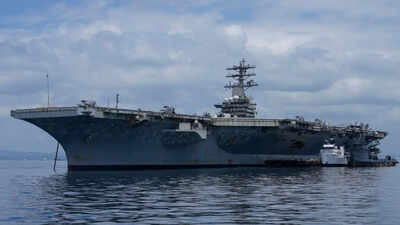
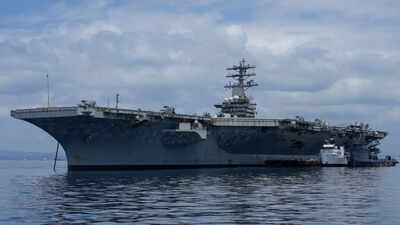
Eighty years after the sinking of the hell ship, Oyoku Maru, in December 1944, DPAA conducted a bold, multi-year recovery operation in the Philippine Sea. The Japanese hell ship was inadvertently bombed by the US in December 1944, resulting in more than 1,600 prisoners of war falling with the ship, of whom approximately 250 Americans are still unaccounted for. USNS Salvor is the base for naval divers and forensic anthropologists conducting recovery efforts at 90 feet in zero visibility conditions and entangled in crushed metal. This effort is authorized under the Sunken Military Craft Act and represents the United States’ commitment to providing the most thorough possible accounting for troops facing the worst maritime conditions of the Pacific War.

The tragedy of the hell ship Ōryoku Maru

According to US Navy history, in December 1944, the Oryoku Maru, one of Japan’s notorious ‘hell ships’, was carrying more than 1,600 Allied prisoners of war when it was attacked by US Navy aircraft from the USS Hornet. Unaware that their own countrymen were held in dark and suffocating confinement, American pilots conducted 17 separate air strikes over a three-day period. Naval History and Heritage Command records describe chaos and madness in the lower decks as extreme dehydration and suffocation took their toll before the ship came to rest on the bottom of Subic Bay.

pentagonHigh-precision search for 250 missing Americans

The Defense POW/MIA Accounting Agency (DPAA) has dispatched a special team to the Philippine Sea to begin the complex process of excavating the Oryoku Maru. Operating from the USNS Salvor, a rescue and salvage ship, fifteen divers are working at a depth of approximately 90 feet to try to recover the remains that have been trapped for more than 80 years, particularly those of the 250 Americans who were lost. The site represents ‘a complex mass of steel’ covered with extensive layers of river silt, reducing underwater visibility to near zero, requiring high-precision forensic dredging to separate biological evidence from the debris.

Legal protection under the Sunken Military Craft Act

Recovery is strictly regulated by the Sunken Military Craft Act of 2004 (SMCA), which grants the United States ‘protected sovereign status’ over the remains of its sunken military craft and its service personnel, regardless of whether they are in territorial waters. This federal law ensures that Oryoku Maru is a protected site and any unauthorized salvage or looting is prevented. The Mission has a formal diplomatic partnership with the Philippine Government to carry out the policy of ‘fullest possible accounting’ with respect to missing personnel.

Source link

Cyclone Narel turns sky red in Western Australia as rare dust storm hits: What caused the terrifying red glow and how it happened world News

Cyclone Narel turns Western Australia sky red due to rare dust storm: What caused the terrifying red glow and how it happened

In parts of Western Australia, particularly Shark Bay and Denham, the sky turned red due to a severe dust storm that passed through the region. Strong winds caused by the incoming weather system carried large amounts of iron-rich soil into the atmosphere, resulting in thick layers of dust over the region. This caused a drastic change in the color of the sky due to dust and other particles in the atmosphere, resulting in the region turning red. The presence of this dust in the atmosphere also reduced the visibility in this area, making it difficult for the people living in this area. Due to the dense fog in this environment, sunlight was also being filtered, resulting in a ghostly appearance.

What is the science behind the red skies during dust storms in Australia?

This phenomenon is explained through atmospheric light scattering, a process related to Rayleigh scattering and Mie scattering. Under normal circumstances, the atmosphere scatters shorter wavelengths of light more effectively than longer wavelengths. That is why the normal color of the sky is blue.However, when a dust storm is underway, the atmosphere is filled with large particles of nature, especially mineral particles. These particles scatter light more aggressively, especially at shorter wavelengths. In this case, longer wavelengths of light, especially red and orange, have the opportunity to be effective. Iron oxide particles in the soil contribute to this phenomenon because they have the ability to reflect and intensify red light when passing through thick layers of dust.This phenomenon results in a red or orange sky with a lack of direct sunlight.

Regional impact of dust storm in Gascoyne and Pilbara in Western Australia

The most extreme visual changes occurred in the Gascoyne area, including Shark Bay. However, other impacts occurred in places such as the Pilbara coast, Exmouth and Karratha. It was reported that there was a sudden decrease in visibility and an increase in airborne particles, which are associated with excessive levels of dust transport.The breadth of the storm system contributed to atmospheric turbulence.

cyclone narelUnexpected route and varying intensity

Cyclone Narele took an unusual path across different areas. The storm first made landfall in the Cape York Peninsula in Queensland, then moved across the Northern Territory, and later strengthened in the Indian Ocean before reaching Western Australia.When the storm was at its most intense, it reached Category 4 intensity, with wind gusts reaching 200 km/h or more. Structural damage was observed in coastal areas, particularly Exmouth and Coral Bay.

How iron-rich dust and strong winds change the color of the sky

Dust-induced sky color changes are linked to environmental conditions such as prolonged dryness, loose topsoil and strong wind systems. In arid and semi-arid regions of Australia, iron-rich soils are easily compacted during high wind events, especially when vegetation cover is sparse.

Source link

‘For the first time in centuries’ Israel stops senior Catholic leaders from entering Jerusalem church on Palm Sunday, entry restored world News

Israel blocks senior Catholic leaders from visiting Jerusalem church on Palm Sunday, access restored 'for the first time in centuries'
The Latin Patriarch of Jerusalem, Pierbattista Pizzaballa, second from left, walks in a procession during Palm Sunday Mass at the Church of the Holy Sepulcher in the Old City of Jerusalem on Sunday, March 24, 2024, traditionally believed by many to be the site of the crucifixion and burial of Jesus Christ. (AP Photo/Ohad Zweigenberg)

For the first time in centuries, senior Catholic leaders were prevented from entering Jerusalem’s Church of the Holy Sepulcher on Palm Sunday, one of the holiest days of the Christian calendar, sparking sharp international criticism and a wave of diplomatic reactions. The incident, which came against a backdrop of rising regional tensions and the ongoing conflict involving Iran, was condemned by church officials, foreign governments and US Ambassador Mike Huckabee, who called the move an “unfortunate overreaction”.

What happened: The priests returned on Palm Sunday

according to a Joint press release issued On March 29, by the Custody of the Latin Patriarchate of Jerusalem and the Holy Land, Israeli police stopped Pierbattista Pizzaballa, the most senior Catholic authority in the region, Francesco Ilpo, and two other priests on their way to the church.

Holy Land's top Catholic leader calls on Christians to help build bridges in Gaza conflict

FILE – Cardinal Pierbattista Pizzaballa arrives for a meeting of the College of Cardinals at the Vatican on April 24, 2025. (AP Photo/Andrew Medichini, File)

The statement emphasized that the group was traveling quietly, noting that they were “proceeding privately and without any attributes of procession or ceremonial function” when they were forced to turn back. As a result, the Patriarchate said it was a historic rupture, “for the first time in centuries, Church heads were prevented from celebrating Palm Sunday Mass in the Church of the Holy Sepulcher.” The church, widely revered as the place where Jesus Christ is believed to have been crucified, buried and resurrected, holds deep significance for Christians around the world, especially during Holy Week.

Church of the Holy Sepulcher

Church of the Holy Sepulcher in Jerusalem/Photo via https://www.planetware.com

Calling the decision unprecedented, the patriarchate warned that it “disregards the sensitivities of the billions of people around the world who, during this week, look towards Jerusalem,” adding that church leaders had already complied with wartime restrictions, including canceling public gatherings, barring attendance, and arranging broadcasts so that “millions of the faithful around the world” could still observe the ceremonies.It went further, calling the move “a patently inappropriate and wholly disproportionate measure” and a “hasty and fundamentally flawed decision”, warning that it represented “a serious precedent” and an “extreme departure from the basic principles of rationality, freedom of worship and respect for the status quo”.

Why Palm Sunday and the Church Matter

Palm Sunday marks the beginning of Holy Week, commemorating the entry of Jesus Christ into Jerusalem, when, according to the Gospels, crowds laid palm branches in his path. In Jerusalem, the day is traditionally marked by a large procession that starts from Bethphage on the Mount of Olives and descends through the Lions Gate into the Old City, an event that attracts thousands of pilgrims annually.

Palm Sunday procession on the Mount of Olives in East Jerusalem

Christians walk in a Palm Sunday procession on the Mount of Olives in East Jerusalem, Sunday, March 24, 2024. (AP Photo/Ohad Zweigenberg)

The Church of the Holy Sepulcher is at the center of these rituals. It is considered by many Christians to be the holiest site in Christianity, believed to contain both the site of the crucifixion (Golgotha) and the tomb of Jesus. Holy Week culminates on Easter Sunday, making the period the holiest period in the Christian religious calendar. The restrictions affecting access to the church during this period took on both religious and symbolic significance far beyond Jerusalem.

Israel’s explanation: security fears amid Iran conflict

According to Israeli officials Jerusalem Post, The decision was framed as a security measure related to the ongoing conflict with Iran, given that the Patriarch’s request to pray in the church had previously been reviewed and rejected due to the security situation. In a statement, Israeli police said the layout of the Old City “does not allow access for large emergency and rescue vehicles”, warning that this significantly challenges response capabilities and “poses a real threat to human life in the event of mass casualties.” Police said all holy sites in Jerusalem’s Old City were closed to worshippers, especially those without protected places, “to protect public safety and security”.prime minister benjamin netanyahu An ex-post said he had intervened after learning of the incident, following an international outcry, adding that he had instructed authorities to grant Cardinal Pizzaballa “full and immediate access” to the church. He linked the sanctions directly to the recent attacks, saying Iran had “repeatedly targeted the holy sites of all three monotheistic religions in Jerusalem with ballistic missiles,” with one attack landing fragments just meters away from a church. Laying out the broader policy, Netanyahu said Israel had asked members of all religions to “temporarily refrain from worshiping” at key sites in the Old City to protect civilians, adding that Pizzaballa in particular had been asked to refrain from holding Mass “out of special concern for their safety.” Despite understanding the concern, Netanyahu said that as soon as he learned of the incident with Cardinal Pizzaballa, he “instructed officials to enable the Patriarch to hold services as he wishes.” His office later acknowledged the sensitivity of the timing, saying security agencies were now working on plans to enable church leaders to worship during Holy Week. Israeli President Isaac Herzog also moved to defuse tensions, saying he had spoken to Pizzaballa to apologize and express his “great sorrow”, adding that the incident stemmed from “the constant threat of missile attacks from the Iranian terrorist regime” following recent attacks near the Old City.

International reaction and diplomatic fallout

This decision was sharply criticized even outside Israel. US Ambassador Mike Huckabee said the move was “an unfortunate overreach that is already having a major impact around the world,” arguing that while limiting large gatherings may be appropriate, preventing a private visit is “difficult to understand or justify.” Italy reacted at the highest level. Prime Minister Giorgia Meloni said The Church of the Holy Sepulcher “is a sacred place of Christianity, and as such it must be preserved and protected,” warning that barring church leaders “is an insult not only to the faithful, but to every community that recognizes religious freedom.” The Italian Foreign Ministry summoned Israeli Ambassador to Italy Jonathan Peled to provide clarification on the incident, while other foreign embassies also sought clarification from the Israeli Foreign Ministry.president of france Emmanuel Macron Posted on X that he “expresses.”[es] “Full support to the Latin Patriarch of Jerusalem and the Christians of the Holy Land who were prevented from celebrating Palm Sunday Mass in the Church of the Holy Sepulchre.” He condemned the Israeli police decision, calling it “a disturbing sequence of violations of the status quo of the holy sites in Jerusalem” and adding that “freedom of worship for all religions in Jerusalem must be ensured. This controversy has come to light amid widespread tension over access to religious places. Earlier this month, Saudi Arabia, Jordan, the United Arab Emirates, Qatar, Indonesia, Pakistan, Egypt and Turkey jointly condemned Israel’s closure of the Al-Aqsa Mosque compound to Muslim worshippers, calling such restrictions a “gross violation” of international law.

A widespread pattern of restrictions, and a symbolic rupture

The patriarch said the Palm Sunday incident was not an isolated mistake but part of the increasing pressure on religious life in the city during the war. Cardinal Pizzaballa himself described the situation as “a wound that many others have received from the conflict”, a comment that reflects how deeply the restrictions are being felt within the Christian community. According to reporting cited by cnnThe barriers span across religions: Jewish worship at the Western Wall has been limited to 50 people a day, while Muslims have been completely barred from accessing the Al-Aqsa Mosque since the conflict escalated in late February, including throughout Ramadan.

Source link

How ‘ghost taxi drivers’ in China tricked customers into paying for rides without paying

How 'ghost taxi drivers' in China tricked customers into paying for rides without paying
In a strange twist to the ride-hailing sector, a group of Chinese drivers resorted to scary profile pictures to scare passengers into canceling their rides, thereby allowing them to pay a cancellation fee. Additionally, some drivers start rides only to leave without passengers or simply walk away, collecting additional fines.

In 2016, a strange and disturbing scam began to surface on ride-hailing apps in China. Passengers booking trips through Uber started noticing something strange. The driver profiles assigned to pick them up often feature disturbing, distorted or zombie-like faces.What initially appeared to be a prank or prank soon became a calculated scam.The so-called “ghost drivers” were not supernatural beings, but actual drivers exploiting flaws in the system. His goal was simple. They wanted passengers to cancel trips out of fear, allowing them to collect cancellation fees without showing up.The scam was reported in several major Chinese cities, including Tianjin, Chengdu, Chengdu, Beijing, Shanghai and Suzhou. According to local media and international reports at the time, this method relied heavily on psychology.When a passenger books a ride, the app will display the driver’s profile photo along with details like car and number plate. In many cases, the images used by these drivers were intentionally disturbing. Some appeared heavily edited, distorted or even horror-themed. Given the existing security concerns around ride-sharing, many users opted to cancel the ride immediately.That decision came at a cost.

-

Canceling a ride before pickup usually incurs a small fee, often only a few yuan (Chinese currency). Although the amount was modest, the scale of the scam made it profitable. If this is repeated multiple times a day, drivers can make money without completing a single trip.The plan did not stop here. Drivers adopted additional tactics if passengers did not cancel out of fear.One method involved starting the journey without the passenger entering the car. These “ghost rides” allowed the driver to register completed trips and collect fares. Another tactic involved accepting a ride request and then not returning. After waiting the passenger will eventually cancel and pay the fee again.In some reported cases, users described situations where the app showed the driver’s car approaching their location or even passing by them, despite no vehicles being visible. “It was night time and from the driver’s place I was expecting the driver to arrive soon,” a rider from Shandong province told the Financial Times. The map showed that the driver had just passed me, but there were no cars nearby. The road was very narrow and no car could pass me without my seeing.The problem drew attention at a sensitive time for Uber in China. The company was struggling financially in the country, reportedly losing about $1 billion per year. In August 2016, Uber merged its China operations with local rival Didi Chuxing, effectively ending its independent operations in the market.Even while the merger was taking place, the ghost driver issue highlighted the challenges of managing a large and decentralized driver network.Uber publicly acknowledged the problem. The company said it has a “zero-tolerance attitude towards fraudulent behavior” and said it is actively investigating the issue. It also confirmed that it has started banning accounts linked to fraudulent activity.“We have taken immediate action and banned these reported individual fraudulent accounts while continuing to investigate and take action against any fraudulent behavior to protect rider and driver interests,” an Uber spokesperson said at the time.To prevent such scams, Uber had already introduced facial recognition system for drivers in China. The system was designed to ensure that the person driving the vehicle matches the registered account holder. However, the Ghost Driver scandal showed that identity verification alone was not enough to prevent platform manipulation.The company also said it was refunding money to customers who reported being affected and gathering evidence to better understand the scale of the issue.Reports suggest that this scam may not be an isolated incident but part of a wider pattern. The use of similar tactics in several cities raised concerns that drivers were sharing methods or coordinating behavior.The episode also highlighted a broader issue in the ride-hailing industry. Digital platforms rely heavily on trust in both drivers and systems. When that trust is weakened, even small scams can have a big impact on user trust.While the financial loss for individual passengers was generally minimal, the experience itself was harrowing. The combination of gruesome images, missing drivers, and unexplained allegations created a feeling of unease among users.In the years since, ride-hailing companies have tightened their systems and introduced stronger security measures. However, China’s “ghost drivers” are one of the more unusual examples of how technology platforms can be exploited in unexpected ways.What exposed the scam was not just the fraud, but the method. Using fear and confusion, drivers turned a simple cancellation feature into a tool for profit. It was a reminder that even in highly controlled digital environments, human behavior can find gaps to exploit.

Source link