Will the indictment of Raul Castro for the 1996 downing of civilian airliners bring the US and Cuba closer to war?

Will the indictment of Raul Castro for the 1996 downing of civilian airliners bring the US and Cuba closer to war?

The US indictment of Raul Castro in the 1996 shooting down of civilian planes has heightened tensions between Washington and Havana, with some analysts warning that the move could take the two Cold War rivals closer to open conflict.Charges against the 94-year-old former Cuban president were announced this week in Miami, where Cuban exile groups welcomed the verdict as they awaited long-awaited justice for the deaths of four Cuban Americans when Cuban fighter planes shot down two planes operated by Brothers to the Rescue in 1996.But in Cuba, Raul Castro is still seen by supporters as one of the main symbols of the communist revolution he founded along with his revolutionary brother Fidel Castro.“He is the living embodiment of the revolution,” former US diplomat Ricardo Zuniga told CNN.Zuniga was involved in secret talks that restored diplomatic relations between the US and Cuba during the Obama administration. He warned that the indictment could cut off communications between the two governments and make tensions even more dangerous.“Ultimately, frustrations on both sides could lead to conflict as Washington cuts off communications with the Cuban government through this indictment,” he said.The allegations come at a time when Cuba is already facing one of the worst economic and humanitarian crises in decades. Fuel shortages, food shortages and lengthy power outages have fueled growing despair across the island, while new US sanctions and embargoes have increased pressure on Havana.US President Donald Trump has criticized the Cuban government in recent months and has also suggested he is open to a possible deal.“Whether you change the regime or not, I can (make the deal). It’s been a harsh regime and they killed a lot of people,” Trump said Tuesday.POTUS said: “But this is a country that really needs help. They can’t turn on the lights, they can’t eat. We don’t want to see that.”At the same time, Secretary of State Marco Rubio, a Cuban-American and longtime critic of the Castro family, has taken a much tougher stance. He believes that the current Cuban leadership should be removed from power.The indictment has emboldened anti-Castro groups in Miami, many of whom believe Cuba’s communist government is weakening and could eventually collapse under the pressure.“Castro’s time is over,” Cuban-American congresswoman Maria Elvira Salazar said on X.For Cuban exile communities, the 1996 shootings remain one of the most painful chapters in US–Cuba relations. Brothers to the Rescue aircraft were flying missions involving Cuban refugees and had previously dropped anti-government leaflets in Havana. Cuban officials at the time insisted that the planes violated Cuban airspace and called the attack an act of national sovereignty.Now, if the US attempts to pursue Castro more aggressively, the impeachment could lead to a direct confrontation. The charges could theoretically provide a legal basis for extradition efforts or further action against senior Cuban officials.Cuban President Miguel Diaz-Canel has responded boldly, accusing Washington of trying to impose political change on Cuba. The Cuban military has stepped up exercises across the country, CNN reports, while a state message warned citizens to prepare for possible aggression.Diaz-Canel also warned that a “blood bath” would await any attacking force.Analysts say that despite Cuba’s weak military position, any military conflict would carry enormous risks. Unlike Venezuela, where the US has recently increased pressure on the government of Nicolas Maduro, Cuba’s political and military leadership has been tied for decades to the revolutionary system created by Fidel and Raul Castro.Even though Raul Castro officially stepped down from power several years ago, he still holds tremendous symbolic influence within Cuba. He is regularly referred to as the leader of the revolution, and senior officers continue to consult him on major decisions.Zuniga warned that completely isolating Cuba’s leadership could make the situation more unstable rather than less.“By cutting off communications, they may fail to understand on the Cuban side that the next step could be some type of attack from the United States,” he said.He added: “But there is nothing to destroy that is not already in disrepair.”


Source link

Mysterious 2,000-year-old jars from Pompeii finally revealed with 3D scan: How the Romans made them, and why their function remains a mystery world News

Pompeii's 2,000-year-old mysterious vessels finally revealed by 3D scan: How the Romans made them, and why their function remains a mystery

In the ancient ruins of Pompeii, time seems unusually still. Roads, houses and small shops are frozen after the eruption of Mount Vesuvius in 79 AD. Of the many finds scattered across the site, the most puzzling is a set of ceramic jars built directly into the stone counters inside the Roman tavern. Archaeologists have studied them for decades, yet their purpose remains unclear. The jars are physically present, but their story is out of reach. That uncertainty has made them one of the quietest mysteries of everyday Roman life.Now, new research using advanced scanning technology is beginning to change the way we understand these objects. Answers are still sketchy, but the details that are emerging are beginning to reshape long-held beliefs. The findings suggest that these jars may contain more information about Roman craftsmanship and daily trade than previously thought.

The mystery of the Pompeii tabernacle and the built-in jar that survived for nearly 2,000 years

At Pompeii, archaeologists have identified more than 150 small tavern-style establishments known as tabernae. These were simple one-room shops that served food and drink to locals and travelers. Many of these places have ceramic jars permanently set into stone counters. These jars vary in size and shape. Some are tall and narrow, reaching about three feet in height. Others are smaller and more circular. They are not removable, and they were clearly built as part of the structure rather than added later.For years, researchers could only investigate them by looking at them. Opening them was never an option as it would have destroyed both the ships and their archaeological context. As a result, their purpose remained uncertain. Scholars have debated whether they stored food, liquids, or something entirely different. No single explanation has been confirmed.

What 3D scans of Pompeii jars reveal about Roman craftsmanship

A recent study published in Archaeological Method and Theory used non-invasive scanning techniques to examine the jars. Instead of physically touching or removing them, the researchers used a handheld light scanner to capture their internal structure. The team analyzed about 40 jars from 14 different wineries. They then created detailed 3D models based on the scans. These models allowed them to study the internal shape, alignment, and structural stability of each ship.The results showed that the jars were probably made using a slow-turning potter’s wheel. The process was not entirely industrial, but neither was it entirely handmade. This appears to be a controlled method that still allows for small variations during production.

How ancient potters created jars through layered, step-by-step techniques

From the analysis it can be inferred that ancient potters used a step-by-step process in making these jars. They would build a part of the ship, stop, add new material and continue the process. This resulted in small errors in different parts of each jar. Some jars exhibit high stability with respect to their manufacture, while others do not. This implies that multiple workshops or potters were involved in making them. In some cases, jars from different wineries display similar shapes and construction patterns. This indicates some form of training among the potters of the area. On the other hand, most other jars vary considerably in terms of both their size and internal structure.

what were these jars used for

Despite all the recent discoveries about how these vessels were made, their original purpose has not yet been established. Scientists cannot establish exactly what was stored in them. According to some scholars, the contents of the jar may have been some cooked food, such as a stew. This hypothesis is more likely than any liquids due to the fact that they were fixed inside the counter and therefore could not be easily cleaned.Nevertheless, there is no chemical evidence proving the above hypothesis. There are other possible uses of the jar that are still under discussion. These can be used to store semi-solid components or local foods to be consumed in taverns.

Source link

Israeli parliament votes on advance bill to dissolve the Knesset, paving the way for early elections

Israeli parliament votes on advance bill to dissolve the Knesset, paving the way for early elections
Image used for representative purposes

Israeli lawmakers voted overwhelmingly on Wednesday to advance a bill to dissolve the Knesset, a move that could pave the way for early elections and deepen political uncertainty for Prime Minister Benjamin Netanyahu’s coalition.In the initial reading, 110 out of 120 members of Parliament supported the motion, with no votes against it and the remainder abstained. The bill, introduced by the ruling coalition, has now moved to the committee stage before going through three more readings needed for final approval.If ultimately passed, the dissolution would automatically trigger elections within 90 days, potentially pushing voting to October 27.The development comes amid growing tensions within Netanyahu’s right-wing coalition, particularly over disputes with ultra-Orthodox parties. They have accused the prime minister of failing to meet commitments to pass a law granting military service exemptions to their communities, a long-standing political flashpoint in Israel.Coalition tensions have opened the door to opposition parties who are pushing for early elections and trying to capitalize on Netanyahu’s declining political standing in opinion polls. Israeli political columnist Miriam Shermer said, “The dissolution of the Knesset, approved in preliminary reading this Wednesday, could still be suspended if the exemption (for ultra-Orthodox students) is already passed.” He said the situation could still change depending on security developments or legislative deals, as cited by AFP.On Wednesday, coalition chairman Ofir Katz said: “This coalition has fulfilled its days.”Political analysts say the timing of the move could shape the election narrative, with some suggesting that Netanyahu may prefer to hold early elections to avoid the anniversary of the October 7 attacks dominating the election campaign.“The election campaign has begun,” opposition leaders have said, as rival factions begin setting the stage for another closely contested and fractured vote with so far no clear path to a stable majority.

Source link

David Lammy unveils reforms to reduce youth prison sentences in the UK and protect vulnerable children

David Lammy unveils reforms to reduce youth prison sentences in the UK and protect vulnerable children

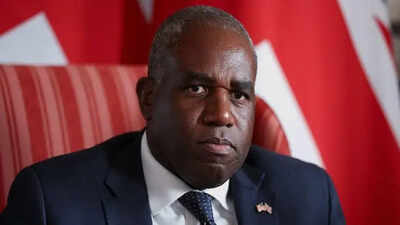
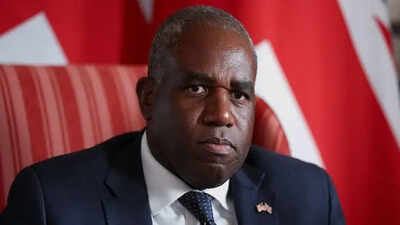
UK Justice Secretary David Lammy announced his plans to ensure a 25 per cent reduction in the number of children in detention before the end of this parliamentary term. The Justice Ministry is also planning a consultation on lifetime criminal records for those under 18, new youth intervention courts and tougher parental accountability measures for children involved in crime. For Lammy, the reforms were linked to his personal experience as he grew up in Tottenham during the 1980s. Prison was always a threat for him as a child as were many black boys like him who found themselves in the criminal justice system due to truancy from schools and committing minor crimes.He said, “Growing up in Tottenham in the 1980s, my greatest fear was being jailed. It may seem irrational, but in reality it was the fate of many young black boys like me”, as quoted by the Guardian.“You saw it happen gradually at first. People missed school, got into minor trouble and started hanging out with the wrong crowd. No one stepped in to pull them back. For us, going to prison wasn’t shocking or far-fetched. It felt almost inevitable. I could have been one of them, but was lucky enough to get a scholarship to a state boarding school, which gave me an outlet that others never had,” he adds.According to Lammy, short-term detention makes children and adolescents more likely to commit crimes in the future. He said, “For the most serious crimes, custody will always be necessary to protect the public; that will never change.”“But for many children, even a small shock inside can cause lasting damage, disrupting the most formative years of their lives and sometimes exposing them to greater violence and criminal influence.”The Ministry of Justice intends to allocate £15 million of funding each year to special teams that will support children who are at risk of becoming involved in criminal activity. It is feared that introducing more community sentences and reducing custodial remands will reduce the youth prisoner population by 20 per cent.These measures would include criminalizing child exploitation against adults who incite children to commit crimes. These pilot youth interventions will be delivered through court judges and support workers, who will develop individual plans.Children’s Commissioner Rachel de Souza supported the proposals. “I have been consistently clear about the need to reform the youth justice system,” she said.“We must create an approach that keeps children safe, keeps them away from crime wherever possible and prioritizes meaningful behavior change.”

Source link

A 78-year-old British great-grandmother was left in shock after a utility firm mistakenly declared her dead on a £60 bill. world News

A 78-year-old British great-grandmother was left shocked after a utility firm mistakenly declared her dead after paying a £60 bill.
A UK utility company mistakenly declared a 78-year-old great-grandmother dead after failing to pay a £60 bill/Image: X, Metro UK

A 78-year-old great-grandmother in Britain was sent a debt collection letter addressed to the executor of her estate after she was mistakenly declared dead by a utility company.Ginette Bye later discovered the letter had been sent by debt collection agency Phillips & Cohen Associates on behalf of Southern Water over an alleged unpaid bill of £60.87, the Metro reports.The letter reportedly expressed condolences on her “death” before requesting payment linked to her water account, despite monthly payments continuing to be made from her bank account.This account was previously registered jointly with her late husband Paul Bye, who died in 2020, causing this error.Bye said Southern Water was notified of her husband’s death several years in advance and criticized the company for failing to contact her directly before referring the matter to debt collectors.“They have taken direct debits from my bank account every month for the last five years,” Bye told Metro.“If Southern Water had spoken to me and said, ‘Mrs Bye, you owe me £60, fine, I’ll pay it’. That’s what I’m angry about.”He also said the letter could have been very distressing for elderly people living alone without family support.The debt collection notice said Southern Water had been informed that he had “sadly passed away” and claimed the unpaid amount could become a liability of his estate.His son Mark Bye said the family is deeply troubled by the situation.“At first they thought it was a scam,” he said.“She’s almost 80. Something like this could seriously affect anyone.”Daughter Paula McVicar also questioned why payments were still being accepted when the company believed the account holder to be dead.“How can you talk to the bill payer when, according to you, she is dead?” He said.The account has since been completely transferred to Bye’s name and the disputed balance has been removed as a goodwill gesture.A spokesperson for Southern Water apologized for the incident and confirmed that an investigation had been launched.“We regret this error, which has caused unnecessary distress to Mrs. Bye,” the spokesperson was quoted as saying by Metro.“We are now reviewing our processes to understand exactly what went wrong and ensure it doesn’t happen again.”

Source link

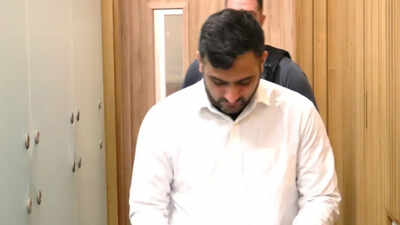
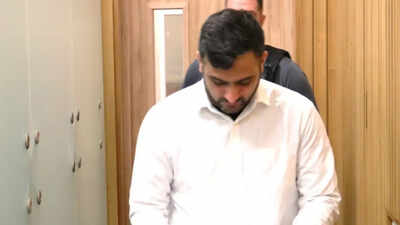
Dishant Srideva, 36, accused of recording women inside fitting rooms in Canada

Dishant Srideva, 36, accused of recording women inside fitting rooms in Canada
(Source: Halton Regional Police Service)

A Mississauga man has been charged after police say he secretly recorded women inside the fitting room of a retail store in Oakville. Investigators say there may be more victims involved, CP24 reportsDishant Srideva, 36, is facing two counts of voyeurism following the incidents at a Winners store on Winston Churchill Boulevard, according to Halton Regional Police.The first complaint was received in early April 2026 when a woman reported that a man had secretly recorded her using his cellphone while she was changing clothes inside a fitting room at the store. The investigation was taken over by the 2nd District Criminal Investigation Bureau, which said officers used “a variety of investigative techniques” to identify a suspect.As the investigation continued, investigators linked the same man to a similar incident at the same store in November 2024, which also involved another adult female victim.Last week, police executed a search warrant at a residence in Mississauga. The suspect was arrested at the scene and officers seized several items believed to contain evidence, including a cell phone and a laptop computer.“Multiple items of evidentiary value were found, including cellular phones and a laptop computer,” police said in a release.Since then, two allegations of voyeurism have been leveled against Srideva. He was later released on a recognizance bond and was scheduled to appear in court in Milton at a later date.Investigators have also publicly released his image and have said they are concerned there may be additional victims who have not yet come forward. The purpose of releasing the image is to identify further complainants and assist in the ongoing investigation.Srideva is before the court and has not been found guilty.

Source link

Indian-origin truck driver Shamsher Singh gets 6 years in jail for raping a woman he met on a dating app in New Zealand

Indian-origin truck driver Shamsher Singh gets 6 years in jail for raping a woman he met on a dating app in New Zealand
Truck driver Shamsher Singh (Source: NZ Herald)

A married father of two in New Zealand has been jailed for six years and nine months after raping a woman he met on a dating app while driving late-night freight.Indian-origin Shamsher Singh, 33, attacked the victim inside the cab of his commercial truck while it was parked on an isolated stretch of highway between Nelson and Blenheim, the NZ Herald reports.Singh was found guilty of rape and sexual assault. Despite the medical evidence and the guilty verdict, Singh has denied any wrongdoing.The incident occurred in January 2024 when the pair connected online and met for lunch in Nelson. Upon learning that the woman’s father was a truck driver, Singh invited her to accompany him on a commercial delivery during the night. The victim accepted the invitation because her memories of traveling with her father as a child made her feel safe around trucks.The attack occurred during the return leg of the journey in the early hours of the morning. The victim was sleeping on a bed inside the vehicle when Singh stopped in the remote Rai valley and immediately attacked him.When the woman protested, Singh told her, “F***, I’m horny, let’s do it,” before pinning her down and forcing himself on her.Crown prosecutor Sophie O’Donoghue said the victim was vulnerable, noting that she was trapped in a completely isolated area and had no means of escape. O’Donoghue said Singh ignored the woman’s distress and later attempted to avoid blame by claiming the victim had a choice and could have escaped sooner.After the attack, Singh drove back to the Nelson Freight Depot, where the victim ran away and contacted police. Later, medical examination revealed injury marks all over his body.The woman cried in court, saying the attack had destroyed her sense of security and ruined her childhood memories. Addressing Singh directly, she said, “You stole from me the happy memories of when you held me and raped me. You made me feel disgusted and ashamed and I blamed myself for what happened and for getting into your truck.”When sentencing Judge Harrop said that responsibility for the crime rested solely with the criminal. He also said that Singh did not participate in restorative justice, did not apologize and showed no remorse, so he did not receive a normal sentence reduction.Defense lawyer Paul Borich, KC, said the attack was an “unusual event” for Singh, pointing to his steady work record and support from his family and the South Island branch of the New Zealand Sikh Society. He also said that Singh’s wife still supports him despite his impact on the family.Judge Harrop imposed an initial sentence of eight years in prison. He then reduced it slightly for Singh’s previous good character and by 10% for the financial and emotional hardship the prison sentence would cause to his wife and two young children.Singh received a final sentence of six years and nine months for rape, with a concurrent sentence of two years for sexual assault

Source link

Who is James Roscoe? Britain’s deputy ambassador to the US suddenly quits his post in Washington

Who is James Roscoe? Britain's deputy ambassador to the US suddenly quits his post in Washington

James Roscoe, one of Britain’s most senior diplomats to the United States, has resigned as deputy chief of mission at the British Embassy in the US capital.According to the BBC report, Foreign Office officials confirmed that Roscoe “has left his post” but did not provide any further details regarding his departure.Roscoe also served as Chargé d’Affaires to the US between September 2025 and February 2026, and temporarily led the embassy during a critical period in UK–US diplomatic relations.Before moving to Washington, Roscoe represented the UK at the United Nations General Assembly and later held senior communications roles within the UK Government, including posts in the Cabinet Office and the Department for Exiting the European Union.She is also known for serving as Elizabeth II’s Communications Secretary between 2013 and 2016.Early in his career, Roscoe worked inside 10 Downing Street as chief press officer for former British Prime Ministers Tony Blair and Gordon Brown.During his time in Washington, Roscoe played a role in major diplomatic events, including arrangements for the state visit of former US President Donald Trump to the UK and the recent visit of Charles III to the United States.His first diplomatic assignments also included postings to the United Nations, Sierra Leone and Iraq.

Source link

As Afghanistan is ravaged by hunger, families ‘sell’ their young daughters for food

As Afghanistan is ravaged by hunger, families 'sell' their young daughters for food

Disturbing incidents have emerged from economically impoverished Afghanistan, where families are selling their young daughters to be able to afford food, medical expenses and debt relief.The United Nations says three out of four people in Afghanistan are unable to meet basic needs amid widespread unemployment, a struggling healthcare system and dwindling international aid. It estimates that 4.7 million people, or more than 10% of the population, are one step away from famine.Fathers struggling with extreme poverty and unemployment said they have been forced to make “impossible choices” as hunger deepens across the country, according to a BBC report from Afghanistan’s Ghor province.

‘I am ready to sell my daughter’

Abdul Rashid Azimi, a resident of the province, said he was considering selling one of his seven-year-old twin daughters, Rokia and Rohila, because extreme poverty, debt and unemployment had left him unable to support his family.“I am ready to sell my daughters. I am poor, in debt and helpless,” Abdul Rashid Azimi tearfully told the BBC.“I come home from work with dry lips, hungry, thirsty, upset and confused. My children come to me and say ‘Baba, give us some bread.’ But what can I give? Where is the work?” He added. “I am heartbroken by this decision,” Abdul said while hugging and kissing Rohila while speaking to reporters, but called it the only option for his family’s survival.Another father, Saeed Ahmed, said he was forced to sell his five-year-old daughter Shaika to a relative because his daughter had appendicitis and liver cysts and he could not afford the medical treatment she needed.“I didn’t have the money to pay for the treatment. So I sold my daughter to a relative,” the BBC quoted him as saying.He said, “If I had taken the entire amount at that time, he would have taken her away. So I told him to give me enough money for her treatment now, and in the next five years you can give me the rest after which you can take her away. She will become his daughter-in-law.” Saeed said the money for Shaika’s surgery came from a 200,000 Afghani arrangement under which she would eventually be married into a relative’s family. He initially accepted only enough money to pay for the operation, delaying the rest of the payment so that his daughter could live with him for a few more years.Two years ago, his family, like millions of Afghans, received food aid, including flour, cooking oil, pulses and nutritional supplements for children. But sharp cuts in international aid, especially as the US cut nearly all aid to Afghanistan and other major donors reduced support, left families deprived of basic lifelines.

Why were daughters sold instead of sons?

Families are largely selling daughters instead of sons because boys are traditionally seen as future earners who can support families financially. In Afghanistan, this priority has become even more pronounced under Taliban sanctions that limit education and employment opportunities for women and girls. There is also an age-old practice in which the groom’s family gives money or gifts to the bride’s family during the wedding, making the daughters a source of immediate financial relief for poor families facing hunger, debt and medical crises.The practice of early marriage is widespread in Afghanistan and has reportedly increased since the Taliban prevented girls from getting an education. Experts said girls are often sold because restrictions on women’s education and employment have deepened gender inequality, while the Taliban’s policies towards women have also contributed to international donors withdrawing aid, worsening the humanitarian crisis.

Source link

Standard Chartered CEO’s comments spark outrage as bank plans job cuts in India and other centers

'Low-value human beings': Standard Chartered CEO's comments spark outrage as bank plans job cuts in India and other centres.

Standard Chartered’s plan to cut around 7,800 jobs globally by 2030 has sparked intense backlash online after CEO Bill Winters described some roles as “low-value human capital” while outlining an AI-driven overhaul of the bank.The London-headquartered lender, which has major back-office operations in India, said it will eliminate about 15 per cent of corporate-function roles over the next few years as it adopts automation and artificial intelligence.Bengaluru and Chennai are expected to be among the worst-hit centres, along with Shenzhen, Kuala Lumpur and Warsaw.“We are replacing low-value human capital with financial capital and investment capital in some cases,” Winters said during an investor briefing in Hong Kong, adding that the move was “not cost cutting.”

India is also among the major centers facing cuts

The Asia-focused bank employs about 82,000 people globally, of whom more than 52,000 work in corporate functions which are now under review.According to the bank, the biggest impact will be on back-office and operational teams, including human resources, compliance and risk roles.With a large employee base in Bengaluru and Chennai, India is the hub of Standard Chartered’s global operations. The bank said the restructuring will provide affected employees with opportunities to retrain and move into new roles as AI reshapes banking operations.The move puts Standard Chartered among the growing list of global financial institutions that are aggressively adopting AI to reduce headcount and improve efficiency.

There was an uproar on social media over the CEO’s statement.

But it was Winters’ choice of term: “undervalued human capital”, which soon became an online flashpoint.Social media users accused the bank of reducing workers to disposable assets in the race for profits and automation.One user wrote: “A new name for the working class, ‘low-value human capital’.”Another posted: “Rich people now talk about real humans because of undervalued capital. Get them out.”A third user compared the comment to the infamous “let them eat cake” phrase associated with the elite’s indifference towards the common people.The reaction spread across LinkedIn, X and Facebook, especially in Asia, where Standard Chartered makes a large share of its profits.

Singapore’s former president joins the criticism

Among the prominent critics was former Singapore President Halimah Yacob, who criticized the terminology in a Facebook post, calling it “disturbing” to describe workers in such clinical terms.Singapore and Hong Kong serve as Standard Chartered’s two largest operating centres.Several LinkedIn users also threatened to sever ties with the bank over the comments.“You call humans ‘low-value human capital’? I live in Hong Kong and will never do business with your bank,” one commenter wrote under Winters’ post.

CEO attempts damage control

As outrage grew, Winters sought to assuage employees’ concerns in an internal memo circulated after the investor event.“Many of you may have seen the media coverage following the investor event in Hong Kong, particularly the reporting around automation, AI and workforce changes,” he wrote. “I know it can be irritating when it’s reduced to simple headlines or quotes taken out of context.”However, the clarification did not quell criticism, with many online users arguing that the CEO’s comments reflected how large corporations view workers in the AI ​​age.

Source link