

Why did we see a restrained Trump in China?
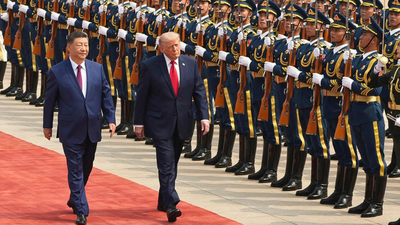
Chinese President Xi Jinping and US President Donald Trump (AP Photo)
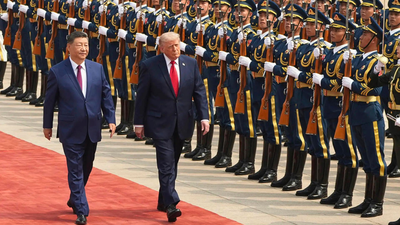
“The military is in the clear.”US President’s comment donald trump He arrived almost casually and stood between his Chinese counterpart and the grand ceremony hosted by Xi Jinping in Beijing. Lines of Chinse soldiers stood in perfect formation. Red carpets were spread across the vast expanse of the Great Hall of the People. Children waved flags. Precision, discipline and power were on full display, not subtly, but deliberately, causing Trump to soften a bit from his usual approach.For a president who has often claimed that the US military is the “greatest and the best”, there was something different about Trump’s tone this time: praise mixed with recognition that the global military balance is no longer as lopsided as it used to be.For decades after the collapse of the Soviet Union in 1990, Washington stood alone at the pinnacle of global power. America’s military dominance became the defining characteristic of the post-Cold War world. But in Beijing on Thursday, China appeared eager to send a message to Trump and the world that the era may be changing.During the visit, Trump repeatedly praised Xi, calling him a “great leader.” Yet behind the warm words and diplomatic smiles there was a deeper undercurrent: this was not just a state visit. It was a display of China’s confidence, military, technological and geopolitical.And Beijing didn’t stop at symbolism.Even as Trump received military honors, China’s message on Taiwan became extremely clear. Chinese officials warned that US involvement in Taiwan-related matters “could lead to US-China conflict.”This warning comes as tensions around Taiwan continue to increase. The self-ruled island, which is claimed by Beijing but backed militarily and politically by Washington, has fast become the most dangerous fault line in US-China relations.Taiwan retaliated strongly.Taiwan’s Defense Ministry accused China of “military oppression” and gray-zone operations around the island, saying “Beijing officials are currently the only threat to regional peace and stability.” It added that “Beijing has no right to make any claims on behalf of Taiwan at the international level.”But beyond Taiwan, another conflict has quietly revealed how modern geopolitical battles are evolving, and how China’s influence is already spilling over into the future of war.Trump’s military strike against Tehran under “Operation Epic Fury” put the Iran conflict into global focus. War-related reports have repeatedly pointed out that Chinese technology is playing a behind-the-scenes role in strengthening Iran’s military capabilities.The battlefield of the 21st century is no longer determined solely by the size of fighter planes, aircraft carriers or defense budgets. Increasingly, power is being measured through drones, AI systems, cyber capabilities, satellite navigation and precision technology.And in many of those areas, Beijing is increasingly emerging as a serious challenger to Washington.One symbol of that change is the BeiDou Navigation Satellite System, China’s answer to America’s GPS network. Iran has reportedly been using the BeiDou system since 2021 to deploy decoy systems capable of improving drone accuracy and complicating enemy targeting.That description may sound technical. But strategically it is very big.
Trump calm in Xi’s stage show
Trump, in China and in the presence of Xi Jinping, appeared notably more restrained than his usual approach with other world leaders, where he is often more confrontational.From calling Shehbaz Sharif to the mic for praise, gratitude and even publicly criticizing Volodymyr Zelensky over his attire, Donald Trump has often turned diplomatic meetings into headline-grabbing moments marked by sharp exchanges. But with Xi Jinping, the tone has changed.
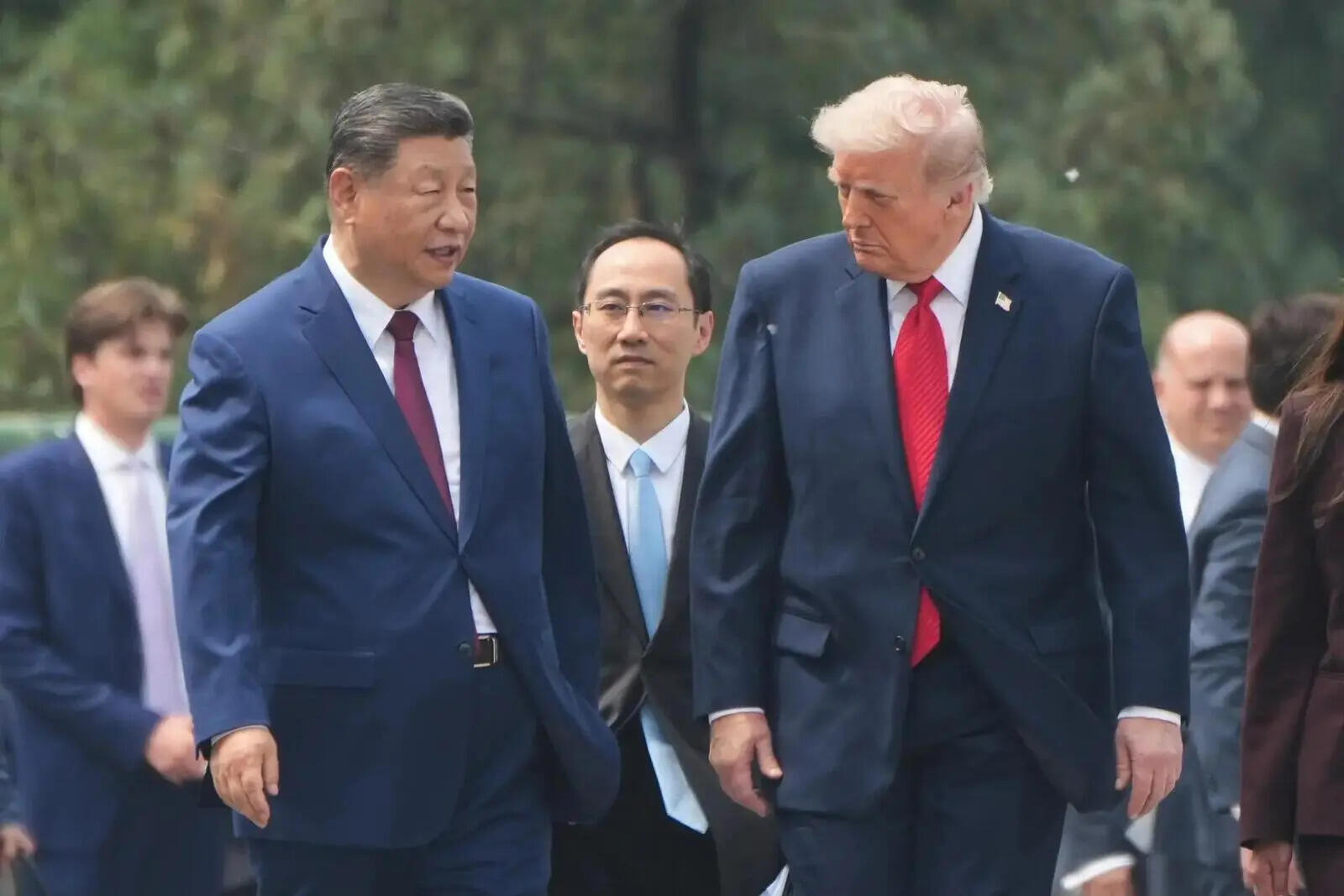
Xi and Trump
Trump has repeatedly praised Xi as a “great leader”, alternating sharp comments with warm language and diplomatic smiles. Yet in a cordial atmosphere, the visit doubled as a carefully choreographed display of China’s military might, technological ambition and growing geopolitical confidence.
China is reshaping conflicts beyond its borders
This shows that China is no longer making weapons only for itself. Its technology is beginning to shape conflicts beyond its borders, being indirectly tested against US military systems in real-world combat situations.The contradiction is amazing.The United States still spends more on defense than any other country in the world. Meanwhile, China holds the largest position in the world Army. But modern warfare is increasingly becoming less about size and more about systems, controlling the algorithms, satellites, drones, data and artificial intelligence behind the battlefield.This is the real competition taking place in Beijing under carefully choreographed handshakes.Not just a rivalry between two countries. But there is a struggle over who will define the next era of global power.
Empty missile compartment behind superpower image
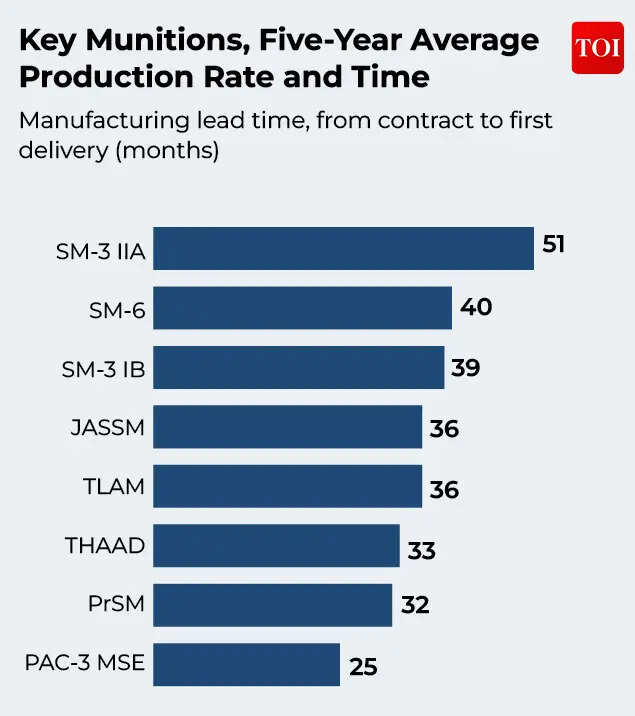
The Iran War exposed both the extraordinary strengths and growing weaknesses of the American military apparatus.US forces fired thousands of missiles, drones, and interceptors with remarkable accuracy during attacks on Iranian bases, command centers, military bases, and weapons facilities. Advanced systems such as Tomahawk cruise missiles, JASSMs, Patriot interceptors and THAAD air defense systems performed effectively.But the scale of the operation raised alarm bells even in strategic circles.According to CSIS’s assessment, the US stockpile of long-range precision munitions was under pressure even before the Iran conflict began. The war only intensified the shortage.The concern is particularly grave because a modern war against China would depend on exactly the same weapons.Unlike conflicts in the Middle East, a Pacific war would involve huge distances, heavily defended airfields, and heavy missile exchanges. In such a scenario, long-range strike systems become the backbone of military operations.
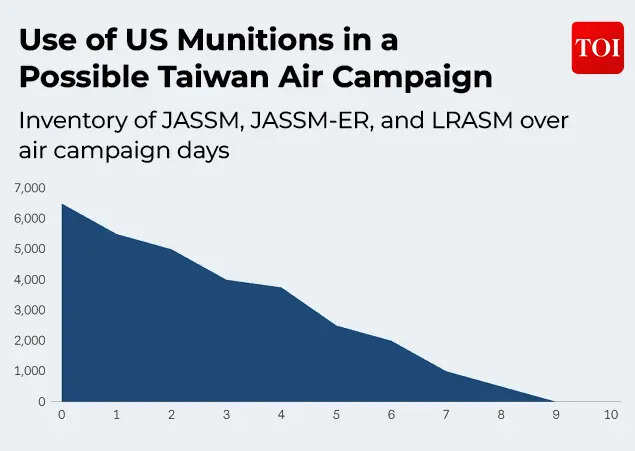
Problem? America may not have enough of these.The report said that the timeline for production of critical weapons is extremely slow. Some systems take three to four years to build. Replenishment of depleted arms and ammunition stocks is not a quick process.And while US officials publicly insist that the US still has overwhelming military power and is on top of defense spending, strategic analysts fear that a prolonged conflict could rapidly expose the shortfall.
China’s war machine is already on war footing
The speed at which China is expanding its military-industrial capabilities may further increase Washington’s concerns.According to the report, Beijing’s defense industry is already working with a wartime mentality. China is rapidly producing warships, submarines, missiles, aircraft, drones and cyber capabilities in almost every field of warfare.
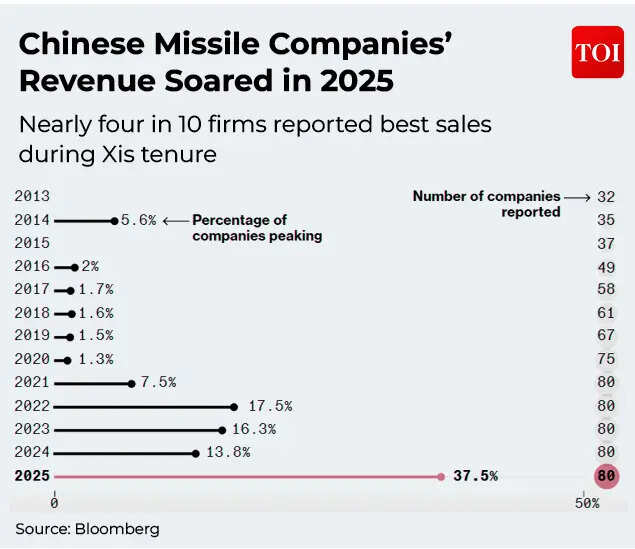
And unlike the United States, which still faces procurement delays and political obstacles, China’s centralized system allows military production to scale up rapidly.The concern is no longer just about the number of tanks or fighter planes.Modern warfare has shifted toward drones, AI-enabled targeting, cyber systems, electronic warfare, satellite navigation, and autonomous platforms. China is moving forward aggressively in many of these sectors.The Iran conflict became a glimpse of that future.Reports on Tehran’s drone and missile operations repeatedly point to Chinese-linked technology. Iran’s use of the BeiDou navigation satellite system improved the accuracy of drones and enabled more sophisticated battlefield deception systems.
What once seemed futuristic is now becoming a working reality.Wars are being fought not only with bombs and bullets, but also with algorithms, autonomous systems and satellite networks.
Taiwan became the center of the storm
Taiwan is at the center of the US-China rivalry.During Trump’s visit to Beijing, China warned that mishandling the Taiwan issue “could lead to US-China conflict.” Meanwhile, Taiwan accused Beijing of being the “single threat to regional peace and stability”.
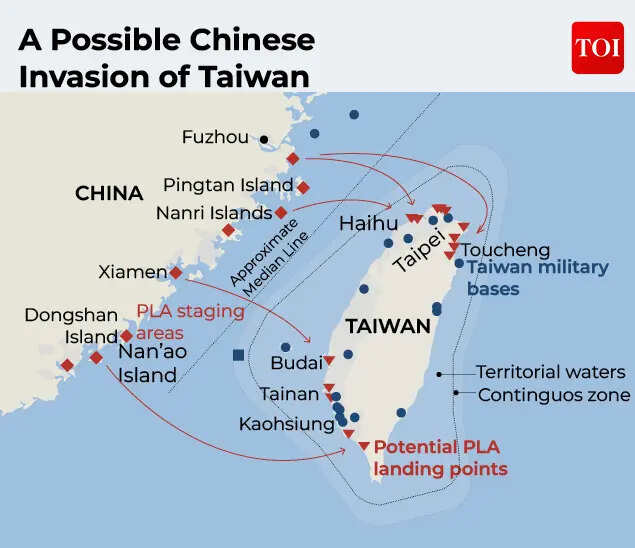
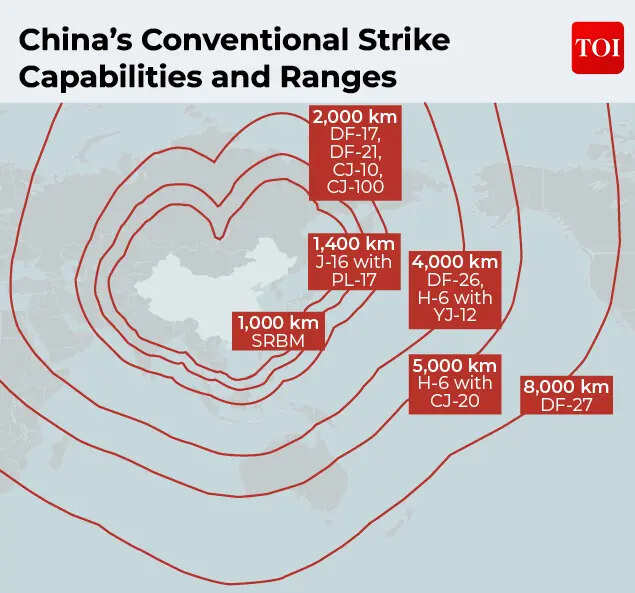
For military planners, Taiwan is no longer just a diplomatic flashpoint. This is the scenario around which the future Pacific war is increasingly being modeled.The CSIS report repeatedly highlights war-game simulations in which the US military eliminated a significant number of long-range missiles within the first week of the Taiwan conflict.Many simulations in Taiwan reportedly lost anti-ship missiles almost immediately.That discovery has strategists deeply concerned because China’s missile systems now threaten large parts of the Indo-Pacific, including US bases in Japan, Guam and the Philippines.U.S. aircraft carriers and destroyers, once symbols of unmatched American power, are now seen as increasingly vulnerable when within China’s missile range.
‘Hellscape’ era of war
The Pentagon’s answer to this growing challenge is an emerging concept known as “hellscape.”The idea is simple but dramatic: turn the Taiwan Strait into a vast maze of drones, underwater systems, unmanned attack vehicles (UAVs) and autonomous weapons that would make any Chinese invasion exceptionally costly.Rather than relying solely on expensive fighter planes or huge warships, the strategy focuses on “precision mass”, large numbers of cheap drones and unmanned systems working together.
Military planners believe that future wars will not be won simply by the side with the largest navy or air force, but by the side able to produce and maintain the largest numbers of smart, expendable systems.And here again, China’s manufacturing strength becomes central.The report also warns that the United States and Taiwan may need hundreds of thousands of drones and unmanned systems in any long-lasting Indo-Pacific conflict.The scale was more like industrial warfare than conventional military operations.
America’s industrial wake-up call
Perhaps the most shocking finding of the CSIS report is not about missiles or submarines, but about factories.The report argued that wars between great powers are ultimately won by industrial capacity.It pointed to America’s historic mobilization during World War II and the Cold War, when presidents like Franklin D. Roosevelt and Dwight D. Eisenhower turned the country into a defense production giant.Today, the fear surrounding Uncle Sam remains just as significant because it no longer has the same momentum or industrial urgency.Aircraft maintenance problems, excessive naval deployments, weak Pacific bases and delays in weapons production all point to a stressed system.The report calls for a wartime effort to modernize industrial mobilization efforts, accelerate defense manufacturing, strengthen supply chains, and rapidly expand production of drones, missiles and air defense systems.Because under Beijing’s diplomatic maneuvers, strategic competition is no longer just about who has the stronger military today.It is about who can face the next war tomorrow.