Tyler “Sim” Porter’s cause of death: Twitch streamer and TSM Valorant pro dies during birthday trip

tyler
Tyler Porter, a rising Valorant professional and Twitch streamer known as “Sim,” tragically died in a car accident while celebrating his 21st birthday on May 5. The former TSM player was widely respected for his Viral Jet gameplay and competitive success. Teammate Austen also reportedly died in the crash. Tributes poured in on social media from teammates, friends and the esports community, remembering Sim as a talented player and dear friend with a bright future.

Tyler Porter, popularly known by his online alias “Sim”, was recently involved in an unfortunate incident that resulted in his death at just 21 years old. According to reports, he died in a car accident on May 5 while enjoying his birthday holidays with his friends.He was a young rising star in the competitive Valorant scene who gained popularity in no time due to his aggressive jet plays and courageous duelist play style. His clips regularly went viral on social media, attracting thousands of fans who admired his mechanical skills and easy-going personality. In addition to his highlights, teammates and close friends said he was a player who brought energy to every roster. Now tributes are coming from all over the country eSports The world is painting a picture of a career and a life cut painfully short.

tsmValor community mourns Tyler “Empathy” Porter

During his career, Sim has played for several teams, including TSM, Evil Geniuses, and Moist Moguls. But most fans will most likely associate him with TSM, where he helped raise the level of the organization’s Valorant Academy system before earning a bigger role on the main roster.Following confirmation of his passing, TSM released an emotional statement that quickly spread across social media:“From elevating our Academy program to helping us reach Ascension on the main roster, you left your mark on TSM VALORANT. You had a lot to do with, and we will miss you so much, @SimStar. Rest in peace, you and Austen 🤍🖤”The message also referenced Austen, another competitive Valorant player who reportedly lost his life in the same accident.Sim’s influence extended far beyond tournament wins. He earned respect throughout the eSports world for his work ethic and ability to lift struggling teams during difficult moments.

Friends share emotional memories after Sim’s tragic death

The most emotional tributes came from those closest to Tyler. His friend Harry shared the devastating news online, writing:“With a broken heart I am writing to everyone to let everyone know that sadly my best friend @symstar and our good friend Austen passed away tragically in a car accident late last night. Tyler was celebrating his 21st birthday on the trip. “I know he brought laughter and smiles to a lot of people.”Former TSM player In0X also reflected on Sim’s impact on the team environment and described him as a player who changed the environment around him.Meanwhile, Shawn Garces shared old screenshots of messages between him and Tyler, reminiscing about their early efforts toward becoming professional. His tribute expressed the grief felt throughout the community as players, streamers, and fans mourn the loss of one of Valorant’s brightest young talents.

Source link

Stanford’s tiny chip could make your internet 100 times faster while using less power

Stanford's tiny chip could make your internet 100 times faster while using less power

Researchers at Stanford University came up with an innovative optical amplifier about the size of a fingertip. This small device could replace high-speed data communications by significantly cutting energy use. Traditional amplifiers are large and consume a lot of power, but this new chip is different. It has a ‘racetrack-sized’ resonator that recycles light, increasing signal strength 100 times while using very little power. According to the report of Stanford University, This advancement opens the door for advanced photonics to enter portable, battery-powered gadgets such as smartphones and remote sensors. By miniaturizing the technology required for fiber-optic-quality signals, researchers have successfully connected large-scale telecommunications systems with tiny consumer electronics; It promises faster and more efficient global connectivity in the future.

How a finger-sized chip provides 100x signal boost with low power usage

As Stanford University points out, the key breakthrough of this chip is its ability to amplify light signals up to 100 times while using only a few hundred milliwatts of power. In the past, optical amplifiers required a lot of energy and space, limiting them to large data centers or undersea cables. However, this new device changes the game. Built on a thin layer of lithium niobate, it uses what is called ‘resonant’ architecture. So here’s what happens: Light travels around a tiny track on the chip thousands of times. This process boosts intensity through stimulated emission, similar to how lasers work, but it is incredibly energy-efficient for communications signals.

Key materials for next generation optical chips

The researchers worked with lithium niobate, a material popular in the optics world because it can change the path of light when electricity is applied. The Stanford team developed a new method called thin-film-on-insulator; This method allowed them to trap light more effectively than ever before. Because of this tight confinement of light, they managed to keep the amplifier effective even when it was miniaturized to the size of a fingertip. It is necessary to shrink the amplifier to fit these chips on regular computer motherboards and mobile devices.

Role of low-power chips in development 6G network

The chip not only increases internet speeds; It also requires very little power, which is a big deal for the Department of Energy’s ‘green ICT’ objectives. Reducing the heat generated during data transmission is important for future 6G networks and sensors in self-driving cars such as LiDAR. Since the chip can work with batteries, it could let drones or satellites send lots of data without adding much weight or using much power. This will help government projects in space exploration and remote environmental monitoring.

How looping resonators increase light interaction length

The Stanford team came up with a new design that tackles the ‘gain-saturation’ problem common in small amplifiers. They used a looping resonator, which cleverly increases the ‘interaction length’ of light without making the chip larger. Instead of passing through only once, the light travels through the gain medium multiple times. This allows it to collect more photons from a less powerful pump source, increasing output and reducing the general ‘noise’ that often interferes with signals in fast communications.

Source link

“It’s too easy to explain”: Candace Owens questions Blake Neff on Erica Kirk TPUSA leadership video after Charlie Kirk’s death

Candace Owens questions Blake Neff over Erica Kirk TPUSA leadership video following Charlie Kirk’s death (Image via Getty)

Candace Owens publicly challenged Turning Point USA creator Blake Neff this week, as the fight centers around the late TPUSA founder. charlie kirk And the fight for the organization’s leadership continued to escalate online. The debate over X came after Blake Neff shared screenshots criticizing Candace Owens for repeatedly posting videos and livestreams targeting TPUSA and Charlie Kirk’s widow, Erica Kirk. In his post, Blake Neff pointed to several thumbnails of Owens’ recent “Candace” episode, which included videos discussing Erica Kirk, Jeffrey Epstein theories, donor allegations and claims of betrayal inside conservative circles. He also included an old screenshot where Owens called Daily Wire co-founder Jeremy Boring “a literal deranged stalker” after he was fired from the company.Soon after, Owens directly attacked Neff. He questioned why TPUSA has not yet released the reported video in which Charlie Kirk allegedly named Erica Kirk as future CEO and chairman, if something had happened to him. Owens wrote, “Really great to have you here Blake, any chance you can comment on why you wouldn’t release the video of Charlie announcing he wanted Erica to become CEO and Chairman if he died? Donors claim that never happened. Seems a lot easier to explain.”

Candace Owens and Blake Neff clash over Charlie Kirk succession video and TPUSA leadership claims

The exchange quickly became more personal after Blake Neff reposted a previous response he gave to Owens in April. In that message, Neff strongly rejected his claims and accused him of ignoring evidence linking him to TPUSA and Erica Kirk’s leadership.Neff wrote, “Candace, we didn’t even bother playing it because we know that psychopathic predators like you don’t care what is true or false and normal evidentiary logic has no effect on you. We gave up the possibility of any good-faith conversation with you months ago. It’s like trying to convince a lunatic while waving a knife.The public fight is part of a much larger division inside conservative media circles following the death of Charlie Kirk in late 2025. Since then, Owens has repeatedly questioned how leadership changed inside TPUSA and whether donors were fully informed about succession plans involving Erica Kirk.Meanwhile, Blake Neff and other TPUSA supporters have defended Erica Kirk and accused Owens of using conspiracy-driven content to attack the organization to gain views and attention. TPUSA supporters also argue that releasing private internal material will only lead to more harassment and online chaos.Owens supporters continued to demand proof that Charlie Kirk had officially approved Erica Kirk as his successor before his death. TPUSA supporters, on the other hand, believe that Owens is stirring up unnecessary drama by turning a private tragedy into a public material. The debate has now become one of the largest online conservative movement feuds, with both sides continuing to exchange accusations, screenshots and public statements on Twitter and livestream platforms.

Source link

What reportedly prompted Australia to cancel Sneekko’s visa? The streamer responded with a bold explanation

What reportedly prompted Australia to cancel Sneekko's visa? The streamer responded with a bold explanation
What reportedly prompted Australia to cancel Sneekko’s visa? The streamer responded with a clear clarification (Image via Getty)

Controversial streamer Nico Sneekko De Balinthazi, known online as Sneekko, became part of a major controversy this week after reports claimed Australia has banned him from entering the country for life. On May 5, 2026, several Australian media outlets reported that the American streamer’s visa had been canceled by Australian Home Affairs Minister Tony Burke. Reports also claimed that he was banned for life due to comments and online content deemed hateful by authorities. The story first attracted attention Sky News Australia reported that Tony Burke had canceled Sneekko’s visa and barred him from applying for future visas. “Our government has made it clear that we will use every power at our disposal to protect our communities from those who come to this country to spread hate,” Burke said, according to the report.The situation quickly spread on social media, especially after clips of the Australian news broadcast circulated online. Some commentators on television questioned how Sneekko was allowed into the country in the first place, pointing to his past controversies and online bans. The streamer later reposted one of the clips herself, writing sarcastically, “Thanks for having me, Australia.”

Nico Sneekko denies deportation after reports of Tony Burke visa ban spread online

While news continued to grow about a lifetime ban, Nico Sneekko disputed the claims on X. The streamer said he was not deported and explained that his trip to Australia had already ended naturally.In a video shared online, Sneekko was seen talking to a fan before boarding his flight. During the conversation, the fan asked how many likes the collaboration would get. Sneekko replied, “One million.” A few moments later, he said, “I have to get on the plane… I have to get on the flight.”The streamer later shared another post from inside the airplane, reacting directly to the reports. “I was not deported from Australia, my South East Asia tour ended and I stopped in Sydney and Melbourne to meet friends and take meetings and then flew home,” he wrote.Sneekko also reposted a headline claiming Australian authorities had deported him from the country. Responding to that report, he simply wrote, “No, I’m just going home.”At this time, Australian authorities have not publicly released additional documents regarding the alleged lifetime ban. Because of that, there is still confusion online as to whether Sneekko will officially face a permanent ban from returning to Australia in the future.

Source link

‘Comparing H-1B workers to the entire workforce’: US entrepreneurs dispute claim number of visa holders is less than 0.5%

'Comparing H-1B workers to the entire workforce': US entrepreneurs dispute claim number of visa holders is less than 0.5%

A social media post by American entrepreneur James Blunt claiming that H-1B visa holders constitute less than 0.5% of the US workforce has triggered an online debate on immigration, tech jobs and data interpretation.Blunt shared a chart on He argued that concerns about foreign workers taking American jobs are exaggerated and driven by emotions rather than facts.“For perspective: Every dot is American workers. The small yellow group are H-1B workers <0.5% of the workforce. This is being framed as a 'crisis.' There is no Indian acquisition. No talented unemployed Americans are being replaced. This debate is being driven more by emotions than actual numbers,” he wrote.He also claimed that even in fields where H-1B workers are most common, such as STEM fields, they only represent about 5 percent of the workforce.However, Blunt’s post did not include any sources for the figures, leading to criticism from other users who argued that the data presentation was misleading. Some said the concentration in specific industries was overlooked when compared to the entire US workforce, while others raised concerns about visa categories and hiring practices.One response came from edtech entrepreneur Hany Girgis, who challenged the interpretation of the data, saying it underestimates the impact of H-1B workers in high-skill sectors.Haney replied on X: “James, lovely dot chart”He added: “You are comparing H-1B workers to the entire US workforce (160+ million people) and pretending this is proof there is “no crisis.” It’s like standing in the living room and saying “There’s no fire in the kitchen”.The majority of recent H-1B approvals have been in technical and IT roles, Girgis said, pointing to federal data. He also argued that in some engineering and software teams, H-1B workers could form a significant portion of the workforce.“The ‘little yellow group’ is concentrated exactly where the high-paying American jobs used to be,” he wrote. He further said that the real debate is not the overall workforce share but job distribution across key industries.He added: “It’s not ’emotion versus numbers’.” It’s a misleading chart versus numbers in the right field.”Girgis is the co-founder and president and owner of Skillstorm, an edtech and workforce training company. He has a background in engineering and consulting and works in technical skills development and job placement.The debate comes as the H-1B visa controversy is unfolding in the US, especially among the MAGA base, which claims visa holders are taking American jobs and replacing local workers in various sectors.

Source link

JPMorgan offered $1 million, Viva Rana demands $20 million in sexual harassment suit against Lorna Hajdini: Report

JPMorgan offered $1 million, Viva Rana demands $20 million in sexual harassment suit against Lorna Hajdini: Report

A high-profile legal battle involving JPMorgan and a sex scandal has taken a new turn, with new details revealing a huge gap between the settlement sought and offered before the controversial sexual harassment lawsuit became public.Former JPMorgan banker Chirayu Rana reportedly demanded more than $20 million from the bank before filing a lawsuit accusing senior executive Lorna Hajdini of sexual harassment, according to sources cited by the New York Post. The demand was made in June last year, months before the matter came to public notice.“He threatened to go public and demanded millions of dollars,” a source close to the situation told the NYP.According to the Wall Street Journal, JPMorgan later offered Rana $1 million to settle the case, a figure previously reported. The report also said that Rana’s current lawyer Daniel J Kaiser proposed a counter offer of $11.75 million.The lawsuit was filed last month in New York County Supreme Court under the pseudonym “John Doe.” It contains serious allegations against Hazdini, including claims that he drugged Rana with Viagra and forced her to have sex repeatedly, including racist abuse and humiliating demands. Hazdini and his lawyers have denied all allegations. Hazdini’s associates have also described the lawsuit as a written “fan fiction” or “novel”.JPMorgan has also rejected the claims, saying an internal investigation found no evidence of wrongdoing. The bank said it reviewed emails, phone records and witness statements and found that Hajdini cooperated fully while Rana did not.Legal experts have weighed in on the dispute. New York lawyer Jason Goldman said: “Presumably, Rana sent Hazdini a shakedown letter, publicly threatening to file a lawsuit unless he bought his silence by paying an exorbitant fee for something he did not do. When he refused to bow down, Rana doubled down and pushed his name and reputation into the mud.Besides the sexual abuse claims, there are other layers to the case. According to the NYP, Rana told JPMorgan supervisors in December 2024 that his father had died, allowing him to take extended bereavement leave. However, his father was later found alive. When contacted, his father said, “I don’t know anything about this.” He is my son. He is a good boy.”Rana had filed an internal complaint alleging race and gender-based harassment in May 2025 before leaving the bank. He later joined private equity firm Bregel Sagemount but left the job in early April, just weeks before the lawsuit was filed.The central claim of the lawsuit has also been challenged by internal company structures. Rana and Hazdini reported to different managers and suggested they had no say over their pay or promotions. But Rana’s legal team says the allegations are genuine. His lawyer has said the claims will be supported by evidence as the case progresses.The lawsuit includes a series of detailed allegations. Rana claims the alleged harassment began soon after she joined the bank in 2024, including inappropriate physical contact and explicit comments. He further alleged that Hajdini threatened his career if his demands were not met. He has also accused the bank of retaliation and claims that following his complaint, he was sent on leave and his professional reputation has been damaged.Rana also says that he has been diagnosed with post-traumatic stress disorder (PTSD) as a result of the alleged events.Additionally, two new witness accounts in the high-profile case were reported by the Daily Mail. In one incident, a witness claimed that Lorna Hazdini, who was naked, asked him to “join her in the bedroom” in a New York apartment. Meanwhile, a second witness said he had heard Chirayu Rana say Lorna had made his life at work a “living hell”.

Source link

Mexico City is slowly sinking: NASA radar reveals hidden ground collapse due to groundwater depletion and deepening water crisis. world News

Mexico City is slowly sinking: NASA radar reveals hidden land collapse due to groundwater depletion and deepening water crisis

Mexico City has recently attracted considerable attention due to its worrisome behavior that cannot be explained by typical urban factors. According to recent observations made using satellites, some areas of Mexico City are beginning to sink at an alarming rate. Although no destructive landslide process is occurring in Mexico City, the phenomenon is becoming more intense and noticeable in some specific areas. There is no doubt that this process is linked to the existing water problem, which is affecting millions of people in Mexico City.The subsidence process in Mexico City does not have immediate catastrophic consequences. Nevertheless, the city has begun to change slowly and irreversibly. Satellite images provide a better understanding of how city surfaces move. However, they also demonstrate how complex the interplay between water and geological processes has become in Mexico City.Scientists claim that there is a need to implement new water management policies and develop sustainable urban development plans to effectively address the problem. If something is not changed soon, Mexico City will experience additional landslides.

How an old lake is still affecting Mexico City today

Mexico City was initially built on the basin of an old lake; Therefore, this is responsible for its current weaknesses. The soil in this area is made up of very loose and dense layers of soil which makes it weak when pressure changes. Over time, this inherent characteristic makes the area vulnerable to groundwater withdrawal.This is because water is removed from the underground aquifer layer, resulting in voids that begin to sink, causing the surface land to sink. It does not affect the entire area but only some neighborhoods. It has been suggested that this places additional stress on buildings and structures.

NASA radar shows mexico city is sinking in detail

Advanced satellite technology has made it possible to observe these changes with astonishing accuracy. Radar instruments used in Earth-observation missions can detect ground movements down to the millimeter level. This allows scientists to track how the city is changing over time, rather than relying only on surface damage reports.Recent data reportedly shows that parts of Mexico City are sinking at a rate of about 0.8 inches per month. This may not seem dramatic in the short term, but over a year it adds up significantly. Changes are often invisible from day to day, yet they accumulate in ways that can affect entire neighborhoods.Experts say this type of monitoring is important because it reveals patterns that might otherwise go unnoticed until the damage becomes severe.

Why is Mexico City’s water system under pressure from below?

At the heart of the issue is the city’s dependence on groundwater. A large portion of Mexico City’s drinking water comes from an ancient aquifer system located beneath the surface. Over the decades, this resource has been heavily exploited to support the city’s growing population.However, continued excavation has created imbalance underground. As water is removed faster than it can be naturally replenished, the supporting structure of the soil weakens. This causes compaction, causing the land above to sink.

Visible effects of cracks, tilts, and sinking ground

The effects of subsidence are becoming increasingly evident in daily life, where in some places roads are no longer level, and cracks in the ground are visible. Some structures have tilted slightly due to subsidence as they react to ground shifting.There is also pressure on infrastructure, with underground pipelines and transportation and drainage systems having to constantly adjust to accommodate ground level changes. In some cases, maintenance may be much higher than in other larger cities.One of the areas that is being carefully monitored for any signs of change is Benito Juarez International Airport. Since airport runways must be perfectly level, even minor variations in the ground can cause problems.

How is demand for water exacerbating the problem in Mexico City?

This issue is directly related to water shortage in Mexico City. The city has more than 20 million inhabitants and the need for water is high. With the continued depletion of groundwater resources, there are increasing concerns over the sustainability of water availability.There have been warnings of what is known as “Day Zero”. This includes reaching a critical point of water shortage, which means that water will stop coming through taps for some parts of the residents. Although this does not appear to be an imminent threat, it is often said to be a result of current trends.Since it is linked to the issue of water consumption, it becomes even more complex. Extraction of groundwater leads to land subsidence and water distribution subsequently becomes difficult.

Source link

Return of ‘Ghost Lake’: California’s largest lost body of water resurfaces after 130 years world News

'Ghost Lake' returns: California's largest lost body of water resurfaces after 130 years

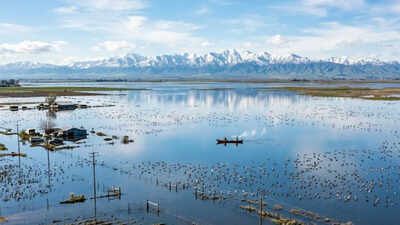
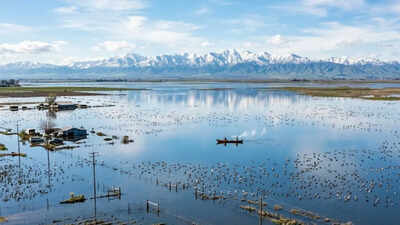
Tulare Lake, once known as Pashi by the Tachi Yokut tribe, has made a stunning comeback. This rare phenomenon shows how a long-lost terminal lake can reclaim its original basin. It used to be the largest freshwater lake west of the Mississippi until it was drained for farming purposes in the late 1800s. However, in 2023, extreme weather and record snowfall in the Sierra Nevada refilled the basin, covering more than 100,000 acres. The event highlights California’s unpredictable water cycles and points to the limits of modern flood control. In addition to impacting the Central Valley’s economy, the lake’s return has promoted ecological revival, attracted many migratory birds and renewed indigenous cultural areas.

California’s largest lost water reservoir resurfaces

According to the California Department of Water Resources, the Tulare Lake Basin is a terminal sink for the Kings, Kaweah, Tule, and White rivers. While it was considered ‘extinct’ due to 20th century water diversions and land reclamation for farming, the basin remains a natural topographic depression. In 2023, the sheer volume of runoff from the Sierra Nevada exceeded the capacity of man-made canals and dams, causing water to follow its natural gravity-driven path back into the ‘ghost lake’.

how 12 atmospheric rivers A lost lake revived

Re-emergence was promoted by a ‘Big Fill’ event caused by a series of more than 12 atmospheric rivers. As the California Department of Water Resources reported, these storms left snow accumulations in the southern Sierra Nevada that were nearly 300 percent of the normal average. As this record snowpack melted, it overwhelmed the Kings River and Tule River watersheds, causing sustained flooding of agricultural areas downstream of Tulare Lake.

How a dry basin reactivated its biological cycle

Despite being a disaster for local infrastructure, the revived lake immediately served as an important stop on the Pacific Flyway. Ornithological observations recorded thousands of waterbirds, including American avocets, black-necked stilts, and various duck species, nesting in the newly formed wetlands. This rapid colonization demonstrates the ‘ecological memory’ of the landscape, where dormant seeds and biological cycles are reactivated when flooded.

existence of indigenous Pashi

For the Tachi Yokut tribe, the return of the lake is the restoration of Pashi. Research indicates that the lake was the center of the region’s biodiversity and indigenous livelihoods for centuries before the lake was diverted. The resurgence has allowed tribal members to perform traditional ceremonies on the water for the first time in generations, emphasizing that ‘the lake never died,’ but was only suppressed by industrial engineering.

Source link

US closes Peshawar Consulate despite soft talks on Pakistan

US closes Peshawar Consulate despite soft talks on Pakistan

TOI correspondent from Washington: The US State Department on Monday announced the closure of its embassy in Peshawar, a move that underscores a surprising contradiction in the Trump administration’s Pakistan policy: warm rhetoric and praise at the top, but a steady decline in diplomatic infrastructure on the ground.The decision, framed by officials as a matter of “security” and “efficient resource management,” would transfer responsibility for the engagement in Pakistan’s Khyber Pakhtunkhwa province to the U.S. Embassy in Islamabad, about 114 miles away. The closing comes as Trump has publicly praised Pakistan’s leadership, paying unusual praise to the country’s “field marshal” (sic), whom Trump has liked for his help as a mediator with Tehran. The State Department has offered a familiar quartet of justifications for closing the Peshawar Consulate: cost savings, restructuring, changes in logistical needs, and security concerns. Officials also point to the post’s diminished strategic role since the US withdrawal from Afghanistan, when Peshawar served as a major logistics hub. Security concerns have also been cited, with recent unrest in the area increasing the risk to personnel. The Peshawar shutdown is the first permanent closure of a foreign US diplomatic mission in Trump’s second term. In the Middle East and South Asia, several US consulates have temporarily suspended operations amid regional tensions, particularly military tensions involving Iran, and following a “worldwide caution” advisory issued earlier this year. Meanwhile, visa services have been cut at many posts under the extended restrictions and “extreme scrutiny” policies.Behind these operational changes lies a more profound change: the systematic downsizing of America’s diplomatic corps. More than 200 career diplomats, including about 246 foreign service officers, were laid off on Monday, in the latest phase of sweeping “reductions in force”. The cuts have disproportionately targeted refugee, human rights, and democracy promotion bureaus. The administration justified this by openly arguing that such offices were “prone to ideological capture”, indicating a deliberate move away from the traditional pillars of American diplomacy.Adding to the turmoil has been the dismantling of the United States Agency for International Development (USAID), long a cornerstone of American soft power. With its functions cut or absorbed, many of the State Department’s roles have been deemed redundant.Employees reportedly arrived at work in recent days under instructions to bring passports and government equipment, preparing them to surrender at short notice – a process that created what one insider called “an atmosphere of quiet panic”.The downsizing coincides with a significant shift in the way the administration conducts high-level diplomacy. Rather than relying primarily on career diplomats and subject-matter experts, major negotiations—particularly those involving Iran’s nuclear program—are increasingly being handled by political loyalists and unofficial messengers, including Steve Witkoff and Jared Kushner.Neither has formal diplomatic training or deep technical expertise in nuclear nonproliferation, an area that typically requires years of specialized experience.At the top of the diplomatic hierarchy, Marco Rubio is managing an unusually broad portfolio. In addition to serving as Secretary of State, she has been tasked with multiple overlapping roles in national security and policy coordination, raising questions about the administration’s bandwidth and strategic coherence. On Tuesday, he stood in for White House spokeswoman Carolyn Levitt, who is on maternity leave. In a raucous briefing, there was no pregnant interruption. “This is chaos, folks,” Rubio said at one point while speaking to the noisy press.

Source link

This children’s village stays cool without air conditioning in one of the hottest regions of the world – here’s how world News

This children's village stays cool without air conditioning in one of the world's hottest regions – here's how

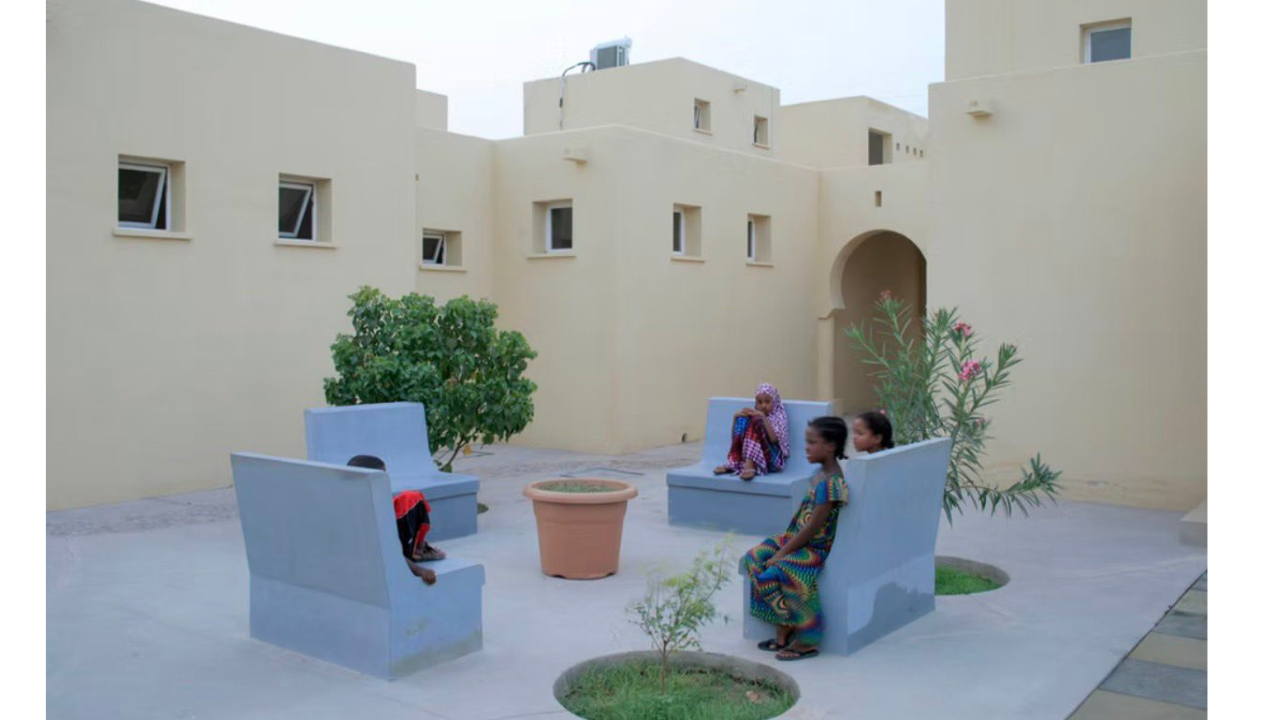
In Djibouti’s coastal city of Tadjoura, where there is extreme heat and dry desert conditions for most of the year, architects have designed a children’s village that operates without traditional air conditioning. The project, known as SOS Children’s Villages Tadjourah, was created by Urko Sanchez Architects for SOS Children’s Villages International. Instead of relying on glass towers, sealed interiors, and energy-intensive cooling systems, the architects turned to centuries-old climate-responsive design principles used in North Africa and the Middle East. Narrow shady streets, wind-capturing towers, reflective surfaces, vegetation and carefully planned airflow work together to keep the settlement naturally cool. The result is a rare modern project where the architecture itself functions as a climate-control system.

How this children’s village remains cool even in the scorching heat

SOS Children’s Villages is located in Tadjoura, a port city in Djibouti on the Horn of Africa. The region experiences extremely high temperatures, intense sunlight and low rainfall for most of the year, making cooling one of the country’s greatest architectural challenges.Rather than importing Western-style climate systems designed for temperate environments, architects studied how traditional settlements in hot desert areas survived for centuries before modern air conditioning existed. This became the basis of the project’s design philosophy.Completed in 2014, the village was developed for SOS Children’s Villages International, an organization that provides housing and support to vulnerable children and families.Urco Sanchez Architects described the project as “a medina for children”. The design is largely inspired by the historic medinas of North Africa and parts of the Middle East, where dense urban layouts naturally reduce heat exposure.Traditional medinas are built around narrow streets and closely packed structures that shade each other throughout the day. Instead of exposing the buildings to direct sunlight, the layout creates cool pedestrian corridors where air flow is concentrated.The architects recreated this concept inside the village using a maze-like arrangement of pathways, courtyards and communal spaces. Small public squares were added throughout the complex to improve air circulation between buildings as well as encourage social interaction.The result is an environment where shade and ventilation are integrated directly into the layout rather than being added later through mechanical systems.

How this children's village remains cool even in the scorching heat

How the village cools itself naturally

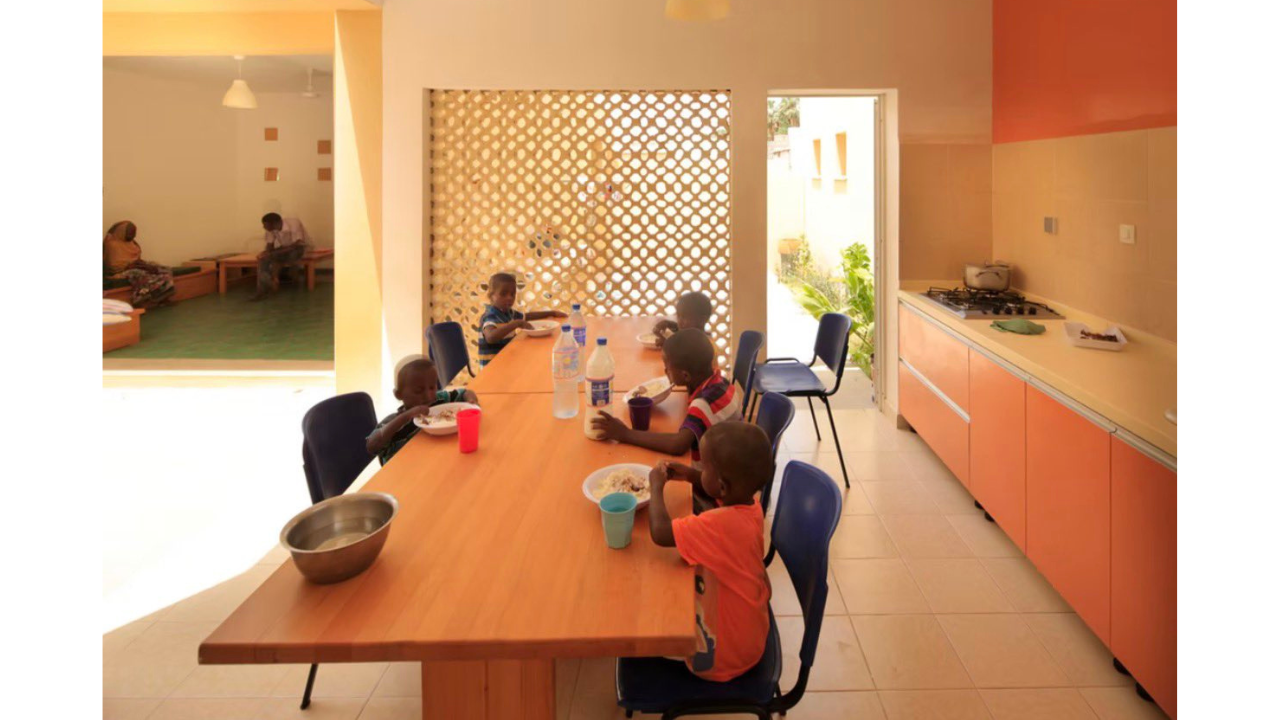
One of the most important features of the project is its passive cooling system. Passive cooling refers to architectural methods that reduce heat without relying heavily on electrical or mechanical refrigeration.The village uses wind-catching towers that rise above roof level and direct the moving air into the living spaces below. Similar structures have existed for centuries in traditional Persian and Middle Eastern architecture.The orientation of roads and open spaces was also carefully planned to accelerate air flow through the settlement. As air passes through narrow passages, its speed increases, improving ventilation and helping to remove trapped heat.Mashrabiya-style screening systems are used instead of sealed glass windows in many open spaces in buildings. These patterned screens allow air to pass through freely while blocking direct sunlight and reducing heat gain.The buildings are designed in light earthy colors that reflect sunlight rather than absorb it. In extremely hot climates, dark surfaces trap heat and continue to radiate long after sunset, while reflective finishes help keep temperatures down.

children's village

Why is there so little reliance on modern air conditioning?

Unlike many modern buildings in hot climates, the village was not designed around heavy mechanical cooling infrastructure. Wherever possible, the architects deliberately avoided energy-intensive climate systems.Instead the project relies on thermal mass, shade, airflow and reflective materials to maintain a more stable indoor temperature. Thick walls made of precast cement blocks and reinforced concrete absorb heat slowly during the day and release it slowly at night.This approach minimizes sudden increases in temperature indoors and allows many areas of the village to remain significantly cooler than the outdoor environment without constant artificial cooling. It also reduces long-term operating costs, which is especially important in areas where electricity infrastructure may be limited or expensive.

Children's village which remains cool even in extreme heat

Role of vegetation and microclimate

Although Djibouti is an arid country, vegetation plays an important role in the project. Over time trees and planted areas were gradually integrated throughout the settlement to create a shady microclimate.As plants grow, they lower the surrounding temperature through shade and evaporation, the process by which moisture released from leaves cools the surrounding air. Even relatively small green spaces can significantly improve thermal conditions in hot climates.The landscaping was also intended to create tranquil communal spaces and strengthen the social atmosphere of the village.

Materials selected based on climate, not appearance

The materials used in the village were deliberately simple and locally practical. The architects avoided imported glass-heavy architectural styles that often perform poorly in desert climates without massive energy consumption.Instead, the project relies primarily on reinforced concrete, precast cement block and textured plaster finishes. These materials were selected for durability, thermal performance, and ease of maintenance in extreme environmental conditions.The emphasis was not on futuristic aesthetics but on long-term climate adaptation using techniques already proven for generations in hot regions.

Car-free environment designed for kids

The village was designed as a pedestrian-first environment. Cars are largely excluded from the interior layout, allowing children to move safely through interconnected streets and shared courtyards.The narrow streets serve not only as cooling corridors but also as social spaces where children can play and interact. This creates a stronger sense of community than the isolated layouts often found in modern housing developments.The architects say the aim of the spatial design was to balance safety, social interaction and climate response at the same time.In an era of increasing electricity demand, climate change and urban extreme heat, such projects are becoming increasingly relevant. Rather than treating architecture and climate control as separate systems, the village combines them into an integrated design.


Source link