Three British Navy personnel killed in helicopter crash during training exercise in Devon, MOD confirms | world News

Three British Navy personnel killed in helicopter crash during training exercise in Devon, MOD confirms
Three navy personnel killed in helicopter crash in Devon.

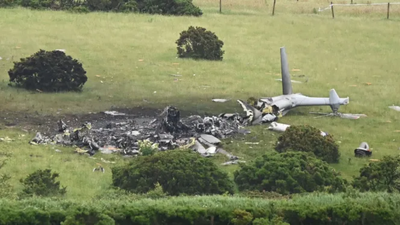
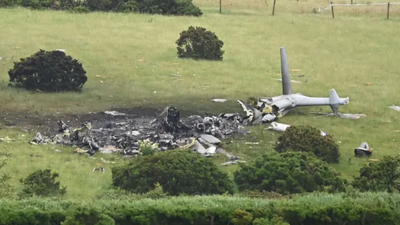
Three members of the Royal Navy have died when a military helicopter crashed during a training exercise in Devon, the Ministry of Defense has confirmed.The incident happened in the early hours of Wednesday morning near Sourton Down, near Okehampton. Emergency services were alerted at about 3.45am after a Royal Navy Merlin Mk4 helicopter was reported to have crashed in a field.According to the Defense Ministry, the plane was taking part in a training exercise when it crashed.In a post on Twitter, the ministry said: “It is with deep sadness that we can confirm that three members of the Royal Navy have died during a helicopter training exercise near Saughton, Devon, on Wednesday, June 3.”The ministry said the families of the deceased personnel have been informed.“The families of the service personnel have been informed and have requested some time off before releasing further information. Our thoughts and sympathies are with their families and friends at this tragic time,” it said.The identities of the three personnel have not yet been released. General Sir Gwyn Jenkins, First Sea Lord and head of the Royal Navy, said he was “deeply saddened” by the deaths.He said: “I am very sad to share the news that a Royal Navy Merlin Mk4 helicopter has crashed near Saunton, Devon this morning, killing all three crew members on board.“I know this will be a huge blow to everyone in our Navy community, and I have my deepest condolences to the families, friends and loved ones affected by this tragedy.“I would like to thank Devon and Cornwall Police and the search and rescue teams who responded to the incident this morning.”Devon and Cornwall Police said officers were called to the scene shortly before 4am and emergency services responded to the scene of the crash.

Source link

‘Any Indian supporting Vikram Digva should be deported’: UK MP issues warning after Henry Novak killed by Sikh man

'Any Indian supporting Vikram Digva should be deported': UK MP issues warning after Henry Novak killed by Sikh man

Calls for tougher action against those linked to convicted murderer Vikram Digva intensified after MP Rupert Lowe said, “Any Indian covering for Vikram Digva should be immediately deported”, as the debate over the murder of Southampton student Henry Novak and the use of bladed weapons under religious exemptions continues.Lowe is the MP for Great Yarmouth and leader of Restore Britain. He made the comments to theThe politician also called for the saber to be banned in Britain, calling it an “un-British religious practice”.DeGava was convicted of stabbing Nowak to death on Dec. 3 as the teen walked home alone after a night out with friends. Digwa used a 21 cm blade, which he claimed he considered part of his Sikhism.Judge William Mousley KC rejected DeGwa’s claims that he had acted in self-defence after being racially abused. Sentencing him, the judge said that Digwa had “shamed” both his family and his religion.Musli told the defendant, “You were calm but you had a large Sikh dagger.”Novak was a first-year student at the University of Southampton from Chafford Hundred, Essex. She was stabbed five times, including fatal injuries to her face, leg and chest. Prosecutors said DeGwa had a “passion for weapons”.Neighbors heard Novak saying that he had been stabbed and was dying. He tried to escape by climbing over the fence, leaving a trail of blood behind him.The case received national attention after police bodycam footage showed authorities initially treating Novak as a suspect. Despite repeatedly saying “I’ve been stabbed” and “I can’t breathe”, after Degawa falsely claimed he was attacked, he was handcuffed and arrested for assault.Police later apologized, saying that officers had been misled by information given at the scene and faced an “extremely complex” situation.Henry’s father Mark Novak described the events as “unbearable”.He said: “Henry did not die with dignity. He did not die with the care he deserved. Before anyone could believe him, he lost consciousness.”Meanwhile, the debate continues regarding the weapon used in the attack. The Sikh Federation said the blade used by Digwa was not a religious knife known as a kirpan and accused authorities of failing to clarify that distinction. However, the Crown Prosecution Service said that Digwa had chosen to carry two ceremonial knives and the judge accepted its assessment that the weapon was the saber that Digwa had chosen to use.Digva was also convicted of carrying a knife in a public place. His mother, Kiran Kaur, 53, was found guilty of assisting a criminal after attempting to hide the murder weapon. He is scheduled to be sentenced on July 17.

Source link

The dark side of plastic recycling: why some waste is burnt

The dark side of plastic recycling: why some waste is burned

Although many people believe that their plastic waste is managed effectively and properly through recycling, a good amount of exported plastic waste ends up in countries that lack proper waste management facilities. Sometimes, plastics that are considered recyclable are burned in the open, emitting dangerous gases and particles into the atmosphere. Recycling of plastics, export of plastic waste, international recycling of plastics, pollution from plastics, open burning of plastics, threats to public health, air pollution, waste management and environmental pollution, especially due to global plastic waste, are increasingly interconnected in an emerging environmental crisis.

The hidden reality of exported plastic waste: where does it go?

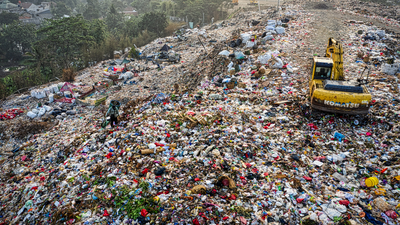
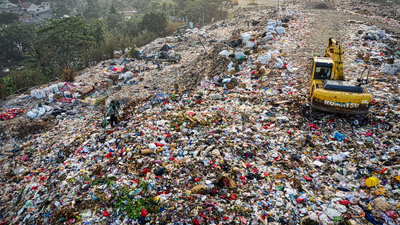
For years, developed countries have been disposing of plastic waste in poor countries to process it. Its purpose is to process the waste and eventually put it back into circulation. However, most of these materials cannot be recycled properly due to contaminants and mixed materials.When recycling facilities are overwhelmed, plastic waste is often dumped, buried or burned. Researchers studying global waste management have identified open burning as one of the most overlooked forms of plastic pollution. Dr. Therese M. CarlsonDoctor of Philosophy, Science and Technical Advisor at the International Pollutant Elimination Network (IPEN), describes open burning of plastic waste as “highly prevalent around the world” and notes that the actual amount of plastic and plastic waste, and the actual amount of toxic chemicals present in the waste, being moved globally through plastics and trade is likely to be even higher. As plastic production increases, plastic waste will also skyrocket. Estimates show that we will generate 26 billion tons of plastic waste by 2050. We cannot sustainably manage this level of waste production, and without global policies to reduce plastic production, the unequal exchange of plastic waste from high-income countries to non-high-income countries will continue.The issue extends beyond garbage and landfill sites. Once plastic is burned, pollutants are released directly into the atmosphere, affecting both local communities and the wider ecosystem.

What effect does burning plastic have on public health?

The health consequences of burning plastic are becoming increasingly clear. Studies show that when plastic is burned, a complex composition of toxic substances such as dioxins, furans, heavy metals and fine particles are emitted into the air.In their study, “Open burning of plastic waste: an urgent global health issueScientists claim that the pollutants emitted when burning plastic may remain active even after all the smoke and odor has disappeared.These pollutants can affect not only the air but also the lungs, blood and surrounding environment. Exposure to these pollutants can cause respiratory infections, heart disease, developmental disorders, and many other diseases.Joseph Hoover, who holds a doctorate from the University of Arizona and is also part of the core faculty of the Center for Indigenous Resilience, speaking in an interview with Susan Cozier National Institute of Environmental Health SciencesIt also notes that burning plastic waste at home has a huge impact on air pollution and health, especially in areas where there is no waste collection system.It is estimated that approximately two billion people around the world have no access to garbage collection.

Why does open burning remain a global environmental challenge?

An additional reason why open burning of waste continues despite efforts to address the problem is that it can sometimes become an informal means of waste disposal due to inadequate infrastructure. If garbage collection services are either sporadic or non-existent altogether, communities may lack other options.The above study on waste management practices in India, Indonesia, Philippines and Zambia states that burning plastic is often considered a practical way to reduce waste volume despite insufficient awareness of its long-term effects on health.Open burning of plastic waste can pose serious risks to both businesses and the general population as contaminated smoke is inhaled by waste workers and nearby communities. Aerosols produced by burning plastic waste are more toxic than aerosols produced in most other combustion processes.

Improving Recycling and Reducing Plastic Pollution

According to experts, the solution to the problem is not just to motivate people for recycling. Domestic recycling processes, reduced plastic production, better waste management practices and increased transparency on the export of plastic waste should all be considered.Experts say the issue of open burning should be addressed in international plans related to plastic pollution, as this sector is currently ignored.The study results remind consumers that putting plastic in the recycling bin is just the first step. Further fate will depend on the management systems. Without proper recycling infrastructure and proper waste management regulations, plastics that were created for recycling may contribute to pollution anyway.

Source link

Ukraine drone attacks: Ukraine drones attack St. Petersburg oil terminal, naval base, while Russia reports 8 civilians killed in bus attack

Ukrainian drones hit St. Petersburg oil terminal, naval base, while Russia reports 8 civilians killed in bus attack
Ukrainian drone attacks St. Petersburg oil terminal

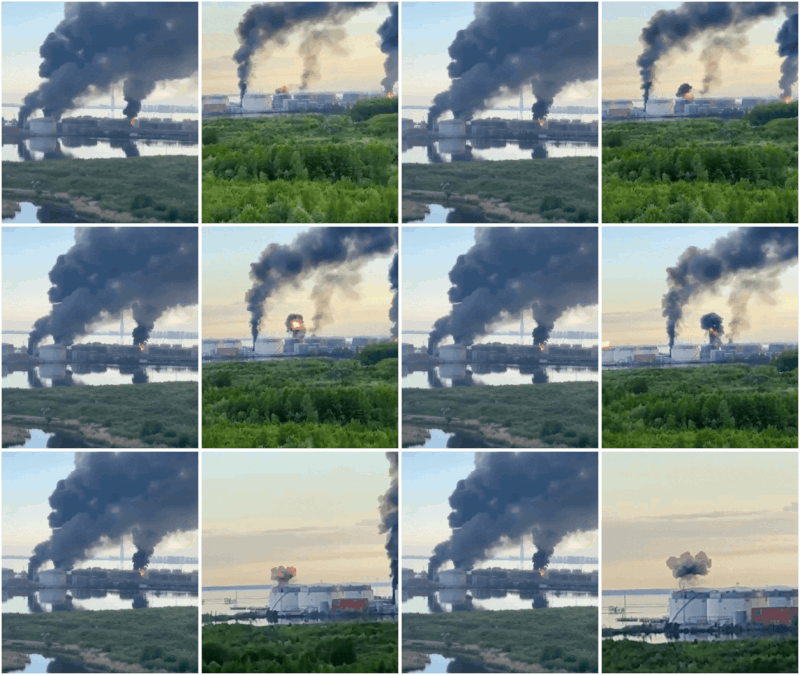
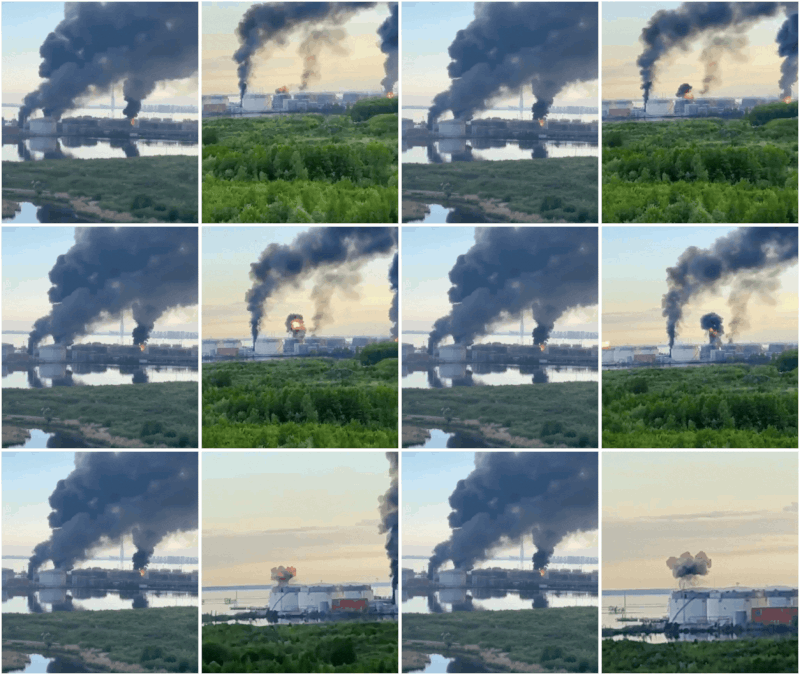
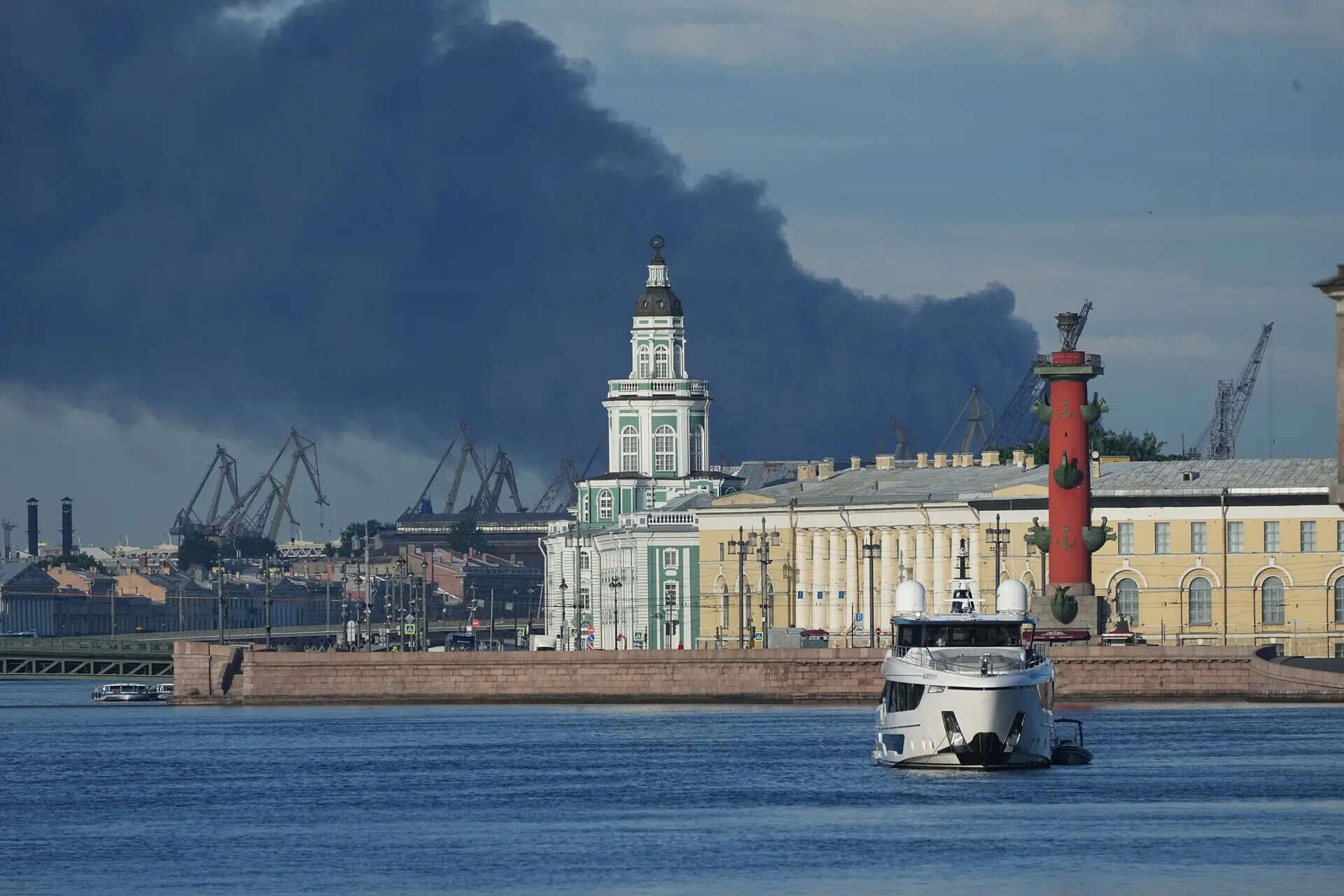
Ukraine carried out one of its deepest drone strikes inside Russia overnight, targeting energy and military facilities in St. Petersburg as the city prepared to host President Vladimir Putin’s major economic forum.Meanwhile, Russian officials accused Ukraine of carrying out a separate drone attack on a passenger bus in the Russian-controlled part of the Donetsk region, killing 8 people and injuring several more.The strikes came hours after a deadly wave of Russian missile and drone attacks on Ukrainian cities, reflecting an intensifying tit-for-tat campaign that has deepened the war in the two countries’ territory.Ukrainian long-range drones attacked an oil terminal and military facilities in St. Petersburg, Russia’s second-largest city, causing a temporary airport closure and disrupting communications ahead of the annual St. Petersburg International Economic Forum (SPIEF), according to news agency AP.Ukrainian President Volodymyr Zelensky said the drone flew more than 1,000 kilometers to attack the St. Petersburg oil terminal.Video shared by Ukrainian officials showed thick black smoke rising from the facility. According to news agency AFP, smoke was visible from the conference venue where the delegates had gathered.

Ukraine claims attack on naval base, warship

Zelensky said Ukrainian drones also targeted the Kronstadt naval base, home to Russia’s Baltic Fleet. The Ukrainian military later claimed that it had attacked the Boiki corvette, causing a massive fire on the warship.The commander of Ukraine’s drone forces posted footage he said showed an attack on a ship at a naval base.Russian officials confirmed that infrastructure in St. Petersburg was damaged, but did not provide details. Governor Alexander Beglov said no casualties were reported.The strike disrupted operations at St. Petersburg’s main airport, with flights suspended for several hours overnight. According to news agency AP, mobile internet services were also temporarily restricted.Zelensky described the attacks as part of Ukraine’s strategy of “long-range sanctions” aimed at Russian military and energy infrastructure.“Ukraine’s long-range sanctions plan is being implemented exactly as needed to bring peace closer,” he said.

SPIEF Forum opens in the shadow of war

These attacks coincided with the inauguration of SPIEF, often referred to as the “Davos of Russia”. The forum remains one of Moscow’s most important economic events despite most Western investors leaving following Russia’s invasion of Ukraine in 2022.

Ukrainian drone strikes St. Petersburg oil terminal ahead of 'Russian Davos'

Putin is expected to deliver a keynote speech on Friday. Nearly 20,000 participants from 130 countries are expected to attend this year’s gathering.Kremlin spokesman Dmitry Peskov vowed to respond to the Ukrainian attacks.“Our responses will be systemic in nature,” he told reporters.The Kremlin also said it was continuing to fight to prevent such drone attacks in Ukraine.

Russia blames Ukraine for deadly bus attack

According to Reuters, Russia-based Donetsk leader Denis Pushilin said a Ukrainian drone attacked the bus as it stopped to pick up passengers in Yenakiyev.Pushilin said eight civilians were killed and 11 were injured.Kiev did not immediately comment on the allegation. Like Russia, Ukraine also denies deliberately targeting civilians.Russian investigators opened a criminal case over what they described as a “terrorist attack”.Russian Foreign Ministry spokeswoman Maria Zakharova accused Ukraine of waging a “campaign” against civilians, while Special Ambassador Rodion Miroshnik alleged that Kiev was attempting to intimidate residents in Russian-controlled areas.

growing drone war

The latest attacks come amid a sharp increase in long-range attacks by both sides.According to the AP, Russia launched 198 drones into Ukraine overnight, while Russian officials said their air defenses intercepted 354 Ukrainian drones in several areas.The exchange came after a major Russian missile and drone attack on Ukraine on Tuesday, which killed at least 23 people and injured more than 130.Fighting continued even on the front lines. Ukrainian officials said Russian strikes killed civilians in the Kherson, Sumy and Kharkiv regions, while Russian-established officials reported casualties in occupied eastern Ukraine.With battlefield lines largely static and drone warfare increasingly shaping the conflict, both Moscow and Kiev are relying more on long-range strikes aimed at military infrastructure, energy facilities and logistics networks far from the front.

Source link

Henry Novak: The Sikh man who murdered Henry Novak was booked in 2023 for allegedly stealing ceremonial blades from a gurudwara. world News

Sikh man who murdered Henry Novak was reported in 2023 for allegedly stealing ceremonial blades from a gurudwara

A Sikh man jailed for the murder of an 18-year-old student in Southampton has previously been reported to police over the alleged theft of a ceremonial religious blade, the Daily Mail reports.Vikram Digva, 23, was jailed for life after being found guilty of murdering 18-year-old Henry Novak with an eight-inch saber in Southampton city center in December 2025.Members of Southampton’s Sikh community contacted police over the alleged theft of a ceremonial Shastar blade worth approximately £1,000 in July 2023.The blades were reportedly taken from Gurdwara Khalsa Darbar in Southampton, where Digwa and his brother were teaching Gatka, a traditional Sikh martial art involving the display of weapons.A source at the gurudwara said Digva was dismissed as a gatka instructor in August 2023 and the alleged theft was later reported to the police.“We sacked him as a Gatka teacher in August 2023 and then I reported him to the police for stealing Shastra worth about £1,000, which was bought with community money,” the source told the Daily Mail.No charges were filed in connection with the alleged incident.Digwa’s mother Kiran Kaur, 53, was also convicted of assisting an offender after prosecutors said she removed the murder weapon from the scene of the stabbing.Sentencing Degua to life in prison, Judge William Mousley Casey told the defendant he had “brought shame to your family and your religion”.The judge also said he was satisfied that Henry Novak “did not say anything racist” during the encounter and rejected a significant portion of DeGava’s account of the events leading up to the fatal stabbing.

Source link

Meet Avni Ahuja: Indian-origin MIT student wins prestigious Henry Ford II Scholar Award for engineering excellence and leadership

Meet Avni Ahuja: Indian-origin MIT student wins prestigious Henry Ford II Scholar Award for engineering excellence and leadership
Avni Ahuja (right) received the Henry Ford II Scholar Award.

of indian origin MIT Graduate Avani Ahuja has received the prestigious Henry Ford II Scholar Award. The honor is one of the institution’s top honors for undergraduate engineering students and celebrates academic excellence, leadership and future promise. During her tenure at MIT, Ahuja conducted research in power electronics, robotics, and women’s health technologies. He also received the prestigious Barry Goldwater Scholarship in 2025. ​​This autumn she will begin her PhD in power electronics at MIT with plans to explore applications in health care and women’s health research.

Avni Ahuja receives one of MIT’s top engineering honors

The Henry Ford II Scholar Award is presented to a senior undergraduate student who demonstrates exceptional academic achievement and strong leadership potential in engineering and society.The award places Ahuja among a select group of MIT students who are recognized not only for their academic performance but also for their potential to make significant contributions to the engineering profession.Reflecting on the honor, Ahuja said, “I am honored and humbled to receive this award. It was especially an honor to meet Dean Hammond.”

Research that helped earn the award

Ahuja’s undergraduate career was marked by research in several engineering disciplines.His most recent work in the Kode Research Group focused on capacitive wireless power transfer. This technology could eventually be used to wirelessly charge electric vehicles and power implantable medical devices.He also conducted robotics research under Professor Sangbae Kim, whose laboratory is known for advanced legged and bio-inspired robots.Ahuja described research as one of the defining aspects of his MIT experience.“My most important experiences at MIT have included being involved in research, whether it was women’s health research under Professor Canon Dagdeviren in the MIT Media Lab, robotics research under Professor Sangbae Kim, or power electronics research under Professor Samantha Codey.”His ability to work in health care technologies, robotics, and electrical engineering helped establish him as one of MIT’s most accomplished undergraduate researchers.

Her work in women’s health technology

One of Ahuja’s strongest interests is women’s health research.She worked with Professor Canon Dagdeviren at the MIT Media Lab where she contributed to projects focused on medical technologies for women.According to MIT his research included work related to a wearable breast ultrasound patch designed to make breast cancer screening more accessible.The experience inspired his long-term goal of applying engineering innovations to health care challenges.“I hope that one day after completing my PhD, I will be able to apply power electronics to the field of women’s health research,” she said.

The Goldwater Scholarship added to his growing list of accomplishments

Ahuja was selected as a 2025 Barry Goldwater Scholar before receiving the Henry Ford II Scholar Award.The scholarship is considered one of the most prestigious graduate awards in science, engineering and mathematics in the United States. Only a few hundred students are selected across the country each year.This recognition highlighted both his research achievements and his potential as a future engineer and researcher.

What’s next for Avni Ahuja?

Ahuja will remain at MIT this fall as a PhD student in power electronics within the Department of Electrical Engineering and Computer Science.His future work will focus on power electronics and exploring opportunities to apply those technologies to health care and medical devices.He has also expressed interest in pursuing a long-term career in research and education.

life beyond the laboratory

Along with her engineering studies, Ahuja remained active in campus life through events like MIT Oms MIT Live and even line dancing classes.“I’ve also really enjoyed getting involved in extracurricular opportunities on campus, whether it’s participating in the MIT Oms through MIT Live or taking line dancing lessons in the Student Center,” she said.Ahuja also completed a minor in gender studies and credits professors Hafsa Arain and Mara Gubar for broadening her perspective.“As a gender studies minor I have to thank Professor Hafsa Arain and Professor Mara Gubar for offering me amazing WGS and CMS classes that have truly changed the way I think about the world around me.”

The gurus who shaped his journey

Ahuja credits several mentors and faculty members for supporting her throughout her tenure at MIT.He thanked Professor Samantha Codey, Professor Maria Yang and Professor Canon Dagdeviren, along with graduate students Colin Marcus and Sarah Fernandez and Associate Dean Kimberly Benard.“I also want to thank the entire Code Research group for being a great support system,” she said.As she prepares to begin her PhD, Ahuja’s accomplishments are already placing her on MIT’s list of rising young engineers whose research interests span power electronics robotics and women’s health care innovation.

Source link

Indian-origin couple’s 23-year-long divorce battle in Britain: Ex-wife wins £6.6 million after husband hid assets worth £28 million. world News

Indian-origin couple's 23-year-long divorce battle in Britain: Ex-wife wins £6.6 million after husband hid assets worth £28 million
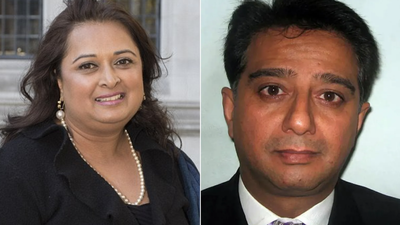
Varsha Gohil and Bhadresh Gohil

The 23-year-long divorce battle between an Indian-origin couple in Britain has ended with a court awarding Varsha Gohil £6.6 million after years of litigation over hidden assets worth £28 million.The controversy began in 2002 when Varsha Gohil filed for divorce from her husband Bhadresh Gohil, citing adultery and inappropriate behavior. At the time, he accepted a £270,000 financial settlement with the family’s Peugeot, The Sun reported.Varsha later became convinced that her ex-husband had not fully disclosed his assets during the divorce proceedings. Under UK law, both parties must give full accounts of their assets and income when deciding on a financial settlement.In 2007, she returned to court seeking to overturn the original agreement after gathering evidence that she believed Bhadresh had concealed part of his fortune.The case took a dramatic turn in 2011 when Bhadresh was convicted of money laundering and forgery. The former lawyer was sentenced to 10 years in prison, while the Crown Prosecution Service seized assets worth almost £28 million which investigators said were hidden around the world.The legal battle then turned into a dispute over whether those properties should be considered part of the couple’s marital estate.Varsha’s challenge eventually reached the UK Supreme Court. There, judges considered her case alongside that of Alison Sharland, who made similar allegations that her ex-husband hid assets during divorce proceedings. The verdict allowed both women to reopen their financial settlements and pursue new claims.Despite that victory, the financial dispute remained unresolved for years. The Crown Prosecution Service faced difficulties locating and recovering the assets, leading to a new High Court hearing not taking place until 2023.At that hearing, Bhadresh argued that the frozen property was not his and therefore could not be included in any divorce judgment. Varsha said the assets were accumulated during their marriage and should be considered while dividing the couple’s property.The Crown Prosecution Service argued that the money represented the proceeds of crime and should remain subject to criminal recovery proceedings rather than being distributed through the family courts.However, Mr Justice Williams ruled that prosecutors had failed to prove that the entire £28 million had arisen from criminal activity. They found that some of the assets came from legitimate businesses that existed during the marriage and therefore formed part of the couple’s estate.The judge awarded Varsha £6.6 million and sharply criticized her ex-husband, describing him as “grossly dishonest”.In his judgment, Mr Justice Williams said Bhadresh’s portrayal of himself as a hard-working family man who had been treated unfairly was “so far from the truth that it is difficult to understand how he could have put this forward”.The decision ends one of Britain’s longest-running divorce disputes, ending a legal battle that lasted more than two decades.

Source link

NASA’s James Webb Space Telescope has discovered methane hidden deep inside the interstellar comet 3I/ATLAS along with unusual carbon dioxide abundance.

NASA's James Webb Space Telescope has discovered methane hidden deep inside the interstellar comet 3I/ATLAS along with unusual carbon dioxide abundance.

The view back from NASA’s James Webb Space Telescope makes the familiar categories of comet science a little strange. 3I/ATLAS, an interstellar object that briefly passes through the Solar System, has been observed before, but this time’s readings seem less like a routine update and more like a chemical surprise that refuses to sit well with local comets. The data come from a narrow post-perihelion window, when the object was already retreating from the Sun and slowly cooling again. What the telescope caught was not just the usual mixture of water vapor and dust, but signs of gases behaving that didn’t quite match the established patterns seen in domestic icy bodies. The data gives the impression that this Traveler was manufactured somewhere else, under completely different circumstances.

NASA James Webb Space Telescope Observations reveal hidden methane inside an interstellar comet

The comet was observed twice in mid-to-late December, during the phase when it had already passed the Sun and was heading back to the cooler location. At the time, it was still releasing material, although not as uniformly. The readings show that a body is closing gradually rather than all at once.The distances from the Sun were still large in everyday terms, but far enough for solar heating to continue to perturb its surface layers. The instruments tracked that change in real time, observing how different gases reacted as the object moved away. One of the most significant elements in the data is the presence of methane. It was picked up directly in the mid-infrared spectrum, something that had not been clearly recorded for an interstellar comet before. Methane is a type of compound that does not survive well in exposed conditions. It turns from ice to gas at relatively low temperatures, which generally means it should be one of the first substances to disappear from a hot surface.Its presence here and its timing suggest that it may be hidden beneath the outer layer. Only when the heat reached the deeper layers did it start leaking. This type of delayed release hints at a layered structure rather than a uniform icy block.

NASA's James Webb Space Telescope discovers methane hidden deep inside interstellar comet 3I/ATLAS

PC: NASA

NASA web data shows carbon dioxide dominance and anomalous gas decline in 3I/ATLAS

Along with methane, carbon dioxide was unusually effective. The comet appears to be releasing it at a level that is typically seen in many Solar System comets, especially when compared to water production.That imbalance matters because it points to a different initial structure. Carbon dioxide behaves differently from water ice when heated, and a body that produces more of it relative to water may have formed under cooler or chemically different conditions than those that have shaped objects in our own outer Solar System. As 3I/ATLAS moved away from the Sun, activity decreased in a fairly clear pattern. Water production declined most rapidly, which is not unexpected, as it requires continued heat to sublimate as the surface cools.Methane and carbon dioxide declined gradually. The overall effect is not of a sudden stop but of a gradual retreat, with different materials ceasing activity at different thresholds. The comet does not behave like a single homogeneous object losing energy uniformly; It reacts in layers, almost as if its interior stores heat separately from its surface.

What NASA James Webb MIRI has revealed Interstellar Comet 3I/ATLAS chemistry

The instrument behind these measurements, MIRI on the James Webb Space Telescope, works by breaking infrared light into finely spaced components. Each slice of sky produces not only an image but a complete chemical breakdown, point by point, around the comet’s nucleus.This type of mapping allows faint gases to be tracked as they move away from the surface, forming a loose envelope around the object. It’s less about a snapshot and more about a dynamic chemical field, which changes as sunlight weakens and distance increases. What the combined readings create is not a dramatic discrepancy, but a persistent mismatch. The proportions are off in small but noticeable ways. Methane appears later than expected. Carbon dioxide predominates more than usual. Water runs out faster than the rest.

Source link

Iran attacks Kuwait: Watch: Air defense war over Kuwait, Patriot missiles respond to Iranian attack

WATCH: Air defense war over Kuwait, Patriot missiles respond to Iranian attack

Tensions rose again in the Middle East early Wednesday after Iran fired missiles towards US military facilities in Kuwait and Bahrain. According to US Central Command (CENTCOM), the missiles failed to hit their targets and were either intercepted or separated before impact. In response, US forces launched attacks on Iranian military facilities.The night sky over the Gulf lit up as Iranian missiles and drones headed toward American bases. American air defense systems intercepted incoming threats near Kuwait City, preventing them from reaching Ali Al Salem Air Base in Kuwait.US air defense used Patriot missiles to respond to the Iranian threat.The latest exchange comes amid a conflict that has intensified since the US launched a major military campaign against Iran earlier this year. Since then, the two sides have exchanged attacks, bringing the region closer to a wider confrontation. Several attempts at dialogue and negotiation have been made, but there has been no success in reducing tensions.The US military responded strongly to Iran’s action by attacking Qeshm Island.Also read: Iran launches attacks on US targets in Kuwait; Air defense intercepts missiles, dronesAccording to US officials, Iran fired missiles toward Kuwait and Bahrain, but none reached their intended targets. Two missiles targeting Kuwait broke up mid-flight, while the missiles targeting Bahrain were intercepted by US and Bahraini forces.The development comes after reports from Iran’s semi-official Fars and Tasnim news agencies claimed that Tehran has stopped communicating with mediators about extending a ceasefire in its conflict with the US and Israel. chairman donald trump disputed the reports, saying talks were ongoing.The reports published by Fars and Tasnim, considered close to Iran’s paramilitary Revolutionary Guard, came as tensions also rose on Israel’s northern front with the Iran-backed Hezbollah group in Lebanon.A regional official involved in mediation efforts, speaking anonymously to The Associated Press, said Iran did not negotiate with mediators on Tuesday after insisting that a ceasefire must be implemented in Lebanon before talks could continue.

What is the most worrying aspect of recent military actions in the Middle East?

In a separate development, the US military said it targeted another oil tanker attempting to reach an Iranian port in violation of the US blockade. According to CENTCOM, it was the seventh ship to be intercepted while trying to circumvent sanctions.The Botswana-flagged merchant vessel M/T Lexi was stopped after her crew allegedly ignored repeated warnings for 24 hours. CENTCOM said one aircraft fired a Hellfire missile into the ship’s engine room, disabling the ship.

Source link

10 largest island countries in the world: Indonesia, Japan, Papua New Guinea among the largest island countries. world News

10 largest island countries in the world: Indonesia, Japan, Papua New Guinea among the largest island countries

Standing back from a world map, the outline of land against water appears less well-defined than before. Some countries disintegrate into hundreds or even thousands of pieces, scattered like broken glass across vast expanses of ocean. Others sit almost entirely on a single group of rock but still qualify as island nations in their own right. There are places where distances between communities are measured in ferry hours rather than roads, and others where a capital city is closer to another continent than to its outer edges. worldatlas The report says that these countries are not sitting comfortably in one size. In a way, they flow across water that has long shaped the way people live within them.

10 Largest island countries by area

Post
Country
Area (km²)
Area (mile²)
1 Indonesia 1,904,569 735,358
2 madagascar 587,041 226,658
3 Papua New Guinea 462,840 178,704
4 Japan 377,915 145,913
5 malaysia 329,847 127,355
6 philippines 300,000 115,831
7 new zealand 268,838 103,798
8 united kingdom 243,610 94,058
9 Cuba 110,860 42,804
10 iceland 103,000 39,769

The world’s largest island countries

Indonesia

Indonesia sits in a long arc between Asia and Australia, divided into a group of islands that go on and on once you start counting. The spread is so wide that the country crosses different time zones without much effort. Some islands are densely populated and built up, other islands are quiet and forested, rarely mentioned on external maps.Java is home to a large number of people, while the shared parts of Sumatra and Borneo make the country feel unequally burdened. Farther east, the western part of New Guinea adds another layer of distance, making the country feel cohesive rather than holistic in the general sense. Traveling across it is less a journey within one place and more a sequence of different worlds connected by the sea.

madagascar

Madagascar is alone off the African coast, separated by a wide strip of ocean that has physically isolated it for millions of years. Most of the country lies on one large island, surrounded by a few smaller pieces that barely change its overall outline.That long isolation has shaped life there in unusual ways. Species evolved without much outside influence, which is why many of the plants and animals found there do not appear anywhere else. The landscape shifts from dense forest to arid fields with little transitions, giving the island a sense of internal contradiction that seems almost self-contained.

Papua New Guinea

Papua New Guinea occupies the eastern part of New Guinea and surrounding islands. The terrain is steep in places, densely forested in some places, and often cut off by natural barriers, making movement between communities difficult.Within that geography there is an extraordinary breadth of languages, hundreds of which are still in use. Many evolved in isolation across valleys and ranges, where contact between groups remained limited for generations. Nearby islands add another layer of isolation, making the country fragmented not only by water but also by land that resists easy travel.

Japan

Japan runs a narrow chain along the edge of East Asia that passes through cold northern waters and into subtropical regions. The main islands form a clear spine, but smaller surrounding islands complicate any simple picture of the country.At one point, official mapping suggested a fixed number of islands. Subsequent surveys, using improved methods, revised the figure sharply upward. Nothing changed about the land, yet the way it was counted changed. The coastline remains irregular due to volcanic activity and changing seas, giving the country a consistently measured, slightly uncertain geography.

malaysia

Malaysia exists in two distinct parts, divided by an expanse of ocean that keeps them physically separated. Half of it lies on the Malay Peninsula, which shares a land border with Thailand. The other is located on Indonesia and Brunei as well as Borneo.This dissociation affects daily activity in practical ways. Flights often replace overland travel, and national administrations extend open water intervals. Islands and coastal fringes add further fragmentation, although most of the population is concentrated in urban centers that support each half of the country.

philippines

The Philippines covers a wide part of the western Pacific, made up of thousands of islands of varying shapes and sizes. Some are so large that they can contain major cities and entire provinces, while others are little more than strips of land surrounded by rocks and deep water.Three broad regional groupings help to understand this, although they do not remove the feeling of fragmentation. Travel between islands often depends on weather and sea conditions, which can change quickly. The result is a country where distances are measured less in kilometers and more in terms of time taken to cross water.

new zealand

New Zealand is far from major landmasses, consisting primarily of two large islands and a long list of smaller islands. The South Island has mountains, rivers and wide open spaces, while the North Island contains most of the population and administrative centres.Despite its size, the country feels relatively limited, with most people living in coastal cities. Beyond those areas, the landscape opens up to increasingly less populated areas. The sea plays a continuing role in shaping that isolation, with even internal travel often involving long distances between settlements.

united kingdom

The United Kingdom is surrounded by Great Britain, a large island that holds England, Scotland, and Wales. Nearby there is another large territory shared with the Republic of Ireland, with Northern Ireland forming part of the political structure on its side.The surrounding waters have long influenced how the country connects internally and externally. Even within the main island the distances are so short that no point sits too far from the coast. Offshore areas and small islands extend the reach further, although the mainland remains firmly concentrated on a single stretch of land.

Cuba

Cuba is located at a point where several major bodies of water meet, giving it a long, narrow shape extending into the Caribbean. The main island dominates, with smaller surrounding islands adding texture to its outline without changing its overall appearance.Its position places it close to other major landmasses, yet clearly separated by water. Coastal areas vary between quiet stretches and more developed urban areas, while inland areas remain less densely populated. The island’s size makes travel across it relatively simple compared to the more fragmented archipelago.

iceland

Iceland is located in the North Atlantic, closer to the Arctic Circle than continental Europe. Most of the population is concentrated in a small part of the island, while large areas remain uninhabited due to the volcanic terrain and harsh weather.The land slowly continues to shift as tectonic forces push it apart. New structures appear over time, while others change shape under geothermal activity. Despite its size relative to the list, it stands as a single landmass, whose shape is caused by the movement of the sea beneath the surface and around it.

Source link