‘Don’t want to look 20 pounds heavier’: Trump quips over reports of wearing bulletproof vest during White House dinner

'Don't want to look 20 pounds heavier': Trump quips over reports of wearing bulletproof vest during White House dinner

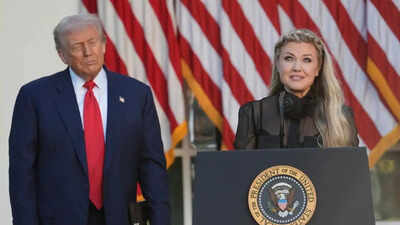
US President Donald Trump on Thursday rejected reports that he was wearing a bulletproof vest following an assassination attempt at the White House correspondents’ dinner.Speaking to reporters, Trump joked that he didn’t want to look ’20 pounds’ heavier. He said, “I don’t know if I could handle looking 20 pounds heavier. These guys, they look like this, some of these guys are physical specimens.”He said that although such precautions are sometimes considered, they do not support the idea of ​​appearing overly protected.“I think it’s something you consider. In a way, you don’t like to do it because you’re giving in to a bad element. I don’t know. But I’ve been asked about it,” Trump said.Asked whether he was worried about the possibility of another attack, Trump said he avoided thinking about it. “I don’t think about it,” he said.He added, “And if I did that, I wouldn’t be able to do a very good job here. I’m not thinking about anything else other than that. I don’t think about it. I really don’t think about it. If I did, I wouldn’t be effective.”The comments came after reports and speculation about security measures following what officials described as a serious attack at the White House dinner.The incident, which took place during the high-profile gathering, erupted into chaos when a gunman, reportedly armed, stormed the venue, triggering a security response, after which Trump fled the stage.According to authorities, suspect Cole Tomas Allen allegedly entered the venue armed with guns and knives, causing panic as gunshots were fired and guests hid. Trump was taken out safely during the incident.Authorities have charged Allen with attempted murder and other crimes.Authorities are continuing to investigate the motive behind the attack, as well as reviewing electronic evidence and online posts linked to the suspect.Despite the seriousness of the incident, Trump said he did not pay attention to personal security threats, saying he preferred to remain focused on his duties.

Source link

IshowSpeed: IShowSpeed ​​plans space livestream after completing world tour goal

iShowSpeed ​​plans space livestream after hitting world tour goal

iShowSpeed ​​has shared a big and exciting dream with its fans. The popular streamer said that he wants to stream from space after he finishes touring countries around the world. Now, he has already traveled to many places and met fans in different continents. During a recent stream in St. Maarten on April 29, he talked about his future plans and made it clear that he is serious about going beyond Earth.He told that he has already visited 96 countries and wants to visit all the countries of the world. He said there are about 200 countries, so he has completed about half the work. He believes that he can achieve this goal in the next two to three years. After this he wants to try to do something bigger. He said he wants to go to space and live stream from there, which would be something no streamer has done before.

IShowSpeed ​​wants to stream from space after closing world Tour

IShowSpeed ​​has been doing travel streaming for the past few years. He started from his room but now travels to different countries to meet fans and show new places. His streams are often full of energy, fun, and sometimes chaos. Each new journey has been bigger than the last, and fans enjoy watching their adventures.He also said that he still wanted to visit Antarctica one day. If he does so, he will have accomplished his goal of streaming on all seven continents. But his biggest dream is still space. He even said that he may need the help of Elon Musk to do this.Along with space, he also talked about going under water. This is probably related to his love for the anime One Piece. He often talks about finding hidden treasures on the show, and his favorite character, Monkey D. Luffy, is a large part of his streams.Ultimately, IShowSpeed ​​is dreaming big. First of all, he wants to finish his world tour. Then, he wants to go into space and maybe even underwater. Fans are excited to see if he can make these dreams come true in the next few years.

Source link

Top 10 countries with most skyscrapers in the world 2026: China, US, UAE and other major countries world News

Top 10 countries with most skyscrapers in the world 2026: China, US, UAE and other major countries

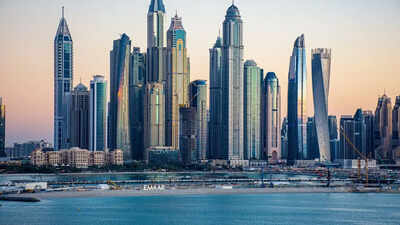
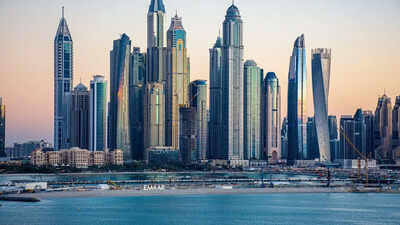
Skyscrapers have become a kind of silent competition between nations. It hasn’t always been planned this way, but it’s clearly visible in the skylines. Cities are moving upwards faster than outwards. The idea of ​​”top 10 countries with the most skyscrapers” is usually associated with urban growth, population pressure, and economic ambition. China dominates this space by a large margin, while the United States still holds the historical lead in coveted high-rise development. Other countries in Asia and the Middle East are rapidly falling prey to it. Modern construction trends, commercial centers and demand for real estate are driving cities to build taller than ever. Some skylines are still developing, while others already look almost entirely filled with glass towers and steel giants.

List of countries with most skyscrapers 2026

Country
skyscrapers
China 3,492
United States of America 905
united arab emirates 342
malaysia 319
Japan 283
south korea 281
Canada 178
Australia 163
Thailand 144
Indonesia 139

Source: World Population Review

Top 10 countries in the world with most skyscrapers in 2026

China

China is in first place, but by a considerable distance. Cities such as Shenzhen, Shanghai and Guangzhou have an abundance of tall buildings. The districts look like entire vertical cities. It seems that the reason behind such rapid growth is urbanization as well as the development of industries. Most skyscrapers in the country are mixed-use buildings that include both office space, hotel accommodation and residential properties. Obviously, construction activity in China over the past few decades exceeds anything that has occurred anywhere else. The views of some cities seem almost futuristic, even more so in the evening. Yet the pace of construction continues, albeit at a slower rate than before.

United States of America

The United States has a long tradition with skyscrapers and ranks as the second largest country in the world. New York and Chicago were among the first cities to be recognized by skyscrapers. In the context of the country’s architectural flag, its dominance in the global architectural world is quite evident. New York City alone contributes huge numbers. It appears as if the objective here is not quantity but quality, and modern skyscrapers are used for luxury residences or headquarters of corporations.

united arab emirates

What makes the United Arab Emirates unique is Dubai and Abu Dhabi. Indeed, Dubai has transformed its skyline unprecedentedly in just a few years. The existence of landmarks like Burj Khalifa reflects its ambition to become a global power. Skyscrapers in Dubai are known for their emphasis on luxury, tourism and corporate branding. In other words, the UAE seems to use tall buildings to build its global image.

malaysia

Malaysia, especially Kuala Lumpur, contributes heavily to the number of skyscrapers in the country. The city has a dense cluster of modern towers including residential and commercial buildings. The Petronas Towers remain an iconic part of the skyline. Urban development policies seem to have encouraged vertical growth to efficiently manage land use. Skyscrapers here are often functional and integrated into public transportation networks. The overall horizon continues to expand, although not as aggressively as China or the United Arab Emirates.

Japan

Due to earthquake risks, Japan’s skyscrapers are shaped according to strict engineering standards. With a mix of commercial and residential towers, Tokyo is leading the country in high-rise development. The design focus is often on safety and functionality rather than excessive height. The scarcity of land in major cities appears to have encouraged vertical expansion. Japanese skyscrapers are compact but highly efficient. The horizon continues to evolve gradually with advanced construction techniques.

south korea

Many high-rise buildings are being built in South Korea, especially in Seoul. For example, Songdo District shows an emphasis on modern urban planning. It appears that the progress made by South Korea is related to the technological sector and globalization. The skyscrapers present in South Korea are efficient and in line with the demands of today’s lifestyle.

Canada

Skyscrapers in Canada are dominated by cities such as Toronto and Vancouver. They have grown steadily, not suddenly. In Toronto, skyscrapers make up the highly populated central part of the city, which contains many residential buildings. Immigration and urban population growth appear to have contributed to the growth of skyscrapers. The skyscrapers are fairly new but well-proportioned, leaving ample room for further expansion.

Australia

The construction of tall buildings in Australia is mostly concentrated in the cities of Sydney and Melbourne. It is highly associated with coastal city planning and design. The buildings are characterized by a combination of residential and commercial functions. There may be a need for building construction due to the high demand for land in the city. Modern high-rise buildings in Australia feature attractive design and integration with the coast.

Thailand

Thailand, especially Bangkok, shows rapid skyscraper development. The city’s skyline is becoming denser with residential towers and hotels. Tourism plays a strong role in this expansion. Urban migration also appears to be contributing to vertical growth. Bangkok’s skyline is still changing, with ongoing construction projects shaping its future identity.

Indonesia

Indonesia is slowly expanding its skyscraper presence, following Jakarta’s lead. The city faces high population density, which encourages vertical construction. Economic growth and urban demand appear to be driving new development. Despite lagging behind regional leaders, the horizon is changing rapidly. New projects suggest continued expansion in the coming years.

Source link

‘Make Pluto a planet again’: NASA Administrator Jared Isaacman calls for restoration of status at US Senate hearing

'Make Pluto a planet again': NASA Administrator Jared Isaacman calls for restoration of status at US Senate hearing
Jared Isaacman (Image/AP)

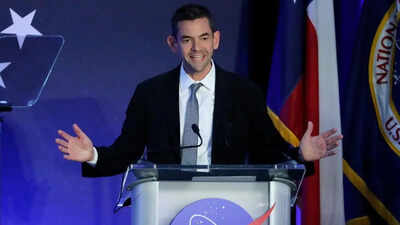
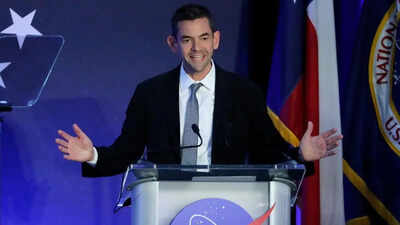
NASA Administrator Jared Isaacman has reiterated his support for restoring Pluto to planet status.Speaking during a US Senate hearing on Tuesday, Isaacman expressed strong support for reconsidering Pluto’s classification.Responding to a question from Senator Jerry Moran, chairman of the Senate Committee on Appropriations, Isakman said, “Senator, I am in favor of ‘making Pluto a planet again.’He also indicated that NASA researchers are working on studies that could help reopen the scientific debate over Pluto’s status, USA Today reports. Isaacman said he firmly believes that the distant icy world should not be reclassified as a dwarf planet.His comments come nearly two decades after Pluto was stripped of its planet status in a 2006 decision by the International Astronomical Union (IAU).Isaacman, who was confirmed as NASA Administrator in December 2025, has expressed similar views before, including in media interviews where he suggested that Pluto’s classification deserves fresh scrutiny.

Why was Pluto’s status reduced?

Pluto was discovered by American astronomer Clyde Tombaugh in 1930 and was long considered the ninth planet in the Solar System.However, in 2006, the IAU redefined qualification as a planet. While Pluto meets some of the criteria, such as orbiting the Sun and being spherical in shape, it does not meet the requirement to ‘clear its orbit’ of other debris.Because of this, Pluto was reclassified as a ‘dwarf planet’, a designation that placed it in a separate category with other icy bodies in the Kuiper Belt beyond Neptune.Pluto is a small, frozen world about 1,400 miles wide, located at the edge of the Solar System. It is part of the Kuiper Belt, a region filled with icy objects and remnants of the early Solar System.NASA’s New Horizons spacecraft remains the only mission to fly past Pluto, completing a historic flyby in 2015 and providing the first close-up images of its surface and moons.

Ongoing debate on definition of planets

The question of Pluto’s status has remained a matter of scientific and public debate since its reclassification.Some planetary scientists, including Alan Stern, head of the New Horizons mission, argue that Pluto should still be considered a planet based on its geology and atmosphere, not just orbital criteria.Public figures have also joined the discussion, with supporters calling for a broader definition of what constitutes a planet.Pluto was identified after years of discovery efforts following the predictions of astronomer Percival Lowell, who theorized the existence of a distant ‘Planet X’ based on irregularities in the orbit of Uranus.Clyde Tombaugh finally discovered Pluto in 1930 at Lowell Observatory in Arizona.The name ‘Pluto’ was suggested by 11-year-old Venetia Burney of England, inspired by the Roman god of the underworld, and later adopted by astronomers.Despite new calls from NASA leadership and supporters, Pluto’s classification remains unchanged under current International Astronomical Union rules.Any official reclassification would require a revision of the scientific definition of a planet, a step that will continue to face debate within the global astronomy community.

Source link

Move over TACO, NACHO takes over: Trump earns new nickname amid oil disruption from blockade of the Strait of Hormuz

Move over TACO, NACHO takes over: Trump earns new nickname amid oil disruption from blockade of the Strait of Hormuz

US President Donald Trump has earned a new nickname as tensions over Iran and the Strait of Hormuz fuel fresh market and political commentary. Analysts are now moving from the earlier ‘TACO’ label to the new term ‘NACHO’ for the US President.The change comes amid an ongoing blockade between the Trump administration and Iran over control and access to the Strait of Hormuz, a key global energy route, and continued disruptions in oil shipments that have hit global fuel prices.Bloomberg columnist Javier Blas shed light on the new term in a post on X.“We thought we were getting a TACO, ‘Trump Always Chickens Out.’ But so far we’ve got Nacho, ‘Not a Chance Hormuz Opens,'” Blass wrote.The Strait of Hormuz, which connects the Persian Gulf to the Gulf of Oman and the Arabian Sea, handles about 20% of global crude oil shipments. Any disruption along the route has an immediate impact on global energy supplies and prices.Two months into the ongoing crisis, Iran has reportedly tightened its control over the strait, while the United States has imposed sanctions on Iranian ports and shipping activity.Iran has indicated it might consider reopening the waterway if U.S. sanctions are lifted, but Washington has said any relaxation would depend on Iran meeting its demands regarding its nuclear enrichment program.Despite the ceasefire framework, talks between the US, Israel and Iran have stalled several times. A planned follow-up round of talks recently collapsed after Trump recalled his negotiating team to Washington.The disruption has already sent fuel prices soaring, with U.S. gasoline prices reaching $4 a gallon earlier this month for the first time since 2022.What is a taco?TACO stands for ‘Trump Always Chickens Out’ and was coined by Financial Times columnist Robert Armstrong.This refers to a pattern observed by traders and analysts in which Trump announces aggressive tariffs or policy threats, markets react negatively and then the measures are delayed, reversed or softened.This pattern has become widely used on Wall Street, where some investors buy stocks after market declines due to policy announcements, with the expectation that there will be a rebound if the threats are not fully implemented.The rise of the ‘nacho’ labelNACHO stands for ‘Not a Chance Hormuz Opens’ and was described by Javier Blas. This reflects growing skepticism among traders that the Strait of Hormuz dispute will be quickly resolved despite diplomatic efforts and ceasefire arrangements.White House spokesman Kush Desai pushed back on the narrative, taking issue with critics of the administration’s trade and policy record.“Are these the same geniuses who thought President Trump would never secure voluntary most-favoured nation drug pricing deals or renegotiate broken trade deals?” Desai said in response to the new nickname, reports the Independent. Trump himself has previously rejected the ‘TACO’ label, calling it inaccurate and a negotiating tactic rather than a reversal of his actions.“I eat chicken? Oh, I’ve never heard of that,” he said earlier, arguing that market reactions are part of broader deal-making dynamics.

Source link

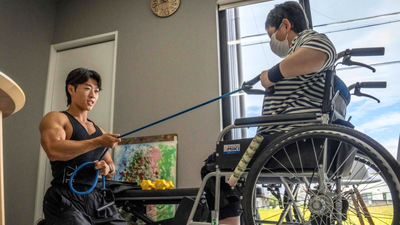
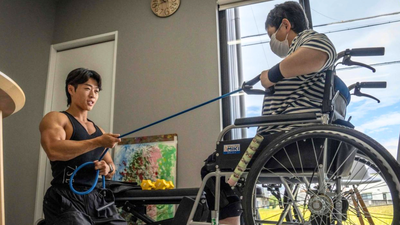
Why Japan is recruiting bodybuilders and MMA fighters to care for the elderly world News

Why is Japan recruiting bodybuilders and MMA fighters to care for the elderly?

Japan’s rapidly aging population is forcing it to rethink how the country supports its elders, with some care providers turning to an unpredictable workforce, including bodybuilders and combat sports athletes. Companies like Visionary have begun recruiting physically strong men to assist with caregiving tasks such as lifting, mobility aids and daily assistance. This outlook reflects the growing labor shortage in the care sector as demand increases along with the aging population. The aim is to make care more attractive to younger workers by reframing it as a more active and physically engaging profession while supporting the existing workforce.

Japan is turning to bodybuilders to care for the elderly

Japan has one of the oldest populations in the world, with nearly a third of its people aged 65 or older. This demographic change is placing continued pressure on health care and long-term care systems. The country is expected to need millions of caregivers in the coming decades, with a significant shortage likely if current trends continue, especially in physically demanding roles that are hard to fill.Care work involves physically intensive tasks such as lifting patients, assisting with movement, and preventing falls. Recruiting bodybuilders and athletes provides a practical solution, as their strength and conditioning helps reduce stress during patient handling and the risk of workplace injuries. This approach also helps to present caring as a more dynamic profession, potentially attracting candidates who may not have previously considered the field.

Role of MMA fighters and wrestlers

While the most obvious examples involve bodybuilders, the broader narrative includes mixed martial arts and wrestling athletes. These individuals bring discipline, stamina, and situational awareness that can be useful in caregiving environments. However, their participation is limited and not yet a widespread industry standard, with most recruitment focused on physically fit individuals rather than specific sporting backgrounds.

Why is Japan recruiting bodybuilders and MMA fighters to care for the elderly?

Athletes are not replacing trained care workers but are being integrated into teams to assist with physically demanding tasks. They work alongside qualified professionals, while proper training in care practices, communication and patient safety is essential. Physical strength alone is not enough for this role.Japan’s response to its care shortage has also included investments in assistive technologies such as lifting aids, robotics, and AI systems designed to assist caregivers. Although some innovations remain experimental, these efforts reflect a broader strategy to combine human labor with technical assistance to maintain the care system.

What this means for the future of care

The recruitment of physically trained individuals highlights how Japan is experimenting with unconventional solutions to a structural demographic challenge. While this approach alone will not solve the workforce shortage, it signals a shift toward more flexible recruitment strategies that may influence how other aging societies address similar pressures.

Source link

Machines will take over: China to deploy 8,500 robots for $1 billion to automate its power grid world News

Machines will take over: China to deploy 8,500 robots for $1 billion to automate its power grid

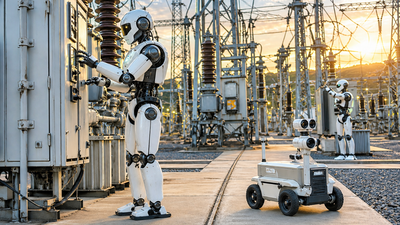
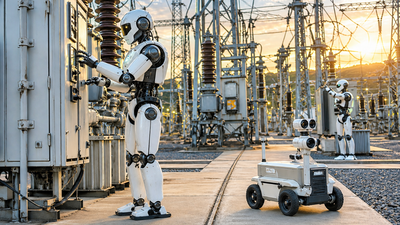
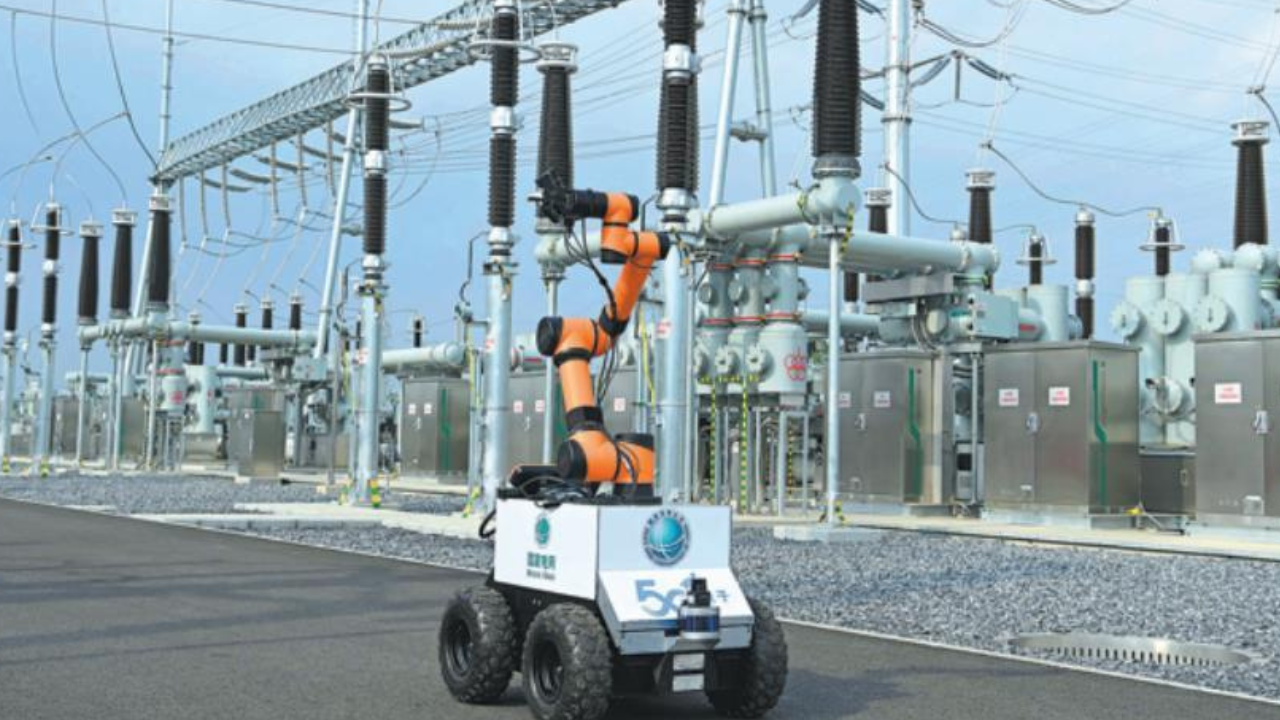
China is accelerating the use of robotics in one of its most critical systems: the national power grid. China’s state-owned State Grid Corporation has outlined plans to invest about $1 billion (about 6.8 billion yuan) to buy about 8,500 robots, with deployment expected on a large scale by 2026. These machines will aid in inspection and maintenance in substations and transmission networks, including in remote or hazardous environments. The move reflects a broader effort to improve efficiency, security and reliability in power distribution as demand grows, while also advancing China’s ambitions in industrial robotics and AI-enabled infrastructure.

What’s included in China’s $1B robot rollout

The planned fleet includes a mix of machine types already being tested or deployed in grid operation. Quadruped robots, often called robot dogs, are designed for patrolling and inspection in challenging terrain and large substations. Wheeled robots equipped with robotic arms are being developed for controlled maintenance work requiring precise operations. Humanoid robots are also part of the broader approach, although they remain in limited and largely experimental roles. Domestic companies like Unitri Robotics, Deep Robotics and UBTech Robotics are contributing to the development of these systems. Current deployments still focus primarily on inspection rather than complex repair work, especially in structured substation environments.

What are these robots designed to do

Grid robots are used to support routine and high-risk operations within the electricity network. They can detect defects using thermal imaging and other sensors, monitor equipment condition, and identify anomalies that may not be immediately visible to human inspectors. They are also deployed to inspect transmission lines in mountainous or inaccessible areas, reducing the need for personnel to enter hazardous locations. In controlled settings, some robots can perform basic, repetitive maintenance tasks. These functions are already being tested in a number of areas and are helping to reduce reliance on manual inspections where the risks are greatest.

What are these robots designed to do

change the way of working

Despite the scale of the rollout, the robots are not expected to replace human maintenance workers. Their role is to complement the existing workforce by reducing the risk of hazardous situations, improving consistency in inspections and enabling faster fault detection in large networks. Human technicians are essential for complex repairs, system-level decisions, and emergency management. This shift represents an evolution in the way work is done, with machines handling specific tasks while people retain overall control.

Why is China investing heavily in grid automation?

China operates one of the largest and most complex electricity networks in the world, spanning vast geographic areas that include remote and difficult terrain. Maintaining this system presents significant logistical challenges, especially as electricity demand continues to grow due to the increasing energy needs of industrial expansion, urbanization and digital infrastructure. The development of ultra-high-voltage transmission systems has further increased this complexity. Robotics offers a practical way to improve efficiency, reduce risk, and enable more consistent monitoring across the network.

A push into industrial robotics

The Grid Automation initiative is part of a broader national strategy to expand capabilities in robotics and artificial intelligence. Industrial environments such as power networks provide structured conditions suitable for automation and generate continuous operational data that can be used to refine AI systems over time. Large-scale deployment in such settings allows companies and state operators to develop technologies beyond laboratory conditions, accelerating their practical application.

What does this mean for the future of power systems

China’s approach highlights how critical infrastructure is becoming a testing ground for robotics and AI technologies. While full automation of power grids is still away, the increased use of machines for inspection and routine maintenance is likely to impact the way utilities operate globally. The change is gradual, with robots playing defined roles within existing systems, improving efficiency and safety while human oversight remains central.

Source link

‘They call Trump a Nazi, Hitler and still attend’: Erica Kirk hits out at reporters for ‘ultimate hypocrisy’ at White House dinner

'They call Trump a Nazi, Hitler and still attend': Erica Kirk hits out at reporters for 'ultimate hypocrisy' at White House dinner
Donald Trump and Erica Kirk (Image/AP)

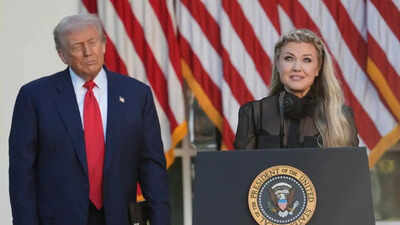
Turning Point USA CEO Erica Kirk has sharply criticized journalists after the attempted shooting at the White House Correspondents’ Dinner, accusing them of repeatedly labeling President Donald Trump with extremist terms such as ‘Nazi’ and ‘Hitler’.In a video message posted on Instagram and shared via her late husband Charlie Kirk’s podcast platform, Kirk said some sections of the media had used such language while attending the high-profile event.“Many of the left-wing journalists attending WHCD have spent years repeatedly calling President Trump a ‘Nazi’, a ‘threat to democracy’ and ‘Hitler’, yet they happily attended the evening’s event….”He said that such behavior shows inconsistency in his stand.“If they really believed their own rhetoric, they would either happily have dinner with ‘Hitler’ or they would be lying to radicalize American citizens about things they know are extremely exaggerated.”Kirk added, “Either way, it exposes their game of ultimate hypocrisy: build hatred and then profit from the consequences; even if it means losing a life.”

Why did she attend the dinner?

Kirk said she traveled across the country to attend the White House Correspondents’ Dinner and talk to reporters about their coverage of her and her late husband.Explaining her decision, she said, “Many journalists in that room attempted to dehumanize me, and I wanted to meet some of them face to face, quite frankly.”“Why talk about me when you can talk to me,” he added, according to the Daily Beast. Kirk also described a conversation she had with a reporter, in which she said: “It feels great to have someone’s name out there, especially with all the slander, lies, accusations that have surrounded my husband and my murder.”Recalling the dinner meeting, Kirk said, “Shots started flying and there was complete chaos.”

Claims of ‘dehumanization’ and media conduct

In his remarks, Kirk linked the attack to a broader climate of hostility.“There is a serious epidemic of dehumanization in this country,” he said, arguing that violent incidents were being normalized in public discussion.He also criticized the behavior of journalists during the shooting, saying that they focused on capturing footage instead of prioritizing safety.He said, “During a shooting act, these journalists are using their phones to capture moments for clips… they may have accidentally and literally shot themselves.”The incident comes months after the murder of Charlie Kirk, who was shot dead at a public event in 2025. Since then, Erica Kirk has taken over the leadership of Turning Point USA and has been the subject of intense public scrutiny.He said he continues to face criticism and misinformation.She said, “Every morning I wake up to a new headline telling lies about me. I have white-faced comedians. I have people saying I’m not fit to be a CEO.”Kirk also criticized political opponents and commentators, including media personalities and public figures, accusing them of contributing to a hostile environment.She said, “Our country has become unrecognizable. These people have distorted the truth to such an extent that they inspired the murder of my husband.”A dinner at the Washington Hilton was disrupted after a gunman reportedly attempted to storm the venue.According to authorities, 31-year-old Cole Thomas Allen tried to breach security near the ballroom, where senior officials and journalists had gathered.Shots were fired during the incident and a Secret Service officer was shot in his bullet-resistant vest, but survived. President Trump was escorted out of the venue and the event was stopped.

Source link

‘There is no place in the Gulf except the bottom of the water’: Iran’s Khamenei criticizes ‘great devil’ US, rejects nuclear sanctions

'There is no place in the Gulf except the bottom of the water': Iran's Khamenei criticizes 'great devil' US, rejects nuclear sanctions

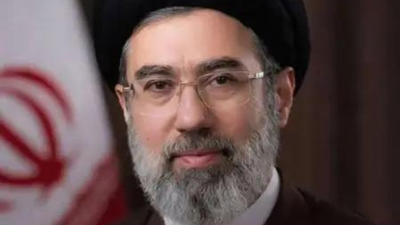
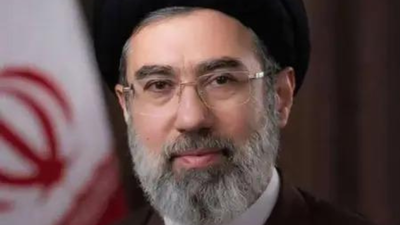
Iran’s supreme leader Ayatollah Mojtaba Khamenei on Thursday criticized the United States, calling it the “great devil” and hinting at no compromise on Iran’s nuclear and missile capabilities.In a written statement read on state television, Khamenei said Iran’s strategic programs are non-negotiable and central to national sovereignty. He also said that there is no place for Americans in the Persian Gulf region.“We and our neighbors across the Persian Gulf and the (Gulf) of Oman share a common destiny. Those who come from thousands of kilometers away to act with foreign greed and malice have no place in it – except at the bottom of its waters,” he said, as quoted by the Associated Press.He further described Iran’s technological and military capabilities as national assets that would be protected by the population. Khamenei said, “Ninety million proud and respected Iranians inside and outside the country consider all of Iran’s identity-based, spiritual, humanitarian, scientific, industrial and technological capabilities – from nanotechnology and biotechnology to nuclear and missile capabilities – as national assets, and will protect them in the same way they protect the country’s waters, land and airspace.”The comments come amid heightened tensions in West Asia, where Iran’s oil sector is reportedly under strain due to sanctions affecting the movement of tankers. The disruption coincided with volatility in global oil prices, with Brent crude previously reaching $126 a barrel.The Strait of Hormuz, through which about a fifth of global oil and gas flows, remains the epicenter of the standoff. Iran’s strategic position on the waterway has increased volatility in energy markets and increased pressure on the United States as it considers its response.With a fragile ceasefire still in force, the US and Iran are locked in disputes over sanctions, nuclear talks and maritime control. Tehran has also proposed delaying talks over its nuclear program, while Washington says its aim is to prevent Iran from developing nuclear weapons. Iran insists that its nuclear program is peaceful but it has enriched uranium to near weapons-grade levels.Khamenei also linked Iran’s regional stance to broader geopolitical changes and said the future of the Persian Gulf should be shaped by regional powers rather than external actors.He suggested Iran would continue to assert its position on the Strait of Hormuz and what he described as a “new management” framework for the waterway. The Gulf Arab countries and most of the international community view the strait as an important international route for global trade.

Source link

Today’s Quote by Marie Curie: “There are sadistic scientists who are more hastened to discover error than to establish truth.” |

Today's Quote by Marie Curie: "There are sadistic scientists who rush to find mistakes rather than establish truth."
Today’s Quote by Marie Curie (Image Source: Wikipedia)

People often say that science is a disciplined pursuit of truth based on evidence, observation, and logic. But the way people think and act during the process of scientific discovery also affects the results. Today’s quote from Marie Curie, “There are sadistic scientists who hasten to discover error rather than establish truth,” draws attention to a less-discussed part of scientific culture. This shows the difference between being critical and being constructive, as well as the difference between merely pointing out problems and actually advancing knowledge.Marie Curie’s words are important because she was a scientist who spent her life conducting careful, systematic research in difficult circumstances. His work with radioactivity taught him how science should work because it requires patience, accuracy, and the ability to recover from failure. This quote is not just a criticism; It is also a reminder that the main goal of science is to discover the truth, not to win arguments or make others look bad. Their message is still important in many fields and businesses, even though information moves faster and people are always paying attention to things.

Quote of the Day by Marie Curie

“There are sadistic scientists who are sooner to discover error than to establish truth.”

What does Marie Curie’s quote mean in simple words

The quote shows how two different ways of doing science differ from each other. One way to do this is to quickly and aggressively point out and highlight mistakes in other people’s work. The second approach places more emphasis on a careful process of finding and confirming the correct information.Marie Curie says that when scientists rush to find problems they can miss the bigger picture. It shouldn’t always be about finding mistakes in science. Finding mistakes is important, but it shouldn’t be the only thing you do to build, test, and deepen your understanding.

Balance between criticism and discovery

Criticism is an important part of the way scientists work. Peer review, replication of results, and questioning of findings are all necessary to ensure that the results are correct. But Curie’s observation shows that when criticism is the focus, there can be an imbalance.When the focus is too much on finding mistakes, it can cause researchers to feel stressed or discouraged. Instead of encouraging people to explore, this type of environment can stifle creativity and slow down progress. You have to be open-minded, patient, and willing to work with others to learn something.

The philosophy behind Marie Curie’s work

Marie Curie was very focused on science. For many years, he studied radioactive elements such as polonium and radium, often under very poor conditions. She did not want to be recognized immediately; Instead, she kept working on achieving results that were useful and reliable.His quote reflects this thinking. It says that scientists should care more about finding the truth rather than looking down on other people. He won two Nobel Prizes in different scientific fields, which shows how well a systematic and truth-seeking approach can work.

Why is this quote still relevant today?

In today’s world, where research is published rapidly and discussed extensively, it is easy to see how people are quick to criticize or question the findings. Digital platforms and global communication have made it easier to view and question work.This has made things more open, but this has also led to criticism. Marie Curie’s message reminds us that depth should not be sacrificed for speed. To find out the truth, you have to carefully examine the data, test it multiple times, and think about what it means.

Understanding the Role of Patience in Science

It is unusual for scientific discoveries to occur immediately. It usually takes years of observing, trying, and improving things. Curie’s work is a great example of this long and difficult process.His quote shows how important it is to have patience in every matter. If scientists focus too much on finding mistakes immediately, they will not understand the value of hard work over time. Finding the truth takes time and effort, and you have to be willing to question what you believe.

broader meaning beyond science

Marie Curie was talking about scientists, but what she said applies to more than just laboratories and research centers. In many areas of life, such as school, work, and public discussions, people may be more interested in finding mistakes than in learning more.Things may take more time with this method. When you focus on being better and having constructive conversations, the environment is better for learning and growth. Curie’s words inspire us to stop looking for problems and do something about them.

Truth is the central goal of knowledge

The quote ultimately supports a fundamental principle: the purpose of science is to find the truth. This means gathering evidence, trying out ideas, and improving them over time. This is achieved not through isolated acts of criticism but through an ongoing and collaborative process.Marie Curie draws attention to the values ​​that support scientific progress by distinguishing between the search for errors and the search for truth. Accuracy, honesty and hard work are still important parts of the process.

Marie Curie’s message on truth and the purpose of science

Marie Curie’s quote gives a clear and enduring vision of how science should be done. It differentiates between merely finding mistakes and the more important goal of finding truth. Criticism is still an important part of scientific research, but it should not get in the way of the larger goal of gaining more knowledge.This message is based on the life and work of Marie Curie. She worked hard, was patient, and was dedicated to getting things right. His words remind readers even today that real progress comes not just from being critical, but from understanding.


Source link