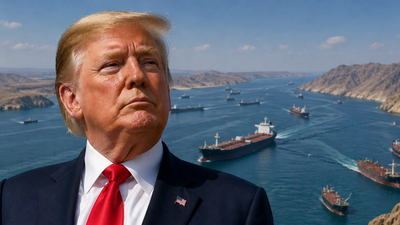
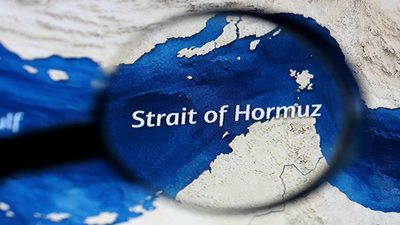
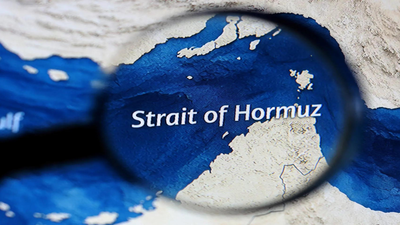
‘Strait of Trump’: US President Donald Trump shares new map naming Hormuz after himself. world News

'Trump Strait': US President shares new map naming Strait of Hormuz after himself, says blockade could last for months

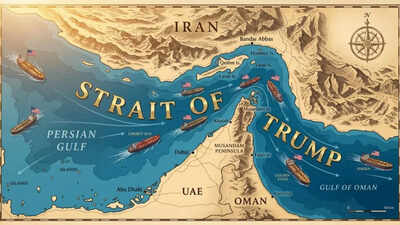
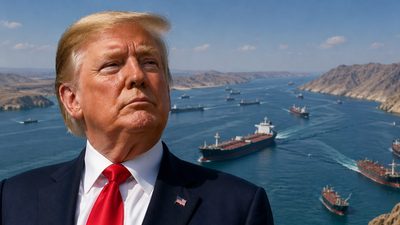
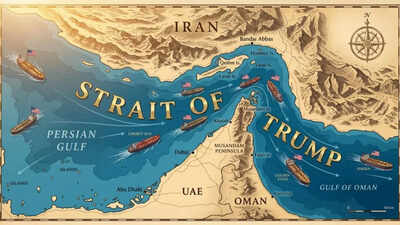
us President donald trump The Strait of Hormuz has been renamed “Trump’s Strait” after a revised map shared on Thursday claimed the naval blockade against Iran could continue for months.Trump posted the image on his Truth social account labeling the strategic Strait of Hormuz as “Trump’s Strait” with no caption. The graphic was originally posted by an account called “IStandWithTrump47.”This is not the first time Trump has made such comments. In an earlier statement, he messed up the name, saying Iran needed to “open up the Strait of Hormuz, I mean, Trump.”“Sorry. I’m so sorry. Such a terrible mistake. ‘She mistakenly said,’ the fake news will say – no, I haven’t had an accident, not very much.” If that were the case, we would have a bigger story,” he added.

Watch

US Navy fails in Hormuz? Trump appeals to allies for naval help if Iran remains steadfast

This development comes after Trump indicated that the US naval blockade against Iran could continue for months. The blockade, implemented since mid-April, targets ships entering or leaving Iranian ports and has contributed to a rise in global oil prices, which recently reached their highest level in four years.Earlier, a report by the Institute for the Study of War suggests that Iran is unlikely to back down. The analysis indicates that the fundamentalist approach led by Ahmed Vahidi has become dominant in Tehran.According to the report, Iran is not ready to negotiate on its nuclear program until the US lifts the blockade and is looking for alternative strategies to maintain its edge.These include a possible plan with Oman to impose tolls on ships passing through the Strait of Hormuz, allowing Tehran to present a “new proposal” without compromising its core demands. The report also said Iran may be trying to indirectly pressure the US by encouraging Houthi groups in Yemen to target ships in the Bab al-Mandeb Strait.Earlier, US Treasury Secretary Scott Besant had said that the combined effect of sanctions and the naval blockade would cause long-term damage to Iran’s economy.“Through Economic Fury, the Treasury Department has targeted Iran’s international shadow banking infrastructure, access to crypto, shadow fleets, weapons procurement networks, funding for terrorist proxies in the region, and independent Chinese ‘teapot’ refineries that support Iran’s oil trade. “These actions have disrupted millions of dollars of revenue that would otherwise be used to finance terrorism,” Scott said.“Kharg Island, Iran’s primary oil export terminal, is soon nearing storage capacity, which would force the regime to reduce oil production, resulting in an additional loss of approximately $170 million per day in revenue, and permanent damage to Iran’s oil infrastructure. The Treasury will continue maximum pressure and risk U.S. sanctions against any individual, vessel, or entity facilitating illicit flows into Tehran. Restrictions,” he said.

voting

What do you think about renaming the Strait of Hormuz?

However, Iran rejected the US claims and criticized the strategy. Parliament Speaker Mohammad Bagher Ghalibaf rejected Besant’s comments, calling her advice “garbage”.“It’s been 3 days, no wells have erupted. We can expand to 30 and livestream the wells here. This is the kind of useless advice the US administration gets from people like Besant, who promote the blockade theory and crank oil to $120+. Next stop: 140. The issue is not theory, it’s mentality,” Ghalibaf said in a post on X.

Source link

Saudi Arabia: Saudi Arabia hangs Iraqi citizens convicted in drug smuggling case on the northern border. world News

Saudi Arabia hangs Iraqi citizens convicted in drug smuggling case on the northern border
Saudi Arabia executes Iraqi men after conviction in drug smuggling case on northern border / Image: File

saudi arabia Several Iraqi citizens convicted of attempting to smuggle narcotics into the kingdom through the northern border area have been hanged, according to an official statement issued by the Saudi Interior Ministry on Wednesday, April 30.The ministry said the accused were hanged after being arrested by Saudi security officials, investigated by prosecutors and later convicted by special courts on drug trafficking charges. The sentence was later upheld by the Saudi Court of Appeal. Supreme Court before a royal order authorized the execution. The ministry did not immediately disclose the exact method of execution in its public statement, in line with standard Saudi practice.According to Saudi state media and regional reports, the case is linked to cross-border drug smuggling involving the kingdom. IraqSpecifically through the Northern Frontier Province, the location of the Arar border crossing, which is one of the main land gateways between Saudi Arabia and Iraq.The Saudi Interior Ministry has identified the killed Iraqi citizens as individuals guilty of trafficking banned drugs into Saudi territory. Arabic media reports said the men were found guilty of transporting illegal drugs through border routes used by organized trafficking networks operating throughout the region. Authorities did not publicly release full operational details of the seizure, including the quantity or exact type of narcotics involved.In its statement, the interior ministry stressed that Saudi Arabia “will continue to strike hard” against anyone attempting to target the kingdom’s youth and society through drug trafficking. The ministry said the kingdom would impose “harsh legal penalties” against smugglers and smugglers under Saudi law.

Saudi Arabia’s anti-drug action

The executions are the latest in a sweeping anti-drug campaign launched by Saudi authorities amid growing concerns over drug trafficking along the Gulf borders. Saudi Arabia has sharply increased arrests, seizures and executions in drug trafficking cases over the past two years, particularly involving amphetamine pills, captagon and hashish shipments entering from neighboring countries.Saudi authorities have repeatedly linked organized drug trafficking to regional criminal networks operating through Iraq, Syria and Jordan. The Interior Ministry and the Directorate General of Narcotics Control have announced several large-scale interceptions in recent months, involving millions of Captagon pills hidden inside trucks, food shipments and industrial cargo entering the state.Earlier in April 2026, Saudi Arabia executed seven people in one day on separate drug trafficking convictions linked to amphetamine trafficking operations, according to announcements by the official Saudi Press Agency. Many of those hanged were foreign nationals.Human rights organizations that monitor the use of the death penalty in Saudi Arabia say the number of executions in the kingdom has increased significantly since 2021. Both Amnesty International and Human Rights Watch have reported increased use of the death penalty in narcotics-related cases after a brief lull during prior reform announcements made by Saudi authorities.Rights groups estimate that dozens of foreign nationals have been executed on drug charges in Saudi Arabia in the last year alone, including citizens of Pakistan, Syria, Jordan, Nigeria, Ethiopia and Iraq.

Saudi-Iraq border security concerns

Saudi Arabia’s Northern Border Province has become one of the kingdom’s most sensitive security areas due to its proximity to Iraq and broader regional instability. The Arar Crossing serves as an important commercial and religious transit route connecting Saudi Arabia with Iraq, especially during the pilgrimage season.Saudi security officials say criminal trafficking groups are increasingly taking advantage of remote desert areas and cross-border smuggling routes to transport drugs into the Gulf. Iraqi officials have also acknowledged the growing regional drug problem, particularly involving methamphetamine and Captagon trafficking networks that have expanded following years of conflict and instability throughout the region.In several recent statements, Saudi officials have argued that drug trafficking poses a direct threat to national security and social stability. The Ministry of the Interior has frequently described drug trafficking as an attempt to “target the state’s youth” and undermine public security.The state’s anti-narcotics operations are coordinated through multiple agencies, including the Ministry of the Interior, border guards, customs officials, and the General Directorate of Narcotics Control. Saudi authorities regularly publish videos and photographs of intercepted shipments as part of public awareness campaigns warning against drug trafficking.

Human rights criticize Saudi executions

The latest executions have again drawn criticism from international rights organizations, which oppose the use of the death penalty for drug-related crimes. Human Rights Watch and Amnesty International argue that international law limits the death penalty to “the most serious crimes”, generally understood to include intentional murder, and say that drug crimes should not qualify for execution.Rights groups have also raised concerns over past Saudi cases involving foreign nationals, including access to legal representation, interpreter services and allegations of forced confessions.However, Saudi Arabia maintains that all defendants receive full judicial review under the kingdom’s legal system before sentences are imposed. Saudi officials stress that harsher penalties are necessary to stop organized trafficking operations and protect society from the spread of narcotics.

Source link

Nine arrested in raid on Peace and Light’s Ahmadi crew in UK over ‘modern slavery’ and rape allegations | world News

Nine people arrested in raid on Ahmadiyya crew of Peace and Light over 'modern slavery' and rape allegations in UK
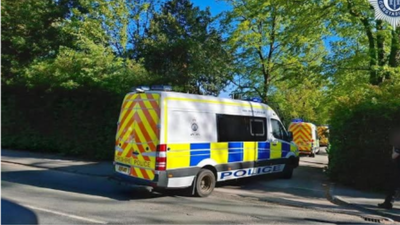
Nine people arrested in raids in Britain on charges of ‘modern slavery’ and rape.

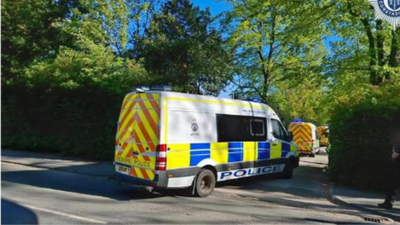
Nine people linked to a religious group have been arrested in Crewe, Cheshire, following allegations of rape, sexual assault, forced marriage and modern slavery in a major police operation in Britain, according to the BBC.More than 500 officers carried out a coordinated early morning raid on three properties linked to a group called the Ahmadi Religion of Peace and Light (Arpol). The organization, founded in the early 2000s by followers who emerged from Shia Islam, currently has an estimated 150 members based in the city.Cheshire Police said it was alerted to the allegations last month, with the claims reportedly dating back to 2023. The investigation focuses on a crime that involved a woman who was a member of the group at the time.A police spokesperson said the inquiry focused on individuals, adding that “it is not related to religion itself.”Those arrested include six men and three women of different nationalities, including American, Mexican, Italian, Spanish and British. They face a variety of charges including human trafficking, rape, sexual assault, forced marriage and modern slavery crimes.Among them, a 35-year-old Spanish man has been arrested on suspicion of rape, sexual assault, assault and forced marriage, while a 30-year-old Mexican man is being held on suspicion of sexual and forced marriage crimes as well as human trafficking. Others include individuals suspected of modern slavery and sexual assault crimes.Separately, 13 more people were arrested on suspicion of public order offences, who police said were not linked to the main investigation.The raids took place shortly before 09:00 BST, with a heavy police presence reported in parts of Crewe. Emergency services were seen near the King George V playing fields, while roads around Victoria Avenue and near Queen’s Park were temporarily closed.Searches were carried out at several locations, including Webb House and properties in Nantwich Road. Police said they are working with the local authority to support residents and ensure safety measures.A spokesperson for Cheshire East Council said, “Our priority is to ensure that those who have been displaced are safe and supported.”The operation was supported by Europol with assistance from authorities in Ireland and Sweden.

Source link

UAE Petrol Prices May 2026: UAE announces petrol, diesel prices for May 2026 as fuel rates rise by up to 10% across the emirate. world News

UAE announces petrol, diesel prices for May 2026 as fuel rates rise by up to 10% across the emirate
UAE motorists brace for higher fuel costs as petrol and diesel prices to rise by 10% in May 2026 / Image: File

Motorists in the UAE are set to pay more at the pump again in May 2026, after authorities announced another hike in the price of petrol, extending a months-long upward trend due to global oil market volatility, geopolitical tensions and supply concerns. The latest revision follows a sharp rise already seen in April, with fuel prices now reaching the highest level recorded in recent years.The UAE’s Fuel Pricing Committee revised rates for all major petrol categories, while diesel prices remained high. From May 1, Super 98 petrol will cost Dh3.66 per litre, up from Dh3.39 in April. Special 95 has increased from Dh3.28 to Dh3.55, while E-Plus 91 has increased to Dh3.48 per litre. Diesel remains at Dh4.69 per litre.The increase means motorists will spend more every time they refuel. Filling up a compact car with Super 98 will now cost around Dh186.66, while SUV owners may have to pay more than Dh270 for a full tank, depending on the vehicle size and fuel type.

UAE fuel prices for May 2026

The revision in May is the third consecutive increase in fuel prices this year, following earlier hikes in March and April.

fuel grade April 2026 price (per litre) May 2026 Price (per litre) Change (per litre)
super 98 Dh3.39 Dh3.66 +Dh0.27
special 95 Dh3.28 Dh3.55 +Dh0.27
e-plus 91 Dh3.20 Dh3.48 +Dh0.28
diesel Dh4.69 Dh4.69 no change

Just a few weeks earlier, April prices had already increased dramatically after global crude oil prices soared amid heightened regional tensions involving Iran, Israel and the United States. In April, Super 98 rose from Dh2.59 to Dh3.39 per litre, one of the sharpest month-on-month increases in recent memory.Earlier, March prices had already reversed two months of decline, signaling the beginning of a fresh rise in UAE fuel costs.

How much would you pay for a full tank?

The latest increase will immediately impact daily commute costs for residents and businesses.According to estimates published after the announcement:

  • Compact cars will cost about Dh13 to Dh20 more to fill up compared to April
  • Sedan owners’ fuel bills will increase by about Dh17 on average
  • The SUV may cost around Dh20 more per tank, depending on the fuel category

If high fuel prices persist in the coming months, businesses dependent on transportation and logistics may also feel the pressure. Delivery services, freight operators and ride-hailing sectors are expected to face rising operating costs as fuel expenses remain high.Yet, despite the growth, fuel prices in the UAE remain low compared to many global markets due to comparatively low taxes and the country’s strong domestic energy infrastructure.

Why are fuel prices increasing in UAE?

The latest increase is closely linked to fluctuations in international crude oil markets. Since the UAE deregulated petrol prices in 2015, monthly retail fuel prices have been directly linked to global oil benchmarks, refining costs and supply-demand conditions.Oil markets remained volatile throughout 2026 due to ongoing geopolitical instability in the Middle East. Analysts cite tensions related to Iran, fears over the Strait of Hormuz and disruption in regional energy infrastructure as the main reasons behind the high crude oil prices.At one stage during March, Brent crude reportedly neared $115 a barrel as fears grew of supply disruptions on key oil shipping routes. Nearly one-fifth of global oil trade passes through the Strait of Hormuz, making any instability in the region a major concern for energy markets around the world.Analysts also say that prices remain under pressure due to strong demand from Asian markets and tight global supply conditions. Even though UAE has announced its exit from OPEC And from OPEC+ May 1, experts believe domestic fuel prices will still largely follow global crude trends rather than local production decisions alone.

Source link

IshowSpeed: IShowSpeed ​​Health Status: Social media icon collapses on livestream after 12 hours of intense streaming on Caribbean tour

iShowSpeed ​​Health status: Social media icon collapses on livestream after 12 hours of intense streaming on Caribbean tour
IShowSpeed ​​(via YouTube/IShowSpeed)

Popular YouTuber and livestreamer IShowSpeed ​​left fans terrified after he appeared to faint during a live stream in St. Maarten. The incident occurred during his ongoing Caribbean tour, where he is streaming from multiple countries. A short video clip quickly went viral on social media, showing the 21-year-old man looking extremely exhausted before collapsing, while people nearby ran to help him.The video shows the streamer holding his face and struggling to remain steady while walking. After a few moments, he bent down and suddenly fell unconscious. The people around immediately picked him up. When he did not respond for a few seconds, concerns grew around him. The livestream was stopped briefly. This increased concern among the audience. However, the streamer later confirmed that he has recovered. He reassured fans about his health.

iShowSpeed ​​fainted mid-stream but later assured fans he was fine

The viral clip caused a wave of concern online. Many users on X reacted with concern following the incident. Some fans said they hoped it was nothing serious and wished him a speedy recovery. Others felt they should take a break and focus on resting and staying properly hydrated. Some netizens pointed out the physically demanding nature of her content. Some also noted that the hot weather in St. Maarten may have contributed to his condition. Temperatures on the island were reported to be around 29 °C, with warm and sunny conditions.

Watch

IRL stream in St. Maarten 🇸🇽 and St. Martin 🇫🇷 (world record)

Many users also highlighted that the streamer was putting too much pressure on himself. According to online posts, he was streaming for about 12 hours while traveling to several Caribbean locations in a short period of time. His itinerary included visits to Dominica, Guadeloupe, St. Kitts and Nevis and St. Maarten.Later during the livestream, IShowSpeed ​​spoke to its viewers and assuaged their concerns. He said that he felt weak for a while and his body reacted suddenly, but he clarified that he is fine. He apologized for worrying his viewers. He also thanked them for their support. To prove that he has recovered, he also did more than 50 push-ups on stream, and asked fans not to worry about his health.The streamer is currently on a travel campaign with Expedia to promote tourism in Caribbean destinations. Despite the fear, he has continued his journey and has also talked about his ambition to stream from unique locations in the future. Including space!

Source link

Iran ‘suffocating like a stuffed pig’: Trump takes dig at Hormuz blockade; Tehran warns of ‘unprecedented action’

Iran 'suffocating like a stuffed pig': Trump takes dig at Hormuz blockade; Tehran warns of 'unprecedented action'

us President donald trump has said the United States will maintain its naval blockade of Iran until Tehran agrees to a deal that addresses Washington’s concerns over its nuclear program, signaling a tough stance despite consideration of military options.Speaking to Axios, Trump indicated that a blockade is currently his preferred tool of pressure, describing it as more effective than direct military action. He said, “A blockade is somewhat more effective than bombing. They’re suffocating like stuffed pigs. And it’s going to be even worse for them. They can’t have nuclear weapons.”The US stance comes amid Iran’s earlier proposal to reopen the Strait of Hormuz and lift the blockade, while postponing nuclear talks to a later stage, which Trump has rejected. He said Tehran wanted relief from the blockade but said it would not be lifted without concrete guarantees over its nuclear program.Meanwhile, the United States Central Command has already drawn up plans for a “small and powerful” wave of attacks targeting Iranian infrastructure, according to Axios sources familiar with the matter. The attacks are aimed at breaking the current negotiation deadlock and bringing Iran back to the table under greater pressure. However, as of Tuesday night, Trump had not authorized any kinetic action.For now, the administration sees the blockade as its primary leverage, although officials have indicated that military action is an option if negotiations fail to make headway. Trump declined to discuss operational details, but suggested the pressure campaign was already taking a toll, claiming Iran’s oil infrastructure was under strain due to its inability to export.However, Iran has strongly protested against the ongoing US blockade of Hormuz. A senior Iranian security source told state media that the US naval blockade “will soon be met with practical and unprecedented action”, warning that the restraint shown so far may not continue if pressure continues.

Source link

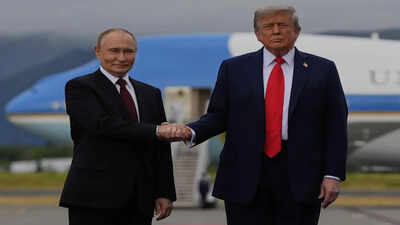
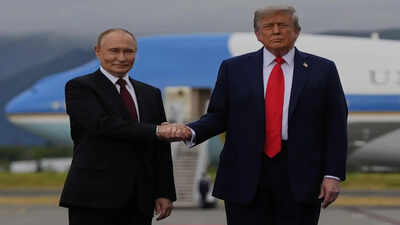
Putin, Trump talk for 90 minutes on Iran, Ukraine war: Russia proposes Kiev ceasefire for Victory Day

Putin, Trump talk for 90 minutes on Iran, Ukraine war: Russia proposes Kiev ceasefire for Victory Day
Vladimir Putin and Donald Trump

Russian President Vladimir Putin and US President Donald Trump held a phone call on Wednesday, where the two leaders discussed the broader geopolitical situation, including the ongoing war in the Middle East and the war in Ukraine.The conversation, which lasted about an hour and a half, was the first direct contact between the two leaders since March and covered major issues ranging from Iran to possible ceasefire efforts in Ukraine.According to Kremlin aide Yuri Ushakov, the two leaders held detailed discussions on the escalating situation in the Middle East.“The presidents paid special attention to the situation in Iran and the Persian Gulf,” Ushakov said while briefing reporters.He said President Putin supported Trump’s recent moves related to Iran. “Vladimir Putin considers Donald Trump’s decision to extend the ceasefire with Iran correct, as this should provide an opportunity for negotiations and help stabilize the overall situation,” Ushakov said.According to the Times of Israel, Putin warned his US counterpart against the ‘harmful consequences’ of a new military action in Iran. “Putin highlighted the inevitable and extremely harmful consequences not only for Iran and its neighbors, but for the entire international community, if the US and Israel once again resort to military action,” Ushakov said.Beyond the Middle East, the call also addressed the ongoing Russia–Ukraine conflict. Putin reportedly proposed a temporary ceasefire in Ukraine to coincide with Russia’s Victory Day celebrations on May 9, the anniversary of the end of World War II.Ushakov said the Russian leader expressed readiness for a cease-fire during the commemoration, Reuters reported, suggesting it could serve as a step toward broader peace talks.

Source link

Canada’s Dyvik mine made a surprise discovery of a 158-carat diamond just before its closure. world News

Canada's Diavik mine makes stunning discovery of 158-carat diamond just before closure

The Diavik diamond mine in Canada recently discovered a stunning 158.20 carat yellow diamond, marking the conclusion of the mine’s 20-year history and the creation of one of only five diamonds of this size. This unique discovery occurred in April 2026, shortly after the mine’s operational period ended. As noted by the Gem and Jewelery Export Promotion Council (GJEPC), located approximately 200 kilometers north of the Arctic Circle in the Northwest Territories (NT), the mine has played a major role in the industrial economy of Northern Canada, producing over 150 million carats of diamonds since its first production in 2003. This beautiful yellow diamond symbolizes the success of the operation, representing both the innovations of modern Arctic scientific design and modern partnerships in natural resource management, and celebrates a transformative period for the world diamond industry.

a notable 158 carat yellow diamond search in canada

According to the Gem and Jewelery Export Promotion Council (GJEPC), this 158.20-carat yellow gem is an exceptional find for the Diavik site, which used to produce mainly high-quality white diamonds. Yellow diamonds account for less than 1 percent of the mine’s total historical production. This recovery marks the fifth time that more than 100 carats of yellowstone has been discovered at the facility, highlighting the rare geological conditions of the kimberlite pipe beneath Lac de Grasse.

Diavik’s two decades of Arctic mining

According to the Northwest Territories government, since commercial production began in 2003, Diavik has operated as a joint venture, becoming one of North America’s most productive mining operations. By the time it ceased production in April 2026, more than 150 million carats of diamonds had been successfully extracted from the mine. The operation is known for its engineering flexibility in the sub-Arctic, utilizing complex water-management dikes and integrated wind-diesel power systems.

Indigenous participation in site restoration

Following the end of extraction, the site is now in the formal closure and reclamation phase, which is expected to continue until at least 2029. This process is governed by a closure plan developed in consultation with local indigenous stakeholders and regulatory bodies to ensure that the land is returned to a self-sustaining ecosystem.

Source link

India needs to focus on its national interests regarding the Gulf of Hormuz

India needs to focus on its national interests regarding the Gulf of Hormuz
Strait of Hormuz crisis: US blockade continues despite ceasefire extension with Iran (AI image)

The second round of talks between Iran and America has been inconclusive. The situation remains stable, although a ceasefire remains in place but Iran has effectively closed the Strait of Hormuz, while the US has established a naval blockade of the Gulf in retaliation. Primarily, both are wrong because they interfere with the control of the so-called ‘global commons’.chairman donald trump Is averse to conversation and most of his communications are threats in ‘capitals’ as posted on X. However, publicly insulting the other party is not the best basis for negotiation. The essence and privacy of interactions have been fundamentally changed by the speed of social media. Now there is an ups and downs between tensions and diplomacy that is changing every hour and affecting the graphs of commodity prices, currencies values ​​and stock indices across the world. India is no exception.The US is seeking to focus on Iran’s three pillars of security, its nuclear ambitions, missile program which now also includes drones and regional proxies. Iran’s situation remains more limited. It has clearly indicated a willingness to temporarily limit enrichment, reduce reserves, and accept international monitoring in exchange for sanctions relief and a freeze on its accounts. Missile forces and regional relations were not on the negotiating table. Furthermore, the second war in the midst of the negotiations also made it imperative for Iran to demand a guaranteed, comprehensive non-aggression pact.But now another important point has been added. The issue of the US naval blockade of Hormuz. Although a ceasefire is necessary to the extent that the bombardment ceases, the blockade and closure of the Strait of Hormuz is an act of war under the relevant international law provisions. The real question is, how long can the blockade continue? Iran believes, and has expressed it in many words, that it can withstand pressure. There is an analogy in Afghanistan where the Taliban was able to absorb pain and then turn time into a strategic asset. Unfortunately, time is not a solution and it is a path towards deeper instability because the Strait of Hormuz is not a highway within a country in a remote mountainous area, but a vital artery for global energy flows and geopolitical levers of influence. The world is currently facing three conflicts but not all wars are fought equally. The Ukraine war has been going on for more than four years, while the wars in Gaza and Lebanon have been going on for more than two years. Both are bloody but still ineffective in their own ways. Israel has failed to eliminate the threat on its borders while both Hamas and Hezbollah, despite being weakened, are holding their own. In comparison, the current Iran war has barely completed two months. Although Ukraine has exposed European countries’ weapons stockpiles, the impact of escalating the conflict by closing the Strait of Hormuz and engaging targets in the Gulf has caused devastating ripple effects around the world. On March 20, when asked by a reporter if the US was at war, President Trump responded, “It depends what your definition of war is. Also, I never said war. I said kinetic peace. Great phrase.” Someone give me credit.”

iran

The truth is that Iran has now been attacked twice, both times in the midst of ongoing negotiations. Before the war began, Iran was negotiating but also preparing for conflict. Its war preparations consisted of four interconnected strategies: dispersal and delegation (mosaic defense); succession redundancy to compensate for the impact of decapitation attacks; horizontal escalation to increase the costs of the war by attacking Gulf countries; and blocked the Strait of Hormuz, increasing the cost of the war. Iran suffered the pain of decapitation and collapse attacks. Dispersion allowed it to increase the survivability of its missiles and drones for counter-attacks and delegation meant that its commanders could operate without being in constant contact with the top leadership and were given orders in advance on how to respond.Survival strategies, as it is now known, also depended on deeply buried production and firing sites. Another aspect, which has now come to light, is Iran’s advanced satellite-based ISR and targeting capabilities. According to an April 2026 Financial Times investigation, a private Chinese firm, Earth Eye Company, reportedly sold a high-resolution TEE-01B satellite to Iran in late 2024, which was used to monitor US military installations in the Middle East, before and after US strikes in early 2026.However, the Chinese Foreign Ministry denied this report and called it false. What is clear is that Iran’s targeting in this war has been more accurate and effective than in June 2025.

what next

The next round of talks about which everyone was speculating is not happening at the moment. The fact is that both Iran and Israel and America need to co-exist and the energy of the world needs to flow. The truth is that if both sides felt that the rising costs of conflict were unbearable, they would be willing to make peace. If only one feels the costs are unbearable while the other can afford the losses, the stronger one will press for capitulation. The key question is whether the space Iran has created through its dynamic responses can be translated into diplomatic leverage: sanctions relief and a guarantee of a cessation of hostilities. This shows what Iran can accept and to what extent.

Where does India fit in this matrix?

India’s stake in West Asia is due to its geographical proximity to the Gulf countries and the fact that its western maritime border runs along the Arabian Sea and the wider Indian Ocean region, through which vital trade and energy communication sea lines run. This proximity makes instability in the Gulf, especially the Strait of Hormuz, an immediate concern. Along with China, India is also most affected by the disruption in the Strait of Hormuz. It also has strategic relations with all major actors such as the US, Israel and Iran. It has excellent relations with the Gulf countries with which it has trade relations. The protracted conflict in West Asia also has a direct impact on remittances from India’s large diaspora in the region. India enjoys a high degree of confidence in all parties and, more importantly, its own interests are being harmed by the conflict. It has enough military capability and nuclear deterrence to command respect. While China is reluctant to enter the fray directly, it also has deep ties with the region and the Gulf blockade is impacting both India and China as they are among the largest buyers of crude oil from the region. Actually, China is the largest buyer of Iranian crude oil. In this era of complexity and interdependence, both India and China need to focus on their aligned interests with respect to the reopening of the Strait of Hormuz. India, currently holding the reins of BRICS, is in a unique position to not only tell the US that ‘this is not the era of war’, but also to work closely with China and put pressure on both Iran and the US with regard to removing the ‘dual blockade’ and allowing free flow of energy and goods. What the ongoing conflicts have demonstrated is the notion of victory. Both Russia and Israel focused on complete victory and the opponent paid the price in human losses but to date it has been impossible to achieve victory to guarantee complete security. In all three ongoing conflicts, overwhelming military power differences have not been the solution. The consequences of resumption of hostilities are catastrophic for both its human and economic costs. Logic dictates that both sides resolve issues without causing much destruction in a face-saving agreement. But we currently live in a world that lacks both principles and logic and the UN remains a mute spectator because of its ‘veto rule’ which acts as a firewall. India now needs to seize the opportunity and join hands with China to put pressure on both the US and Iran to open the strait. India fits perfectly into this role as it is also the leading voice of the Global South and advocates for peace, security and prosperity. Its relations with America cannot be at the cost of economic loss to its people. Apart from shaping global governance, what matters in the end is that national interests must prevail over all other issues and, at present, minimize the economic fallout resulting from the ‘dual blockade’ of the Strait of Hormuz. The only question is one of method; ‘Quiet diplomacy’ or ‘tough stance’.

Source link

4,300-year-old gold-covered mummy found locked in a deep mine in Egypt, shocking archaeologists. world News

4,300 year old gold covered mummy found locked in a deep mine of Egypt, archaeologists shocked

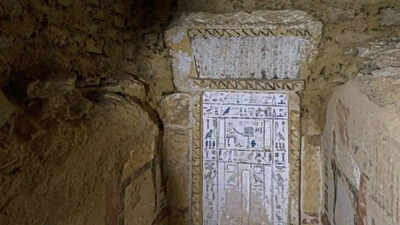
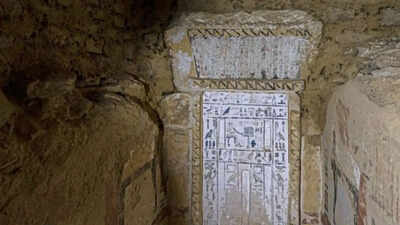
Beneath the sands of Egypt’s Saqqara Necropolis, a discovery has again begun to draw attention to how much is still apparently hidden. Archaeologists have reportedly discovered a sealed tomb containing a gold-covered mummy at the bottom of a deep shaft, untouched for more than 4,300 years. The site is located near Cairo, an area already full of ancient tombs, yet it seems to have survived looters and time in an unusual way. Experts say the discovery could offer a clear glimpse of the Old Kingdom’s burial customs, especially for the elite. The mummy, wrapped and coated in gold elements, immediately emerges, but it is not just the shine that counts. The surrounding artifacts, the sealed coffin, and the serene peace of the chamber all add to a strange sense of preservation that seems almost accidental.

Hidden beneath Saqqara, Egypt: Gold-covered mummy is revealed when sealed coffin is opened

Saqqara is not a new name in the world of archaeology. It is one of the oldest and largest cemeteries in Egypt, having been used by royalty, priests and officials for centuries. This latest discovery was made deep underground, at the bottom of a shaft about 15 meters down. It seems almost unreal, but this is where the limestone coffin was found, still sealed with ancient mortar.The burial chamber remained hidden to protect it from the usual disturbances seen in the area. Many tombs at Saqqara have long been opened, some have even been cleaned. However, this appears to be different; He is most protected in silence. Based on inscriptions found in the burial chamber, the mummy of a man identified as Heka-Sheps was placed inside a limestone sarcophagus. Archaeologist Zahi Hawass reportedly described the moment he looked inside, noting that the mummy was still covered in layers of gold.Experts believe that this coffin was sealed with ancient mortar, which had kept everything in place for thousands of years. That detail alone is unusual. Most burial sites from this era show signs of disturbance, even if minor.

Why was gold important in ancient Egyptian burials and what it reveals

Gold was never just decoration in ancient Egypt. Experts say it has a deep connection to divinity, often being referred to as “the flesh of the gods.” This idea may seem far-fetched now, but it had real meaning at the time. Thin sheets of gold were reportedly placed over the mummy’s covering and fixed with resin. It was a careful process. Slow, deliberate. Not something that was done casually or just for show.It also seems that gold might have had some other purpose. Some researchers suggest that this helped preserve the body, at least visually, slowing the effects of decay over time. Whether this was intentional or symbolic is still debated. Either way, seeing a face covered in gold inside a sealed tomb is not something archaeologists often get to see. Especially not in Saqqara today.

Who was Heka-Sheps?

Heka-Shapes remains a somewhat mysterious figure. Based on the quality of the burial, he was probably part of the elite, possibly associated with royal administration or religious roles during the Fifth or Sixth Dynasty of the Old Kingdom.This doesn’t limit it completely. Status in ancient Egypt was not just about money. This may include influence, proximity to power, or roles in temple life. Experts say people like him often had layered identities that cannot be easily defined in modern terms.

What has been found nearby at Saqqara tells about elite life and burial practices

The grave was not alone. Statues, pottery and small objects such as amulets and stoneware were found in nearby structures. Some statues are associated with individuals such as Fetek, who are believed to have served as symbolic stand-ins for the dead. These things were not random. They had roles in funerary belief systems. They were given gifts, as if they were showing their presence.The extensive area also contained the remains of a royal pyramid priest and a palace official. It suggests a kind of elite neighborhood buried beneath the sand, each grave linked in some way to the power structures of the time.

Source link