‘We’re all scared right now’: ICE arrests Indian-origin truck driver in Oregon crash case; community in fear

'We're all scared right now': ICE arrests Indian-origin truck driver in Oregon crash case; community in fear
William Micah Carter and Jennifer Lynn Lower (left) and Rajinder Kumar (right) (Image/X@DHSgov)

The US Department of Homeland Security (DHS) has announced that Immigration and Customs Enforcement (ICE) has arrested an Indian-origin truck driver accused in a fatal road accident in Oregon in 2025 that killed a newlywed couple. The arrest comes weeks after he was released from custody by local authorities on April 2.Rajinder Kumar, 32, is currently being held at the Northwest ICE Processing Center in Tacoma, Washington and is pending removal proceedings.

Watch

Trump pushes ‘NICE’ rebrand to ease anger over ICE deportation raids

Fatal accident in which newly married couple died

According to officials, the incident occurred on November 24 last year when Kumar allegedly rammed his semi-truck and trailer, blocking both lanes of US Highway 20 in Deschutes County, Oregon. A Subaru Outback collided with a truck, resulting in the deaths of driver William Micah Carter and passenger Jennifer Lynn Lower. The couple had been married for just 16 days and were returning home after their wedding reception, the Lookout Eugene-Springfield reported.The state police arrested Kumar the same day. He has since been charged with two counts of murder and three counts of recklessly endangering another person. Court records show he pleaded not guilty to all charges on March 30 and his trial is now set for January 19, 2027.

Release from jail and subsequent ICE arrest

Court documents indicate Kumar was released from the Deschutes County Jail on April 2 after meeting bail conditions. The release order included electronic monitoring requirements. However, federal immigration authorities had previously filed a detention request seeking notification and temporary detention upon his release.ICE said local authorities did not comply with this request. In a statement, the agency said: “On April 2, 2026, Oregon sanctuary politicians refused to cooperate with ICE and released Kumar back onto the streets of Oregon. On April 22, 2026, ICE arrested Rajinder. Now, he is being held at the Northwest ICE Processing Center in Tacoma and placed in removal proceedings.”

DHS and ICE statements on arrest

Following Kumar’s arrest, DHS criticized local officials and highlighted broader concerns around immigration enforcement.Acting Assistant Secretary of State Lauren Biss said: “This illegal alien was issued a CDL by Gavin Newsom’s California. He then drove a truck recklessly on America’s highways and killed two honeymooners. Instead of cooperating with ICE law enforcement, Oregon sanctuary politicians released him from prison back into American communities.”He added: “Every time sanctuary politicians release a dangerous criminal illegal alien back into our communities, they are gambling with American lives. We are grateful to our ICE law enforcement officers who tracked down this killer and ensured he was permanently removed from America’s highways and could never again harm another American family.”Authorities also said Kumar had entered the United States illegally near Lukeville, Arizona, in November 2022 and was later granted work authorization. He was also issued a commercial driver’s license in California.

Legal proceedings and prosecution concerns

Despite ICE detention, local prosecutors have indicated their intention to pursue a criminal case. Deschutes County District Attorney Stephen Gunnels said: “We hope and intend to pursue a criminal case… That said, the federal action is out of our control, and we have no input into that process.”Kumar’s defense lawyer Andrew Ince stressed that his client is considered innocent until proven guilty. They also observed that Oregon law generally allows bail in most cases and that no special offer was made to secure Kumar’s release.Ince raised concerns about the impact of ICE detention on the trial and said that under Oregon law, trials in serious criminal cases cannot proceed without the physical presence of the defendant. He also said: “This is still an open case, so not much can be said regarding a decision in this case.”He said nothing would stop federal authorities from deporting Kumar before the criminal case is resolved.

Eyewitness accounts and community reaction

An eyewitness present during Kumar’s arrest described the experience as shocking. Speaking anonymously, the man said: “That was a huge shock of my life… I don’t have words for that moment.”A lawful permanent resident man said he was stopped by ICE officers while Kumar was a passenger in his vehicle. Later, after showing the documents, he was allowed to go.She said Kumar was struggling emotionally after being released from jail and described him as “losing hope” after being taken into ICE custody. He also shared what Kumar had told him about the accident: “If the court reaches a verdict that he is guilty, he deserves to be punished… anybody deserves justice.”He said, “Either Rajinder deserves justice, either they are husband and wife… this is not justice.”The incident has also instilled fear among members of the small Indian immigrant community in Bend. The man said: “To be honest, we’re all scared right now.”


Source link

Meet Dattatreya Ramchandra Kaprekar: the Indian mathematician who discovered a ‘ghost number’ that always returns to itself.

Meet Dattatreya Ramachandra Kaprekar: The Indian mathematician who discovered a 'ghost number' that always returns to itself

In an ordinary classroom in Deolali near Nashik, a school teacher quietly uncovered one of the most interesting patterns in mathematics. Dattatreya Ramachandra Kaprekar, born in 1905, was not part of elite academic circles, yet his fascination with numbers led him to discover a remarkable constant: 6174. What makes this number extraordinary is its behavior. Apply a simple digit-based process to almost any four-digit number in which not all digits are the same, and it essentially converges to 6174, looping endlessly once it is reached. Although initially less recognized in formal academic settings, his work later gained international attention and continues to influence mathematics education and computer science.

How did Dattatreya Ramchandra Kaprekar discover? Kaprekar constant

Kaprekar was attracted by simple number patterns. Instead of working on complex formulas, he experimented with everyday numbers to see how they behaved when rearranged. While playing with four-digit numbers, he noticed a fascinating pattern. No matter what number one started with, the same result kept appearing again and again.Here’s how it works in a simple way that anyone can try:Take any four digit number in which all the digits are not the same. Rearrange its digits to make the largest number possible and the smallest number possible. Subtract the smaller number from the larger number. Then repeat the same steps with the new number you get.After doing this a few times, and up to seven iterations, something amazing happens. The result always becomes 6174.Once you reach 6174, the process stops changing. If you repeat the steps again, you still get 6174. In simple words, the number is stuck there.Mathematicians call this behavior a fixed point, meaning that the process always stabilizes at the same number. That’s why 6174 is often called the “ghost number” because it keeps coming back no matter where you start.Kaprekar did not discover it using advanced equipment or computers. He found it by patiently experimenting with numbers and paying attention to patterns, showing how powerful simple curiosity can be.

a mathematician outside formal education

Unlike many recognized mathematicians of his time, Dattatreya Ramachandra Kaprekar worked primarily as a school teacher and conducted his research independently. He did not hold a doctoral degree and was not affiliated with major research institutions. His focus on patterns within numbers rather than formal theoretical frameworks meant that his work was sometimes seen as amusing. This limited the recognition he received in his early years, even though his ideas were original and practical.Kaprekar’s work began to attract widespread attention when Martin Gardner wrote about it in Scientific American in the mid-1970s. Gardner’s column was widely read and helped present Kaprekar’s discoveries to an international audience. Following this demonstration, the Kaprekar constant gained popularity in mathematical circles, appearing in puzzles, teaching materials, and discussions in computer science.

Over 6174 contributions

Kaprekar’s curiosity extended beyond a single discovery. He identified what are now known as Kaprekar numbers, such as 45, where the square of the number can be divided into parts that add up to the original number. He also discovered the numbers themselves, which cannot be generated through certain digit-based operations. Through these investigations, he developed a body of work focused on numerical transformations and patterns that closely aligns with modern concepts in algorithmic thinking and iterative computation.

Why does Kaprekar’s continuity matter today?

The Kaprekar constant is widely used as a teaching tool because it shows how simple rules can give predictable results. It reflects the concept of iteration, where a process is repeated step by step, and convergence, where repeated steps lead to a stable result. These ideas are fundamental to computer science, especially in understanding loops, recursion, and iterative algorithms.Although Dattatreya Ramachandra Kaprekar did not receive widespread recognition during his lifetime, his work has endured and gained importance over time. Today, his discoveries are included in textbooks, programming exercises, and mathematical explorations around the world. The number 6174 has become a well-known constant, and its methods are used to introduce students to logical and computational thinking.

a number that keeps coming back

The enduring appeal of the 6174 lies in its simplicity. A straightforward numerical process produces a consistent and inevitable result, revealing order within what initially appears random. Every time the Kaprekar routine is performed, it recreates the insights first observed by a schoolteacher working outside major educational institutions. His work shows that meaningful discoveries can emerge from curiosity, perseverance, and deep engagement with simple ideas.

Source link

‘Not proper football’: Fans criticize Piers Morgan after brutal attack on PSG vs Bayern in epic nine-goal thriller international sports news

'Not proper football': Fans criticize Piers Morgan after brutal attack on PSG vs Bayern in epic nine-goal thriller
Champions League semi-final Paris Saint-Germain vs FC Bayern / Image: FC Bayern

there are nights in Champions League The game feels almost too rushed to process, when there’s barely time to settle before another goal arrives, and this first leg between Paris Saint-Germain and Bayern Munich was exactly in that category, a 5-4 result at the Parc des Princes that left most of the audience cheering and at least one prominent voice completely unconvinced.

a night that never ends

The scoreline alone tells part of the story, although it doesn’t reflect how quickly the match swung from one end to the other. Harry Kane opened the scoring from the penalty spot after 17 minutes, a routine finish that looked as if Bayern were on their way before the game had even started, which was less expected. Seven minutes later, Khvicha Kvaratskheliya equalized for PSG, and from there the rhythm of the evening changed completely, turning into an attacking sequence rather than a controlled contest.Before half-time, PSG got three more goals through Joao Neves, Michael Olise and Ousmane Dembele, while Vincent Kompany-coached Bayern responded through Dayot Upamecano and Luis Diaz to put themselves within 3–2 at the interval. The second half didn’t slow down; Kvaratskhelia and Dembélé scored the second to extend PSG’s lead to 5–2, only for Bayern to bounce back with late goals from Upamecano and Diaz, leaving the tie delicately poised ahead of the return leg at the Allianz Arena.

Why did most people like it?

For many watching, the appeal was obvious. The game swung constantly from one end to the other, chances came in clusters rather than individually, and the usual caution that defines this stage of the competition never took hold.The attacking performance was widely praised by pundits. Former Arsenal striker Thierry Henry, speaking on CBS, emphasized the balance between analysis and enjoyment, saying: “That game was not boring. And then, if you put on your professional hat, we need to analyze some aspects of the agreed goals. But you know what? I enjoyed myself and I think everyone at home enjoyed.” Former Manchester United goalkeeper Peter Schmeichel was even more emphatic, saying, “I don’t remember seeing a better game than this in my life. The pace and how it changed all the time from one end to the other was fantastic.” Former Liverpool defender Jamie Carragher focused on the level of attacking quality on display, saying, “Every attacking player on the pitch was eight or nine out of ten. And I think every attacking player was better than his counterpart.

Piers Morgan has very different understandings of the same game

Morgan looked at the same nine goals and came to the opposite conclusion. Posting on X, he wrote: “Not proper football. Too aggressive. Leakier than a sieve. Arteta’s attacking arsenal would crush any of them.” It’s a deliberately sharp move, but it depends on a specific view of what high-level football should prioritise. By calling the game “more leaky than a sieve”, he was pointing to the defensive lapses that allowed so many goals to be scored, suggesting that both teams sacrificed structure for spectacle in a way that would have been punished by the more disciplined side. The reference to “Arteta’s attritional arsenal” brings that idea to mind. Under manager Mikel Arteta, Arsenal have leaned on a style built on control, where the emphasis is on managing space, maintaining possession, maintaining a compact defensive shape and slowly wearing down opponents rather than engaging in open exchanges. It is a way of playing that often produces tighter scorelines and less dramatic upsets, but is designed to minimize risk, especially in knockout football.

Fans and pundits push back

|That scene did not go down quietly. Reactions online were swift and many of them described Morgan’s move as unlike anything most people have ever seen.Fans immediately offered their thoughts on the journalist’s opinion, with reactions ranging from disappointment to outright disagreement.One fan said: “This is why Arsenal fans are universally hated – the only fans to moan about goals.”Another said: ‘Dude lives in a constantly delusional world. Tonight’s match will be a snooze-fest.”A third comment read: “Pierce calling Arsenal attrition is a big deal. Arteta’s players still spend half the match in second gear begging Saka to take them out.”Others rejected the criticism of high-scoring football altogether. One said: “I disagree. One of the best games ever in the Champions League. I’d much rather see a 5-4 game or a 3-3 game than a 1-0 game from Arsenal where they park the bus for the whole game.”

A contrast that will unfold in real time

The debate comes at a moment when Arsenal are preparing for their semi-final against Atletico Madrid, managed by Diego Simeone, a coach whose teams are often defined by the qualities Morgan is advocating: discipline, compactness and control over chaos. That encounter at the Metropolitano is expected to unfold in a much more measured manner against Bayern than against PSG, with fewer chances, tighter margins and a greater emphasis on tactical structure. Arsenal, chasing their first Champions League final since 2006, are heading into a match that will test whether a controlled approach can take them through.

Source link

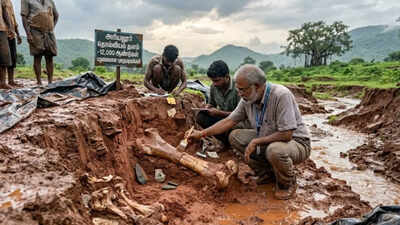
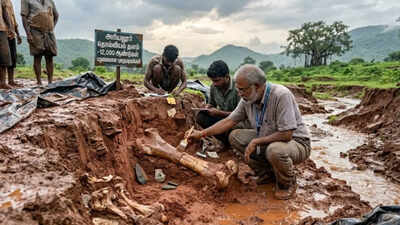
12,000-year-old fossil site uncovered after heavy rains in Tamil Nadu.

12,000-year-old fossil site uncovered in Tamil Nadu after heavy rains

in Thoothukudi district Tamil NaduIn India, a very interesting geological discovery has been made as a result of heavy rains, which caused considerable soil erosion, revealing an ancient fossil bed about 12,000 years old. Union Environment Minister Bhupendra Yadav confirmed that the site dates back to the Holocene era. Which represents an important transitional period in the development of modern ecosystems and the evolution of early humanity. At the request of local government bodies, Zoological Survey of India (ZSI) Completed an extensive regional survey of the area and confirmed that the type of deposits found in this fossil bed represent a major addition to the Quaternary record of India. Such discoveries provide a natural record of ancient biodiversity, climate change and conditions that existed in southern India.

Discovery of 12,000-year-old fossil bed that opens a window into prehistoric India

The fossil display provides a unique view into the late Holocene epoch through scientific evaluation of available marine invertebrate fossils (e.g., molluscs, gastropods, bivalves) that are contained in ancient sedimentary formations. Researchers claim that these ‘natural archives’ enable scientists to examine how regional ecosystems responded to past climate changes. As reported in a study csr journalThe researchers hope to use fossil composition analysis to determine whether the area has always been dominated by a specific vegetation type (forest, grassland) or whether it was once located in a marine environment. Data obtained from fossil analysis will enable scientists to fill in the gaps in the southern Indian fossil record.

Geological insights from Holocene sedimentary formations

The Quaternary period, which covers the last 2.6 million years, is marked by dynamic climate changes. The Thoothukudi site provides a high-resolution window into Holocene sedimentology. Geologists use preserved structures such as cross-stratification (layers formed by currents) and bioturbation (evidence of burrowing organisms) to reconstruct ancient coastal dynamics. Because these fossils have been exposed to natural erosion, their integrity is threatened by the elements. Experts are currently urging immediate conservation protocols to prevent the degradation of these natural archives before full longitudinal studies are completed.

History of human civilization and climate

The Holocene Epoch is the most recent period of geologic time, spanning approximately the last 11,700 years. It is unique in geological history because it corresponds to the late period of human civilization and the post-Stone Age history. In the context of the Indian subcontinent, researchers use such records to trace the intensity of monsoonal variations – particularly the southwest and northeast monsoons – that have historically influenced the rise and fall of ancient regional civilizations. The discoveries made in Tamil Nadu provide a calibrated chronological framework that helps link paleontological findings with documented environmental changes, painting a clear picture of the region’s ancient past.

Source link

The NBA is set to make a major rule change to crack down on losing teams for the purpose of better draft picks. international sports news

NBA set to make major rule change to crack down on losing teams aimed at better draft picks
NBA Commissioner Adam Silver speaks during a press conference at NBA Basketball All-Star Weekend on Saturday, Feb. 14, 2026, in Inglewood, Calif. (AP Photo/Jay C. Hong)

nba Heading into one of its most significant rule changes in years, not on the court but in how teams build their futures. At the center of it is a long-standing problem known as “tanking” and a proposed solution called the “3-2-1 lottery” that would change the way young talent enters the league. According to reporting from ESPN’s Shams Charania, the league has formally presented the proposal to all 30 team general managers, with it expected to be voted on by the Board of Governors on May 28. The outline has been discussed in several meetings involving owners, officials and the competition committee, and while small adjustments are possible, the basic idea already enjoys widespread support. To understand why the league is considering such a change, it helps to start with the system that exists today, and why it has created unintended incentives.

What does “tanking” mean, and why did it become a problem

In simple terms, tanking refers to a team intentionally weakening its chances of winning games, often at the end of the season, in order to secure better draft picks for the next season. The draft is the league’s annual system for assigning new players, usually from colleges or international leagues, to NBA teams. The teams that performed worst during the regular season are given the best chance to be selected first, which matters because the top pick often brings a player who changes franchises. To prevent teams from finishing in last place and automatically receiving the first pick, the NBA uses a lottery system. It is a weighted draw that determines the order of the top picks, with worse teams getting better chances. Even with that system in place, the incentives remain clear. If finishing near the bottom improves your chances of reaching the top tier, losing games, especially late in the season, can be strategically valuable. It’s this behavior the league is now trying to discourage. NBA Commissioner Adam Silver addressed the issue directly earlier this year, saying that the current structure incentivizes teams to “do whatever they can to maximize their opportunities” in the lottery and confirming that reform is a priority. In February two teams were fined for conduct the league described as prioritizing draft position over wins, with the Indiana Pacers fined $100,000 and the Utah Jazz fined $500,000.

How does the current draft lottery work?

Under the current system, the 14 teams that miss the playoffs enter the draft lottery. Teams with the worst records are given the highest probability of securing the number one spot overall, although the chances are fractionally reduced compared to older versions of the system. The intention behind that first reform, introduced in 2019, was to reduce tanking by making the three already worst teams share the same odds. But even with that adjustment, finishing at or near the bottom still pays off. The new proposal tries to reverse this dynamic.

What changes in the “3-2-1 Lottery” offer

The proposed system introduces several linked changes, all built around the same idea: being the worst team in the league should no longer be the most advantageous situation. First, the lottery will expand from 14 teams to 16 teams. This means more teams remain in competition for top draft positions, expanding the competitive field. Second, and more importantly, the distribution of lottery odds will be reshaped. The model is called “3-2-1” because it specifies different numbers of lottery opportunities, often described as “balls” in the draw, depending on where a team finishes. Teams that finish above the lowest, particularly those ranked with the fourth-worst to tenth-worst records in the league, will have the strongest advantage. These teams will each be given three lottery balls, effectively making them the most likely group to get the number one spot. Conversely, the teams with the three worst records would move into what the proposal describes as the “relegation zone”. Those teams will only get two lottery balls, meaning their chances will actually be worse than teams that performed slightly better in the season. The message is simple. Instead of encouraging teams to lose as many games as possible, the system will reward teams that remain competitive enough to avoid finishing bottom altogether.

How will the rest of the system be structured?

The proposed “3-2-1” NBA Draft reform is designed to reduce intentional losing, or “tanking”, by changing how draft positions are awarded and how late-season situations are treated. Under the plan, all 16 teams that missed the playoffs would enter the draft lottery, rather than just the worst-performing teams with the strongest prospects.To indicate how close a team comes to making the postseason, the system ties draft lottery chances to both regular season finale and performance in the NBA Play-In Tournament. The play-in serves as a mini-postseason for the teams finishing 7th to 10th in each conference, while the teams finishing 1st to 6th automatically qualify for the playoffs.In the play-ins, teams compete for the last two playoff spots in each conference. The 7th and 8th placed teams face each other first, with the winner getting the 7th seed and a direct spot in the playoffs. The loser is not eliminated immediately but gets a second chance by playing the winner of the 9th vs 10th game. The winner of that final matchup takes the 8th and final playoff spot, while the loser is eliminated from the postseason altogether.Under the proposed reform, draft lottery odds are also used to reflect how competitive teams were in the season and how close they came to the playoffs. The 9th and 10th-place teams will receive two lottery balls as a reward for remaining competitive and reaching the play-in zone, effectively serving as a strong consolation for missing the postseason.Conversely, the 7th and 8th seeds will only receive a lottery ball if they fail to qualify through the play-ins, as they are considered the strongest of the non-playoff teams and therefore have the least need for draft assistance.The reform also reorganized late lottery selections, with selections 12, 13 and 14 effectively reserved for teams that miss the playoffs, often described as “best of the rest”. Additionally, to ensure that traded draft assets are fully respected, it bans protected picks in the 12-15 range, and introduces safeguards to prevent teams from receiving consecutive numbers. 1 selection or multiple top-five selections in consecutive years. For the bottom three teams, there is a partial safety net. Although his chances of reaching the top spot may have diminished, his draft position will not drop below No. 12.

Why does the league believe this will change behavior?

The central idea behind the reform is rooted in behavior rather than pure mathematics, as the league is deliberately trying to reduce teams’ incentives to lose, while also increasing competitiveness in the league. The team that finished bottom at the end of the season would no longer benefit from slipping further down the standings. In fact, this would be a reason to win the game and get out of the bottom three, where the lottery chances are weak. Additionally, teams outside of that bottom tier will have an incentive to continue competing, as they will now have the best chance at securing a top prospect, rather than seeing their situation worsen. As Charania explained, league officials believe the system will “incentivize winning, especially during the second half of the season,” when tanking behavior is historically most visible.

Timeline and what happens next

The proposal is not final yet. The NBA Board of Governors is expected to vote on it on May 28, and the system may still undergo minor adjustments before any formal adoption. If approved, the changes will take effect through the 2027 NBA Draft with a built-in review period. The proposal includes what is known as a sunset clause, meaning the system would run through the 2029 draft before the league decides to continue it or introduce further changes. That timeline is consistent with the current collective bargaining agreement, which runs through the 2029-30 season.

One league is trying to rebalance incentives

The NBA has adjusted its draft system before, most recently in 2019, but this proposal represents a more direct effort to reshape incentives across the league. At its core, the issue is not just competitive balance but credibility. When teams appear to profit from losing, it affects how the league is viewed by fans, players, and commercial partners. Silver acknowledged this when he described the decision as having “business implications, basketball implications.” [and] Integrity implications,” adding that the league is committed to fixing the issue. The “3-2-1 Lottery” is the clearest indication of how far the NBA is willing to go to do this, ensuring that, over the course of a season, trying to win is once again the most rational strategy.

Source link

Scientists trace ancient diseases from bones, teeth and DNA evidence.

Scientists discover ancient diseases from bones, teeth and DNA evidence

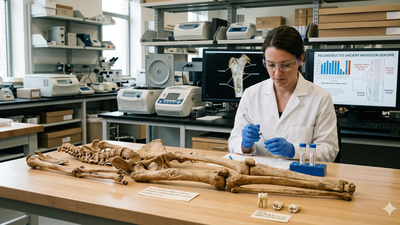
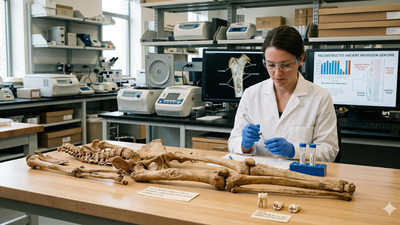
The topic of archaeological disease research is based on the use of human skeletal records to reveal the presence of diseases in the past. Bioarchaeology, paleopathology, and biomolecular analysis are among the techniques that can be used by researchers to discover diseases such as infections, nutritional deficiencies, and degenerative conditions in ancient populations. DNA sequencing, isotope analysis, and radiography are some of the tools researchers can use to detect diseases like tuberculosis and bubonic plague from ancient remains. Such techniques allow researchers to gain insight into the development of diseases, past medical trends, and the environment around people.

Paleopathology explains how ancient disease found in human remains

The archeology of disease, also known as paleopathology, involves the investigation of diseases in ancient human and animal remains. Examination of abnormalities on bones, wear on teeth, and burial conditions helps draw conclusions about diseases in a population. In an article titledBioarchaeology of health crises: infectious diseases in the past,’ Clark Spencer Larson, a leading bioarchaeologist, states that “human skeletons are rich records of life experience, including disease, nutrition, and biological stress.”Through paleopathology, we gain insight into the lives of past generations through the analysis of diseases preserved in bones and tissues.

Scientific techniques are used to identify ancient diseases

Modern science has revolutionized the way we detect diseases in fossils of the past. One such advanced technique is ancient DNA or aDNA studies. Scientists have the ability to obtain DNA from bone or tooth samples and study the pathogen. according to Bose et al. (2011)who studied the genomic structure of the bacterium that causes the Black Death, “We show that Yersinia pestis was the causative agent of the Black Death.” Another important method is isotope analysis. By studying the chemical composition of bone, scientists are able to trace individuals’ migratory history and dietary habits, which are strongly linked to good health. Another technique is radiographic imaging, which includes CT scanning. These help in studying mummified bodies without damaging them. For example, scientists analyzing Egyptian mummies found evidence of hardening of the arteries, a sign of atherosclerosis.

Diseases discovered in ancient populations

Many diseases can be documented from archeology of the past. For example, tuberculosis infection has been found in the remains of individuals from many years ago. According to the study’Historical and prehistoric epidemics: an overview of the sources available for the study of ancient pathogens‘, Some characteristics of tuberculosis include damage to the spine, called Pott’s disease.There is also an incidence of leprosy infection, which is evident from the distinctive features of the bones found on the face and body parts. Cases of malnutrition are also common, including conditions such as rickets and scurvy.Furthermore, scientists have managed to discover that plague DNA is present in large burial sites.

Why does the study of ancient disease matter today?

In addition to providing information about past events, investigation of ancient diseases is beneficial to contemporary medical practice. Studying the evolution of pathogens can help predict the occurrence of future pandemics.Furthermore, research on historical trends in human well-being allows medical professionals to assess the impact of various environmental and socioeconomic factors on the development of disease. Such an approach is particularly useful in analyzing the etiology of current lifestyle-related diseases.Studying the pathology of ancient populations provides insight into human experience captured in physical form. With the help of cutting-edge technology, researchers are able to uncover the secrets of past diseases.

Source link

Two-time world champion sprinter sues sponsor, says his shoes ruined his career international sports news

Two-time world champion sprinter sues sponsor, says his shoes ruined his career
Abby Steiner is seeking damages for medical expenses, lost career earnings and long-term physical effects following injuries she suffered after joining Puma Footwear.

A two-time world champion sprinter has taken legal action against her own shoe sponsor, arguing that a device designed to support her elevation contributed to injuries that stunted, and possibly ended, her career. Abby Steiner, a key part of the United States relay teams that won gold medals in both the 4×100 meters and 4×400 meters at the 2022 World Championships in Eugene, has filed a lawsuit in Massachusetts, alleging that Puma supplied “defective” and unsafe shoes that caused a series of chronic foot and ankle problems.

From breakout star to long-term injury concerns

The timeline of Steiner’s rise and subsequent struggles is a central part of the case, beginning in June 2022 when she declared herself one of the fastest women in the world by winning the 200 meters in 21.77 seconds at the US National Championships. This success followed a standout collegiate career at the University of Kentucky, where she became a four-time NCAA champion. A month later, she turned professional and signed a deal with Puma, widely reported to be worth around $2 million, one of the most significant endorsements for a female runner coming out of the college system. In a matter of weeks, he added global success to his resume by earning two World Championship gold medals as part of U.S. relay teams. His trajectory changed in 2023, when he began experiencing persistent foot injuries. Over the next two years, those issues turned into a series of medical interventions. Steiner developed chronic problems with his foot and ankle, including Haglund’s deformity, a growth of the bone behind the heel in his right foot, which required surgery in 2023. He also suffered a partial tear of his Achilles tendon and ultimately had to undergo at least three surgical procedures between 2023 and 2025.

What is alleged in the lawsuit about the shoes?

In a complaint filed April 24 in Massachusetts Superior Court, Steiner claims that specific Puma models, including the Deviant Nitro Elite 2 and 3 and the EvoSpeed ​​Tokyo Nitro, directly contributed to those injuries. Front Office Sports. The lawsuit also names Mercedes-Benz Grand Prix, which collaborated on elements of the spike design. At the heart of the claim is technology used in specific running footwear over the past decade. Steiner argues that the inclusion of carbon fiber plates and nitrogen-based foam designed to improve energy return and speed altered the natural mechanics of his foot and ankle during running. According to the filing, those changes increased stress on her lower limbs and increased her risk of injury over time. They further alleged that Puma was aware of potential defects in the design, yet continued to market the shoes as safe and suitable for specific competition, and failed to properly inspect them. A key element of the matter is time. Steiner says that although his injuries began years ago, he “recently” identified the shoes as the cause, arguing that the way the shoes modified running mechanics made it difficult to identify the source of the problem at the time.

Competitive impact and final race

The physical toll described in the lawsuit matches the apparent competitive decline. In preparation for the 2024 U.S. Olympic Trials, Steiner withdrew from several preliminary races because she was unable to complete basic training sessions, including walking and jogging exercises, without pain. When she competed at the trials, she finished sixth in the 200 m and missed qualification for the Olympic team. That race now stands as his most recent competitive appearance at the elite level. In August 2025, she publicly announced that she would step away from the sport, citing this as a decision to focus on recovery and pursue a master’s degree in exercise science. The lawsuit goes further, stating that he is no longer able to compete at the professional or Olympic level.

what steiner wants

Steiner is seeking both financial and non-financial damages from Puma. The claim includes compensation for the medical expenses associated with her surgery and treatment, as well as the loss of potential earnings from her rapidly growing professional career. It also seeks damages for what the filing describes as “loss and impairment of the full enjoyment of life,” noting long-term physical consequences attributed to the injuries.

Source link

Spain: 2,000-year-old Roman cup found in Spain may be directly linked to Hadrian’s Wall

2,000-year-old Roman cup found in Spain may be directly linked to Hadrian's Wall

Archaeologists have identified a rare, 2,000-year-old Roman artefact, known as the ‘Berlanga Cup’, discovered in the soil of the La Serrada de Arroyo site in Soria, Spain. This cup is made of bronze and is a very rare example of what are known as the ‘Hadrian’s Wall Series’ vessels, and these usually come with decorative enamel work and inscriptions identifying Roman armies and the military fortifications built by those armies.Most known examples of ‘Hadrian’s Wall Series’ ships are built in the area that includes the western part of Hadrian’s Wall, while this example is the only example of a ‘Hadrian’s Wall Series’ boot documenting the eastern part of Hadrian’s Wall, specifically the forts located on the western part, such as Benwell and Hulton Chesters. Scholars are suggesting that this cup may have been given as a personal gift to a soldier, commemorating that soldier’s service to the Cohors I Celtiberorum when he returned home to Roman Spain.

Berlanga Cup: New evidence of Hadrian’s Wall found in Spain

The discovery of the Berlanga Cup (now identified in the journal Britannia) provides a unique opportunity to understand how military souvenirs were distributed throughout the Roman Empire. According to a journal published in Cambridge, the cup is the largest of the known Hadrian’s Wall pans, measuring approximately 114 millimeters in diameter and 81 millimeters in height. The exterior of the cup features elaborate decorative designs, including a horizontal frieze with colored (i.e., red, green, turquoise, navy) enamel and an inscription along the upper rim bearing the names of four different forts located on the east side of Hadrian’s Wall: Cylernum (Chesters), Onno (Halton Chesters), Vindobala (Rudchester), and Condarkum (Benwell).

how did the cup reach spain

As reported in a journal published in Cambridge, the cup was found at the Roman site of ‘La Cerrada de Arroyo’ in Berlanga de Duero and is currently housed in the Numantine Museum of Soria. Researchers have used ground-penetrating radar (GPR) along with detailed archaeological surveys of the objects to place the cup in context of its geographical location. The discovery of the cup in Spain, an area far from the Roman frontier, supports the previously suggested hypothesis that this type of artefact served as souvenirs for Roman soldiers. Scholars have concluded that the cup was probably either made or purchased by a veteran who wanted to celebrate his military service while stationed in Britain before returning home to Roman Celtiberia.

Unraveling the Mysteries of the Cup by Modern Science

Beyond its historical legend, the Berlanga Cup has undergone rigorous scientific investigation to confirm its authenticity and provenance. The researchers used portable X-ray fluorescence (PXRF) spectrometry to perform archaeological characterization of the metal alloy. Analysis revealed the composition of lead gunmetal – a common material in Roman metalwork of the 2nd century AD – which included trace elements of silver and antimony that align with metal groups frequently found in Roman Britain. Additionally, experts used advanced 3D virtualization techniques to create a ‘digital twin’ of the ship. This reconstruction allowed scholars to virtually connect the fragmentary fragments, facilitating accurate measurement of its dimensions and clear reading of inscriptions that had been obscured by distortion.

Source link

Donald Trump: Trump calls Britons ‘friends’ during King Charles’ visit

King Charles's address to the US Congress was full of jabs; 'Everything is the same except...'

President Donald Trump talks with Britain’s King Charles III at the White House in Washington. (AP)

President Donald Trump said Tuesday the United States has “no closer friend” than Britain as he welcomed King Charles III to the White House for a state visit amid tensions over the Iran war.In the speech, which was greeted with fanfare and a 21-gun salute, Trump’s tone was a sharp contrast to his recent widespread criticism of the British government for failing to engage in the conflict with Tehran.

Watch

King Charles’s address to the US Congress was full of jabs; ‘Everything is the same except…’

“In the centuries since we won our independence, Americans have never had a closer friend than the British,” Trump said. Using a phrase valued by British governments since it was first used by Winston Churchill after World War II, Trump said the two countries had a “special relationship, and we hope it will always remain that way.”Trump also praised the British military, saying that despite recently deriding Britain’s two aircraft carriers as “toys”, “nobody has ever fought a better fight than the United States”.

Source link

Iran war: Gulf leaders meet in Saudi to discuss consequences of Iran war

Gulf leaders meet in Saudi to discuss fallout from Iran war

saudi arabia Hosted leaders and officials from across the Gulf on Tuesday to discuss the ongoing crisis in the region. The talks in the coastal city of Jeddah come as the White House considers Iran’s latest proposal to end the two-month-old conflict. “During the summit, a number of topics and issues related to regional and international developments were discussed, as well as the coordination of efforts in response to them,” the Saudi Press Agency reported. A source close to the government said “the current political and security situation in the region” was being discussed during the summit.

Source link