Israel Lebanon conflict: New evacuations in Lebanon despite Israel saying ‘no territorial ambitions’

New evacuations in Lebanon despite Israel saying 'no territorial ambitions'
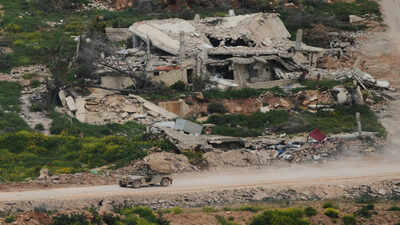
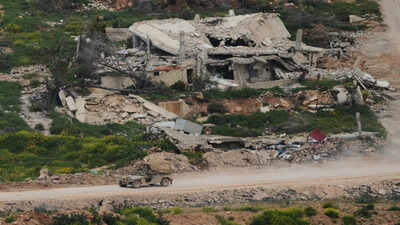
Israeli troops march through southern Lebanon, as seen from northern Israel. (AP)

Israel said on Tuesday it was not trying to take territory in Lebanon, as its military issued a wave of new evacuation warnings for towns and villages in the war-torn south. Israel is fighting Hezbollah Since early March, Iran has been sending troops into southern Lebanon to fight the backed militant group, with violence continuing despite a shaky April 17 ceasefire. Foreign Minister Gideon Saar told a news conference, “Israel has no territorial ambitions in Lebanon. Our presence… serves one purpose: to protect our citizens.” “No country will be willing to live with a gun pointed at its head like this,” he said, as the military stepped up its campaign in Lebanon against Iran-backed Hezbollah.

Watch

‘The war is not over’: Iran military says new targets identified as Trump claims victory against Tehran

Source link

Starmer dodges ethics probe over Mandelson appointment but faces more pressure

Starmer dodges ethics probe over Mandelson appointment but faces more pressure
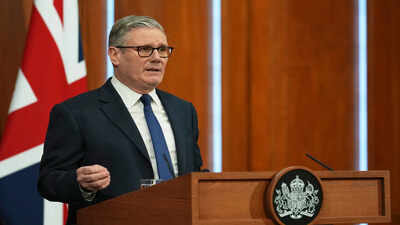
File photo: British Prime Minister Keir Starmer speaking during a press conference at Downing Street in London. (AP)

LONDON: British Prime Minister Keir Starmer on Tuesday dodged a parliamentary inquiry into the choice of Jeffrey Epstein’s friend Peter Mandelson as British ambassador to Washington, but failed to answer questions about whether he had changed the rules to make the controversial appointment.On Tuesday, MPs voted 335 to 223 against asking the privileges committee to investigate whether Starmer had misled the House of Commons on a number of matters, including saying “full due process” was followed during the appointment. If the committee had found that Starmer had deliberately misled Parliament, he would have been expected to resign.Starmer had criticized the effort to launch the investigation, led by opposition Conservative Party leader Kemi Badenoch, as a political stunt to influence voters ahead of local and regional elections on May 7. He ordered MPs from his centre-left Labor Party to oppose an investigation, which resulted in overwhelming rejection. Badenoch said it was a sign of Starmer’s weakness that he had to use such an order.The fallout from Mandelson’s appointment has left Starmer fighting for his job and for his civil service. Starmer is angry that she was not told that Mandelson failed security checks, while officials say they felt pressure from Starmer’s office to quickly confirm the appointment at the start of President Trump’s second term.Starmer’s former chief of staff, Morgan McSweeney, acknowledged on Tuesday that he had made a “serious mistake” by recommending Mandelson, but denied pressuring officials to ignore security concerns. McSweeney told MPs on the Foreign Affairs Committee of the House of Commons that “the Prime Minister relied on my advice, and I got it wrong.” He apologized to Epstein’s victims, saying, “I am sorry for any role this controversy may have played in causing further hurt or distress.Starmer fired Mandelson in September after new details emerged about the ambassador’s friendship with Epstein.McSweeney resigned in February, saying he wanted to take responsibility for the ambassadorial appointment. McSweeney said he thinks Mandelson’s experience as a former EU trade commissioner will help broker a trade deal with the Trump administration. “I don’t think the prime minister would have chosen Mandelson if Kamala Harris had been elected president,” McSweeney said.

Source link

Bangladesh’s first N-power plant starts fuel loading

Bangladesh's first N-power plant starts fuel loading
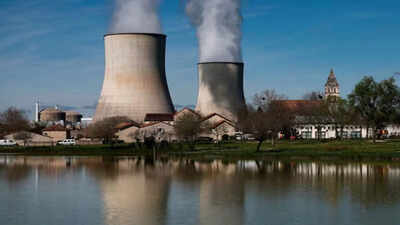
Bangladesh has started loading fuel at Rooppur Nuclear Power Plant

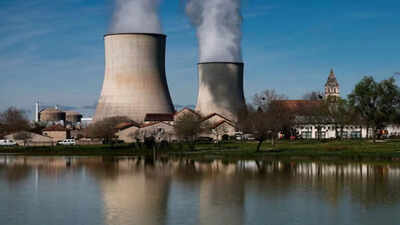
DHAKA: Bangladesh entered the era of nuclear power generation on Tuesday as its Rooppur Nuclear Power Plant started loading fuel into its VVER-1200 reactor – the latest Russian Gen III+ pressurized water reactor technology, which India is also looking at for its future nuclear power projects, including new units at Kudankulam. The fuel for the plant’s first unit was loaded at Pabna, about 160 km from the capital Dhaka. Built by Russia’s state-run nuclear corporation Rosatom, the 2.4 GW plant (2 x 1200 MW units) aims to provide 10-12% of the country’s electricity. The first unit will be formally and legally transferred to Bangladesh for operation before the end of 2026. Rooppur NPP will play an important role in ensuring national energy security, accelerating industrialization and promoting the development of a technology-driven economy, Science and Technology Minister Faqir Mehboob Anam said, adding that the project is being built at a cost of about $13 billion, with Russia providing 90% of the state loan. The loading phase is the first in the commissioning phase of the unit and will then bring the reactor to a stable controllable power level. Officials said production will start at a low level and full production is not expected until 2027. In India, Kudankulam – which already has two Russian VVER 1000 pressurized water reactors in commercial operation since 2014 – will have two more units – 7 and 8 with larger VVER-1200 reactors – as proposed for the fourth phase of the plant. Last year, Rosatom said that technical specifications were currently being prepared for the construction of a new Russian-designed nuclear power plant with VVER-1200 reactor units in India.

Source link

“She’s guilty of something”: Candace Owens faces intense scrutiny after show cancellation and viral post

"she is guilty of something":Candace Owens faces intense scrutiny after show's cancellation and viral post
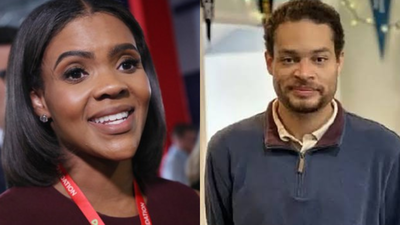
Candace Owens is trending after recent show cancellations, with a viral post making unverified claims about her absence. The post suggests a possible connection to a recent incident, but no credible evidence supports these allegations. Owens has not responded publicly, which has fueled further speculation online. As the story spread, it highlighted how quickly social media narratives can grow despite a lack of confirmed facts.

The online conversation about Candace Owens took a sharp turn this week when a viral post started raising questions about her recent absence from the headlines. Time raised an eyebrow. As attention turned to a larger national event, their show was canceled and that overlap soon became the focus of speculation. Although no verified connection exists, the conversation has already gained momentum across all platforms.What is different in this case is how quickly a story became a big story. No official statement has confirmed any wrongdoing but the silence has raised curiosity. In today’s digital age, even a pause can be interpreted in many ways, and that’s exactly what is happening here.

A viral post raises serious questions about Candace Owens’ canceled show

The claims began with a post that spread quickly online. It read:“Candace Owens canceled her show once again today.It’s almost as if he’s ashamed to show his face on camera because he’s guilty of something.She didn’t trust people like me that she disappeared right before the White House Correspondents’ Dinner attack.People have been digging into the possible relationship between her and Cole Allen and they are finding some really interesting things.She thinks that if she cancels her shows and keeps quiet about it and goes into hiding… then it will all be over.But this will not happen!!!We will continue GO MAXXXX until the vibes start again.The language is direct and emotional. It also makes serious claims, including a suggested relationship with a man named Cole Allen. Nevertheless, there is no confirmed evidence supporting these allegations, and no reliable sources have yet supported them.

When silence becomes part of the story

People often look up to public figures, especially if they are not used to such appearances. In such a situation, Owens’ absence has become a topic of discussion in itself. Some people consider it a strategy and some people consider it a coincidence. In the absence of any reaction from his side, assumptions have filled the space.This moment also points to a bigger problem. Social media can turn speculations into trending topics in a matter of hours. Once a story takes hold it becomes difficult to separate fact from noise.At present the situation is not clear. Until verified information emerges, the claims remain in the realm of speculation. What is certain, however, is how quickly a post can shape the public conversation and move it forward long after the facts are unknown.

Source link

Silent Operations to Balance Nuclear Powers: The Secret Espionage Networks That Quietly Shaped the Cold War world News

Silent Operations to Balance Nuclear Power: The Secret Espionage Networks that Quietly Shaped the Cold War

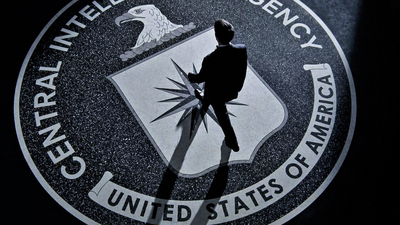
The Cold War is often framed through leaders, treaties, and nuclear arsenals, yet much of its direction emerged in quiet places. Intelligence officers met with anonymous sources, analysts pieced together fragments of captured signals, and reconnaissance flights captured images that could sway global decisions. The United States and the Soviet Union stood in opposition with the potential for devastating war, which made knowledge as valuable as strength. This competition unfolds through systems designed to gather, interpret, and share information. These systems created networks that connected people, technology, and governments, shaping how each party understood and responded to risk.

spy network that shaped the cold war

The Cold War functioned as a competition between networks rather than isolated states. Intelligence agencies created interconnected systems that transmitted information across borders, linking field operators, surveillance platforms, and central analysts. Each piece of intelligence gained meaning when combined with others, creating a comprehensive and more reliable picture of events.At the heart of the Western system was the UKUSA Agreement, which formalized the sharing of signals intelligence between the Allies. Communications intercepted in one region can be analyzed elsewhere and integrated with other sources, creating a level of insight that no single country can achieve independently. This structure reduced uncertainty and allowed decision makers to react with more confidence during moments of stress.These networks also support coordinated operations. The Berlin Tunnel Operation is one of the most ambitious examples, where Western agencies attempted to tap Soviet communication lines in East Berlin. The operation was later found to have been compromised by a Soviet source, yet it demonstrated the scale, reach, and coordination that the intelligence network had achieved. The hidden architecture of the Cold War was already in place, operating across borders and under public diplomacy.

When the threat came from inside the network

The strength of these systems depended on trust, and that trust was not always secure. The most revealing early infiltration came from within Britain, where the Cambridge Five exposed how deeply Soviet intelligence could penetrate Western institutions. They included Kim Philby, who worked within the intelligence establishment while passing information to Moscow.Their actions did not define the beginning of Cold War espionage, yet they revealed how vulnerable even well-established systems could be. Information was transferred through the same networks meant to protect it, allowing the damage to spread silently across operations and alliances. Intelligence agencies responded by tightening investigative procedures and strengthening counterintelligence structures, recognizing that internal compromise could undermine the entire system.

Human sources and flow of insight

While networks depended on structure, they were equally dependent on individuals who could provide access from within. Oleg Gordievsky became one of the most valuable sources for Western intelligence during a period of extreme tension in the early 1980s. As a senior officer in the KGB, he provided insight into how Soviet leaders interpreted Western actions.His reporting contributed to a clear understanding of Soviet perceptions, including what the leadership feared of a possible NATO attack. This information entered the broader intelligence network, where it was analyzed with other sources and helped reduce the risk of misinterpretation. His eventual removal marked the end of his role, yet his contributions had already shaped how Western policymakers assessed a volatile situation.A generation earlier, Oleg Penkovsky played a different role within the same network system. His intelligence on Soviet missile capabilities became part of a broader analytical effort to assess the balance of power. His reporting did not stand alone. This joined with other sources and technical data, helping to reduce uncertainty during a period when there was significant risk to perceptions.

When technology became part of the network

The development of intelligence networks extended beyond human sources. Technology became an integral part, expanding both reach and reliability. High-altitude reconnaissance platforms such as the Lockheed U-2 allowed the United States to gather visual evidence of Soviet military activity within the restricted zone.The 1960 incident involving Gary Powers exposed the scale of these operations, revealing a hidden aspect of the Cold War to the public. Despite diplomatic consequences, aerial reconnaissance remained central to intelligence gathering. During the Cuban Missile Crisis, photographs collected through these systems confirmed the presence of Soviet missiles in Cuba. This evidence entered the intelligence network, where it informed rapid decision-making at the highest levels.Technology did not replace human intelligence. This expanded the network, providing additional streams of data that could be verified, compared, and integrated into broader analytical frameworks.

Late Cold War violations and system limitations

Even as intelligence networks became more sophisticated, they remained exposed to insider risk. In the latter stages of the Cold War and beyond, cases such as Aldrich Ames and Robert Hanssen demonstrated how damaging internal breaches could be.Both men worked within American intelligence organizations while passing information to the Soviet Union. Their actions compromised the network, exposing operations and exposing weaknesses that persisted despite decades of improvements. These cases demonstrated that while intelligence systems can be strengthened through structure and technology, they are still dependent on human reliability at their core.

A balance was created through the network

The Cold War did not depend on any single decisive intelligence success. Its trajectory was shaped through the continuous operation of interconnected systems that collect, share, and interpret information. Intelligence networks influenced many major decisions and crises, helping leaders understand intentions, assess capabilities, and reduce the risk of catastrophic miscalculation.From this steady flow of insights emerged a balance between confrontation and restraint. Each piece of intelligence contributed to a bigger picture, allowing policymakers to act with greater awareness of the consequences.

legacy of invisible system

The intelligence networks created during the Cold War continue to impact global security today. Modern systems of surveillance, signals interception, and international cooperation reflect structures first developed during that period. The equipment has evolved, and the scale has expanded, yet the principle remains consistent. Information, when collected and shared effectively, shapes how nations respond to uncertainty.The Cold War demonstrated that history can be quietly shaped through systems that operate beyond public view. These networks linked individuals, technology, and governments into a single framework of understanding. Within that framework, decisions were made, risks were assessed and the course of the conflict was directed with a level of awareness that helped prevent it from becoming far more destructive.

Source link

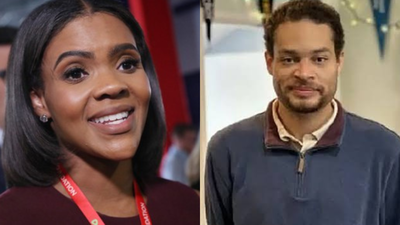
Candace Owens and Cole Allen’s claims exposed online as White House correspondents’ dinner questions expose deep secret

Candace Owens and Cole Allen's claims exposed online as White House correspondents' dinner questions expose deep secret
Candace Owens and Cole Allen’s claims exposed online as White House correspondents’ dinner questions expose deeper secret (Image via Getty)

A post shared online has sparked discussion about an alleged relationship between Candace Owens and a man named Cole Allen. These claims primarily come from an anonymous X user who says they are “investigating” connections to the White House Correspondents’ Dinner. But there are no verified reports, official statements or confirmed evidence supporting any relationship between Candace Owens and Cole Allen. Most claims rely on distant personal links, unrelated stories, and speculation rather than facts.As of now, no law enforcement agency, major news outlet, or official source has confirmed any investigation regarding the dinner or Candace Owens’ association with Cole Allen. The situation appears to be driven by viral social media speculation rather than actual, verified information.

X User’s Viral Claims of Candace Owens and Cole Allen Lack Verified Evidence or Official Confirmation

Posts circulating online follow a pattern. They connect unrelated people through long chains of relationships, such as extended family members or old business ties, and then suggest something suspicious without evidence.For example, one claim refers to a distant relative owning a candle store decades ago, and another to someone who worked at a mall store. These details are presented as “clues”, but they have no apparent connection to Candace Owens or any actual incident.The same posts also question why Candace Owens canceled her show and stopped posting on X. However, public figures often cancel appearances or take breaks for a number of common reasons, including personal events, production issues, or health. There is no concrete reason to link his absence to any wrongdoing.The mention of the White House correspondents dinner is also not supported by any official report of an “assault” associated with this situation. No credible outlet has reported any such incident involving Candace Owens or Cole Allen.Another key point is that posts promote the theory and ask for donations, subscriptions, and purchases. This raises questions about intent, especially when the claims are not supported by facts.Right now, everything that is being shared is unverified. There are no police records, no court filings, and no confirmed investigation linking Candace Owens to any of these claims.

Source link

Texas daycare accused of H-1B scam in ‘pay-to-play’ scheme; Visa linked to unrelated job roles

टेक्सास डेकेयर पर 'पे-टू-प्ले' योजना में एच-1बी घोटाले का आरोप; वीजा असंबंधित नौकरी भूमिकाओं से जुड़ा हुआ है

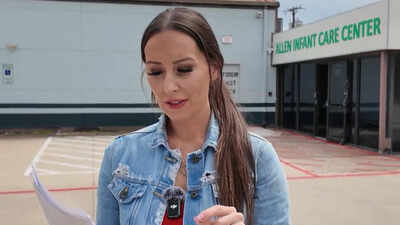
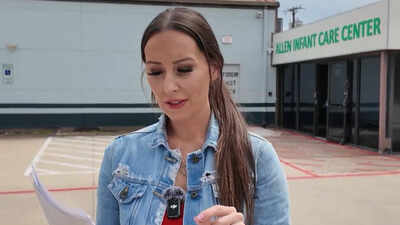
Sara Gonzales outside the daycare

A Texas daycare owner has come under scrutiny after a video surfaced showing him objecting to claims that his businesses had sponsored dozens of foreign workers through the US H-1B visa program. Critics described it as a “pay-to-play” scheme.The footage was shared by BlazeTV and Texas personality Sara Gonzales. It shows him interrogating the operator of the Allen Infant Care Center, formerly known as Golden Acorn Academy, in North Texas. Gonzales says the daycare is affiliated with Golden Qi Holdings LLC and autism therapy provider DFW ABA Center.According to their findings, the businesses have collectively filed more than 50 labor status applications and sponsored at least 37 H-1B visa workers. Some of the roles listed include market research analysts and supply chain analysts, positions that appear to be unrelated to daycare or childcare services.During the confrontation, the owner, identified as Yuan Yao, refused to answer questions and repeatedly asked Gonzales to speak to his attorney. Asked about the allegations, he declined to provide documents, saying, “I can only tell you, everything is legal.”Gonzales also asked for public records that employers are required to keep under H-1B rules, but said these were not produced during the exchange.The video also includes claims from a whistleblower who is said to be familiar with the businesses. “He sells visas,” the man alleged, and claimed foreign workers paid up to $20,000 for sponsorships. The whistleblower also alleged that some workers were underpaid after arriving in the US, saying the owner “asks them to work for him without any fees.”Questions were also raised about whether the daycare facility was actively running. Gonzales said during his visit that “this day care just closed” and it appears changes are underway.It was also reported that businesses had received over $100,000 in Paycheck Protection Program loans that were later forgiven.The H-1B visa program allows US employers to hire foreign workers into specialist roles, but requires them to demonstrate genuine job requirements and be paid a set salary level.Gonzales said she plans to convey her findings to federal officials, questioning why an allegedly defunct daycare would continue to file H-1B petitions.The confrontation comes as Texas Attorney General Ken Paxton is already investigating suspected H-1B abuses in North Texas. His office had previously issued civil demands following reports of companies allegedly running “ghost” operations while sponsoring foreign workers.

Source link

Bizarre tax laws in US could wipe out more than 30 countries’ World Cup earnings as FIFA fails to secure exemption international sports news

Bizarre tax laws in US could wipe out more than 30 countries' World Cup earnings as FIFA fails to secure exemption
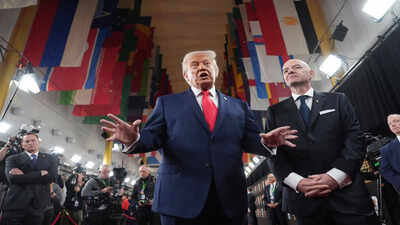
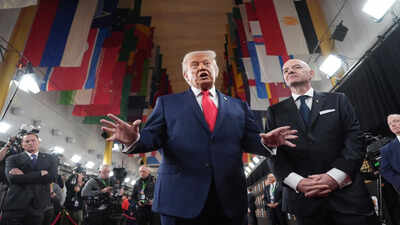
President Donald Trump speaks to members of the media during his arrival with FIFA President Gianni Infantino at the Kennedy Center for the 2026 FIFA World Cup draw in Washington, Friday, Dec. 5, 2025. (AP Photo/Ivan Vucci)

The FIFA World Cup 2026 is just a few weeks away, but behind the scale of the 48-team tournament spanning three countries is a quiet issue that has nothing to do with football. For the first time in decades, a large number of participating nations are going to the World Cup knowing that some of their earnings may be lost to taxes.At the heart of the issue is the fact that, while FIFA itself retains tax-exempt status in the United States, a status it has held since the 1994 World Cup, it has not been able to secure the same blanket exemption for the 48 participating national associations. That difference, combined with the structure of US tax law and the uneven network of international tax treaties, means that the financial impact will not be shared equally. It is already clear that more than half of the region, especially non-European countries, may face significantly higher costs.

Why is this World Cup different from previous editions?

In past tournaments, host governments have generally granted tax exemptions to all participating teams. The most recent example is the 2022 World Cup in Qatar, where all 32 national associations were allowed to operate without paying local taxes on their tournament earnings. This time this has not happened in the United States. According to the report of GuardianFIFA was unable to negotiate comprehensive waivers with the US government. As a result, national associations will now be subject to a mix of federal, state and city taxes on income generated during tournaments.
Lego to launch life-size World Cup trophy as part of FIFA deal

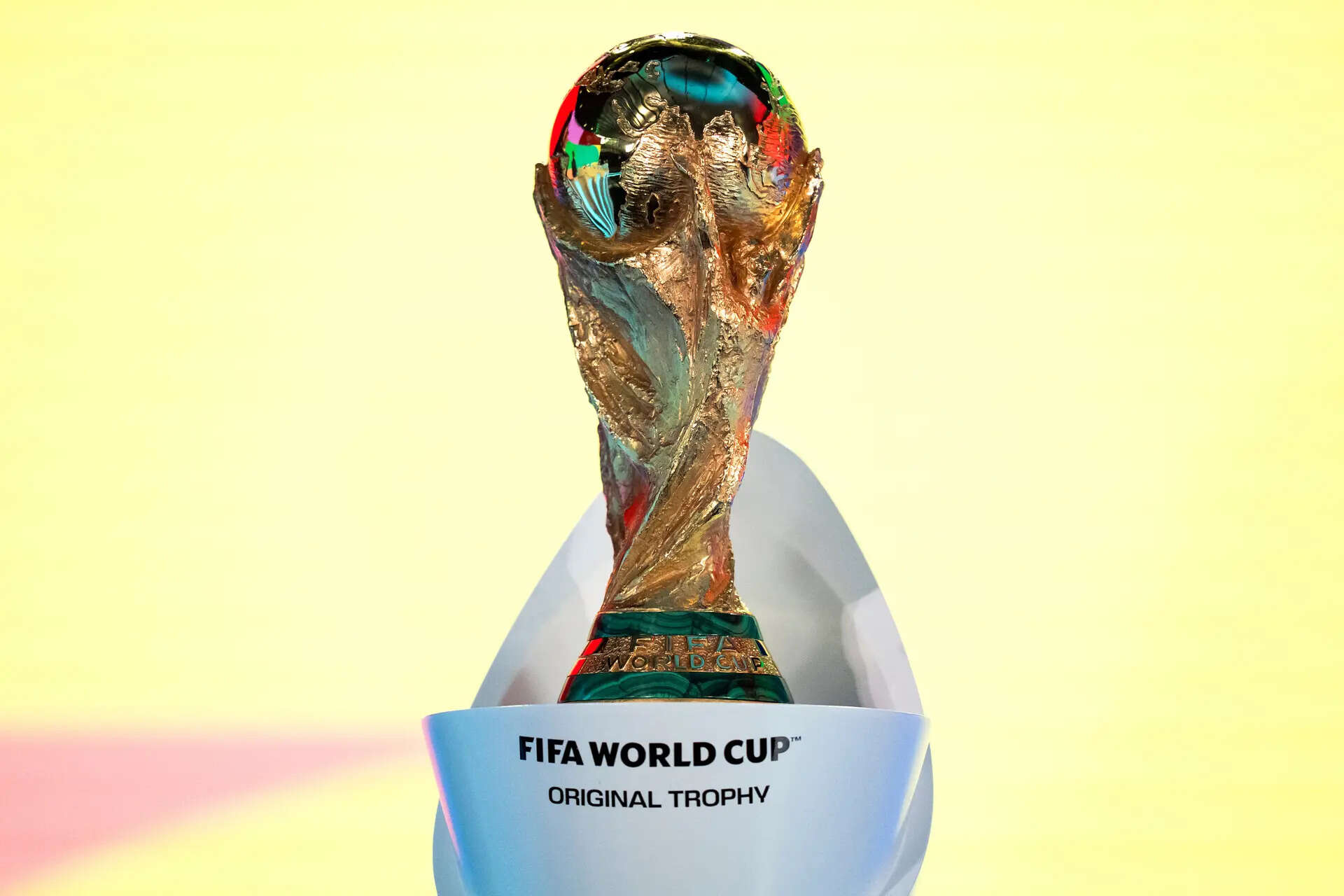
The FIFA World Cup trophy will be on display during the FIFA World Cup 2026 playoff draw on Thursday, November 20, 2025 in Zurich, Switzerland. (Claudio Thoma/Keystone via AP)

Under US law, athletes and artists are required to pay taxes on earnings made while working in the country. This principle applies directly to footballers participating in the World Cup. Backroom staff and coaches fall into a slightly different category depending on tax treaties, but they are still part of the broader financial equation.

Treaty divides, why some countries are protected and others are not

The biggest dividing line runs through something called a double taxation agreement or DTA. These are bilateral treaties between countries that prevent individuals or organizations from being taxed twice on the same income. Of the 48 teams in the 2026 World Cup, only 18 come from countries that have a DTA with the United States. Those agreements largely involve co-hosts Canada and Mexico, as well as European countries and a few others like Australia, Egypt, Morocco and South Africa. For those countries, the burden is significantly reduced because their delegations are exempt from some federal taxes. For the remaining 30 countries, many of which are from small football economies, there is no such protection. This imbalance is at the heart of the issue. As tax consultant Oriana Morrison, who has advised both the Portuguese and Brazilian federations, said in comments reported by The Guardian: Teams from countries with tax treaties “will have much lower costs than smaller countries like Curaçao and Haiti.” Countries like Curaçao and Cape Verde, both of which are making their World Cup debuts, may have larger tax liabilities than wealthier European nations like England, France or Germany because of where they are located.

How is the tax actually applied, and who pays what?

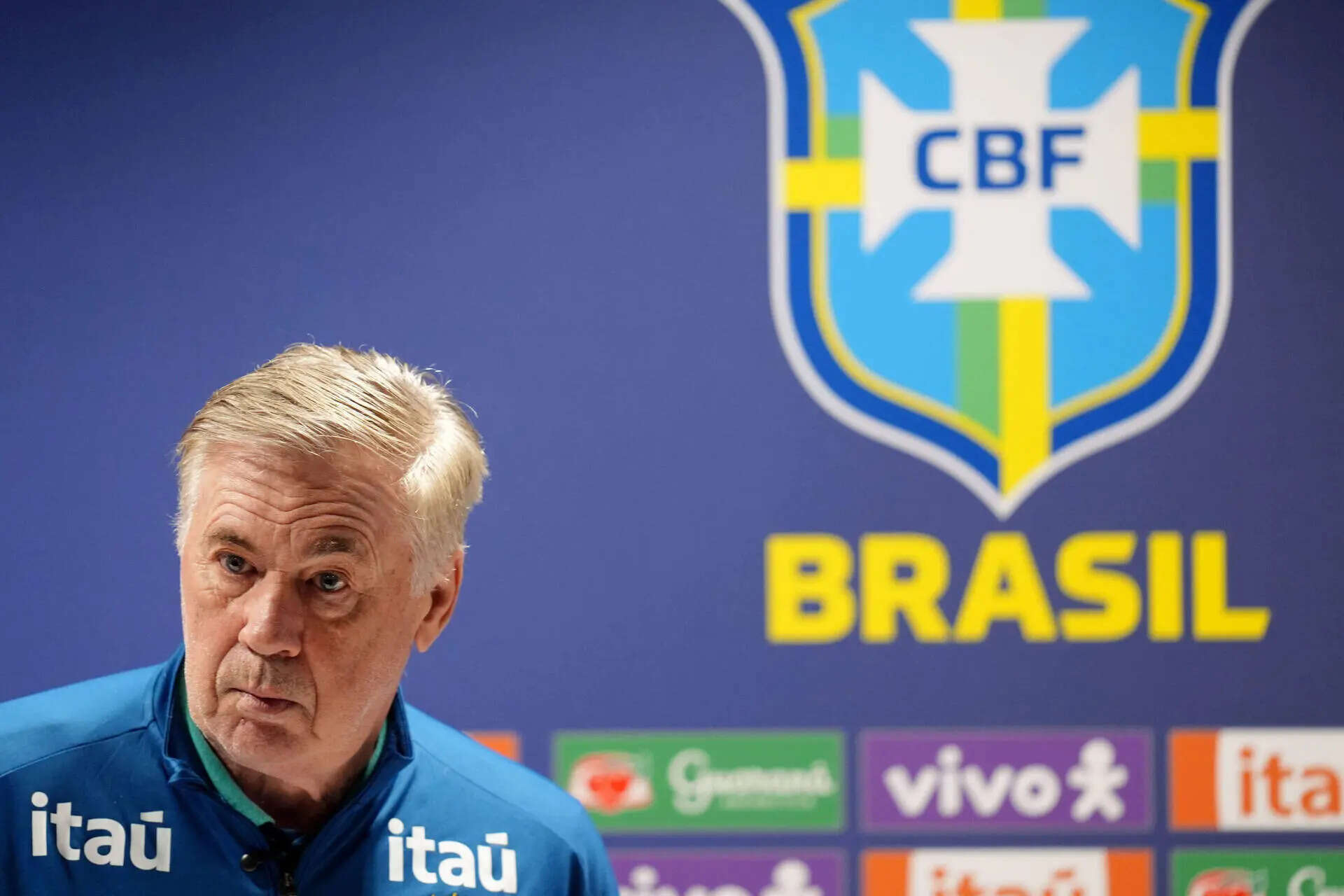
Breaking down the details becomes more complicated, as players in the United States are always taxed on income earned there, regardless of any tax treaties. This means that match fees, bonuses and tournament-related commercial earnings all fall under the US tax system. Coaches and staff may be treated differently depending on treaty coverage. For example, Thomas Tuchel, who manages England, would usually only pay tax in the United Kingdom due to treaty protection. In contrast, Carlo Ancelotti, currently leading Brazil, may face taxation in both Brazil and the US as Brazil does not have a DTA with the United States.
britain football brazil

Brazil manager Carlo Ancelotti during a press conference at the Emirates Stadium, London, on Friday, November 14, 2025. (John Walton/PA via AP)

For high earners, numbers matter. The US federal income tax rate for the top bracket is about 37%, while the corporate tax is about 21%. Furthermore, state-level taxes vary widely depending on where the matches are played. For example, Florida has no state income tax, while New Jersey, which will host the finals at MetLife Stadium, could reach 10.75%, and California, where Los Angeles and San Francisco host the games, could reach 13.3%. Those variations mean the exact tax bill for each team will depend not only on their earnings, but also on where their matches are scheduled.

Cost pressure is not just taxes, it is the entire financial model

Even without the tax issue, many federations were already concerned about the cost. FIFA has set a fixed operating budget of $1.5 million per team for the tournament. That budget includes a per diem for each delegation member, which has been reduced from $850 to $600 for the 2022 World Cup. This decrease comes despite significantly higher travel, accommodation and logistics costs in the United States than in Qatar. When this is combined with potential tax liabilities, margins become tight, especially for smaller organizations. As Morrison said, the impact is not just accounting. For smaller associations, participation in the World Cup may represent a financial windfall that supports domestic football development. Losing a portion of that income to taxes changes the economic meaning of the tournament. “It’s going to cost most non-European countries a lot of money to go to the World Cup,” he said, adding that the money that could support local soccer “is going to stay in the US.”

Geography adds another layer of complexity

The tournament is spread across three countries, but the United States will host the majority of the matches, 78 of the 104, including every game through the quarterfinals. This matters because both Canada and Mexico provide full tax exemptions to participating teams. Any matches played in those countries will have a light financial burden. However, once teams progress to the subsequent knockout rounds, they will inevitably play in the US, where the tax risk increases.
FIFA World Cup draw pictures for the 2026 football tournament

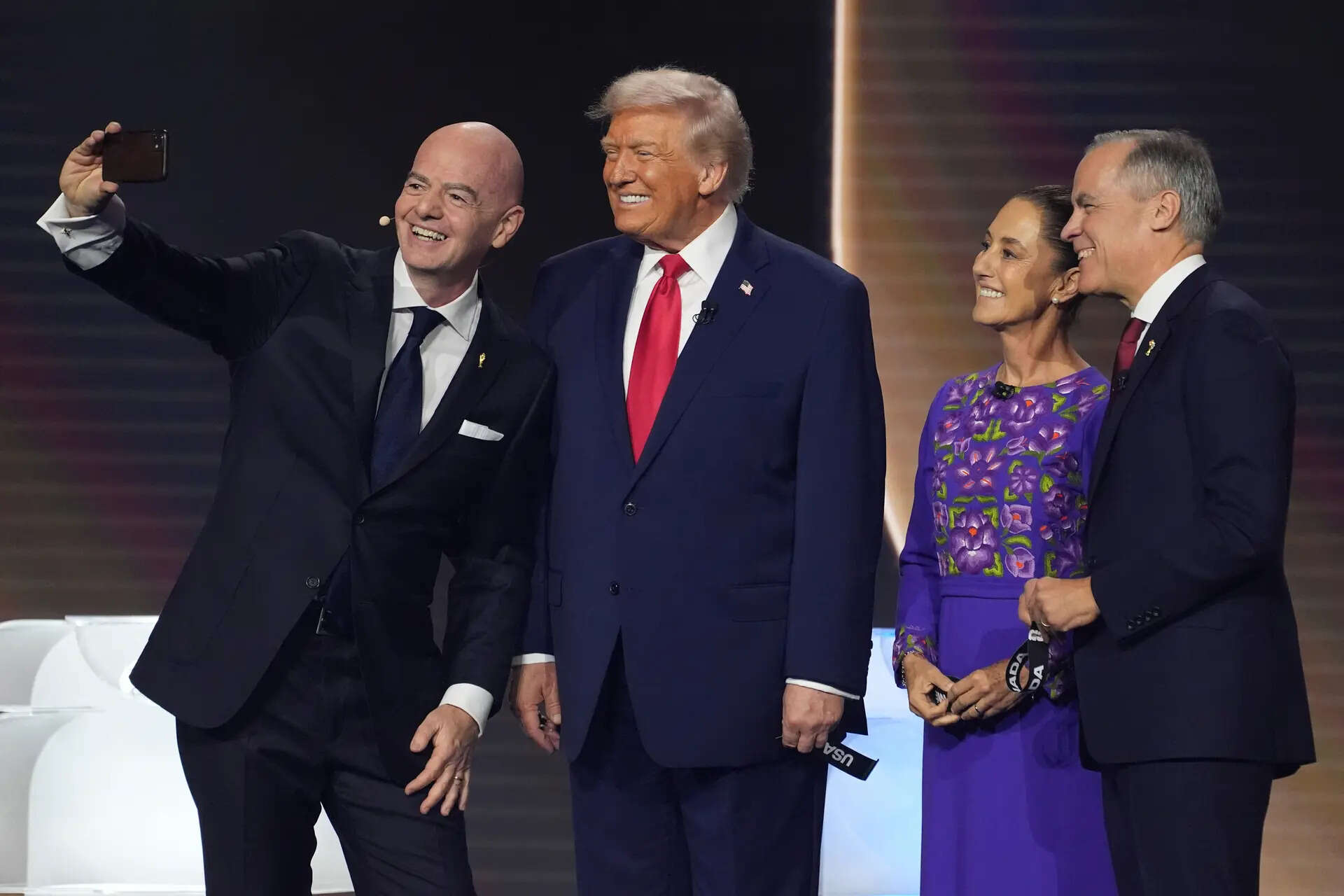
FIFA President Gianni Infantino takes a selfie with President Donald Trump, Mexican President Claudia Sheinbaum and Canadian Prime Minister Mark Carney during the draw for the 2026 soccer World Cup at the Kennedy Center in Washington, Friday, Dec. 5, 2025. (AP Photo/Ivan Vucci)

This uneven geography creates a situation where two teams in the same tournament can face very different financial outcomes, depending on where their matches are held and how much progress they are making.

FIFA’s response, what else could change

FIFA has not publicly detailed the full solution, but sources indicate the governing body is working with national associations to manage the tax implications and provide guidance. There is movement on the revenue side also. Reports in late April suggest that FIFA has agreed in principle to increase prize money and participation fees for the 2026 tournament, with final approval expected at the FIFA Council meeting in Vancouver. That adjustment is seen as a response to concerns first raised at the beginning of the year that teams could lose money despite participating in the sport’s biggest event.

big picture

On paper, the expansion to 48 teams was meant to make the World Cup more inclusive. Financially, this has introduced a layer of inequality that depends less on performance and more on tax treaties and geography. For wealthy European countries with established agreements, the impact is manageable. For smaller countries without those protections, the difference could be substantial, enough to turn a scarce fiscal stimulus into a more complicated calculation.

Source link

Donald Trump plans to put his photo on limited edition US passports: report

Donald Trump plans to put his photo on limited edition US passports: report

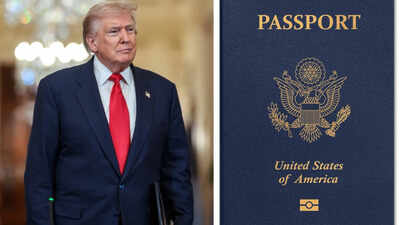
US President Donald Trump is at the center of a new controversy following reports that his image may appear in a redesigned US passport. The move will break long-standing global practice.According to a report cited by Bulwark, the US State Department is working on a limited edition passport that will include Trump’s photo on the inside cover. This image is said to be taken from his second inaugural portrait and is placed above the Declaration of Independence with the President’s signature in gold.If approved, it would be the first time the image of a sitting US president has been included in a passport. No modern US passport has ever featured a presidential portrait, and such a feature is also absent in passports issued by other countries.This proposal was criticized by opposition leaders. Democratic Congressman Raja Krishnamurthy said, “Putting Donald Trump’s face on a U.S. passport is absurd.” He added, “These documents represent the American people – not any one individual’s ego.”Traditionally, US passports are issued not in the name of the President, but in the name of the Secretary of State. Earlier editions had signatures of the issuing officials, but not photographs of political leaders.The redesign plan is tied to the celebration of 250 years of American independence. Other changes are also being considered, including coins bearing Trump’s image and updated designs for government materials.Under the proposal, the back cover of the passport would feature a more traditional patriotic image, a detail of a famous painting of the Declaration of Independence. However, the new version is expected to be produced in limited numbers, with only 25,000 copies planned rather than a full rollout.The current passport design was introduced in 2021 and features key moments and symbols from American history. It includes lines from the American national anthem as well as an image of Francis Scott Key watching the bombardment of Fort McHenry. The back cover features a quote about the imagination of space exploration and freedom by author Anna Julia Cooper.Trump’s alleged push to include his likeness on official documents is not the only such move during his second term. His name and image have been added to various government-related initiatives and assets, including proposed changes to the currency, federal buildings displaying large banners, and branding associated with public services.Some institutions have also seen Trump-related name changes or changes, while new programs bearing his name have been introduced. They include premium residency plans such as the “Trump Gold Card” and the “Trump Platinum Card”, which are marketed as fast-track options for applicants willing to pay higher fees. He also plans to build a $300 million White House Ballroom as an expansion of the old building.

Source link

Quote of the Day by Mother Teresa: “I cannot change the world alone, but I can create many waves by tossing a stone in water.” | world News

Quote of the Day by Mother Teresa:
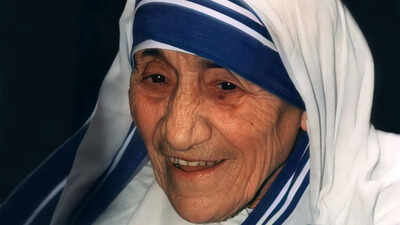
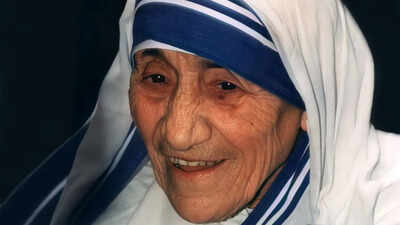
Today’s Quote by Mother Teresa (Image Source: Wikipedia)

Some quotes stick with us because they are easy to understand and have great significance. An example of this is this line mother Teresa. It talks about how small actions can make a big impact and how even the smallest effort can make a big difference. People may feel that their efforts do not matter in a world where problems seem too big to solve. This quote gently questions that idea. It reminds us that big changes don’t always happen through big actions or movements. Instead, it usually starts with one person doing something small. Just as a stone can create waves in water, one action can affect many others. The message is clear and useful for everyday life. It asks people to be kind, responsible and purposeful without waiting for the right time.

Today’s Quote by Mother Teresa

“I cannot change the world alone, but I can create many waves by throwing a stone into the water.”

What is the meaning behind this statement of Mother Teresa?

At first glance this quote seems very simple. But if we think about it carefully, we can see more clearly what it means. Mother Teresa is not saying that one person can fix everything in the world. Instead, she understands that changing the world is hard and takes a lot of hard work. But she also says that every action has a value.The picture of stones making waves in water is important. When you throw a stone in water it forms a circle which goes out. These waves continue to travel far beyond the place where the stone first hit the water. Similarly, a small act of kindness or responsibility can have an impact on other people. A good deed can inspire someone else, and that person can inspire someone else. This causes a chain reaction to occur over time.This idea helps people realize that every little thing they do matters. Even if the results aren’t immediately apparent, they may have an impact over time.

Why does this statement of Mother Teresa still matter today?

There are many problems in the world today, such as social inequality, environmental issues, and economic problems. These issues may seem too big to handle, and many people may feel that their efforts are not worth it.This is where quotes really matter. It asks people to think about what they can do, rather than what they can’t do. Every action, whether it’s helping someone in need, cutting down on waste, or just being nice to people every day, makes a big difference.In today’s world, where social media and instant communication often focus attention on larger accomplishments, small tasks may not seem as important. But this quote reminds us that real change often starts slowly and develops over time.

Life and work of Mother Teresa

Andze Gonxe Bojaxhiu, better known as Mother Teresa, spent her entire life helping the sick and the poor. He worked mostly in Kolkata, India, where he started the Missionaries of Charity. He worked with people who were often ignored by society, such as the sick, the homeless, and the dying.He made kindness and service the basis of his approach. He thought it would be appropriate to help even one person. He did not wait for the right time or enough money to start the work. Instead, he started with what he had and worked hard to improve over time.His life tells the same story as his speech. He didn’t try to change the whole world at once. Instead, he worked with one person at a time to help them. Over the years, his work grew and inspired many others to help.

Small actions and their long term impact

A main point of the quote is that small things can make a big impact over time. You can see this in many parts of life.Small acts of kindness can help people in the community trust and work together. In the workplace, small things like working together and helping each other can boost productivity and morale. You can help the environment by doing small things like saving water or spreading less garbage. These little things can add up to bigger goals for sustainability.Taken individually, these actions may not seem like much, but taken together they can have a major impact. The quote talks about the ripple effect, which is when one action affects many others and has a larger impact.

ripple effect in real life

The ripple effect is not just a saying; This happens in real life. For example, when one person helps another, that person often wants to help someone else. This starts a chain of good things happening.Similarly, a teacher’s guidance can have an impact on students, who can later contribute significantly to the society. An act of caring in health care can improve a patient’s life, which has an impact on their family and community.The assumption is that actions are interconnected. Even if the first step seems small, it can lead to results that are bigger than you can imagine.

A reminder to take responsibility

Responsibility is another important part of the quote. It motivates people to do something instead of waiting for someone else to do it. People often think that big groups or governments should solve problems. These organizations are important, but the efforts of individuals are also important.People can help find solutions by focusing on what they can do themselves. You don’t need any special skills or equipment for this. Doing simple things like helping a neighbor, supporting a cause, or being mindful of your daily habits can make a difference.The quote says that action, not just intention, initiates change.

Other famous quotes from Mother Teresa

  • “Not all of us can do great things. But we can do small things with great love.”
  • “If you judge people, you don’t have time to love them.”
  • “If you find happiness, people may be jealous. Be happy anyway.”
  • “If you are humble nothing will touch you, neither praise nor insult, because you know what you are.”
  • “Life is an opportunity, take advantage of it. Life is beauty, appreciate it. Life is a dream, make it come true.”
  • “Don’t wait for leaders; do it alone, person by person.”
  • “I can do what you can’t, you can do what I can’t; together we can do great things.”

How can the quote be applied in daily life

This quote is easy to use in everyday life because it is so simple. There is no need for big changes or big promises. Instead, it focuses on small, useful things people can do.For example, being polite and nice when talking to someone can improve your relationship. If you help someone with a small task, it can make their day better. Choosing good environmental habits can help.The most important thing is to be consistent. When you do small things repeatedly, they become part of a larger pattern. This pattern leads to real change over time.

An eternal lesson for all generations

The meaning of this quote is not limited to any specific time or place. It is important for people of all ages and backgrounds. The idea is the same for everyone, whether they are students, professionals or community members.It helps people to deal with problems in a positive manner. People can focus on what they can do instead of feeling like they have a lot to do. This gives people a sense of purpose and involvement.This quote also makes people feel like they are connected. This shows that actions are not isolated, but part of a larger web of influence.

Last resort: the power of a simple action

What Mother Teresa said is clear and useful. Even though one person can’t change the whole world, what he does still matters. No matter how small, every effort can make a difference.The image of ripples spreading across water is a strong reminder of how the effect works. This shows that change does not happen all at once; It occurs over time through repeated actions.This quote tells people to be kind and purposeful in their daily lives. It shows that small steps can lead to big changes and everyone can help.

Source link