

England vs India 3rd ODI: Rohit Sharma’s 138, Virat Kohli’s 74 runs not enough, England won the series 2-1 at Lord’s
Brief Scores: England (387/3) beat India (360/7) by 27 runs in the Lord’s ODI to win the three-match ODI series 2-1.
There are days when a man stands up and applauds, bows his head, does everything he is asked, and still loses in the end. Sunday was in the name of Rohit Sharma for a long time at Lord’s. However, by the time the last ball was bowled, it was England’s side.
India vs England, Lord’s ODI: highlighted | Achievement:
Chasing a mammoth target of 388, India were given hope by an opening partnership of 147 between Rohit and Shubman Gill, and then Rohit kept it alive by partnering with Virat Kohli. However, in the end, the gap created during the first 30 overs of England’s innings proved too wide to bridge and the hosts won by 27 runs and took the series 2–1 in the 50-over format after a 4–0 defeat in the T20Is. For the Indian team, which arrived in England as the world No. 1 ranked ODI team, it has been a tough tour.
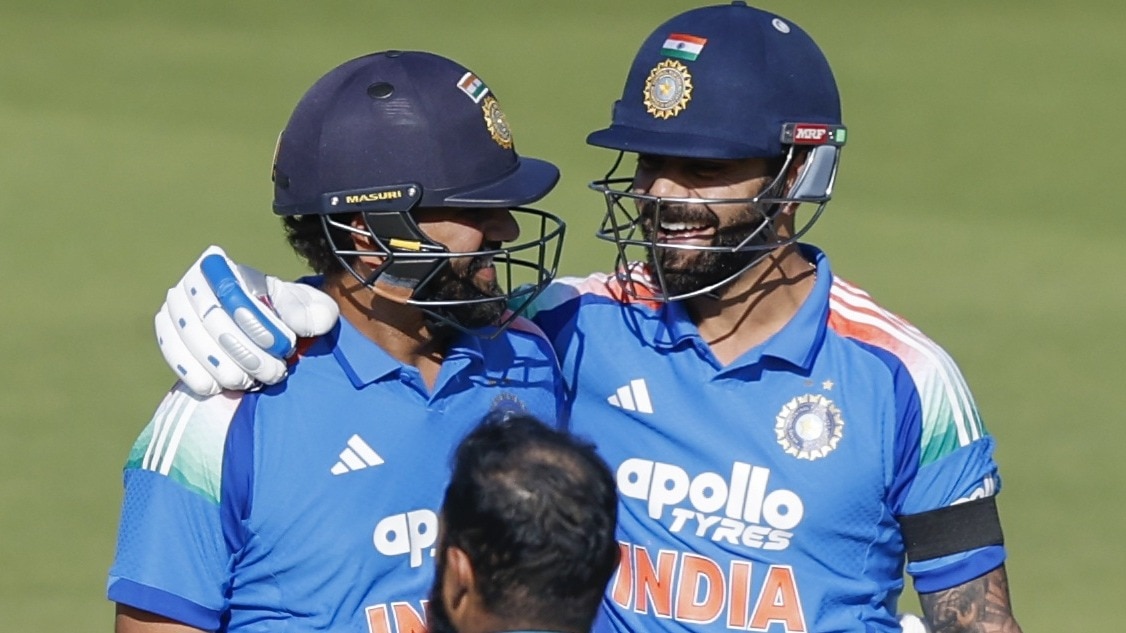
If this was the last time Rohit Sharma and Virat Kohli played together in England, Lord’s provided a suitable platform. Those who packed the ground for the series decider saw two of India’s finest ODI batsmen show that they are still in top form.
Rohit scored a brilliant 138 runsThis is his 34th ODI century, while Kohli’s innings of 74 runs is his 133rd score of fifty or more in this format. Between them, they pulled India back in a chase that seemed beyond reach. The only thing they could not deliver was victory.
He was from England. The hosts scored 387 runs for 3 wickets thanks to Ben Duckett’s career-best 141 runs and Jacob Bethel’s 91 runs, but Jos Buttler’s explosive inning of 41 not out in 13 balls took them to a challenging score. India responded by scoring 360 for 7 despite Rohit’s 138, Gill’s 77 and Kohli’s 74 as England won the series 2–1, their first ODI series win over India since 2018 and only their eighth win in 22 bilateral encounters.
With his back up and his illustrious career in the spotlight, Rohit put retirement rumors to rest in the only way possible, with one of his most memorable ODI centuries. This was an innings worth winning the match. Instead, it became the decisive performance in defeat.
Duckett, Bethel Lay Platform
This damage was done within the first two-thirds of England’s innings. Ben Duckett scored a brilliant 141 runs and, with the formidable Jacob Bethell, added 192 runs for the first wicket, taking England to 387 for 3. This was genocide of the most clinical kind. 58 runs came in the powerplay alone and between overs 11 and 30, the innings went away from India’s attack.
Duckett crossed the boundary with eighteen fours and a six, while Bethel performed fluently from the very first over, hitting eleven fours and a maximum and finally dismissed Prasidh Krishna. Bethel completed his half-century in just 51 balls and by the time England crossed 100 runs in the 16th over, India had badly lost their lines and hit fifteen boundaries.
There was no relief even after the stage makers left. Joe Root, in the form of his life, scored an unbeaten 74 off 48 balls, his third half-century in as many matches on this tour, taking the total past 350. Jos Buttler then scored an unbeaten 41 off just 13 balls, particularly hitting out at Gurnoor Brar, who took 0 for 97. Between them, England hit 42 fours and six sixes.
no boomerang, no magic
There was no answer to India’s bowling and that had a lot to do with who was not there. Jasprit Bumrah’s absence ruled out due to knee problemIt was a blow from which India never really recovered. Prasidh Krishna took 2 for 69 in his ten overs, Arshdeep Singh conceded 72 runs without reward, Prince Yadav took one wicket but conceded 79 runs, and Axar Patel, the only spinner in the XI, was out for 61 runs. There was barely fifty ODI matches of collective experience between the four seamers, and it showed against a fearless batting line-up that never allowed them to settle.
Young fast bowler Prince, who was still finding his feet on the Lord’s slope, was taken to deep midwicket for a six and then sent through the gap at mid-on inside his first spell. This set the tone. Arshdeep struggled for discipline with his lines, and even with Prasidh beating Bethel’s bat more than once, he mixed his good balls with too many loose ones. By the time the innings ended it was clear that this was one of those days when nothing went right for the bowlers.
Rohit stands tall
If the first innings had an unbalanced quality, there was real drama in the chase. Rohit and Gill gave India exactly the start they needed by making a partnership of 147 runs for the first wicket, giving England parity. Gill scored a fluent 77 before falling, but Rohit kept going until he scored a brilliant century, his first at Lord’s, putting to rest every question asked about his form on this tour. With speculation about the selectors’ long-term plans and the head coach ready to move on from him, the 39-year-old former skipper heads into the series decider under immense pressure.
Rohit descended upon the sacred ground of Lord’s with a dual goal: to win a series for India and protect a legacy that had come under increasing scrutiny. He did not raise his bat after completing his 34th ODI century, the first by an Indian batsman at Lord’s. Nor did he stand and applaud from the members’ balcony after an innings of 110 balls filled with heart, hurt and sweat.
For Rohit, there were 17 fours and five sixes, three of them off Josh Tongue, including one at pull, one straight down the ground and one over long-on. He also pulled Sam Curran into the stands, but the final decision rested with the left-arm fast bowler. Rohit and Kohli added 113 runs for the third wicket and for a long time it looked like India might do the impossible. Kohli played one of his most assured innings of the series, his 74 being his highest international score at Lord’s.
But cricket has a habit of taking turn on a single ball and this game turned to Jacob Bethel. Bethel worked the magic of its life after the 30th over, conceding just 49 runs in seven overs. Within that spell came the wicket that mattered most, Rohit on 138 runs. It broke a partnership that had threatened to take the game away from England and changed the complexion of the chase.
From there, Bethel and Sam Curran closed out the game. Mixing their pace wisely and refusing to give India any slack, the pair stopped the flow of runs when India desperately needed the pace. Curran ended India’s hopes by dismissing Ishan Kishan, Shreyas Iyer and Kohli in seven balls.
Even after the game was over, India refused to go quietly. Jofra Archer got the edge of Arshdeep Singh’s bat, but Jos Buttler could not hold on. Adil Rashid kept his composure in the final over, before Gurnoor Brar reduced the gap with a six and a four, although the result was long beyond doubt.
This became the first ODI in which all four opening batsmen scored 75 or more. Nevertheless, Duckett’s 141 made Rohit’s 138 the highest score of the day, which was perhaps fitting for a match in which England controlled from the first ball to the last, while India did not concede until the very end.
big picture
Apart from the scorecard, there was much more to the afternoon. If this turns out to be the last time we see Rohit Sharma and Virat Kohli bat together at Lord’s, in England or anywhere in the world, then it was a fitting platform on which to bow. Two veteran preachers persevered long after many had written them off, and pulled one effort back from the brink before failing miserably.
For India, the questions on this tour run deep, about the bowling attack’s over-dependence on one bowler, team balance and the way forward. But none of these questions have anything to do with the form of Rohit Sharma or Virat Kohli, both of whom leave English shores with their reputations, if anything, enhanced.
For England, under Harry Brook, the job is well and truly accomplished. A 4-0 T20I whitewash followed by a 2-1 ODI series win over the world No. 1 ranked team was sealed in front of a Lord’s crowd that came, saw and left convinced.
– ends