

Phone sirens startle millions as government launches real-time warning system india news
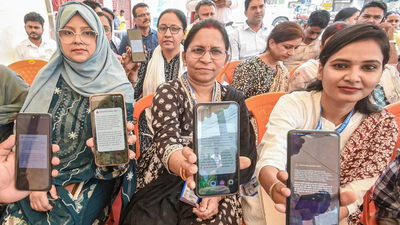
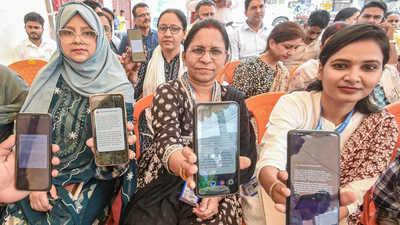
People show their mobile phones during the nationwide trial of the new ‘Cell Broadcast Alert System’ in Patna on Saturday.
The phones started shouting. The screens lit up. A passenger lunged for the emergency chain. The theater audience froze. Patients grabbed chairs. Tensions are already running high in West Asia, with many fearing the worst as confusion spread across cities – before being relieved within minutes.Millions of users across India received an “extremely severe warning” around 11.45am on Saturday, which was repeated a few minutes later – part of a nationwide trial of a new cell broadcast-based disaster alert system.The message was clear: no action required. The reaction was anything but. During a children’s play at Mumbai’s Prithvi Theatre, around 40 phones started ringing simultaneously, as startled families lined up for the performance. In a suburban train, a passenger tried to pull the emergency chain before others could intervene.
Phone sirens were annoying to some people and scary to others
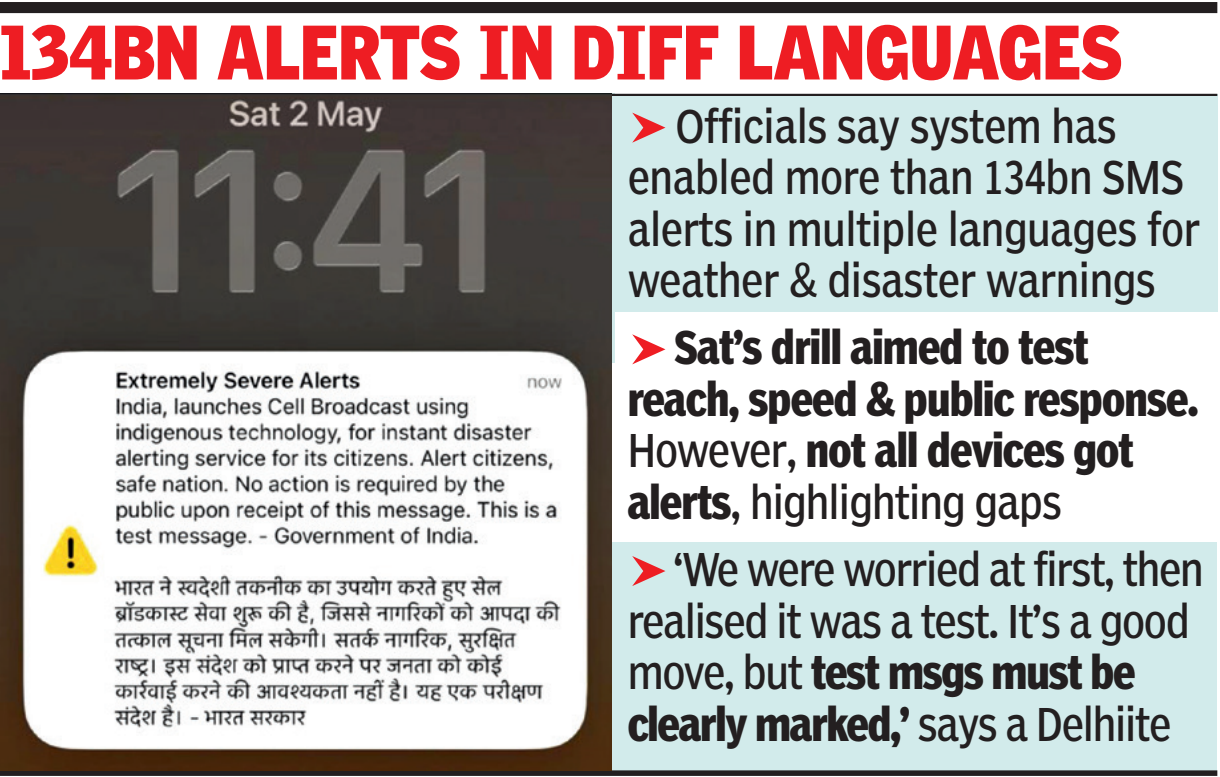
In hospitals and clinics, alarms interrupt consultations, causing patients to panic.“I immediately switched off my phone thinking it was a bug,” said a resident of Bandra. A visitor to Borivali remembered people shivering from the cold. “It was annoying to some people and scary to others.”Similar scenes were seen in all the states. Before reading further, many people in Bhubaneswar were afraid of hacking or cyber attack.One resident said, “I thought my phone had been attacked, then felt relieved.” In Bengaluru, users mistook it for a heatwave or earthquake warning before clarity emerged. In Lucknow, a pharmacist said that several instruments started ringing simultaneously, causing a brief panic.In New Delhi, Kanika Sharma, a 29-year-old private school teacher, said the sudden movement during lunch sparked fears of global tension before she realized it was a drill. “The tension in West Asia was the first thing that came to my mind… this system could be useful in an emergency,” he said. Others described confusion over repeated alerts. Abhishek Dogra, a 33-year-old IT professional from Jasola in southeast Delhi, said his entire family’s phones rang simultaneously. He said, “At first we were worried, then realized it was a test. It’s a good step, but test messages should be clearly marked.”Officials later confirmed that it was a planned test by the National Disaster Management Authority and the Department of Telecommunications, marking the rollout of a real-time public warning system.Unlike SMS, cell broadcast technology sends alerts simultaneously to all devices within a defined area, overriding silent and do not disturb settings.It does not require any internet, apps or subscription.Alerts appear as full-screen pop-ups with a loud siren, temporarily halting other phone functions.Built on an indigenous platform called SACHET and aligned with the global warning protocol, the system is already operational in all states and union territories. Officials said it has enabled more than 134 billion SMS alerts so far in multiple languages for weather and disaster warnings.Saturday’s drill was aimed at testing reach, speed and public reaction. To enhance understanding, messages were given in English and Hindi as well as regional languages. Not all devices received alerts highlighting the vulnerabilities. Some users reported that one phone was ringing while the other phone next to it was silent – a reminder of the ongoing calibration. Officials said the system will be used for industrial hazards like earthquake, cyclone, flood, lightning and gas leakage. Geo-targeting will allow alerts tailored to specific districts or neighborhoods.In Bihar, officials are planning follow-up preparedness exercises, including blackout and civil defense exercises, later this month to build public familiarity. “This created awareness among the people,” said a senior official.(Input from New Delhi, Bengaluru, Lucknow, Patna, Bhubaneswar, Hyderabad)