


A man has been arrested after a van injured a pedestrian during a protest over the removal of flags in Birmingham

London: A man has been arrested after a van injured a pedestrian during a protest over the removal of flags in Birmingham
A man has been arrested in London after a van hit a pedestrian following an incident involving the removal of flags from lampposts in Birmingham. The incident occurred on Thursday night, in which a 30-year-old man suffered a broken leg, which required surgery. Police later detained a 44-year-old man at Euston station near the area where the “Unite the Kingdom” marcher had gathered. Separately, another person was arrested for encouraging attacks on a police officer.The Guardian report cites statements from West Midlands Police about the collision, the arrest and the ongoing investigation.The investigation is based on information provided by detectives that the driver of the van hit the pedestrian and fled the scene. Later the police was successful in recovering the vehicle from the adjacent Prince Road.According to a police spokesperson, “A 44-year-old man has been arrested on suspicion of causing injury following a collision between a van and a pedestrian in Stitchley on Thursday night. Met Police officers arrested the man in London this morning.” [Sat]And at the appropriate time our officers will interrogate him.”“The pedestrian, a man aged in his 30s, suffered leg injuries in the collision on Mayfield Road and is in hospital,” it said.Detailing the incident, the report said, “The van failed to stop at the scene but was recovered on nearby Prince’s Road and is now being investigated. We are looking at CCTV and social media footage as we work to identify the full circumstances of what happened.”The 30-year-old man is still hospitalized as a result of the accident. Officers urged anyone with information to contact police on 101, quoting reference number 5802 of 14 May.

India, Netherlands form joint working group on clean energy

New Delhi: India and the Netherlands have formed a joint working group to accelerate New Delhi’s clean energy expansion through shared technology, expertise and finance, New and Renewable Energy Minister Pralhad Joshi said in a social media post.The minister said the joint working group will help create new opportunities for Indian industry, researchers and workers in green energy sectors.Several agreements were signed between the Indian delegation and the Netherlands during the visit of PM Narendra Modi to promote strategic relations and cooperation between the two countries.“India-Netherlands partnership gained new momentum during the visit of Prime Minister Narendra Modi to the Netherlands. Collaboration in renewable energy, green hydrogen and energy transition will strengthen clean energy innovation, boost investment, create new economic opportunities and aid India’s emergence as a global green hydrogen hub. These results further strengthen India’s commitment to sustainable development, energy security and a clean future,” Joshi posted on X.The minister said the India-Netherlands Roadmap on Green Hydrogen will expand export markets for India to Europe and attract investment and technology for electrolyzers, storage and port infrastructure. He said this would also create high-skilled jobs and strengthen India’s position as a global green hydrogen hub.Joshi said the arrangement between NITI Aayog and the Netherlands on energy sector and energy transition projects will promote collaborative projects and industry partnerships, enhance energy security through diverse, cleaner and more reliable energy sources and create economic opportunities through green jobs, innovation and investment.

Monsoon is 2 months away, lack of coordination, blockage of drains has increased the risk of floods.


Gurgaon: with monsoon With less than a month to go, residents of Sector 31 fear another season of severe waterlogging and floods due to the lack of a functional drainage system in the area. He alleged that the area remains unsafe during heavy rains due to poor coordination among multiple agencies, clogged drains and delay in implementation of sanctioned projects.Residents said the situation is particularly serious in low-lying areas and areas along the highway, where rainwater accumulates due to blocked natural slopes and inadequate storm water drainage connectivity.“Most parts of Sector 31 either lack proper drainage network or the existing drains are in poor condition. Many drains are filled with silt and debris, while some stretches have been encroached upon. “Proper desilting has not been done for almost five years,” said BS Yadav, RWA president of Sector 31.Residents alleged that despite repeated complaints, civic agencies have failed to execute sanctioned projects aimed at mitigating floods. Sudhir Yadav, a resident, said, “Every monsoon, the same roads and houses get submerged. Plans were earlier approved to increase green belt absorption areas to reduce rain water runoff, but the work was never executed.”Residents said damaged drains with broken lids and blocked channels at many places have made the situation worse. Residents said immediate desilting and repair works are needed to prevent flooding during the upcoming monsoon.Residents also blamed overlapping jurisdictions between civic bodies for the delay in resolution. “There are a lot of agencies involved – mcgGMDA, NHAI and HSVP – but no one takes ownership of the problem. Meetings were held earlier also and a tender for a sump and lifting system to divert excess rainwater was also approved, but the project never took off,” said Arvind Chadha, general secretary of the RWA.Meanwhile, MCG chief engineer Vijay Dhaka could not be reached for comment.

Colbert’s exit raises concerns about political satire in America

Stephen Colbert (file photo)
TOI correspondent from Washington: American late-night television, that unique, bizarre institution where presidents are mocked, celebrities are fawned over and audiences applaud on cue, is preparing for a funeral. After 33 years, CBS is shutting down The Late Show stephen colbertIts eponymous host took his final bow this week — marking the end of not just a show, but perhaps an era when comedians doubled as political opposition.CBS emphasizes that the decision is “purely financial”, which, as one article stated, may be true in the same way that there was a “water management issue” with the Titanic. According to the network, late-night television is losing money in the streaming age, with young viewers migrating to social media memes, clips and podcasts hosted by hosts broadcasting from basements and bunkers. Advertising revenues for late night TV have declined dramatically in recent years, even as production costs have increased.Yet some people in America believe that money is the reason for the demise of the top-rated late-night franchise. Suspicion deepened after Colbert blamed Paramount Global – CBS’s parent company – for settling a lawsuit brought by President Trump, and called the payment a “big fat bribe.” A few days later, CBS announced the show’s cancellation as Paramount sought regulatory approval for its merger with Skydance Media, as the late-night show had become politically and commercially radioactive.At MAGA USA, comedians are now treated less like clowns and more like hostile political actors. Trump has long viewed late-night hosts as enemies, regularly attacking Colbert, Jimmy Kimmel and Seth Meyers on social media. The trio, along with Jon Stewart and John Oliver, have leaned into political satire since the rise of Trump, turning the monologue into a nightly prosecution summary. Critics called it liberal quacking, but for fans it was therapy.As the end of the week approached, late at night the fraternity closed ranks with surprising tenderness. Kimmel and Fallon reportedly opted for a rerun rather than compete with Colbert’s farewell episode, and they, along with Meyers and Oliver, appeared in a symbolic on-air group hug. He joked that Jon Stewart, who was not with him, was a “designated survivor”. Even David Letterman, the patron saint of sardonic late-night television and Colbert’s predecessor, recently joined him in throwing CBS office furniture off the roof in a mock revolt. Apparently American television executives can cancel the show – but not their beloved drama.Colbert himself alternated between gallows humor and visible bitterness, saying with some disbelief that his staff would be effectively laid off immediately after the final show. And what’s next for the 62-year-old host? Amid reports that he will co-write a Lord of the Rings film with his son Peter, he is also expected to shift towards streaming and podcasting.Interestingly, India has often featured in Colbert’s comic universe. During Trump-era outsourcing concerns, he once joked that American jobs were being sent to “a call center in Bangalore, which has better customer service even for scam calls.” He often chided Indian-Americans for their academic knowledge, joking that spelling-bee champions “sound less like kids and more like junior tax consultants.” When PM Modi visited the US, he quipped that Trump and their bonding at big rallies was the geopolitical version of two DJs comparing crowd sizes.“But the broader resonance may lie elsewhere, including India. As political polarization deepens globally, comedians on both sides of the globe are learning that satire now comes with legal notices, troll armies, and ideological surveillance. Indian stand-up comics know this pressure intimately from police complaints, canceled venues and legal cases. America’s late-night readers are now discovering only what they have long understood: Power laughs loudest at jokes aimed not upward, but downwards. Late night television once promised Americans catharsis before bed. After this it will be morning soon.
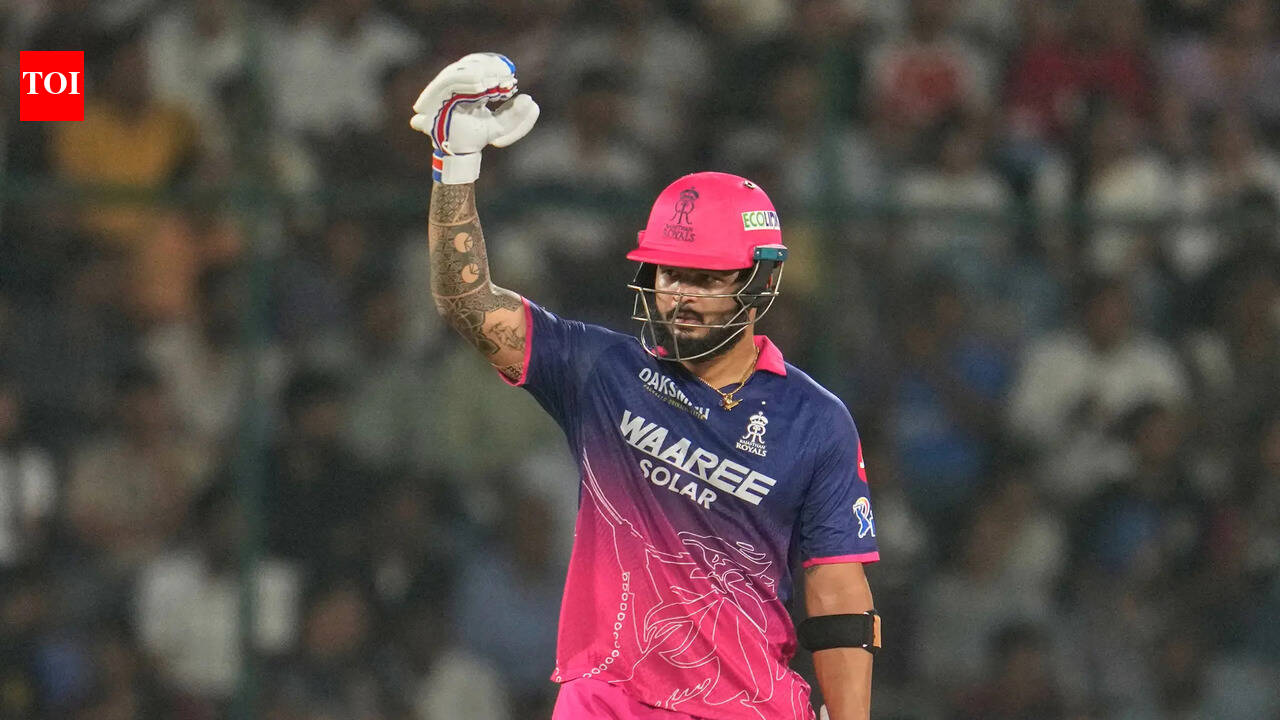
‘We shouldn’t be in the top 4’- Riyan Parag’s brutal RR reality check after DC defeat

Rajasthan Royals captain Riyan Parag (AP Photo)
Riyan Parag after this there was no turning back Rajasthan RoyalsA five-wicket defeat against Delhi Capitals in a crucial IPL 2026 encounter at the Arun Jaitley Stadium, openly admitting that his team let the game slip away from a winnable position. RR were firmly in control at 160 for 2 in 14 overs, and looked set for a score of 220-230, but a dramatic collapse began Mitchell StarcWith the help of four wickets, their score became 193 runs for 8 wickets. After this, Delhi Capitals achieved the target in just 19.2 overs. Parag, who led the way and scored 51 runs, described the middle and death overs as the turning point. “Actually, almost everything. We were in a pretty good position after 14 overs. After I got out, we just couldn’t take advantage of it. It had to be 220-230, something like that,” he said. He also defended his tactical call of bringing Donovan Ferreira into the attack during the middle overs, a move that did not yield results. “Ferreira was not a gamble. I know it looks like a gamble on TV, but then you have two left-handers. I would rather bowl Donovan than have Shanaka bowl another over, take a chance. It didn’t really work out.” Parag was equally critical of RR’s overall performance, especially in the field. “Too bad. I think if you want to win trophies, if you want to be competitive every year, you have to be better than what we did today. Extremely disappointed.” He also pointed to a worrying drop in standards compared to recent games. “I think we are a much better team than what we have played or shown in the last 4-5 games. But today… energy-wise, skill-wise, execution-wise, it was definitely not up to the mark. And if we keep playing like this, we should not be in the race for the top 4.” With RR still in the race for the playoffs but under pressure, Parag made it clear that there can be no reliance on other results. “I don’t like leading like this… We had the opportunity, we didn’t take it. So if we don’t deserve, it’s our fault. Not anyone else’s.” First, KL Rahul (56), Abhishek Porel (51), Akshar Patel (34*) and Ashutosh Sharma gave DC the win after Starc’s match-turning magic broke RR’s strong start.

Approval for installation of 13L rooftop solar system under ULA model for 10 States/UTs

New Delhi: To accelerate the adoption of renewable energy among low-income and vulnerable households, the government has approved the installation of more than 13 lakh rooftop solar systems under the utility-based aggregation (ULA) model in 10 states/union territories (UTs).The effort is part of the Centre’s broader focus on expanding solar power capacity as a clean and green alternative to fossil fuel-based power generation.Andhra Pradesh, Odisha, Telangana and Union Territories of Dadra and Nagar Haveli and Daman and Diu have already started installation, while Bihar, Kerala, Jammu and Kashmir, Tripura, Rajasthan, Chhattisgarh, Karnataka, Maharashtra and Delhi have sent proposals to the Centre, officials said.The Ministry of New and Renewable Energy (MNRE) has set a target of installing one crore rooftop solar systems across the country by March 2027 under the PM Surya Ghar Muft Bijli Yojana, of which 30 lakh will be installed under the ULA model.Under the PM Surya Ghar Yojana, more than 60% of rooftop installations are in the 3-4 kW category, highlighting the low participation of poor households with low power demand. The ULA model seeks to bridge this gap through utility-based deployment, efficient scale-up and financing support, officials said.Under the PM Surya Ghar Free Electricity Scheme, more than 31 lakh rooftop solar systems with a total capacity of 11.4 GW have been installed so far.
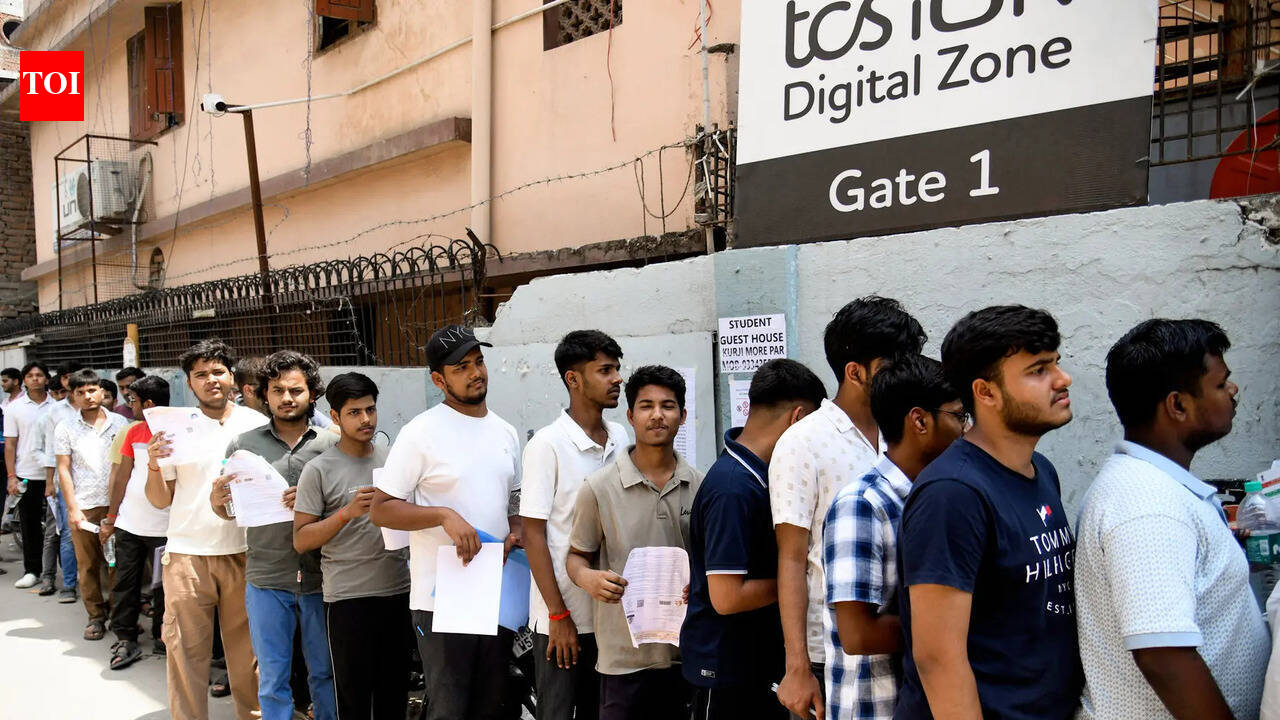
Maths difficult, Physics long in JEE Advanced: Students
Patna: More than 14,000 students appeared for JEE Advanced 2026 across Bihar on Sunday, of which around 9,000 candidates took the exam at around 18 centers in Patna.The exam was conducted in two shifts – Paper 1 from 9 am to 12 noon and Paper 2 from 2.30 pm to 5.30 pm. Students emerging from centers across Patliputra found the paper a bit tough, with Mathematics in Paper 1 and Physics in Paper 2 emerging as the toughest sections.According to the candidates, more importance was given to coordinate geometry and vectors in mathematics, while questions from integration were less than expected. Physics in Paper 2 was described as long and calculation-heavy.“Topics like ray optics and rotation dominated the paper. On the other hand, Chemistry was relatively easy compared to other subjects. Overall the paper was difficult. Now, it all depends on how many questions I solve correctly. For this, I will match it with the answer key,” said Shashank Srivastava, a student.Students said Paper 1 consisted of four categories of questions – single correct question (SCQ), multiple correct question (MCQ), matrix matching and integer-based questions.Abhyanand, an academic and former Bihar DGP (retired IPS), said the negative marking pattern has been comparatively relaxed this year. “It was not as rigorous as it used to be in previous years. However, the Physics questions were a little tougher than before. Mathematics was challenging but possible with good practice. For Chemistry, the questions were a little better than the standard level – we can call it moderate,” he said.Physics expert Anand Kumar Jha said that Physics in Paper 2 and Mathematics in Paper 1 will probably decide the rank. “This year’s JEE Advanced was a little easier compared to last year’s paper, so a slight increase in the cutoff is expected,” he said.This exam, conducted by IIT Roorkee this year, is the gateway for admission to other premier institutes including IIT and IISc Bengaluru.

Police launch investigation after deadly robbery attack in east Belfast, UK

Police launch investigation after deadly robbery attack in east Belfast, UK
A murder investigation has been launched after a man died in an attack by robbers at an apartment building in east Belfast. Nicholas, also known as Nicky Gordon, died after suffering serious injuries as a result of an attack by intruders inside the apartment building early Tuesday morning. Gordon was taken to hospital, where he died. The police service was notified of the incident at 08:25 BST on Tuesday, while the actual incident occurred at around 04:45 am, as reported by the BBC. Speaking to the press, Detective Chief Inspector Duffy said that “a number of intruders” entered the apartment building and “attacked another male before leaving”. Ambulance personnel reached the spot after some time.The two suspects were charged with aggravated burglary with intent to cause grievous bodily harm. The two suspects include a 24-year-old man and a 49-year-old woman. When the police investigated the case, the police granted him bail. The PSNI said officers “will continue to work aggressively to locate other people involved”.Several local political officials indicated that the local community had become concerned after news of violent crime. One such official, Democratic Unionist Party MLA David Brooks, said such cases cause fear and anxiety for many residents of the local community. He said: “It’s not something you expect to happen in your local community, but given the nature of these burglaries, people are also concerned about their homes and safety.“Another Alliance Party MLA, Peter McReynolds, said the local community was shocked and distressed by the case, as such a crime is rare in that particular community.
Punjab strengthens fight against ‘silent killer’ hypertension through prevention, early detection and cashless treatment
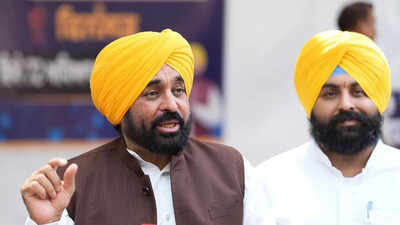
As the world celebrates World Hypertension Day, Punjab Government’s Mukhyamantri Sehat Yojana (MMSY) is emerging as an important safety net for patients suffering from hypertension and related diseases by ensuring affordable and timely health care.High blood pressure, often called the “silent killer” by doctors, gives little warning before it triggers stroke, heart failure or kidney disease. This condition is now common in all age groups.With hypertension rising as a major health concern in Punjab, the state government is focusing on prevention, early detection and treatment. While CM Di Yogshala promotes healthy living, Aam Aadmi Clinic ensures prompt diagnosis – over 1 crore people have been screened and 24 lakh have been treated – and MMSY provides cashless care, helping prevent serious complications.According to the World Health Organization (WHO), the burden of hypertension is increasing rapidly in India due to poor eating habits, stress, tobacco use, lack of physical activity and irregular daily routine. Doctors warn that many patients remain unaware of their condition until serious complications develop. Amid this crisis, Punjab’s Mukhyamantri Sehat Yojana has become a vital safety net, helping thousands of people receive treatment without the burden of unaffordable medical bills.Health Minister Dr Balbir Singh said that regular check-ups are being done at all health facilities including 990 Aam Aadmi Clinics, where people aged 30 years and above are being screened for high blood pressure and linked to timely treatment. He said more than 1 crore people aged 30 and above have been screened and 24 lakh have been enrolled for treatment. “Monthly follow-ups, free medicines and timely referrals ensure continuous care with strong rural-urban primary health care coverage,” he said.A landmark initiative of the Punjab Government aimed at making yoga accessible to every section of the society, CM The Yogashala has conducted over 10,600 yoga classes with approximately 3 lakh participants. The initiative promotes yoga, stress management and healthy lifestyle to help control high blood pressure and other lifestyle diseases.Hospital admissions related to stroke, heart emergencies and kidney diseases caused by uncontrolled blood pressure are covered under the MMSY scheme, providing financial relief to families already struggling with emotional distress.Most of the hypertensive patients in Punjab belong to the middle-aged and elderly population, with the highest burden seen in people aged 40 to 80 years. Data from the State Health Agency (SHA) shows that Gurdaspur recorded patients up to 94 years of age, while SAS Nagar recorded cases up to 98 years of age, underscoring the deep reach of the disease among senior citizens.The highest and widespread cases in both genders were reported in districts like Patiala, SAS Nagar, Hoshiarpur, Jalandhar and Faridkot. In Amritsar and Ludhiana, hospital records show a particularly high concentration among women aged 50 to 77 years.Dr Saurabh Sharma, associate professor and head of the department of cardiology at Government Medical College and Rajindra Hospital, Patiala, says hypertension is no longer just an old person’s disease.“Modern lifestyle brings a different set of health challenges for all age groups. While most cases of hypertension are seen in people aged 40 to 90 years and above, we are also seeing cases in teenagers and people in their twenties and thirties,” he says.Dr. Sharma says that lifestyle factors like stress, poor diet, lack of exercise and irregular routine play a major role. He warned that complications are emerging earlier than before. “What we’re seeing now is not just high blood pressure, but its complications coming from earlier — stroke, heart failure and kidney disease.”On schemes like Mukhyamantri Sehat Yojana, Dr Sharma says they are important as they ensure that patients do not delay treatment due to financial fear. “In a hypertensive emergency, delay is often the difference between recovery and tragedy.”Health officials say the importance of the scheme lies not only in treatment but also in timely intervention. In earlier years, many families used to delay hospitalization due to financial fear. Such delays often prove dangerous, sometimes even fatal. Under the Sehat Yojana, patients are increasingly seeking medical attention earlier, thereby increasing their chances of recovery.For middle-class families, pensioners and government employees, the scheme has become a buffer against catastrophic health care expenditure.
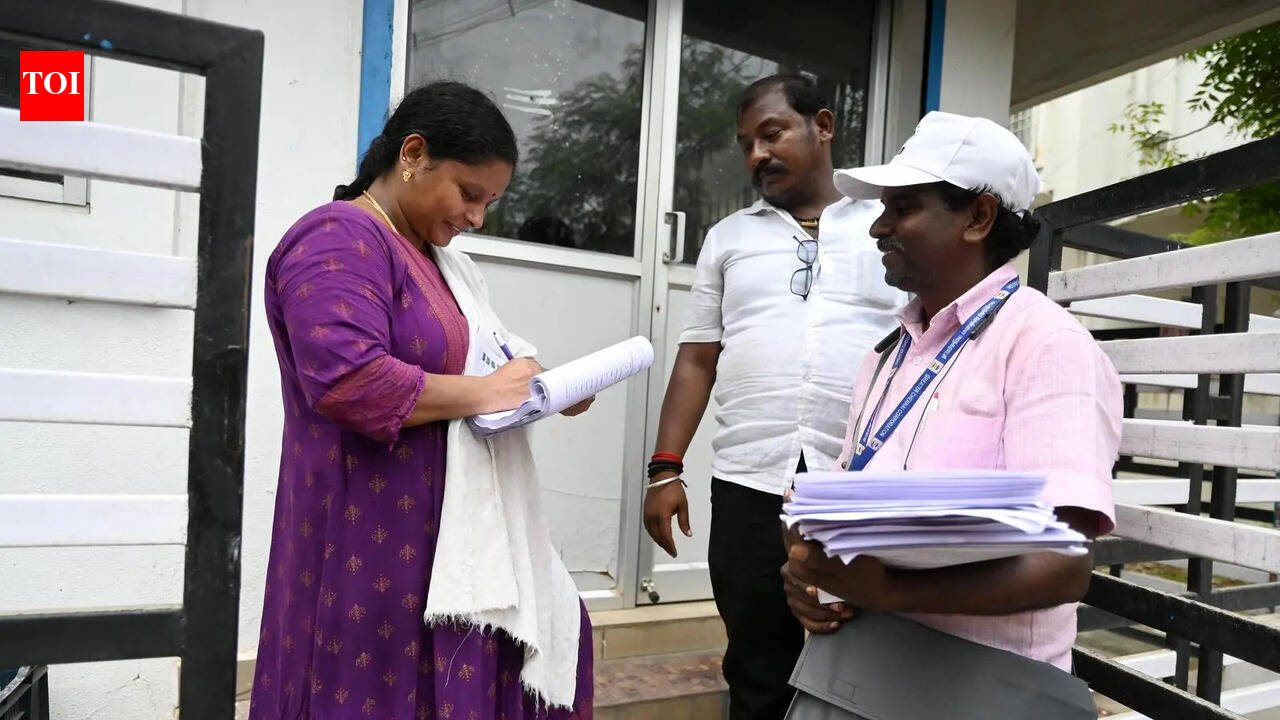
Expressed concern over the functioning of BLO
Hyderabad: Political parties have alleged that booth level officers (BLOs) are not conducting door-to-door verification in some parts of Hyderabad ahead of the Pre-Special Intensive Revision (Pre-SIR) exercise, raising concerns regarding voter mapping and roll verification.Majlis Bachao Tehreek (MBT) spokesperson Amjad Ullah Khan said in a complaint Chief Electoral Officer of TelanganaAlleged irregularities in the functioning of BLOs in Yakutpura, Chandrayangutta, Malakpet, Charminar, Bahadurpura and Caravan assembly constituencies under Hyderabad Parliamentary constituency.‘BLOs are working from party offices’Khan alleged that instead of visiting voters’ homes for verification, some BLOs were working from local party offices or residences of political leaders, forcing voters to visit these places for verification. The complaint also alleged that official BLO phone numbers were being answered by local political workers or leaders instead of the officials concerned.According to the complaint, these practices have created fears among voters that the verification process could be compromised and voter rolls could be manipulated, including the possible deletion of voters believed to be affiliated with rival political parties.Data privacy concerns flaggedMBT also alleged that BLO login IDs and passwords were shared with unauthorized persons, enabling them to download and operate the BLO app and access confidential voter data. Khan said this has raised serious concerns over voter data privacy, including sensitive information related to Muslim women voters.He requested the CEO to order an immediate inquiry into the functioning of BLOs in the affected constituencies, ensure strict door-to-door verification, investigate the alleged misuse of login credentials, put in place security measures for voter information and initiate disciplinary action against officials violating election norms.