Messi scolds fanatical fans after players protest claiming ‘lack of respect’

Video: Messi scolds fanatic fans after players protest claiming 'lack of respect'
Messi showed clear frustration at Inter Miami’s die-hard supporters as he staged a silent protest over claims the players showed a lack of respect for him and failed to acknowledge him/AP Image, X

Lionel Messi Inter found themselves at the center of an unexpected flashpoint during Miami CF’s 2-0 win over the Portland Timbers, where a rare and deliberate silence from the stands created a tense backdrop that persisted long after the final whistle.That night was considered a turning point, with Inter Miami finally achieving their first home win at the newly opened Nu Stadium after three draws and one loss, yet the atmosphere could never match the occasion as the disappointment of the club’s most committed supporters reshaped the entire experience inside the arena.

The silence that says more than the noise

For almost the entire match, La Familia, Inter Miami’s most vocal group of supporters, decided to forgo the same energy that usually defines their presence, arriving without drums, flags or coordinated chants and instead allowing the stadium to sit in an unfamiliar silence.That absence was not random or passive, but a coordinated protest rooted in growing frustration among supporters who feel the players have failed to properly acknowledge them since moving to the new stadium at the start of this season.Members of the group pointed to a pattern repeated in the first four home matches, where players would leave the pitch and walk straight towards the tunnel, without approaching the stands, despite the visible effort made by supporters in creating the atmosphere throughout the match day.“We sing our hearts out for over 90 minutes,” said Jesse Aviles of Southern Legion. Miami Herald, Explaining that fans arrive as early as 11 a.m. to set up a tailgate and organize a demonstration, but are ignored the entire time, he candidly stated that home defender, Noah Allen, was the only player to acknowledge him so far.

When the silence finally broke

The tension that had built throughout the match came to a head late, when La Familia broke their silence in the 85th minute and began chanting again, bringing life back into a stadium that had felt unusually quiet for most of the night.Amidst those chants, one message stood out clearly and directly, delivered in Spanish and aimed directly at the players as a demand rather than an encouragement: “Players, salute your fans, accept your people, who ask for nothing more from you!”Standing near midfield with his hands on his hips, Messi looked and listened before responding with a visual signal towards the stands, including wagging a finger that signaled disapproval at the protest rather than agreement with its message.

A victory that felt secondary to everything else around it

Inter Miami still got the result they needed, with Messi opening the scoring in the 31st minute after a clever attacking move that began with a backheel from Telasco Segovia and also involved Luis Suárez.The second goal came in the 42nd minute when German Bertram finished off a chance created by Messi, who passed through tight spaces with close control before passing his teammate to double the lead.

mls portland inter miami soccer

Inter Miami forward German Bertram runs to hug midfielder Leo Messi (10) after scoring against the Portland Timbers during the first half of an MLS soccer match on Sunday, May 17, 2026 in Miami. (AP Photo/Rebecca Blackwell)

That performance moved Inter Miami into second place in the Eastern Conference standings with 28 points from eight wins, two losses and four draws, leaving them just two points behind leaders Nashville after consecutive wins against Toronto and Cincinnati and already off the pace.Despite those positives, the match never fully took center stage, with the atmosphere inside the stadium being influenced more by what was happening in the stands than what was happening on the field.

Players respond, but not in unison

After the final whistle, a clear divide emerged in how the players chose to respond to the supporters, with a group consisting largely of youth and new squad members heading straight to the North Stand to applaud La Familia.Others including Messi, Rodrigo De Paul and Suárez took to various parts of the stadium before heading towards the tunnel, a decision that drew whistles from sections of the protesting supporters.Bertram acknowledged that the protests had taken the team by surprise, but also acknowledged that the supporters’ disappointment was not entirely misplaced, saying: “Obviously, it was surprising, but at the same time, they have a point because they deserve that we recognize them. The important thing is that we stay united.”Right-back Facundo Mura adopted a more measured tone, emphasizing unity within the club and appreciation of the fans, while avoiding direct criticism of either side, saying everyone involved needed to stick together moving forward.

mls portland inter miami soccer

Inter Miami midfielder Leo Messi (10) celebrates with teammates after scoring against the Portland Timbers during the first half of an MLS soccer match in Miami on Sunday, May 17, 2026. (AP Photo/Rebecca Blackwell)

Interim coach Guillermo Hoyos decided not to delve into the controversy in detail, instead keeping his focus on the broader picture of the club and the result achieved on the night.“Inter Miami is a big club because of the players who have been champions and won many things,” Hoyos said. “People expressed their opinion, but I have no opinion on it.”

hard work, fatigue and an unresolved tension

However, Hoyos underlined the physical demands placed on the team during heavy matches, noting the toll of travel and the effort required to achieve victory in difficult conditions.“The players made a huge sacrifice because they were tired from a very difficult week with travel,” he said, describing the result as a product of flexibility rather than routine execution.The match also had an added layer of context, with the Portland Timbers being managed by former Inter Miami coach Phil Neville, who was fired shortly before Messi’s arrival in 2023, although that subplot remained secondary to the immediate tensions inside the stadium.Despite the three points secured, the climb up the table seemingly assured and Messi once again proving decisive in front of goal, the night ended with the feeling that something had changed between the team and its most passionate supporters, and has yet to be resolved.

Source link

A scorching 26°C on the way, hotter than Athens and Barcelona

UK weather forecast: Scorching 26°C on the way, hotter than Athens and Barcelona

Temperatures will rise dramatically in the UK at the end of the week, with forecasters predicting a high of 26⁰C in the South East on Friday. Britain experienced a cold snap in early May, with northerly winds bringing arctic air into the country, but the Met Office is now predicting steady sunshine and warm weather across England and Wales until the weekend. The forecast made by the Met Office, alongside the Weather Comparison report at the BBC, highlights that the UK can expect warm temperatures as well as steady sunshine for the bank holiday weekend.Cold weather was felt in Britain for most of May. Daytime temperatures were mostly around 9°C to 14°C, while seasonal temperatures at this stage of spring should be 17°C to 18°C. Northerly winds brought cold Arctic air, causing temperatures to drop a few degrees below the seasonal average.Unstable conditions are expected to persist in the initial part of the week. There will be isolated showers, some sunny spells and possibly thunderstorms on Monday and strong winds on Tuesday. Weather systems moving east are expected to affect weather patterns by mid-week.Met Office forecaster Craig Snell said, “The first half of this week will still be variable, if not unsettled, across parts of the UK. Temperatures at the start of the week are still slightly below normal for this time of year; we are expecting to see a change as we head towards the weekend.”Weather conditions will begin to improve on Thursday when high pressure begins to develop over England and Wales. Sunny and more stable weather is expected, with warm temperatures gradually increasing and reaching a maximum of 26°C in the south east by Friday. The maximum temperature in Athens is expected to reach 25 degrees Celsius, while in Barcelona it could reach 21 degrees Celsius.The heat is expected to persist through the bank holiday weekend. Forecasters have predicted that England and Wales will have the sunniest hours while many areas are expected to have above normal temperatures for the year.Snell said, “The best sunshine over the bank holiday weekend will probably be in England and Wales. Temperatures are still above normal, potentially very warm again, but it is a little way off in the future to get maximum temperatures.”He said recent forecasts show a more favorable picture for the holiday weekend after several cold and wet days earlier this month. “There are signs at the moment that the bank holidays are looking much better than last week.”

Source link

CM Vijay expresses solidarity with global Tamil diaspora on Mullivaikkal Remembrance Day

CM Vijay expresses solidarity with global Tamil diaspora on Mullivaikkal Remembrance Day

Chennai: Chief Minister of Tamil Nadu C Joseph Vijay expressed solidarity with the global Tamil diaspora on the occasion of Mullivaikkal Remembrance Day on Monday and pledged his administration’s continued support for their rights.In a social media post on ‘X’, the Tamilaga Vetri Kazhagam (TVK) chief wrote: “Let us keep the memories of Mullivaikkal in our hearts. We will always stand for the rights of our Tamil relatives living across the ocean.”18 May is celebrated every year as Mullivaikkal Remembrance Day by Sri Lankan Tamils ​​across the world. On 18 May 2009, the bloody conclusion of the nearly three decade long Sri Lankan civil war took place in Mullivaikkal, a small coastal village in Mullaitivu district, following the death of LTTE leader Velupillai Prabhakaran.According to United Nations estimates, 40,000 to 70,000 Tamil civilians lost their lives in the final stages, making Mullivaikkal a universal symbol of wartime atrocities and civilian suffering.

Source link

ED writes to Tamil Nadu government seeking approval to prosecute Senthil Balaji

ED writes to Tamil Nadu government seeking approval to prosecute Senthil Balaji

Chennai: After seven months the then DMK government refused to grant prosecution sanction Enforcement Directorate (ED) In ​​the cash-for-jobs scam case against its minister V Senthil Balaji and others, the federal agency has again written to Chief Secretary M Sai Kumar seeking state approval to prosecute the former minister.The three-page letter dated May 15 said his previous prosecution sanction request, addressed to the then Governor on May 14, 2025, was returned on February 23 this year, as per the instructions of the state government. The then Chief Secretary informed the Governor in October 2025 that the state government was the competent authority to grant sanction to prosecute a public servant and the ED should have written directly to the Chief Secretary instead of approaching the Governor.Now, the ED has enclosed all the relevant evidence in the latest letter along with a confidential note on the investigation and a copy of the prosecution complaint in a pen drive. The communication has been duly received and acknowledged by the Office of the Chief Secretary.The alleged cash for jobs case in the transport department took place between 2011 and 2016 when Senthil Balaji was the transport minister. The ED registered a case against Senthil Balaji, his brother RV Ashok Kumar, personal assistants B Shanmugam and M Karthikeyan on money laundering charges and accused them of accepting illegal bribes from candidates seeking employment in the transport department. In this case, Senthil Balaji was arrested by ED in June 2023.While Senthil Balaji was released on bail by the Supreme Court in September 2024, the ED had filed a prosecution complaint against him before the special court for PMLA cases in the city. However, the trial in the case is yet to begin, pending clearance from the state government as he was a minister at the time of the crime.

Source link

How close have the US and China come to conflict before?

Taiwan & Thucydides Trap: How close have the US and China come to conflict before?

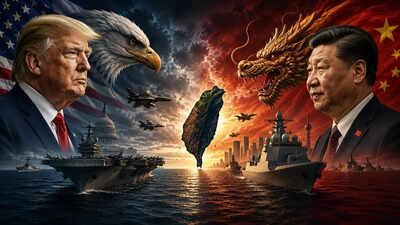
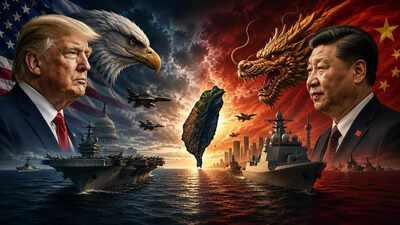
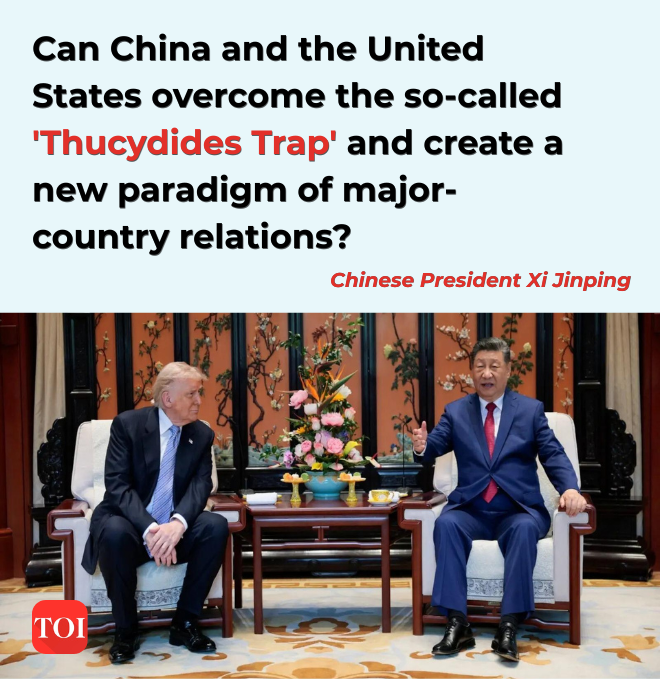
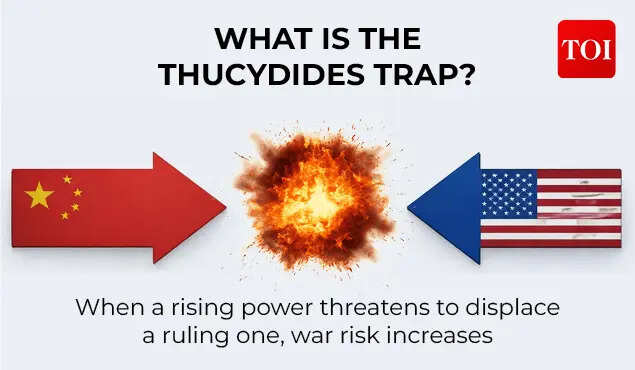
For decades, Taiwan has been one of the world’s most dangerous fault lines, a small island sitting at the centre of a growing rivalry between the world’s rising superpower and its reigning one.Now, tension has returned sharply to the global spotlight after Chinese President Xi Jinping appeared to invoke the idea of the “Thucydides Trap” during his recent summit with US President Donald Trump in Beijing.At their meeting, Jinping directly cautioned Trump that mishandling Taiwan could trigger “clashes and even conflicts”.Xi also raised the broader question of whether both powers could “transcend the Thucydides Trap” and build a more stable global order.The phrase refers to the theory that when a rising power threatens to displace an established one, war becomes more likely than peace.

Thucydides trap

The term was popularised by American political scientist Graham Allison, drawing from the ancient Peloponnesian War. The Greek historian Thucydides famously wrote, “It was the rise of Athens and the fear that this instilled in Sparta that made war inevitable.”Today, many see a modern parallel. China as the rising power, the United States as the existing superpower and Taiwan as the flashpoint where the rivalry could turn dangerous.Xi made it clear during the summit that “the Taiwan question is the most important issue in China–US relations,” warning that if handled poorly, it could jeopardise the entire relationship.Trump, meanwhile, struck a softer tone publicly, calling Xi a “great leader” and emphasising friendship, though the two sides remained far apart on Taiwan, trade, and regional security.But the fear surrounding Taiwan is not new. In fact, the US and China have repeatedly come dangerously close to confrontation over the island for more than 70 years.

What is the Thucydides trap?

Why Taiwan matters so much

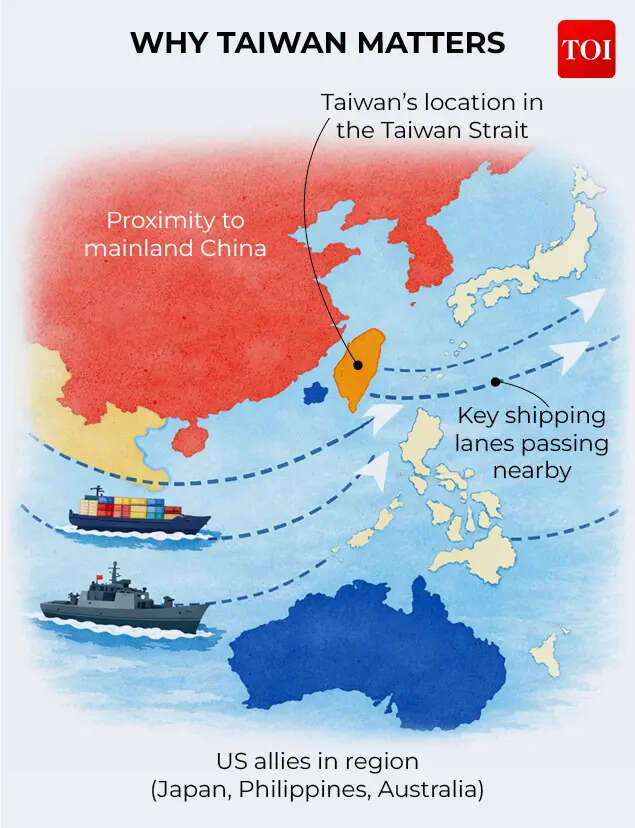
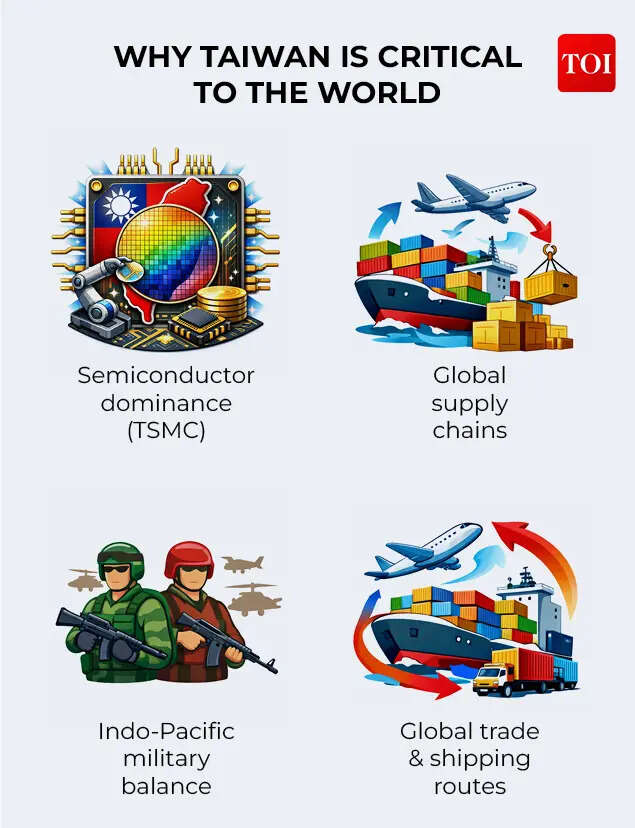
To understand why Taiwan has become central to US-China tensions, one must first understand what the island represents to both sides.China views Taiwan as a breakaway province that must eventually reunify with the mainland, by force if necessary. Beijing considers the issue a matter of sovereignty, territorial integrity, and national prestige.The United States officially follows the “One China Policy,” meaning it formally recognises Beijing rather than Taipei diplomatically. However, Washington also maintains deep unofficial ties with Taiwan and supplies it with weapons under the Taiwan Relations Act.Over time, Taiwan has become far more than a territorial dispute.The island now sits at the centre of global semiconductor production, critical shipping routes, Indo-Pacific military strategy and the broader US-China power struggle.Taiwan Semiconductor Manufacturing Company alone produces the world’s most advanced semiconductor chips, which power everything from smartphones and artificial intelligence systems to fighter jets and data centres.

Why Taiwan matters

Experts also argue that Taiwan is far from vulnerable in any potential conflict scenario.“Taiwan is no pushover when you compare Taiwan and Ukraine”, said Prof Srikanth Kondapalli, Chinese Studies expert, JNU, as quoted by news agency ANI.A conflict over Taiwan would therefore not remain regional for long. It could disrupt global trade, technology supply chains, shipping routes, financial markets, and the world economy within days.

The origin: From civil war to a divided China (1949 onwards)

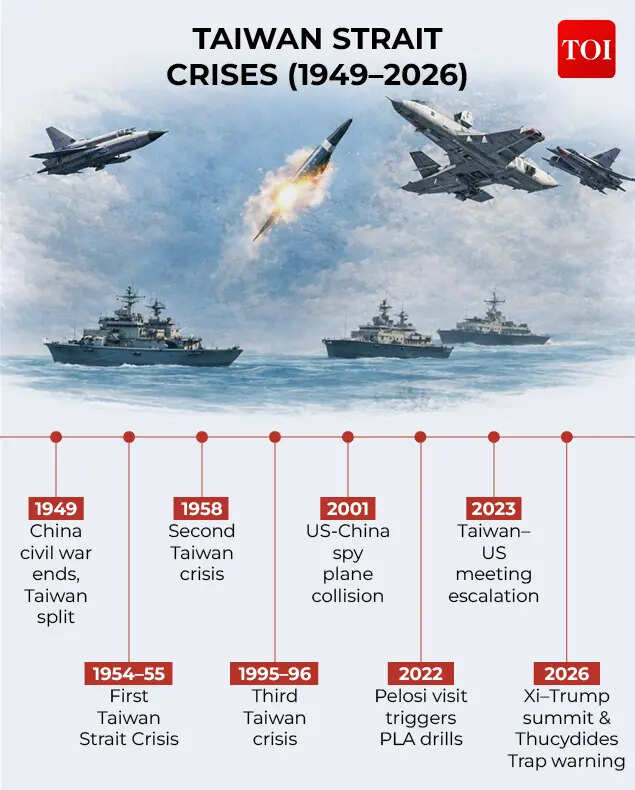
Following the Chinese Civil War, the defeated Nationalist government of Chiang Kai-shek retreated to Taiwan in 1949, establishing the Republic of China (ROC), while the Communist Party formed the People’s Republic of China (PRC) on the mainland.The Taiwan Strait, separating mainland China from Taiwan and nearby islands, quickly became a militarised frontier, with both sides viewing offshore islands as strategically vital for possible future offensives.According to the US state department, early US policy initially signalled limited willingness to intervene. But this changed dramatically after the Korean War began in 1950, when the US Navy deployed the Seventh Fleet into the Taiwan Strait to prevent escalation and contain Communist expansion.This marked the beginning of sustained US involvement in the Taiwan question.

The first Taiwan Strait crisis: 1954–55

The first major military crisis over Taiwan erupted just a few years after the Chinese Civil War.After Mao Zedong’s Communist Party took control of mainland China in 1949, the defeated Nationalist government led by Chiang Kai-shek fled to Taiwan and continued calling itself the legitimate government of China.Beijing saw this as unfinished civil war business.A few years later, the first major crisis erupted in 1954 when the PRC began shelling ROC-controlled islands such as Jinmen (Quemoy), Mazu (Matsu), and the Dachen Islands, all located close to the Chinese mainland but held by Taiwan.As documented by the US state department, these islands were not just symbolic but were strategically located just miles from key Chinese coastal cities like Xiamen and Fuzhou, making them military launch points in the eyes of both sides.The crisis escalated because the PRC saw ROC-controlled islands as threats to mainland security. Also, the US increasingly aligned with Taiwan under the Cold War containment policy and Washington feared the collapse of Taiwan’s defence morale.In response, the US and Taiwan signed the Sino-American Mutual Defense Treaty (1954), formally committing Washington to Taiwan’s defence.In 1955, the US Congress passed the Formosa Resolution, giving President Dwight Eisenhower authority to defend Taiwan and nearby islands “as he deems necessary”.The crisis nearly escalated further, with US policymakers even considering extreme military options like using nuclear weapons, before China eventually signalled willingness to negotiate.Talks began in Geneva in 1955, temporarily easing tensions.

US-China tensions

The second Taiwan Strait crisis: 1958

Just three years later, tensions exploded again.In 1958, the PRC resumed heavy artillery bombardment of Jinmen and Mazu, taking advantage of global distractions such as US military involvement in Lebanon, according to Britannica.China also attempted to block resupply of ROC garrisons on offshore islands, escalating fears of a broader conflict.The US responded by resupplying Taiwan’s forces on the islands, maintaining naval deterrence in the region and reinforcing its commitment to Taiwan’s defence.At several moments during the crisis, fears emerged that fighting could spiral into a direct US-China war, potentially even nuclear escalation.Eventually, the crisis de-escalated, but did not truly end. Instead, both sides entered an unusual pattern of intermittent shelling that continued for decades, until US–China diplomatic normalisation in 1979.

The 1995–96 Taiwan Strait crisis: The closest modern confrontation

For decades after the Cold War, tensions remained relatively controlled. But in the mid-1990s, Taiwan once again brought Washington and Beijing to the edge.The crisis began after the US granted a visa to Taiwan’s President Lee Teng-hui in 1995, breaking long-standing diplomatic convention.

Taiwan Strait Crises

The move angered Beijing, which viewed the trip as encouraging Taiwanese separatism.China responded with large-scale military exercises as it fired missiles near Taiwan’s waters, simulated amphibious invasion drills and deployed over 100,000 troops in Fujian province.The United States answered by deploying two aircraft carrier battle groups — USS Nimitz and USS Independence — to the region in one of the largest American military shows of force in Asia since the Vietnam War, signalling overwhelming military deterrence.The confrontation became known as the Third Taiwan Strait Crisis.The crisis ended once Chinese exercises concluded, but it fundamentally reshaped regional security thinking: Taiwan was now officially a potential US–China flashpoint in the post-Cold War era.For many analysts, it marked the beginning of modern US-China strategic rivalry.The crisis also deeply influenced China’s military thinking. Beijing concluded that it lacked the military capability to challenge US power near Taiwan, helping trigger decades of rapid Chinese military modernisation.

The 2001 spy plane incident

The next major scare came not from missiles, but from an accident in the sky.In April 2001, a US Navy EP-3 surveillance aircraft collided with a Chinese fighter jet near Hainan Island.The Chinese pilot was killed, while the damaged American plane made an emergency landing on Chinese territory. Its 24-member crew was detained by China for days, sparking a serious diplomatic standoff between the two powers.The Hainan Island incident proved how easily accidents between military forces could escalate into broader crises.It also exposed a problem that remains relevant today that the more aggressively both militaries operate near each other, the greater the risk of miscalculation.

South China Sea tensions and the military build-up

Through the 2010s, US-China rivalry steadily intensified beyond Taiwan itself.China rapidly expanded its military presence in the South China Sea, building artificial islands equipped with military infrastructure, radar systems, and missile platforms.The United States responded with “freedom of navigation” operations, sending warships through disputed waters to challenge Beijing’s territorial claims.Near-collisions between Chinese and American warships and fighter jets became increasingly common.At the same time, China dramatically modernised the People’s Liberation Army (PLA), expanding naval power, missile capabilities, cyber warfare units, anti-ship systems and air force deployments around Taiwan.Washington, meanwhile, strengthened alliances with Japan, Australia, South Korea, and the Philippines as part of its broader Indo-Pacific strategy aimed at countering China’s growing influence.

Pelosi’s Taiwan visit and the new era of escalation

The biggest turning point in recent years came in 2022 when then-US House Speaker Nancy Pelosi visited Taiwan despite strong warnings from Beijing.China reacted furiously.Beijing condemned Pelosi’s visit right away. The foreign ministry stated that it harms peace and stability in the Taiwan Strait.It said in a statement that the visit “has a severe impact on the political foundation of China-U.S. relations, and seriously infringes upon China’s sovereignty and territorial integrity”.“These moves, like playing with fire, are extremely dangerous. Those who play with fire will perish by it,” the statement added.On the military front, the PLA launched unprecedented military drills around Taiwan, fired missiles over the island, and effectively simulated a blockade.Chinese warships and aircraft crossed the Taiwan Strait median line in large numbers, something that had previously been relatively rare.Many analysts described the episode as the most dangerous Taiwan crisis since 1996.More importantly, it fundamentally changed the military environment around Taiwan.Since Pelosi’s visit, Chinese military activity around the island has become far more aggressive and routine. Large-scale PLA drills, naval patrols, and fighter jet incursions are now frequent occurrences.A second escalation also followed in April 2023 after Taiwan’s President Tsai Ing-wen met US House Speaker Kevin McCarthy in the US. China again launched military exercises involving aircraft carriers, mass air incursions, and temporary exclusion zones.

Why is Taiwan critical to the world

The US again deployed naval assets to deter escalation, while regional allies such as Japan and Australia strengthened contingency coordination.

How Taiwan becomes the centre of global rivalry

In 2026, Taiwan has become the centrepiece of a much larger geopolitical contest, rather than merely a regional dispute.The US-China rivalry now stretches across semiconductors, artificial intelligence, trade, cyber warfare, military alliances, shipping routes and technological dominance.Washington has increased arms support and military coordination with Taiwan and regional allies, while Beijing has repeatedly warned that outside interference crosses its red lines.The latest Trump-Xi summit in Beijing also reflected both the tension and the caution shaping the relationship.While both leaders publicly stressed stability and economic cooperation, Taiwan also dominated closed-door discussions. According to news agency AP, Xi reportedly warned Trump against increasing military or political support for Taipei, calling Taiwan the “core of China’s core interests.”Trump, meanwhile, reportedly pushed for maintaining freedom of navigation and regional stability while also seeking to reduce economic tensions between the two countries.After returning to the US, Trump raised new concerns about Washington’s support for Taiwan. He called the island “a little bit of a difficult problem” because of China’s geographic and military advantage.“When you look at the odds, China is a very, very powerful, big country. That’s a very small island. Think of it; it’s 59 miles away. We’re 9,500 miles away. That’s a little bit of a difficult problem,” Trump said while speaking to Fox News about Taiwan. Yet Xi’s remarks about historical power transitions drew the most global attention because they appeared to revive direct discussion of the Thucydides Trap at the highest political level.

Why experts fear miscalculation more than deliberate war

Despite the intense rivalry, most analysts believe neither Washington nor Beijing actually wants a full-scale war.The economic consequences alone would be catastrophic.China and the United States remain deeply interconnected economically despite ongoing tensions. A conflict over Taiwan could trigger global recession, semiconductor shortages, financial panic, shipping disruptions, energy shocks, cyber attacks and supply chain collapse.Analysts also warn that any conflict would carry catastrophic human and strategic costs, making escalation risks even more dangerous.“A minimum of one lakh Chinese soldiers will be killed if there is an invasion by China on Taiwan”, said Kondapalli.Yet experts increasingly worry not about deliberate war, but accidental escalation.Military aircraft now routinely operate near each other. Warships shadow each other at sea andpolitical rhetoric has hardened on both sides.In such an environment, even a small incident, a collision, a misread military exercise, or political provocation, could spiral rapidly.It can be compared with the danger of not a planned invasion but to the chain reactions that triggered World War I.Also, some analysts hear the echoes of the Cuban Missile Crisis, where superpowers repeatedly approached the brink before stepping back.

Is the Thucydides Trap inevitable?

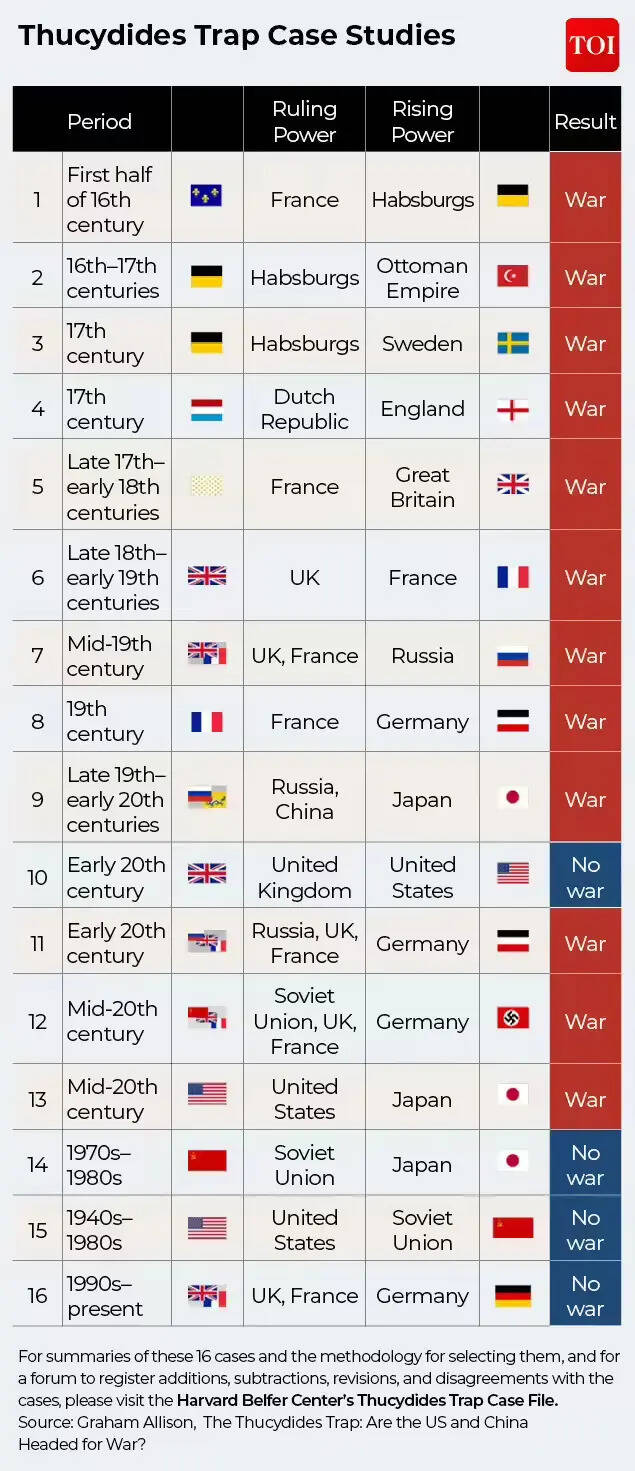
Not everyone believes conflict between China and the United States is unavoidable.Supporters of the Thucydides Trap theory may argue that history shows rising and ruling powers often collide eventually.

Thucydides trap case studies

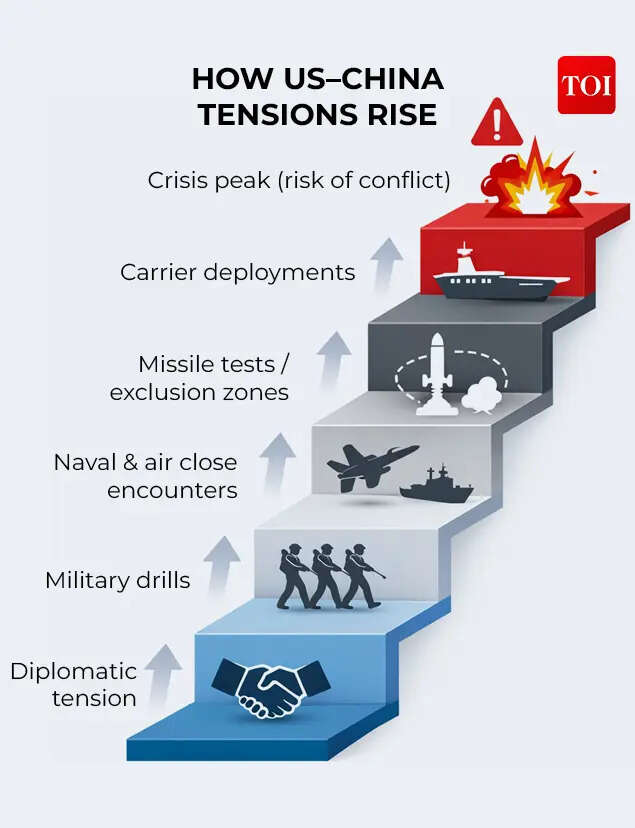
But critics also note that nuclear deterrence, globalisation, and economic interdependence make direct war far less likely today than in previous centuries.There are also strong incentives for restraint.China’s economic growth depends heavily on global stability and trade access. The United States, meanwhile, understands that a war over Taiwan could become one of the costliest conflicts in modern history.Still, the danger lies in how repeated crises gradually normalise confrontation.Each military drill. Each naval standoff. Each sanctions round. Each political provocation.Together, they slowly increase the possibility that one future crisis may not cool down as earlier ones did.That is why Xi Jinping’s remarks during the Beijing summit resonated far beyond diplomatic symbolism.The fear surrounding Taiwan is now something beyond whether China or the United States wants war.It is whether the world’s two most powerful nations can continue competing intensely without eventually sliding into it.


Source link

India steps up Ebola surveillance and preparedness after WHO’s emergency declaration

India steps up Ebola surveillance and preparedness after WHO's emergency declaration

New Delhi: India has strengthened surveillance and preparedness measures at entry points and the public health system as an “extreme precaution” following the declaration of a Public Health Emergency (PHEIC) by the World Health Organization over the Ebola outbreak in parts of Central Africa.Senior officials of the Union health ministry, including teams from the National Center for Disease Control (NCDC), Integrated Disease Surveillance Program (IDSP), ICMR and other concerned divisions, met on Monday to review the emerging situation and initiate precautionary public health measures, officials said.The ministry clarified that no case of Ebola has been reported in India and the current threat to the country is minimal.This outbreak involves the Bundibugyo virus strain and has been reported from the Democratic Republic of Congo and parts of Uganda.Officials said the Center has started reviewing the standard operating procedures for screening, surveillance, quarantine and case management, while laboratory preparedness is also being expanded. National Institute of Virology (NIV), Pune has been designated as the nodal testing center and additional laboratories are being added in phases.Coordination with multiple ministries and agencies has also been intensified to monitor international travel from the affected areas.Isolation and quarantine facilities at major airports and ports have been identified and kept on standby in case of any suspected case, officials said.The ministry urged the public and media not to panic or spread unverified information, stressing that India’s public health system is alert and fully prepared to respond to any emerging situation.Officials also pointed out that India has not recorded any cases of Ebola even during previous outbreaks and global alerts linked to the disease, including in 2014 and 2019, and said the government continues to maintain close coordination with international health authorities.

Source link

CSK fans completely criticized Ruturaj Gaikwad in the last home game: 15 runs in 21 balls, 0 fours

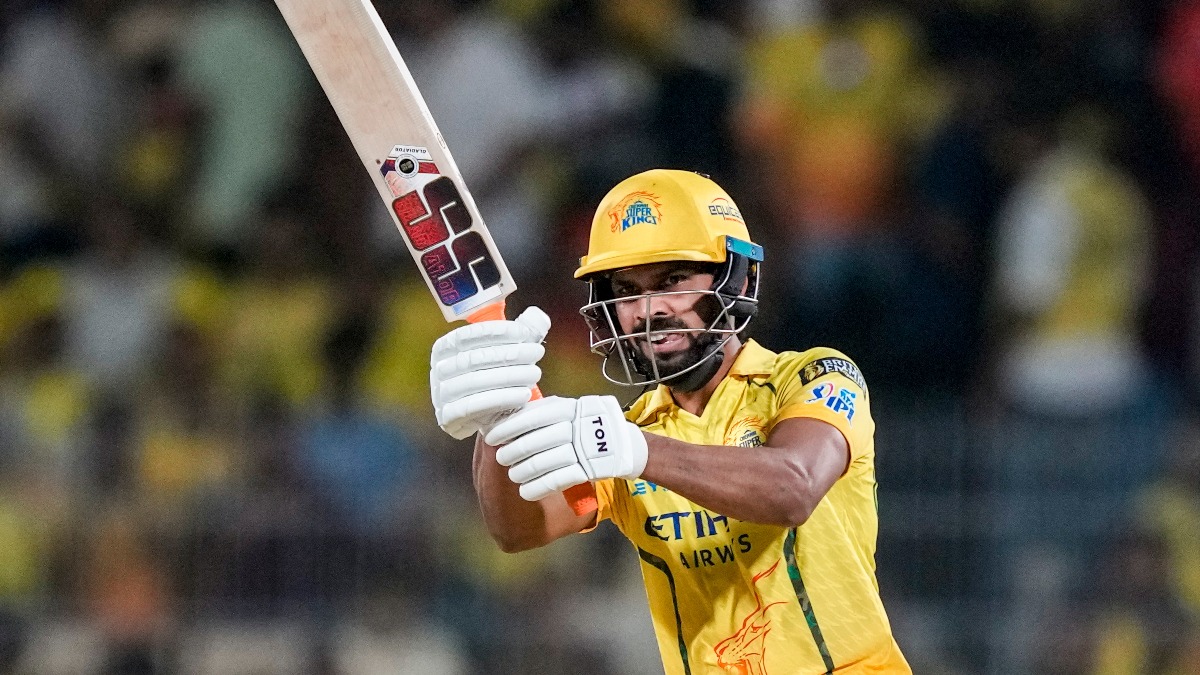
Chennai Super Kings captain Ruturaj Gaikwad faced a nightmare in the team’s last home match of the season against Sunrisers Hyderabad on Monday, May 18. After electing to bat first in a must-win encounter, Gaikwad struggled badly for pace and slowed down CSK’s innings at the crucial stage of the game.

Opening the batting with Sanju Samson, Ruturaj attempted to get the innings going on the difficult Chepauk surface. However, in an era where anchor batsmen often operate at strike rates above 140, the CSK skipper could manage just 15 runs off 21 balls and eventually lost his wicket in the 12th over.

CSK vs SRH, IPL 2026: Updates | Achievement:

At the time of his dismissal, Chennai had scored only 100 runs despite having the wicket in hand, putting additional pressure on the middle order in a game they could not afford to lose.

This slow innings was immediately criticized by fans on social media, especially as the batsmen around him looked far more comfortable with the speed of the surface. While Ruturaj scored at a strike rate of just 71.4, Sanju Samson, Karthik Sharma and Urvil Patel all batted at strike rates above 160 during their respective cameos.

Was the Chennai pitch difficult?

A major factor behind Ruturaj’s struggles appears to be the nature of the MA Chidambaram Stadium pitch. Chennai Super Kings had used a black clay surface in an apparent attempt to neutralize Sunrisers Hyderabad’s explosive batting lineup.

Although this tactic may have been aimed at slowing down SRH later in the match, it also trapped CSK’s own captain.

Ruturaj looked particularly uncomfortable against the cutters and slower balls bowled by Pat Cummins and Saqib Hussain. Instead of taking risks, the opener mainly focused on rotating the strike and protecting his wicket, a strategy that never allowed CSK to break free during the middle overs.

Remarkably, Ruturaj failed to hit a single four in his entire innings, ending without hitting a four or a six in one of the slowest innings ever. IPL 2026 season.

ipl 2026 | ipl schedule | ipl points table | ipl player stats | purple cap | orange cap | ipl video | cricket news | live score

– ends

published by:

Kingshuk Kusari

Published on:

May 18, 2026 20:59 IST

Source link

Show trains that highlight ordinary lives that make history

Show trains that highlight ordinary lives that make history
Pushpa Bhatia and her first car. Photo Courtesy: The Citizens Archive of India, Collection of Pushpa Bhatia

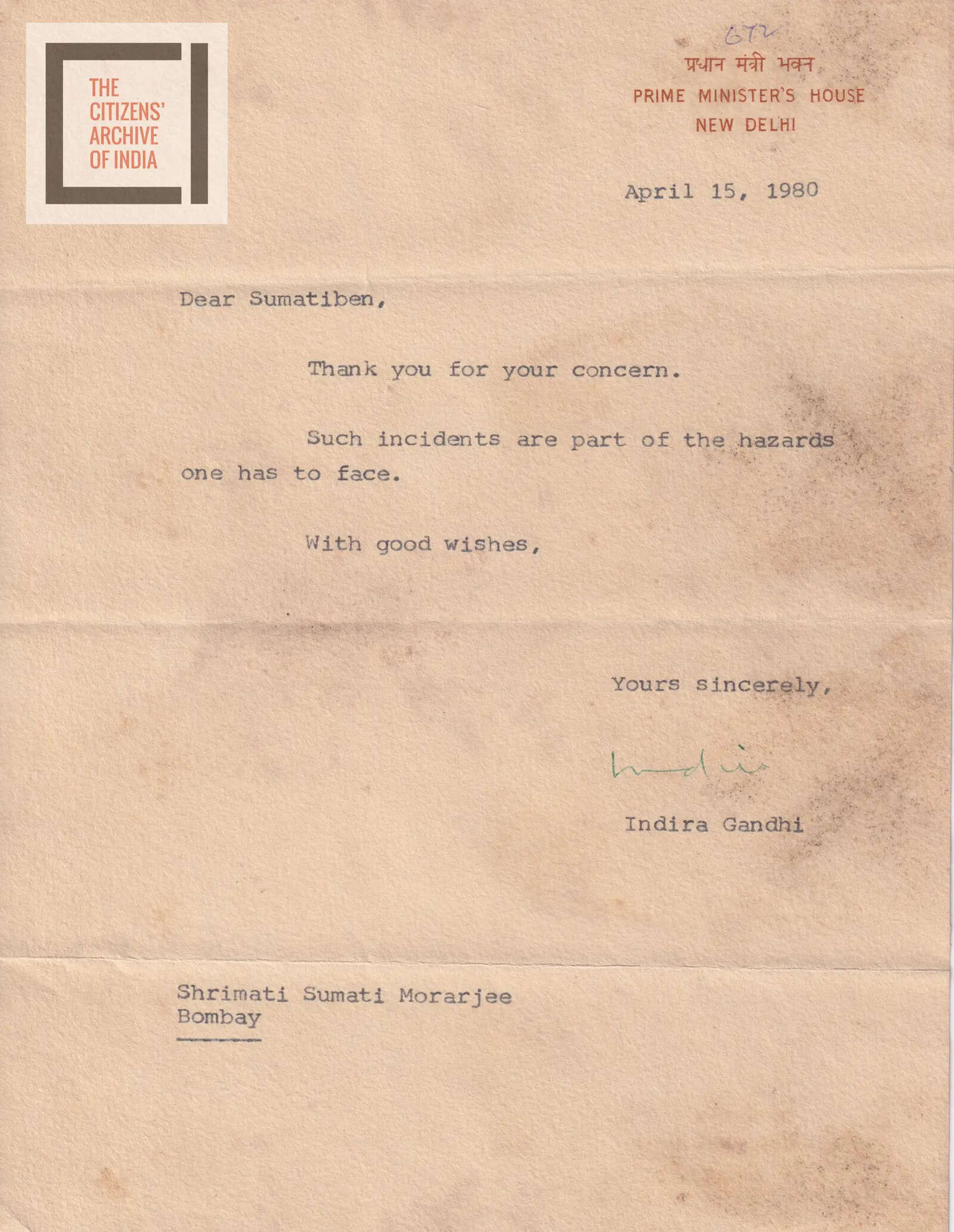
In April 1980, Sumati Morarji, chairperson of the Scindia Steam Navigation Company and known as the First Lady of Indian Shipping, received a letter from the Prime Minister’s House in New Delhi. Indira Gandhi wrote, “Thank you for your letters, your prayers, offerings and mangoes.” Look carefully at the typed black words and you’ll find an adjective scribbled in blue pen at the last minute: “Delicious.”The caption below the correspondence reads, “Business and political relationships were always important… but somewhere along the way, they became personal and intimate.”Drawing on over 700 hours of interviews and over 6,500 digitized objects collected from across India in 17 languages, the four-day exhibition of this decade-old digital oral history project highlights the small human stories that make up the big records.

-

Indira Gandhi’s letter to Sumati Morarji, April 1980

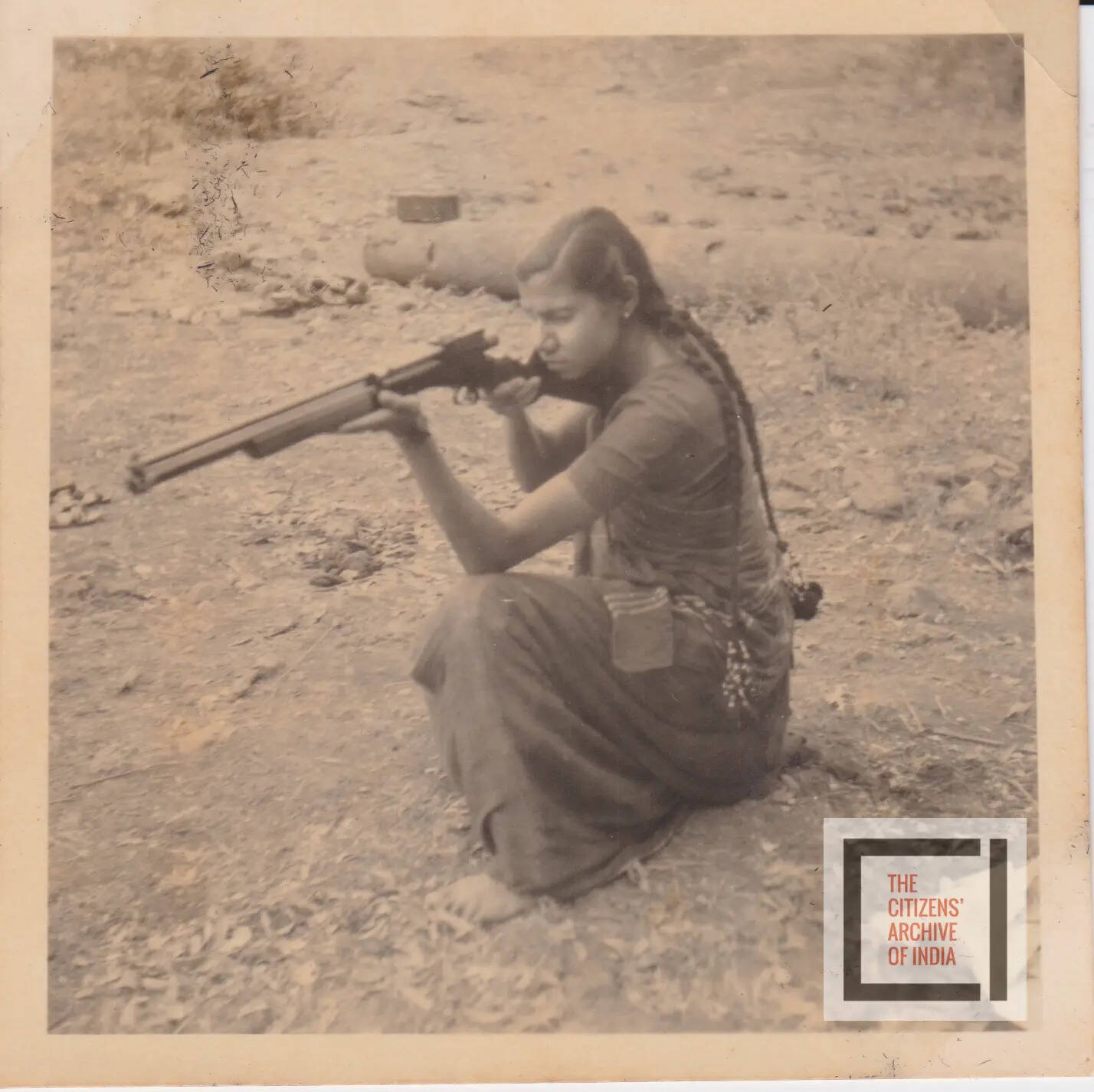
“We wanted to record the stories of the people who lived in India before and after independence, because now we have a generation that can still tell us,” says Malvika Bhatia, director of CAI, during the show. “Ten years ago, it was still easy to get an interview. Now it’s becoming much, much harder.”Political upheavals do not appear as dates and events but as things that happened to people while they were trying to live normal lives. One woman remembers sleeping with her children fully clothed during the Assam movement – ​​with shoes, socks, a torch and water nearby – so that they would not have to run away at night. Another, Rama Khandwala, remembered that his English-medium school in Burma was transformed overnight into a Japanese school during World War II. As a teenager in the Indian National Army, she broke her leg near the front lines and cried with homesickness. “Netaji himself came to my bed,” he recalled. “He said, ‘We don’t want to look back, we want to move forward.’”

-

Rama Mehta is completing her training as part of the Azad Hind Fauj (Indian National Army). Photo Credit: The Citizens Archive of India, Collection of Rama Khandwala

Unlike traditional archives built around governments or institutions, CAI focuses on oral history and material memory – personal objects such as letters, photographs, diaries, passports and memorabilia as well as recorded interviews. The collection is entirely digital: contributors maintain the physical objects while CAI digitalizes them. That’s why the showcase features stories that have no obvious historical significance yet offer a glimpse of another time. The first sarees marked with huge jalebis. Newlyweds are sending photos to different continents so they can see how they have aged. A man who dropped out of college to work in a tractor factory and carefully preserved his testimonials from Keshub Mahindra.One of the most impactful interviews of the exhibition is of Dr Armida Fernandes, a leading neonatologist recently awarded the Padma Shri, who remembers her father as “a dreamer and a writer” who followed the freedom movement through poetry. Her mother supported seven children on a professional salary, which made it all easier. “We never wanted for anything. It was an open house.Bhatia says interviews rarely start smoothly. Elderly participants worry that they will forget dates or facts. She disarms them with a simple question: “What’s your father’s name? What did he do?” Then, she says, “the nervousness disappears. Chances are they haven’t talked about their parents in years. Their eyes light up.”In the final room, visitors are given an old Mughal-e-Azam cinema ticket – an invitation to watch a short film about the collection. On the way out, a visitor tells Bhatia: “At first the stories seem very different. But you managed to show how they are connected.”

Source link

Panic spreads in India as F-1 visa slots disappear within minutes, experts ask students to be patient

Panic spreads in India as F-1 visa slots disappear within minutes, experts ask students to be patient
F-1 visa slots in India are disappearing within minutes, causing increased anxiety among students.

After several months of no show, the US started releasing visa slots for F-1 students, but the slots are disappearing within minutes, leaving students panicking and worried about whether they will be able to get it before American schools and colleges start their academic sessions this autumn. Like the H-1B, there was several months of inactivity for F-1 student visas after social media scrutiny began in December 2025. Now visa slots are being issued in installments and slots are being booked within minutes.As per the latest update, a huge amount of slots were released on May 15 for June-July dates, which is important for autumn but they disappeared immediately.

Checklist for F-1 Slot Booking

  • Do not check the portal frequently as this will get you ‘access limit’ block for 24-72 hours
  • Do not switch between Delhi, Mumbai, Chennai and Hyderabad consultations as it leads to immediate session ban.
  • Prepare everything (DS-160, I-20, etc.) in advance so that you can book immediately when the slot appears.

What happens at an F-1 visa interview?

Career coach Pritesh Jagani explains how F1 interviews have changed in 2026 in his latest social media video. He said he spoke to visa officers and understood that the interview officer figures out in the first 5 minutes of the conversation whether a student should be granted a visa or not. There are no right or wrong answers, but the officials try to know how much interest the student has in the course and the school they have chosen and whether they are somehow trying to get inside the US and have someone else choose the course and school on their behalf.

  • Expect technical questions about courses, application process and fees.
  • A visa officer may ask about your reasoning behind choosing a specific school/university to understand if you have chosen it.
  • They can check if you know which city your university is in, which airport to land at – just to find out how involved you were in the process.

Source link

Mother-in-law claims she consumed marijuana during pregnancy, says parents pushed her into the world of glamor

Tvisha death case: Mother-in-law claims marijuana consumption during pregnancy, says parents pushed her into glamor world
A 31-year-old woman from Noida was found hanging at her husband’s house in Bhopal, news agency PTI reported. Tvisha Sharma, daughter-in-law of a retired judge, was found hanging in Katara Hills area of ​​the city on Tuesday night.

New Delhi: The mother-in-law of Tvisha Sharma, the Noida woman who was found dead in her marital home in Bhopal, on Monday made serious allegations against her parents and her mental health.Just five months after marrying Samarth Singh, a lawyer, in December 2025, Tvisha (33) was found dead at her husband’s house in Bhopal’s Katara Hills area on May 12. Her family has alleged that she was subjected to mental torture and dowry harassment by her husband and in-laws and claimed that she was murdered.The case took a dramatic turn on Monday when Tvisha’s mother-in-law, retired judge Giribala Singh, presented a completely different picture of the events leading to the woman’s death.At a press conference, Giribala Singh claimed that Twisha was undergoing psychiatric counseling and had been given drugs “given to a schizophrenic patient”. He also alleged that Twisha showed “withdrawal symptoms”, including hand tremors. Making a big allegation, he said, “Twisha has confessed to consuming large amounts of marijuana during pregnancy.”“She also went for psychiatric consultation and was given medicines, which are given to a schizophrenic patient… She will remain stable for a day or two, but then, there will be a slight change in her condition,” he claimed.The retired judge also rejected allegations of dowry harassment and said the family had tried to save Tvisha after she was found hanging. “We gave CPR to Twisha and the neighbors also tried to save her. We tried our best to save Twisha,” he said.She further accused Twisha’s parents of neglecting their daughter and exploiting her financially. He said, “Tvisha’s parents pushed her into the world of glamor at an early age and later abandoned her. They were earning money because of her looks and are now not allowing her to be cremated. I have faith in the investigating agencies and the truth.”The same claims were also made in the bail petition filed for her husband Samarth Singh. According to the application, she became irritable when she did not have access to narcotics and was receiving psychiatric care. The petition also claimed that she had suffered an abortion and that her behavior towards her in-laws changed after she became pregnant.A local court in Bhopal, which had earlier granted anticipatory bail to Giribala Singh, on Monday reserved its order on the bail plea of ​​Samarth Singh. Samarth is absconding.Police said six teams have been deployed to trace him and a reward of Rs 10,000 has been announced for information leading to his arrest.Speaking to ANI, Assistant Police Commissioner Rajneesh Kashyap Kaul said that the officials have also contacted the passport office to stop the accused from fleeing the country.“A reward of Rs 10,000 has been announced in the case. Multiple teams have been deployed to nab the accused Samarth Singh,” the officer said.The police have formed a Special Investigation Team (SIT) to investigate the case. According to ACP Kashyap, the preliminary post-mortem report from AIIMS Bhopal indicated death due to “suicide by hanging”.He said that till now the post mortem report has not revealed any findings related to alleged drug use. “Tvisha’s drug addiction allegations have been mentioned in the bail plea, but we are investigating the case strictly as per the sections of the FIR,” he told PTI.Meanwhile, Tvisha’s family has refused to accept the body and is demanding a repeat post-mortem in AIIMS Delhi, claiming that the local investigation has been compromised.His father Navnidhi Sharma questioned why the body should be handed over when the case is “suspicious”.He said, “The PM report and the evidence do not match. That is why we have applied for a second postmortem. We want the government to take cognizance. This is a high-profile family. We have lost any hope of justice.”According to her relatives, Tvisha wanted to leave Bhopal and return to Noida and was in touch with them till around 10 pm on the day of her death.

Source link