
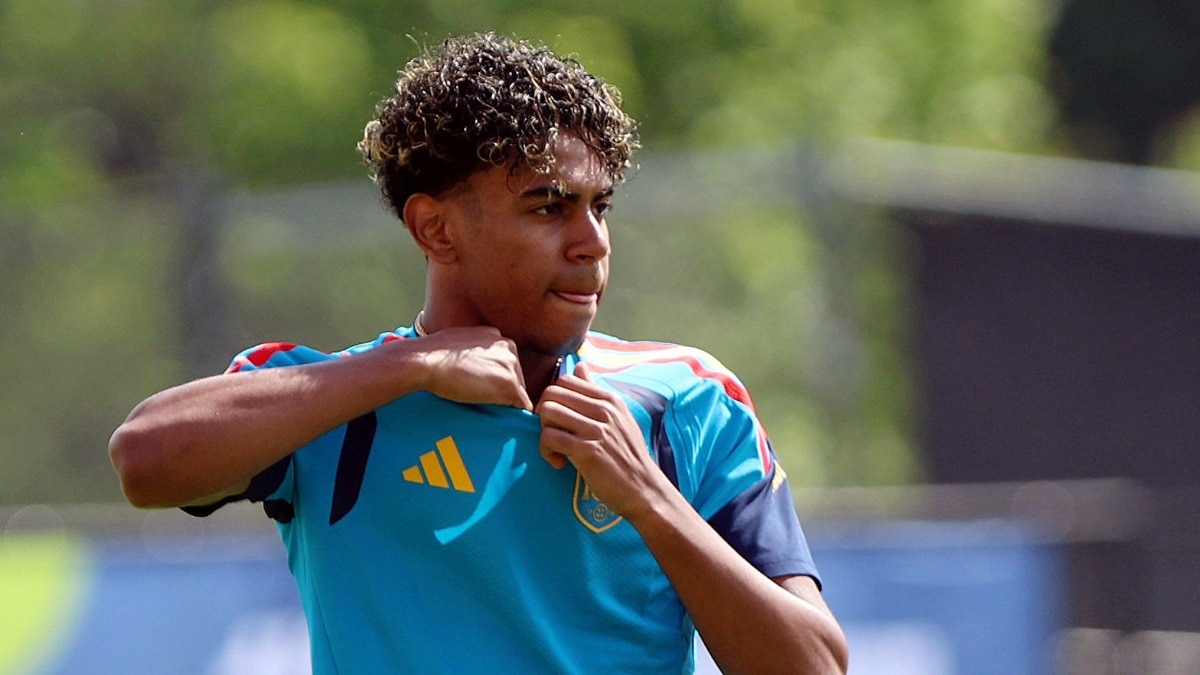

Spain vs Cape Verde live, FIFA World Cup 2026: Lamine Yamal aims for fast start as European champions
Cape Verde or Cabo Verde is one of four making their World Cup debut this year. When they made it to the FIFA World Cup for the first time in their history, there was celebration throughout the Atlantic archipelago. For a nation of over 500,000 people, qualification was more than a sporting achievement, it was a historic moment that united the entire nation.
The decisive moment came on the final day of African qualifying when the Blue Sharks defeated Eswatini 3–0 in Praia. The significance of the occasion was felt far beyond the confines of the national stadium, which can only seat about 8,000 spectators. Business slowed, workplaces emptied and much of the country stopped to watch the match that would become part of Cabo Verdean sporting folklore.
Although an attendance of 8,000 may seem modest by World Cup standards, it held enormous significance for one of the world’s smallest nations. Cabo Verde’s qualification places them among the least populous nations to reach football’s biggest stage, highlighting the scale of their achievement.
What makes this achievement even more remarkable is that it comes after a period of disappointment. The island nation failed to qualify for the 2025 Africa Cup of Nations, finishing bottom of their qualifying group and raising questions about the team’s direction.
Rather than derailing progress, that setback became a turning point.
Since taking over in 2020, head coach Pedro “Bubista” Brito has steadily transformed Cabo Verde into one of Africa’s most organized and resilient sides. Under his guidance, the Blue Sharks have become regular participants at the Africa Cup of Nations, qualifying for four of the last six editions and reaching the quarter-finals on two occasions.
Their path to the World Cup was not built on free-flowing attacking football or heavy scorelines. Rather, it was a campaign defined by discipline, efficiency and the ability to achieve results. Cabo Verde scored only 16 goals in 10 qualifying matches, fewer than any other African team to book a ticket to the tournament, but they consistently found ways to turn small advantages into victories.
Many of their wins have come by razor-thin margins, showing that the team is comfortable working under pressure and is determined to make the most of every opportunity.
That consistency proved decisive in a challenging Group D, where Cabo Verde finished with 23 points, ahead of regional heavyweights Cameroon and rival Angola sides. Finishing ahead of Cameroon, Africa’s most-capped World Cup winners, was perhaps the clearest indication yet of how far the Blue Sharks have come.
Dasta tells a unique story in itself. Like many small countries, Cabo Verde relies heavily on global diaspora. The players are spread across clubs from many countries, bringing together different influences and experiences of football. In the crucial qualifier against Eswatini, every member of the starting eleven was abroad, underscoring the international character of the team.
One of the standout performers during the campaign was forward Daylin Rocha Livramiento. The 24-year-old emerged as Cabo Verde’s leading scorer in qualifying, scoring four goals and playing a key role in the country’s historic run.
Now, the Blue Sharks are preparing for the biggest challenge in their football history. Whatever happens on the World Cup stage, his ability has already secured a place in the country’s sporting heritage.
For a nation spread across a chain of islands in the Atlantic Ocean, the trip to the World Cup is proof that size is no barrier to ambition. Cabo Verde may be one of the tournament’s smallest participants, but their story is one of the biggest.