
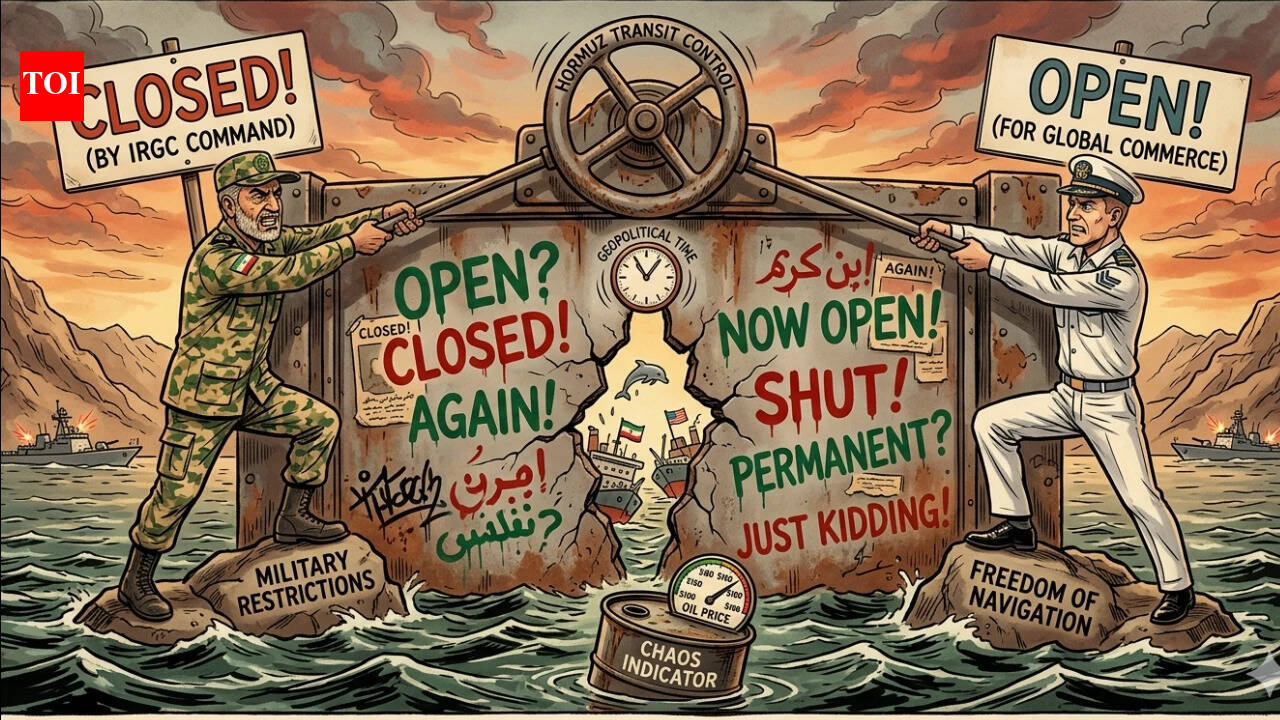

Strait of Hormuz: Open, closed, open, closed: What’s happening with the Strait of Hormuz?
Open, closed, open, closed: what’s happening with the Strait of Hormuz?
Iran has reimposed sanctions on the Strait of Hormuz after the US refused to end the blockade on ships coming to or from Iranian ports. Iran’s IRGC naval command said it would take strong action against US “malicious violations”, and said the Strait of Hormuz would remain under strict military control until all threats to ships traveling to and from Iranian ports are removed.“Control of the Strait of Hormuz has returned to its previous position under the strict management and control of the armed forces,” Iran’s Joint Military Command said, accusing the US of violating the agreement. It further warned that sanctions would remain in place as long as the US blockade of Iranian ships continues.This announcement comes after US President Donald Trump’s statement on Friday in which he said that the US blockade on Iranian ships will remain in place despite Iran opening the Strait of Hormuz.
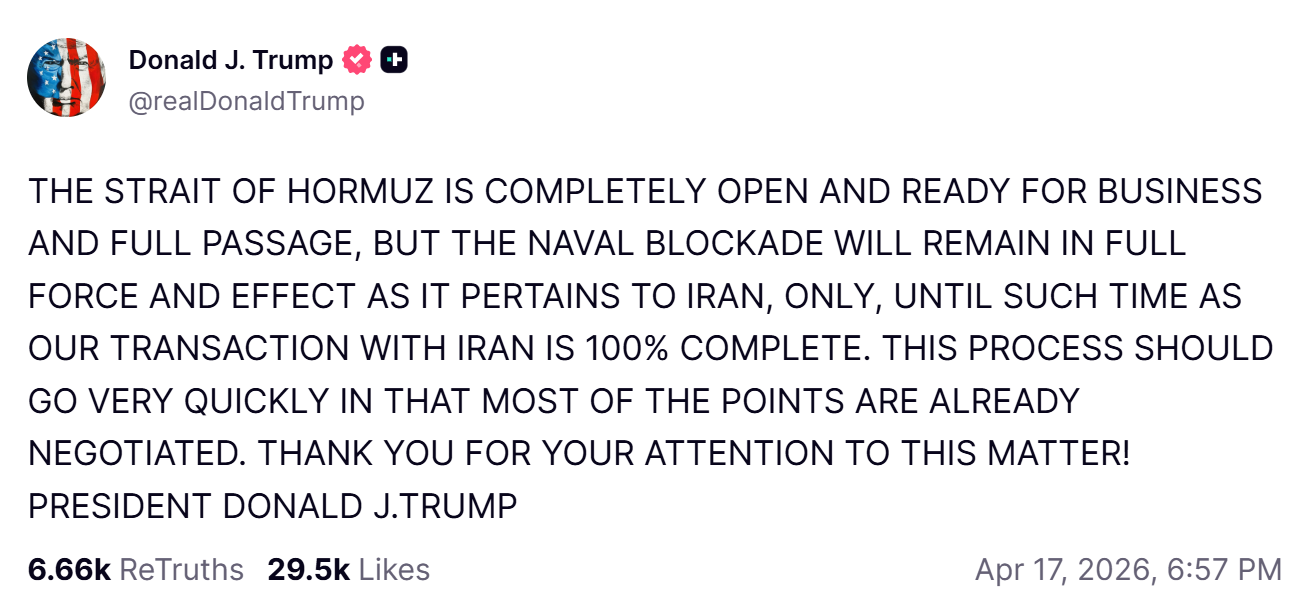
Trump announces continuation of US blockade of Iranian ports despite Iran reopening the Strait of Hormuz
Trump said in a post on Truth Social, “The Strait of Hormuz is fully open and ready for trade and full passage, but the naval blockade will remain in full force and effect as it relates to Iran, only until our transaction with Iran is 100% complete. This process should be very rapid as most points have already been negotiated.”On Friday, Iran said it had fully reopened the Strait of Hormuz to commercial vessels following the announcement of a 10-day ceasefire between Israel and the Iranian-backed Hezbollah militant group in Lebanon. Following the ceasefire announcement, Iran’s Foreign Minister Abbas Araghchi announced the reopening of the summit.“In line with the ceasefire in Lebanon, passage for all commercial vessels through the Strait of Hormuz has been declared fully open for the remaining period of the ceasefire, as already announced by the Ports and Maritime Organization of the Islamic Representative of Iran,” he wrote.
Iran’s statement
Ibrahim Azizi, head of Iran’s National Security Committee, gave an update on the situation in the Strait of Hormuz in a statement. According to the new maritime system of strategic waterways, only commercial vessels with authorization from the IRGC navy are allowed in after paying tolls, Al Jazeera reported.“The time has come for the Strait of Hormuz to comply with a new maritime regime,” he said, adding that under this new system, only commercial vessels with authorization from the IRGC Navy are allowed to navigate through designated routes after paying the required tolls.He also warned against US interference, saying, “As long as the US continues to threaten the movement of ships to and from Iran, the situation in the Strait of Hormuz will remain even more restricted than before.”Iranian state media also reported a statement from Iran’s military spokesman, accusing it of a “breach of trust” by the United States.Confirming the Iranian Navy’s full monitoring of the ships’ passage, the statement further said, “If the alleged naval blockade continues such passage is considered void. A limited number of oil tankers and commercial ships were allowed to pass through the strait. But unfortunately, the Americans, because of the repeated breaches of trust that are part of their track record, continue to engage in piracy and sea piracy under the so-called rubric of blockade.“It concluded, “Control of the strait was again ‘under the strict management and control of the armed forces’ until the US ended its blockade of ships sailing to Iranian ports.”Notably, about a fifth of the world’s oil passes through the strait and further border increases would reduce already constrained supplies, pushing prices up once again.
Hormuz crisis timeline
The crisis began on February 28, when Iran announced the closure of the Strait of Hormuz following the US and Israel launching “Operation Epic Fury” and the assassination of Supreme Leader Ali Khamenei. The IRGC laid sea mines and targeted merchant ships.This caused shipping traffic to halt until early March.By March 7, Tehran had formally announced a closure, banning ships from what it called “hostile nations”. This included America, Israel and its allies. Global oil prices increased due to the shutdown.The second phase began on March 9, when US President Donald Trump claimed the strait was open, although it remained firmly under Iranian control. On March 15, Iran introduced a toll system for passing ships, charging up to $2 million per ship. However, it offered exemptions to some countries, including India, China and Russia, who were allowed to pass through without paying any toll.The US military began a mine-clearing operation, and later on April 6, Trump issued an ultimatum demanding Iran reopen the strait or face attacks on its energy infrastructure.This was followed by a fragile ceasefire brokered by Pakistan on 8 April, marking the third phase of talks. While Iran agreed in principle to reopen the strait, it maintained tight control and continued toll, leading to the failure of the Islamabad talks on 11–12 April.On April 13, Washington announced a naval blockade targeting all ships traveling to and from Iranian ports. Other ships were exempted from the blockade.On 17 April, Iran announced the reopening of the strait, linking it to a separate 10-day Israel–Lebanon ceasefire. However, by 18 April, Tehran reversed course. Citing the ongoing US naval blockade, Iran’s parliament revoked the reopening agreement, with the military saying that control has “returned to its previous position”, effectively closing the Strait of Hormuz to international traffic again.