Government’s warning to industrial consumers: The government has warned industrial consumers against purchasing from retail pumps. india news

Government has warned industrial consumers against purchasing from retail pumps

New Delhi: Issuing a stern warning to industrial consumers buying diesel from retail outlets due to differential pricing and creation of artificial shortage of fuel in some parts of the country, the government on Wednesday said there is “more than enough” supply of petrol and diesel to meet the demand.The government said industrial consumers are shifting their purchases to retail pumps, leading to local shortages at the expense of ordinary citizens, and urged industry associations to make them aware of the consequences of such violations. It also asked states and union territories to form special squads and take strict action against bulk consumers purchasing from retail shops, hoarders and black marketeers under relevant provisions of the Essential Commodities Act and control orders.According to the government, about 29% of the bulk diesel volume of public sector oil retailers shifted to retail outlets in the current month, while sales volumes at fuel stations run by private oil marketing companies declined by 38%.While the price of diesel for retail consumers in Delhi is Rs 95.2 per litre, bulk consumers like industries get it at Rs 134 per litre. Private oil retailers also sell diesel at more than Rs 130 per litre.Officials said there were continuous reports of shortage at retail outlets from different parts of the country, following which an assessment was conducted by both the petroleum ministry and oil marketing companies. The assessment found that wholesale consumers were purchasing from retail stores.While Petroleum Minister Hardeep Singh Puri was coordinating with public sector OMCs, states and industry bodies to ensure uninterrupted supply of petrol and diesel to all, Petroleum Secretary Neeraj Mittal also held a review meeting with Chief Secretaries of states and UTs, which was attended by industry bodies FICCI and CII.“The picture that emerges from the field is consistent. There is no shortage of any petroleum product. There is a pattern of arbitrage in pockets which is creating an appearance of disarray,” the petroleum ministry said in a statement.Amid the disruptions in West Asia, state-run OMCs have deliberately kept petrol and diesel prices low to protect retail customers – families, two-wheeler commuters and farmers at the pump – while incurring a loss of around Rs 550 crore per day on sales of petrol, diesel and domestic LPG. “This does not extend to industrial procurement, where pricing tracks international actual data as a matter of permanent policy,” the government said.

Source link

MCD is planning street food hubs on the lines of culinary parks in Indore and Surat Delhi News

MCD is planning street food hubs on the lines of culinary parks in Indore and Surat

New Delhi: Delhi Municipal Corporation (MCD) is planning to set up the capital’s first organized street food hub in several areas.Designed to blend Delhi’s vibrant street food culture and regional culinary heritage with modern civic amenities, the proposed hub will offer non-permanent vending spaces, clean infrastructure, adequate lighting, waste management facilities and evening dining areas on the lines of food parks in Indore and Surat.The proposed centers are being planned at locations with adequate public presence and operational feasibility. Six locations have been identified, including MCD Market near NDRF Camp in Vasant Vihar in the South Zone, Shanti Stupa on Ring Road in the Central Zone, the area behind Salimgarh Fort near the old iron railway bridge in the City-SP Zone and NSP Place near Keshavpuram TV Tower. Two additional sites have been identified in Rohini and West region.Senior MCD officials told times of India Two of these sites are controlled by other land-owning agencies, for which No Objection Certificate (NOC) will first be sought.The average development cost is estimated to be around Rs 50,000 per square metre, depending on the size and nature of each site.“The initiative is currently in the planning and approval stage, with all proposals submitted to the Union Ministry of Housing and Urban Affairs through the Delhi government,” an official said.Unlike permanent commercial establishments, hubs will allow only movable and non-permanent vending carts that are designed to meet prescribed sanitary and visual standards. Various categories have been proposed, including ready-made food carts, chaat and salad carts, beverage vending carts, and single-item vending carts.Each food hub is expected to accommodate approximately 50 to 100 vending units depending on the size of the space. Selection of vendors is proposed to be done through a transparent process which will involve a draw among the eligible registered street vendors under the respective Zone Vending Committees.The MCD is planning to introduce a regulated licensing system under which vendors will pay processing fees, registration fees and annual license fees, officials said, adding that the centers are expected to generate reasonable municipal revenue.The proposal includes development of civic and sanitation infrastructure, such as waste management systems, general dustbins, lighting systems, circulation spaces, weatherproof structures and other public amenity facilities. Provision of drinking water supply and toilet facilities will be considered.To ensure better management of public and regulation of activities, the Food Hub is proposed to operate mainly in the evening. The carts will have a standardized design and a common visual identity to create uniformity and better identification. Their functioning will be monitored through periodic inspections by municipal and public health authorities to ensure that they comply with sanitation, hygiene and food safety standards.Depending on the success and feasibility of the pilot, this initiative can later be expanded to more locations across the city.

Source link

A Buffalo Township man accused of damaging a family’s home with an excavator during a dispute

A Buffalo Township man accused of damaging a family's home with an excavator during a dispute
A Buffalo Township man accused of damaging a family’s home with an excavator during a dispute

A Buffalo Township man has been charged with multiple criminal offenses after allegations he used an excavator to destroy his own home while his wife and children were still home Tuesday morning. Eric Pierwsza, 48, was arrested by police after his family home was destroyed in the Martin Road area. Police say the argument began when Pierwsza’s wife told him their marriage was over because they had recently separated.According to reports from TribLive and details outlined in a criminal complaint, authorities say Pierwsza came home after a night of drinking. Police say that soon after Pierwsza arrived, he and his wife got into an argument. The criminal complaint outlines the sequence of events that occurred during the fight.Pierwsza’s wife says she told her husband their marriage was over during the argument. As stated in the criminal complaint, Pierwsza allegedly said, “If it’s over, I’ll tear the house down.”Pierwsza then climbed into a Kubota excavator and began demolishing the rear of the family home, while his wife and daughters were still inside. Police said the machine had caused extensive damage to the building in a short period of time. Officials later noted that the extent of the damage raised serious doubts about the safety of the structure.Pierwsza reportedly left the scene after the incident. Later, he was caught by the authorities. The charges against Pierwsza include causing mayhem, reckless endangerment and disorderly conduct.According to investigators, the damage posed an immediate threat to the family as large portions of the building were severely damaged during the incident. When police officers arrived at the property, they found extensive destruction to the rear of the building.Records showed Pierwsza was booked into the Butler County Jail after being unable to post $10,000 bail. Public records revealed a preliminary hearing will be held before District Judge Jack Dee. Ripper on 9 June.Court documents revealed there was no defense attorney listed for Pierwsza when the details were released.The case is gaining much attention locally due to the heavy machinery involved in the attack, which occurred while relatives were present in the home. Police are still investigating the cause of the clash and the destruction of property.

Source link

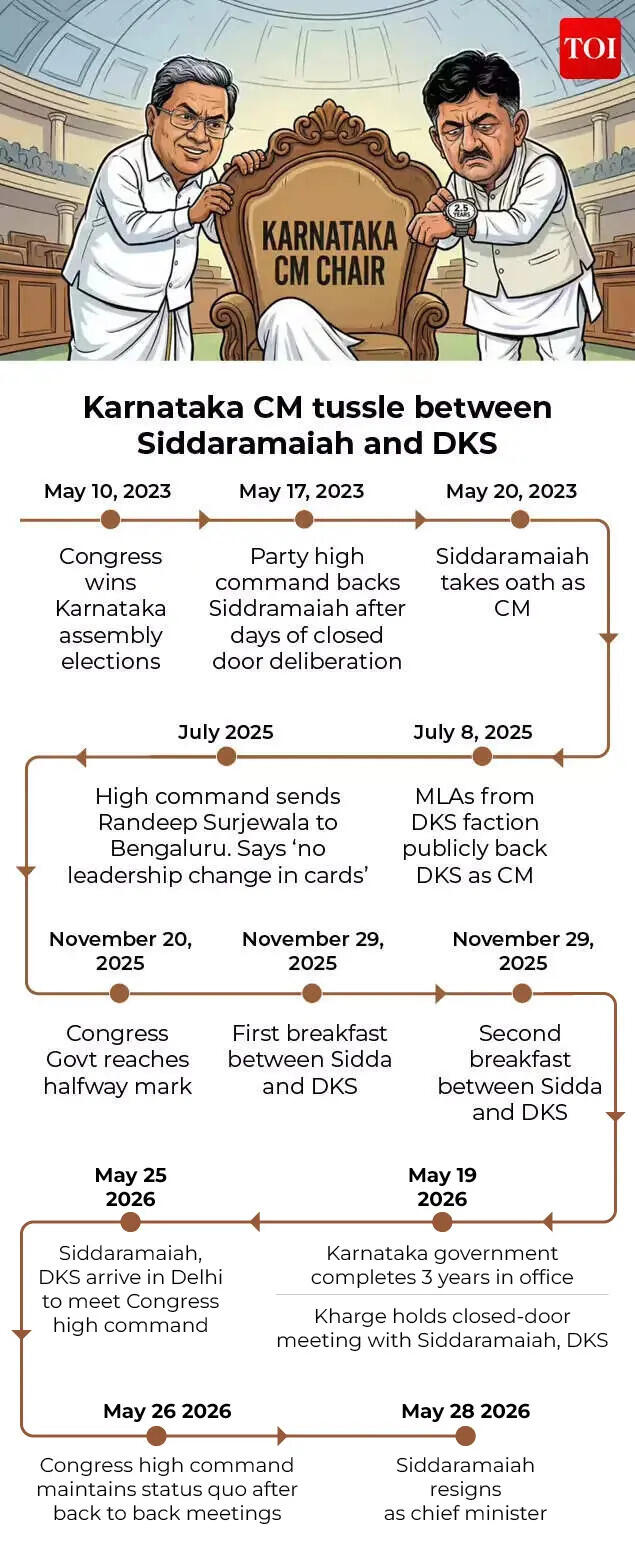
Siddaramaiah is out, but troubles may begin for Shivkumar and Rahul Gandhi. india news

Siddaramaiah is out, but trouble may begin for Shivkumar and Rahul Gandhi

New Delhi: Outgoing Chief Minister of Karnataka Siddaramaiah Looks like he left a ticking bomb as a farewell gift to his successor DK Shivakumar And Rahul Gandhi Before deciding to step down from his post on Thursday.A day before resigning as chief minister, Siddaramaiah on Wednesday accepted the long-delayed educational survey report of the Karnataka State Backward Classes Commission, known as the caste census.Read this also Siddaramaiah’s resignation, Shivakumar’s top post decided: Will Congress’ ‘drama’ end in Karnataka or will it continue as before?The report on Karnataka’s first caste survey has been prepared since 2017, during Siddaramaiah’s previous tenure as chief minister. After returning to power in 2023, Siddaramaiah ordered a fresh caste survey, the report of which was to be prepared in 2025.Siddaramaiah’s decision to accept the report just before leaving office is being seen as an important political message.Critics had alleged that successive governments refrained from acting on the first report due to fear of reaction from Lingayats and Vokkaligas, politically influential communities in the state.With the revised report now formally submitted, the focus turns to the next chief minister and cabinet, who will have to decide whether to implement its recommendations.why it mattersThe Karnataka government’s 2025 Caste Survey is one of the most comprehensive exercises conducted by the state to find out the socio-economic status of backward classes, other castes, scheduled castes and scheduled tribes.Read this also Siddaramaiah rejects Congress high command’s Rajya Sabha proposal: Pressure strategy or long-term strategy?However, the report is politically sensitive as it has the potential to disrupt Karnataka’s carefully balanced caste equations. Reports suggest that the number of backward communities may exceed that of Lingayats and Vokkaligas – the two dominant communities that have traditionally shaped the state’s politics for decades.Siddaramaiah’s Ahinda politics – an alliance of minorities, backward classes and Dalits – was designed to challenge that dominance by uniting numerically strong but politically fragmented groups. The caste census report is now being seen as an empirical validation of the social strength of the AHINDA block and could restart that political battle on a larger scale.

.

Due to this DK Shivkumar is in a difficult situation. Shivakumar is not only the most prominent Vokkaliga leader of the Congress in Karnataka, but is also credited with rebuilding the organizational structure of the party in the state.If the government led by him goes ahead with presenting or implementing the report, it risks a backlash from the influential Lingayat and Vokkaliga communities. On the other hand, delaying the report or shelving it could erode AHINDA’s support base that Siddaramaiah has carefully built up over the years to the Congress.In fact, Siddaramaiah has pushed DKS into a difficult position.Rahul Gandhi’s credibility at stake?Karnataka’s caste census also poses a political challenge at the national level for Rahul Gandhi, the leader of the opposition in the Lok Sabha.Rahul Gandhi has made caste census a central pillar of the national politics of the Congress Party. He has argued that accurate caste data is essential to ensure social justice, fair representation and targeted welfare policies for OBCs, Dalits and minorities.It was Rahul Gandhi who strongly pressured Congress-ruled states to conduct caste surveys to show the party was serious about implementing its politically supported social justice agenda.Under Revanth Reddy, Karnataka and Telangana emerged as the biggest testing grounds for that strategy.If the next government led by Shivakumar refrains from implementing or presenting the report, it could undermine Rahul Gandhi’s larger national narrative on social justice. This will give the BJP an opportunity to accuse the Congress of demanding a caste census at the national level, while being hesitant to act on it in states where it faces political resistance.

Source link

Governor removed VC of Baba Amte Divyang University and Skill University on appointment irregularities. jaipur news

Governor removes VC of Baba Amte Divyang University and Skill University over appointment irregularities

Jaipur: Governor Haribhau Bagde on Thursday ordered the immediate removal of Professor Dev Swaroop from the posts of Vice Chancellor of Baba Amte Divyang University and Acting Vice Chancellor of Vishwakarma Kaushal University over alleged irregularities in appointments during his tenure. Rajasthan University. Officials said the action was taken in consultation with the state government following complaints alleging fraudulent practices and arbitrary appointments during Swarup’s tenure as Rajasthan University vice-chancellor in 2011-12 and the selection process in 2013-14. According to a statement issued by the Governor’s office, complainant Prem Lata Singaria from Jaipur alleged that Swarup bypassed university rules and UGC provisions to benefit selected candidates instead of deserving applicants. The complaint was filed under the category “injustice against Scheduled Caste woman”. After the complaint, the Governor constituted a three-member high level inquiry committee under the chairmanship of Kota University Vice Chancellor Bhagwati Prasad Saraswat. “The report conclusively established that, during his tenure as VC, Dev Swarup violated established rules and UGC provisions; he arbitrarily convened selection-related meetings and recorded their minutes,” the governor’s office said in an official release. The report further said that during the syndicate meetings, Swarup “departed from standard procedural norms and prepared forged, fake and false documents, thereby fraudulently securing appointments for his preferred candidates.” The investigation report also found that despite being eligible, complainant Premlata Singaria was given less marks for academic records and research work. It further said that while the preferred candidates got 49 marks out of 50 in the interview and subject knowledge assessment, Singaria was given only 10 marks. The Governor has directed Rajuwas Vice Chancellor Professor Tribhuvan Sharma to take additional charge of Baba Amte Divyang University, while Professor NK Pandey of Haridev Joshi Journalism and Mass Communication University will take additional charge of Vishwakarma Skills University.

Source link

Gulf of doubt: Despite missiles flying, an agreement between America and Iran is said to be close.

Gulf of doubt: Despite missiles flying, an agreement between America and Iran is said to be close.

TOI correspondent from Washington: Just hours after verbal clashes and fresh attacks in and around the Strait of Hormuz between the US and Iran, both sides are reported to have once again reached a diplomatic breakthrough.According to Axios, US and Iranian negotiators have agreed to a draft memorandum of understanding to extend the fragile ceasefire and open a 60-day negotiating window focused primarily on Iran’s nuclear program in exchange for economic relief. But the proposed deal is still awaiting final approval from President Donald Trump. Trump wants “a few days” to consider it, according to officials cited in the report.The proposed arrangement would be the clearest signal yet that Washington and Tehran both recognize the limits of military escalation after months of naval warfare, sanctions, air strikes and economic disruption that have roiled global energy markets and exhausted countries near and far.Under the emerging framework, the ceasefire will remain in place formally while unrestricted commercial shipping through the Strait of Hormuz will resume. The US Navy will gradually lift its blockade operations, Iranian harassment of shipping will cease, and both sides will begin negotiations on sanctions relief, frozen Iranian funds, and humanitarian access to Iran.The nuclear issue – the central trigger for war – will remain at the forefront of the agenda during the 60-day negotiation period. Iran will reportedly commit to not developing nuclear weapons while discussions will continue on uranium enrichment, stockpiles and monitoring mechanisms. Iran has not confirmed any of these claims, Axios reports.The military escalation comes as President Trump again mixes threats with diplomacy in the way that has become characteristic of the conflict. During a Cabinet meeting, Trump threatened Oman – historically one of Washington’s most trusted mediators with Tehran – warning that Muscat would “behave” or face consequences, after reports emerged that Omani officials were exploring mechanisms to help manage commercial traffic through the Strait of Hormuz.At the same time, Trump publicly insisted that the strait would soon be fully reopened and repeatedly suggested that Iran now understood that the US would maintain heavy military pressure indefinitely if necessary.Contradictory messages – tension one hour, diplomacy the next – have become a defining feature of the war and a growing source of frustration for countries in Europe, Asia and across the Gulf. For countries like India, Japan and South Korea, the Hormuz disruption has become a strategic nightmare.Tanker insurance costs have soared, shipping schedules remain in disarray and governments are scrambling for alternative energy supplies, while privately urging Washington and Tehran to back off.The economic consequences are now reaching ordinary Americans as well. Gasoline prices across the US are at $4.50 a gallon (about Rs 1.15 a litre), adding to fresh political pressure ahead of the midterm elections in November, although Trump said he was not particularly worried about the elections.Republican strategists privately acknowledge voters’ growing fatigue with a conflict that was initially presented as a short campaign to force Iranian concessions but has instead evolved into a war of naval blockades, drone strikes and repeated confrontations at one of the world’s most important energy chokepoints.Yet Trump himself appears to be engaged in a display of patience rather than compromise, insisting that Iran is under severe military and economic stress and that “negotiations are on smoke.”Iran, for its part, is betting that Trump lacks the patience for a protracted conflict and rising domestic political costs. This may now be the decisive calculation of the war: not which side can win outright, but which side can endure the pain longer.Even the emerging MoU reflects that reality. It is less a peace treaty than a mutual truce — an acknowledgment that both powers may need a temporary respite from a confrontation that has disrupted global trade, destabilized energy markets and raised the ever-increasing threat of a broader regional war.

Source link

Government may use IAF aircraft to transport question papers for NEET re-exam: Report india news

Government may use Air Force aircraft to transport question papers for NEET re-exam: Report

New Delhi: The Center is considering the possibility of using the Indian Air Force to transport the NEET-UG paper to ensure foolproof conduct of the re-exam on June 21, news agency PTI reported citing sources.This comes after a high-level meeting chaired by Defense Minister Rajnath Singh. Interestingly, Education Minister Dharmendra Pradhan and Communications Minister Jyotiraditya Scindia also attended the meeting.The meeting focused on the entire examination process, from setting and printing of question papers to transportation and security arrangements.“Ministers and senior officials discussed whether IAF aircraft could be used to transport NEET-UG exam papers,” sources told PTI.“However, no final decision has been taken yet and the option will be placed before Prime Minister Narendra Modi for final consideration,” he said.Meanwhile, Prime Minister Narendra Modi is also believed to be personally monitoring the preparations for the June 21 re-examination, and is being updated on every detail related to the exam process.The National Eligibility cum Entrance Test (Undergraduate), or NEET-UG, was conducted on May 3 across 551 Indian cities and 14 overseas centres. Around 23 lakh candidates had registered for the examination conducted by NTA.According to NTA, information about the alleged malpractice was received on the evening of May 7, four days after the examination was conducted.The NTA said the inputs were shared with central agencies the next morning for “independent verification and necessary action”.NTA had canceled NEET-UG on May 12 amid allegations of paper leak. The exam has been scheduled again on June 21.The CBI registered the case based on a written complaint by the Department of Higher Education under the Education Ministry.The Central Investigation Agency formed special teams to investigate the case, conducted searches across the country and made prompt arrests.So far, 13 accused have been arrested in the case from Delhi, Jaipur, Gurugram, Nashik, Pune, Latur and Ahilyanagar.The investigation conducted so far has revealed the real source of the question paper leak, the CBI had earlier said.

Source link

Aadhaar, voter and ration cards found in TMC’s Tangra office. kolkata news

Aadhaar, voter and ration cards found in TMC's Tangra office

Kolkata: A pile of voter, Aadhaar and ration cards was recovered from the closed Trinamool Congress Party office on Thursday morning. Recently, the party office was locked after it was painted in saffron colour.The recovery at Tangra Lane No. 2 in East Kulia created intense tension in the neighbourhood, leading to the deployment of police in large numbers to control the protests by agitated locals.The party office, located within the Beleghata assembly constituency and earlier used by TMC councilor Jibankumar Saha of Ward 57, was closed after the assembly election results were declared on May 4.Local residents, reportedly with the support of BJP officials, broke the lock and entered the premises and found bundles of identity documents kept neatly inside a cabinet.As news of the discovery spread, a large crowd gathered outside the office, with many residents identifying their missing cards among the recovered items. The discovery has puzzled many, as some locals already had the original documents at home, raising the question of how parallel or duplicate copies were stored inside a political office.Some local residents have leveled serious allegations against the TMC and claimed that its leaders had earlier collected these identity cards on the pretext of facilitating various government welfare schemes but never returned them.Another resident alleged that the cards intercepted at the local post office level were deliberately withheld by party workers.Local BJP leaders have expressed suspicion that the documents collected may have been submitted to manipulate the voter list or create fake voter identities.The recovery of Tangra mirrors a similar incident that took place a few days ago in Ward 36 of Basanti Devi Colony area of ​​Bidhannagar, where a cache of voter and identity cards was found under similar circumstances. In that instance, locals alleged that political miscreants forcibly confiscated the cards to suppress voting percentage during the elections.Senior police said a comprehensive investigation was launched to determine how such a large quantity of sensitive identity documents issued by the government reached the party office.Police are attempting to contact each individual whose name appears on the seized cards to verify the circumstances under which they surrendered their documents.No TMC leader has yet come forward regarding the incident.

Source link

Down the rabbit hole: Bangladeshi buffalo pardoned by ‘Donald Trump’ – A brief history of animal sacrifice world News

Down the rabbit hole: Bangladeshi buffalo 'Donald Trump' pardoned - A brief history of animal sacrifice

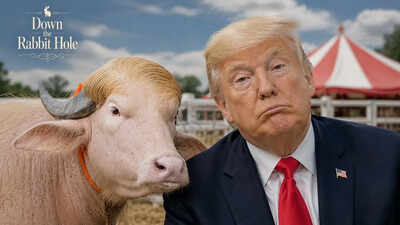
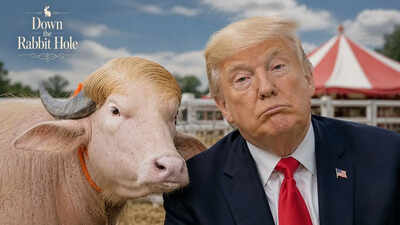
donald trump‘Became a viral sensation overnight. Crowds gathered from far and wide to be amazed by his darshan. They could hardly understand that someone like him walked the earth. They were amazed by her golden hair and fair skin. They were surprised by his weight. And when they learned that he might soon be sacrificed, they were in a state of shock. But destiny had other plans and when he survived, the whole world heaved a sigh of relief.Now, while this leadership may read as if one is describing the leader of the free world, one is simply describing Yudhishthira here: Donald Trumpo jeevati iti, neta va mahisho va.For those who have forgotten their Mahabharata or Sanskrit, Donald is not the US President, especially does not eat from the McDonald’s menu, and has never bombed Iran or damaged the global economy. He is a buffalo in Bangladesh who became an overnight sensation due to his resemblance to Trump and is seven times heavier than his namesake.What started as routine Eid shopping soon became a global viral sensation. Farm owner Ziauddin Mridha said the majestic animal caused him 1.5 million taka, or about $12,300, in damage, and now that he has been compensated, the Bangladesh government has decided to send Donald to Dhaka’s National Zoo instead of letting him end up on someone’s plate.We live in the age of viral animals, from Larry the Cat, who lives permanently in 10 Downing Street, to Moo Deng, the lovable pygmy hippo in Thailand, and Punch, the lonely monkey whose inability to make friends took the world by surprise. Donald Trump the buffoon may be the latest addition to this god band. But long before algorithms turned animals into celebrities, humans were already turning them into gods, omens, and pardoned prisoners.This is where the rabbit hole begins.

man, animal and god

To understand why the sudden killing of a buffalo going viral might be so meaningful, one has to go back to the beginning, when animals were not content but cosmological. Long before the advent of Twitter, animals helped us understand the world. We were the original monkey, see, do monkeys, although, to be fair to our simian cousins, they never did anything as awesome as inventing LinkedIn. The earliest cave paintings are not self-indulgent selfies or breakfast photos but sketches of animals: horses, bison, aurochs, deer, lions and wild boars.
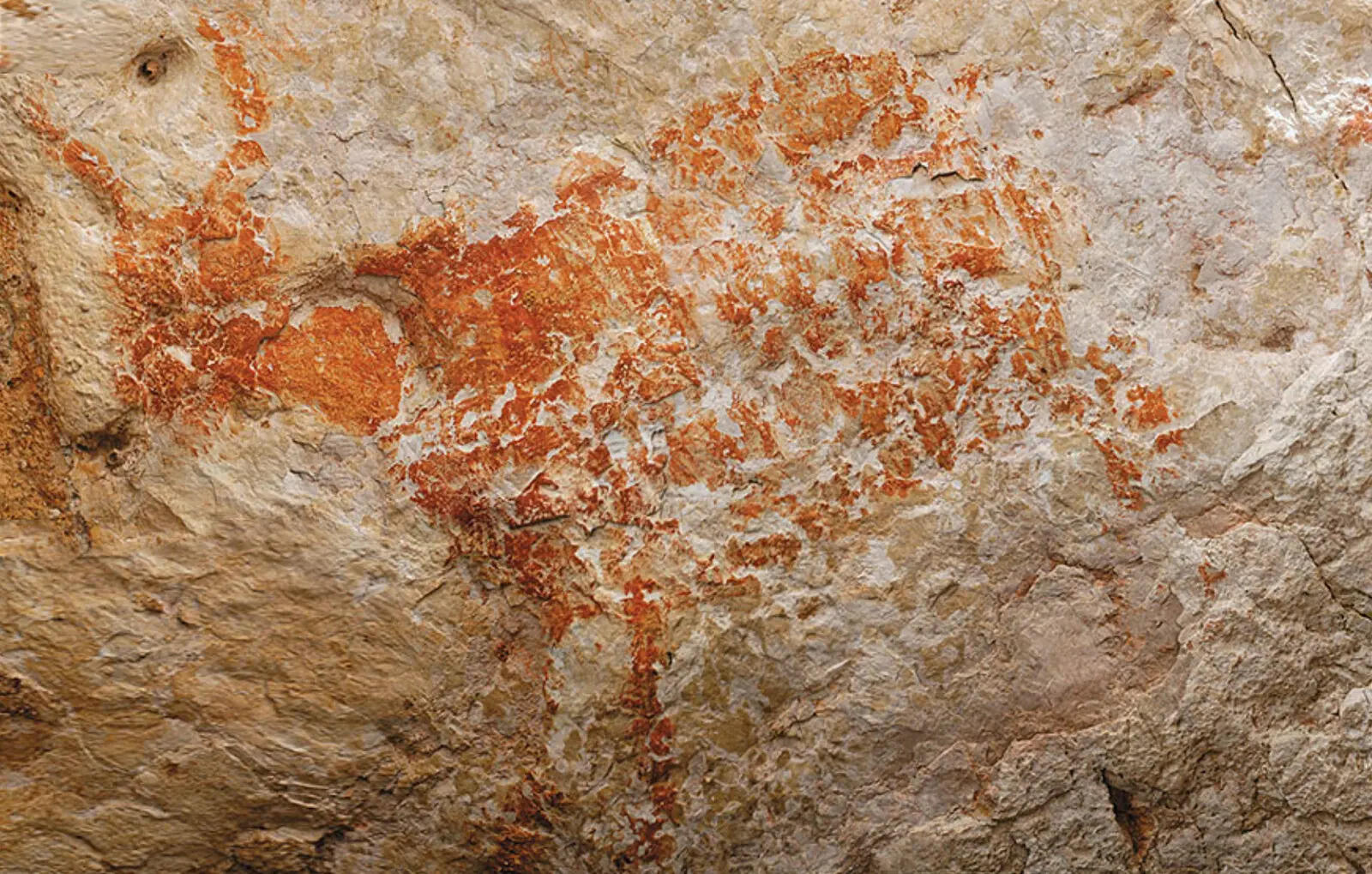
an unknown cow

One of the oldest known figurative paintings, depicting an unidentified bovine, was discovered in the Lubang Jeriji Saleh Cave and dated to be over 40,000 (perhaps as old as 52,000) years old.

Animals were our first guides and textbooks, teaching us how to hunt, when the weather was changing, and why communism wouldn’t work.Animals inspired us and, in turn, revealed our first gods. The lion can symbolize courage, the snake can symbolize danger, the bull can symbolize force, and the cow can symbolize abundance. Once animals became symbols, gods were never far behind.One of the most iconic images of the Indus Valley Civilization is the Pashupati seal, which many historians interpret as Shiva, the lord of animals. The horned, seated figure is surrounded by an elephant, tiger, rhinoceros, buffalo and other creatures, which suggests that one of our earliest ideas about divinity was one who could command a wild animal like Komaram Bheem in RRR.In the ancient world, gods rarely traveled alone. Sometimes animals were their vehicles, sometimes their symbols, sometimes their bodies, and sometimes a complete warning label attached to their power. In Hinduism, the entire divine vocabulary centers around animals: gods ride them as vehicles, possess their bodies as avatars, and often turn them into sacred symbols.This was hardly unique to ancient India. Egyptian gods often looked as if they were assembled in some divine costume department: Horus had the head of a falcon, Anubis had the head of a jackal, Bastet had that of a cat, Sobek had that of a crocodile, Hathor had the horns of a cow, Khnum had the head of a ram, Taweret had the body of a hippopotamus, and Apis had the body of a complete bull.The Greeks, as they are wont to do, made things more scandalous, and Zeus treated the animal kingdom like a divine disguise kit, becoming a bull, swan or eagle whenever the plot required moral degradation. Rome, being Rome, turns animals into monarchs. The eagle became the soul of the army, while the wolf that suckled Romulus and Remus gave the empire an origin story with milk, murder, and excellent branding.China, too, mapped the cosmic order through animals: the dragon stood for royal authority and rain, the phoenix for renewal, the tiger for martial courage, and the tortoise for endurance. The four symbols made the animals themselves guardians of direction, as clearly space also required wildlife management. And later, a fifth, a noodle-loving panda, was added to tarnish the Middle Kingdom’s image around the world.And in Norse mythology, Jörmungandr, the Midgard or World Serpent, encircles the Earth. In Ragnarok, Thor kills the serpent but dies from its venom, unlike the MCU Thor, who is condemned to appear in sequels until Chris Hemsworth shrugs off his mortal coil. And given that animals and gods were interconnected, it was only a matter of time before humans began sacrificing animals to the gods.

to give up and sorry

The English word sacrifice comes from the Latin sacer and facere, meaning “to make sacred,” which sounds much better than killing something and hoping the universe listens. The animal was the envelope and God was the addressee.Sacrifices were transactions of various kinds: food for the gods, blood for crime, life for favor, smoke for prayer. In Mesopotamia, offerings were made to gods such as Enlil, Enki, Inanna-Ishtar, Shamash, and Marduk, as gods were conceived not as distant abstractions but as forces to be honored, fed, satisfied, and largely kept aside.In Egypt, offerings to gods such as Amun-Ra, Osiris, Isis, Hathor, and Ptah were part of maintaining Maat, the cosmic order that kept the world from slipping back into chaos.In Greece, sacrifices were made to Zeus for power and protection, to Athena for wisdom and victory, to Artemis for hunting and childbirth, to Apollo for prophecy and healing, to Demeter for harvest, and to Dionysus for fertility, ecstasy, and whatever ancient civilization called a more respectable version of the long weekend.

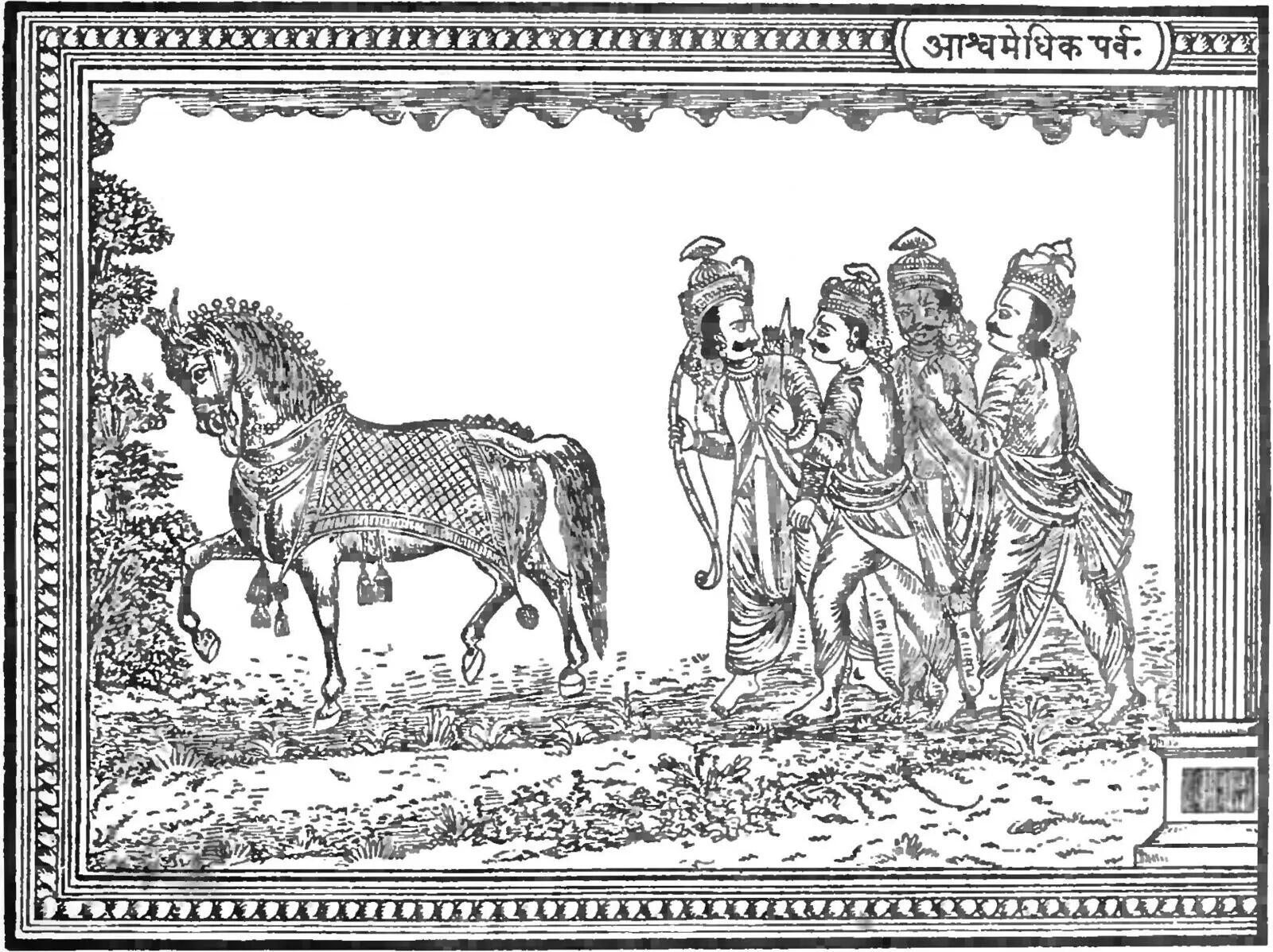
Illustration of Ashwamedha in the History of India (1906)

Ancient India also had its own rituals, like Ashvamedha, where a horse was allowed to roam around for a year under the protection of the king, and if the horse returned without being challenged, the king could claim universal sovereignty, which sounds a lot less messy than frequent UN Security Council meetings.As paganism evolved into Abrahamic beliefs, the ritual of sacrifice changed and did not change.In Judaism, animals were offered to Yahweh as burnt offerings, peace offerings, sin offerings, trespass offerings, and, according to one hypothesis, as offerings to renew Seinfeld. The most enduring image was the Yom Kippur scapegoat described in Leviticus: one goat was sacrificed, while the other was burdened with the community’s sins and sent into the wilderness. Long before modern politics discovered the utility of blaming immigrants, minorities, internees, previous governments, or algorithms, humanity had already put collective guilt on a goat and told it to leave town.One can imagine that the gods were happy as Seinfeld kept getting renewed, while the Jews were responsible for everything that came out of Western civilization. In fact, it was a Jewish gentleman who also promoted Christianity, although Christianity was a religious transformation of sacrifice.Jesus became the “Lamb of God”, the innocent victim whose death replaced the repeated blood transfusions on the old altar, the one who died for all sins, leading to the terrible joke that if no one sins, Jesus died for nothing.Instead the animals became metaphors, with the lamb as survival of innocence, the shepherd as divine care, and the sacrificial victim as salvation. Christianity moved sacrifice from ritual slaughter to theology, which is why the language of blood, redemption, and offering persisted long after most Christians stopped bringing livestock to the priests.Meanwhile, in the third Abrahamic faith, sacrifice remained necessary, which brings us Eid al-Adha. The festival commemorates Abraham’s desire to obey God, but an animal takes his place instead. The meat is traditionally shared among friends and family, making it an act of remembrance and obedience.In all three Abrahamic traditions, the animal either dies, becomes plagued with guilt, or becomes a memory of a sacrifice that has been postponed.But while sacrifice is understood, how did forgiveness become the norm?While there are many versions of it around the world, the modern version can be linked to the Thanksgiving pardoning of the turkey, although when one knows the entire history, one wonders if Thanksgiving is the right word to describe the event.
Thank you

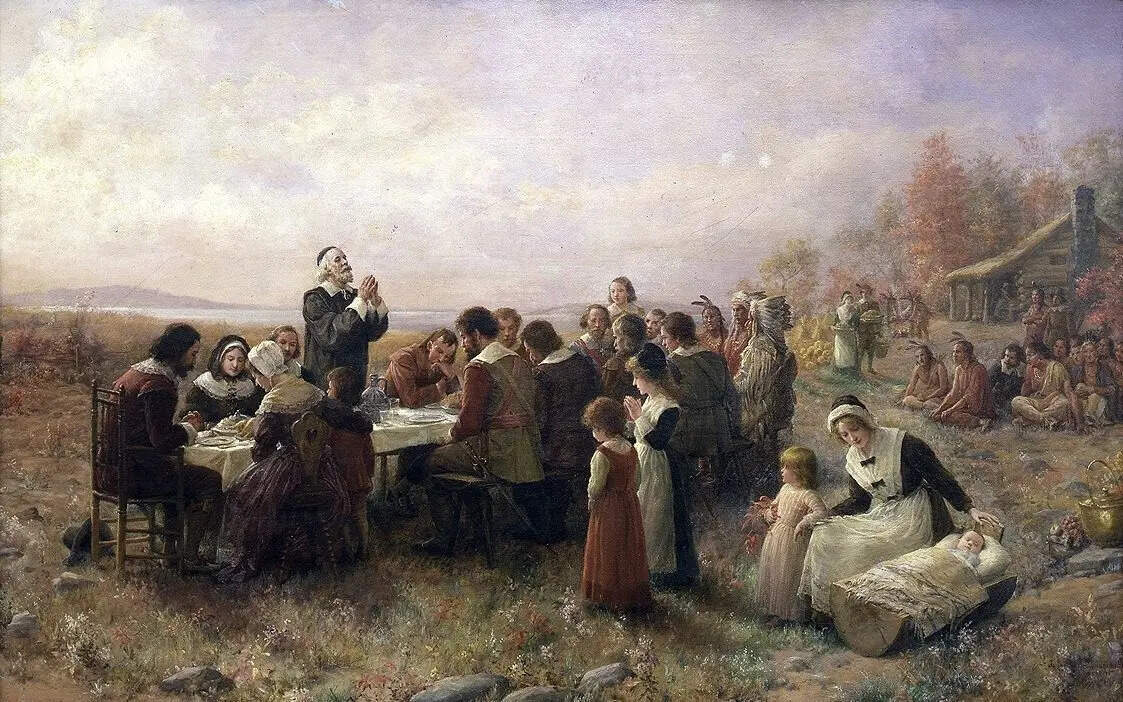
Jennie Augusta Brownscomb’s 1914 portrait, the first Thanksgiving in Plymouth, is now on display at Pilgrim Hall Museum in Plymouth, Massachusetts.

The story goes that in 1621, the English settlers in Plymouth were barely getting by – just as members of the Delhi Gymkhana were forced to attend the Press Club – when the Wampanoag tribe, led by Osemquin, decided to help them. The tribe was also weakened by disease and rivalry, and the first “Thanksgiving” was not a Norman Rockwell painting with gravy boats, but a strange political system, like the one we see in coalition governments over breakfast.While history suggests it was likely poultry, including turkeys, ducks or geese, and even deer, the turkey became the food mascot because it was native, large, practical and could feed several people at the same time.What began as a harvest meal turned into a national myth, especially in the 19th century, when Thanksgiving was promoted as a unifying American ritual. Abraham Lincoln proclaimed a national Thanksgiving in 1863 during the Civil War, and the familiar menu, including turkey, became part of the holiday’s emotional machinery.Legend has it that Abe’s son Tad pleaded to spare a Christmas turkey named Jack. JFK saw a man wearing a sign in 1963 that read, “Good food, Mr. President”, and decided it should see another birthday.
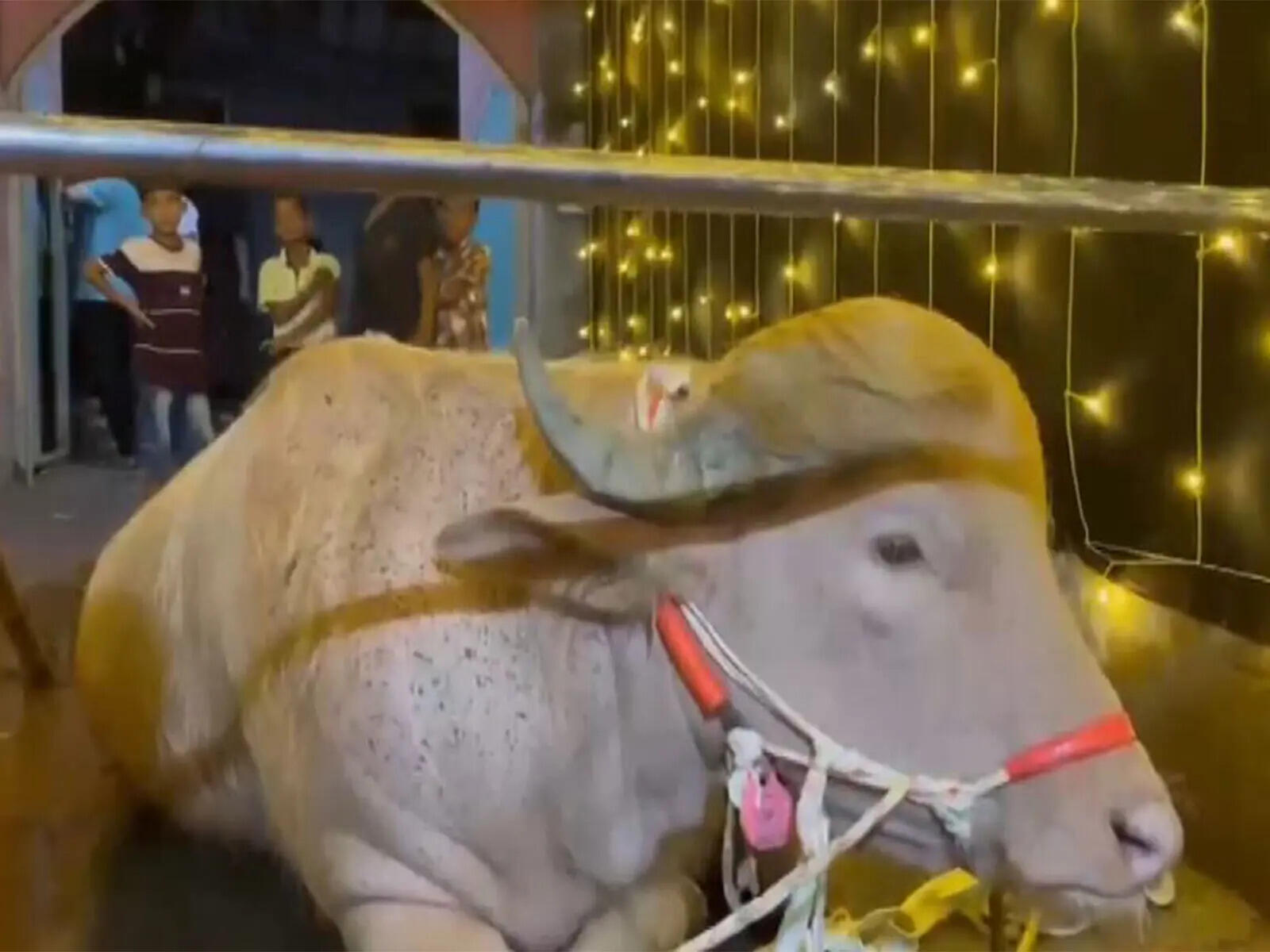
the buffalo survived

From viral sensation to zoo resident: Bangladesh’s ‘Trump’ buffalo saved from Eid sacrifice

Later, when reporters asked about those involved in the Iran-Contra scandal, Reagan scoffed at the pardon.George HW Bush formally announced the pardoning of the turkey in 1989, and it soon became part of the national skyline. And like most American things, like Ozempic and diabetes, Thanksgiving, turkey and forgiveness became part of the world’s spectacle.Thanks largely to the algorithm and the spectacle that followed, not unlike the chaotic sequence of events that saw its namesake become leader of the free world, it will live to see another day. But their survival shows us that humanity never outgrows its old ways: On some days, we sacrifice animals to appease the gods, and on other days, we sacrifice animals to feel a little more human.


Source link