A torn sleeve, a piece of fabric left over from the tailor’s shop, a piece of material too small to be sewn into any fabric again; These are usually either left in a corner of one’s room or thrown out. However, from similar pieces in Lucknow, an idea emerged which later gained recognition across the borders.Aliya Fatima Rizvi, a Class 9 student of La Martiniere Girls College, Lucknow, started collecting scrap pieces of cloth and making colorful hand puppets from them. His idea of converting waste materials into something useful not only proved innovative, but also became a means of educating children about waste utilization.This idea won first place 2026 National Geographic Slingshot Challenge.
From fabric scraps to award-winning innovations
Textile waste remains a big issue in India. Textile manufacturing plants, sewing centers and homes are major sources of textile waste. Most of these remain unused, even though they could be reused due to their perfect condition.This is what Aaliya thought of doing to resolve the issue. Instead of treating the discarded pieces as trash, they collected them and used them to make puppets that will help convey messages to children about recycling, reusing, and caring for the environment.The idea was recognized in the National Geographic Slingshot Challenge among other innovations from young innovators.
Bringing traditional art into modern classrooms
The project also holds a distinct local connection. Lucknow is famous for textile traditions like chikankari, while the northern part of India has an ancient tradition of storytelling through puppet shows. Puppets have been a source of entertaining people and conveying messages for generations.But now, this form of traditional performance is under threat due to competing forms of entertainment such as technology.But Alia’s idea brings together both the old and the new by using puppets to educate people on environmental issues. The result is something that is both familiar and fresh.
Teaching sustainability through puppets and stories
Children often connect more naturally to stories than lectures.This is why puppet-based education continues to be used in schools and awareness programs. They can make even the most difficult subjects accessible to children; Topics may range from health care, sanitation, or environmental protection.That’s exactly what Alia’s puppets do. To teach children about the importance of reducing waste, she demonstrates how such materials can have another purpose.It starts right from the beginning, when we see a doll made of bits and pieces of material. Every piece of stitching in this is proof that simplicity and sustainability can work together.
How Alia’s idea went from a small beginning to a grand vision
Although the entire project started as a small trial on behalf of her student at her school, she managed to expand its scope to a great extent.By transforming discarded pieces of cloth into puppets teaching environmental conservation lessons, Rizavi proved that environmental interventions don’t always mean lots of money and technology. Sometimes, this just means using materials that others would discard.In Rizavi’s project, craft activity, environmental protection and education are brought together in a common theme.
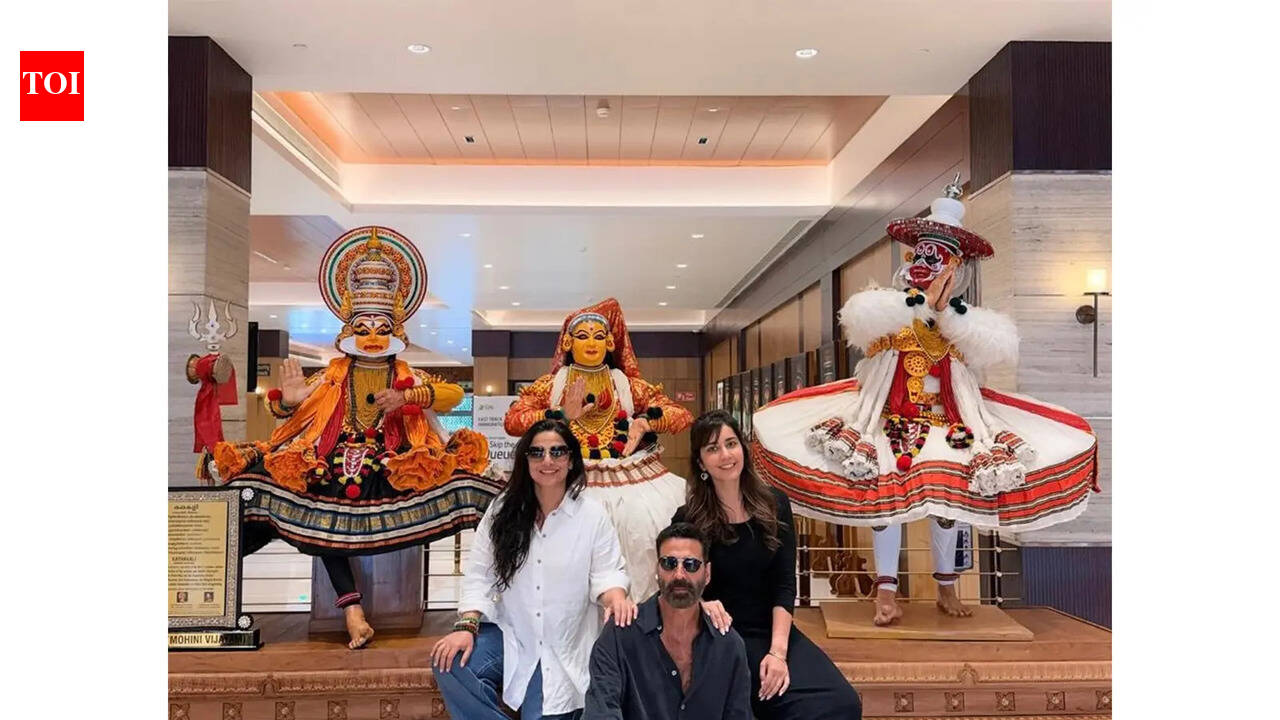
Akshay Kumar, Vidya Balan and Raashi Khanna are moving ahead with work on their yet-untitled romantic comedy directed by Anees Bazmee. The actors recently shot portions of a romantic track in Mumbai after completing the Kerala schedule of the film in May. The team will next travel to Dehradun in July to complete the remaining parts of the song, which focuses on the key relationships of the story.
akshay kumar vidya balan song shoot
Mid-Day reported that the unit is currently filming at Royal Palms in Goregaon, Mumbai. The report states that the film team is working at a fast pace after wrapping up the Kerala schedule. The romantic track stars Kumar, Balan and Khanna. It shows how Kumar and Balan’s characters fall in love for the first time. In the film they played the role of a married couple. The song also shows how Kumar’s character met Khanna’s character, who plays his ex-girlfriend.A source told Mid-Day, “A set depicting the interiors of the lead couple’s house, designed by Mayur Sharma, was erected at Royal Palms. Choreographer Vijay Ganguly shot portions of the song in three days. In July, the unit will move to Dehradun where they will film the remaining portions of the track.”This sequence gives the film a romantic thread and also establishes the relationship between the three central characters.
Anees Bazmee’s film is headed to Dehradun
The song which started in Mumbai will end in Dehradun schedule. According to the report, the team will shoot the pending portions next month. Bazmee’s film brings together Kumar and Balan in a romantic-comedy setting. Their marriage is a part of the story, while Khanna’s role adds another layer through her relationship with Kumar.The Mumbai shoot used home interior sets created for the lead pair. The design helped the team capture the emotional moments of their relationship. Ganguly handled the choreography of the track. The report describes the setup as a love story involving three characters. It was also noted that the film has not been titled.Kumar, Balan and Khanna will continue work on the project as the team prepares for the Dehradun leg. The song shoot marks another step in the film’s production after its first Kerala schedule.
Mohammed Siraj has been ruled out of India’s upcoming T20 series against Ireland and England after being advised rest under the workload management programme, the BCCI announced on Tuesday.The board said the decision has been taken as a precautionary measure to help the fast bowler recover ahead of the busy international season. Prasidh Krishna has been named as Siraj’s replacement for both the tours.Siraj was originally selected in India’s squad for the Ireland and England T20I series, but was not selected for the Asian Games in Japan.“Fast bowler Mohammed Siraj has been withdrawn from India’s squad for the upcoming T20 series against Ireland and England,” the BCCI said in a statement.“Following discussions between the BCCI medical team and the team management, Siraj has been advised rest as part of his workload management programme.”“This decision has been taken as a precautionary measure to ensure adequate recovery ahead of the long international season. The men’s selection committee has named Prasidh Krishna as Siraj’s replacement for both T20 series,” the BCCI said.Siraj was a late inclusion in India’s squad for the T20 World Cup and he took 19 wickets in all 17 matches for Gujarat Titans during IPL 2026.The right-arm fast bowler was also part of India’s one-off Test against Afghanistan, which ended in three days on Monday.Reigning ICC Men’s T20 World Cup champions India will begin their white-ball tour with two T20 matches against Ireland on June 26 and June 28.The team will then travel to England for a five-match T20 series from July 1 to July 11, followed by a three-match ODI series from July 14 to July 19.The ODI team is yet to be announced.
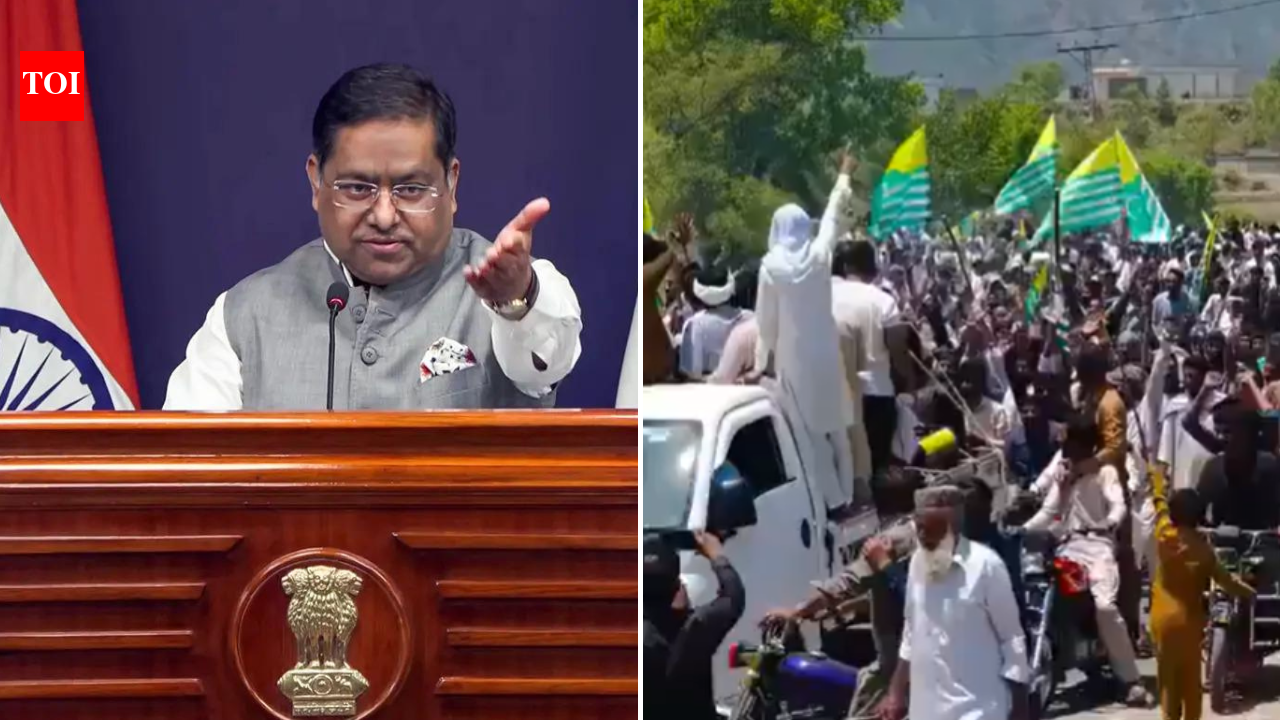
New Delhi: The Ministry of External Affairs on Tuesday condemned reports of violence against protesters in Pakistan-occupied Kashmir (PoK). Responding to the situation, External Affairs Ministry spokesperson Randhir Jaiswal said New Delhi has noticed “a pattern of fake news and videos coming from Pakistan” regarding the protests. “This is a desperate attempt by Pakistan to hide its failures and divert attention from its human rights abuses,” he said.Also read: Six security forces killed in terrorist attack in Peshawar amid growing unrest in PakistanJaiswal also mentioned reports of excessive use of force against civilians in PoK. He said, “There have been reports of serious police brutality in Pakistan-occupied Kashmir, in which several people have been killed and many injured. We hope the international community will hold Pakistan accountable for its misdeeds and abuses.”His comments came as tension continues to rise in PoK following deadly clashes between protesters and Pakistani security forces. The shutdown strike remained in effect in many areas, while reports revealed that communication services were disrupted following the violence in Rawalkot and Muzaffarabad. The protests have spread to several towns including Bhimbar and Kotli, with hundreds of people taking part in anti-government protests.According to reports, at least eleven civilians were killed during the clashes on Sunday night.The unrest has also attracted international attention. More than 50 British MPs have written to UK Foreign Secretary Yvette Cooper expressing concern over reports of communications blackouts, arrests and rising tensions in PoK. In their letter, the MPs said British Kashmiris struggled to contact relatives in the region and warned that restrictions on communications risked worsening an already volatile situation.
Have you ever noticed how quickly your brain recognizes something in a confusing image? That first impression is not random; Instead, it is quietly revealing how your nervous system is feeling at the moment. This Optical Illusion Personality Test, recently shared by Marina Neuralyan on social media, invites you to look at a mysterious image and pay attention to what you see first: a butterfly or a moth, something dark and dangerous, just an abstract pattern, or a fairytale creature like a bird or dragon. The immediate effect it has on you can tell whether you’re feeling anxious, fearful, calm, or frightened. It’s not about your personality type; It’s about the current state of your body.Wait a moment. Look at the image. Then figure out what your first instinct tells you about how you’re really feeling.
1. If you first saw a butterfly, moth or winged creature, it means…
“Your nervous system is reaching out for space and freedom. The body wants to get away from something that feels too tight, whether it’s a situation, a conversation, a routine. This is not avoidance. This is your system telling you that it needs space to breathe. Your step one: Identify what specifically feels too tight right now. Not to fix it; just to name it. If you saw two figures or people, it means that your The nervous system is oriented toward connection and security. You instinctively scan “who’s with me” before relaxing. Your Step One: Ask yourself whose approval you’ve been waiting for lately. You probably already know,” Marina wrote in the post.
2. If you saw something dark, dangerous or monster-like, it means…
“Your threat-detection system is going into overdrive. Increased cortisol, hypervigilance. That’s not your personality. This is your amygdala doing what it has learned to do. Your One Step: Three slow breaths; Longer outside than inside. This sends a direct signal to your vagus nerve: the threat has passed,” she shared.
3. If you just saw a pattern or abstract shape, it means…
“Your nervous system is in a more regulated state. You’re not rushing to find meaning. There’s more space between stimulus and response right now. It’s not coolness; it’s grounding. Your step one: Notice what helped you get here. It’s worth repeating,” she explained.
4. If you have seen a bird, dragon or any other creature with a story, it means…
“Your nervous system expresses itself through imagination and narrative. Your internal world is very active right now; possibly more so than the external. Your step one: check if you’re really living in more scenarios than what’s in front of you,” she said.How accurate was this test result for you? Tell us in the comments section below.
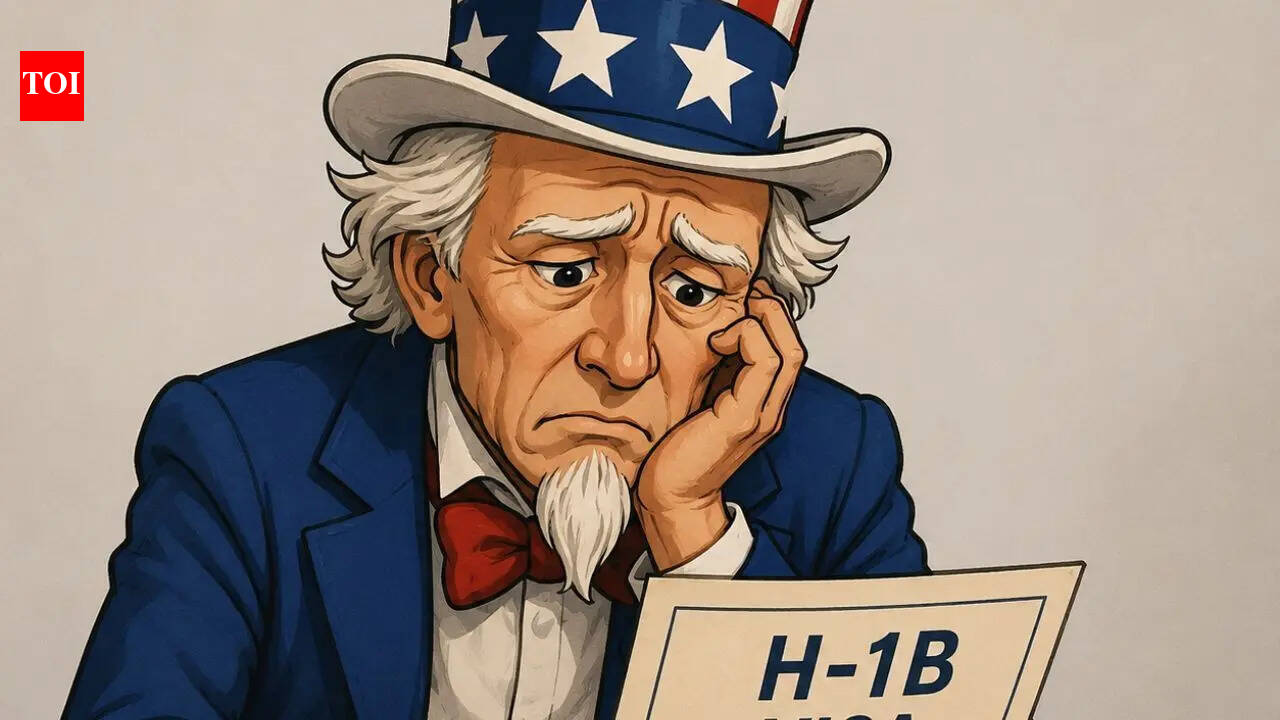
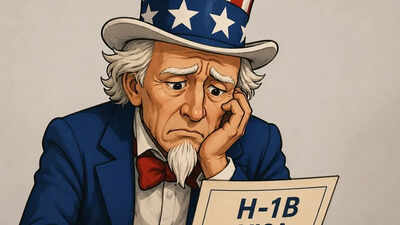
“Banning the entry of certain non-immigrant workers,” US President donald trump Announced as he signed a proclamation on September 19, 2025, unveiling one of the toughest changes ever to the H-1B visa program in the name of protecting American jobs and preventing alleged abuses of the system.Under the order, foreign professionals seeking some new H-1B visas will effectively face a hefty $100,000 hurdle, a move that immediately shocked the global technology industry and especially thousands of willing workers in India.However, the plan to put the brakes on the aspirations of many applicants was canceled on Monday after a federal judge in Massachusetts threw out Trump’s controversial $100,000 fee, saying the administration lacked the legal authority to impose an unauthorized tax on employers seeking to hire highly skilled foreign workers. The decision by U.S. District Judge Leo Sorokin is seen as one of the most significant judicial setbacks to Trump’s sweeping effort to restrict legal immigration through executive action.The Court concluded that the fee far exceeded the charges authorized by Congress, effectively turning it into a tax that the executive branch cannot impose unilaterally.
The $100,000 fee was not immigration policy, it was an economic boycott dressed up in legal language. The court has rightly recognized it as an unauthorized tax.
Rajeev Dabhadkar
What started the matter?
The controversy began when Trump, through a presidential proclamation, imposed a $100,000 fee for employers to pay the fee for some new H-1B workers recruited from abroad.The move immediately faced legal challenges from a coalition of 20 Democratic state attorneys general. They argued that the President had effectively created a new tax without congressional approval and had exceeded his authority under the Immigration and Nationality Act.States also warned that huge increases would discourage companies from sponsoring skilled foreign workers and harm state economies, universities, hospitals and technology industries that rely heavily on H-1B talent.In his ruling, Judge Sorokin agreed with the states’ argument and said the structure of the payment makes it a de facto tax.“Here, the substance and application of the $100,000 payment show that it is a tax, no matter what the payment is called,” the judge wrote. He also said that only Congress has the power to impose such a levy.
What actually changed in 2025?
In September 2025, Trump signed a proclamation called the Ban on Entry of Certain Nonimmigrant Workers, which introduced a $100,000 fee on new H-1B petitions filed on or after September 21, 2025.The administration said the measure is intended to improve the program, curb abuses, and protect American workers.Subsequent guidance from U.S. Citizenship and Immigration Services clarified that the fee will not apply to existing visa holders, renewals, or petitions filed before the effective date. Some exemptions were also outlined in “exceptionally rare circumstances”, including cases involving the national interest or a shortage of qualified US workers.The Trump administration defended this policy as part of its “America First” approach to immigration.Officials said the fee was designed to protect American workers, discourage companies from hiring cheap foreign labor, and generate revenue for immigration enforcement and border security.The White House also cited cases where companies had reduced domestic hiring while increasing H-1B sponsorship, arguing that the system was being abused.
Why did the court cancel it
In detailed findings, the court said the policy would cause widespread disruption in essential sectors such as education and healthcare.The plaintiffs argued that the fee would block faculty recruitment, put pressure on public universities, and reduce access to specialized medical professionals.He warned that the policy would “cause widespread harm throughout plaintiff states” by weakening health care systems, increasing the costs of state insurance programs, and reducing the availability of qualified professionals.Judge Sorokin agreed that these impacts reinforced concerns that the policy exceeded executive authority.
What is the H-1B program?
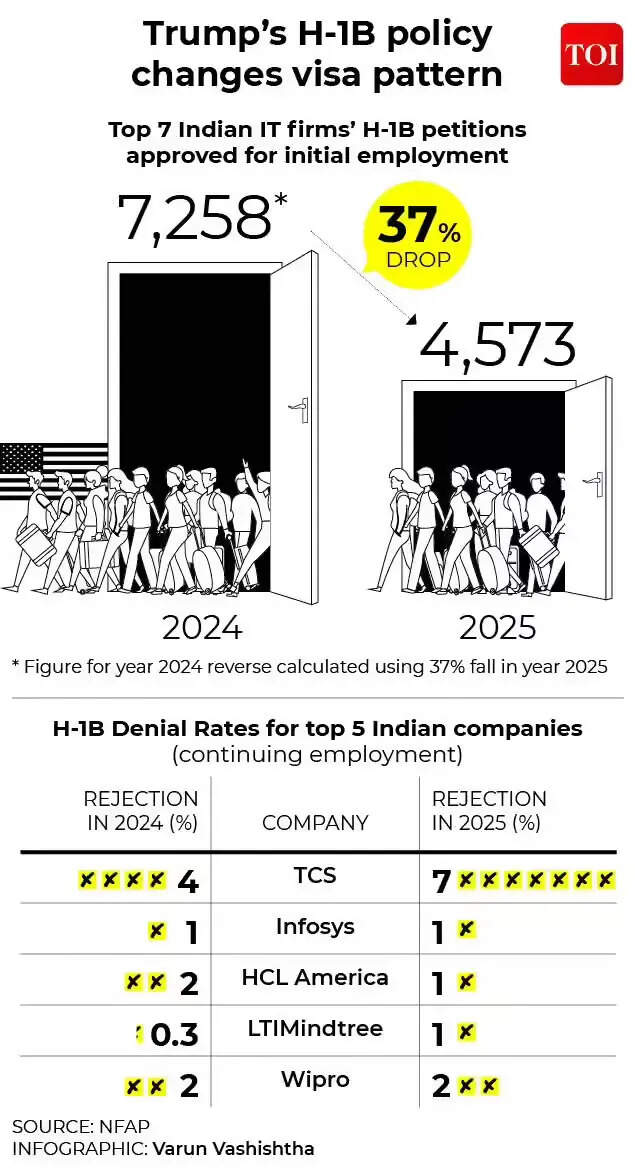
The H-1B visa allows U.S. employers to hire foreign professionals in specialty occupations that require at least a bachelor’s degree or equivalent expertise.These roles include software engineering, medicine, finance, biotechnology and academic research. This program is widely used by technology companies to recruit engineers and coders, especially from India and China.Each year, the US issues 65,000 regular H-1B visas, with an additional 20,000 reserved for applicants with advanced US degrees. Because demand far exceeds supply, the program operates through a lottery system.Indian professionals account for nearly 70 percent of all H-1B beneficiaries, making any policy changes to the program particularly important for India’s technology workforce.Before the Trump administration’s proposal, employers typically paid between $2,000 and $5,000 in filing-related costs, depending on the type of petition.The new rule dramatically increased that burden to $100,000 for some new H-1B applications, making it one of the largest immigration-related costs ever.
Why does this matter for Indian workers?
Indian professionals dominate the H-1B system, accounting for nearly three-quarters of approvals in recent years. According to USCIS data, the average salary for H-1B professionals in technology and engineering often ranges from $110,000 to more than $140,000 annually. Because of these income levels, H-1B workers contribute substantial tax revenues to federal, state, and local governments.Data cited by Pew Research shows that India is the top country of birth for H-1B workers. Nearly 73% of H-1B workers whose applications were approved in FY 2023 were born in India, with the majority of approvals each year since 2010 going to Indian-origin professionals. China is the second largest source, accounting for about 12% of approvals in 2023.Gil Guerra, an immigration policy analyst at the Niskanen Center, told the BBC in 2025 that because the fee would only apply to new H-1B recipients, it would be more likely to cause medium and long-term labor shortages rather than immediate disruption.
Indian professionals may also benefit from this decision, making it easier for US employers to hire specialized foreign talent. Kuldeep Kumar, partner at Mainstay Tax Advisors, who specializes in global mobility and cross-border taxation matters, said the decision could encourage employers who were hesitant due to the huge additional costs.“This is a favorable development and may encourage many US employers who require specialized foreign talent to access the global labor market, who may be reluctant to do so due to the significant cost implications of the tariff,” Kumar told TOI.
India cannot depend indefinitely on any one country as the primary destination for its skilled workforce.
Rajeev Dabhadkar
At the same time, Rajiv Dabhadkar, founder of National Organization for Software and Technology Professionals (NOStops), said that this decision has brought a broad lesson for India.He said the decision should also serve as a reminder that India cannot depend indefinitely on any one country as the primary destination for its skilled workforce.
what the experts said
Dabhadkar said the decision preserves the role of the H-1B program as an important channel for global talent.“While the $100,000 fee would not have been a routine cost increase, it would have fundamentally changed the business case of hiring foreign professionals, particularly Indians, who are the backbone of the H-1B workforce. If it had remained in place, many employers would probably have shifted work abroad instead of importing talent,” he told TOI.He argued that the measure was more than a routine immigration policy change.He said, “The $100,000 fee was not immigration policy, it was economic exclusion in legal terms. The court correctly identified it as an unauthorized tax.”Dabhadkar also said that the episode highlights the need to strengthen opportunities for India domestically.He said, “The deeper message for India’s knowledge workforce should be clear: the era of relying on a single geopolitical path for professional development is over. India must now invest as seriously in creating world-class opportunities at home as its professionals have invested in creating them abroad.”However, Kumar cautioned that the legal battle may not be over.“However, it is important to note that the Federal Court’s decision was based on a finding that the fee was, in fact, a tax. “Under the U.S. Constitution, the power to tax lies with Congress, not the President,” he said. “Therefore the decision is likely to be challenged on appeal. If the decision is stayed by the appellate court, the fee may remain in force until the case is finally resolved,” he said.
How did the Trump administration respond?
The Department of Homeland Security criticized the decision, calling it judicial overreach and accusing the court of interfering with immigration reforms.A statement from DHS said it “disagrees with this blatant judicial activism that seeks to dismantle President Trump’s historic efforts for immigration reform.”Trump also reacted sharply, saying, “These federal judges are really giving us a hard time. What’s happening with the court system is really crazy… They’re hurting our country very badly.”White House spokeswoman Taylor Rogers said the administration was confident the decision would be overturned on appeal.“President Trump has the clear legal authority to restrict entry to any class of aliens that he does not believe to be in the best interests of the United States, and that is exactly what he did,” she said.
what happens next?
The Massachusetts federal court’s ruling means the $100,000 fee cannot currently be enforced and must be set aside. However, the legal battle is not over yet. The Trump administration has already signaled its intention to appeal.The decision also highlights a growing legal divide. In a separate case, a federal judge in Washington previously upheld the charges, agreeing that the administration had broad authority under immigration law to restrict the entry of foreign nationals. That decision is now subject to appeal.What happens next will depend on higher courts, including the U.S. Court of Appeals for the First Circuit. The Trump administration may also seek a stay to keep the tariffs in effect while the litigation continues.However, for now, the ruling effectively halts the charges nationwide, providing relief to employers, universities, and thousands of foreign professionals who rely on the H-1B program to work in the United States.“In addition, other restrictive measures related to the H-1B selection process will remain in place. The long-term impact will depend on the outcome of the appellate proceedings and any subsequent policy changes,” Kumar said.
Just three days before the start of football’s biggest extravaganza, the FIFA World Cup, a round of strange controversies continues. What started as a simple ticketing and logistics failure has taken a darker turn, with footballers and staff detained at airports for several hours, and one official not even allowed to enter the United States.
The controversies are endless, with the latest one involving Africa’s best football referee, Omar Abdulkadir Artan. The Somali official was turned away by authorities at Miami International Airport and sent straight back on a flight to Istanbul, angering the entire football community.
Somalia’s referee Omar Abdulkadir Artan was sent back from the airport. (Photo: X)
The decision to deport the referee stunned the football world, especially since reports revealed that Artan was traveling on a diplomatic passport. After initial delays the Somali Embassy in Nairobi stepped in to help secure their visas, but US border control ultimately refused to let them into the country.
The incident prompted the Somali Prime Minister to issue a public statement calling on the US administration.
Hassan Ali Khaire said, “I am deeply disappointed by the news that Omar Arton, Africa’s finest referee and one of the world’s best referees, may be unable to officiate at the FIFA World Cup due to visa circumstances.”
He said, “Omar has earned his place through talent, hard work, professionalism and integrity. Having officiated at the highest levels of African and international football, his credentials speak for themselves. He represents not only Somalia, but the aspirations of millions of young Africans who believe excellence should be recognized on the world stage.”
This is not an isolated incident.
America’s growing confrontation in West Asia has created many problems ahead of the FIFA World Cup. Just two days earlier, on June 7, Iraq’s vice-captain and the country’s top striker, Ayman Hussain was detained and interrogated for seven hours.
Iraq striker Ayman Hussein was detained at the airport and interrogated for 7 hours. (Reuters photo)
Hussein is a charismatic individual who scored the goal that ensured Iraq’s qualification for the final.
The striker was not alone in this difficult situation. Another footballer from the team was stopped at the airport for questioning along with the team photographer.
While Hussain was eventually allowed into the country, the team photographer was barred from entering the United States.
“The Iran National Soccer Team is welcome to the World Cup, but I really do not believe that it is appropriate for them to stay here for the sake of their lives and safety. Thank you for your attention to this matter!” Trump wrote.
Despite concerns raised by Iran, FIFA refused to consider the team’s request to move matches outside the United States.
It doesn’t take a genius to figure out that the visa drama has affected the Iran football team too. The players were granted visas only 10 days before their first match in the tournament, essentially wasting their vital time for acclimatization and preparation.
However, several members of the Iranian contingent, including “key managerial and administrative members”, were not granted visas, according to Iran’s football federation, which accused the US of breaching its host obligations and violating FIFA rules.
Iranian Ambassador Ali Pasandideh said that 15 of the 70 members of the delegation that arrived in Tijuana have not been granted visas to enter the United States.
FIFA did not respond to requests for comment regarding the dispute.
Ticket sales: FIFA’s extortion policy
There is a joke going around among football fans on social media that if FIFA could do it then they would charge you for the air you breathe inside the stadium.
Football supporters in Europe launched a formal complaint with the European Commission in March over World Cup ticket prices. Supporters’ groups alleged that FIFA abused its position to impose excessive prices on fans.
The groups accused FIFA of massive betrayal when normal sales of tickets for the cheapest group-stage game ranged from $140 (roughly Rs. 13,000) to $8,680 (roughly Rs. 8.3 lakh) for the final.
The FIFA World Cup ticketing process has angered fans. (Reuters photo)
But how exactly has FIFA, one of the most powerful conglomerates in world sport, managed to offend football fans?
There have been many phases to the FIFA ticketing controversy, which is essentially where this whole saga of criticism began.
This is the first Football World Cup in recent memory where FIFA did not make the ticketing process public several years before the tournament.
As of September 2025, FIFA had released little information about how the ticketing process will work. For comparison, FIFA revealed ticket prices and booking process almost two years earlier, ahead of the 2018 World Cup.
As soon as the tickets were released, fans were in for a shock. The upcoming edition was priced significantly higher than the previous World Cup in Qatar.
Worse, FIFA adopted a dynamic pricing policy, meaning ticket prices could continue to rise as demand increases and the tournament gets closer.
FIFA earns a lot from resale of tickets
Major American newspapers reported that the process of purchasing tickets had been a major pain for ordinary fans. Many people have faced hours-long digital queues, with multiple reporting glitches resulting in them being shut out of the process and sent straight to the back of the line.
The system that was supposed to discourage ticket hoarders failed at FIFA.
The United States has a relatively unregulated ticket resale market, which FIFA is willing to embrace.
Instead of trying to stop the process, FIFA intervened and created an official platform where people who had already purchased tickets could resell them at a higher price.
FIFA has not set any limits on resale prices. Why would they do this? The governing body only wanted a 15 percent cut from tickets that were resold at a higher price through its platform.
This is probably a good time to remind everyone that FIFA is officially a non-profit organization.
Fans missed out on the best seats
Ticket-selling glitches aside, FIFA’s strangest controversy came when fans claimed they were cheated after buying their favorite seats.
The issue arose when several supporters pointed out that despite purchasing seats closest to the playing field, they would not get an unrestricted view because FIFA had decided to add additional seating structures in front of them.
It was not limited to one or two matches. Fans alleged that the issue affected venues throughout the tournament’s 104-match schedule.
FIFA has not publicly addressed these complaints.
FIFA World Cup: Travel permit denied
For many soccer fans, traveling to the FIFA World Cup is a dream. Many spend years saving money to attend even one edition of the tournament and experience football’s greatest spectacle in person.
Many Scottish football fans have been left heartbroken and financially strapped after their visa approval status changed at the last minute just days before the tournament.
Speaking to the BBC, some supporters said they had booked flights, hotels and internal travel after getting approval, but later discovered that their travel permits had been rejected.
“I’m amazed at how badly it’s gone!”
“I have waited 28 years for the World Cup…this is [cost me] Over £10k!”
With flights and hotel bookings low so close to the tournament, many people are sure to lose almost all their money as their reservations can neither be canceled nor rescheduled.
controversies fifa world cup
Hosting the FIFA World Cup is considered a celebration. It aims to bring together players, officials and fans from every corner of the world for a month-long celebration of football. Instead, just days before kick-off, the 2026 World Cup finds itself mired in controversy.
From referees being deported and players being detained at airports, to visa disputes, ticketing complaints and fans being pickpocketed, there have been stories that have little to do with football.
None of these issues, individually, are big enough to derail the tournament. The World Cup will still start on June 12. The stadium is likely to be full. Millions of people will still tune in to watch.
But overall, they paint an uneasy picture for FIFA and its hosts.
For an event that prides itself on being the largest and most inclusive sporting spectacle on the planet, it’s been a very easy road to beginning.
The signature track of Bengali action thriller Tarkata, ‘Bheshe Jaai’ is out, offering a preview of the emotional depth of the show. Directed by Shamik Roy Chowdhury, the series stars Vikram Chatterjee as a former officer who investigates a mysterious death, uncovering past secrets. The narrative promises a blend of mystery, action and dark humor with compelling performances from its cast.
Producer of upcoming Bengali action thriller Tarkata The series’ signature track was unveiled, be sentWritten and composed by Saumit Deb, which gives viewers a glimpse into the emotional and atmospheric world of the show ahead of its release.Directed by Shamik Roy Chowdhury, Tarkata A blend of mystery, action, dark humor and psychological intrigue. The story follows Agni, a former police officer who returns to his hometown to investigate a mysterious death, but finds himself entangled in the memories and secrets of his past.The series stars Vikram Chatterjee in the lead role of Agni, alongside Priyanka Sarkar, Miang Chang, Joydeep Mukherjee, Satyam Bhattacharya and Ayush Das. Talking about the series, the makers said Tarkata Whereas, brings together an engaging narrative, layered characters and compelling performances be sent Reflects the emotional essence of the story and its central characters. The newly released track is expected to increase the anticipation for the action-packed thriller.
Margot Robbie, our own “Barbie” is one star whose presence makes Hollywood feel a little more comfortable. From lighting up the screen in Barbie, The Wolf of Wall Street to walking the red carpet with her signature glow, the star never forgets to maintain a blend of glamor and spontaneity that feels very human.Recently her film The Wuthering Heights made headlines with various debates, discussions on toxic love, daring costumes and discourse.But what does the actress follow for her beauty?The Australian beauty’s flawless complexion is something fans have long admired for its natural glow and understated elegance.
minimalism
Margot’s makeup regime is something that focuses on “minimalism.”As reported by Women’s Health, though, the truth is that in true Aussie fashion, when it comes to her makeup preferences in real life, she keeps it low-key, even at big events like premieres and awards shows.Robbie has said, “I always wear a more monochromatic, natural look.”When Vogue UK asked Robbie what beauty advice she would give her 16-year-old self, her answer was to wear less makeup, especially because she prefers an ‘au natural’ look these days.“I remember being at that age when I thought I needed to wear a lot of makeup because I was old enough to wear it,” Robbie said.“I think it’s a confidence thing, you wear your mask all the time. As I’ve gotten older, I’ve gained the confidence to wear less. Now I’ll happily go out to dinner wearing a tinted moisturizer.”
remove your makeup before going to bed
Margot Robbie is strictly against going to bed with makeup on; This is the bare minimum in skin care! Multitasking is her game which is quite evident in the case of face washing.“I always start by cleansing in the shower, I don’t take too many steps because I don’t really have that much time, but I’m really anal-sensitive about clean skin,” Robbie tells Vogue UK.“Especially with my job, where they just keep moving the makeup up and down.”
Always be ready for non-surgical beauty treatments
Speaking about her love for trying new skin care treatments, Margot mentioned that she is never afraid to try them. She shared her travel experience with her best friend Soph where they tried to do something that was absolutely local.She said, “The funniest thing was last year I was backpacking in the Philippines, my best friend Soph and I were getting these treatments where we were in this hut completely covered in mud, and we were wrapped in banana leaves and essentially left there for three hours,” Robbie told Byrdie.“And after a while, the whole situation was so ridiculous that we looked like a mixture of Tutankhamun in a bowl of fruit, like it was the most absurd thing, and we started laughing all the way through.” You know what they say? Laughter is the best medicine, and the fastest way to a beautiful, natural glow.
His love for face masks
Skin preparation is extremely important for our Harley Quinn. So every time she prepares herself for a movie or a big event, she takes time to prep her skin with her makeup artist husband Dubroff.She applies patches under her eyes to cleanse her orbital area before wearing her “face” for the day.
When buying a property, two numbers matter: what the seller is asking and what the government believes the property is worth. The government’s number is known as the circle rate, also called the reckoner rate or guidance price, depending on the state.Circle rate is the minimum price set by the government for properties in a particular locality, below which they cannot be registered. Each state in India maintains its own circle rate list, updating it from time to time based on factors such as location, market trends and infrastructure development. These rates may also vary from one neighborhood to another in the same state.In theory, circle rates are meant to reflect prevailing property values in an area. They also serve as the basis for calculating stamp duty. This means that even if a property is sold for a price lower than the applicable circle rate, stamp duty is usually charged on the circle rate value.However, circle rates do not always correspond to actual market prices. In some cases, they may be lower than what buyers are willing to pay, while in others they may be higher than prevailing market rates, leading to a gap between the government’s valuation and real-world transactions.
Factors affecting circle rate of a property
Many factors shape the circle rate of a property.
Location is the biggest because properties in busy cities and urban centers have higher values than quiet suburban or underdeveloped areas.
The type of property also matters, with commercial properties generally having higher circle rates than residential properties due to their earning potential.
Ownership also plays a role, as government-owned properties tend to have lower rates than privately owned properties.
Furthermore, the size of the property has a direct impact as larger properties attract higher valuations.
Finally, good infrastructure and access to amenities like transport links, schools, hospitals and markets make an area more desirable, which in turn pushes up the circle rates.
How does this affect your payments?
While registering a property, stamp duty and registration charges are calculated at the circle rate or the actual transaction value, whichever is higher. In fact, the circle rate acts as a benchmark to determine the minimum price at which these charges are levied.Knowing the applicable circle rate can also strengthen the buyer’s negotiating position. This provides a useful reference point to assess whether the seller’s asking price is in line with the prevailing valuations in the area. In this way, circle rates help buyers arrive at the fair market value of the property.Before finalizing the purchase of a property, it is advisable to check the circle rates for the specific locality. When planning your budget, stamp duty and registration costs should always be estimated using the circle rate price, even if the agreed selling price is lower. This is because the government will use the higher of the two values at the time of property registration.