US judge invalidates travel and visa ban on 39 countries: what’s next?

US judge invalidates travel and visa ban on 39 countries: what's next?
A federal judge invalidated Donald Trump’s ban on 39 countries.

A US federal judge ruled Friday that an immigration ban imposed by the Donald Trump administration on 39 countries following last November’s DC shootings was unlawful. Chief US District Judge John McConnell in Providence, Rhode Island ruled that US Citizenship and Immigration Services had adopted a number of unlawful policies targeting people from 39 African, Asian, Latin American and Middle Eastern countries.The Obama-appointed judge said those policies have put the lives of countless immigrants living in the United States in uncertain legal jeopardy. He wrote, “USCIS’s hold on the decisions cannot be attributed to anything that these individuals have done wrong; rather, it arises entirely from the phenomenon of their birth.” “But the rule of law must apply equally to everyone, and as is clear here, USCIS neither ‘followed the law’ nor ‘did things the right way,'” McConnell wrote in the 135-page decision. “In fact, the agency has violated the same immigration laws that Congress has charged it to enforce, as well as the administrative laws that govern the agency’s actions.”The Department of Homeland Security did not immediately comment on the decision. The administration can appeal the decision and if they do not want the ban to be lifted, they can appeal for an immediate stay of the decision.The policies barring immigrants from any of the list of countries from receiving any immigration benefits, visas, green cards, travel visas were announced after two National Guard members were shot in Washington by an Afghan national, Rahmanullah Lakanwal. Lakanwal pleaded not guilty.The judge wrote, “The Court is reminded of an oft-repeated line in discussions of immigration policy: If people want to immigrate to the United States, they must ‘obey the law’ and ‘do things the right way.'” “This case is a perfect example of immigrants doing just that.”

list of 39 countries

full suspension: Afghanistan, Burkina Faso, Burma, Chad, Republic of the Congo, Equatorial Guinea, Eritrea, Haiti, Iran, Laos, Libya, Mali, Niger, Sierra Leone, Somalia, South Sudan, Sudan, Syria, YemenPartial suspension: Angola, Antigua and Barbuda, Benin, Burundi, Côte d’Ivoire, Cuba, Dominica, Gabon, Gambia, Malawi, Mauritania, Nigeria, Senegal, Tanzania, Togo, Tonga, Turkmenistan, Venezuela, Zambia, Zimbabwe

Source link

TMC’s gathering at Mamata Banerjee’s residence: 8 out of 80 MLAs arrived amid concerns of party split. india news

TMC's gathering at Mamata Banerjee's residence: 8 out of 80 MLAs arrived amid concerns of party split

New Delhi: Amid concerns of internal rift in Trinamool Congress (TMC), only 8 out of 80 MLAs and 6 MPs attended the meeting at Mamata Banerjee’s residence on Friday, ANI reported.Those present at the residence included MLAs Bina Mandal, Ashima Patra, Madan Mitra, Kunal Ghosh, Firhad Hakim, Shobhandeb Chattopadhyay, Biman Banerjee and Ashok Kumar Deb. The participating MPs included Dola Sen, Mala Roy, Kalyan Banerjee, Abhishek Banerjee, Derek O’Brien and Sudip Bandyopadhyay. “We have decided that the LOP appointed by the Speaker is illegal. We are approaching the court against it on Monday. We will file a petition before the High Court,” ANI quoted Kalyan Banerjee as saying after the meeting. He said, “We will fight against the way BJP is killing TMC workers and filing false cases against them. Banerjee said, we will fight on the streets, we will fight in the court.Moreover, Mamata announced a major organizational reshuffle in TMC as the party faces internal rebellion. The new leadership team includes many experienced leaders and loyalists.Abhishek Banerjee retained his position as national general secretary, while Derek O’Brien and Dola Sen were appointed national joint secretaries. Senior minister Chandrima Bhattacharya replaced Subrata Bakshi as state president of the party.The change comes days after TMC dissolved all its committees and frontal organizations across West Bengal.The TMC meeting took place against the backdrop of growing political unrest within the party, triggered by claims by a group of rebel MLAs, including expelled leaders Ritabrata Banerjee and Sandipan Saha. The dissidents have claimed that they have the support of 58 MLAs in the West Bengal Assembly and have opposed the party leadership’s decision to appoint Shobhandeb Chattopadhyay as the Leader of the Opposition (LOP).

Source link

Due to hidden arthritis, cataract patients almost lose their vision. mumbai news

Cataract patient almost loses vision due to latent arthritis

Mumbai: a 60 year old man welfare The resident’s routine cataract surgery turned into a race to save his eyesight after doctors revealed he had an unusual form of an autoimmune disease called rheumatoid arthritis (RA).RA is a condition in which the immune system mistakenly attacks the lining of the joints. But in the case of Subhash Pardikar, a former Kalyan Municipal Corporation employee, there were no joint-related symptoms.Pardikar underwent cataract surgery in both eyes at a local eye hospital in February. One eye healed normally, while the other continued to have redness, pain, and swelling. After treatment with antibiotics for a month, his ophthalmologist referred him to a senior doctor in Dadar. “The doctor in Dadar took a look at my right eye and asked me to consult a rheumatologist,” Pardikar said.Tests revealed that Pardikar’s RA markers were highly positive. Dr Snehal Patil, a rheumatologist at Fortis Hospital in Kalyan, who treated him, said, “His rheumatoid factor was elevated and RA-related antibody (anti-CCP) was more than 500. Yet he had none of the classic RA symptoms like swollen joints, prolonged morning stiffness or limited movement.”Pardikar said that four-five years ago he suffered from intermittent joint pain. “But the symptoms disappeared after a few months of Ayurvedic treatment,” he said.Dr. Patil diagnosed him with RA-associated autoimmune peripheral ulcerative keratitis, a rare but potentially blinding inflammatory eye condition. “Autoimmune diseases don’t always exist in textbook form. In some patients, rheumatological conditions can affect organs such as the eyes before other symptoms appear,” the doctor said.Dr. Sumeet Lahane of Raghunath Nethralaya and MGM College, Navi Mumbai said autoimmune peripheral ulcerative keratitis remains a rare but serious condition. “It is associated with thinning of the cornea and loss of vision. In the early stages, it can be difficult to diagnose,” he said.Dr. Lahane, who sees five to six such patients annually, said that once the diagnosis is made, treatment is easy. “In advanced cases, a patient may require a corneal graft,” he said.Pardikar also had a severely melted cornea, with his eye doctors using “tissue glue” to save his cornea. Dr. Patil started him on intravenous steroids, followed by oral steroids and an immunosuppressant drug called cyclophosphamide. Over the next few weeks, the swelling went down, the corneal damage stabilized and healing gradually began.

Source link

Nepal batsman achieves rare T20I feat; Included in the top list with Sanju Samson and Tilak Verma. cricket news

Nepal batsman achieves rare T20I feat; Joins the elite list along with Sanju Samson and Tilak Verma
Kushal Bhurtel of Nepal (PTI Photo/Shashank Parade)

nepal batsman Kushal Bhurtel He continued his extraordinary form in the Asian Games men’s cricket qualifier, equaling a rare world record with consecutive T20I centuries just days after hitting six sixes in a single over.The explosive opening batsman played another breathtaking innings on Thursday as Nepal defeated Malaysia by 167 runs to strengthen their bid for a place in the final of the tournament.After Malaysia elected to field first, Bhurtel and the wicketkeeper-batsman Asif Shaikh Launched a brutal attack on the top order. The pair added 134 runs for the opening wicket and reached three figures before the completion of the seventh over. After this, Nepal’s scoring rate slowed down a bit and by the end of the 16th over the team reached 230 runs for 2 wickets.Asif provided the early fireworks, scoring 68 runs from just 24 balls, before Virandeep Singh eventually finished his innings. However, the spotlight soon turned squarely on Bhurtel.The left-handed batsman completed his half-century in just 25 balls and needed only 19 balls to convert it into a century. He eventually walked out after scoring a sensational inning of 126 runs in 54 balls with the help of 14 fours and eight sixes.Riding on Bhurtel’s brilliance, Nepal scored 275 runs before securing a dominant win. Malaysia never threatened the target and were all out for only 108 runs.This century holds additional significance for Bhurtel. Having already scored a century in Nepal’s opening group match against China, he became only the 10th male cricketer in T20I history to register centuries in consecutive innings.This accomplishment puts him in an exclusive group with players like Riley Rossouw. sanju samson, Tilak Verma And Phil Salt.Bhurtel’s remarkable performance began in the opening match of the tournament against China, where he bowled one of the most devastating overs seen in international cricket. After completing his half-century inside eight overs, he targeted left-arm spinner Chen Zhou Yu in the next over and launched all six balls for six, with most of the blows coming straight over the bowler’s head.Despite the heavy defeat, Malaysia had already secured qualification for the 2026 Asian Games by defeating China in the competition. Now they will face Group B winner Hong Kong in the semi-finals. Meanwhile, Nepal will take on Oman as it continues its search for gold.However, for now, the tournament belongs to Bhurtel. In the span of four days, he hit six sixes in an over, scored consecutive T20I centuries and etched his name in the record books with one of the most explosive batting performances ever seen in Associate cricket.

Source link

Indian student battling for life after falling 25 feet at subway station in Chicago, family seeks help

Indian student battling for life after falling 25 feet at subway station in Chicago, family seeks help
A major accident happened with an Indian student in Chicago, when she slipped and fell 25 feet at a subway station.

Spandana Lagishetti, an Indian student studying at Elmhurst University, Illinois, suffered a major accident after she reportedly fell 25 feet at a metro station. According to a fundraising organization set up by his family to seek help, the accident occurred on May 30. “Spandana suffered a fatal fall from a great height and suffered multiple life-threatening injuries. She was rushed to Advocate Lutheran General Hospital, where she remains in the intensive care unit (ICU) and is receiving critical care,” the fundraiser said.“The extent of her injuries is heartbreaking. She suffered traumatic brain injuries, including bleeding around the brain, severe contusion to the brain, skull fractures and injuries to the blood vessels supplying the brain. Several ribs were broken, leaving both lungs partially collapsed and requiring emergency chest tube placement. The impact caused injuries to his liver and spleen, internal bleeding, fractures to his spine and lower back, and multiple fractures to his pelvis. “He is unconscious while doctors are struggling to recover.”“Unfortunately, her medical expenses are not covered by insurance, and the costs of her critical care continue to rise every day. Her family is facing an enormous financial burden during an already heartbreaking time. Her parents in India are desperately trying to travel to the United States to be with their daughter, while also grappling with the financial challenges posed by this sudden tragedy.”According to reports, Spandana came to America for her master’s degree after completing her B.Tech from Chennai. His father works as a cab driver.

Source link

NTPC to set up flexible coal based units to ensure reliable power supply. india news

NTPC to set up flexible coal based units to ensure reliable power supply

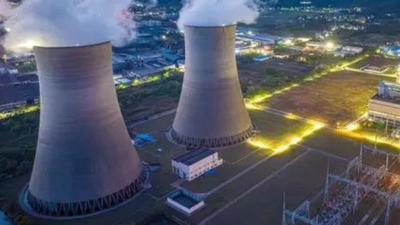
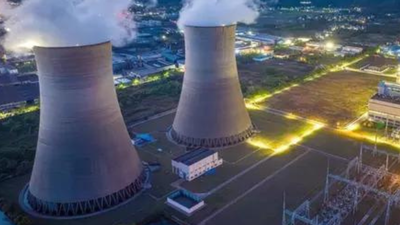
New Delhi: Amid concerns over the impact of intermittent renewable energy generation on grid stability, state-run NTPC has decided to install flexible coal-based thermal power units to provide balancing support and ensure reliable power supply.The power giant said the rapid expansion of renewable energy capacity is transforming the power sector and driving the country’s clean energy ambitions, but its growing share is also driving the need for flexible power sources that can respond quickly to changing grid conditions.NTPC has invited expressions of interest for sub-critical thermal power units of 150-250 megawatt (MW) capacity that can operate in two shifts and run at a minimum technical load of 25% of their installed capacity. These units are intended to balance fluctuations in electricity demand and renewable energy production rather than operating continuously at full load.“Through this initiative, NTPC aims to identify technology providers and EPC (engineering, procurement and construction) partners to develop highly flexible thermal generation solutions that strengthen their commitment to grid reliability, sustainability and India’s growing energy transition needs,” the company said.NTPC said its entire thermal fleet was currently operating at a technical minimum load of 55% during low demand periods and providing various grid-support services that help maintain frequency, keep reserve power available and adjust generation in response to fluctuations in renewable energy generation, thereby improving grid resilience and reliability.With limited hydropower capacity, gas-fired generation and large-scale energy storage systems to balance the grid, thermal power plants continue to play an important role in supporting the electricity supply.While solar energy contributes about 25% of the daytime electricity demand, its intermittent nature due to weather conditions, seasonal variations and geographical factors requires continuous support from thermal plants to maintain stable power supply and grid frequency. The role of thermal plants increases at night when solar energy is not available.Stating its preference for the technology, NTPC said its operational experience shows that sub-critical thermal units can provide greater flexibility than supercritical and ultra-supercritical technologies for certain grid-balancing requirements due to lower operational stress due to smaller parameter variations. The company said their ability to operate efficiently at low loads and adapt to frequent start-stop cycles could make them an important enabler for higher renewable energy integration in the future.

Source link

Tailor from Ujjain, who was killed in Kuwait, reached home in a coffin, cremated after a tearful procession. bhopal news

Ujjain's tailor killed in Kuwait reached home in a coffin, buried after a tearful procession

Ujjain: mortal remains of Manzoor AhmedThe 50-year-old Indian, who does tailoring for a living in the Gulf, arrived at his Raj Royal Enclave residence in Ujjain late on Thursday night, a day after he was killed in a suspected Iranian missile attack at Kuwait International Airport.Resting in a coffin, his remains were flown by a passenger flight from Kuwait to Ahmedabad airport, before being taken by road in an ambulance to his hometown, said his brother-in-law, who had gone to collect his body at the airport.The coffin was opened briefly before being shouldered to his residence. His widow Farida, sitting among the mourners at home, cried after taking one last look at her husband, who was about to return under much happier circumstances for a family wedding.After his tearful return home, his family calmed him down and prepared to give him the last rites.A funeral procession was taken out in the presence of a large number of community members before he was buried at the Begambagh cemetery.According to family members, Manzoor’s brother-in-law… Mohammad IsmailAlong with two other persons, he reached Ahmedabad airport in an ambulance to collect his body. “We had to wait for some time after the final remains arrived as some formalities had to be taken care of before handing over,” his brother-in-law told TOI.After this, on Friday afternoon, the body was taken to Raj Royal Enclave of Ujjain via Nagda.Firoz Pathan, a family member, alleged that no official from the local administration came to express condolences to the bereaved family, adding, “We raised Rs 27,000 to arrange for an ambulance to bring them home.” Congress leader of opposition in Ujjain Municipal Corporation Ravi Ray spoke to the collector, who assured help. No government official has yet come forward to assure financial help to the family. The government should show more sensitivity and stand with the grieving family.A crowd of mourners, including his widowed mother Shamim Bano, daughters Saba Parveen and Sana Parveen, son Mohammad Anas and other relatives, were waiting for his coffin. Within minutes of his coffin reaching home, the family members got busy in the last rites process.His cousin Munnawar Hussain Rahmani told TOI that Javed, an acquaintance who runs Malang Al Zaid, a tailoring shop in Kuwait where Manzoor worked, provided monetary assistance in bringing his last remains back to India.His friend from Kuwait, Mohammad Hanif Qureshi, a native of Hammal Wadi, Ujjain, also attended his funeral. Hanif, who runs a perfume business in Kuwait, said, “We used to meet almost every day in Kuwait. Since I am also from Ujjain, he had special affection for me. Since I was preparing to return to Ujjain in April, amidst the worsening (West Asian) conflict, I asked him to accompany me. However, he decided not to do so, citing the increased costs of flying at the time.“I was shocked to learn of his death in a tragic incident,” he said.Not only family members and relatives, but also residents of the neighborhood turned out in large numbers to attend his last rites, each in turn shouldering the bier for some time for a distance of about 100 metres. Subsequently, his remains were placed in a vehicle and taken to the cemetery, about 4 km away.

Source link

Unicorns in the United States: Indians are not stealing American jobs; They’re Building the Entire Human Resources Department

Unicorns in the United States: Indians are not stealing American jobs; They're Building the Entire Human Resources Department

TOI correspondent from Washington: For a country currently engaged in a vigorous debate over whether immigrants are stealing jobs, taking away opportunities, overrunning the system and generally causing the decline of Western civilization, the United States has produced a strange statistic.According to a new policy from the National Foundation for American Policy (NFAP), immigrants have founded or co-founded 455 of America’s 775 unicorns – the term for a private startup company valued at more than $1 billion – accounting for 59% of all US billion dollar start-ups. While about two-thirds of America’s unicorns were founded by immigrants or children of immigrants, about 80% have either an immigrant founder or an immigrant in a key leadership role. Notably, at a time of intense xenophobia directed at Indians by MAGA extremists, the report states that people of Indian origin (PIOs) own $96 billion worth of startups, more than any other immigrant group. This is far ahead of second place Israel (60), Britain (47) and China (41). In terms of startups, Indians are not only leading the league tables, they are batting on a different pitch, an achievement reflected in their median household income that is now above $150,000 – meaning Indian families in the US bring home about 80% more than the typical American family ($83,730) – a fact that runs contrary to the MAGA narrative that Indians are low-paid hard workers breaking out of the system. The timing of the report is excellent, coming amid one of the most intense outbreaks of anti-immigrant sentiment in recent American memory, much of it focused on Indians because of the never-ending political battle over H-1B visas. In recent months, especially since the return of President Trump for a second term, Indians in technology have been accused of taking over jobs, suppressing wages, monopolizing engineering departments and apparently committing the unpardonable crime of being good at science, technology, engineering and mathematics (STEM).While immigration advocates acknowledge that there are indeed many wrinkles in the immigration system and sporadic examples of scams in the job market, the NFAP study presents a remarkably positive picture of immigrant enterprise and contribution. The report found that immigrant-founded unicorns employ an average of 833 employees per company and that 455 immigrant-founded billion-dollar companies are collectively valued at $5 trillion. Add in the immigrant-founded unicorns that have gone public since 2016 and the figure exceeds $5.8 trillion. The NFAP report reads like an inventory of modern American innovation. Immigrant-founded unicorns dominate artificial intelligence, cybersecurity, biotechnology, healthcare, defense technology and enterprise software. Among the most valuable are OpenAI, Anthropic, Databricks, Stripe and SpaceX. One of the most interesting stories comes from Munjal Shah, co-founder and CEO of Hippocratic AI. According to NFAP, Shah’s father arrived in the United States with just $16 in his pocket to attend graduate school at Berkeley. Decades later, Shah’s company is valued at $3.5 billion and employs about 200 people.Another disconcerting NFAP finding for MAGA relates to international students. About 24% of American unicorn founders are those who first came to the US as an international student. An example cited in the report is Ashutosh Garg, who immigrated from India in 1998, earned a doctorate at the University of Illinois and went on to co-found both Bloomreach and Eightfold AI, with the two companies having a combined value of more than $4 billion and employing about 1,700 people. He also holds over 50 patents and thousands of research citations.While founding a company worth $1 billion is a remarkable achievement in itself, the NFAP has also identified at least 15 immigrants who have founded companies worth two or more billion dollars. Six of the 15 were born in India before immigrating to the US: Mohit Aaron, Jyoti Bansal, Arvind Jain, Ashutosh Garg, Ajit Singh and Sachin Nayyar. Others on the list include Noubar Affian (born in Lebanon), Al Goldstein (Uzbekistan), Michael Grönager (Denmark), Ignacio Martínez (Spain), Elon Musk (South Africa), Christopher Wray (France), Ion Stoica (Romania), Ilya Sutskever (Canada) and Vlad Tenev (Bulgaria). Of course, immigrants aren’t just sending resumes. They’re building entire human resources departments. For decades, American universities have served as the world’s largest talent magnet. The formula was simple: attract talented students from around the world, educate them, allow many of them to stay, and then watch them build companies. That model, which has served America well in every way, is now being challenged by MAGA radicals who believe that immigrants, including foreign students and guest workers, are stealing “American jobs.” Coincidentally, the same people who complain about foreign workers are many of them deeply invested in companies created by immigrants through their stock market portfolios and retirement accounts. “The collective value of immigrant-founded unicorn companies is set to grow by $168 billion to $5.0 trillion between 2016 and 2026, an increase of 2876% in just a decade. This does not include the more than $837 billion in combined market capitalization for unicorn companies with at least one immigrant founder that have gone public since 2016. These and other publicly traded companies benefits the pocketbooks of retirees and other Americans, including individual stock investments and mutual fund holdings,” the NFAP study notes.


Source link

‘Carry the tricolor, apply sunscreen, stay hydrated’: Cockroach Janata Party shares protest itinerary; Appealed to PM Modi. india news

'Carry the tricolor, apply sunscreen, stay hydrated': Cockroach Janata Party shares protest itinerary; Appealed to PM Modi

New Delhi: Cockroach Janata Party released a list of do’s and don’ts for the protest to be held at Jantar Mantar in Delhi on June 6. The organization which started as a “small joke” and has gained over 22 million followers on Instagram, more than any other political party in the country, has called on people to express their disagreement over alleged irregularities in NEET, CBSE, CUET and SSCDG. In a video posted on Twitter, CJP spokespersons repeatedly appealed to Prime Minister Narendra Modi to sack Union Education Minister Dharmendra Pradhan, calling him an “incompetent” leader, citing the paper leak.“June 6, 9am – See you tomorrow, fellow cockroaches. We won’t stop until we get Dharmendra Pradhan’s resignation! It’s time to turn this little joke into a revolution. Get ready to roam the streets of Delhi with peaceful and loving dissent. But remember the do’s and don’ts. All eyes are on us!” CJP said in a post on X.

The task list includes:

  • carry the tricolor and a book
  • record everything
  • report miscreants
  • Wear sunscreen, wear a hat, stay hydrated

Not in list:

  • Don’t come alone if you can help it
  • Don’t throw flowers, offer them.
  • Do not engage trolls and instigators
  • don’t act hungry

Source link

Harish Rao criticized Telangana Chief Minister Revanth Reddy on Krishna water issue. hyderabad news

Harish Rao criticizes Telangana Chief Minister Revanth Reddy on Krishna water issue

Hyderabad: Former Irrigation Minister T Harish Rao criticized the Chief Minister Revanth Reddy On his remarks on Krishna water usage, he alleged that the Chief Minister lacked even basic awareness about his government’s performance in security. TelanganaWater rights.Harish Rao said it was unfortunate not only for Palamuru but for the entire state that the CM was unaware of the actual utilization of Krishna water during his tenure.“A chief minister who lacks such basic understanding is a serious threat to the water rights of Telangana,” he said.Harish Rao, who wrote a letter to CM Revanth Reddy on Krishna water, questioned the Irrigation Minister. Uttam Kumar Reddy Also, were both the leaders unaware of the contents of the official communication issued by their respective governments?Harish Rao informed that on May 2, 2026, Telangana Engineer-in-Chief (General) had officially written to the Krishna River Management Board. According to the letter, Andhra Pradesh 74.23 per cent of the available Krishna water was utilized, while Telangana utilized only 25.77 per cent.He alleged that despite portraying himself as the son of Palamuru, Revanth Reddy has done virtually nothing for the undivided Mahabubnagar district during the last two and a half years.“The CM is only spreading lies and half-truths to divert attention from the failures of his government,” the former irrigation minister said.He accused the Congress government of betraying Palamuru by failing to complete the Palamuru-Rangareddy Lift Irrigation Scheme, which is designed to irrigate 12.30 lakh acres and provide drinking water to 1,226 villages.Harish Rao reminded that Revanth Reddy and the Congress party had opposed the project from the beginning and had filed cases which had delayed its progress.Despite these obstacles, he said, the BRS government successfully defended the project and expedited its execution. He said despite repeated attempts to create hurdles and instigate farmers against the project, the BRS government had acquired 27,191 acres of land for the Palamuru-Rangareddy project.He challenged the Congress government to tell how much land it had acquired for the project in the last two and a half years.“Wasting 30 months and then waking up after the government is halfway through its tenure to talk about land acquisition proposals is nothing short of shameful,” he said.End/

Source link