New rules for work permits in America: Asylum seekers may lose jobs under DHS proposal

New rules for work permits in America: Asylum seekers may lose jobs under DHS proposal
The US has proposed new rules for work permits targeting asylum seekers.

The Department of Homeland Security has come up with a new proposal, under which it will be restricted who can work legally in America and for how long. The offer is for non-citizens, but not skilled workers; The new proposal specifically targets those seeking humanitarian parole, non-DACA deferred status, and those facing possible deportation.The proposal states, “The Department of Homeland Security proposes to limit and clarify eligibility for discretionary employment authorization for aliens temporarily released on parole to the United States for immediate humanitarian reasons or significant public benefit, who have been granted deferred action, or against whom a final order of removal exists and who have been temporarily released from custody on an order of supervision.”But if the new proposal is implemented, it could be devastating for asylum seekers working in the US. “I think the argument is to discourage people from seeking asylum in the United States,” attorney Gordon Kwan said, “because if they can’t work to support their families, they’ll have to work illegally or go hungry.”Under the proposal, DHS would sharply limit eligibility for “discretionary” employment authorization, requiring applicants to prove economic need, pass enhanced background checks and meet stringent case-by-case criteria. One of the new rules states that non-citizens seeking to renew their work permits must work for an employer that uses the E-Verify system. The changes will also reduce the duration of many work permits to no more than one year and require renewal applicants to work for employers enrolled in the federal E-Verify system.

What did DHS say about the new proposal?

  • DHS estimates that this proposed rule will result in a reduction in the number of deferred action aliens, paroled aliens, and aliens with final orders of removal who are eligible for employment authorization.
  • This could result in reduced earnings for foreigners who are no longer eligible for employment authorization, while also ensuring and strengthening protections for American workers.
  • Lost earnings may result in transfers from the alien to his or her support network, which includes family members, community groups, non-profits or third-party organizations that provide for the alien and any dependents.
  • DHS anticipates that the proposed rule will increase the filing burden for aliens who remain eligible for employment authorization, while ensuring economic need for employment and allowing DHS to verify criminal history and biometrically verify an alien’s identity before issuing employment authorization, and demonstrating to the satisfaction of USCIS that the alien warrants a favorable exercise of discretion.
  • U.S. businesses that currently employ alien workers, who would no longer be eligible to renew their employment authorization under this proposed rule, may incur new costs due to employee turnover or compliance with the proposed E-Verify requirement that would ensure aliens’ authorization to work.
  • Ultimately, the proposed rule could result in a loss of tax revenue.

Source link

How affordable is India’s public transport: Fuel savings, rising costs: Is public transport affordable enough? | india news

Fuel savings, rising costs: Is public transport economical enough?

As fuel prices remain sensitive to global events and governments continue to urge citizens to use public transport, a practical question arises: how affordable is public transport in India today?While buses, metros and local trains are generally much cheaper than private vehicles, commuters often face additional costs such as last-mile connectivity, multiple transfers and longer travel times.An examination of fares in major Indian cities shows that public transport is the most affordable option on paper, but affordability varies greatly depending on where people live and how they travel.

Public transport is still the cheapest option

At a purely fare-based level, public transport remains the most affordable mode of urban mobility in India. A commuter traveling 10 to 15 kilometers per day in most major cities typically spends a fraction of what a private vehicle owner would spend on fuel alone.For example, a simple baseline look at a 10km trip reveals a clear difference in the different modes:This gap becomes even wider when vehicle ownership costs such as maintenance, insurance, parking, depreciation and financing are included.The challenge is not whether public transport is cheap or not. This happens almost always.

The hidden cost of last-mile connectivity

In many cities the fare for a metro ride can range from just Rs 20 to Rs 50. Still, reaching the metro station may add another Rs 20 to Rs 100 to the total journey. This “first mile and last mile problem” is one of the biggest barriers to public transport adoption.Consider a commuter whose home is three kilometers away from the nearest metro station. If an auto-rickshaw ride costs Rs 40 to Rs 80 each way, a passenger may spend more on reaching the metro than on a metro ride.In cities where feeder buses, e-rickshaws, bicycle-sharing systems or pedestrian infrastructure are weak, public transport affordability deteriorates rapidly. Transportation economists often argue that affordability should not be measured by ticket price but by total door-to-door cost. Using that metric, some travelers found that the savings on private vehicles paled in comparison to headline fare comparisons.

Buses remain the backbone of India’s strength

Despite the rapid expansion of metro rail systems, city buses continue to carry the largest share of urban public transport users. Buses remain the most affordable option for low-income and lower-middle-income families.Many state governments continue to subsidize bus operations, keeping fares below market rates. However, with the onset of new challenges, schemes like Delhi Pink Ticket, which made travel in buses absolutely free for women across Delhi, have been cancelled.And while subsidies have strengthened affordability, they have also increased the financial burden on state transport undertakings, many of which are already facing rising losses.

Metro: speed but not always lowest cost

Metro systems have transformed commuting in cities like Delhi, Bengaluru, Hyderabad, Mumbai, Kochi and Chennai. They are generally faster, more reliable and less affected by road congestion than buses. However, metro travel is not always the cheapest option. Bus fares are often low for short distances.For middle-class travelers, there is often a compromise between time and money.A bus journey costing Rs 15 may take 70 minutes, while a metro journey costing Rs 40 may take only 30 minutes.The value of time therefore becomes a major factor in determining whether passengers consider public transport economical or not.

Airport trips highlight the biggest drawbacks

The clearest example of urban transport affordability can be seen in airport connectivity. The difference between public transport and private transport costs is often dramatic.In many cities, airport cabs can cost five to ten times more than public transportation options.Yet many passengers continue to choose cabs due to luggage concerns, limited operating hours, or inadequate last-mile connectivity after reaching the metro or bus station.

travel share of income

Affordability isn’t just about rent. It’s about how much of a person’s income is spent on transportation. Globally, transportation planners often assess affordability by calculating transportation expenditures as a share of household income.Using that approach, the picture becomes more nuanced. For an employee earning Rs 20,000 per month, a monthly commuting bill of Rs 2,000 represents 10 per cent of income. For a person earning Rs 60,000, the same commute bill comes to only 3.3 per cent.A city-wise macro comparison shows how these costs measure up against estimated middle-to-lower-middle class income metrics:This metric often shows that public transportation may be relatively affordable for higher-income commuters while it may remain a significant expense for lower-income workers.

How do private vehicles compare?

The government’s appeal to save fuel inevitably raises a broader question: how much does private transport really cost? At current fuel prices, where petrol ranges between Rs 95 to Rs 105 per liter and CNG around Rs 77 to Rs 83 per kg in metros, a two-wheeler remains relatively affordable compared to a car, but it is generally more expensive than buses and suburban rail.Cars are quite expensive. A typical car traveler has to face the following expenses:

  • fuel: Cost per kilometer for petrol hatchback/sedan is Rs 7 to Rs 10.
  • Parking: Daily commercial parking charges range from Rs 50 to Rs 200.
  • Maintenance & Insurance: Fixed annual costs that add thousands to the bottom line.
  • Depreciation and Loan Repayment: EMI of most private vehicles on the road has become a silent monthly drain.

Once these costs are combined, public transportation often becomes dramatically cheaper. This is especially true in metropolitan areas where indirect costs increase significantly due to parking fees and congestion.

Why do many people still not switch?

If public transportation is cheap, why do many commuters continue to use private vehicles? The answer lies in other factors beyond fares. Commuters often cite convenience, reliability and time savings as the main reasons for continuing to use private vehicles.Common concerns listed by these travelers include:

  • Excessive overcrowding (for example, “super dense crush load” in suburban trains)
  • Long wait times and poor reliability
  • Safety and structural accessibility concerns, especially for women and senior citizens
  • Lack of predictable last-mile connectivity
  • Insufficient integration between transportation modes (e.g., separate ticketing for buses and metros)
  • Limited service in suburban and peripheral areas

The persistence of private vehicle use suggests that many travelers are willing to pay a premium for greater reliability, comfort and shorter travel times. As a result, affordability alone does not determine transportation choices.

How affordable is public transportation?

India’s public transport system is significantly cheaper than private transport for most urban journeys. On paper, the government’s appeal to use public transport instead of fuel-guzzling private vehicles makes economic sense.Yet affordability is more complex than bus tickets or metro fares. For millions of commuters, the real costs include the auto-rickshaw ride to the station, the time spent waiting for a connection, the reliability of services and the percentage of monthly income devoted to travel.Evidence suggests that public transport in India is generally affordable, but not equally affordable everywhere. In cities with strong networks and efficient last-mile connectivity, the savings can be substantial. In places where passengers have to pay heavily to access the main mass transport system, the economic benefits are significantly reduced.As governments encourage citizens to leave their vehicles at home amid global energy uncertainty, the success of that message may depend less on appeals to save fuel and more on whether public transportation can truly provide affordable, seamless door-to-door options.


Source link

Drug smugglers Baltej Singh and Himmatjit Kahlon lose final bid to overturn jail sentences in New Zealand’s biggest meth importation case

Drug smugglers Baltej Singh and Himmatjit Kahlon lose final bid to overturn jail sentences in New Zealand's biggest meth importation case

The two men behind New Zealand’s largest-ever methamphetamine importation operation have failed in their final attempt to overturn more than 20 years’ jail sentences, as the country’s highest court rejected their applications for permission to appeal.Baltej Singh and Himmatjit Singh Kahlon were convicted internationally drug trafficking Network that imported up to 741 kilograms of methamphetamine into New Zealand. The drugs were hidden inside the shipment, including bottles of beer and kombucha.According to Stuff, the court upheld the sentences given to both men and ruled that the punishment was appropriate given the seriousness of their crimes. Singh is serving a 22-year prison sentence, while Kahlon was sentenced to 21 years. Both men must serve a minimum non-parole period of 10 years.In its decision, the court said there was no reason to reconsider the sentence and found no error or unfairness in the earlier court decisions. The court said that severe penalties are appropriate given the scale of drug trafficking and the damage it causes to communities.The judgment also noted the human cost of the crime. Among the consequences linked to the drug network was the death of 21-year-old Aiden Sagala, who died after unknowingly consuming alcohol that had been mixed with methamphetamine and supplied during the criminal operation.Kahlon was convicted of drug supply offenses as well as murder.Singh was described during court proceedings as a senior member of the syndicate and a South Auckland-based businessman. Later, before leaving the application, he had first sought to hide the permanent name.According to The Indian Panorama, Baltej Singh is an Indian-origin businessman with roots in Punjab, while Himmatjit Singh Kahlon has also been identified as being of Indian origin.

Source link

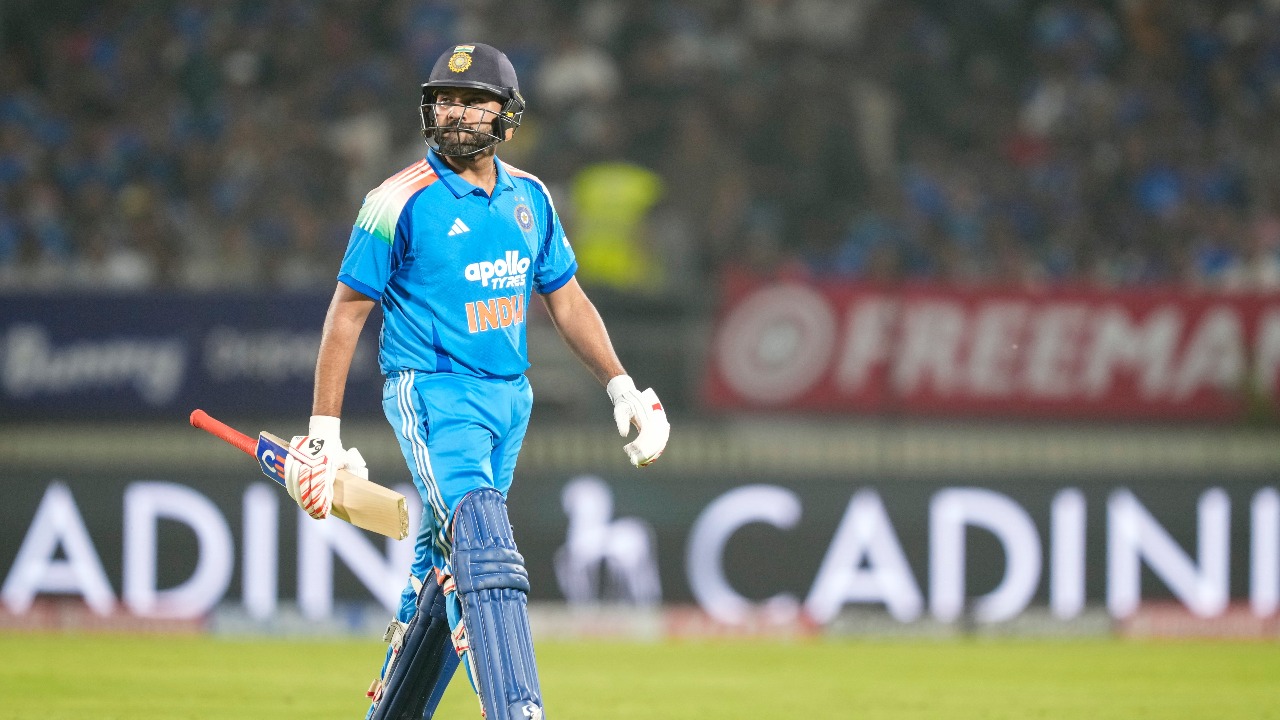
Rohit Sharma does not need to prove himself in ODIs, India needs his experience in 2027 World Cup: Dinesh Lad

Former India captain Rohit Sharma doesn’t need to prove his fitness or batting ability according to his childhood coach Dinesh Lad, who believes the experienced opener is vital to India’s hopes of winning the 2027 ODI World Cup.

Rohit has come under scrutiny after poor performance In his last ODI series against New Zealand, where he could only score 61 runs in three innings. However, Lad dismissed concerns over the 39-year-old’s form and fitness and insisted the criticism is unfair given Rohit’s stature and achievements in the format.

“Being a coach, I don’t think he needs to prove anything to anyone. He wants to win the ODI World Cup. I have spoken to him and he is very clear on what he wants in his career. I don’t think he needs to prove his fitness. Despite his age, he is still very fit,” Lad told PTI in a video on Friday.

The veteran coach said India would benefit greatly from Rohit’s experience in the next World Cup and backed him to overcome his recent struggles.

“Critics keep talking. That’s their job. If we want to reach the final, India need Rohit’s experience. There is no problem in terms of technique. Also, in 50-over cricket you need to be a bit methodical. Rohit has the technique which allows you to be methodical and then launch yourself,” Lad said.

He also pointed to Rohit’s IPL performance, where the opening batsman mixed aggression with smart strike rotation.

“Even in the IPL, he showed his technique. He was not only playing big shots but also taking singles and doubles. I don’t understand the critics’ point of view. My view is that he should be in the team.”

Lad also responded to former national selector Saba Karim’s recent comment that the next six months will be crucial for Rohit to cement his place in India’s plans for the 2027 World Cup.

He said, “Why are the next six months important only for Rohit? It is important for all the players. Everyone has to play well to keep their place in the team. I have 100 per cent guarantee that Rohit will definitely play the 50-over World Cup in 2027.”

“He will perform well during these six months and also in the subsequent months. If you give him a chance, he will perform well.”

After retiring from Test cricket and T20 International, Rohit is now completely focused on the ODI format. Lad believes the opener’s desire to lift the World Cup trophy is driving his preparations.

“He knows there has to be a reason if he has to play. The reason is to win the ODI World Cup. He wants to win it for India at any cost. I am sure he will retire only after this,” Lad said.

The coach revealed that despite being away from the two international formats, Rohit has been working hard behind the scenes.

“Rohit is not playing any other format, it does not mean that he has free time and is enjoying life. He is practicing every day and continuously working on his fitness. Don’t worry, he is preparing himself hard for the World Cup.”

Lad also reminded critics of Rohit’s remarkable ODI records, which include three double centuries and a record five hundreds in the 2019 World Cup.

“He has retired not from ODIs but from Tests and T20s. His ODI records are impeccable. I don’t think there is any pressure on him,” Lad said.

Giving final advice to his former disciple, Lad urged Rohit to rely on the formula that has brought him success in the past.

“Rohit should stay on the wicket and once he settles down, he becomes a dangerous player. I would like to remind him of how he played in the 2019 World Cup. He should play like that again.”

“He should play domestic 50-over matches. There will be criticism, but Rohit should ignore it. He should enjoy playing.”

– ends

published by:

-Saurabh Kumar

Published on:

June 5, 2026 19:00 IST

Source link

Henry Novak case: How Sikh man’s handcuffed murder of UK student sparked national outrage – Timeline of events

Henry Novak case: How Sikh man's handcuffed murder of UK student sparked national outrage - Timeline of events
Henry Novak (left) was killed by Vikram Singh Digwa (right)

The murder of 18-year-old Henry Novak by Sikh man Vikram Singh Digwa sparked national outrage after police bodycam footage showed the Southampton student being handcuffed after he was stabbed. The incident sparked protests across the UK and led to reactions from prominent figures ranging from Prime Minister Keir Starmer to billionaire Elon Musk.Novak, a first-year University of Southampton student, was stabbed by 23-year-old Vikram Singh Digwa on December 3, 2025, while walking home after a night out with friends.Moments after the attack, DeGwa reportedly claimed she was racially abused and attacked. When officers arrived, they handcuffed Novak, despite him repeatedly stating that he had been stabbed and could not breathe.The release of police bodycam footage, Degua’s subsequent murder conviction and nationwide protests turned the case into a national confrontation over policing, race and public trust.

Timeline of events in the Henry Novak case

3 December 2025

  • Henry Novak, 18, encountered Vikram Singh Digwa while walking home in Southampton.
  • After the confrontation, DeGava stabbed Novak five times.
  • DeGwa claimed racial abuse; Police initially handcuffed Novak.
  • Bodycam footage captured Novak saying, “I’ve been stabbed” and “I can’t breathe.”
  • Officers later realized he had suffered serious stab wounds and began CPR.
  • Novak died shortly after midnight.

4 December 2025

  • The police searched the house of the Digva family.
  • Officers recovered several offensive weapons, including swords, knives, knives and knuckledusters.
  • Investigators alleged that Digva’s mother Kiran Kaur had removed and hidden the murder weapon.

8 December 2025

  • Hampshire Police charged Vikram Digva with murder and possession of a sharp object.

early 2026

  • More than 650 mourners attended Novak’s funeral at Brentwood Cathedral in January.
  • Prosecutors alleged that DeGwa fabricated claims of racial abuse to portray herself as a victim.
  • Investigators accused Kiran Kaur of helping to remove and hide the murder weapon.
  • The secretly recorded conversations allegedly show Digva discussing the stabbing and agreeing to claim self-defense.

May 2026

  • Degawa’s murder trial began at Southampton Crown Court.

28 May 2026

  • The jury found Digva guilty of murder.
  • He was also convicted of carrying a sharp weapon in a public place.
  • Kiran Kaur was convicted of assisting an offender.
  • Jurors rejected DeGava’s claims of racial abuse and self-defense.

1 June 2026

  • Digwa was sentenced to life imprisonment with a minimum term of 21 years.
  • The judge described Novak as unarmed and defenseless.
  • Hampshire police have apologized for handcuffing a teenager after he was stabbed.

2 June 2026

  • Digwa appeared in court on separate weapons charges.
  • His father, Moga Singh, and brother, Gurpreet Digwa, also faced weapons-related charges.

June 2026

  • Bodycam footage from the night of the murder was released.
  • The footage caused widespread outrage across Britain.
  • “Justice for Henry Novak” rallies were held in Southampton.
  • Protesters demanded accountability for the police response.
  • Disorder broke out during some protests, resulting in injuries to police officers.

after punishment

  • The Attorney General’s Office received requests to review Degawa’s sentence under the inappropriately lenient sentencing scheme.
  • Prime Minister Keir Starmer met with Novak’s family and described the case as “horrific” and “shocking”.

How did the opposition emerge?

Public anger intensified after details of the case and bodycam footage came to light. In the footage, the teen can be seen lying on the ground as officers handcuff him and try to make him sit. He repeatedly tells police that he has been stabbed and is having trouble breathing.“You’ve been stabbed? Where?” an officer can be heard asking. The other replies: “Don’t think you have to, friend.”Hundreds of people gathered at “Justice for Henry Novak” rallies in Southampton demanding accountability and greater investigation of the police response.The matter soon entered the political arena. Nigel Farage and Rupert Lowe repeatedly raised concerns about the handling of the incident, while Prime Minister Keir Starmer met with Novak’s family members and pledged that lessons would be learned.Tech billionaire Elon Musk also commented on the matter on social media, helping draw international attention to the controversy.As the protests intensified, the Novak family urged supporters to seek justice through legitimate means and not let Henry’s death become a source of division.

Source link

‘Public anger forced Congress to change CM in Karnataka’: PM Modi india news

'People's anger forced Congress to change CM in Karnataka': PM Modi

New Delhi: Prime Minister Narendra Modi on Friday said the Congress was forced to change its chief minister in Karnataka due to public anger against the state government.The Prime Minister made the remarks while making a broader point on India moving away from “negative politics”.He was speaking at an event in Surat, his home state Gujarat.Prime Minister Narendra Modi said, “There is a huge resentment among the people of Karnataka against the Congress government and that is why the party had to change its Chief Minister there.”He described India as a country of citizens “full of aspirations”.“India has moved far beyond negativity; it is a nation defined by optimism and driven by extraordinary aspirations. Its citizens are full of dreams and determination and are committed to turning that determination into reality. When the collective will of the nation is strong, it can achieve any goal and this is the real strength of India.In Karnataka, DK Shivakumar on Wednesday succeeded rival Siddaramaiah as chief minister, ending the long-running leadership struggle that had been going on since the Congress returned to power by defeating the BJP in May 2023.The Congress leadership had initially chosen veteran Siddaramaiah as the chief minister, while Shivakumar was appointed deputy chief minister with the understanding that he would take over during the second half of the five-year term.The controversy escalated after Siddaramaiah did not step down on completing 2.5 years in office in November last year.In late May, the party leadership resolved the issue by convincing Siddaramaiah to step down and installing Shivakumar in the top post.

Source link

‘Dhootha 2’ announcement brings double celebration for Naga Chaitanya as he debuts as producer

'Dhootha 2' announcement brings double celebration for Naga Chaitanya as he debuts as producer

Naga Chaitanya is set to revisit one of his most successful digital projects as the actor has officially announced the next chapter of the supernatural thriller series ‘Dhootha’. Along with confirming the sequel, Chaitanya also revealed a major professional milestone, which is his debut as a producer. The actor shared an update on social media expressing his excitement about returning to the mysterious world of the series while taking on a new responsibility behind the camera.

A new chapter as producer for Naga Chaitanya

While Chaitanya has spent years building his career as an actor, ‘Dhootha 2’ will see him expand his horizons by entering content production for the first time. Sharing the announcement he wrote, “Auspicious beginning as I enter the second chapter of Dhuta and my first step as a producer. Onward and upward. Here’s to the magic that comes.” The project will also feature the actor in a dual role, adding another layer of intrigue to the highly anticipated sequel. Many of the key cast members from the first season are returning for the follow-up. Priya Bhavani Shankar will reprise her role as journalist Priya Avudhuri Parvathy Thiruvothu DCP Kranti Shenoy’s return is certain. Filmmaker Vikram Kumar, who directed the acclaimed first season, will once again direct the series. Although production has officially begun, the makers are keeping further details about the story and additional cast under wraps.

Review of the world of ‘Dhootha’

Released in 2023, ‘Dhootha’ marked the OTT debut of Naga Chaitanya and received praise from both audiences and critics for its unique blend of supernatural mystery and investigative drama.The series followed journalist Sagar, whose life takes a terrifying turn when mysterious newspaper clippings begin to predict tragic events involving him. As the prophecies begin to become reality, he finds himself entangled in a web of murders and supernatural mysteries while trying to prove his innocence.The first season had an ensemble cast that included Prachi Desai, Dnyaneshwari Kandregula, Tharun Bhaskar, Anish Kuruvilla, Rohini, Tanikella Bharani and Pasupathi.

Do you think Naga Chaitanya will make a good producer?

The long wait for the sequel is over

Prime Video had renewed ‘Dhootha’ for a second season some time ago, but the development of the project took longer than expected. With filming now beginning, fans can finally look forward to returning to the dark and unsettling universe created by Vikram Kumar. The success of the first season naturally raised expectations for the sequel, especially given the show’s reputation for combining psychological tension, supernatural themes, and crime investigation elements.

More than just a sequel

For Naga Chaitanya, ‘Dhootha 2’ represents more than the return of a popular character. The project marks a significant evolution in his career as he balances acting with producing for the first time. As the cameras start rolling on the second season, the actor is not only revisiting one of his most acclaimed digital ventures but is also taking his first steps towards shaping stories from behind the scenes, opening up an exciting new phase in his professional journey.

Source link

UAE Sports Betting: UAE makes history with the launch of the first licensed sports betting and iGaming platform. world News

UAE makes history with launch of first-ever licensed sports betting and iGaming platform
UAE opens doors to regulated sports betting with first licensed online platform / Image – file

The United Arab Emirates has taken an important step in developing its regulated gaming industry by licensing its first online sports betting and internet gaming platform, marking a major milestone in a sector that has grown rapidly since the creation of the country’s gaming regulator.The platform, known as Play971, has been approved by the UAE General Commercial Gaming Regulatory Authority (GCGRA), the federal body responsible for overseeing and regulating all commercial gaming activities across the country. The launch marks the first time that a fully licensed online sports betting and iGaming operator has been authorized to operate within the UAE’s new regulatory framework.

UAE’s new gaming stage

GCGRA was established in September 2023 to create and oversee a national framework for commercial gaming, including lotteries, internet gaming, sports betting and land-based integrated gaming resorts. Since then, the regulator has gradually created a licensing system designed to ensure consumer protection, responsible gaming and regulatory oversight.Play971 is operated by Coin Technology Projects LLC, an Abu Dhabi-based company that is officially listed by the regulator under both the “Internet Gaming” and “Sports Wagering” license categories. The company is headquartered in the Yas Creative Hub in the twofour54 district of Abu Dhabi. Industry observers see this approval as one of the clearest signs yet that the UAE is moving forward with a tightly regulated commercial gaming ecosystem under federal supervision.

What sports and betting options are available?

According to GCGRA, Internet gaming includes online activities conducted through websites and mobile applications that involve chance, skill, or a combination of the two. Examples cited by the regulator include bingo, poker, blackjack, roulette, baccarat, slots, fantasy sports, eSports competitions, peer-to-peer games and skill-based gaming products.The sports betting category allows licensed betting on sporting events and athlete performances. The regulator says sports betting can include football, cricket, basketball, tennis, horse racing and other recognized sports. The launch therefore introduces both sportsbook services and casino-style online gaming products under a regulated environment to eligible users in the UAE.

Rules for UAE residents

The Platform operates under a number of restrictions set out in its terms and conditions.Users must be at least 21 years of age and physically present in the UAE to create an account, deposit funds or participate in games. The platform also prohibits the use of virtual private networks (VPNs) and other methods used to hide a user’s location or identity. According to published rules, the platform may withhold winnings if users violate these requirements.Play971 also notes that access may be restricted in certain “sensitive geographic areas” identified by the regulator. The company says it has implemented responsible gaming tools, player safety measures, safeguards against underage participation, and access to support services designed to promote responsible play.GCGRA has repeatedly stressed that only licensed operators can legally conduct commercial gaming activities in the UAE and that participating in unauthorized gaming activities can result in fines.

UAE’s comprehensive gaming strategy

Play971’s approval comes amid a massive expansion of the UAE’s regulated gaming sector.According to GCGRA, the license is one of a growing number of approvals to be issued since the regulator’s inception. Earlier licenses included The Game LLC, operator of the UAE Lottery, and a license awarded to Wynn Al Marjan Island in Ras Al Khaimah, which is developing the region’s first integrated gaming resort. Several gaming-related technology and service providers have also received regulatory approval. Analysts consider the launch of the country’s first licensed online betting platform as another milestone in the UAE’s carefully managed approach to commercial gaming. Rather than wide open the market, regulators have focused on a phased rollout based on strict licensing, inspection and responsible gaming requirements.For the UAE, the arrival of Play971 is much more than the launch of a new website. This signals the continued development of an entirely new regulated industry that, only a few years ago, did not formally exist within the country’s federal structure.

Source link

Evening News Wrap: India’s GDP growth in the last quarter was better than expectations; K Annamalai started a new political movement and much more. india news

Evening News Wrap: India's GDP growth in the last quarter was better than expectations; K Annamalai starts new political movement and more
  • India’s economy grew 7.8 percent in the last quarter of FY26, taking the full-year growth rate to 7.7 percent and exceeding estimates.
  • Former Tamil Nadu BJP chief K Annamalai has launched a new political movement, signaling a change in his political journey after quitting the BJP.
  • Expelled TMC leader Ritabrata Banerjee has claimed that support for his rebel faction is increasing, increasing political uncertainty in West Bengal.
  • Iranian Foreign Minister Abbas Araghchi has said he was present during the attack that killed former supreme leader Ali Khamenei, giving new information about the early days of the conflict.
  • Russian President Vladimir Putin has renewed his offer to jointly develop and produce Su-57 fighter jets with India, highlighting defense cooperation between the two countries.

Here are the top stories of the day

India’s GDP growth in the last quarter of FY 2026 was better than expectations

India’s economy grew 7.8 percent year-on-year in the January-March quarter of FY26, beating expectations and taking the full-year growth rate to 7.7 percent. Strong performance in the services, manufacturing and construction sectors contributed to the expansion, cementing India’s position as one of the world’s fastest growing major economies. Read the full story

Annamalai started a new political movement after leaving BJP

Former Tamil Nadu BJP chief K Annamalai has launched a political movement called “We the Leaders”, inviting people interested in education, health care, sustainability and youth leadership to participate. He said the initiative aims to promote a development-oriented political culture and has outlined a governance model focused on community engagement and data-driven decision making. Read the full story

Ritabrata Banerjee claims growing support for TMC rebel faction

Expelled Trinamool Congress leader Ritabrata Banerjee has claimed that support for the rebel group he leads will continue to grow within the West Bengal Assembly. His comments come amid the ongoing turmoil in the state’s political landscape with competing claims to leadership positions and changing political alliances. Read the full story

Araghchi referred to the attack that killed Iran’s former supreme leader

Iranian Foreign Minister Abbas Araghchi has said he was inside former supreme leader Ali Khamenei’s office when it was attacked during the initial wave of US-Israeli attacks on Tehran. He then described the uncertainty surrounding Khamenei’s fate and reiterated Iran’s position on regional security and the broader consequences of the conflict. Read the full story

Putin revives proposal for joint India-Russia Su-57 fighter program

Russian President Vladimir Putin has said that Moscow is ready to jointly develop and advance the fifth generation fighter jet Su-57 with India without any restrictions. The proposal comes as India evaluates future air combat requirements while pursuing its indigenous advanced multirole combat aircraft program and comprehensive defense modernization plans. Read the full story

Source link

Oxford Vaccine: The world’s first AI-designed vaccine developed by UK scientists has entered human trials World News

The world's first AI-designed vaccine developed by UK scientists has entered human trials
Trial of world’s first AI-designed vaccine begins in Oxford

A vaccine designed with the help of artificial intelligence has entered human trials in what scientists are calling a world first for medical research and drug development.The vaccine, developed by researchers at the University of Oxford in partnership with biotechnology company Basecamp Research, is being tested against a disease called Crimean-Congo hemorrhagic fever (CCHF), a potentially deadly virus that is primarily spread by tick bites. Researchers believe this project could demonstrate how AI can dramatically speed up the process of creating vaccines and treatments for emerging infectious diseases.The trial is an important step forward for a technology that many experts believe could reshape the future of medicine, reducing years of laboratory research to months, while helping scientists respond more quickly to global health threats.The vaccine has been developed to protect against Crimean-Congo hemorrhagic fever, a disease that causes severe bleeding, organ failure and, in some cases, death.The virus is found in parts of Africa, Asia, the Middle East, and Eastern Europe and is considered one of the priority pathogens with pandemic potential by the World Health Organization. Mortality rates can reach 40% in severe outbreaks, and there is currently no widely approved vaccine available for human use.The researchers chose CCHF because it represents exactly the type of emerging infectious threat that may be difficult to deal with using traditional vaccine development methods. The virus also evolves and varies in different regions, making it a challenging target for scientists.The Oxford-led team hopes the new vaccine can provide broad protection against multiple strains of the virus, improving preparedness for future outbreaks.Unlike traditional vaccine development, which often relies on years of laboratory experimentation, the new approach used artificial intelligence to analyze large amounts of genetic and biological data.Basecamp Research, which specializes in using AI to study biological information, supplied one of the world’s largest databases of genetic sequences collected from ecosystems around the world. The machine-learning system then examined these datasets to identify the parts of the virus that are most likely to trigger a strong immune response.Scientists used that information to design vaccine components capable of targeting multiple versions of the virus simultaneously.The researchers say the AI ​​was not responsible for creating or testing the vaccine, but played a key role in identifying promising targets far more quickly than traditional methods.The project demonstrates how artificial intelligence can act as a powerful research tool, helping scientists discover hidden patterns within huge datasets that would be difficult for humans alone to analyze.The first phase of clinical trials is currently underway oxford vaccine Group, part of the University of Oxford.The study will primarily investigate whether the vaccine is safe and whether it produces the desired immune response in healthy volunteers. Early-stage trials are designed to assess safety before researchers move on to larger studies testing effectiveness.Professor Dame Sarah Gilbert, whose work on the Oxford-AstraZeneca COVID-19 vaccine brought her international prominence during the pandemic, has highlighted the potential of AI-assisted vaccine development to speed up the response to future disease outbreaks.Researchers involved in the project say the trial represents the first known example of a vaccine reaching human testing through this type of AI-driven biological discovery process.Scientists believe that the importance of this project goes beyond that of a disease.Traditional vaccine development can take years of laboratory work, data collection and testing before a candidate reaches human testing. By identifying promising biological targets much earlier, AI can help reduce both costs and development timelines.Researchers say this technology could prove particularly valuable in tackling emerging diseases, pandemic threats and viruses that currently receive limited scientific attention due to funding or logistical challenges.The experience of the COVID-19 pandemic demonstrated the importance of rapid vaccine development. Many experts now see artificial intelligence as one of the most promising tools to prepare the world for future health emergencies.While the Oxford trial is in its early stages and many hurdles remain before any vaccine can reach approval, the project has already achieved something important. For the first time, a vaccine designed with the help of artificial intelligence has gone from computer models and biological databases into the arms of human volunteers.If successful, it could mark the beginning of a new chapter in medicine, where algorithms help scientists design vaccines that protect future generations.

Source link