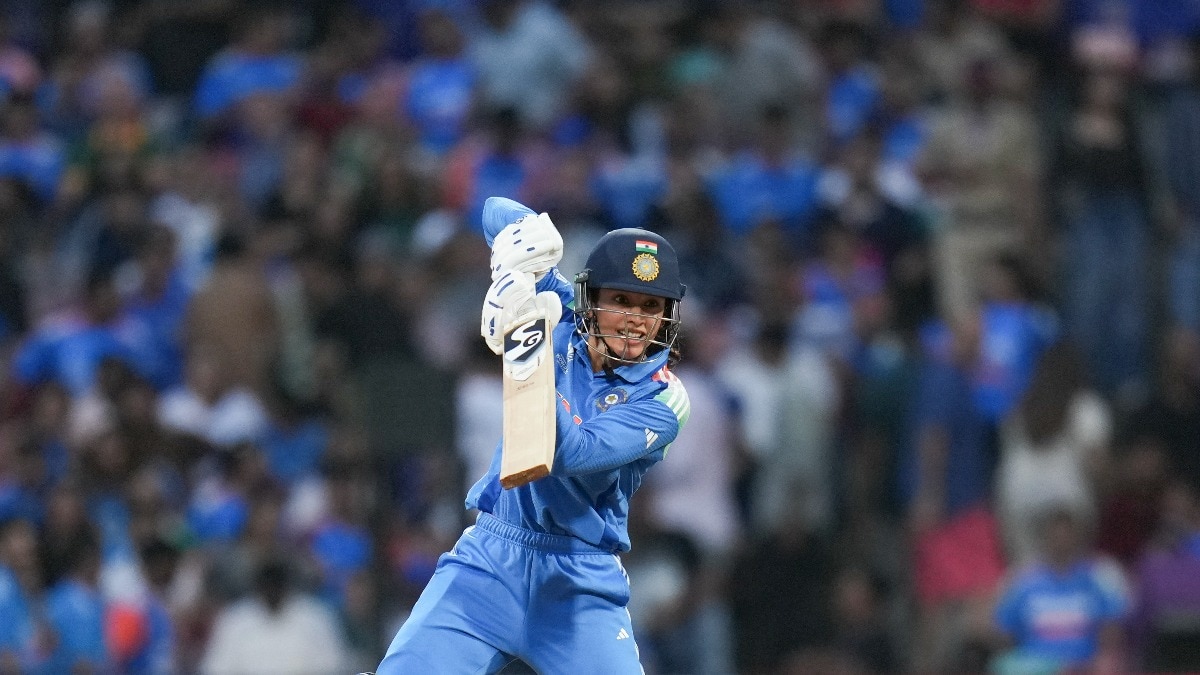

England vs India, 3rd Women’s T20I: Live score and updates from Taunton
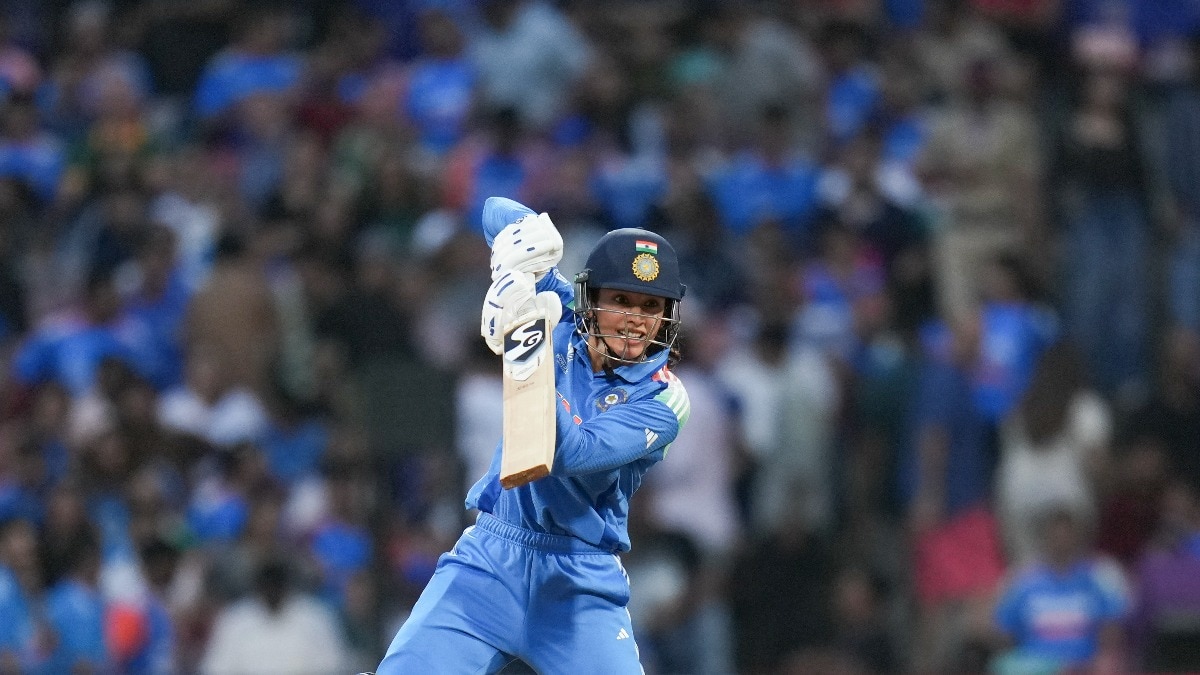 England vs India, 3rd Women’s T20I: Live score and updates from Taunton
Source link
England vs India, 3rd Women’s T20I: Live score and updates from Taunton
Source link
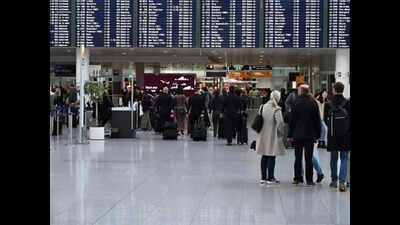
Germany announced that Indian citizens will no longer require a transit visa while traveling to another country with a stopover at a German airport. The new rule will come into effect from June 3. “This implements the outcome of Federal Chancellor Friedrich Merz’s visit to India in January this year. It underlines the commitment of the federal government to deepen German-Indian relations, facilitate the movement of people and further strengthen economic ties,” the German Embassy said in a statement.
When you travel from country A to country B and stop in country C in between, you may need a visa only for the stop in country C. This is called transit visa.Before Germany, France had removed the transit visa requirement for India. It came into effect on April 10, 2026. France became the first Schengen country to completely abolish transit visas for Indian citizens, although Germany was the first to announce the same in January. France announced this decision after President Emmanuel Macron’s state visit to India in February. During Macron’s visit, France announced a six-month pilot scheme to allow Indian passport holders to transit through French airports without ATVs. The pilot was effective immediately. The pilot bailed out successfully. Airlines updated boarding systems, Paris CDG reported no compliance issues, and transit bookings by Indian passengers through French airports increased significantly. In April, France lifted the transit visa requirement.
Removing transit visas does not mean travelers can enter the country. They are allowed to stay only in the transit zone. They cannot go out of the airport.

New Delhi: After Air India, IndiGo will also cut down its wider operations due to expensive jet fuel, longer routes following airspace restrictions and forex volatility. IndiGo will “temporarily cease its flight operations to and from Manchester from August 31, 2026” and return one of the six damp lease (hired along with operating crew) Boeing 787 Dreamliners to Europe’s Norse Atlantic Airways. The budget airline says it will “continue to operate all its remaining long-haul flights as planned.”IndiGo has leased six Boeing 787-9 Dreamliner aircraft from Norse Atlantic in early 2025 to “make strategic inroads to establish the IndiGo brand in the European market, ahead of the launch of services using its own Airbus A350 aircraft.” But it “has become much higher than originally envisioned” due to increased operating costs following the US-Iran war.Abhijit Dasgupta, IndiGo senior vice president (network planning and revenue management, IndiGo) said: “We inducted these wide-body aircraft on a short-term basis to fast-track our connectivity to high potential long-haul destinations like Manchester, and saw a very encouraging demand response. Therefore, it is unfortunate that due to the shortage of airspace with the dramatically increasing costs of flying long haul we have had to temporarily suspend our India – Manchester services. Was forced to take the decision to close. This amputation is temporary in nature.Air India is also making significant cuts to its wider operations for the same reasons. AI and IndiGo are also temporarily reducing domestic flights.

Tamil Nadu to publish registry of 41,000 clinical establishmentEmpowering patients to verify credentialsChennai: The Tamil Nadu state health department will release a gazetted list of over 40,000 clinical establishments registered under its authority – a significant step towards transparency in a sector that has long operated with limited public oversight.The list will include a wide range of health care facilities, including hospitals, nursing homes, counseling clinics and clinical laboratories in allopathy, Indian medicine and homeopathy, which are registered with the health department under the Clinical Establishments Act. “This list created by the department is creating a legally recognised, publicly accessible record that patients can consult before seeking medical care,” said a senior official of the Directorate of Medical Services.Under the Clinical Establishment Act, all such institutions are required to obtain registration and renew it once every five years. Registration ensures that clinical establishments meet basic standards for location, staff, equipment, records, cleanliness and safety. It is required to maintain medical records as per the rules, display certificates and properly report changes such as ownership transfer or closure. “The department is now making the renewal process completely online. We will eliminate the paper-heavy process and reduce chances of delays or lapses in compliance,” the official said.Ten days ago, Health Minister KG Arun Raj had told reporters that around 8,000 applications from private hospitals and other clinical establishments for licenses were pending with the department. He had given instructions to issue temporary certificate immediately as soon as the necessary details are uploaded online and then to issue permanent certificate after comprehensive inspection. “We are doing this now. This is to ensure that no hospital operates without a license. The temporary license is given on the basis of self-declaration,” the official said.Health advocates say the registry will be a powerful reference point for patients, especially in small towns and peri-urban areas where unregulated clinics are common.
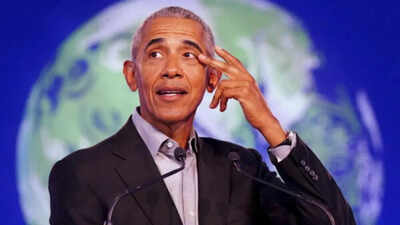
This line is attributed to Barack ObamaLeadership often appears in writing, interviews, and motivational pieces, usually in contexts where people discuss setbacks and recovery. It’s not designed to be anything dramatic or abstract. This reads like a statement from experience, where failure is treated as something that just happens when doing things or trying new things. Obama has often talked about reflection and learning in public life, and this quote fits in that general vein. The focus is not on failure but on what happens after. It is believed that what matters is not the mistake made in isolation, but the adjustment that occurs afterward, once the initial reaction subsides and thinking becomes clear again.
The central idea here is quite simple. Failure is not being viewed as a final label on a person. Instead, it is treated as an event that can either prevent or contribute to progress, depending on how it is handled.There is a clear division in the way the quote frame is experienced. On one hand, failure becomes something that clings to identity and limits self-confidence. On the other hand, it becomes material to work with, something that gives insight into what went wrong. The difference is not in the event itself but in the subsequent interpretation.This shift is important because it shifts the focus from decision to adjustment. The quote recognizes that mistakes are inevitable in any process involving action. What differentiates the results is what changes people make after seeing those mistakes clearly.
In practice, most things people try don’t work perfectly the first time. Work projects change direction, plans require revision, and decisions are often adjusted once results are visible. Failure in this sense is not unusual. This is part of the repetition.The quote sits within that reality. It does not consider failure as something extraordinary. It treats it as something that is related to the process of making an effort. What matters more is what happens next.If nothing changes after a mistake, there is a tendency to repeat the same results. If something is adjusted, even slightly, the next attempt often looks different. This quote is pointing towards the same simple cycle without sounding technical.
When something goes wrong, the first reaction is usually not reflection. It is more immediate. People react emotionally, sometimes quickly, sometimes quietly, but rarely with complete clarity in that moment.The quote implicitly acknowledges that difference. It is not asking for immediate insight. This is indicative of what happens after the initial reaction fades a bit and the situation becomes easier to see.This is usually when details start to fall apart. It becomes more clear what exactly failed, which parts worked, and what needs to be replaced. Learning happens in that place, not within the moment of failure, but a little after that.
One of the cool ideas in the quote is how identity is formed around the experience. A failure need not define ability, but it may trigger it if it is considered final.If a person stops at failure, it starts feeling like a limit. If they grow from it and adjust, it becomes part of the experience. The same event leads to different internal consequences depending on the response.Over time, that gap widens. People who regard failures as material for adjustment have a different relationship with risk. They are not free from failure, but they are less controlled by it.
In most work settings, especially where problem-solving is involved, results are rarely perfect on the first try. Things are tested, reviewed, and improved. That pattern is normal rather than abnormal.The idea in the quote fits that structure. Progress often depends less on avoiding mistakes and more on how quickly those mistakes are recognized and adjusted.Teams and individuals who work well in such environments usually never fail. They are the ones who change direction when information shows that something is not working.
It’s easy to read this type of statement as general motivation, but it’s more practical than uplifting. This does not mean that failure is good or desirable. It is saying that failure contains useful direction if not ignored.That distinction matters. The focus is not on making failure feel positive. It’s about preventing this from becoming the last.There is no suggestion that learning is automatic. This needs to be addressed after the fact. Without that attention, the same patterns repeat.
This way of thinking is visible in small and big decisions. In work, education, and personal planning, most progress occurs through adjustment rather than perfect implementation.A decision that doesn’t work often leads to a modified version. A plan that fails once is usually reshaped and tried again in a different form. Over time, that process builds experience.The quote illustrates that pattern in a simple way. It does not describe a system; It simply points to what people already see happening when they look back on their decisions.
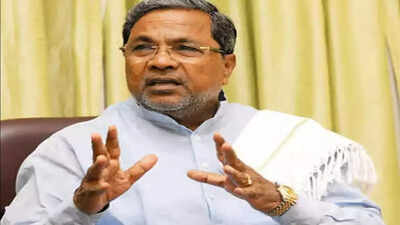
New Delhi: Congress on Tuesday announced the appointment of former Chief Minister of Karnataka Siddaramaiah addressed the Congress Working Committee (CWC), the top decision-making body of the party. Congress General Secretary (Organisation) KC Venugopal said in a statement, “Hon’ble Congress President has appointed Shri Siddaramaiah as a member of the CWC with immediate effect.“ The appointment comes just days after Siddaramaiah stepped down as chief minister, marking the end of his record-long tenure of more than eight years across two terms.His appointment as CWC member came on the eve of the swearing-in ceremony of his long-time rival and now former deputy DK Shivakumar, who is set to take oath as the new chief minister.Siddaramaiah and Shivakumar were involved in an internal tussle over the post for a long time, often taking veiled digs at each other. Their rivalry stemmed from a reported understanding with the Congress leadership following the party’s victory in the Karnataka Assembly elections in May 2023. Under this alleged arrangement, Shivakumar was said to have been assured the chief ministership for the latter part of the government’s five-year term, while the party had initially chosen veteran leader Siddaramaiah to lead the government.The tussle escalated after Siddaramaiah continued to reach the first 2.5-year mark in November 2025.Last week, the Congress leadership finally resolved the matter, deciding to honor its “commitment” to Shivakumar, who also serves as the party’s Karnataka unit president.Siddaramaiah had reportedly refused to seek a Rajya Sabha seat and instead opted to remain active in state politics.
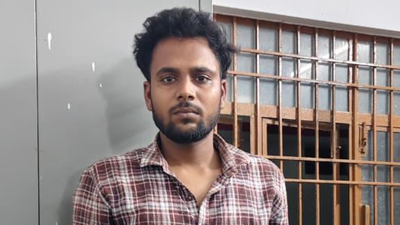
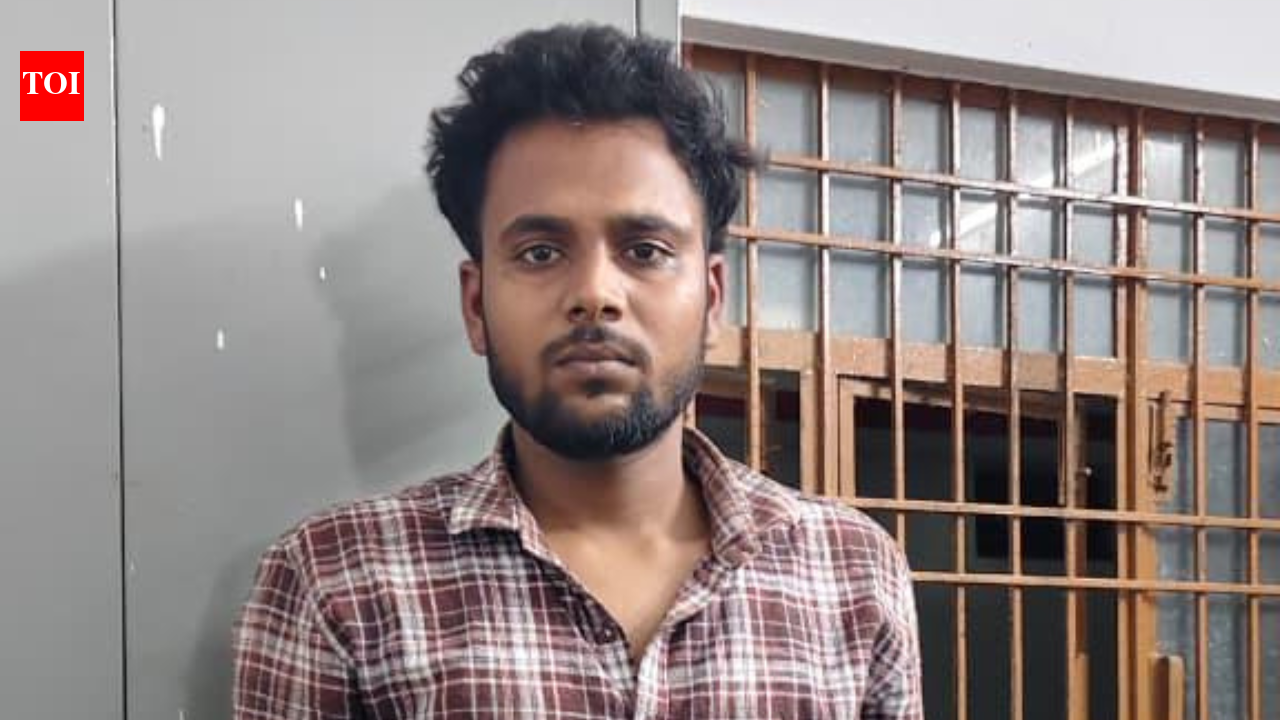
LUCKNOW: The heist in which a professional photographer was lured with a fake birthday-party assignment and made away with expensive camera equipment was allegedly an inside job by his own assistant photography colleague, who according to the police conspired to make quick money and rescue the mortgaged camera due to financial crisis.The crime came to light on Tuesday when photographer-cum-videographer Ashok Yadav, a resident of Ranikheda village under Mal police station area, lodged a complaint at Itaunja police station.He alleged that he was approached by unknown persons for photography and videography coverage of the birthday celebrations and asked to reach near Neelansh Water Park Road around 9.30 pm on Monday.On reaching the spot, four men on two motorcycles allegedly stopped their vehicle, threatened them and fled with professional equipment including six cameras, seven lenses, two gimbals and a mobile phone. The value of the stolen gear is estimated to be around Rs 15 lakh.Assistant Commissioner of Police (BKT) Vikas Pandey, who supervised the investigation, said police cracked the case within a few hours using technical surveillance, local intelligence and interrogation of suspects.Pandey said, “During preliminary interrogation, it emerged that the victim’s photography assistant Rohan Sharma had conspired with his associates to commit the robbery. Rohan was aware of the expensive equipment carried by Ashok and knew his activities and agenda.”According to the ACP, Sharma had worked with Yadav on photography assignments and was also employed at a stationery shop owned by the victim. Financial difficulties allegedly led him to plan the crime.“The accused had mortgaged his own camera, which was worth around Rs 8 lakh, and was unable to rescue it. He allegedly planned the robbery after seeing that the victim had many new and expensive gadgets. They believed the equipment could be sold quickly for substantial profits,” Pandey said.Police arrested three accused Rohan Sharma, Ramanuj Mishra and Vipin Mishra and recovered the entire stolen property. The fourth accused Vivek is still absconding. Raids are being conducted to catch him.Police found that the conspirators had faked the birthday-party booking to lure the photographer to a secluded place. Rohan allegedly passed on details of the assignment, route and equipment to his associates who carried out the robbery.ACP Pandey said that the victim started suspecting Rohan’s involvement soon after the robbery.During the incident on the night of 1 June, the assailants who stopped his vehicle reportedly held Rohan at gunpoint, but did not harm him, instead instructing him to hand over all the photography equipment (which only he was aware of being carried by him).The victim also observed that Rohan appeared unusually calm and was behaving as if he was familiar with the attackers, raising suspicions that he had prior knowledge of the crime.
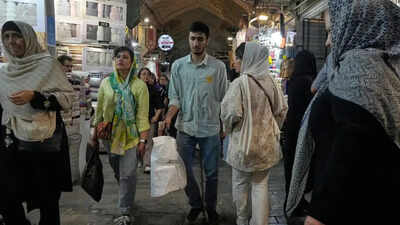
Iran’s annual inflation rate reaches its highest level since World War II In May, the crisis highlighted the deepening economic crisis facing ordinary citizens as the country grapples with conflict, sanctions and long-standing structural problems.According to data released by Iran’s Central Bank, the consumer price index rose 77.2 percent year-on-year in May, while monthly inflation rose 8.5 percent compared with April. Prices of everyday necessities, including medicine, taxi fares, tobacco and communication services, rose 113.8 percent from a year earlier.The figures mark the first official acknowledgment of the severe inflationary pressures already being felt by Iranians, many of whom have seen the cost of basic goods and services rise amid a sharp decline in the value of the national currency.The Bamdad Institute of Economic Studies, a private Iranian think tank, described the inflation rate as “an unprecedented rate since World War II.”War, sanctions and economic stressAccording to the Associated Press, economists say the surge in prices reflects the combined effects of war-related disruptions, U.S. sanctions and years of economic mismanagement.Iran’s oil industry and businesses have suffered significant damage following recent military attacks, while US measures targeting Iranian oil exports have further reduced a major source of revenue for the government.Tax collections have also come under pressure as businesses struggle to recover from months of economic uncertainty.The past decade has seen a dramatic decline in the Iranian rial, falling from about 32,000 rials against the US dollar in 2015 to more than 1.7 million rials per dollar today.Iranian President Massoud Pezeshkian had earlier warned citizens that further price increases were likely. “We will definitely have higher prices,” Pezeshkian said in May. “We are fighting and we have to accept this difficulty,” he said.Is another crisis looming?The deteriorating economic situation has revived concerns about the possibility of new anti-government protests. There have been large demonstrations in Iran in recent years due to economic grievances.Rising food prices sparked protests in 2017 and 2018, while rising prices of subsidized fuel also led to widespread unrest, which reportedly left hundreds dead.Earlier this year, protests over the falling rial currency became the most intense demonstrations in Iran since the 1979 revolution and the turbulent years that followed.Analyst Mohsin Jalilvand warned that if the economic situation continues to worsen, social tensions could increase further. “I have no doubt that if Trump goes to (Iran) without a formal peace deal… then potentially, we will see something like January by the end of the summer because of the economic and social conditions,” he said in comments published by Iranian news website Fararu.Meanwhile, some economists say inflation could climb further. Tehran-based economist Saeed Lilaz told The Associated Press that annual inflation could reach 80 percent in the coming months. “Iranian society cannot tolerate annual inflation of more than 25 percent,” he said.
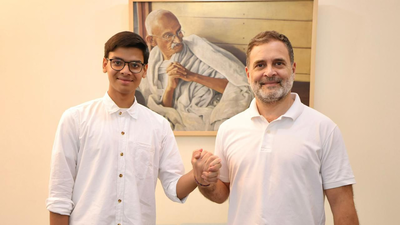
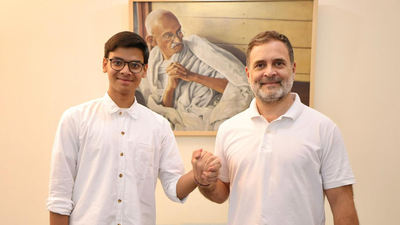
congress leader Rahul Gandhi Jharkhand student on Tuesday met Sarthak Siddhant, who had recently presented his findings before a parliamentary panel on alleged irregularities in CBSE’s online marking system. Sharing pictures of the meeting on social media, Gandhi praised the student and wrote, “Sarthak, stay firm on your principles. #TenderInvestigator”.The meeting took place hours after Siddhant, who appeared for the CBSE Class 12 exams this year, briefed the Parliamentary Standing Committee on Education, Women, Children, Youth and Sports about alleged anomalies in the tender process used to select vendors for the board’s on-screen marking (OSM) system.Siddhant presented a seven-page document before the committee headed by Congress MP Digvijay Singh, in which he highlighted irregularities in the vendor selection process and raised several questions for CBSE officials. His presentation was made in the presence of CBSE Chairman Rahul Singh, School Education Secretary Sanjay Kumar and other senior officials of the Education Ministry.The parliamentary panel had summoned CBSE and Education Ministry officials amid growing concerns over the OSM system, which has been the center of complaints from students about technical glitches, assessment discrepancies and difficulties during the post-result verification process.During the meeting, members also raised questions on the board’s preparedness before starting online marking, including concerns over system testing and teacher training. Some MPs reportedly demanded accountability for the problems faced by students and suggested measures such as compensation through grace marks or faster evaluation.CBSE officials told the committee that the technical issues affecting the system have been fixed and students will have time till June 6 to apply for revaluation of their answer sheets. The Board also submitted a report outlining its position on the controversy.After the meeting, Digvijay Singh said that the focus of the committee is to address the concerns of the students. Asked whether he was satisfied with CBSE’s responses, he replied, “It is for the committee to decide.”

Mumbai: At a time when there is huge speculation about whether he will remain India’s T20 captain for the tours of Ireland and England or not. Suryakumar YadavHis poor form shows no signs of slowing down.On Tuesday, the 35-year-old, who is captaining Triumph Knights in the opening match of Season 4 of the T20 Mumbai League, was out after scoring 19 runs in 11 balls as his team lost by 21 runs against North Mumbai Panthers at the Wankhede Stadium. Surya started well and added 37 runs in 25 balls for the third wicket with youngster Nutan Goyal, who played a brilliant inning of 93 runs in 56 balls, but was caught at deep square leg by spinner Rahul Sawant (2-32 in four overs) in the seventh over. Chasing 189 runs, Triumph Knights could only score 188 runs for eight wickets. Despite leading India to a second consecutive T20 World Cup title under his captaincy in February–March, Surya maintained mediocre form in the tournament, managing only 242 runs at an average of 30.25 in nine matches, with a highest score of 84 not out against the USA in the opening match at the Wankhede Stadium in Mumbai.The experienced batsman’s fortunes with the bat did not improve in IPL-2026, where he scored just 260 runs at an average of 20.76 and a strike rate of 147.54, including just two fifties, in 13 matches for Mumbai Indians, who were eliminated in the league stage.India are set to play two T20 matches against Ireland in Belfast later this month. The first T20 match will be played on June 26 and the second T20 match will be played two days later on June 28.