
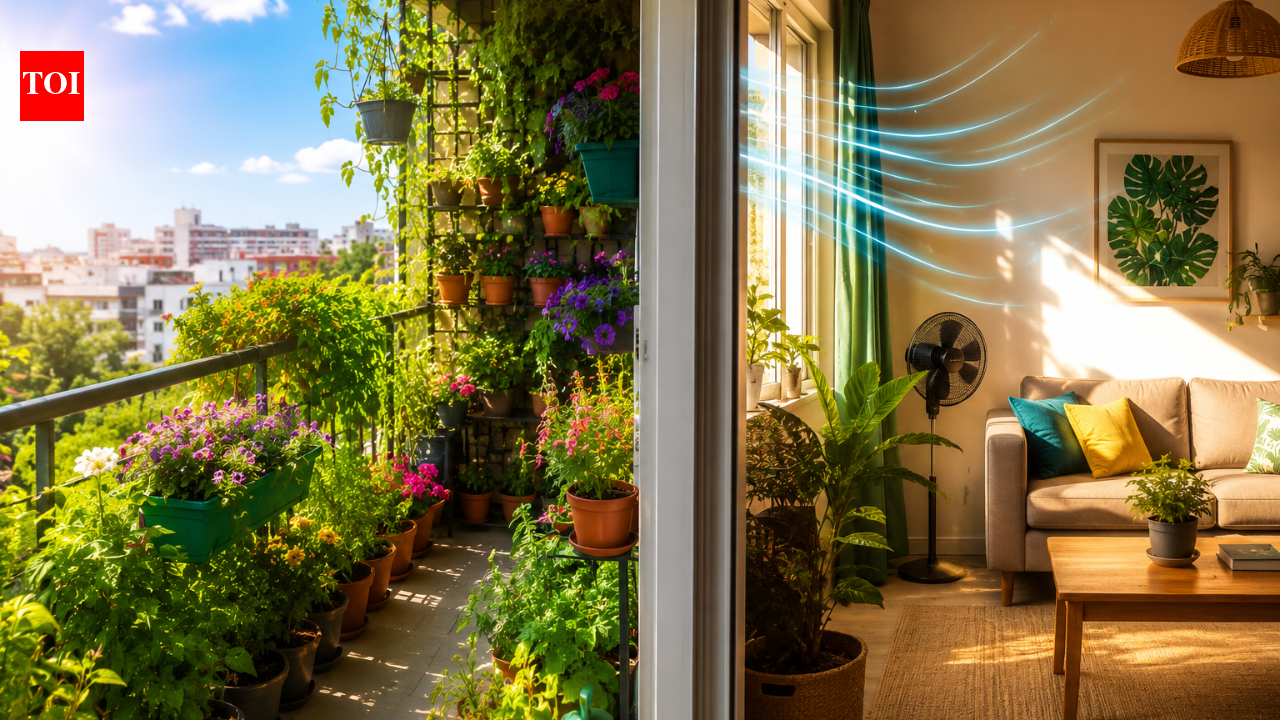

Can a balcony garden really reduce indoor heat? Here’s what the science says
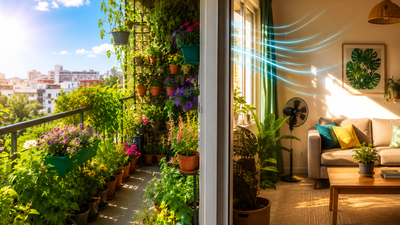
Plants cool their surroundings through a process called evapotranspiration, essentially, they release moisture through their leaves, and that moisture pulls heat from the surrounding air as it evaporates. On a sunny balcony in the middle of summer, this process matters more than most people realize. And the research supports it quite clearly.A StudyAn investigation of residential greenery in a tropical apartment, published in Energy & Buildings, found that the combination of potted plants and a living wall on the balcony reduced indoor air temperatures by 2.5°C, while balcony surface temperatures dropped by 5.5°C. This is not a minor difference, especially in cities like Mumbai, Chennai or Delhi where temperatures in summer regularly go above 40 degrees Celsius and air conditioners run almost all day.“The summers in India are becoming unbearable and deadly year after year. While external climatic conditions like the El Nino effect are often blamed, day-to-day lifestyle choices are ignored. A man-made health and wellness disaster, the Urban Heat Island (UHI) effect, is rapidly painting our cities gray and depriving us of our most basic survival need, greenery. It’s time to bring those exotic plants home. The frenzy is compounded by the many benefits of cleaning/cleansing, which do very little towards helping biodiversity while still being high on maintenance, Peeple founder and garden designer Deepti Agarwal told The Times of India.She says that tackling this issue at the level of city infrastructure is a tough task, but anyone can address the issue with smart and sustainable greenery efforts in their home gardens.Particularly for Indian households, the evidence is encouraging. A Study Greater Noida found that rooftop gardens can reduce rooftop temperatures by 2°C to 3°C in winter and 5°C to 7°C in summer.Agarwal says native and hardy species form quick, dense green cover of leaves and provide a cooling effect. “Popular exotic plants like bougainvillea are often chosen in home gardens. However, one must differentiate heat-resistant plants from plants that can reduce heat in the environment. Bougainvillea, despite being loved globally, often fails to maintain a thick, green appearance with its small and sparse leaves, thus being counter-productive to reducing urban heat,” she suggests.
Experts share some guidelines on this:
- Selecting the right species of plants that provide shade with their canopies, cool and purify the air with their large leaf structures or create a natural green curtain can go a long way in reducing urban heat.
- Simple garden design elements like trellis for balconies or terraces can help create a natural green wall or vertical garden, including fast-growing climbing plants like Thunbergia grandiflora, Madhumalti (Combretum indicum), Aparajita (Clitoria ternatea), Jasmine (Jasminum officinale), etc.
- Another effective technique is layered planting which uses a combination of different plant heights in descending order. Like forests, this cascading effect helps to create overlapping canopies and filter sunlight before it reaches the bottom. For example, one might combine a tall palm or champa plant with medium flowering shrubs such as ixigorous or jasmine to create a layer of visual relief and respite from the heat.
What practical advice would you give to homeowners or apartment dwellers who want to create a balcony garden specifically to deal with the heat indoors during summer?
“Choosing native plants that have broad leaf structure, deep root systems, dark green leaf color can help cool the environment through the evaporation process. Releasing moisture, increasing air flow, blocking sun rays, thus reducing internal temperatures are some of the many benefits of creating a well-planned balcony garden,” she suggests. “The wider the leafy surface area you can add to your garden space, the better the cooling effect you can ultimately create. At the individual household level, this cooling effect can be gradually felt with the right plant mix and low-maintenance gardening materials to maintain the health and appearance of the garden.
some examples:
The founder says that for balconies, decks or terraces that receive direct sunlight, exotic foliage plants should be replaced with native flowering plants. Some examples of medium height shrubs include Ixora (Ixora coccinea), Son Champa (Magnolia champaca), Nag Champa (Plumeria pudica), Parijat (Nyctanthes arbor-tristis), Hibiscus (Hibiscus rosa-sinensis), Kaner (Nerium oleander). Even edible plants like lemon, curry leaves, which have thick leaves, can serve the purpose. Such plants not only help in improving your indoor environment but also support biodiversity. On the other hand, for locations that receive partial direct sunlight (indirect bright light), one can opt for Areca palm (Dypsis lutescens), Raphis palm (Rhapsis excelsa), and Ficus varieties of palm trees (although most of them are non-native).So yes, a balcony garden can indeed reduce indoor heat. It will not replace an air conditioner on a 45°C afternoon. But it will reduce heat gain, reduce your cooling load, and make your home more livable during the summer. Plants, which you grow anyway, do something useful all day long.