

BJP hits back at Rahul Gandhi’s ‘economic tsunami’ warning amid Iran war: ‘Stop selling panic’ india news
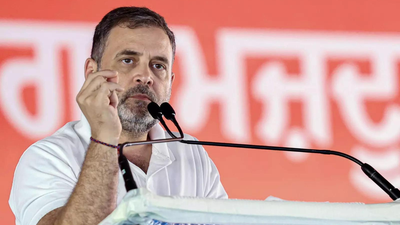
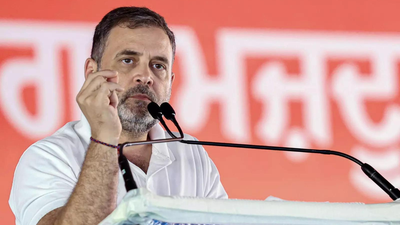
New Delhi: The Bharatiya Janata Party (BJP) on Thursday hit back strongly against Rahul Gandhi’s warning of an “economic tsunami” for India, dismissing it as “classic fear mongering”.“The leader of the opposition in the Lok Sabha had expressed concern over the escalating situation in the Middle East and its possible impact on India.Responding sharply, BJP IT cell chief Amit Malviya rejected Rahul’s claims and argued that India is well placed to withstand any economic fallout from the Iran war. Citing several economic and strategic indicators, Malviya stressed that “India is not defenceless” amid the ongoing crisis in the Middle East.In a post on Twitter, Malviya cited a range of economic indicators to refute Rahul’s claims. He said e-way bill generation grew by 12.9% in May 2026, while manufacturing and services activity remained strong with PMI readings of 56.6 and 58.9, respectively. Retail inflation in April stood at 3.48%, below the Reserve Bank of India’s target, while gross foreign direct investment (FDI) inflows reached a record $94.5 billion in FY26.Pointing to the strength of India’s external sector, Malviya said comfortable foreign exchange reserves and strong services exports have been providing stability amid global volatility.“These are not signs of an economy without shock absorbers. These are signs of resilience. The government has also taken direct measures to protect citizens, businesses and jobs,” Malviya said.The BJP leader also highlighted the steps taken by the Center to protect consumers and businesses from global economic shocks.“When global crude oil prices rose, cuts in excise duty on petrol and diesel provided relief to consumers. Supply side interventions and export restrictions were used when necessary to protect domestic availability and control inflation. Through ECLGS 5.0, MSMEs receive 100% guarantee coverage, while non-MSMEs and airlines receive 90% coverage. Additional credit support up to 20% of maximum working capital, Limited to Rs 100 crore, available to eligible borrowers,” he said.“Airlines facing fuel price volatility may get assistance up to Rs 1,500 crore per borrower. The objective is clear: to protect jobs, maintain supply chains and ensure uninterrupted production,” he said.Malviya further said that the Union Cabinet has approved Rs 37,500 crore for surface coal and lignite gasification projects, with an aim to create 75 million tonnes of gasification capacity and attract investments of Rs 2.5-3 lakh crore.“These are not actions of the government eliminating shock absorbers. These are actions of the government actively strengthening them,” he said.Launching his attack on the previous UPA government, Malviya cited economic indicators from 2009 to 2014. He claimed that the rupee depreciated by 36% during this period, while foreign exchange reserves declined from about $294 billion in July 2011 to about $256 billion in August 2013.“Foreign exchange reserves declined from about $294 billion in July 2011 to about $256 billion in August 2013. Import cover declined by more than six months by September 2013, down significantly from 17 months in March 2004,” he said.“The foreign exchange reserves-to-external debt ratio declined from 95.8% in FY2011 to 68.8% in FY2014. The RBI was forced to open the FCNR (B) window and offer attractive incentives to attract dollar deposits. India ultimately raised $26.6 billion through the scheme, almost twelve times the size of the 1991 IMF bailout.”Malviya urged Rahul to “stop spreading terror”, claiming that India’s economic security had weakened during the UPA era, long before any external shocks emerged.His comments came in response to Rahul’s warning that India was heading towards an “economic tsunami” due to the BJP government allegedly dismantling the country’s economic “shock absorbers” amid ongoing tensions in the Middle East.Rahul had said, “An economic tsunami is coming. The reason for this is that the BJP government has removed India’s safety net, which was the shock absorber from the international economy. A dangerous economic tsunami is coming, prices are rising and this is just the beginning.”