

Sherpas survive Everest’s 6-day ordeal without food, O2 | india news
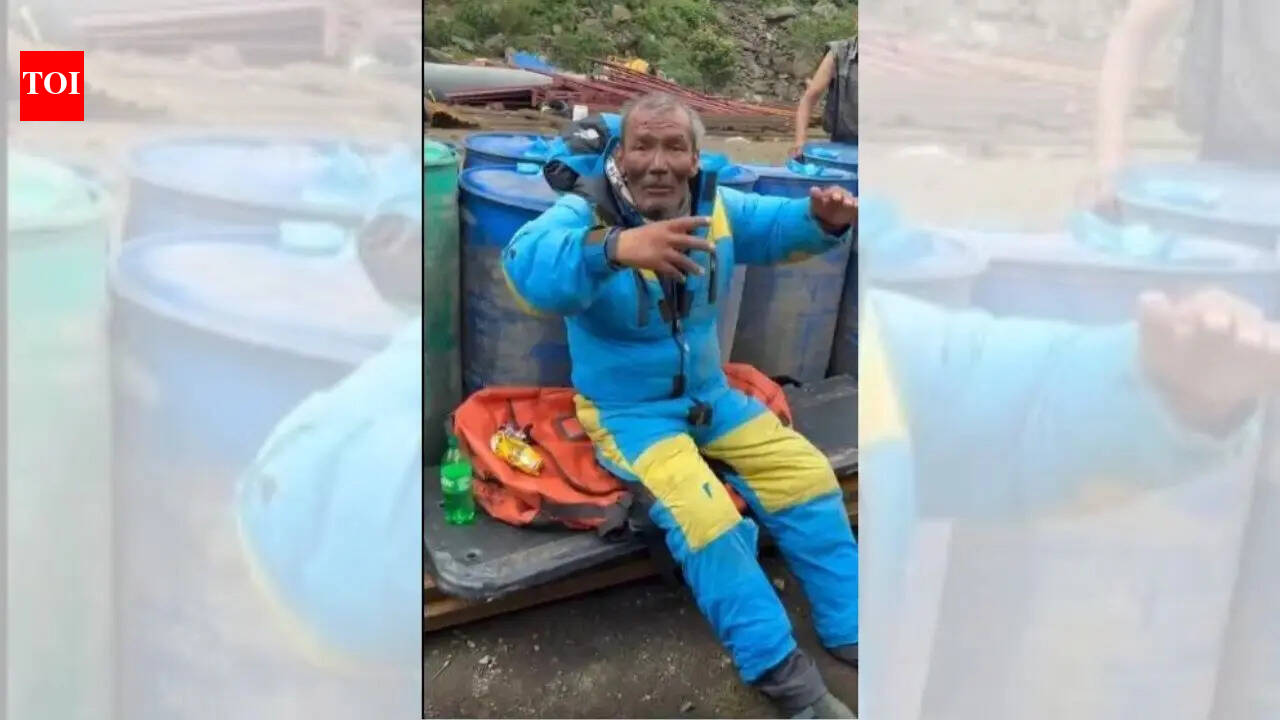
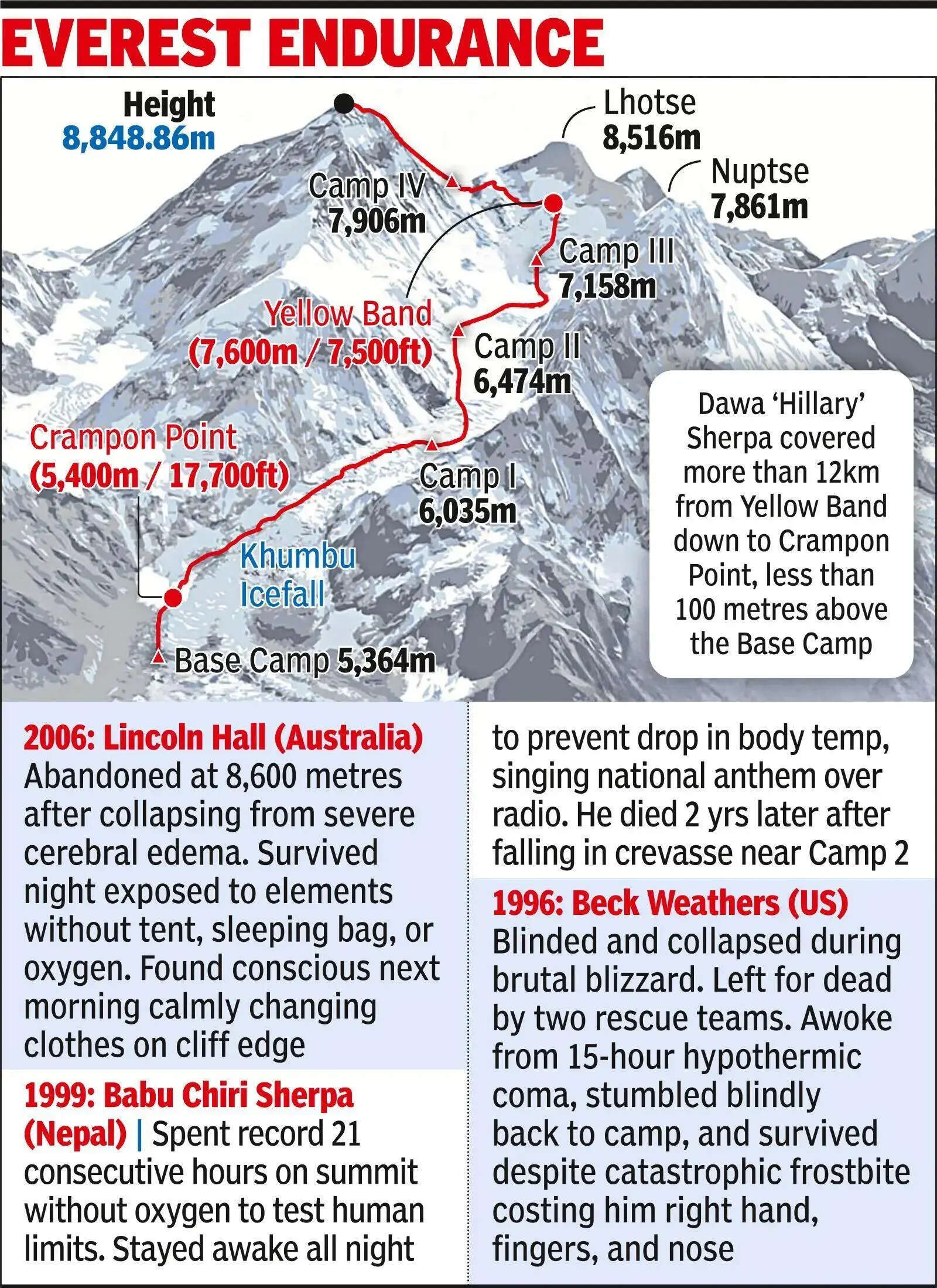
In what climbers are calling a miracle, a 52-year-old Sherpa guide, who was presumed dead after he went missing while descending Mount Everest on May 29, was found alive near base camp on Thursday morning, six days later.Dawa ‘Hillary’ Sherpa – who earned the nickname for her mountaineering expertise – climbed more than 12 km from the Yellow Band (25,000 ft) to Crampon Point (17,000 ft) in difficult weather without food, water or supplemental oxygen, crossing the dangerous Khumbu Icefall after the climbing season ended and ropes and ladders were removed on the route.His family, having lost hope, were reciting prayers for his funeral when they were told that Dawa had been saved, searching for food, water and discarded bottled oxygen in the remaining tents.Dawa was descending after climbing Everest at 5 pm on May 28 with a group that included British climber Chris Thrall, a former Royal Marine and a Polish climber, when he was last seen near the Yellow Band on May 29. Reports state that the Polish climber reached base camp, but claimed not to be reached.Dawa praises ‘tiger of the mountains’ for ‘surviving on snow, a packet of biscuits’Thrall also “paid tribute” to Dawa on social media, saying, “RIP… Mero Dai” (Rest in peace, my elder brother). In a 13-minute video posted on Instagram on Wednesday, Thrall said, “Dawa sat down to rest with his backpack. These guys carry heavy stuff…” He added that he examined Dawa before moving on. “I turned to him and said, ‘Hillary, are you okay brother?’ He said, ‘Yes, yes, I’m fine, Chris.’ Please go.”Thrall said that as he descended, he saw a Polish climber from his team who “had frostbite and was out of supplemental oxygen”. He said, “I come from the British Royal Marines – we are taught to never leave anyone behind… I only have half a tank of oxygen left. Do I take the Polish climber who has frostbite, or go back for the Sherpa who will likely recover and do just fine as he has done hundreds of times before? His account of events has not been verified.
Thrall said he shared oxygen with the Polish climber and descended with him, and later reported Dawa missing after reaching lower camps. After increasing online criticism for not returning for the claim, Thrall said he was tired of being called a “killer”. Once Dava was found alive, Thrall said he was “overjoyed and happy for her and her wonderful family”.The Sagarmatha Pollution Control Committee (SPCC) cleaning team, which was removing root equipment, spotted Dawa near Crampon Point and brought him down before he was taken to a Kathmandu hospital due to frostbite and other complications. “He is in intensive care but out of danger,” a doctor at Kathmandu’s HAMS hospital said.For the climbers and guides, what was most important was not only that Dawa survived for nearly six days without supplies, but that he passed through active crevasses and broken areas. “Two days in a crevasse deep below Camp I after a whole week in the death zone? Surviving on snow and a packet of biscuits at that altitude is an incredible feat of mental strength. He is a tiger of the mountains,” high altitude guide Nima Tenzing Sherpa told TOI.“Many guides and mountaineers have raised questions over the delay in locating Dawa. Mingma Si Sherpa, an independent high-altitude porter, told TOI that climbers often make “dangerous assumptions” about Sherpas because of their experience. “Foreign climbers believe we are invincible – a dangerous mentality. When a client is asked by a guide to move on so they can rest, they trust that expertise. Thrall made a textbook choice of survival in brutal conditions.“