
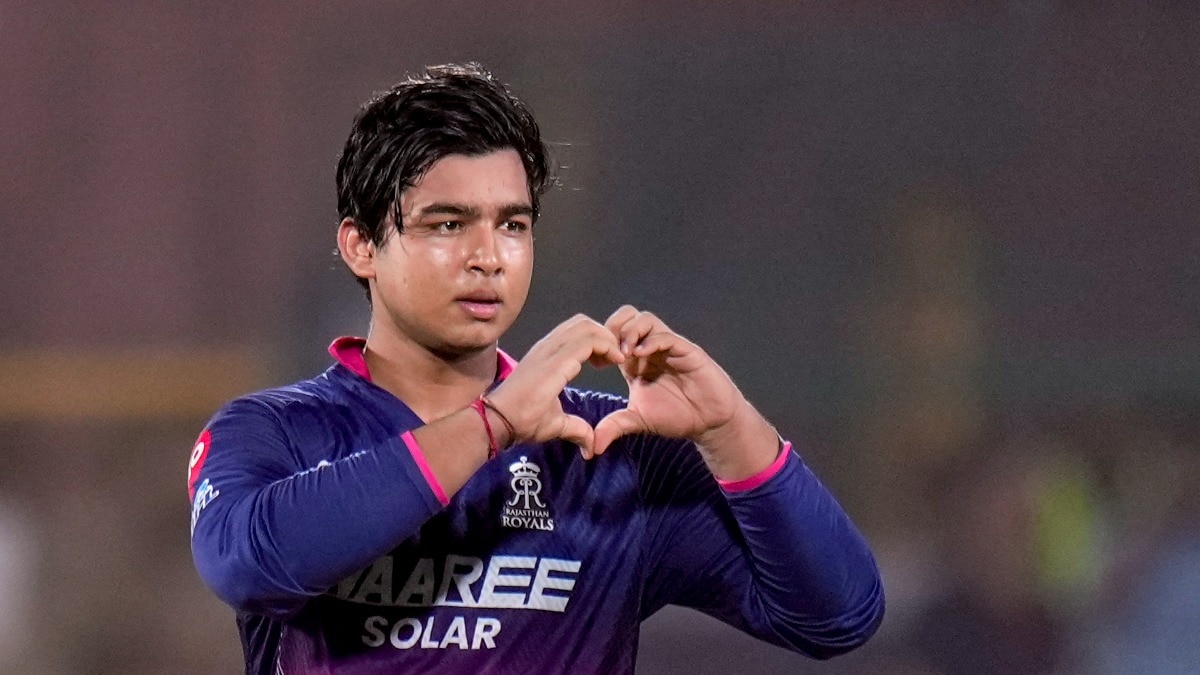

IPL 2026: Vaibhav Suryavanshi and the heat of suspended disbelief
Ajit Agarkar is not a man who is easily surprised. As India’s chief selector, his press conferences are an exercise in careful diplomacy. The measured words, the guarded assessments, the bureaucratic language of a man who must appear rational about everything. But on Saturday, June 6, something went wrong at the BCCI headquarters in Mumbai. They recently named a 15-year-old player in India’s T20 squad, who is the youngest player ever selected for the national team, even younger than Sachin Tendulkar was when he first donned the blue. And when journalists asked him, Agarkar paused in such a way that it seemed as if it was not written.
“I think he’s really picked himself out. What do you say, man?”
What do you say. That little dedication, three words, a half shrug, the sound of a man’s professional vocabulary failing him, is probably the most honest thing a cricket administrator has said in years. No data. No strategic logic. Just a man admitting that some things are beyond the language of selection committees.
There was much more. Agarkar talked about Vaibhav taking Rajasthan Royals to the playoffs almost single-handedly. Of a young kid performing in the most competitive, most high-pressure cricket environment on earth, and doing so not just once but across two seasons.
“How explosive he can be and how game-changing he can be,” he said.
“Like everyone who watches cricket in India or at least watches T20 cricket, we have high expectations from him.”
Like everyone else who has seen. There it was again. The selector, for a moment, seemed less like the selector and more like the rest of us. Like the guy sitting in the cheap seats with his painted face. Like that middle-aged man who couldn’t explain why he cared so much. Like the country.
surprise, no noise
Something happened to Indian cricket this summer that is difficult to explain in the traditional terminology of the game. We are a nation of forensic watchers. We count balls faced and analyze match-ups and debate about strike rates in the powerplay before the powerplay ends. Indian cricket fandom is one of the most sophisticated and most exhausting enterprises in global sport. We often don’t just feel things. We assess them.
And then Vaibhav Suryavanshi came to bat and the assessment stopped.
Throughout the season I had the opportunity to cover IPL matches, moving from ground to ground, press box to press box. I’ve watched a little cricket to understand the sound of the crowd: the chants, the drums, the choreographed noise of organized support. I know how it feels when a crowd cheers for a six and how it feels when a crowd roars for a boundary. I thought I knew all the sounds emanating from the cricket field.
In Lucknow, at the beginning of the season, I heard something different. The Shri Atal Bihari Vajpayee Stadium was draped in pink, Rajasthan Royals in pink, but the quality of energy in those stands was something I had not encountered for some time. No noise of partisan support. Beneath it lies something quieter and stranger. I looked around and I saw it on faces: people looking with a kind of suspended disbelief, as if they were afraid that if they looked away, they would miss the thing they had come to see. And they had come to see a boy who had not yet sat in Class 10, walking leisurely onto the crease against international bowlers as if no one had been asked to be nervous.
You understand, Lucknow is not Rajasthan. These were not home fans in any tribal sense. Many of them came from Bihar and eastern Uttar Pradesh, communities that had quietly laid claim to glory, the way a village claims a boy who went away and came back. I heard it in conversations around the grounds, in the way people said his name, not Suryavanshi, not the surname, just grandeur, with a familiarity that had nothing to do with geography and everything to do with something more fundamental. He was theirs. He had decided.
sixty to six
This feeling persisted for several months before I understood what I was seeing. In the eliminator, at New Chandigarh, with Rajasthan against Sunrisers Hyderabad and everything at stake, it became clear. I reached the ground early and stood there for a moment looking at the crowd before walking up to the press box, which was a sight to behold.
Several schoolchildren, six-year-olds, ten-year-olds, a whole generation of children in matching Suryavanshi shirts, holding banners that they had clearly made themselves, the paint slightly uneven, the lettering done with the intense concentration of someone to whom it meant so much. And besides them, their parents, and their parents, grandparents, men and women in their sixties who can tell you where they were when Sachin made his debut, sitting in plastic stadium seats, watching the latest thing.
That crowd was from sixty to six o’clock. An entire period of Indian life was brought to one level, by one boy.
I spoke to a middle-aged man from Haryana. He had come with his wife and two children, both dressed in Vaibhav’s shirts, both practically trembling with anticipation. They were on the road since morning. The kids had been asking for weeks, he explained. When I asked her what it was about, she looked at her children for a moment before answering, and when she did, she wasn’t actually talking about cricket.
“It’s like a personal success,” he said.
I’ve thought a lot about those words since then. They explain some things that statistics cannot explain. Vaibhav Suryavanshi is not seen just like that. It is inhabited. People don’t root for him the same way you would for a team or a player; They place something of themselves inside her story and then take a breath indistinguishable from hope and see what happens. Their origin makes it almost inevitable. A father who sold the land. A mother wakes up at 3 a.m. to pack breakfast before a 100-km journey to Patna. A backyard pitch in a village in Samastipur. Every family in that stadium in New Chandigarh had some version of this story in their own lives, maybe not cricket, but sacrifice, and faith, and the terrible insecurity of investing everything in a child’s future.
That night when he came out to bat, the sound made by the crowd was not the sound of a six. It was the sound of them all that came out.
world cheer
Even the press box remained untouched. The specific culture, the display of detachment, the studied neutrality, the professional fear of being seen to care. And yet that evening, when Vaibhav missed out on a stunning playoff century, the disappointment in the room was as naked as anything in the stands. The faces fell. People put down their laptops. Without making any decisions, we started wanting something beyond the story from it. It’s the rarest thing a player can do to a reporter. He had made us forget our jobs.
That what In the cold light of the statistics produced during the 2026 season, it was almost hallucinatory. 776 runs. Strike rate of 237. Chris hit seventy-two sixes, breaking Gayle’s 14-year-old record, and did so in 266 balls compared to Gayle’s 456. First batsman in T20 history to score 600 runs in a tournament while striking above 200. But here’s the thing about watching Vaibhav Suryavanshi bat: The numbers feel like a betrayal of experience. They turn into arithmetic what feels like art in that moment.
Pat Cummins, who had personal experience of seeing the boy hit a six on the first ball he bowled, simply called him “my new favorite player”. He hits the ball so hard that it is great to watch. That’s not flattering, coming from the Australian captain, one of the most accomplished fast bowlers in cricket. He is a man who has tried everything and reached laurels.
During England’s summer Test against New Zealand at Lord’s, a match India were not a part of, the commentary kept coming back to Suryavanshi. Michael Atherton, Simon Doull, the voices of English sport, are spending their break on a 15-year-old from Samastipur. Before Vaibhav, only Sachin and Virat had attracted such unexpected attention from British broadcasters. It was becoming impossible to take my eyes off the company.
keep it up, son
Before the eliminator, during pre-match training, he went to where Sunil Gavaskar and Saba Karim were standing and touched their feet. Just like that, in mid-session, without hurrying, because there was an elder nearby and that’s all you do. This clip went viral within a few hours. Gavaskar, who was clearly emotional, would later recall what he told the boy: “Keep going, son. Keep going.” Keep going son.
He went back to the playing field, completed his preparation and went out and scored 97 runs off 29 balls. Because the respect was deep and real, had a precise geographical extent. It ended on the borderline. Once they crossed that, the bowlers, regardless of reputation, regardless of experience, regardless of fifteen years of some of them in international cricket, were simply the opposition.
And after a presentation ceremony, as soon as he came down from the stage, he immediately took off his trousers to change, in the same way as a schoolboy takes off his kit as he passes through the school gates. The adults nearby paused for a moment. He was already thinking of something else.
The world had created an entire mythology around this boy. It appears that he was the last person to know about it.
Gavaskar declared: “2026 will be remembered as the year of Vaibhav Suryavanshi.”
Not good weather. No bright prospects. One year. It is named after the boy who still has homework to do.
His coach Manish Ojha, a Patna native who had first picked a nine-year-old kid from Samastipur who had traveled 100 kilometers and had no clear limits to his talent, allowed himself a comparison when the national selections came around.
Ojha said, “After Sachin, he is a young player who has been selected for the Indian T20 team.”
Virat Kohli, who took time out from his IPL final celebrations in Ahmedabad to spot Vaibhav, who was there collecting a small collection of the awards he had won, said it in four words. “A Bihari is superior to all.” One from Bihar, the best.
A formal exception was made without fanfare, with the BCCI quietly confirming that Vaibhav’s parents would travel with him for the Ireland and England tours, all expenses paid. Institutions make such signals only when they know they are dealing with something unusual.
Robin Singh, the Bhojpuri commentator who was telling seasoned scouts in 2023 that an 11-year-old kid from Samastipur would be in the IPL within two years, and who was laughed at extensively when he said so, put the whole thing with the simplicity of a man who was ahead of everyone else:
“Players from Bihar don’t need recommendations. All they need is introduction.”
The introduction has been done.
only one act
in belfast at the end of this monthAnd then in England, and then in Japan in September, a 15-year-old boy from Tajpur will turn out to represent India for the first time. He will be the youngest person ever to do so. He will almost certainly hit someone for a six in the first over. And somewhere in India, in living rooms and tea shops and at phones placed in front of kitchen shelves, people will lean forward in that special way, not to analyze, not to debate, but just to watch.
That is what he has returned. Indian cricket fans’ protests have long been loud, tribal, argumentative and exhausting. And then a boy from a farming village came to the crease, and it all fell away. What was left was simpler, older, and more important. You had this feeling as a kid, even before you knew what strike rate was. Before you have your opinion. When sports were just a thing that made your chest tight and your hands cold, and you didn’t have to explain to anyone why.
This is only Act One. The boy has not even given the board exam yet.
Keep going, son.
– ends