

Marseille miracle: how reducing pollution brought the ocean back to life world News
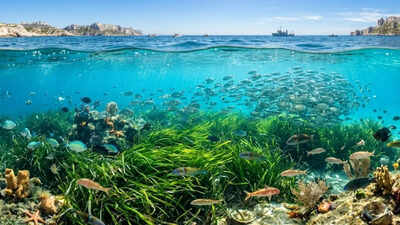
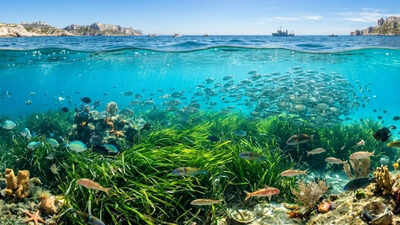
The regeneration of Posidonia oceanica seagrass meadows in Marseille represents an important example of marine resilience, demonstrating nature’s ability to recover when pressures imposed by humans are reduced. Over the years, the city’s untreated wastewater has destroyed large sections of Posidonia oceanica grasslands, which provide important ecosystem services such as carbon storage and habitat for many marine species. Following the construction of a new major waste water treatment plant in 1987, as well as the introduction of several industrial use restrictions, researchers have shown that recovery rates have been ‘extraordinary’. The grasslands were able to expand on their own at low cost by using a method called passive restoration, as opposed to the more expensive method of planting seagrass seedlings. Underwater forests (grasslands) now cover large areas of the ocean floor, creating a global model for coastal protection and demonstrating the long-term success of implementing strict pollution control policies.
How pollution cuts brought seagrass back to life in Marseille, France
The research, published in Marine Environmental Research, highlights that the primary driver of the return of Neptune grass was a drastic reduction in organic matter and industrial pollutants. By 1987, the city of Marseille transferred its sewage system to use a treatment plant, which, as a result, produced less filth in the area. As a result, light can penetrate to the sea floor and allow the natural expansion of existing seagrass beds that had been dormant or declining for about 100 years.
Why did nature defeat human intervention?
The study in Marseille showed that passive restoration, such as in removing the source of degradation, was far more effective than human-directed planting efforts. Active restoration often results in very low success rates and high costs, but the natural restoration of Posidonia oceanica within the Gulf of Marseille demonstrates that once water clarity and sediment quality are restored, the species has considerable resilience.
How do seagrass support the Mediterranean climate?
The ‘lungs of the Mediterranean’ are extremely important in providing essential services of shoreline protection and carbon storage. The European Environment Agency has considered the recovery of these meadows as important for achieving ‘Good Environmental Status’ (GES) under the Marine Strategy Framework Directive, particularly along the coast of France. Seagrass recovery near Marseille is an important contributor to regional biodiversity, providing habitat for hundreds of different marine species.
How EU directives protect Marseille’s marine life
The current health of the seagrass is strongly linked to compliance with the EU Urban Wastewater Treatment Directive, as confirmed by regular monitoring carried out by the French Water Agency (Agence de l’Eau). Regular sampling of coastal waters near Marseille indicates a reduction in levels of heavy metals and nitrogen, which were previously causing algal blooms (eutrophication) that were suppressing seagrass populations.