
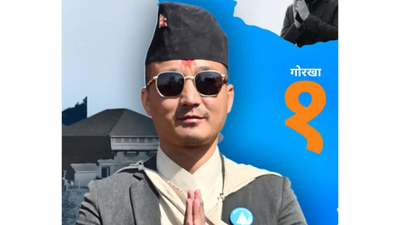

A month after new government, Nepal’s Home Minister Sudan Gurung resigns over ties with businessman under laundering lens
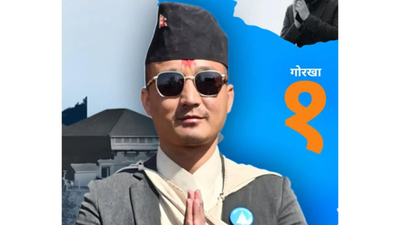
Nepal Home Minister Sudan Gurung, a select aide of PM Balendra Shah, resigned on Wednesday amid a probe into his wealth disclosures, investments and alleged business links with businessman and power broker Deepak Bhatta, who is being investigated in a money-laundering case. In a day of dramatic developments, Shah took charge of the Home Ministry following Gurung’s departure, just 26 days after his anti-corruption government took charge.Gurung’s resignation is the second ministerial setback for Shah in a matter of weeks. On April 9, Shah dismissed Labor, Employment and Social Security Minister Deepak Kumar Shah after a disciplinary panel found that he had misused his position to retain his wife Junu Shrestha on the health insurance board, a move the party said was a violation of its code of conduct and discipline.Gurung, a former events manager and nightclub DJ who founded the NGO Hami Nepal after helping with relief efforts during the 2015 earthquake, had emerged as one of the leaders of last year’s deadly Gen Z protests that forced former PM KP Sharma Oli to resign and ultimately propelled Shah to the prime ministership. Notably, Shah and Gurung formally joined the ruling Rashtriya Swatra Party (RSP) together on January 18, with Gurung announcing on social media that they would enter the party office together.Announcing his resignation, Gurung said he was stepping down to allow a fair investigation and avoid conflict of interest. “For me, morality matters more than a position, and no power is greater than the public trust,” he said, adding that questions raised by citizens should be answered with “moral integrity.” Before resigning, Shah had asked for a written explanation from him.Gen Z activists, whose protests had helped propel Gurung from civil society into Nepal’s political circles, had also demanded his dismissal and arrest after questions were raised over his assets and alleged links with Bhatta. In a statement, Gen-Z Movement Nepal said that allowing him to remain in office “could impact the investigation process and represents a clear conflict of interest”, adding that a minister facing investigation cannot continue without violating “fundamental ethical and legal principles”. The controversy started after the declaration of ministers’ assets became public on 12 April. Gurung declared shares and securities, 89 tola (1.04 kg) of gold, 6 kg of silver, over Rs 61 lakh in Nepali cash, a vehicle and land in Dhankuta, as well as properties registered in the names of his father and grandfather in Chitwan and Gorkha. The revelations raised questions about the wealth of the politician who had built his public image around activism, disaster relief and clean governance.The matter deepened after reports emerged that Gurung held founder-level shares in two micro-insurance firms – Star Micro Insurance and Liberty Micro Life Insurance – where his name had surfaced along with those linked to Bhatta and Shankar Group vice-chairman Sulav Agarwal. Gurung had invested Rs 25 lakh (Rs 15.6 lakh) each in the two companies, which were yet to launch initial public offerings. Agarwal was arrested earlier this month as part of a wide-ranging money-laundering probe into transactions worth Nepali rupees 3.7 billion (Rs 231 crore).Gurung denied hiding the investments, saying they were part of his declared stock-market portfolio. “A person who intends to hide assets does not openly declare investments of more than Rs 20 million,” he had earlier said. He also said that buying shares is not a business partnership.However, critics said that the unlisted founder shares should have been identified separately and not clubbed under general securities holdings. They also raised questions on the source of funds as records showed that on May 9, 2023, Nepali rupees 22.5 lakh (Rs 14 lakh) by Chang Agarwal and Nepali rupees 37.5 lakh (Rs 23.4 lakh) by Bijay Kumar Shrestha were deposited in Gurung’s personal account. The next day, 25 lakh Nepali rupees (₹15.6 lakh) each were transferred from the account to Liberty Micro Life Insurance and Star Micro Insurance.Financial records also raised questions about the donation. Gurung’s personal account had received around Rs 60 lakh (Rs 37.5 lakh) Nepali as COVID-19 relief donations in May–June 2021, of which Rs 25.9 lakh (Rs 16.2 lakh) Nepali were later transferred to Hami Nepal. Hami Nepal received 2.28 crore Nepali rupees (₹1.42 crore) in its bank account between July 2021 and August 2025, while Shankar Group was identified as one of its largest corporate donors.Bhatta, chairman of Infinity Holdings, has interests in energy, real estate, travel, consumer goods, government contracts, insurance and stock-market sectors. The investigators are probing alleged suspicious transactions involving Bhatta, Aggarwal, Shankar Group and Himalayan Reinsurance. Shah’s government is facing protests and clashes at the India-Nepal border over strict customs duties on goods worth more than 100 Nepali rupees (₹63) brought from India, while there have been major demonstrations in Kathmandu over the government’s move to ban party-affiliated student politics in colleges and replace student unions with student councils.