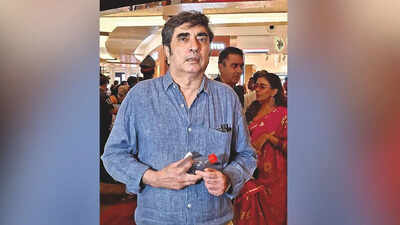
Sanjay Mehrotra, who was rebuffed thrice for US visa, joins Satya Nadella and Sundar Pichai in the trillion-dollar club

Sanjay Mehrotra, who was rebuffed thrice for US visa, joins Satya Nadella and Sundar Pichai in the trillion-dollar club

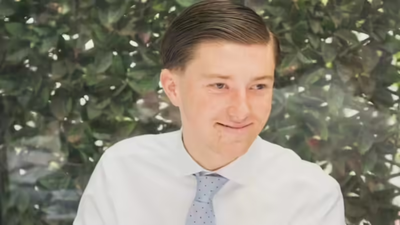
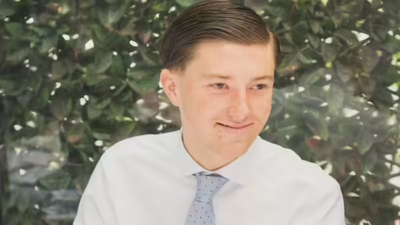
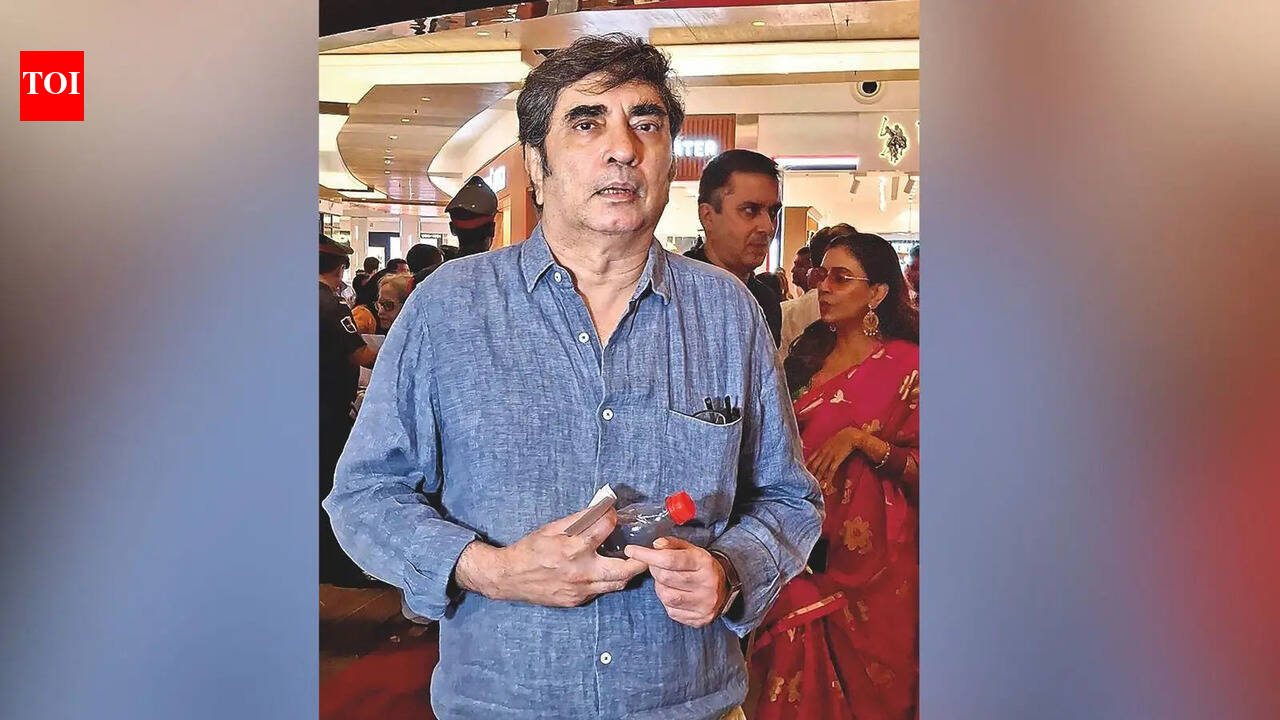
TOI correspondent from Washington: In the summer of 1976, the Kanpur-born teenage engineering student at BITS Pilani stood in the lobby of the US Embassy in New Delhi after being denied a student visa for the third time. His father, who had come with him, refused to go. She had seen the photo of the consular officer in the lobby, learned that he had gone out for lunch, and decided that she would wait to ask him why her son was being denied a visa even though admission to three universities was confirmed and all the documents were in order. Persistence worked. Half a century later, that student, Sanjay Mehrotra, is CEO of Micron Technology, the memory-chip giant that on Tuesday eclipsed the $1 trillion market capitalization that fueled Wall Street’s AI frenzy and joined the top 10 U.S. companies by valuation, surpassing more well-known giants like Walmart, Berkshire Hathaway and JPMorgan Chase. It’s one of Silicon Valley’s most incredible stories: A guy repeatedly shunned by America became the manager of one of America’s most strategically important technology companies in the MAGA era. He is not alone. Mehrotra’s rise also completes an extraordinary desi tableau at the top of corporate America. The world’s three most valuable technology companies – Microsoft, Alphabet and Micron, with market caps exceeding trillions – are now run by Indian-origin executives who arrived in America as middle-class strugglers with nothing but engineering talent, parental sacrifice and a quiet fire in the belly. Satya Nadella Grew up in Hyderabad as the son of a civil servant. Sundar Pichai He was brought up in a modest apartment in Chennai where the family once shared a rotary telephone. Mehrotra also came from a middle-class family in Kanpur that did not even have a phone. During his formative years in America calls to his parents were always via “PP” – “neighbor’s phone” – calling a neighbor who had a landline, who called his parents. Amazingly, their collective rise is now reshaping both Silicon Valley and the political debate over globalization in Donald Trump’s MAGA-backed America.Unlike Pichai and Nadella, who already inherited major software empires, Mehrotra’s achievement has been more industrial and arguably more difficult. Memory chips are cyclical, highly capital-intensive, and historically dominated by Asian giants like Samsung Electronics and SK Hynix. When Mehrotra became CEO of Micron in 2017, the company was worth about $20 billion. Today, Micron has reached the trillion-dollar mark amid an AI-driven explosion in demand for high-bandwidth memory chips that power data centers. Wall Street’s sudden fascination with Micron — driving the stock up 180 percent in 2026, including a 75 percent rise in May alone — reflects a terrible realization: AI may run on Nvidia processors, but it remembers via Micron memory. Micron’s rally has been so intense in recent days that President Trump personally praised the company as “one of the most popular stocks” after hosting Mehrotra at the White House, amid allegations of insider trading after allegations surfaced that Trump owned a stake of between $50,000 and $100,000 in Micron stock. Trump later took Mehrotra on his trip to China as part of a high-profile business delegation — a remarkable embrace from a president whose political movement has often attacked globalization and immigration.That tension now defines the Indian-American CEO moment in modern America that goes beyond the tech trio. MAGA activists and economic nationalists are accusing Indian-led technology companies of outsourcing jobs, favoring Indian engineers in hiring, and maintaining divided loyalties between the United States and India. In recent days, IBM’s Arvind Krishna – another Trump favorite – has come under fire from right-wing activists angry over the company’s huge Indian workforce. Similar allegations have been leveled against Microsoft’s Nadella and Google’s Pichai from time to time. Yet the same White House that is against globalization also relentlessly oppresses these executives because they now control companies central to America’s technological supremacy against China. Few industries illustrate that paradox more clearly than memory chips where Micron has invested extensively in India following ventures in Singapore, Taiwan, Japan, China and Malaysia. As part of India’s $2.75 billion effort to enter the global semiconductor supply chain, the company is investing over $800 million of its capital to build an ATMP (Assembly, Testing, Marking and Packaging) facility in Sanand, Gujarat. The Sanand facility is rapidly hiring engineers, automation specialists, manufacturing experts and quality technicians for its 500,000-square-foot cleanroom space, one of the largest single-floor assembly and test cleanrooms anywhere in the world, as India races to transform itself from a software-services back office to a hardware manufacturing hub.For Mehrotra it’s more personal. Unlike many Silicon Valley executives who maintain only formal ties with India, he has repeatedly viewed Micron’s India expansion as a strategic long-term investment in engineering talent and manufacturing depth. Symbolism matters: The student who was once denied entry to the US is now helping define America’s semiotic relationship with India.Still, the parallels with Nadella and Pichai are striking. Under Nadella, Microsoft’s market value has increased 10-fold – from about $300 billion in 2014 to more than $3 trillion today, largely through cloud computing and AI. Pichai, who became CEO in 2019, has seen 4x growth — from $1 billion to a $4 trillion-plus club that has only one other member, Nvidia. This is while navigating antitrust battles, AI disruption, and political scrutiny over search dominance. All three men have some management qualities in common: low-key demeanor, engineering passion, incrementalism over theatrics, and an aversion to Silicon Valley celebrity culture. None resemble the flamboyant founder ideal popularized by other tech giants like Elon Musk and Jeff Bezos. He is a smooth operator, not a showman. In an industry once dominated by charismatic dropouts – Steve Jobs, Bill Gates, Larry Ellison – corporate America has quietly shifted toward tech immigrant executives with deep managerial discipline.That change is not accidental. The AI ​​age is rewarding operational complexity, supply-chain coordination, and geopolitical balancing rather than pure product charisma. Mehrotra presents that change well. He co-founded SanDisk before leading Micron into one of the most important moments in semiconductor history. Today, memory chips are at the center of the AI ​​arms race between the United States and China. Micron’s fortunes are now tied not just to consumer electronics but to national security, data centers and global power politics.The irony is rich. A young Indian student once struggled to convince America that he was entitled to enter the country. Today, Washington views it as essential to maintaining America’s technological dominance. And somewhere in the story lies a larger truth about modern America: Even in an age of MAGA nativism and skepticism about globalization, some of the companies at the heart of American power are increasingly run by Indian immigrants, who have come after denied visas, middle-class anxieties, and parents willing to wait endlessly in embassy lobbies for a second chance.

Source link

Adequate buffer stock to meet demand from thermal power plants: Coal India india news

Adequate buffer stock to meet demand of thermal power plants: Coal India

New Delhi: Allaying fears of shortage amid scorching heat and high power demand, Coal India said the country has a buffer stock of 168 million tonnes of dry fuel, enough to meet the requirements of domestic thermal power plants for 19 days.The company also said that depletion of coal stock levels at thermal plants during peak summer was a natural phenomenon and about 50 MT of in-situ mine coal was readily available for quick extraction and supply if the demand required.Coal-fired power stations are expected to maintain a “standard” stock of 26 days, which is calculated on the amount of electricity generated compared to the maximum possible output at 85% plant load factor or full capacity. As against the requirement of 75 MT coal to maintain this level, the total stock availability was 49.7 MT or 66% of the standard requirement.According to the daily coal stock report compiled by the Central Electricity Authority, 24 of the country’s 190 coal-based plants with a collective capacity of 223 GW had significant coal stocks as of May 26, meaning the availability was less than 25% of the standard requirement.India is currently in the grip of extreme heat, due to which the demand for electricity is increasing in most parts of the country. The maximum power demand reached 271 GW on May 21. Coal-based power plants provide about 68% of the country’s total electricity requirement during the day.However, Coal India Ltd, which supplies about 80% of the country’s coal requirement, said stocks at domestic coal-fired plants stood at 47.6 MT on May 23, while inventories at its own mine heads stood at a “comfortable level” of 113.5 MT on May 24, 10% higher than the same period in 2025.“This level is sufficient to meet 19 days’ consumption. Besides, about 3 MT of coal is awaiting movement at goods sheds, private washeries and transit points like ports,” CIL said in a statement.The public sector company said about 4 MT of coal remains in transit at any point of time, taking the total coal available in the system to 168 MT. CIL said it had advised power plants with less coal availability to create stocks in advance for peak demand periods. “As such, CIL has sufficient quantities to meet the generation capacity of domestic coal-based plants,” it said.

Source link

TMC MLA arrested in Puri for threatening BJP workers during Bengal Assembly elections. bhubaneswar news

TMC MLA arrested in Puri for threatening BJP workers during Bengal Assembly elections
TMC MLA Dilip Mandal in police custody

Debabrata MahapatraBhubaneswar: West Bengal Police on Wednesday arrested TMC MLA Dilip Mandal from a beachside hotel in Puri for his alleged involvement in cases related to intimidation of BJP workers during the recently concluded assembly elections.Mandal was caught by a joint team of West Bengal and Puri police from the hotel lobby when he was preparing to check out and shift to another hotel in Baliapanda area.“We provided all necessary assistance to West Bengal Police to trace the suspect, who had checked in (at the hotel) with an associate on Tuesday,” said Puri SP, Prateek Singh. times of India.Mandal, who was taken to West Bengal on transit remand, claimed that he was being framed. “The BJP is doing vendetta politics. Since I have been vocal against their top leaders, they took revenge by arresting me,” he told reporters in Puri.Earlier, fearing his escape, around 30 officers, including 20 Puri police officers, surrounded the hotel.A Puri police officer said, “He had checked in in the name of his colleague. As soon as he came down to complete the check-out formalities, he was taken into custody. There was no resistance. He had already booked another hotel near the beach for Wednesday.”Sources said Mandal had reached Puri by train about a week ago and was changing hotels to avoid detection. His alleged hiding in Puri was confirmed after West Bengal Police received information from one of his close associates in Kolkata.Mandal’s arrest follows the arrest of his son Arghya on May 18 in Bakkhali-Fraserganj for allegedly possessing illegal firearms.

Source link

Quote of the Day by Plato: “Good men pay the price of indifference to public affairs…” | world News

Quote of the Day by Plato:

Some quotes survive because they seem wise. Others survive because they cause a small moment of discomfort. They stay in people’s minds because they touch something that feels real even after the world around them has changed. This line related to Plato falls in the same second category. This doesn’t seem gentle or reassuring. It almost feels like a warning uttered centuries ago that has somehow managed to remain relevant.People often imagine that ancient philosophers were merely talking about ideas stuck in another era. They depict old cities, stone buildings and conversations that seem far from ordinary life. Yet every now and then an old saying comes up and sounds unexpectedly modern. This is what makes this quote interesting. Even after thousands of years, it still raises the same questions in people’s minds.What happens when civilized people stop paying attention?This question sounds more familiar than many would like to admit.Today life is moving forward rapidly. Calendars fill up with work. Personal responsibilities increase. There is news every minute and opinions come out from all sides. After some time many people get tired of doing all this. Some people stop following public discussions because everything seems repetitive. Some people decide that they will focus solely on personal matters. Others quietly tell themselves that the bigger issues are those of leaders and governments rather than ordinary people.Plato’s quote seems to challenge that thinking.It doesn’t do it loudly. It simply suggests that walking away completely can produce consequences of its own.

Today’s Quote by Plato

“The price that good people have to pay for their indifference to public affairs is to be ruled by bad people.”

What is the meaning behind this statement of Plato?

At first glance this quote seems political. On closer inspection it seems that it is talking about responsibility in a broader sense.Plato does not suggest that everyone should be deeply involved in political debate every day. The message feels more connected to awareness and participation. Communities, societies and institutions function because people are connected to what is happening around them. They ask questions, make decisions, and pay attention to the events that shape their lives.The quote becomes interesting because of where Plato focuses his attention. He starts with the “good guys” instead of the “bad guys.” That detail changes the meaning of the entire sentence.The warning is not focused on the sudden appearance of bad people. The concern seems to be about civilized people becoming isolated or indifferent.Many people think that avoiding difficult issues creates distance from them. He believes that getting away makes life simpler and more peaceful. Sometimes that feeling is probably understandable. Public discussions can be frustrating and emotionally draining.Plato seems to suggest that complete indifference has a price.Vacant spaces rarely remain vacant for very long. If thoughtful people decide not to participate, other people eventually move into those spaces. The outcome may not always reflect the values ​​of those who walked away.This idea seems uncomfortable because it shifts the focus back to personal responsibility.

Plato’s own experiences may have shaped these ideas

Plato lived in ancient Greece during a time filled with political instability and social change. His thinking did not emerge from a peaceful world untouched by conflict. He witnessed events that reportedly left a deep impression on him.One of the most important moments involved his teacher, Socrates. Socrates was sentenced to death by Athens after being accused of influencing young people and questioning accepted beliefs.Imagine that someone you admire is standing in front of a system that suddenly turns against them.Such experiences rarely disappear from a person’s mind.For Plato, questions of justice, leadership, and responsibility became deeply personal. Later, these ideas would appear again and again throughout his work. He discovered how societies function and what causes them to weaken.It appears that he was interested in more than just political systems. Human behavior often became his subject.Perhaps that’s why many of his comments still seem surprisingly fresh.

There’s something strangely normal about depression

Most people do not consider indifference to be dangerous.Someone may decide that they no longer want to follow certain discussions because they feel tired. Another person may believe that their opinion doesn’t really matter. Another person may believe that someone else will eventually deal with the problem.Neither of these options seems dramatic.This is what makes them interesting.Depression usually comes quietly. It rarely announces itself. People don’t suddenly wake up and decide to stop caring about big issues altogether. This often happens gradually. Attention goes somewhere else. Daily life becomes busy. Personal concerns take priority.Days pass.Weeks pass.Months pass.Small choices repeated over a long period of time sometimes produce results that no one originally expected.A person assumes that their voice changes nothing.Then many people start thinking like this.

Why does this old quote still ring close? modern life

It’s a bit strange to read words written thousands of years ago and recognize modern behavior within them.Today’s world provides people with endless information. News updates appear instantly. Opinion spreads on social media within seconds. The discussion continues throughout the day without stopping.Yet, many individuals feel isolated despite having access to more information than ever before.Some people become overwhelmed by the constant headlines. Some people feel emotionally exhausted from endless arguments. Others stop paying attention simply because it seems easy.That reaction is understandable.Yet Plato’s quote raises an uneasy possibility. Whether people notice or not, public events continue to shape society. Decisions keep being taken. Systems keep changing.Ignoring something does not always prevent its impact from reaching people later.The same thing could happen below the quote.

The message can go beyond politics

Many people interpret this quote in ways that go beyond governments and public systems.Unhealthy situations sometimes develop in workplaces because no one wants to speak up first. Communities sometimes struggle because individuals assume that someone else will take responsibility. Family and friendships may experience similar patterns.A person notices inappropriate behavior but remains silent because it feels uncomfortable to engage in it.Someone sees a problem and assumes that someone else will eventually intervene.Someone sees the warning signs but decides it’s easier not to get involved.Later, people sometimes look back and wonder how situations became so complicated.The answer sometimes seems simple.The issue was not just what happened.The issue was what could not be done.

Other famous quotes from Plato

  • “Wise people speak because they have something to say; fools because they have to say something.”
  • “The beginning is the most important part of the work.”
  • “Human behavior flows from three main sources: desire, emotion, and knowledge.”
  • “Courage is knowing what not to be afraid of.”
  • “Necessity is the mother of invention.”

What Plato understood about silence still matters today

Plato’s quote does not demand endless debate or constant engagement on every issue that exists. The message seems to be more subtle than that.People often assume that avoiding difficult topics means avoiding their consequences. Plato challenged that notion. They suggest that complete indifference can shape outcomes even when individuals believe they are remaining neutral.Perhaps this explains why these words keep appearing again and again from generation to generation.The world changes fast. Technology changes rapidly. On the other hand, human habits sometimes move very slowly.And perhaps this is why this quote still sounds strange today. Sometimes silence can shape events as much as action.

Source link

‘Only differences of opinion’: SP Velumani says all is well in AIADMK after both factions withdraw petitions against each other india news

'Only difference of opinion': SP Velumani says all is well in AIADMK after both factions withdraw petitions against each other.

New Delhi: Senior All India Anna Dravida Munnetra Kazhagam (AIADMK) leader SP Velumani on Wednesday said “there is no division in the party, only differences”, indicating a possible reconciliation within the AIADMK after the rival factions withdrew petitions filed against each other before the Tamil Nadu Assembly Speaker.Referring to the tensions that have emerged within the party after the Tamil Nadu Assembly elections, Velumani told reporters, “There is no division in the party, only differences. We are all united. There are no conflicting views.”These comments came after both Edappadi K Palaniswami The (EPS) camp and the Velumani-CV Shanmugam faction decided to withdraw petitions seeking action against each other.“After the elections, we expressed some views and took some decisions which were seen as supporting the ruling party. He had filed a petition demanding disqualification of 25 of our members. Similarly, we had also filed a petition demanding his disqualification. Now both the parties have withdrawn their filed petitions. Velumani said, we have submitted the return letter to the Assembly Speaker.He said that despite internal differences after the election defeat, the party leadership structure remained unchanged and Edappadi K. Palaniswami remained AIADMK general secretary.“After the defeat, we had put forward some ideas. We expressed our opinion with the belief that AIADMK should continue to exist even a hundred years from now,” he said.Velumani also said that there have been discussions within the party regarding organizational reforms, including convening a general council meeting and forming a committee. According to him, the party leadership had assured that the suggestions would be considered.Earlier in the day, Velumani and MLAs supporting his faction met Tamil Nadu Assembly Speaker JCD Prabhakar at the Secretariat.The Speaker later said that he would examine the petitions presented by both sides before taking a decision.“I cannot disclose the contents of the petitions filed by the two groups of AIADMK. I will study the petition in detail and tell you about my decision tomorrow morning,” he said.The development comes after weeks of internal unrest within the AIADMK after the Velumani-Shanmugam faction extended support to actor-politician Vijay’s Tamilaga Vetri Kazhagam government during the floor test in the Assembly.The EPS camp had later sought disqualification of 25 rebel MLAs under the anti-defection law, while the rival faction had also filed petitions against the EPS side.However, reconciliation efforts appeared to gain momentum after leaders of the Velumani-Shanmugam camp met EPS and handed over an apology letter to the AIADMK leadership. Almost all the MLAs from the so-called rebel camp, except senior leader C Ve Shanmugam, attended the meeting.The AIADMK later indicated that “there will be no further division” within the party, hinting at a possible conflict between rival camps.

Source link

Colorado Avalanche forward Martin Necas suffered a concussion after a collision with Vegas Golden Knights forward Tomas Hertl during Game 4 of the NHL playoffs. nhl news

Colorado Avalanche forward Martin Necas suffers a concussion after a collision with Vegas Golden Knights forward Tomas Hertl during Game 4 of the NHL playoffs.
Martin Necas #88 of the Colorado Avalanche reacts after being injured during the second period against the Vegas Golden Knights in game four of the Western Conference Finals of the 2026 Stanley Cup Playoffs at T-Mobile Arena on May 26, 2026 in Las Vegas, Nevada. (Photo by Jack Krill/NHLI via Getty Images)

The Colorado Avalanche suffered a major blow in Game 4 of the NHL playoffs when forward Martin Necas suffered a lower body injury after colliding with Vegas Golden Knights forward Tomas Hertl.Necas required assistance off the ice after the hit, casting doubt on his status for the remainder of the game and perhaps the series. Necas has been a big part of the Colorado Avalanche’s attack in the NHL playoffs, so the injury is one of the biggest talking points of the game.

martin necas injury Concerns raised during Colorado Avalanche and Vegas Golden Knights NHL Game 4

Colorado Avalanche vs. Vegas Golden Knights NHL Playoffs Game 4: Martin Necas appears to have a lower body injury after a collision with Tomas Hertl.The neutral zone was a factor in the game when Tomas Hertl went over Martin Necas in a puck possession battle. Replays showed Hertl making contact with his hip area, and Necas looked uncomfortable immediately after the collision. A forward for the Colorado Avalanche had trouble putting weight on his foot and had to be helped off the ice.The timing of the injury was of additional concern as the Colorado Avalanche came into the matchup looking for survival in the NHL playoff series. Losing Martin Necas would be a big blow to the team’s offensive depth and transition game against the Vegas Golden Knights.The Colorado Avalanche medical staff did not immediately provide an official update, but the sequence soon became part of the NHL news roundup surrounding the playoff contest. Many analysts said the collision appeared to be accidental, although the impact appeared to be severe enough to keep Necas out for the remainder of the game.One of the big contributors for Colorado in the NHL playoffs has been Martin Necas, with his speed and puck movement creating scoring chances. NHL match updates related to the playoff series focused more on the status of Martin Necas and whether the Avalanche star will be available in upcoming games.

Source link

IPL 2026: CEO Kasi Vishwanathan says MS Dhoni, CSK’s future depends only on him

Chennai Super Kings CEO Kasi Vishwanathan said that any decision regarding MS Dhoni’s future with the franchise will entirely depend on the former skipper, while reiterating that CSK would always want him to be associated with the team in some capacity. Amid growing retirement speculation after IPL 2026, the CSK CEO clarified that the franchise still sees Dhoni as a permanent part of the Chennai setup.

CSK faces another disappointment IPL campaign after being knocked out of the playoff race following a heavy defeat to Gujarat Titans earlier this month. Speaking to RevSportz after the season, Kasi Viswanathan reflected on Dhoni’s future, while also praising the great wicketkeeper’s role in shaping current captain Ruturaj Gaikwad.

“So far we have not had any discussions with MS. MS takes his own decisions and we respect that,” Kasi said.

“We would always like him to join CSK permanently in any capacity – be it as a player, coach or consultant, whoever he wants. Any decision is up to him.”

Kasi also credited Dhoni and head coach Stephen Fleming for helping Ruturaj develop into a calm leader during CSK’s transition phase.

He said, “Ruturaj replaced MS after watching him closely for three to four years. MS and Fleming have developed Ruturaj into a very calm captain. I am sure he will adopt those qualities even more in the years to come.”

The uncertainty over Dhoni’s future has increased further after a season where the 44-year-old did not play a single match due to several injuries. Although there is still no official retirement announcement, IPL 2026 feels like the beginning of a transition away from the Dhoni era at Chennai Super Kings.

Why did MS Dhoni not play IPL 2026?

Dhoni missed the entire IPL 2026 season Due to a persistent shin injury which reportedly worsened over time along with a thumb problem.

Although he remained actively involved in the team and attending matches from the dugout, Dhoni never returned to full fitness during the tournament. His absence left a huge void in CSK’s middle order, with the franchise struggling badly throughout the season.

Despite not being present on the field, Dhoni’s presence remained central to the atmosphere in the CSK dressing room. head coach Stephen Fleming had earlier strongly defended Dhoni’s off-field roleEmphasizing that his influence remains invaluable to a squad undergoing change.

The emotional pressure over Dhoni’s future became most visible after CSK’s last home match in Chepauk earlier this season. Following the loss to Sunrisers Hyderabad, Dhoni walked out during the traditional lap of team appreciation and waved to the crowd, which many fans interpreted as a possible farewell moment.

ipl 2026 | ipl schedule | ipl points table | ipl player stats | purple cap | orange cap | ipl video | cricket news | live score

– ends

published by:

Debodinna Chakraborty

Published on:

May 27, 2026 16:40 IST

Source link

UK farmer shot dead: Britain’s award-winning young farmer shot dead in field; Man charged after two-year investigation

Britain's award-winning young farmer shot dead in field; Man charged after two-year investigation

A 37-year-old man has been charged over the fatal shooting of an award-winning young farmer in Derbyshire, more than two years after the incident shocked the local farming community in Britain.According to a BBC report, the body of 23-year-old Charles Kinston was found in a field off Brizlincote Lane in Broughby, near Swadlincote, on January 29, 2024. Police said officers were called to the scene at around 6.30am GMT, where Kinston was pronounced dead a short time later.

The accused was charged with murder

Derbyshire Police confirmed that Joseph Simpkins, 37, of Brizlincote Lane, Broughby, has been charged with murder, possession of ammunition for a firearm without a certificate and possession of prohibited ammunition.Simpkins has been released on bail and is due to appear before South Derbyshire Magistrates Court on June 15, officials said.

Young farmer honored for innovation

Kinston was widely known in the agricultural world for his creativity and engineering skills. Farmers Weekly magazine previously described him as a “brilliant amateur inventor”.In 2020, he won third place in the publication’s invention competition after modifying a Land Rover Discovery into an off-road milk float designed for calf feeding.

The farming community mourned his death

Following his death in February 2024, the Leicestershire Federation of Young Farmers Clubs described Kinston as a “much-loved, kind and generous character”.A spokesman said he had been involved with the Netherseal Young Farmers Club for more than 12 years and was known for his cheerful personality.“He was a much-loved, kind and generous character who knew how to make everyone laugh,” the spokesperson said at the time. He also said it would be “difficult” to recoup their losses.

Source link

Annamalai: CBSE hits back at Annamalai language: Was the former Tamil Nadu chief sending a message to the BJP leadership in Delhi? | india news

Annamalai's reaction on CBSE language: Was the former Tamil Nadu chief sending a message to the BJP leadership in Delhi?

New Delhi: East Tamil Nadu BJP Chief K Annamalai, in a rare dissent, has publicly opposed the CBSE’s revised three-language mandate, triggering a fresh political controversy in Tamil Nadu.Annamalai urged the Union Education Ministry to withdraw the CBSE notification making three languages ​​compulsory for Class IX students from the current academic year, saying the sudden move was “a shock to many parents, especially those from Tamil Nadu.This public disagreement has given rise to more political controversy than linguistic debate, for obvious reasons.And the reason is simple.Over the years, Annamalai has been one of the BJP’s most aggressive defenders of the National Education Policy (NEP) and the three-language formula in Tamil Nadu, repeatedly taking on the former chief minister. mk stalin And Dravida Munnetra Kazhagam (DMK) whenever it accused the Center of trying to “impose Hindi” in the state.This is what has made the recent intervention politically effective.On May 15, CBSE issued a notification to make the third language compulsory for Class IX students from the current academic year, pushing forward the earlier timeline, which was proposed to be implemented from 2029-30.Annamalai objected not to the policy itself, but to its sudden implementation.“This has come as a shock to many parents, especially those in Tamil Nadu,” he wrote onHe also reminded the Center that the previous CBSE notification issued in April had clearly stated that the compulsory requirement of Class 9 would start only from the academic year 2029-30.“I request the Education Ministry to immediately withdraw this notification and honor its previous commitment,” he said.The sharpness of the statement came because just a few weeks ago, Annamalai had welcomed the comprehensive three-language framework for Class VI students, saying it would introduce children to the “diverse literary landscape” of India.This contradiction indicates that the statement may not just be a policy disagreement, but also a deliberate political signal to the BJP leadership in Delhi.

Why does the statement matter?

Language remains the most politically flammable issue in Tamil Nadu.The anti-Hindi movements of the 1960s reshaped the state’s political landscape and helped Dravidian parties establish their decades-long dominance. Even today, any linguistic imposition immediately takes on emotional and political overtones.For decades, parties like the DMK and the All India Anna Dravida Munnetra Kazhagam (AIADMK) have portrayed the BJP as a “North Indian” party attempting to weaken Tamil linguistic identity.The BJP has struggled to break that perception.Annamalai’s political project since entering Tamil Nadu politics has partly been an attempt to localize the BJP’s image – to make it appear less like an external ideological force and more like a party capable of speaking the language of Tamil identity and regional aspiration.

Tamil Nadu Assembly Election Result 2026.

It becomes difficult to strike a balance on issues like NEP and three-language policy.If the BJP aggressively pursues the policy, it risks giving credence to the DMK’s charge of “Hindi imposition”.Annamalai’s latest intervention appears to be an attempt to walk that middle line.Notably, he did not reject multilingual education or the NEP. Instead, he framed the issue around implementation, student pressure, and administrative overreach.This distinction is important politically as it allows them to oppose the Centre’s way of handling the issue without appearing ideologically rebellious.

Perfect timing?

In the case of a firebrand politician, the timing of the disagreement is equally important.The BJP’s poor performance in the 2026 Tamil Nadu Assembly elections has intensified the debate within the party over strategy, leadership and alliances in the state.The BJP won just one seat, while ally AIADMK secured 47 seats.Even before the elections, AIADMK chief Edappadi K Palaniswami had reportedly asked the BJP to sideline Annamalai to form an alliance.Meanwhile, the BJP had removed Annamalai from the post of state president, a decision widely seen as a way to revive ties with the AIADMK.At that time Union Home Minister Amit Shah had said that “Annamalai’s organizational skills will be leveraged within the national framework of the party.”Later BJP also decided not to field Annamalai in the assembly elections. State President Nainar Nagendra had said, “This decision has been taken by the party high command.”Annamalai, on the other hand, had reportedly expressed uneasiness over the BJP coming too close to the AIADMK. According to party insiders, his rationale was that the BJP needed to develop as an independent force in Tamil Nadu rather than permanently function as a junior partner to the Dravidian chiefs.That internal debate did not disappear after the election.In recent times, reports have revealed that the organizational structure and leadership of Tamil Nadu BJP is being reviewed after the disappointing performance of the NDA. It was said that discussions are ongoing in Delhi regarding possible restructuring and future leadership roles.

How BJP sidelined Annamalai.

In that backdrop, Annamalai choosing to speak publicly on a politically sensitive issue like language does not seem accidental.This statement effectively served several purposes.This projected him as a leader who is capable of articulating Tamil Nadu-specific concerns, even if they differ from the immediate position of the Centre.In effect, Annamalai was telling the BJP leadership that Tamil Nadu needed a different political grammar.

a preemptive political move

The intervention may also be aimed at denying the opposition an easy political opening.If the BJP had defended the CBSE notification without qualification, the DMK and actor-politician Vijay’s Tamilaga Vetri Kazhagam would have likely taken advantage of it to revive the BJP’s image of “Hindi imposition”.Language is one of the few issues that has been able to rapidly strengthen anti-BJP sentiment across all sections of society in Tamil Nadu.By criticizing the circular itself, Annamalai effectively blunted that line of attack before it could gain momentum.The contours of his objection also appear to have been carefully crafted to attract urban middle-class families whose children study in CBSE schools – a demographic that the BJP has increasingly targeted in Tamil Nadu.

More regional space within BJP?

Annamalai’s statement may ultimately reflect a larger reality facing the BJP in Tamil Nadu.The party’s national rise has largely been based on message discipline and ideological stability. However, Tamil Nadu has historically resisted centralized political narratives, particularly on language and identity.To propel the BJP forward in the state, its leaders may need space to publicly formulate positions in line with regional sentiments.Annamalai’s dissent shows that at least some within the party believe this.For Annamalai personally, the episode also helps cement the image she has carefully built – that of a Tamil leader first, a BJP leader later.At a time when the future leadership structure of the Tamil Nadu BJP is under discussion, Annamalai’s intervention may serve as a reminder to the party high command that he is one of the few BJP leaders capable of shaping the political narrative in the state and perhaps that is why the leadership should not listen to him.

Source link

Event Alert: Natural health teacher Barbara O’Neill is in India and why women should look forward to her sessions

Event Alert: Natural health teacher Barbara O'Neill is in India and why women should look forward to her sessions

Great news for women looking for an intense and empowering wellness experience! Barbara O’Neill’s India tour offers women a unique opportunity to gain in-depth information about holistic health, hormone balance, emotional well-being and natural healing practices. World renowned natural health teacher Barbara O’Neill will be in India this May for a much-anticipated series of holistic wellness masterclasses on natural healing, gut health, hormone balancing and lifestyle-based wellness practices. The India tour from May 11 to May 29, 2026 provides a comprehensive learning experience for anyone interested in practical, preventive and sustainable health solutions. Barbara O’Neill is an internationally known authority on simple yet powerful teachings on nutrition, detoxification, emotional well-being and the body’s natural ability to heal. Over the years they have built a strong global community of health enthusiasts. They are especially sought after by those looking for holistic alternative and complementary approaches to modern-day health problems.The India tour will include curated events in two key cities – New Delhi and Mumbai, bringing together wellness experts, health-conscious communities and people interested in learning directly from one of the world’s most recognized natural health teachers.Awareness about preventive health care, conscious living, healthy diet and natural treatment methods has increased rapidly in recent years in India. Rather than quick fixes, more people are actively seeking holistic practices for lasting wellness — from gut health and hormone balance to stress management and emotional well-being. Barbara O’Neill’s teachings are a perfect fit for this growing movement. Their philosophy is to provide people with knowledge about the body, nutrition, lifestyle habits and natural remedies that can help in achieving better health outcomes.Their India session aims to demystify wellness concepts and offer practical strategies that attendees can implement in their daily lives. In engaging discussions, educational masterclasses and interactive sessions, attendees will learn practical ways to improve physical and emotional health through lifestyle changes.Delhi Edition: “Live Well, Live Natural”The “Live Well, Live Naturally” masterclass and panel discussion at the NCUI Auditorium was part of the New Delhi leg of the tour. The event was attended by health enthusiasts, health care practitioners, nutrition conscious families and individuals interested in learning more about holistic healing practices.The session included discussion on the following:

  • Natural Ways to Support Gut Health
  • Hormone Balance: How to Achieve It
  • nutrition and detoxification
  • Stress Management and Emotional Health
  • Creating Healthy Habits for Life
  • Relationship between nutrition, environment and health in general

Attendees can hear Barbara O’Neill’s insights on preventative health and the importance of adopting sustainable daily habits that achieve long-term vitality. The Delhi edition has been curated by Empower Living and Amsha, who have been instrumental in bringing this globally renowned wellness experience to audiences in the capital city.Mumbai Edition: “Digest Easy”The tour will conclude in India on 29th May 2026 with the wellness event, “Digest with Ease” at the prestigious Yashwantrao Chavan Centre, Mumbai. Barbara O’Neill will join other leading health and wellness experts for the Mumbai session, where they will discuss in-depth digestion, gut health and natural healing approaches. With digestive problems on the rise due to modern lifestyle, stress and eating habits, this program will educate attendees about the root causes of gut-related concerns and how to improve digestive health naturally.The Mumbai edition is a collaborative platform curated by Empower Living and Awaken Your Soul that combines wellness education with community-driven healing experiences.Barbara O’Neill has become a leading voice in the natural wellness field internationally, with her practical, accessible and educational approach to health. She doesn’t teach quick solutions, but rather how to understand the body’s systems and make healthy lifestyle choices based on nutrition, activity, emotional balance and conscious living. His workshops and masterclasses often attract participants from a wide range of backgrounds – health care professionals, wellness coaches, housewives, parents, fitness enthusiasts and individuals facing lifestyle-related health problems.Part of his appeal is his ability to take complex wellness ideas and break them down into simple, easy-to-understand advice that people can apply in their daily lives. The India tour is indicative of a broader global transition to preventative wellness and self-awareness, as people are choosing sustainable health practices and taking active steps toward better physical and emotional health.

Source link