

Odisha jails get breathing space with 66% occupancy: PSI report | bhubaneswar news
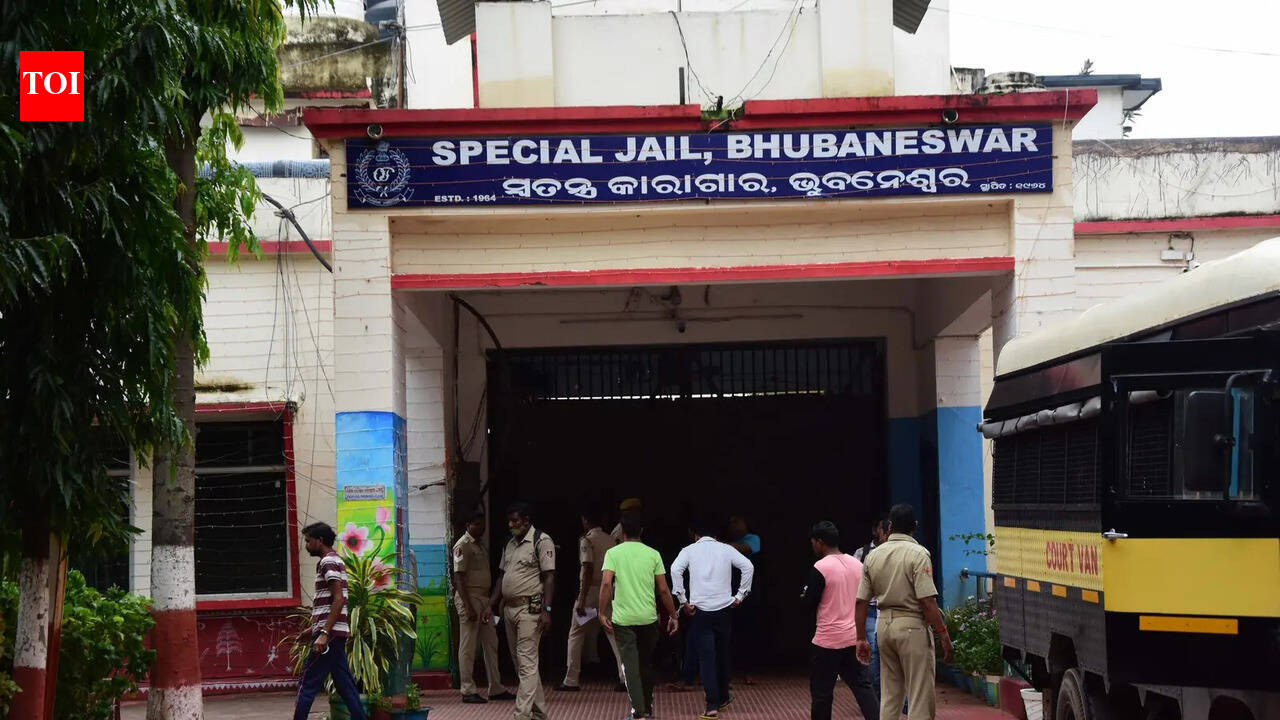
Filling of jails with water is a common sight in the country. But Odisha Prison Statistics India (PSI) has managed to buck this trend, recording an occupancy rate of 66%, according to the 2024 report. The state reduced its prison occupancy rate from 99.1% in 2021 to 66% in 2024. During the same period, it increased its capacity from 20,987 to 25,176, an increase of 19.9%. At present, there are 16,617 prisoners in Odisha jails.The main reason for high population in prisons in India is the high population of undertrial prisoners. While undertrials constitute 72.6% of the total prison population across the country, undertrials constitute 77.5% of the prison population in Odisha – that is, 12,879 out of 16,617 prisoners.The solution to high prison occupancy depends not only on infrastructure but also on mindset Supreme Court It has been repeatedly emphasized that bail is the ideal, not jail. Despite this, the India Justice Report (IJR) 2025 found that decadal data shows that the proportion of the undertrial population spending 1-3 years in almost all states and union territories has increased with an average increase of 4.14 percentage points at the national level.In Odisha, capacity expansion took place after the intervention of the Orissa High Court. In May 2021, a two-judge bench of Chief Justice S Muralidhar and Justice Savitri Ratho said, “There is an urgent need to decongest the prisons and accommodate the prisoners in excess of the capacity of the concerned prison in other secure premises in a phased manner, which can be done by upgrading other state buildings/facilities to meet the needs of the prisons.“As a result, the state sanctioned Rs 39 crore for modernization during FY 2022-2023, which is 56% more than the amount sanctioned for FY 2021-2022, along with Rs 10 crore for repair works.This policy change is reflected in the IJR 2025, where Odisha has improved from 11th to 6th position. Valay Singh, head and co-founder of IJR, said, “Even at the national level, occupancy rates have declined. For Odisha, it was the national trend and the impact of HC intervention that helped in this huge improvement.”Beyond expansion, decentralization contributed to this change. Of its total 92 prisons, Odisha operates 60 sub-jails, the second largest in the country. According to PSI 2024, the occupancy rate in Odisha’s central jails (7) is 76.2%, while its district (17) and sub-jails (60) are 84.9% and 44.5% filled. The state also has one women’s prison with 29.1% occupancy rate, one special prison (6) with 74.7% occupancy rate and one open prison with 28.8% occupancy rate.Commenting on this setup, Singh said, “In the sub-jail infrastructure, prisoners are possibly closer to their place of residence. This helps in family meetings. In a large state like Odisha, it makes natural sense to have sub-jails.“Smaller prisons are more efficient. They can be managed better on a day-to-day basis,” said Krutika Swamy, a criminal justice teacher. Swamy said that decades ago states like Maharashtra had many sub-jails which had fallen into disuse, Odisha actively uses them. This runs counter to the broader national model.Adequate personnel are required to operate sub-jails, a metric where Odisha reports 996 vacant posts, or 31% of its sanctioned strength. However, IJR 2025 found, “In the five years between 2018 and 2022, it reduced officer vacancies from 46% to 14%, even as it increased its sanctioned strength.” “The total approved budget of the state has also increased by 41%,” the report said.Odisha also leads in mandatory prison inspection. “The PSI data currently shows the total number of visits made each year in each state without disaggregating district or jail. Even this presents a bleak picture. At the mandatory rate of one visit per quarter, India’s 775 districts would need a minimum of 3,100 visits per year. But only 899 visits were made. Odisha exceeded the minimum with only 138% visits, while 10 states/UTs reported no visits. Gave.” IJR told.