Iran’s Khamenei warns US will lose ‘safe haven’ in Gulf; Amit Shah forms panel on illegal immigration, demographic changes and more. india news

Iran's Khamenei warns US will lose 'safe haven' in Gulf; Amit Shah forms panel on demographic changes and others related to illegal immigration
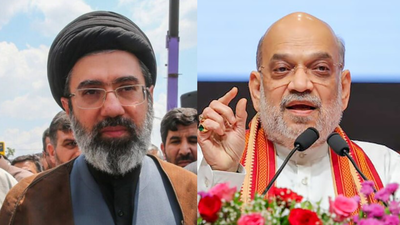
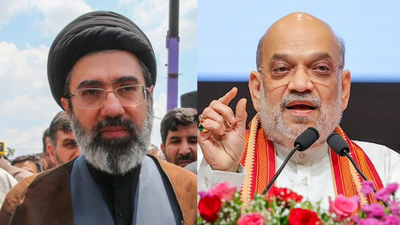
  • Iran’s supreme leader Mojtaba Khamenei warned that Gulf countries would no longer protect US military bases or provide Washington with “safe haven” in the region.
  • Amit Shah announced a high-level committee to study the demographic changes in India due to illegal immigration and other “unnatural causes”.
  • Pakistan refused to join the Abraham Accords, saying it would not recognize Israel without the creation of a Palestinian state.
  • Amid speculations over power sharing agreement in Karnataka, CM Siddaramaiah and DK Shivakumar met the Congress high command in Delhi.
  • Madhya Pradesh Police arrested a couple accused of duping families in a fake marriage racket by using photographs of women taken from social media.

Here are today’s top 5 stories:

‘There will be a lack of safe haven for military bases in the region’: Mojtaba Khamenei issues new warning to America

Iran’s Supreme Leader Ayatollah Mojtaba Khamenei said Gulf countries would no longer serve as a shield for US military bases, warning that Washington would no longer have a “safe haven” in the region. In a statement marking the Hajj pilgrimage, Khamenei said the region would “not return to the previous situation” and declared that anti-US and anti-Israel slogans would continue to unify the Islamic world, especially younger generations. Read the full story

Amit Shah announces panel to study demographic changes due to illegal immigration

Union Home Minister Amit Shah said the Center has formed a high-level committee to examine the demographic changes taking place in the country due to “illegal immigration and other unnatural causes”. Shah said the committee was formed following PM Modi’s announcement to set up a panel on demographic change on August 15, 2025. Read the full story

‘Conflicts with our fundamental ideologies’: Pakistan refuses to join Abraham Accords after pressure from Trump

Pakistan refused to join the Abraham Accords after US President Donald Trump urged several Muslim-majority countries, including Pakistan, to normalize ties with Israel as part of a broader regional accord negotiated with Iran. Defense Minister Khawaja Asif said Islamabad would not support any agreement that goes against Pakistan’s “fundamental ideologies” and reiterated that the country would not recognize Israel without the creation of a Palestinian state. Read the full story

Karnataka power struggle: Siddaramaiah, DK Shivakumar meet Congress high command in Delhi

Karnataka CM Siddaramaiah and Deputy CM DK Shivakumar met the party high command in Delhi. The two leaders held discussions with Congress president Mallikarjun Kharge, Congress MP Rahul Gandhi and AICC general secretary KC Venugopal at Indira Bhavan, as the party tried to curb speculation over the power-sharing arrangement in Karnataka. Read the full story

MP Police busts fake marriage scam, couple arrested for duping 42 families

Madhya Pradesh Police has arrested a couple accused of running a fake marriage racket by allegedly duping families by promising to bring a bride from an orphanage. Police said the accused used photographs of the women downloaded from social media and presented them as prospective brides to unsuspecting families. Families were reportedly charged between Rs 10,000 and Rs 25,000 for arranging marriages through the mass marriage programme. Read the full story

Source link

Mysuru farmers protest against mandatory FID rule for fertilizer purchase. Mysore News

Mysuru farmers protest against mandatory FID rule for fertilizer purchase
This year, registration of fruits for fertilizer purchase has been made mandatory to prevent misuse of fertilizers.

Mysore: : Farmers protested in front of the Agriculture Department office in the city demanding immediate withdrawal of the mandatory Farmer Identification Number (FID) requirement for purchasing fertiliser. The protest was organized by the Karnataka State Sugarcane Growers Association.To prevent misuse of fertilizers, the state government has made registration under Farmer Registration and Integrated Beneficiary Information System (FRUITS) mandatory for all farmers to purchase fertilizers this year.Hallikerehundi Bhagyaraj, president of the state unit of the association, alleged that both the state and central governments were steering farmers away from agriculture. He said that Prime Minister Narendra Modi had promised to double the income of farmers by 2026, but instead of increasing the income, the prices of fertilizers have increased rapidly.He said the ongoing conflicts in West Asia have disrupted the import of raw materials needed for fertilizers. Karnataka He warned that about 20 million tonnes of urea is required, but only about 50% of the required stock is currently available, leading to a serious shortage.Bhagyaraj questioned how farmers cultivating land under Bagar Hukum, Inam Land and lease arrangements would access fertilizers if FID was made mandatory. He urged the state government to introduce alternative mechanisms to ensure uninterrupted supply. He also said that although the PM has encouraged organic farming, a complete change cannot happen overnight.The protesters also complained that petrol and diesel for farm machinery were not being easily supplied at fuel stations. He said it is impractical for farmers to bring tractors, tillers, brush cutters and weeding machines directly to petrol pumps for refueling. The association demanded that restrictions be eased and farmers be allowed to buy fuel in cans for agricultural use.

Source link

Indian-origin woman murdered in supermarket in Virginia; The shooter, who had no relation to him, was later found dead

Indian-origin woman murdered in supermarket in Virginia; The shooter, who had no relation to him, was later found dead
An Indian-origin woman was shot dead in a convenience store in Virginia, USA.

A 45-year-old Indian woman was shot dead at a Virginia supermarket where she had worked for years. The murder of Meghnaben Patel, originally from Gujarat, India, on the morning of 23 May was captured on CCTV installed inside the store. In the video, the attacker can be seen with his face covered approaching the counter where Meghnaben Patel was working. After a while the man put his hands in his pockets, took out a gun and shot her. After this the shooter scattered some items around the shop and fired several bullets and ran away.Local reports from Virginia reported a fatal shooting at a Fat Philly’s convenience store, where a female clerk was shot and killed, although reports did not identify the victim. He said the shooting stemmed from a domestic dispute between a stepfather and stepson and had nothing to do with the convenience store or the clerk who was shot and killed.Police received a call about a domestic dispute around 8:13 a.m. and went to the 3100 block of Blackwood Avenue, off Sewell’s Point Road in the city’s Greenwood section. Reports indicate that a man and his stepfather were arguing. The young man was leaving the house when he turned back and fired a shot into the house. When officers arrived, they found the 45-year-old stepfather suffering from a non-fatal gunshot wound. He went to the hospital for treatment.About 20 minutes later, the gunman arrived at the convenience store, which is about a 20-minute walk or five-minute drive from the initial crime scene. The convenience store was mostly empty, and the clerk was at the counter. After a brief conversation, as appeared from surveillance footage, the gunman opened fire. Police received information about a car running on the road at an unknown location. When officers arrived, they found the suspect himself shot, resulting in his death. Police said they are not looking for any additional suspects, but the investigation is ongoing.

Source link

AI and you: AI vs UPSC- Three chatbots attempt India’s toughest exam india news

AI and you: AI vs UPSC- Three chatbots attempt India's toughest exam

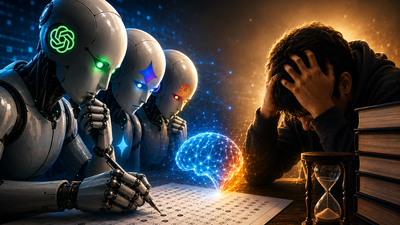
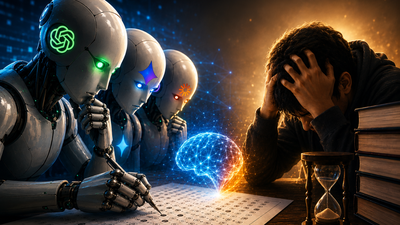
Every year, more than 10 lakh candidates spend years of their lives preparing for India’s toughest examination. UPSC Civil Services Preliminary. The cutoff in 2025 was 92.66 points out of 200, meaning even one wrong guess can derail a dream. So when AI tools like ChatGPT, GeminiAnd as the cloud began to be used as a study companion by millions of students, a natural question emerged: could these AIs actually sit exams on their own?We decided to find out. Not with cherry-picked questions or imaginary prompts, but with the real thing, the actual UPSC CSE Prelims GS Paper 1 of 2025 (May 25, 2025) and 2024 (June 16, 2024), official answer keys in hand. We fed all 100 questions of each paper to each AI model individually, recorded each answer, and scored them according to the official answer key.Models tested: ChatGPT (GPT-5, May 2026), Gemini (2.5 Pro), and Cloud (Sonnet 4.5). Everyone was given questions in plain text, with no prompts, no coaching, no prior context.Each AI model was given the same prompt for each question: the question stem was with all options labeled from (A) to (D) and was asked to identify the single correct answer with one-line reasoning. No web search was enabled. No system prompt priming was used. The only advantage any AI had was that whatever it assimilated during training was the same knowledge that a well-prepared human candidate would take to the examination hall.Scoring: UPSC actual marking scheme has been applied: +2 for correct, -0.67 for incorrect, 0 for not attempted. All three AIs attempted all 100 questions.

About 2025 paper

2025 GS Paper 1 was widely described as moderate to difficult. Economics dominated with 18 questions, followed by Environment and Ecology (15), Politics (14), History and Culture (15), and Science and Technology (12). The paper relied heavily on multiple-statement verification questions, the dreaded “How many of the following statements are correct?” format, which penalizes guessing more than simple factual recall. The official general category cutoff was 92.66 points, the highest since 2020.

Final Scorecard: UPSC Prelims 2025

Social class ChatGPT (GPT-5) Gemini (2.5 Pro) Claude (Sonnet 4.5) 2025 cutoff
GS Paper 1 Score (Expected) ~118 points ~122 points ~112 points 92.66
Question correct (out of 100) ~73 ~76 ~68 ~46 (cutoff equivalent)
accuracy % 73% 76% 68% N/A
Will prelims be cleared? Yes Yes Yes
History/Culture (15 questions) 80% 87% 80% N/A
Science and Technology (12 questions) 75% 67% 67% N/A
Economy (18 questions) 72% 72% 67% N/A
Environment (15 questions) 67% 73% 60% N/A
Politics (14 questions) 79% 79% 79% N/A
Current Affairs (14 questions) 57% 64% 57% N/A
Geography (12 questions) 75% 75% 67% N/A

All three AIs crossed the 2025 cutoff of 92.66 points. But margin and subject-wise analysis reveals huge differences in capacity.

Sample Question: How each AI responded

Here is a representative sample of how the three models answered specific questions from the 2025 paper with official correct answers.

Why# Question (short) chatgpt Gemini cloud key Result
1 Alternative Powertrain Vehicles (EV, H2, Hybrid) C (correct) C (correct) C (correct) C all correct
2 UAV Capabilities (Vertical Landing, Hover, Power) B (correct) D (wrong) D (wrong) b split results
6 CL-20, HMX, LLM-105 General Specification B (wrong) C (correct) B (wrong) C mithun won
8 Monoclonal Antibodies – Three Statements D (correct) Mistake) Mistake) D split results
9 Virus Statement – Ocean, Bacteria, Transcription D (correct) D (correct) D (correct) D all correct
12 India and COP28 Health Declaration D (correct) C (wrong) D (correct) D split results
15 Nature Solutions Finance Hub (ADB vs AIIB) Mistake) B (correct) Mistake) b mithun won
16 Direct Air Capture Technology Applications C (wrong) B (correct) C (wrong) b mithun won
17 Peacock Tarantula (Gooty) Habitat and Types D (wrong) B (correct) D (wrong) b mithun won
22 components of non-cooperation program B (wrong) A (correct) B (wrong) A mithun won
24 inebriated, eccentric, meritorious titles A (correct) A (correct) A (correct) A all correct
25 During whose reign did Fa Hien visit India? B (correct) B (correct) B (correct) b all correct
26 military campaign against srivijaya C (correct) C (correct) C (correct) C all correct
27 Ancient Mahajanapadas were connected with rivers C (correct) C (correct) B (wrong) C cloud wrong
28 Gandharva Mahavidyalaya established by Paluskar D (correct) D (correct) D (correct) D all correct

How each AI performed: analysis

Gemini 2.5 Pro: Leading (76/100, ~122 points)

Gemini had the strongest performance overall, driven primarily by better management of current affairs and environmental questions. On the question about the Nature Solutions Finance Hub for Asia and the Pacific (which the AIIB plans to launch in late 2024), Gemini correctly identified the AIIB, while both ChatGPT and Cloud incorrectly identified the ADB, suggesting that Gemini remembered more recent institutional events. Gemini also outperformed rivals on the Gooty Tarantula question, direct air capture application and non-cooperation program details. Where Gemini went wrong was in science and technology, showing that it sometimes overgeneralizes in technical areas.Best Subject: History and Culture (87%). Worst subject: Science and Technology (67%).

ChatGPT GPT-5: Persistent but cautious (73/100, ~118 points)

ChatGPT delivered solid, consistent performance across all subjects. Its strengths were politics and history, subjects where years of UPSC-specific training data give it a strong base. Its notable weaknesses were in the environment and current affairs. On the CL-20/HMX/LLM-105 question, ChatGPT chose explosives rather than the more specific cruise missile fuel answer, reflecting his tendency toward broader, more familiar categories rather than precise technical distinctions.Best subject: Polity (79%). Worst subject: Current Affairs (57%).

Cloud Sonnet 4.5: Reliable reasoner, gaps in specs (68/100, ~112 points)

Claude passed the cutoff but with the smallest margin of the three. Its strongest performance came in the structured reasoning questions, Statement I/Statement II format that has become the hallmark of UPSC. On questions requiring logical assessment of causal relationships between statements, Claude was particularly more careful. However, Cloud struggled with specific current affairs and environment related questions and was the only AI to get the Mahajanapada-Rivers pair wrong, a staple of UPSC History preparation.Best subjects: Politics and reasoning questions (79%). Worst subject: Environment (60%).

Topic-wise analysis: Where AI wins and loses

History and Culture: Revision, Zero Sleep, Full Score All three AIs scored 80% or higher on the history questions. Questions about Fa Hien, Rajendra I, Araghatta irrigation and Ashoka administration were handled with confidence. These are textbook questions where the training data is rich and clear.Current Affairs and Environment: Accuracy DeclinesThis is where the test separates humans from machines. Questions about which institution launched a specific fund in late 2024, or about the exact habitat status of the obscure Indian spider, depend on highly specific or very recent knowledge. ChatGPT and Cloud scored only 57% on current affairs. The irony is sharp: the AI ​​models, which millions of aspirants use to follow current affairs, themselves get frustrated by current affairs in the exam.Science and Technology: Tough on Technical DetailsThis section produced the most surprising failures. Questions about the CL-20, HMX, and LLM-105 affected all three AIs to varying degrees. Direct air capture technology applications also created confusion. AI models handle broad conceptual science and technical questions well but stumble over precise technical distinctions in specific domains.

2024 Paper: benchmark Compare

UPSC Prelims 2024 was a little easier with a cutoff of 88 marks. When tested on a 30-question sample from 2024, all three AIs performed 2-5 percentage points better. An important real-world data point: In 2024, an IIT-founded AI app called PadAI, trained exclusively on UPSC data and dynamically updated with current affairs, scored between 170 to 185 points at the exam venue. Meanwhile, generic ChatGPT scored only 75 marks in the same exam and failed to cross the cutoff. By 2025-26, the gap has narrowed dramatically. GPT-5 and Gemini 2.5 Pro now pass the preliminary exam without any UPSC-specific training.

So can AI really crack UPSC?

Clearing prelims is table stakes. UPSC has three stages: Preliminary, Main (Descriptive), and Personality Test (Interview). In Mains, candidates are asked to write analytical answers of 200 words demonstrating original thinking, policy awareness and ability to link historical precedent with contemporary governance. No AI can currently sit the mains exam, not because of lack of knowledge, but because the assessment itself is fundamentally different.Personality test is a structured interview before senior IAS officers in which character, leadership abilities and decision making under ambiguity are assessed. This is not the case in any language model.What AI has done is raised the floor. Any candidate who uses these tools wisely for concept clarity, answer-writing practice and faster revision walks into the examination hall better prepared than the generation before him.

What does this mean for candidates

Questions where all three AIs failed, specific recent events, precise wildlife conservation details, nuanced institutional knowledge, these are exactly the questions that set the toppers apart from the rest. An AI that scored 76% in the preliminary exam could be a powerful study partner. But the remaining 24% requires human discipline i.e. following the news daily, reading the environment section of the newspaper and remembering the specific year when a convention came into force. There are no shortcuts there, AI or otherwise.UPSC examinees are aware of this scenario. In 2025, around 22 to 28 per cent of questions in GS Paper 1 can be classified as current affairs-adjacent, based on events and institutional developments of the last 12 to 18 months. For AI models with training cutoffs, this is a structural blind spot. For candidates relying heavily on AI for current affairs preparation, this is a warning.

final call

Sample estimated score Passed the preliminary exam? exceptional quality
ChatGPT (GPT-5) ~118 points Yes consistent across all subjects
gemini 2.5 pro ~122 points Yes Best on current affairs
cloud sonnet 4.5 ~112 points Yes best logical argument

Yes, AI can crack UPSC Prelims in 2026. All three major models pass above the cutoff by a reasonable margin. But clearing Prelims is not cracking UPSC. The exam is designed to test the qualities that are hardest to automate: sustained multi-year preparation, real-time current awareness, analytical writing, and human judgment under pressure. The performance of AI on this paper is an honest picture of that reality.

Source link

NYT Connections Hints and Answers Today, May 26, 2026 |

NYT Connections Hints and Answers Today, May 26, 2026

The New York Times continues to expand the popularity of its daily puzzle collection with The New York Times Connections, a word game that challenges players to find hidden connections between seemingly unrelated words. The May 26 puzzle (#1080) features another entertaining mix of sports-related words, conversational topics, classic movie titles, and clever wordplay. Today’s puzzle includes categories related to championship awards, topics of discussion, iconic comedy from the 1980s, and a purple category based on anagrams. This guide contains spoiler-free hints, complete answers, and a quick explanation of how the puzzle works.

What is the NYT’s ‘connection’ game?

Connections is a daily word puzzle from the New York Times that asks players to group related words together. The game uses four color-coded difficulty levels – yellow, green, blue and purple – with yellow usually being the easiest and purple often incorporating more abstract or playful logic.Players receive 16 words and must arrange them into four groups of four each. Each group shares a hidden relationship that may include categories, meanings, phrases, themes, or wordplay.

NYT Connection signs for today

  • Yellow: Rewards often associated with winning championships
  • Green: currently under discussion
  • Blue: Popular Comedy Films of the 1980s
  • Purple: words made using the same letters

NYT Connections Answers for May 26, 2026

Here are the correct groups for today’s puzzle:

  • Yellow – Championship Awards: Cup, Medal, Pennant, Ring
  • Green – matter at hand: concern, focus, point, topic
  • Blue – ’80s Comedy: Airplane, Big, Clue, Twins
  • purple – Antonyms: list, listen, be silent, tinsel

How to play NYT Connections

The puzzle presents 16 words arranged in a grid, and your goal is to arrange them into four groups of four words that share a hidden connection. A new Connections puzzle is released daily through New York Times Games and the NYT Mobile app. Players should carefully scan all 16 words and look for the most obvious links first, as rearranging the board can often reveal hidden patterns and reduce confusion.Once you’ve identified a potential category, select four related words and submit them as a group. Correct answers are automatically locked. Since players have a limited number of incorrect guesses before the game ends, strategic thinking and elimination become especially important to solve difficult categories.

Other NYT Games to Explore

If you enjoy connections, The New York Times also offers several other popular daily puzzle games:Wordle: Guess the five-letter word in six triesSpelling Bee: Make as many words as possible using a specific set of lettersMini Crossword: A Short Daily Crossword ChallengeStrands: A word search-inspired puzzle based on hidden themes

Source link

‘Unjust and baseless’: Mango founder’s son denies killing father, resigns as vice president

'Unjust and baseless': Mango founder's son denies killing father, resigns as vice president

Jonathan Endick, the son of Mango’s late founder Isaac Endick, has denied allegations he was involved in his father’s death, calling the allegations “serious, unjust and baseless” as he resigned as vice chairman of the fashion giant’s board to focus on his legal defense.In an open letter to staff published on Tuesday, Jonathan Endick said a “biased” and “distorted” narrative had been created around the case following his arrest in Spain as part of an investigation into his father’s 2024 death.“A public narrative has been created based on a perspective that is biased, distorted and taken out of context, creating a perception of the crime that has no connection to reality,” Andic, 45, wrote in his first public comments on the case.He said, “I have made this decision with sadness, but am confident that it is what is best for the company and for me… I need to focus all my energy on demonstrating my innocence.”

The mystery behind the death of Mango Tycoon

Isak Andic, founder of global apparel brand Mango, died on December 14, 2024, after falling about 500 feet from a cliff in the Montserrat mountains near Barcelona while hiking with his son.The death was initially considered a tragic accident. However, prosecutors reopened the investigation in October 2025, focusing on Jonathan Andik after investigators reportedly found inconsistencies in his statements and the circumstances surrounding the fall.Jonathan Andic was arrested last week before being released on one million euro ($1.2 million) bail. According to investigators, the area where the fall occurred was part of a relatively easy walking route commonly used by families and schoolchildren.Authorities reportedly questioned whether the nature of the fall matched his father’s description of Jonathan accidentally slipping.According to the BBC, investigators also examined forensic findings, which reportedly suggested that the injuries and position of Isak Endić’s body were inconsistent with an accidental fall.Police reportedly found inconsistencies in Jonathan Endick’s account of the incident. In one version, he stated that he was running ahead of his father, while in another he indicated that they were very close together.He also initially told authorities that his father was taking photographs moments before the fall, although investigators later found the phone inside Isak Andik’s pocket.The outlet reported that authorities investigated three visits Jonathan allegedly made to the site days before the incident, with investigators suggesting the visits may have included “planning and study of the site.”Police are also investigating the wider family and professional context, including alleged tensions related to Isak Endić’s plans to set up a charitable foundation.Investigators alleged that text messages between father and son reflected tension in their relationship and claimed that Jonathan had used “emotional manipulation” on his father for “economic purposes”.However, Jonathan Andik has denied any conflict and told investigators that he has a good relationship with his father.Founded in the 1980s, Mango became one of Europe’s largest fashion retailers, employing more than 16,000 people and having a turnover of €3.3 billion in 2024.

Watch all live updates on US-Iran conflict, Israel-Iran war, Donald Trump reactions and global oil market impact Here.

Source link

Red Fort car blast: Key accused used fake identity online to buy explosive material, set up lab in Al Falah. india news

Red Fort car blast: Key accused used fake identity online to procure explosive material, set up lab in Al Falah
Omar un Nabi, the main accused in the Red Fort car blast

New Delhi: The National Investigation AgencyThe (NIA) investigation into the deadly car blast at Delhi’s Red Fort revealed how the key accused had allegedly used fake identities and a makeshift laboratory in Faridabad to procure chemicals and experiment with explosive material, official sources said on Tuesday.The agency had recently filed a 7,500-page chargesheet against 10 accused in connection with the high-intensity vehicle-borne IED blast that occurred in the national capital on November 10 last year, in which 11 people were killed and several others were injured.According to the investigation, the main accused Dr. Umar Un Nabi, who was driving a car loaded with explosives and died in the blast, had researched offline and online resources related to various chemicals. Umar used a fake identity under the name “Mr. Rahul Bhatt” on the IndiaMart commercial platform to purchase materials required for the experiments. Under the account, they listed their “products of interest as fertilizer bags, acetone solvent, anodes and chemicals, etc.”He had also set up a makeshift laboratory in his flat at Al Falah University, Faridabad, where he conducted experiments aimed at manufacturing prototype explosive materials, investigators quoted by PTI said.Investigators said Umar contacted a Mumbai-based businessman in August 2024 and paid Rs 25,000 through digital payment platform PhonePe for a customized mixed metal oxide (MMO)-coated titanium anode, a special electrode used in the electrolysis process.During the investigation, NIA sleuths recovered a delivery challan dated September 25, 2024, from the businessman, which helped them trace the supply chain used to procure the explosive-making material.The challan revealed that although Umer had purchased the anode, the name and mobile number of the buyer mentioned in the document belonged to someone else. According to the charge sheet, the businessman later sent the anode through a courier company to a location outside Al Falah University, from where Omar collected it.According to revelations made during the interrogation, an electrolysis process was conducted in Omar’s flat to produce chlorates and perchlorates from common salt solutions, a technique he had learned through his research.Chlorates and perchlorates are explosive substances commonly used in fireworks.Using the same fake identity, Omar later negotiated for 10 more anodes, but the deal did not fall through after the alleged Ansar Ghazwat-ul-Hind (AGUH) interim terror module linked to al-Qaeda in the Indian Subcontinent (AQIS) was busted, the investigation revealed.The investigation also found that Umar and co-accused Dr Muzammil Shakeel had traveled to Ahmedabad, Gujarat on April 12 last year to purchase chemicals to make explosives. After praying at a nearby mosque, they returned to Al Falah the next day.According to officials, the accused followed radical Jihadi literature while carrying out these experiments. Later during investigation, material was recovered from their mobile devices.

Source link

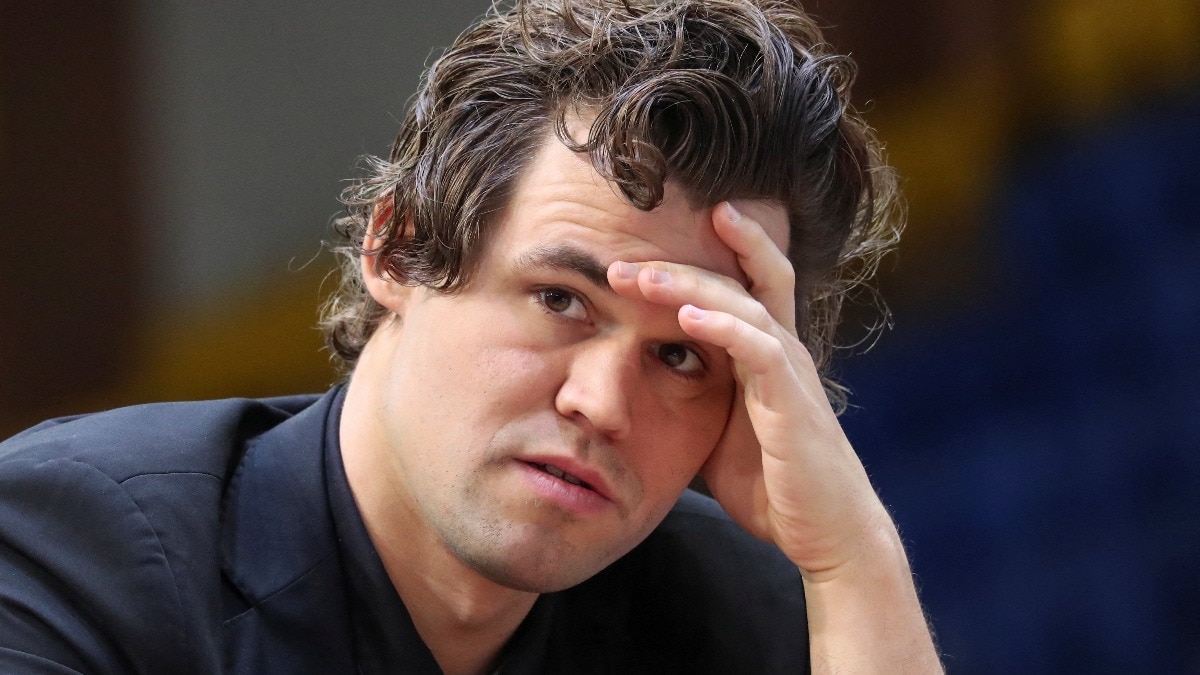
Norway Chess: Carlsen’s crushing defeat, Gukesh, Praggnanandhaa made a winning start

World champion D Gukesh and compatriot R Praggnanandhaa started their campaigns with hard-fought wins at the Norway Chess, while world No. 1 Magnus Carlsen suffered an opening round defeat to Alireza Firozha in Stavanger.

Gukesh emerged victorious after being injuredThe thrilling marathon fight against Vincent Keymer lasted 144 moves and lasted almost five hours. The classical competition ultimately ended in a draw, with Keimer playing hard in the final game despite having only the pawn. The Indian world champion looked visibly upset in the closing stages and even sought clarification from the arbiter regarding the move count as the game headed towards an inevitable stalemate.

However, Gukesh regrouped impressively for the Armageddon tie-break and made quick work of it. The decisive 15.Bh6 proved too strong for Keymer, sealing the Indian teen’s victory and giving him 1.5 points, while the German had to settle for one point.

Praggnanandhaa also had to rely on tie-breaks to ensure victory. The Indian No. 2 played a balanced classical draw against Wesley So, before putting in a sharp attacking performance in the Armageddon to grab an extra half point and tie with Gukesh for second place.

Carlsen suffered a rare defeat

However, the biggest talking point of the early rounds was Carlsen’s defeat on home soil. The defending champions looked to be in control for large parts of their game against Turquoise, but serious timing trouble led to a costly mistake that decisively changed the momentum. Turquoise won all three points with clinical precision and handed Carlsen one of his rare defeats in classical chess.

Firouzja’s victory was made more remarkable by the fact that he played with his injured ankle strapped into a protective “moon shoe” after injuring himself during the Superbet Chess Classic Romania. The French Grandmaster showed composure throughout and moved to the top of the standings with three points.

Divya shined, Hampi faltered

In the women’s category, Bibisara Asoubaeva took an early lead with a stunning classical win over Indian No. 1 Koneru Humpy. Defending champion Anna Muzychuk drew her classical game with Zhu Jiner before winning in Armageddon. Reigning women’s world champion Xu Wenjun and Divya Deshmukh also divided the classical point, Divya won the tie-break.

After the preliminary round, Firoza led the open standings with three points, while Gukesh and Praggnanandhaa had 1.5 points each. Asoubaeva topped the women’s event, with Divya and Zhu joint second.

– ends

Published on:

May 26, 2026 16:49 IST


Source link

Preparation for comprehensive change in Maharashtra tourism with destination management model. mumbai news

Preparation for comprehensive change in Maharashtra tourism with destination management model
Workshop for setting up destination-level tourism governance bodies held at Trident Hotel, Nariman Point

Mumbai: Maharashtra has started work on setting up destination-level tourism governance bodies as part of a broader effort to position the state as a globally competitive travel hub.At a high-level workshop held at the Trident Hotel in Nariman Point earlier this month, the state government discussed the operationalization of six Destination Management Organizations (DMOs) under the World Bank-funded MahaStride programme. The initiative is being implemented by Maharashtra Tourism, with Maharashtra Institution for Transformation (MITRA) acting as the program management unit.The workshop, attended by senior bureaucrats, tourism officials, hospitality stakeholders and policy experts, marked an important milestone under MahaStride’s Disbursement Linked Indicator (DLI)-3, which focuses on setting up and operationalizing six DMOs across Maharashtra.Speaking at the event, MITRA Vice President Dilip Walse Patil said Maharashtra’s tourism potential lies in its history, culture, spirituality, wildlife, beaches and heritage sites, and stressed the need for professional and sustainable tourism management.He said, “Maharashtra has immense tourism potential inherent in its rich history, culture, spirituality, wildlife, coastal landscapes and heritage sites. Through destination management organizations, the state aims to build a professionally managed and sustainable tourism ecosystem that enhances visitor experiences, strengthens stakeholder coordination and positions Maharashtra as a globally competitive tourism destination.”The proposed DMO is envisioned as an institutional mechanism to coordinate tourism development at the destination level, improve visitor experiences and generate sustainable economic opportunities for local communities.An important announcement during the workshop was the signing of an MoU between MITRA and Atithi Foundation to support knowledge-sharing, stakeholder engagement and implementation partnerships within the tourism ecosystem of Maharashtra.A panel discussion on “Role of DMOs and USPs of Maharashtra – You will find India here” was attended by senior officials and tourism industry representatives including MITRA CEO Praveen Pardeshi, Additional Chief Secretary (Tourism) Sanjay Khandare, Maharashtra Tourism Development Corporation Managing Director Nilesh Gatne, MahaSTRIDE Project Director Aman Mittal and private sector tourism experts.Pardeshi said Maharashtra will need to move beyond traditional tourism promotion to emerge as a global destination.“Destination management organizations can operate as dedicated institutions that integrate tourism services, local stakeholders, branding, infrastructure, logistics and visitor experiences into an integrated ecosystem,” he said.Khandare said the government’s approach aims to create an experience-driven and sustainable tourism ecosystem rather than just promoting destinations.“Our focus is not just on promoting destinations, but on creating sustainable, experience-driven tourism ecosystems that benefit local communities, create jobs and enhance visitor experiences,” he said.Gaitne said tourism development now requires the creation of infrastructure as well as coordinated management and strong destination branding.Officials and panelists highlighted Maharashtra’s diverse tourism offerings ranging from heritage and pilgrimage circuits to coastal, wildlife, wellness and adventure tourism and said the DMO framework can help strengthen destination branding, improve governance and support local employment.Tourism department officials from Konkan, Pune, Chhatrapati Sambhajinagar, Nashik and Nagpur divisions participated in the workshop.The Department of Tourism and Cultural Affairs, established in 2016, is tasked with integrating cultural preservation and tourism development to enhance the visibility of Maharashtra as a travel destination while contributing to regional economic development.

Source link

Joey Danger: Meet Joey Danger: 7-year-old boy sets world record by climbing 7,500-foot rock wall El Capitan in five days | world News

Meet Joey Danger: 7-year-old boy sets world record by climbing 7,500-foot rock wall El Capitan in five days

Most seven year olds celebrate birthdays with balloons, cakes and gifts. Joey Danger Evermore spent his birthday climbing one of the world’s most iconic granite walls. Hanging thousands of feet above the ground inside Yosemite National Park, Joey climbed El Capitan with his family, becoming the youngest known person to complete the climb. This feat stunned climbers around the world not only because of Joey’s age, but also because El Capitan is considered one of the most technically demanding and challenging big wall climbs in the world. However, to Joey, the intimidating granite face looked almost like a giant adventure playground hanging over Yosemite Valley.

How joy danger climbed el capitan

Joey began the climb at the age of six and completed the climb when he was seven, making the feat seem almost unreal even to experienced climbers following the story online.The climb reportedly lasted five days, during which Joey remained attached to ropes and aid-climbing systems while navigating nearly vertical granite wall sections. According to his father, Joe Evermore, the family faced harsh winds, exposure to the elements, exhaustion, and limited food and water supplies while spending nights high above Yosemite Valley.Unlike smaller recreational climbs, big wall climbs on El Capitan require climbers to remain on the mountain for several days straight. Climbers often sleep in hanging tents attached to the rock known as portaledges.Joe Evermore said that most climbs require Joey to manage ropes and movement techniques independently, while remaining safely connected to the system during the climb.

Why is El Capitan one of the greatest challenges to climb?

Although the summit of El Capitan is approximately 7,569 feet above sea level, the famous granite wall towers more than 3,000 feet above the Yosemite Valley floor, making it one of the most recognized big wall climbing destinations in the world.Its massive granite face remained open for decades because many early climbers believed the wall was impossible to climb. This changed in 1958 when climber Warren Harding and his team completed the first ascent after 45 days using ropes, pitons, and fixed climbing equipment.Since then, El Capitan has become a proving ground for elite climbers attempting difficult multi-day climbs, speed records, and free climbs using minimal artificial support.The mountain gained further worldwide prominence in 2017 when Alex Honnold completed the first rope-free free solo ascent of El Capitan, later documented in the Oscar-winning film Free Solo.Climbing in Yosemite National Park carries significant risks, with the National Park Service reporting more than 100 climbing accidents and between 15 and 25 climbing rescues annually throughout the park. Several reports over the years also state that more than 30 climbers are believed to have died on El Capitan since the early 1900s due to falls, rockfall accidents, and rock falls.

The Evermore Family’s Unusual Climbing Heritage

Joey’s accomplishment wasn’t the first historic foray inside the Evermore family.Before Joey, the youngest known climber to climb El Capitan was reportedly his older brother Sam Evermore, who completed the climb in 2022 at the age of eight.Before Sam’s climb, climber Sela Schneiter became internationally famous in 2019 after climbing El Capitan at the age of 10.Evermores, based in Colorado Springs, has built a reputation for adventurous outdoor living and involving its children on demanding wilderness expeditions from an early age.Joey completed the climb with his father, his brothers Sam and Sylvan Evermore, and a documentary crew that recorded the climb.

The video that took the internet by storm

Images and video of the climb spread quickly online due to the extraordinary contrast between Joey’s tiny frame and the massive granite wall surrounding him.In footage shared by the family, Joey is seen thousands of feet above Yosemite Valley wearing a bright blue jacket and a colorful climbing helmet decorated with a Mohawk-style crest.Instead of looking scared, the child often looked calm and playful as he gently bounced up the steep cliff attached to ropes.One particularly surreal moment reportedly showed Joey and his brothers playing chess on a narrow ledge during a break above the canyon floor.As Joey approached the summit, supporters gathered in Yosemite Valley below and reportedly sang “Happy Birthday” from the ground while he continued climbing.The combination of childhood innocence and extreme exposure helped turn the climb into a viral Internet story almost instantly.

Praise, Criticism and Parenting Debates

The development sparked fierce debate online about parenting, adventure sports and acceptable levels of risk for children.Many people described Joy’s achievement as inspiring and praised her confidence, discipline and courage.Others questioned whether children should be placed in such dangerous environments without any care for training or supervision.Critics argued that El Capitan is dangerous even for experienced adult climbers and accused parents of instilling too much risk in childhood.Joe Evermore defended climbing by arguing that children are often far more capable than adults when they are carefully trained, appropriately challenged and properly protected.Speaking about the experience he said:“Joey is achieving more than a record. He’s found a new identity. I can see his confidence growing.”The debate reflects broader cultural divides around parenting styles, external exposure and whether challenge or security benefits children more in the long term.

Joey’s last joke after the historic climb

After completing one of the world’s scariest climbs, Joey reportedly responded with humor rather than fear.According to his father, the young climber joked:“I reached the summit at six or seven o’clock.”The line refers to the fact that Joey started climbing at the age of six and completed the climb when he turned seven.For most children, turning seven involves birthday parties and gifts. For Joey Danger Evermore, this meant sleeping on a sheer cliff thousands of feet above the ground while climbing one of the world’s most famous granite walls with his family.

Watch all live updates on US-Iran conflict, Israel-Iran war, Donald Trump reactions and global oil market impact Here.

Source link