
Donald Trump Health Exam: Is Donald Trump Fit for the Oval Office? US President’s medical examination before his 80th birthday
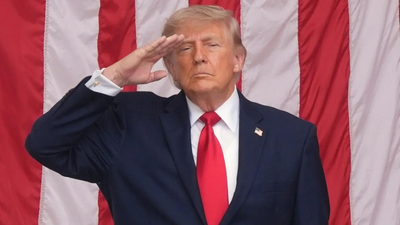
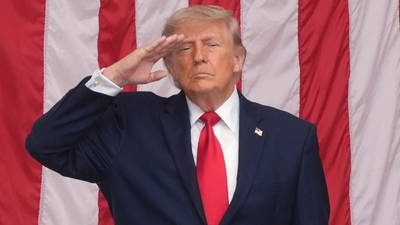
US President Donald Trump underwent his annual medical checkup at Walter Reed National Military Medical Center on Tuesday, with a renewed focus on his health and stamina just days before his 80th birthday.After the check-up, Trump posted on his social media platform Truth Social that the results were positive.Trump wrote, “Just completed my 6 month physical at Walter Reed Military Medical Center. Everything checked out perfectly. Thank you to the great doctors and staff! Heading back to the White House. President DJT.”Trump arrived at the military hospital near Washington at about 8:50 a.m. local time for what the White House described as a routine preventive medical and dental checkup. The ordeal comes amid growing scrutiny over his bruises on his hands, swollen feet and occasional appearance of sleeping during meetings.Trump, who will turn 80 on June 14, is the oldest person elected US president. This is his fourth publicly reported medical examination since returning to office for a second term.The White House said details of the medical evaluation would be released later, although the extent of disclosure is at the discretion of the President.
Questions on transparency and health
Trump has repeatedly defended his fitness for office and has often compared his physical and mental health to that of former President Joe Biden.“I feel the same way I did 50 years ago,” Trump said earlier this month. “Maybe junk food is good,” he said, referring to his famous fondness for burgers, steaks and Diet Coke.However, concerns about presidential health transparency have reemerged in recent months.The administration traditionally releases select portions of presidential medical reports, but critics argue that information is filtered through the White House.A Washington Post/ABC News/Ipsos poll conducted in April found that less than half of American adults believed Trump had the physical health or mental sharpness necessary to serve effectively as president.White House spokesman Davis Ingle defended the president’s position, saying that Trump “is in excellent health” and “is the fastest and most accessible president in American history.”
past health concerns
Last year, the White House had revealed that Trump had noticed swelling in his legs and ankles, after which he was diagnosed with chronic venous insufficiency, a condition affecting blood circulation in the veins.The White House attributed the injury to Trump’s hands to his use of aspirin as part of a heart health regimen.Following a medical evaluation last October, Trump’s physician, US Navy Captain Sean Barbella, said the president’s heart health was “excellent”.Barbabella further claimed that Trump’s “heart age” was approximately 14 years younger than his actual age.Some of Trump’s previous tests included the Montreal Cognitive Assessment, commonly used to screen for cognitive impairment. His doctors had earlier said that he had got 30 out of 30 in the assessments conducted in 2018 and 2025.
Debate on President’s health disclosure
The latest medical investigation has reignited debate in the US over how much health information presidents should publicly disclose, especially as the number of aging leaders in American politics grows.According to news agency AP, bioethicist Sarah Rosenthal said the public often gets only limited information unless the president is in “perfect health”, while medical expert S.J. Olshansky argued that full disclosure of the president’s medical records was necessary because “nothing should be hidden.”The White House has not indicated whether Tuesday’s test involved any procedures requiring anesthesia.Under the 25th Amendment, if Trump is sedated for a medical procedure, a temporary transfer of presidential authority would be required to Vice President J.D. Vance.