SC takes suo motu cognizance of Twisha Sharma death case; The CJI-led bench will hear the case on Monday. india news

SC takes suo motu cognizance of Twisha Sharma death case; CJI-led bench will hear the case on Monday

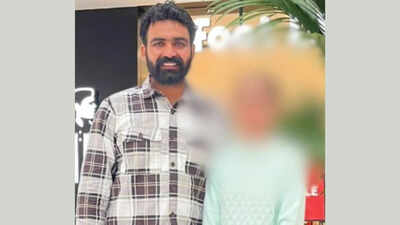
New Delhi: The Supreme Court took suo motu cognizance of Twisha Sharma death case on Saturday. News agency ANI reported that a bench headed by Chief Justice of India Surya Kant is likely to consider the matter on Monday.The case included allegations of dowry harassment and abetment of suicide against Tvisha’s husband and in-laws, including a retired district judge. Also read: Twisha Sharma case timelineNoida-based model-turned-actress Tvisha Sharma married lawyer Samarth Singh, son of retired District Judge Giribala Singh, in December 2025 and moved to Katara Hills area of ​​Bhopal.On May 12, Twisha was found dead at her in-laws’ house in Katara Hills. Her family later accused her husband and in-laws of dowry harassment and abetting her suicide.The police had registered an FIR on May 15 against the retired judge and his lawyer son in the alleged dowry death case. The next day, the police formed a six-member SIT to investigate the case.As public attention on the case grew, Twisha’s family staged a brief protest outside the Chief Minister’s official residence on 17 May after not being able to meet him.On May 18, a sessions court in Bhopal had rejected the bail plea of ​​Samarth Singh. Bhopal Police also announced a reward of Rs 10,000 for information leading to his arrest.Tvisha’s family demanded an independent investigation into the case on 19 May, questioning the police investigation and alleging a “posthumous character test” of the deceased by the accused party while speaking to the media.A day later, the family met the Chief Minister, who assured them that he would demand a CBI inquiry into the case. The same day, a Bhopal court rejected a petition seeking a second post-mortem investigation, while the police increased the reward for the arrest of Samarth Singh to Rs 30,000.Police later issued a third and final notice to Giribala Singh to record his statement, while Samarth Singh filed a fresh bail plea before the court.According to his lawyer, on May 22, Jabalpur police took Samarth Singh into custody from the district court premises when he had reached there to surrender.

Source link

After IPL final loss, Karnataka announces new 80,000-seat stadium near Bengaluru

Just days after Bengaluru lost the right to host the IPL 2026 final, Karnataka has announced plans for a massive new international cricket stadium that could become India’s second largest cricket venue. The move comes amid growing controversy over the limitations of the M Chinnaswamy Stadium, particularly its comparatively low seating capacity.

Karnataka Chief Minister Siddaramaiah on Saturday laid the foundation stone of the proposed stadium in Suryanagar Phase 4 in Anekal taluk near Bengaluru. The new venue is planned with a seating capacity of 80,000 and will be part of a larger sports complex being developed by the Housing Department and the Karnataka Housing Board.

The timing of the announcement has immediately attracted attention as it comes just days after the BCCI shifted the IPL 2026 final from Bengaluru to the Narendra Modi Stadium in Ahmedabad.

KSCA president and former India fast bowler Venkatesh Prasad had earlier admitted this The limited capacity of Chinnaswamy Stadium may have played a role in the decision.

“One reason for shifting the final from this venue is probably the capacity of the stadium,” Prasad had said during an event in Bengaluru.

The IPL had originally allotted the May 31 final to Bengaluru before handing over the summit clash to Ahmedabad. Officially, the BCCI cited “certain requirements from the local association and officials which were beyond the scope of BCCI’s established guidelines and protocols.”

However, reports of logistical concerns, crowd management issues and political disputes over ticket allocation emerged rapidly during the season around the Bengaluru venue.

Why does Karnataka want a big cricket stadium?

The proposed stadium project appears to directly address many of the issues that have recently surfaced around the M Chinnaswamy Stadium.

Speaking during the foundation stone laying ceremony, Siddaramaiah highlighted the need for a larger and more modern sports venue in Karnataka, especially after the crowd chaos during RCB’s IPL win celebrations earlier this season.

The Chief Minister said that about 4,000 acres of land has been acquired for the overall development project, of which about 75 acres has been specifically allotted for the stadium. The remaining land will reportedly be used for housing layouts and plots for farmers and applicants.

The new stadium is expected to be developed with international-standard infrastructure that will be able to handle much larger crowds than the Chinnaswamy Stadium, which currently holds around 35,000 spectators.

If completed as planned, the venue will become India’s second largest cricket stadium after the Narendra Modi Stadium in Ahmedabad, which currently has a seating capacity of over 1.3 lakh.

The project also reflects the growing trend among Indian states to build mega cricket venues capable of hosting major ICC events, IPL finals and global tournaments.

Just last month, Maharashtra announces plans for proposed 1 lakh capacity stadium In Mumbai Metropolitan Region in collaboration with CIDCO and Mumbai Cricket Association.

The project is expected to eventually shift focus away from the iconic Wankhede Stadium, just as Karnataka’s new stadium could gradually reduce the reliance on Chinnaswamy for major matches in the future.

Chinnaswamy redevelopment is also underway

Interestingly, Karnataka’s push for a new mega venue coincides with the ongoing redevelopment plan for the M Chinnaswamy Stadium.

Venkatesh Prasad had recently revealed that the redesign process for Chinnaswamy had started even before the IPL final venue was shifted.

According to him, around 28 internationally experienced architects had shown interest in the redevelopment project, with KSCA now shortlisting the firms for conceptual design.

Redevelopment discussions have focused on improving crowd movement, security infrastructure, fan experience and stadium operations after criticism emerged over crowding and ticketing management during IPL 2026.

However, despite the enthusiasm over the new stadium project, it has already faced opposition from some environmental groups and local farmers due to its proximity to the Karadikkall-Mahadeshwar Wildlife Corridor.

In modern Indian cricket, the strength of the host team matters as much as success on the field. And after losing the IPL 2026 final to Ahmedabad, Karnataka is now determined to ensure that Bengaluru remains firmly in the spotlight for the country’s biggest cricket events in the future.

ipl 2026 | ipl schedule | ipl points table | ipl player stats | purple cap | orange cap | ipl video | cricket news | live score

– ends

published by:

Debodinna Chakraborty

Published on:

May 23, 2026 22:35 IST

Source link

With rising temperatures, Jaipur is struggling with water shortage. jaipur news

With rising temperatures, Jaipur faces water shortage

Jaipur: The city is grappling with a severe water crisis as temperatures soar above 40 degrees Celsius, with the last mile areas being hit the most. Due to irregular municipal supply in many areas, dependence on private tankers has increased and prices have also increased. Residents of some neighborhoods say they are paying almost double the normal rates to meet basic daily needs.In SiddharthnagarMalviya Nagar, Locals report that supplies have been short for the last four to five days. “Private tankers are charging double the normal rate,” said resident Dhruv Agarwal, reflecting the growing frustration in the affected areas.Public Health Engineering Department (PHED) officials say they are responding by increasing Bisalpur water supply to Jaipur in phases. According to PHED, the city is already receiving rainfall close to the maximum possible amount, with plans to increase the supply further from Monday as the weather department predicts higher temperatures in the coming days.The stress is especially visible in tall buildings and large residential complexes. Many such societies are heavily dependent on groundwater extraction or private tankers, and increasing domestic demand is making regular management difficult. “We need about four tanks of water a day. It costs us about Rs 800 per tanker. Now some suppliers are not charging less than Rs 1,200 to Rs 1,500,” said Amit Kumar, president of Residents Welfare Association.According to an official estimate, Jaipur’s private tanker fleet consists of about 2,000 vehicles, typically with a 4,000-litre capacity. While a tanker typically serves 10 to 12 homes per day, operators are now receiving orders for more than 20 per day, increasing competition and driving up prices.

Source link

‘Don’t mind being called a tyrannical dictator, but don’t want to be called dumb either’: Donald Trump

'Don't mind being called a tyrannical dictator, but don't want to be called dumb either': Donald Trump

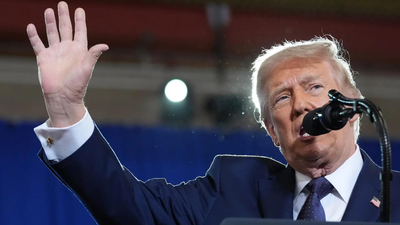
US President Donald Trump on Friday shrugged off criticism from his opponents as he boasted about his cognitive abilities and intelligence during a rally in New York, saying he doesn’t mind being called a “tyrant” or a “dictator”, but he strongly objects to being called “dumb”. “I don’t mind being called a brilliant absolute dictator,” Trump told supporters, “but I don’t want to be called an idiot.” The comments came during a campaign-style appearance in New York’s Hudson Valley with Republican Congressman Mike Lawler, where Trump repeatedly strayed from the economic message and launched into a lengthy defense of his intelligence and mental intensity. At one point, Trump said that criticism surrounding his cognitive fitness prompted him to take a cognitive assessment, which he claimed to have successfully passed. He later told the audience, “I’m the smartest person you’ve ever met.” The nearly 90-minute speech switched rapidly between topics including inflation, crime, immigration, voter ID laws, transgender athletes and a dig at his predecessor Joe Biden. Trump repeatedly mocked Democrats during the event, referring to them as “Democrats”, a term he has used frequently in recent days, while urging supporters to stay politically engaged ahead of the congressional elections. “You have to go vote,” he said, “otherwise this is a rigged election.” The rally was held in support of Lawler, one of the few House Republicans representing a district won by Democrat Kamala Harris in the 2024 presidential election. New York’s 17th Congressional District is expected to be one of the most competitive House races in the country and could play a key role in deciding control of Congress. The event also focused on last year’s expansion of the federal deduction for state and local taxes, commonly known as SALT, an issue of major importance in high-tax states like New York. Trump praised Lawler for aggressively pushing the measure through Congress and joked, “I call him Mr. Salt.” Lawler later thanked Trump for supporting the expansion and said the measure provided significant tax relief to residents of his district. Wearing a red “Mr. Salt” hat, the congressman said that more than 90 percent of families in the district are now able to completely deduct their state and local taxes. During the speech, Trump also defended his macroeconomic agenda. “I’ve cut your taxes, cut taxes on workers, families, small businesses, who are the soul of this state,” he said. “These are all Republican tax cuts. The Democrats voted against every single one of these tax cuts.” The appearance comes as the White House seeks to refocus Trump’s economic record amid declining approval ratings linked to inflation concerns and rising fuel prices following the Iran conflict.

Source link

‘There is no place for genital mutilation in modern society, and this is not just a Bohra issue’ india news

'There is no place for genital mutilation in modern society, and this is not just a Bohra issue'

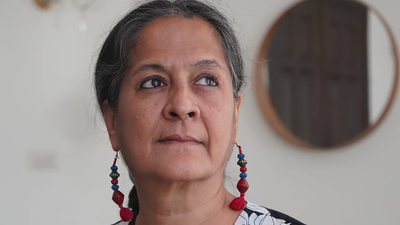
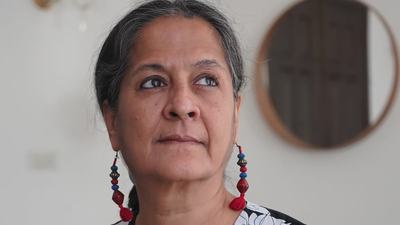
More than a decade ago, when Masooma Ranalvi First to speak publicly about being subjected to circumcision (the local term for female genital mutilation) fgm) at the age of seven, he helped bring the practice within the Dawoodi Bohra community in India into the national spotlight. As the Supreme Court resumes hearing in the long-pending case in which he is a petitioner, fresh evidence from Kerala is also widening the debate beyond the Bohra community. Ranalvi, founder of WeSpeakOut, spoke Mahua Das On why she believes the fight in India could enter a new phaseHas there been any change in the way the court views FGM?It felt different. Even before this, a three-judge bench – Justices Dipak Misra, Chandrachud and Khanwilkar – had made very positive comments. Before the issue moved into religious territory, he raised questions about bodily integrity and talked about child rights. This time, the main issue before the nine-judge bench is the conflict between Articles 25 and 26 of the Constitution – religious freedom of the individual versus the right of a sect to manage its own religious practices. We submitted that when a child is subjected to physical alteration and mental suffering in the name of religious observance, it enters into constitutional and criminal scrutiny. On this, Justice Bagchi commented that as far as FGM is concerned, the words ‘health’ and ‘public health’ may suffice. What we are expecting is a recognition from the court that this is a child rights violation, a criminal act, and something that affects physical integrity. If this happens, it will create pressure within the community and on the government to change policy, run awareness campaigns, educate doctors, support survivors and spread awareness about the harms of FGM. It also gives courage to those in the community who are still struggling.The FGM petition has now taken years to wrangle between constitutional benches and questions related to religious practices. What does this lengthy legal bind mean for survivors and activists on the ground?This is an excellent question because no one cared what happened in the intervening seven years. We were really disappointed. More importantly, the practice continued and many girls suffered something that probably could have been avoided had the case been heard earlier. Nobody really sees the urgency of the issue. This is irreparable damage to a child’s body. There should be no room for something like this in a modern society that claims to care about the rights of women and children. Also, the delay forced us to regroup and rethink our strategies. We realized that this is an uphill battle because we are up against a very powerful religious hierarchy, politically and economically. They have made every effort to stop progress on this issue. So, we began to look outward, learn from global movements, and build coalitions. FGM exists in 94 countries and there is conflict everywhere. In Africa, 29 countries have laws against FGM. Last year, WHO released updated guidelines for health workers after almost a decade. Type III infibulation (the most severe type of FGM) receives the most attention, but there are other forms, including notching and pricking.How are Indian groups connecting with the growing Asian network you have created around FGM?Over the past five years, we have been building alliances and learning from each other. An important aspect of this network is that it is telling the world that FGM is not just an African issue. It is also present in many parts of Asia. But in most places, religion is used as justification for maintaining this practice.For years, FGM was seen solely as a Dawoodi Bohra issue. What prompted WeSpeakOut to look into reports of FGM emerging from Sunni communities in Kerala?There were whispers about this practice in Kerala and parts of Tamil NaduBut there was no direct evidence or survivor testimony. Then, around 2017, there came a story about the Kozhikode clinic and a survivor who talked about it. There was a huge reaction against him. After this the matter cooled down again. But we decided to explore it further. Evidence is almost impossible to obtain. In the Bohra community, some of us came forward and gave interviews, so the conversation started. However, our yet-to-be-released exploratory study provides enough evidence to show that more research, data collection, and intervention strategies are needed.What differences did you notice in Kerala compared to the Bohra context?The biggest difference is age. In the Bohra community the age limit is around seven years. In Kerala, FGM is performed around the 40th day after birth. At that age, the area involved is so small that even skilled surgeons will struggle. The possibility of damage to the clitoris is very high. The other difference is who does it. In Kerala, it is the ‘Osathi’ community, women from the barber community traditionally do this work. There are also clinics in some places which points to increasing medicalization. Women survivors talked about difficult sexual experiences, but they did not necessarily connect them to the FGM they had undergone. This understanding comes much later when you begin to understand the function of the clitoris.After working on this issue for over a decade, do you see more Bohra parents choosing not to subject their daughters to circumcision, even if they don’t say so publicly?Absolutely. Wherever we have been able to reach out to women through talks, literature, campaigns or media coverage, it has had a positive impact. But there are still many women who have not heard or engaged in these debates, especially in small towns and rural areas of Maharashtra, Gujarat, Rajasthan and Madhya Pradesh where many Bohras live. There is also another section which openly says that this is their belief and their right, and they want this practice to continue. That’s why outreach matters. The more conversations there are, the more likely it is that this practice will decrease over time.

Source link

UK pension company sells Israeli bonds after pressure from pro-Palestinian campaigners: report

UK pension company sells Israeli bonds after pressure from pro-Palestinian campaigners: report

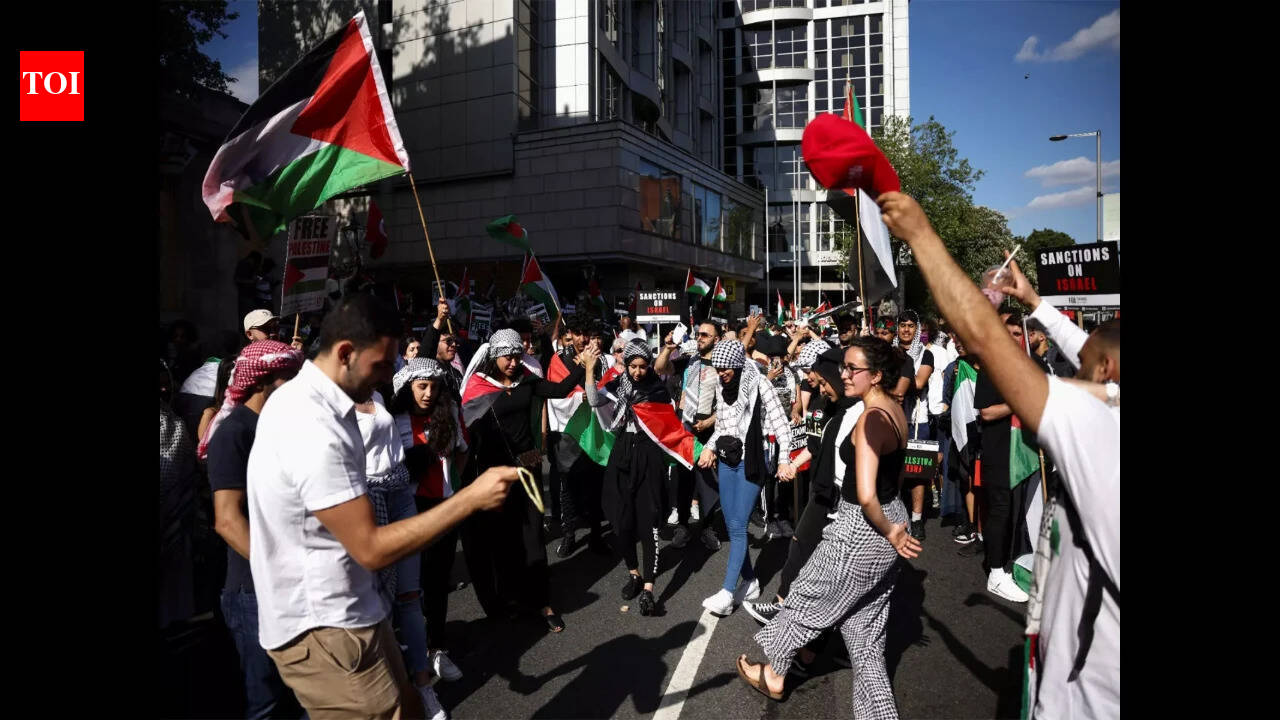
Britain’s largest public sector pension investment pool quietly sold millions of dollars worth of Israeli government bonds after months of pressure from pro-Palestinian campaigners, according to a report by Middle East Eye.Border to Coast Pension Partnership, which manages approximately £120 billion of assets on behalf of approximately two million local government employees, had purchased approximately $29.2 million worth of Israeli government bonds due between 2024 and 2025.The investments were subsequently sold within months, although the organization did not publicly announce the divestment or provide detailed information at the time.According to Middle East Eye, campaigners associated with local government pension schemes discovered the investments while investigating how pension funds were being managed during the Gaza War.Activists from groups including the South Yorkshire Pension Divest for Palestine campaign said they were concerned that pension money was invested in Israeli government bonds, while Israel faced allegations of war crimes and genocide in Gaza.Campaigners organized protests, petitions and pressure campaigns throughout 2025 targeting local pensions authorities and from border to coast.The Israeli bond purchases were made through Pimco, a US-based asset management firm and one of the world’s largest bond managers, the report said.Border to Coast later confirmed that the bonds were sold, but declined to say whether campaign pressure had directly influenced the decision.A spokesperson for the pension partnership said the organization continues to monitor the impact of the Israel-Gaza conflict on investments “in line with our views on ESG issues and our responsible investment policies”.The issue also highlighted wider tensions within UK pension funds over investments linked to the Gaza conflict and the lack of direct guidance from the British government.The planning advisory board for the Local Government Pension Scheme reportedly sought clarification from ministers regarding potential legal liabilities linked to Gaza-related investments.Local Government Minister Alison McGovern later said that foreign policy decisions, including sanctions and divestment policies, were a matter for central government, rather than local authorities.However, he said pension funds may still change investment strategies for financial or fiduciary reasons.The report said Border to Coast still retained investments in several companies listed on the UN database of businesses operating in illegal Israeli settlements, including Airbnb, Booking.com and Bank Leumi.Campaigners have continued to urge further divestment from Israeli settlements and companies linked to the Gaza conflict.

Source link

Indian-origin cancer specialist banned from practicing in Britain says, ‘I will never work in that country again’

Indian-origin cancer specialist banned from practicing in Britain says, 'I will never work in that country again'
Shamir Chandran was accused of coercive behavior and was wanted by the police

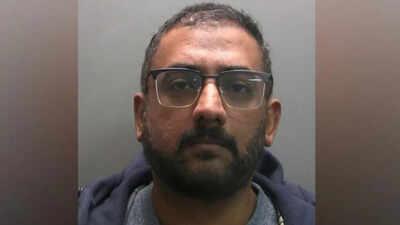
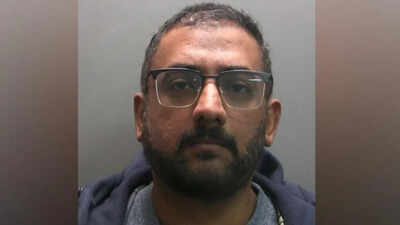
An Indian-origin cancer specialist has been struck off the UK medical register after a tribunal ruled his criminal conviction made him a risk to the public, meaning he can no longer practice medicine in the UK, a more serious sanction than being fired from his job.Shameer Chandran, an oncologist who previously worked at Newcastle Hospital, was sentenced to four years in prison in November after pleading guilty to two counts of controlling and coercive behavior and one count of cruelty to a person under 16.According to the BBC, the Medical Practitioners Tribunal Service (MPTS) has now ordered that his name be struck from the medical register.According to the BBC, Chandran did not attend his criminal trial or disciplinary proceedings at Carlisle Crown Court. Reports say he has fled the UK and there is an outstanding warrant for his arrest. Cumbria Police confirmed he was wanted.The tribunal described the crimes as serious and said the behavior involved repeated actions against vulnerable individuals.“It was directed at people who were vulnerable and contained elements of premeditation – seeking to obtain financial benefit from [his victim] Through intimidation,” the report said.The MPTS also found that Chandran had shown no understanding of the seriousness of his actions or their impact: “The tribunal considered that there was a real risk of him causing harm to someone in the future.”The tribunal said that allowing him to continue practicing medicine would seriously damage public confidence in the profession.Emails included in tribunal documents show Chandran criticized his treatment in Britain and said his medical career had been ruined.“I no longer care about the proceedings, as my career has already been destroyed,” he wrote to the General Medical Council (GMC).“I am completely disappointed with the way I was treated in the UK and I will never work in that country again. They treated me like a common criminal without caring about what I had to say and the impact of what they were doing.”Tribunal documents also revealed that Chandran had resigned from his NHS role and left the UK following the GMC’s action against him.“Due to the GMC’s action, I have had to resign from my job and leave the UK. I don’t know how I can help with these proceedings now, as I am not currently working,” he said in another email.Chandran received his MBBS degree from the University of Calicut Academy of Medical Sciences in Pariyaram, Kerala. He later told GMC that he no longer wanted to continue practicing oncology and began working with a friend in a private business while rebuilding his life.However, the tribunal said there was no evidence that he had accepted responsibility or taken steps to remedy his conduct.

Source link

Prachanda vs Apache: How India’s indigenous attack helicopter stacks up against America’s deadly AH-64E. india news

Prachanda vs Apache: How does India's indigenous attack helicopter stack up against America's deadly AH-64E?
How did India’s indigenous attack helicopter face America’s deadly AH-64E?

Recently, in a deal worth more than US$198.2 million, the US State Department approved the potential sale of support services and relatedEquipment for Boeing AH-64E Apache attack helicopters to India. The State Department said the sale will improve India’s ability to respond to current and future threats, strengthen its homeland defense, and deter regional threats.In April, Army Chief General Upendra Dwivedi flew in India’s indigenously built combat helicopter, the Light Combat.The helicopter (LCH), ‘Prachanda’, is assessing its performance, agility and mission readiness. This raises a question: If India has its own combat helicopters, why does it continue to rely on its Russian and American counterparts? And how does it compare to Apache LCH?

numbers and capacity

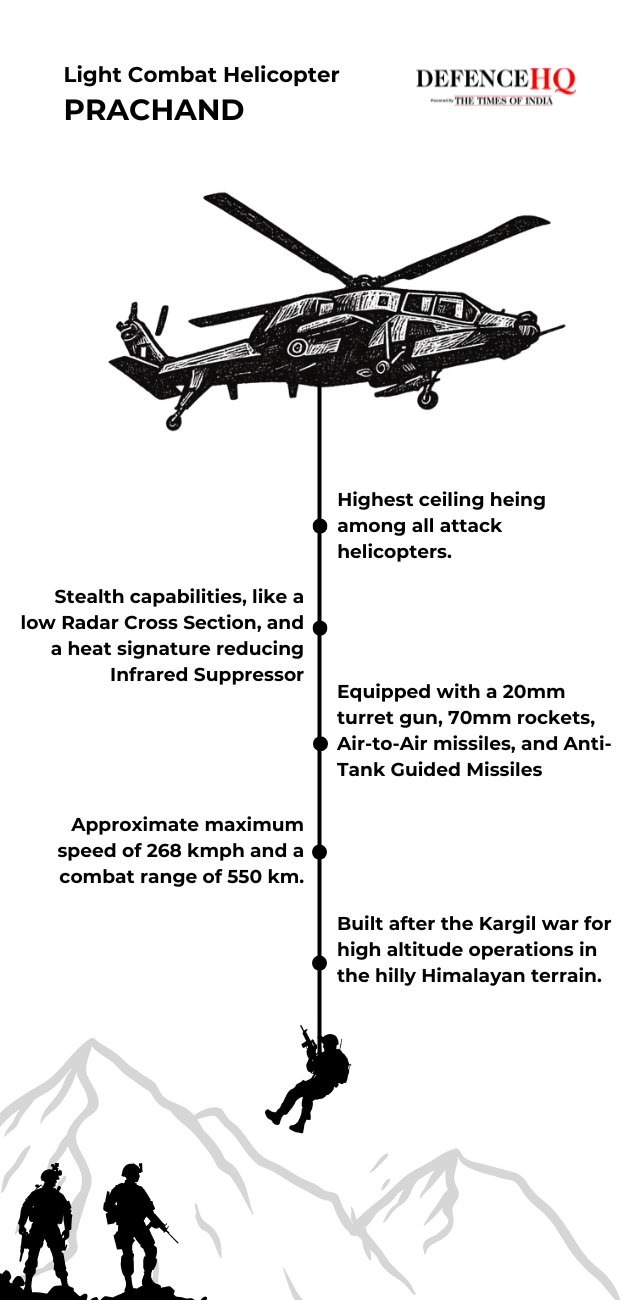
According to Hindustan Aeronautics Limited, Prachanda has a 2-pilot crew, maximum take-off weight 5,800 kg, maximum speed 280 km/h.km/h, a cruise speed of 260 km/h, payload-dependent operational range between 550 and 700 km, a climb rate of 12 meters per second, and the world’s highest operational ceiling of 6,500 metres.On the other hand, according to Boeing, the twin-seater US-made Boeing AH-64E Apache has a maximum take-off weight of 10,432 kg.Speed ​​of 300 km/h, cruise speed of 265 km/h, combat range of 480–500 km, service ceiling of 6,400 m and climb rate of about 14.2 meters per second.Compared to the Apache, the Prachanda has almost the same cruise speed, a larger operating range (the highest), and a larger operational range.Apache excels in terms of double the maximum take-off weight, top speed and faster climb rate. However, combat helicopters have specifications regarding their operational requirements.

various operational requirements

According to HAL, Prachanda has the distinction of being the first attack helicopter to land in Siachen, the world’s highest battlefield. itIt was specifically designed after the need for a light combat helicopter was realized during the Kargil war, which could operate in the high and harsh Himalayan terrain of Siachen, Ladakh and Arunachal Pradesh. It weighs just 5.8 tonnes, which is almost half the weight of the Apache.

Light Combat Helicopter, Prachanda

Light Combat Helicopter, Prachanda

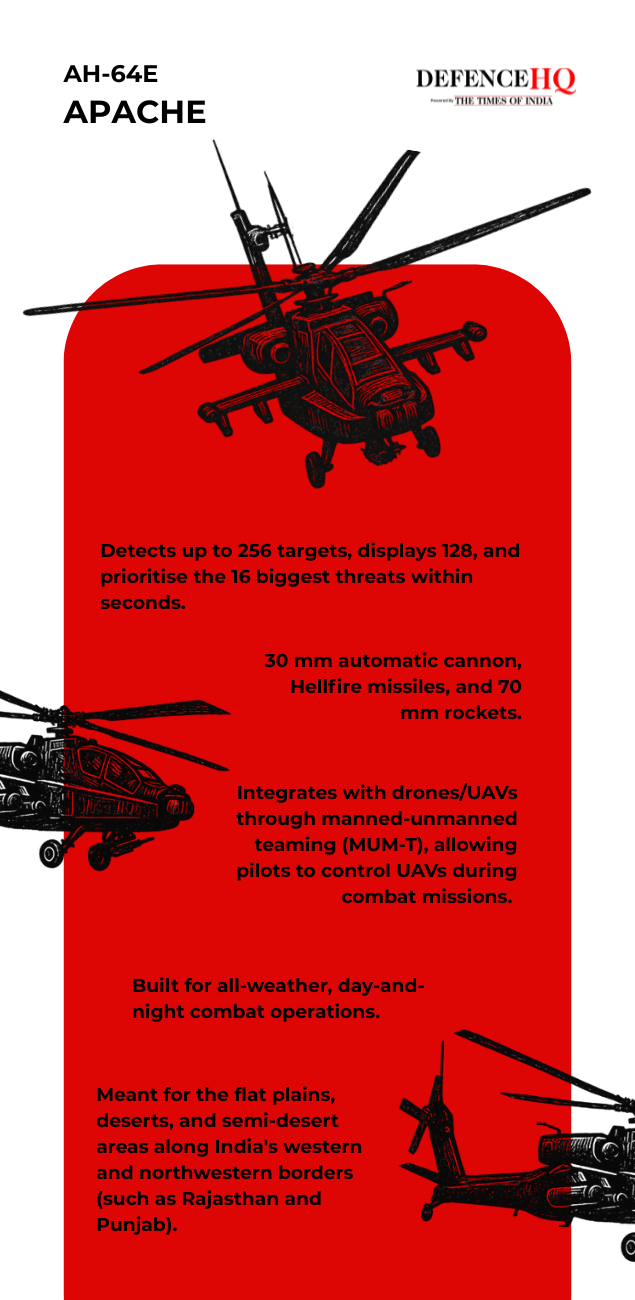
The American equivalent is for the flat plains, deserts, and semi-desert areas along India’s western and northwestern borders.(Like Rajasthan and Punjab). Which explains its almost double maximum take-off weight compared to the LCH. India requires the capabilities of both helicopters for its overall operational requirements.

AH-64E, Apache

AH-64E, Apache

replacement of aging fleet

The entire Air Force is undergoing a modernization process, with the aging fleet being actively replaced. during inductionAt the ceremony of Apache helicopters in 2019, the then Air Chief Marshal BS Dhanoa had said, “Apache combat helicopters are being purchased to replace the Mi-35 fleet. Apaches have been an integral part of many historical campaigns around the world. These aircraft have been specially modified to meet the exacting standards demanded by the Indian Air Force.Highlighting India’s military capabilities, the US State Department said, “India will have no difficulty in integrating these goods and services into its armed forces.”Regarding the deal the US State Department said, “This proposed sale will support foreign policy and national security objectivesOn behalf of the United States by helping to strengthen the US-India strategic relationship and improving the security of a major defense partner“Remains an important force for political stability, peace and economic progress in the Indo-Pacific and South Asia regions.”Earlier on April 9, the Indian Army had demonstrated the combat power of AH-64 Apache during the live firing exercise ‘Brahmastra’.Pokhran Firing Range. The Army’s performance underlined its growing focus on high-precision, network-centric warfare.The Boeing AH-64 Apache is one of the world’s most advanced multi-role combat helicopters. It is equipped with 30mm chainThe gun can carry Hellfire anti-tank missiles and Hydra rockets, and has advanced targeting systems such as Longbow radar and night-vision sensors. Like Prachanda, Apache AH-64E also has the capability to operate in all weather conditions including night.

Source link

Concern raised over delayed admission to Wenlock Hospital. mangaluru news

Concern expressed over delay in admission to Wenlock Hospital
Dalit leader SP Anand raised an issue during the SC/ST grievance meeting held at the city police commissioner’s office in Mangaluru on Saturday.

Mangaluru: During the SC/ST grievance meeting held at the city police commissioner’s office on Saturday, Dalits expressed concern over the delay in admission to Wenlock District Hospital.Referring to a recent case, Dalit leader SP Anand said that a patient, who was married about a year ago and was diagnosed with stage two cancer, faced difficulty in getting admission in the hospital. Anand said he took up the matter with MLC Evan D’Souza and helped the patient get the BPL card. However, he alleged that the doctors attempted to refer the patient to a private hospital with which they had connections. “The facilities in Wenlock are good, but it has been difficult for poor people to get access,” he said.Responding to the concern, DCP (law and order) Mithun HN said the hospital capacity and related issues would be examined, while DCP (crime and traffic) Ravi Shankar K said the matter would be brought to the notice of the deputy commissioner.Anand also highlighted the need to increase hostel facilities in rural areas, and pointed to confusion over the mention of sub-castes within the Adi Dravidian community during school admissions. The delegates were advised to take up the issue with the Social Welfare Department.Meanwhile, Jagdish Pandeshwar referred to a recent incident near Hoige market, in which a man was allegedly forced, abused and threatened to hand over his mobile phone by unknown persons. He urged authorities to focus on targeting people walking alone at night. In response, the DCP directed Mangaluru South Police to intensify patrolling by using sirens and top lights on patrol vehicles to increase police visibility. Police Inspector was also instructed to ensure installation of CCTV cameras in sensitive areas.Several other issues were raised during the meeting, including permission for excavation activities, drainage issue, family disputes and issues caused by street vendors near Lady Goshen Hospital and Nandigudda.A representative also urged the police to ensure that authorities are informed when houses are rented out to people from outside the district. Concern was also expressed over alleged wheelie riding by minors in the morning in Surathkal-Krishnapura-Katipalla area.The DCP directed all police inspectors to organize police station-level SC/ST grievance meetings regularly and urged Dalit representatives to actively participate in them. DCRE Mangaluru Range SP Simon CA was present.

Source link

Paradeep Singh: Indian-origin worker dies after branch collapses in New Zealand, wife left ‘completely alone’ without money

Indian-origin employee dies after branch collapses in New Zealand, wife left 'all alone' without money
Paradeep Singh’s wife Kamal had reached New Zealand from India six months ago to start a new life with him.

What started as yard work for an Indian-origin couple in New Zealand ended in tragedy when a falling tree branch killed Paradeep Singh, leaving his newly arrived wife with no family, income or support system in the country.Singh was known as Deep to his friends and family. He died this week while carrying out maintenance work on his home in Cambridge, Waikato. He was working outside with others on a holiday when the fatal accident occurred.According to eyewitnesses, Singh was helping in cutting tree branches when he suffered serious head injuries. Friends believe that he may have been injured by a bouncing branch or by equipment being used during work.A spokesperson for the couple’s friends and family told 1News, “A branch hit him on the left side of his head, and may have caused some internal damage.”Hearing his scream, people nearby ran for help.“Paradeep screamed and everyone immediately ran towards him and called the emergency services,” the spokesperson said.Police said officers were called to the property at around 3.15pm to assist ambulance crews. St. John’s later confirmed that it had dispatched a rapid response unit and an operations manager to the scene, but Singh was pronounced dead there. The case has now been referred to the coroner.Singh moved to New Zealand in 2023 and worked as operations manager for a horticulture business. Friends said he was the sole earning member of the family and used to financially support his elderly parents in India, including his paralyzed mother.His wife Kamal recently joined him in New Zealand after they got married about six months ago. Relatives say he has no immediate family in the country and has not yet settled down to a life there.A family spokesperson said, “She came here for him.”He added: “He has no source of income, no money, from my understanding he hasn’t even opened a bank account yet.”Another friend said: “She has no money, no support system, and she’s completely alone at the moment.”The couple had planned to apply for residency in New Zealand and later come back to India for the wedding ceremony with relatives and friends.Friends and local community members have now launched a campaign to bring Singh’s body back to India for cremation and raise funds to support Kamal after the tragedy.Organizers said, “His family is facing unimaginable grief and is in need of immediate assistance.”

Source link