
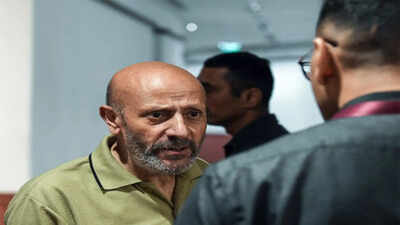

Baramulla MP Engineer Rashid granted interim bail till June 2 after father’s death
Baramulla MP Engineer Rashid (file photo)
Delhi High Court On Monday, interim bail was granted till June 2 to Baramulla MP Sheikh Abdul Rashid alias Engineer Rashid, who is in jail in a terror funding case following the demise of his father.A bench of Justices Prathiba M Singh and Madhu Jain said that during the interim bail period, Rashid will always be accompanied by at least two police officers in plain clothes, who will accompany him from the beginning of the journey from Tihar Jail till his return from Srinagar.The bench ordered that he would be allowed to visit the cemetery or any other place of worship, but would not be allowed to go anywhere else from his residence in Srinagar and Langate.Rashid had sought interim bail on the grounds that his father, who was undergoing treatment at AIIMS, died on the intervening night of Sunday and Monday.Rashid’s lawyer Vikayat Oberoi said interim bail was needed to enable burial, traditional rites and many other ceremonies.“Accordingly, on account of the demise of the appellant’s father, the appellant is granted interim bail till June 2, 2026,” the court ordered.“Immediately, on the expiry of the bail period, the appellant shall surrender before the concerned Jail Superintendent and be brought back to Tihar Jail, Delhi,” it said.The court further ordered that any meeting between Rashid and persons other than his family members would take place only in the presence of police officers and he could use only one mobile number, which would be given to the investigating officer and would be kept “ON” at all times.It also directed Rashid not to contact any witnesses or their family members or indulge in any criminal or illegal activity or leave the country without its prior permission.On April 28, the court granted him interim bail for a week so that he could meet his ailing father in Srinagar. This period was extended till May 10 after Rashid’s father was shifted to AIIMS here for treatment.Rashid is facing trial in the terror funding case. He is accused of funding separatists and terrorist groups in Jammu and Kashmir. He has been lodged in Delhi’s Tihar Jail since 2019 after he was arrested by the National Investigation Agency (NIA) in the 2017 case.After they were named in the chargesheet in October 2019, a special NIA court framed charges against Rashid and others in March 2022 under sections 120B (criminal conspiracy), 121 (waging war against the government), and 124A (sedition) of the Indian Penal Code and relevant provisions of the stringent Unlawful Activities (Prevention) Act.

Mo Salah should be removed from Liverpool farewell game for ‘insulting’ Arne Slot: Wayne Rooney
Wayne Rooney has criticized Mohamed Salah for publicly questioning Liverpool’s direction under Arne Slot and said the forward should be removed from the club’s final game of the season after showing “disrespect” towards his manager.
Speaking on The Wayne Rooney Show, the former Manchester United FC captain hit back strongly at Salah’s recent comments regarding his desire to bring Liverpool back to the “heavy metal” football played under former manager Jurgen Klopp.
Rooney said the comments were effectively another public jab at Slott and were unfair on a manager preparing for his first full season in charge.
“It saddens me what he did and what he achieved at Liverpool,” Rooney said. “There’s no point for him to come out and take another shot at the slot. He wants to play heavy metal football, so he’s basically saying he wants Jurgen Klopp football.”
Rooney also questioned whether Salah could still cope with the demands of Klopp’s high-intensity style.
“Now I don’t think Mo Salah can cope with that type of football. I think his feet have adapted to playing at that high pace and high intensity,” he said.
The former England captain said Salah’s comments had undermined the slot as he left Liverpool’s dressing room to deal with the consequences ahead of next season.
“He’s almost thrown a grenade and said he doesn’t trust Ernie Slot and he’s almost ousted his teammates who are going to be there next season and they have to deal with that too,” Rooney said.
Salah and Slott have faced a difficult relationship during the season. Earlier in the campaign, Salah accuses Liverpool of throwing him “under the bus” Amid disappointment over lack of regular starts.
Despite Salah’s record of 257 goals for Liverpool and his role in the club’s recent successes, Rooney believes the forward’s latest comments have diverted attention from a disappointing season on the pitch.
After scoring 29 league goals during Liverpool’s title-winning campaign last season, Salah has scored 12 goals in 40 appearances in all competitions this year as the club struggles to break into the top five.
“I think Salah is trying to vindicate himself and make himself feel better because he’s had a very bad season,” Rooney said. “So I think he’s been very selfish in what he’s done on two occasions.”
Rooney also recalled his dispute with former manager Alex Ferguson, saying that he was left out of Ferguson’s final home match following a disagreement. He believes Slott should take the same approach to Liverpool’s final match against Brentford FC.
Rooney said, “If I were Ernie Slott, I wouldn’t even have him anywhere near the stadium in the last game.” “He’s your manager. You can’t insult him twice in public and get away with it.”
Rooney said Salah deserves recognition for his achievements at Liverpool but the manner of his exit has marred a proper farewell.
“It’s a shame to see one of the great players of the Premier League leave the Premier League in perhaps this condition,” Rooney said.
– ends
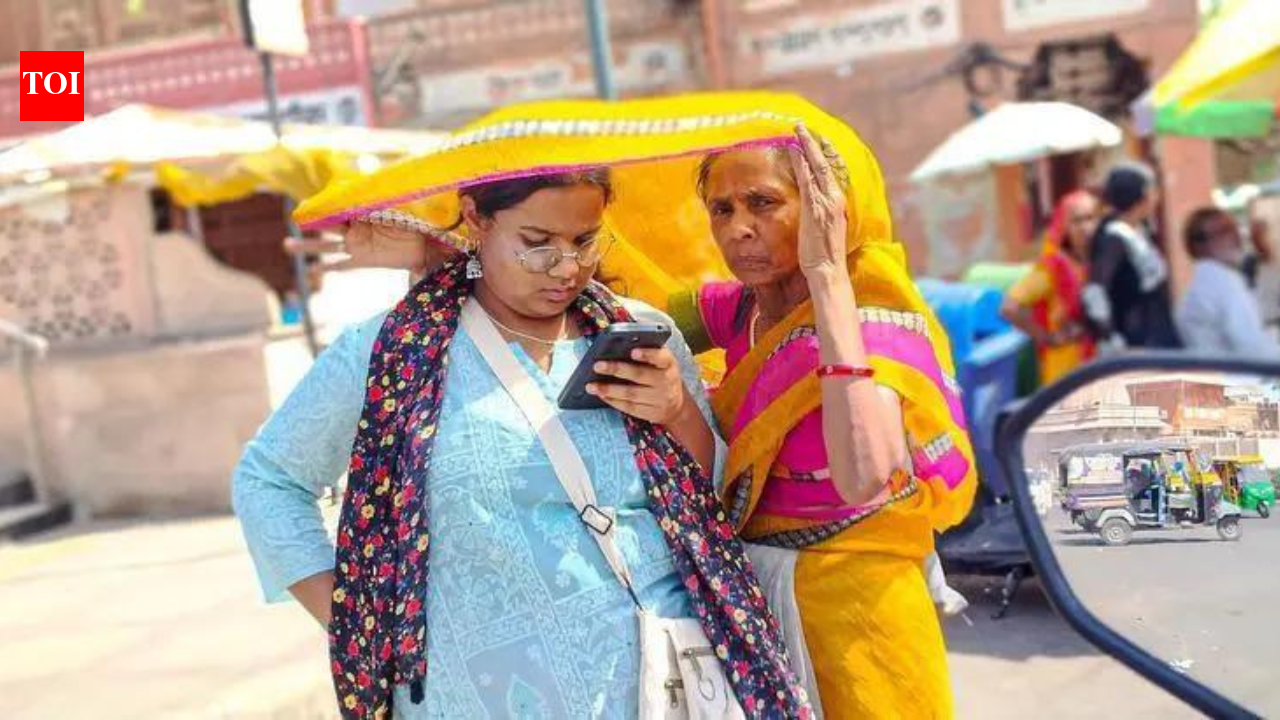
IMD predicts severe heat wave in northwest and central India this week

New Delhi: The India Meteorological Department (IMD) has warned that large parts of northwest and central India may face intense to severe heat in the coming days, with Delhi being one of the worst-affected areas.The weather agency said the day temperature could reach 45 degrees Celsius in different parts of the national capital this week.According to IMD, Safdarjung, considered the primary weather center of Delhi, recorded a maximum temperature of 41.9 degrees Celsius on Sunday, which is about two degrees above the seasonal average.For May 19, the IMD has predicted mainly clear skies along with heat wave conditions at isolated places in Delhi. Strong surface winds at speeds of 15-25 kmph, sometimes reaching 35 kmph, are also expected during the day.
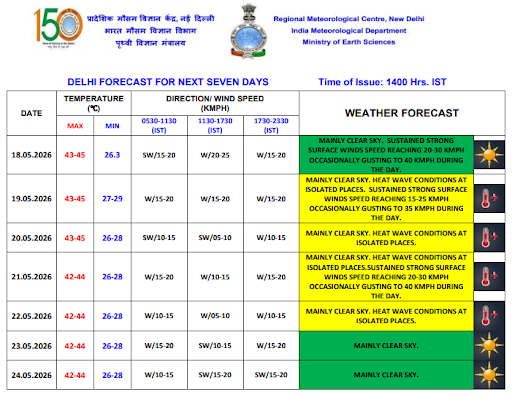
Strong surface winds are also expected over Punjab, Haryana, Delhi and Uttar Pradesh from May 18 to May 24.IMD issues safety advisory amid heat waveThe IMD has advised people to take precautions against heat exposure, especially vulnerable groups like infants, the elderly and people suffering from chronic diseases.The agency said the heat is tolerable for the general public, but may pose moderate health risks to sensitive individuals.The department urged residents to drink enough water frequently, even if they do not feel thirsty, and recommended keeping fire extinguishers in homes and vehicles.Rain, thunderstorm in parts of northwest IndiaApart from heat wave conditions, the IMD has also predicted isolated rain, thunderstorm, lightning and gusty winds over parts of northwest India including Jammu and Kashmir, Uttarakhand and Himachal Pradesh in the coming days.In its All India Bulletin, the IMD warned that isolated thunderstorms with strong winds may affect Madhya Pradesh, Vidarbha and Chhattisgarh on May 18.Meanwhile, light to moderate rain with thunderstorms and gusty winds is likely over parts of West India including Central Maharashtra, Konkan and Goa and Marathwada.
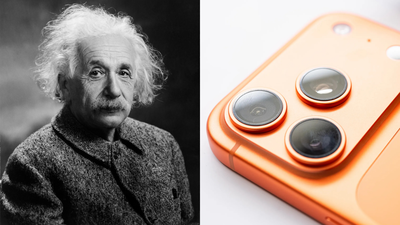
Nobel-winning idea once considered strange
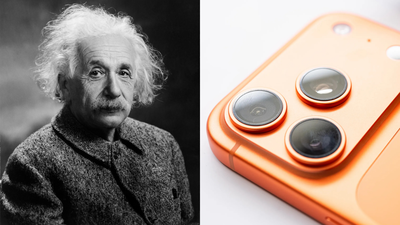
Whenever someone takes a selfie, records a sunset or scans a QR code, they are unknowingly using technology built on a scientific idea that was once dismissed as strange and almost unbelievable. More than a century ago, Albert Einstein Proposed that light behaved not only as a wave, but also as tiny packets of energy capable of stripping electrons from the material. At the time, this idea seemed strange to many scientists. Yet the same principle, known as the photoelectric effect, would eventually become one of the foundations of modern electronics, helping power the solar panels, motion sensors and smartphone cameras now carried by billions of people around the world.
nobel winner Einstein The principles behind smartphone cameras
In the early 20th century, physicists believed that light behaved entirely as a wave, similar to waves traveling in water. According to classical physics, brighter light should always produce more energy because stronger waves carry more power. But the experiments continued to produce strange and confusing results.Scientists observed that certain types of light could produce electricity when shined on metal surfaces. What was even more surprising was that the color of the light mattered more than its brightness. Weak ultraviolet light can instantly liberate electrons from a material, while even very bright red light often does nothing.This phenomenon became known as the photoelectric effect, and it challenged everything scientists thought they knew about light.In 1905, Albert Einstein proposed a revolutionary explanation. He suggested that light is not just a spontaneous wave propagating in space. Instead, it behaved like tiny packets of energy, later called photons. Each photon has a certain amount of energy depending on the color or frequency of the light.Imagine trying to knock a ball off a ledge with small pebbles. Even thousands of soft pebbles may fail to move it, but one hard rock can make it fall instantly. In the same way, dim ultraviolet light contains high-energy photons that immediately liberate electrons, while bright red light contains low-energy photons that may still be too weak to do anything.This makes it clear why brightness alone doesn’t matter. A brighter beam only means more photons, not stronger. What really mattered was whether each photon had enough energy to release an electron.This idea seemed radical because it contradicted the long-held belief that light is only a wave. Many scientists initially opposed Einstein’s theory because it seemed too strange to be true. Yet subsequent experiments repeatedly confirmed that he was right.Today, Einstein is most famous for his theory of relativity, but his Nobel Prize was actually awarded for his work on the photoelectric effect.In 1921 the Nobel Committee recognized his explanation of how light interacts with matter, calling it one of the most important breakthroughs in physics. This discovery later became one of the foundations of quantum mechanics, the branch of science that studies the strange behavior of particles on the atomic and sub-atomic scale.Einstein built on earlier work by scientists including Heinrich Hertz and Max Planck, but he connected the pieces in an entirely new way. His theory helped scientists understand that light could behave as both a wave and a particle, a concept that still shapes modern physics today.
How do smartphone cameras rely on the photoelectric effect?
Modern smartphone cameras work because camera sensors can convert light into electrical signals. This process directly depends on the photoelectric effect.Most smartphones today use CMOS image sensors, tiny semiconductor chips filled with millions or billions of light-sensitive pixels. When light enters the camera lens and hits the silicon inside the sensor, photons release electrons through the photoelectric effect.Those electrons are then measured and converted into digital information. The phone’s software processes that information to create photos and videos.Without this interaction between photons and electrons, digital photography would not exist.Engineer Eric Fossum, who helped develop CMOS imaging technology at NASA during the 1990s, played a major role in making smartphone cameras practical. Originally designed for space imaging, CMOS sensors eventually became small, efficient and cheap enough to be installed inside billions of mobile phones.Today, the camera of almost every smartphone in the world depends on this technology.
The principle that powers everyday life
The photoelectric effect now provides power far more quietly than cameras.Solar panels use a related process called the photovoltaic effect to convert sunlight into electricity. Motion detectors and burglar alarms use infrared light sensors that react when the beam of light is interrupted. Automatic doors, rain-sensing windscreen wipers and barcode scanners also rely on light-triggered electrical responses.Even some medical imaging technologies rely on ultra-sensitive sensors built using the same principles that Einstein helped explain.An unusual example occurred in 2015, when engineers working on Raspberry Pi computers discovered that powerful camera flashes could crash the device. The bright xenon glow triggered the photoelectric effect inside one of the exposed chips, temporarily disrupting the computer’s operation.This incident showed that Einstein’s theory is not just an abstract scientific concept. Engineers still have to consider this in modern electronics.
future of light based technology
Scientists are now developing even more advanced sensors capable of detecting individual photons, the smallest measurable units of light.These ultra-sensitive devices can dramatically improve low-light photography, night vision systems and medical CT scanners while reducing radiation exposure for patients. Researchers are also creating flexible light-sensitive materials that could one day help create advanced bionic eyes and wearable medical monitors.Some scientists believe that future generations of image sensors could allow machines to “see” even in almost complete darkness.While the technology continues to develop, the underlying principle is still based on Einstein’s 1905 breakthrough.
From bizarre theory to everyday reality
When Einstein first proposed that light came in tiny packets of energy, many physicists viewed the idea with skepticism. Yet over the next decades, experiments repeatedly proved him right.Today, the photoelectric effect is at the heart of countless modern technologies. It helps generate renewable energy, power security systems, and enable smartphones to capture billions of photos every day.What was once considered a strange theory has quietly become one of the most important scientific ideas behind modern life.
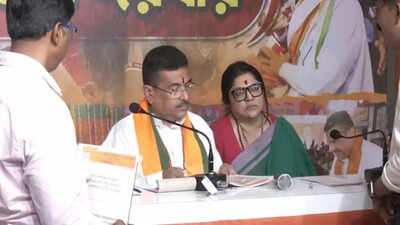
Free bus travel for women, ‘Annapurna’ scheme approved
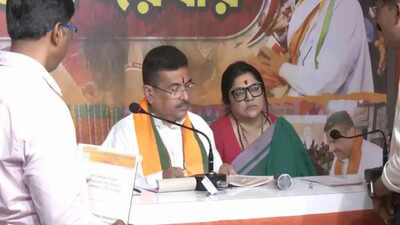
New Delhi: The West Bengal cabinet led by Chief Minister Suvendu Adhikari on Monday decided to stop government aid to groups based on religious classification from June, while also approving a new monthly financial assistance scheme for women and free bus travel in state-run buses.The development comes after CM Adhikari held a ‘Janata Darbar’ at the BJP office in Kolkata’s Salt Lake City, where he interacted with citizens and heard their grievances. The official also reiterated that Bengali culture will again gain global prominence after years of repression under the previous regime.
What are the big decisions of Bengal Cabinet?
- Addressing a press conference after the Cabinet meeting, Minister of State Agnimitra Paul said, “The Bengal Cabinet has decided to stop government aid to groups based on religious classification from June.”
- He also announced that the state government has approved the ‘Annapurna’ scheme under which eligible women will get Rs 3,000 per month from June 1.
- “The Cabinet approved the ‘Annapurna’ scheme of providing monthly assistance of Rs 3,000 to women from June 1. It also approved the proposal to allow free travel for women in government-run buses from June 1,” he said.
- He said women who had applied for citizenship under the CAA and approached tribunals to be included in the voter list would also be eligible for benefits under the Annapurna scheme.
- Paul said the government has also decided to scrap the existing state OBC list following the Calcutta High Court verdict and will set up a scrutiny panel to determine the quota eligibility.
- The Cabinet also approved the constitution of the 7th State Pay Commission for government employees, employees of affiliated statutory bodies, education boards and employees working in state-run educational institutions.
- The BJP won a landslide victory in the recent West Bengal Assembly elections by winning 206 seats in the 294-member House, while the All India Trinamool Congress came second with 80 seats. On 9 May, Suvendu Adhikari was sworn in as the ninth Chief Minister of West Bengal after defeating former Chief Minister Mamata Banerjee from the Bhabanipur seat.

What is the price of petrol, diesel, PNG and CNG in your city today?

Your next petrol, diesel and CNG refill is about to cost more! Fuel prices have once again come under pressure following the recent Rs 3 per liter hike in petrol, diesel and CNG rates, putting the focus on everyday transportation and domestic fuel costs. The increase comes amid a sharp rise in global crude oil prices due to rising tensions in the Middle East. Brent crude, which was hovering around $70 a barrel, has surged above $100 as global energy supplies and fuel markets continue to struggle with uncertainty.In India, the move comes after a long period of stagnation in fuel prices, which had remained unchanged for almost four years. However, after the war started, oil marketing companies were suffering daily losses of about Rs 1,000 crore. Now, be it petrol for personal vehicles, diesel for transport fleets, CNG for daily commuters, or PNG and LPG for home use, fuel prices are once again in the public eye.Here’s how much these fuels cost today:
price of petrol in your city
Oil companies last week announced a Rs 3 per liter hike in petrol prices, pushing up prices in major metro cities.
price of diesel in your city
As the global energy crisis deepens due to the ongoing conflict in the Middle East, diesel rates have also been increased by Rs 3 per litre.
CNG prices in your city
CNG prices have been revised twice within a week, first on Friday and then on Sunday, taking the total increase to Rs 3 per kg across all networks.Indraprastha Gas Limited (IGL) increased CNG prices for the second time in just three days in the national capital. With an increase of Re 1 per kg on Sunday, the price in the national capital crossed Rs 80. Earlier on May 15, an increase of Rs 2 per kg was made, which was implemented along with the revision in the prices of petrol and diesel. The continued increase is likely to put pressure on freight and passenger fares in Delhi.
| Place | Price (Rs. per kg) |
|---|---|
| National Capital Territory of Delhi | 80.09 |
| Noida | 88.70 |
| Ghaziabad | 88.70 |
| Muzaffarnagar | 88.58 |
| meerut | 88.58 |
| Shamli | 88.58 |
| Gurugram | 85.12 |
| Rewari | 84.70 |
| Karnal | 84.43 |
| Kaithal | 85.43 |
| Kanpur | 91.42 |
| Hamirpur | 91.42 |
| Fatehpur | 91.42 |
| Ajmer | 89.44 |
| shift | 89.44 |
| Rajsamand | 89.44 |
| mahoba | 86.42 |
| Banda | 86.42 |
| Chitrakoot | 86.42 |
| Hapur | 89.70 |
| Gautam Buddha Nagar | 88.70 |
| Greater Noida | 88.70 |
price of png in your city
Piped natural gas (PNG) prices have remained stable since April 1. The government has consistently encouraged citizens to switch from LNG to PNG. The Center has asked ministries to evaluate the demand for PNG and actively promote its widespread use in canteens and pantries in government departments and offices.
What type of fuel do you use most?
Government establishments, residential colonies and canteens are being encouraged to move to PNG, while city gas distribution (CGD) companies are being assisted in expanding their networks. The overall effort aims to cut dependence on imported LPG in the long run.

UK pensioners lose thousands in fake officers scam, authorities issue urgent warning

Fake police scam targets UK pensioners as TSB warns of rising cases of fraud / Image: @BBC
A growing scam involving criminals posing as police officers and bank investigators is leaving elderly Britons out of thousands of pounds, prompting new warnings from banks, fraud experts and UK authorities.High street lender TSB has issued an urgent warning after a rise in cases where pensioners were tricked into handing over bank cards, PIN numbers and personal financial details to fraudsters be they law enforcement or the bank fraud department.The scam, often called “courier fraud” or “fake police scam”, usually starts with a convincing phone call. Victims are told that their bank account has been compromised or linked to criminal activity before being pressured to take immediate action to “protect” their savings. The fraudsters then persuade them to withdraw money, disclose security details or hand over the bank card to the so-called courier. According to Action Fraud, criminals often use fake telephone numbers that look real, leading victims to believe they are talking to real police officers or trusted banking employees. The agency has repeatedly warned that real police officers or banks would never ask customers to transfer money to a “secure account” or reveal full security credentials. One case highlighted in recent warnings involved a pensioner over the age of 80 who was persuaded to send his bank card and PIN via post after suspicious activity was detected on his account. The fraudsters later went back and spent thousands of pounds, before the victim realized the call was fraudulent.
Fake Officer Fraud Explained
Banks and police forces across the UK say impersonation scams are becoming increasingly advanced and emotionally manipulative, especially when elderly and vulnerable people are targeted.Action Fraud, the UK’s national reporting center for fraud and cybercrime, says criminals often already have partial personal information before making contact, including names, addresses and banking details collected through previous data breaches or online scams. This makes the fraud appear more credible from the beginning.Fraud experts say scammers deliberately create panic and urgency to prevent victims from thinking clearly. In many cases, victims are instructed not to tell family members or bank employees because the case is allegedly part of a “confidential police investigation”.Detective Chief Inspector Hayley King of the City of London Police previously warned that courier fraud remains “extremely cruel” as criminals prey on trust, fear and isolation, particularly among older people. UK police have repeatedly stressed that no real officer would ever collect bank cards, request cash withdrawals or ask members of the public to assist in an undercover investigation involving their own money. Meanwhile, banking experts say the rise of artificial intelligence and digital impersonation tools has made scams harder to detect. Fraudsters are increasingly combining phone calls with fake text messages, cloned voices and realistic-looking banking alerts to create the illusion of legitimacy.
Elderly Britons lost thousands
Consumer groups say the impact of these scams goes far beyond financial loss, with many elderly victims left traumatized after realizing they have been defrauded.According to recent banking industry figures, impersonation scams now account for a significant proportion of authorized push payment fraud cases reported in the UK, costing victims millions of pounds in losses each year. Older people are considered particularly vulnerable because they tend to use landlines, live alone or rely on authority figures.Charity groups including Age UK have urged families to speak openly with elderly relatives about the risks of fraud and suspicious phone calls. Caroline Abrahams, charity director of Age UK, previously warned that scammers are becoming “increasingly ruthless” in targeting older people and taking advantage of loneliness, confusion and fear. The TSB says many victims only realize they have been defrauded when large sums of money have already disappeared from their accounts. In some cases, fraudsters stay in contact with victims for weeks or months, building trust before requesting money or personal information.Financial experts say embarrassment prevents many pensioners from reporting scams promptly, giving criminals more time to continue their work without detection.
UK authorities issue fraud warning signs
Police, bank and fraud investigators are now urging the public to treat any unexpected calls related to money, bank accounts or police investigations with extreme caution.Officials advise people to hang up immediately if callers request PIN numbers, passwords, cash withdrawals or bank transfers. Experts recommend calling the bank independently using the official numbers listed on bank cards or websites, rather than relying on incoming calls or text messages.The City of London Police say anyone who thinks they have been targeted should contact their bank immediately and report the incident to Action Fraud as soon as possible.With fraud tactics becoming more sophisticated across the UK, experts have warned that scams relying on fear and impersonation are unlikely to disappear any time soon. However, for many elderly victims, the consequences can be devastating long after the phone call has ended.
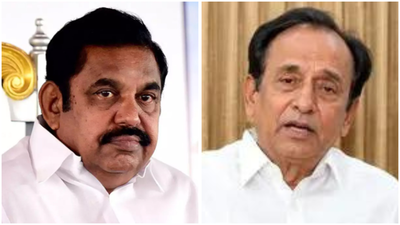
Former minister Semmalai resigns, citing internal conflict
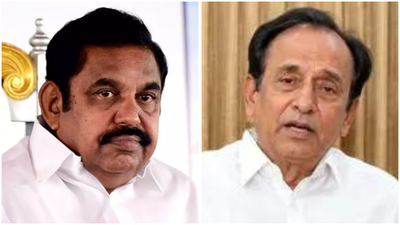
New Delhi: Senior All India Anna Dravida Munnetra Kazhagam (AIADMK) leader S Semmalai on Monday resigned from the party citing dissatisfaction over recent developments within the party and expressing concern over its current situation.has addressed the AIADMK general secretary in his resignation letter Edappadi K PalaniswamiSemmalai, popularly known as EPS, said he was “extremely mentally pained” by the developments in the party after the elections.He wrote, “The series of events taking place in the AIADMK after the elections has caused me immense mental pain. Lakhs of party workers, who have been striving for this movement since the day of its inception, are also in a similar state of mind.”He said that neither past nor ongoing events within the party were satisfactory and were instead “only causing concern”.Announcing his exit from the party, Semmalai told reporters, “I am very concerned about the developments within the party. The party is in a delicate situation. The present situation is not comfortable for me. Therefore, I have decided to leave the party.”
Raises questions on the current direction of the party
Semmalai referred to the legacy of former Tamil Nadu chief ministers MG Ramachandran and J Jayalalitha while questioning the current state of the party.“Is this the fate of the movement created by the golden-hearted revolutionary leader MG Ramachandran and protected by the revolutionary leader Amma J Jayalalitha?” He has written.The veteran leader also claimed that reports of infighting have damaged the image of the AIADMK, with even English newspapers mocking the party over internal disputes.Semmalai said that the condition of the party has deteriorated to such an extent that internal conflicts are being openly ridiculed in media reports.
‘I was blocked after Jayalalitha’s death’
Reflecting on his political career, Semmalai said that both MGR and Jayalalitha had given him opportunities and recognition in public life.He wrote, “Both the revolutionary leader (MGR) and Amma (Jayalalitha) gave me many opportunities and also gave me a stable identity in politics.”He further alleged that he was sidelined after Jayalalitha’s death but continued to work for the party in a disciplined manner.“After the demise of revolutionary leader Amma, many opportunities were denied to me and many were blocked. Nevertheless, I did not worry about it. Without expressing my disappointment, I remained disciplined and continued working under the party leadership,” the letter said.Semmalai said, “I was blocked. However, I continued to work obediently without expressing my feelings.”
Ended long political association
Saying that current circumstances no longer allow him to continue in the movement, Semmalai announced his resignation from both the party and his post.He wrote, “My heart no longer allows me to continue my journey in this movement. My heart is very sad.” He wrote that he was stepping down “with a heavy heart.”Semmalai served as the Health and Education Minister of Tamil Nadu between 2001 and 2004. He was elected to the Tamil Nadu Legislative Assembly from Taramangalam in 1980 as an independent candidate before joining the AIADMK at an early age.He was also known for opposing free distribution by political parties and advocating alternative measures to strengthen state finances.
Sunil Gavaskar casts doubt on MS Dhoni’s return to Chepauk in a must-win match for CSK

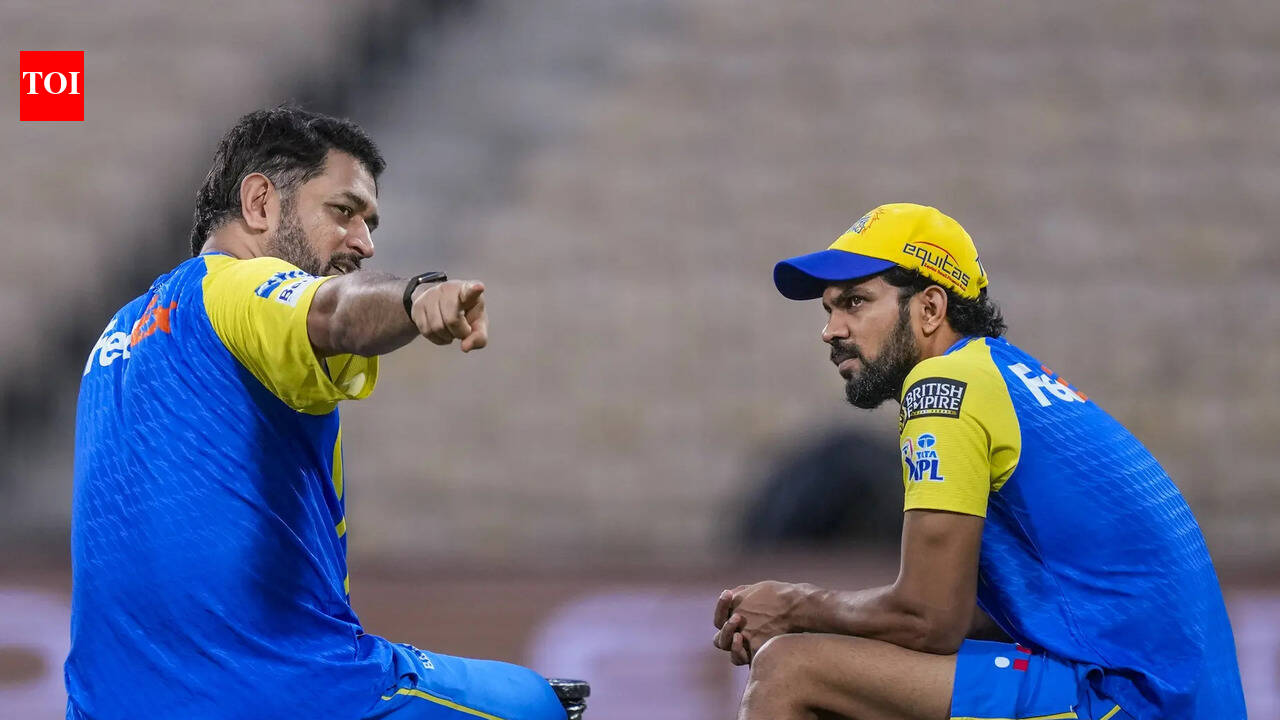
Chennai Super Kings’ Ruturaj Gaikwad, right, and MS Dhoni (PTI photo)
Chennai Super Kings‘The final home match of IPL 2026 against Sunrisers Hyderabad has created huge speculations about ms dhoni There could be a surprise comeback, but Sunil Gavaskar Cold water is poured on the possibility. MS Dhoni He has not featured in a single match this IPL season, with CSK confirming ahead of the tournament that he is recovering from a calf muscle strain. It was initially expected that a short rehabilitation period would be extended to the entire league stage, ruling him out of all CSK fixtures. Yet, with CSK having played their last home game in Chepauk and still alive in the playoff race, the emotional narrative around the potential attendance has intensified. This context is further strengthened by Dhoni’s earlier comments in 2021, when he had hinted that his final T20 could be in Chennai, adding to the emotions in an already high-stakes match. However, former India captain Sunil Gavaskar has strongly rejected any hopes of Dhoni returning for the match, insisting that the risk outweighs the feeling of winning the match.Speaking on JioStar, Sunil Gavaskar addressed the speculations about MS Dhoni’s possible return in CSK’s final home match against Sunrisers Hyderabad. “The match against SRH is important for CSK. It is their last home match in Chepauk, so naturally the fans want to see MS Dhoni playing,” Gavaskar said. However, he immediately highlighted Dhoni’s long absence and said, “But he has not performed at all this season. In fact, he has not played competitive cricket for over a year. So, I doubt he would want to take such a risk at this level.” He stressed the importance of match preparation, saying, “You need players who are match-fit and have been playing regularly for the last six weeks.” Gavaskar also underlined Dhoni’s team-first mentality, saying, “Dhoni is a complete team-man. “I don’t think he would want to disrupt the existing combination.”Concluding his thought, he clarified his stance: “I would be very surprised if he plays against SRH. It is a must-win match for CSK. A win keeps them alive in the playoff race. They have to win this match at all costs, and bringing in a player who has not played for over a year could be a gamble.” CSK’s playoff equation remains straightforward but challenging – two wins in their last two matches will take them to 16 points, keeping them firmly in the race, although qualification will still depend on other results. However, for now, Gavaskar’s assessment makes one thing clear: despite the sentiment, Dhoni’s return to Chepauk today is highly unlikely.
Elon Musk strongly condemns gender change of children and vows to destroy ‘woke mind virus’
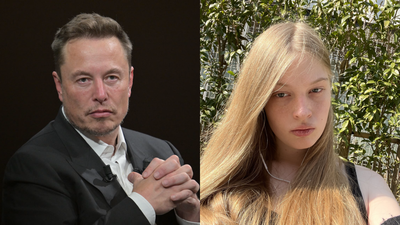
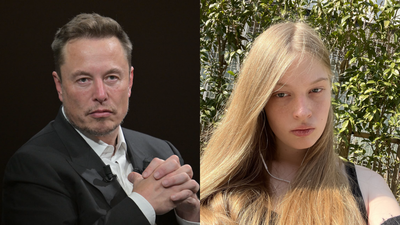
Elon Musk Ax has once again sparked debate after posting a message that he calls a “woke mind virus”. The Tesla and SpaceX CEO responded to a viral graphic of his earlier quote, “I swore to destroy the woke mind virus,” saying, “The woke mind virus killed my son.”The post quickly spread across the platform and garnered heavy engagement, with supporters praising Musk for speaking clearly and critics saying the language was inflammatory. Musk’s comments were widely read as a reference to his long-running dispute over gender transition ideology and his strained relationship with his transgender daughter, Vivian Jenna Wilson, formerly known as Xavier.
Elon Musk’s viral post attracted a lot of attention
The black-and-white graphic shared online shows Musk’s face with a quote about destroying the “woke mind virus.” Her direct response helped bring wider circulation to the post, turning it into another flashpoint in the ongoing culture-war debate around gender identity, free speech and politics.Musk has used the phrase “woke mind virus” for years to describe what he sees as a deeply progressive worldview spreading through politics, media, education and corporate culture. In his view, it encourages identity politics, ideological conformity, censorship and social pressure while discouraging open dissent and merit-based thinking. She has also argued that activists, institutions, and parts of the medical and educational establishment advance gender ideology through coordinated cultural messaging.
Comments related to family separation
Musk’s latest statement was widely interpreted as a reference to Vivian Jenna Wilson, who legally changed her name and gender identity in 2022. In court filings, she said she no longer wanted to be related to her biological father. Musk has previously claimed that he was misled about aspects of gender-related medical treatment during the COVID-19 period and has said that the experience has deeply affected him.Meanwhile, Vivian has spoken out publicly about distancing herself from Musk, adding another layer to the family feud that has been playing out publicly for years.
The debate continues on ‘awakened ideology’
The exchange once again highlighted how polarizing Musk’s comments on gender identity have been. Supporters interpreted his posts as a raw expression of personal grievance and ideological opposition. Critics argued that his words were extreme and unfairly targeted transgender people more broadly.Musk continues to oppose the “woke mind virus” as one of his central cultural battles, linking it to debates over education, institutions, and the direction of modern public life.