


Haryana’s special POCSO court has sentenced the accused to 10 years of rigorous imprisonment.

AI image is used for representational purpose only
Gurgaon: A special POCSO court in Nuh has convicted a man of kidnapping, luring and threatening a minor girl and sentenced him to 10 years of rigorous imprisonment with a fine of Rs 17,000. This decision was given by the court of Additional Sessions Judge and Fast Track Special Court Judge Dr. Ashu Sanjeev Tinjan. According to the case records, the incident took place in the year 2023 in Sadar Tawadu area police station. The complainant told the police that his minor daughter had returned from school to the village by bus, but did not reach home. During the search for the family, CCTV footage of the village showed a young man taking the girl on a motorcycle. Using mobile surveillance and other technical inputs, the police identified the accused as a resident of a village in Alwar district of Rajasthan. A case of kidnapping and related crimes was registered and investigation initiated. The minor victim was located and rescued. Her statement was recorded before the court, and on the basis of her testimony and medical examination, under the provisions of poxo act Added to the FIR.Later the accused was arrested and interrogated. The prosecution, led by the Nuh police, presented sufficient evidence and key witnesses before the court. After nearly three years of trial, the court declared the accused guilty.He was sentenced to 10 years of rigorous imprisonment under relevant sections of the IPC as well as Section 4 of the POCSO Act. All sentences will run concurrently. If the fine of Rs 17 thousand is not paid, he will have to face additional imprisonment.

Scientists use AI and high-tech scans in Peru’s Nazca desert; The result was 303 hidden geoglyphs.
 Remarkably, AI (artificial intelligence) managed to identify 303 new relief-type geoglyphs within just half a year, which almost doubles the list of known figures, according to the published study. PNAS. These newly found artefacts mainly show human figures, domesticated animals and severed heads. It provides a profound insight into both the ritual and everyday life of the Nazca people who created them 2,000 years ago.
303 hidden geoglyphs identified in Peru by AI and high-tech scan
Nazca research presents a significant challenge due to the vastness of the desert and how small geoglyphs, such as relief ones, are destroyed over time. Scientists have made a breakthrough using deep-learning AI to analyze existing data. This allowed them to review high-resolution satellite images with remarkable accuracy; AI (Artificial Intelligence) identified potential sites 20 times faster than human experts. It efficiently filtered out irrelevant data and picked up on patterns that suggested human-made structures. As a result, this mixture of technology and historical study transformed the work that could have been accomplished in a century.
Why does scale matter in Nazca?
Archaeologists have classified these figures into two main categories. These include the famous linear geoglyphs, giant images that often represent birds or whales. The second category is small relief geoglyphs. Interestingly, most of the recent 303 discoveries fall in the relief category. As research published on PNAS explains, these were created by removing darker stones to expose lighter sand in elaborate, smaller designs. These are usually found on old footpaths rather than wide open fields. This shows that they were meant for travelers passing by on foot, not for viewing from above.
Why are there ‘human’ subjects in the new data?
The 303 geoglyphs present an image that is different from what we have seen before. Typically, larger linear figures depict animals, but these small relief carvings lean towards ‘human-related’ subjects. Among them, researchers discovered numerous images that included people in formal attire, pet llamas and even gruesome depictions of severed heads. This variation indicates a different social role for these relief geoglyphs. It seems likely that they may have been used for rituals or to define territorial boundaries within local communities.
The role of AI in conservation and urban mitigation
According to the study published on PNAS, AI (Artificial Intelligence) plays a vital role in preserving UNESCO World Heritage Sites, providing much more than just the excitement of discovery. The Nazca Pampa faces threats such as urban sprawl, mining activities and environmental change. Researchers could rapidly map and document 303 new sites, providing precise coordinates for the Peruvian government to create protection zones. This digital record remains available to future generations even if the physical sites deteriorate.

Robert Vadra gets bail in Gurugram land deal scam case

New Delhi: Delhi-based businessman and husband of Congress leader Priyanka Gandhi, robert vadraDelhi’s Rouse Avenue Court granted bail on Saturday. Enforcement DirectorateThe money laundering case is related to the controversial Shikohpur land deal of Gurugram.The court granted him relief on a personal bond of Rs 50,000 with one surety and fixed the next hearing in the case for July 10.The case pertains to alleged irregularities in a land transaction in Shikohpur village in Haryana and is being investigated by the Enforcement Directorate (ED) under the Prevention of Money Laundering Act (PMLA).Speaking to reporters after getting bail, Vadra expressed his faith in the judiciary and raised questions on the functioning of the agency.“I believe in the judicial system of this country. I know that the ED is being managed by the government and the ED will continue to run on the instructions of the government. So, this is not fair on the part of the ED. But I believe in the judicial system of the country. I am here, I have nothing to hide. So, I will always be here and answer all the questions. Whatever formalities there are, I will complete them. So, it is all good… If we are winning the elections, if we “Doing well and people, I still want my family, by default I have to deal with it. I have the ability to cope and I have nothing to hide.”The case pertains to a 2008 land transaction in which Vadra’s company, Skylight Hospitality Pvt Ltd, purchased about 3.5 acres of land in Gurugram’s Shikohpur village from Omkareshwar Properties for about Rs 7.5 crore. The land was later sold to real estate giant DLF for a much higher amount after the mutation process and grant of commercial license became the subject of investigation.The Haryana government had earlier ordered a probe into the deal, focusing on possible irregularities in land licensing and financial gains arising from the transaction. Later the ED initiated a money laundering investigation on the basis of the crime registered in the case.Vadra, husband of Congress MP Priyanka Gandhi Vadra, has repeatedly denied any wrongdoing and said the allegations against him are politically motivated.

CSK coach Michael Hussey after the defeat against LSG.

CSK lost against LSG by 7 wickets (Image: IPL/BCCI)
Chennai Super Kings batting coach michael hussey He admitted that the five-time champions now have no margin for error after their defeat to Lucknow Supergiants left their IPL 2026 playoff hopes hanging in the balance.CSK suffered a huge blow on Friday when LSG chased down 188 runs with ease thanks to a blistering inning of 90 runs in 38 balls. Michelle Marsh On a live Ikana Stadium surface. After this defeat, Chennai is left with 12 points from 13 matches, which means that to qualify for the playoffs, it will now have to win both the remaining league games, as well as depend on other results.Despite the difficult situation, Hussey remained optimistic and said that the team would treat each remaining match as a knockout match.“Well, I mean, I really like this time of the tournament because it feels like every game is like a final, you know, and we are in that position now,” Hussey said, adding that CSK now need to win both of their remaining games as well as rely on some other results to go their way.“We have to win our last two matches. I mean, I haven’t studied the table that closely. Yes, there are a lot of teams competing for probably the last few spots in the top four,” he said.“This is where (the tournament stage) the pressure is really on everyone, not just on us, but on all the other teams as well. And you can see some strange things happening. So we still have a chance… we still believe we can get through it,” he said during the post-match press conference.Speaking during the post-match presentation after the match, Gaikwad remained calm despite the setback and insisted that the qualification scenario is “simple” for his team to move forward.“Okay, the first challenge is facing Chennai. It’s a long flight. After that, just make sure that we come back and improve on what areas we need to improve and yes, try to adapt and assess the situations as quickly as possible and it is a simple calculation for us. No matter how many games we play, we win every game. So I guess nothing is simple. I mean, it’s simple, nothing complicated. It’s very easy for us here. Nothing to worry about. Just make sure we have a good day. “Whoever has a good day, count it and hope we change things,” Gaikwad said.
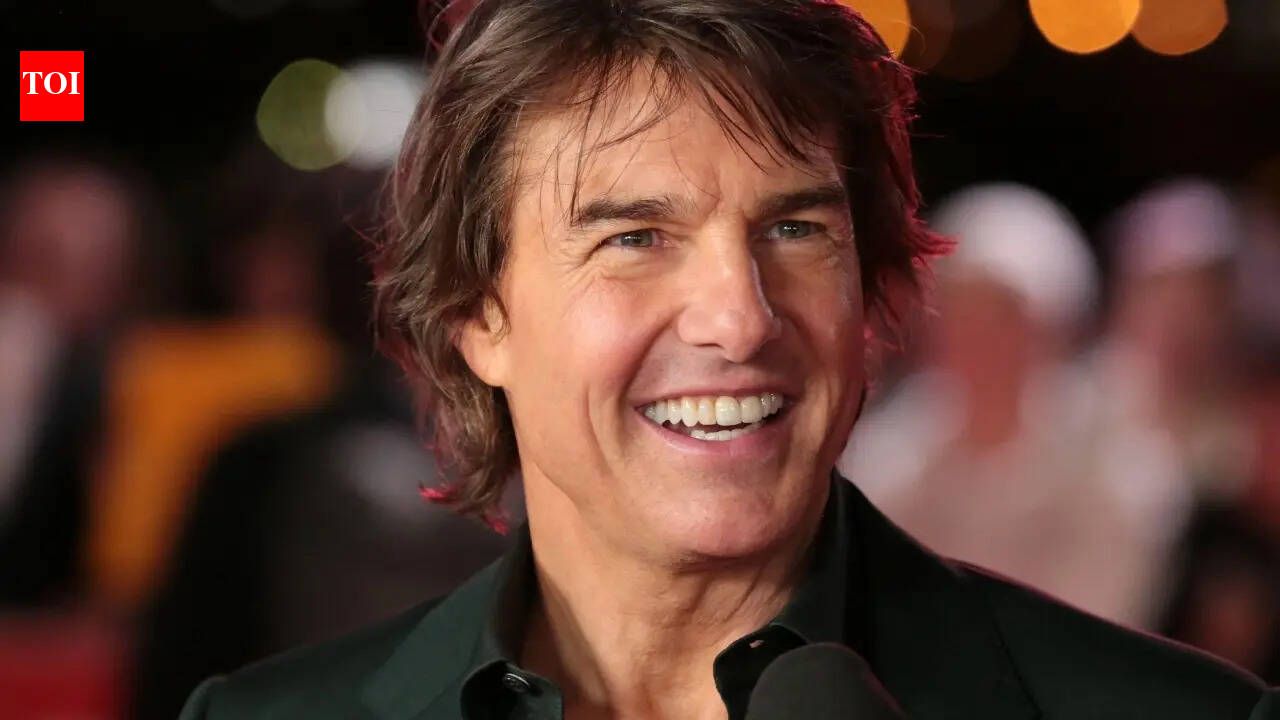
After the announcement of ‘Top Gun 3’, Tom Cruise reached London by helicopter in grand style.

When the Aura bells start ringing in the city, you just know it Tom Cruise. The stylish actor had stepped out of his helicopter and landed at a London helipad earlier this week. Recently, soon after the announcement of the production of the blockbuster film’s threequel, ‘Top Gun 3’, the 63-year-old star was seen all in black as rain covered the sky.
Tom Cruise steps out in all black in London
There was excitement on social media apps after the box-office hit ‘Top Gun: Maverick’ was confirmed to be getting a sequel. However, according to People Magazine, the ‘Jerry Maguire’ actor has been hopping through intense movies and was spotted riding to the United Kingdom on May 14, 2026. Clad in a black outfit, the actor wore a collared black jacket and black slacks with subtle shades. He was seen greeting the airport staff and holding his umbrella even during light drizzle.
Tom Cruise returns to ‘Top Gun’ franchise
Earlier this year, it was revealed that Tom Cruise would be taking to the skies once again during a presentation at CinemaCon. However, according to The Guardian, no other returning cast members have been confirmed for the action drama. “We’re thinking and talking about a lot of different stories and what we can do and what’s possible,” he told an Australian show Today last year. “It took me 35 years to figure out Top Gun: Maverick. So, there’s all these things we’re working on, we’re discussing Days of Thunder and Top Gun: Maverick.”
Tom Cruise signs another film?
While whispers are growing about Tom Cruise’s next film, he is reportedly in talks on another spy film titled ‘Doppelganger’. Jeff Snyder’s entertainment newspaper, The InSnyder, claimed that the actor spoke to the writer Anish Chaganti.

“There are people who argue well, but they far outnumber those who argue poorly.”

Galileo Galilei (Image: Wikipedia)
People often assume that old quotes survive because they sound wise. Sometimes they survive because they seem uncomfortably accurate.Citation: “There are people who reason well, but they far outnumber those who reason poorly.” This line of Galileo Galilei seems to be one of those lines.This doesn’t sound poetic. It’s not even warm or comfortable. If anything, there’s a slight sense of frustration in the sentence, almost like someone who has spent years watching intelligent conversations drown out noise.And honestly, many people today probably understand that sentiment immediately.The strange thing is that Galileo lived centuries before smartphones, social media debates, viral misinformation and endless online debates. Yet this quote somehow fits modern life almost perfectly. Every day, people confidently debate topics they barely understand. Rumors spread faster than facts. Emotional reactions constantly override careful thinking.Galileo may not have predicted the Internet, but he clearly understood human behavior.That part never changes much.
Quote of the Day by Galileo Galilei
“There are people who argue well, but they far outnumber those who argue poorly.”
Why does this quote from Galileo suddenly feel like it’s everywhere online?
In recent years, this line has begun to circulate more frequently online, perhaps because people feel mentally exhausted by the sheer volume of bad arguments surrounding them on a daily basis.Open almost any social media platform, and patterns are immediately visible.People react even before reading it completely. Headlines become opinions. Short clips replace the reference. Anger spreads faster than patience. Confidence is always mistaken for intelligence. Sometimes the loudest person in the room knows the least, yet dominates the conversation because certainty feels persuasive.Galileo’s quote sums them all up with great simplicity.He is essentially saying that thoughtful logic exists, but irrational thinking numerically overwhelms it. Not because good thinkers disappear completely. Simply because emotional thinking often spreads more naturally among larger groups.That observation seems harsh. This also sounds familiar.
Galileo understood something uncomfortable about human nature
Galileo Galilei spent much of his life challenging widely accepted beliefs about the universe. That experience probably shaped the way he viewed public argument.Galileo supported the idea that the Earth revolved around the Sun, which was fiercely opposed by many powerful institutions during his lifetime. For many people at that time, evidence mattered less than tradition, authority, and emotional certainty.That struggle changed his life permanently.He eventually faced trial by the Roman Inquisition and remained under house arrest for years. Imagine experiencing this personally: carefully presenting evidence while vast groups reject it because the conclusions seem uncomfortable or threatening.After going through this, his quote suddenly seems less pejorative and more observational.Galileo saw firsthand how poorly people can reason when pride, fear, ideology, or social pressure are involved.
This line seems strangely personal now
What makes this quote powerful today is that people no longer have to deal with bad logic occasionally. They face it constantly.A person can wake up, check their phone for five minutes, and see misinformation, emotional outcry, conspiracy theories, manipulated statistics, and outright self-indulgent nonsense even before breakfast. Over time, this creates fatigue. Many people feel mentally exhausted, not because the information is there, but because it requires constant effort to separate good logic from bad logic.Galileo’s quote captures that weariness almost perfectly.This sentence sounds less like philosophy and more like someone’s silent admission: “Yes, this has always been a problem.”
Why is it really hard to reason well?
Most people believe that arguments happen naturally. Galileo seems to disagree.Good reasoning requires patience. It demands evidence, self-control, and a willingness to question personal assumptions. Humans struggle with this more than they usually admit. People quickly become emotionally attached to ideas. Once this happens, changing perspective feels uncomfortable because it involves identity.This is where bad logic often begins.One stops to ask, “Is this true?” Instead they begin to ask, “How do I defend what I already believe?”They are completely different mental processes. Galileo seems to be deeply aware of that distinction.
The Internet rewards emotions over logic
One reason this quote seems unusually modern is that online culture often rewards emotional reaction rather than thoughtful analysis.Fast responses perform well online. Anger also performs well. Careful nuances usually do not occur.People who share emotional certainty attract attention faster than individuals who express uncertainty or complexity. Algorithms reward participation, not intellectual discipline. This creates an environment where bad arguments spread faster because emotionally satisfying explanations spread faster than complex truths.Galileo clearly lived centuries before algorithms came into existence, yet his observations still land squarely inside modern digital culture.Maybe that’s why young audiences keep searching for this quote again and again.
Galileo was not alone in attacking the intelligence system.
This quote is interesting because Galileo does not simply divide people into “smart” and “stupid.” The issue itself is one of logic.A highly educated person can still reason badly emotionally. History proves this time and again. Intelligent people sometimes defend irrational beliefs because ego, politics, fear, loyalty, or pride distort their thinking. Meanwhile, ordinary people without formal education can reason carefully because they remain curious, patient, and open-minded.Galileo seems to be more interested in intellectual honesty than in raw intelligence. That distinction matters.A person can remember vast amounts of information even when approaching questions emotionally rather than rationally. Good argument requires humility, which many people struggle to practice consistently.
Why does a crowd often make an argument worse?
Hidden within Galileo’s words is another inconvenient truth: groups do not become intelligent simply because they are large.People often assume that the majority opinion is the truth. History repeatedly shows otherwise.At one time the entire society believed in scientifically wrong ideas for centuries. Public panic, conspiratorial movements, propaganda campaigns, and moral hysteria all show how irrational group thinking can yield under pressure.Galileo experienced that reality personally.He observed that institutions and large groups reject evidence because accepting it threatens existing beliefs. That experience likely shaped his understanding of how emotionally fragile rational thinking can become when fear or power enter the equation.
This quote seems almost sarcastic
What makes this line memorable is its tone. Galileo looks tired.Not dramatic. Not furious. Just quietly know that most of the time illogical thinking far outnumbers careful reasoning. That understated disappointment gives the quote personality. The reader can almost imagine someone saying this after losing patience during a meaningless argument.And honestly, a lot of people today can probably relate to that mood. Especially online.The Internet has created endless opportunities for debate, while simultaneously narrowing attention spans and rewarding oversimplification. Discussions often devolve into tribal shouting rather than genuine curiosity. People defend “their side” emotionally rather than openly examining the facts.Galileo’s statement fits that environment almost exactly.
Why do people keep sharing this quote even after centuries?
Some historical quotations survive primarily because schools continue to teach them. It survives because it still feels emotionally useful.Readers now encounter bad logic constantly in daily life. At work. Online. Politically. Socially. Even in normal conversation. Galileo’s words provide a strange reassurance as they remind people that this problem is not entirely new.Man has always struggled with rational thinking.Technology changed. Human psychology mostly did not do this.That continuity probably explains why the quote keeps returning online every few months. People read it and immediately recognize that there is something true in it.
Other famous quotes from Galileo Galilei
- “You can’t teach a man anything, you can only help him find it within himself.”
- “All truths are easy to understand once discovered; the point is to find them.”
- “Passion is the origin of talent.”
- “Measure what is measurable, and make measurable what is not.”
- “Nature is relentless and immutable.”
- “The Sun, with all the planets revolving around it, can still ripen a bunch of grapes.”
Why do Galileo’s observations still matter?
The uncomfortable thing about this quote is that it denies easy optimism.Galileo is not saying that everyone eventually becomes rational through education or progress. He seems to recognize that flawed reasoning is deeply human. Emotional thinking comes naturally. Reasoning carefully requires effort, discipline, and a willingness to temporarily feel uncertainty.Many people object to that inconvenience.Yet despite the pessimistic edge of the quote, there is still some strange hope within it. Galileo acknowledges that some people argue well. Thoughtful thinking exists even when surrounded by noise. Curiosity still exists. Evidence still matters. Rational people still continue to ask hard questions despite the public confusion around them.Maybe this is enough. Or maybe it always has been.
CJI warns UBT leaders to stop blaming Supreme Court for delay in decision
 Supreme Court Friday objected to “petty politicians” Shiv Sena (UBT) accused the court of delaying the decision on the petitions challenging the Election Commission’s decision not to disqualify the Eknath Shinde-led Shiv Sena and declare them the real ‘Shiv Sena’ and said it was the lawyers of the UBT camp who had sought the adjournment several times.Advocate Rohit Sharma, acting as per the Supreme Court’s cause-list directions, requested the bench of CJI Surya Kant and Justice Joymalya Bagchi to fix the date of final hearing on the three-year-old petition. Uddhav Thackeray against Eknath Shindewho rebelled along with other Sena MLAs and formed the government with the BJP, also filed a two-year-old petition challenging the Assembly Speaker’s order rejecting petitions seeking disqualification of the rebel Sena MLAs.Although the bench accepted Sharma’s request and assured that the “Shiv Sena cases” would soon be taken up for final hearing, the CJI said, “Stop your people from going to the media and accusing the Supreme Court of delaying the decision of the petitions. On one hand you demand adjournment of the hearing and on the other you accuse the Supreme Court of delay. Such irresponsible statements should not be made.”“I am issuing a warning. I will not tolerate these things. Why do these small politicians keep making allegations against the Supreme Court,” the CJI asked. Senior lawyer Devdutt Kamat said he was ready to argue the case on Friday or any day suitable for the court. The CJI said, “The court often sits even after 4 pm to hear the cases. It is not that we are sitting idle. All the cases cannot be heard in a single day.” Senior lawyer Mukul Rohatgi said that these comments, irrespective of the parties, should not be made as the courts are working beyond the stipulated time.
4 year old child dies due to bus fire in Ujjain, Madhya Pradesh

Ujjain: A four-year-old child burnt to death after a fire broke out in an intercity express bus parked in a hotel on the Agra-Mumbai National Highway in Tarana area of Ujjain district of Madhya Pradesh late on Thursday night. There were more than 50 passengers on board the plane.The sleeper bus going from Indore to Gwalior had stopped for tea and breakfast at Hotel Jain Path, about 20 kilometers from Shajapur city, when smoke started rising from the bonnet. Within a few minutes the fire engulfed the car.Tarana SHO RNS Bhaduria said the incident occurred about 15 km from the police station. The bus driver had started the engine. The fire was probably caused by a spark near the engine.Passengers alleged that the smell of burning wires was felt most of the time during the journey and some warned the driver, who ignored them. Passenger Malti Sharma said that if the driver had stopped on time to check, the accident could have been averted.After this, there was chaos and passengers broke windows to escape. In the stampede, girl Anya Jain got buried under a seat and could not come out. Bhaduria said his body was recovered after about two hours and sent to Shajapur District Hospital for post-mortem.The child’s father Abhishek Jain, who was traveling to Shivpuri with his wife and two children, said the bus had neither an emergency exit nor a fire extinguisher. He said, “My child was burnt to death. I fold my hands in front of the media – no other child should die like this. My future has been burnt.” He also alleged that the first fire engine that arrived had no water.Five fire tenders from Maksi, Tarana and Shajapur finally brought the fire under control. The bus driver and cleaner fled from the spot. Police from Maksi and Tarana police stations reached the spot. Later, Jain handed over the jewelery recovered from the burnt bus to the police.Police have registered a case of death and the cause of the fire is being investigated.

Operation Epic Fury to restart? Donald Trump planning new attack on Iran after China visit: Report

us President donald trump Iran faces mounting pressure over war as China returns Friday, with top aides laying out options for fresh military action against Tehran if diplomacy fails.According to a New York Times report, Pentagon officials have drafted a plan for the possible resumption of strikes as part of a renewed military campaign after “Operation Epic Fury” was halted during the ceasefire in April. However, Trump has not yet taken a final decision.“I looked at it, and if I didn’t like the first sentence I would throw it out,” Trump told reporters aboard Air Force One, referring to Iran’s latest peace proposal.The US, Israel and regional officials are trying to broker a deal that would allow Iran to reopen the Strait of Hormuz, giving Trump a chance to claim a diplomatic breakthrough amid growing domestic criticism over the costly conflict, the report said.
Pentagon prepares options for escalation
War Secretary Pete Hegseth told lawmakers this week that the U.S. military has a “plan to surge if necessary” while also keeping options open to reducing the deployment.The report said the Pentagon has prepared several military scenarios, including an intense bombing campaign targeting Iranian military and infrastructure sites.Another option reportedly involves deploying US special operations troops to secure highly enriched uranium believed to be stored deep underground at Iran’s Isfahan nuclear facility.According to the New York Times, several hundred special operations personnel were flown to the Middle East earlier this year to prepare for such contingencies. However, officials acknowledged that any ground operation would carry “significant risk of casualties” and would require thousands of support troops.Meanwhile, Iran signaled readiness for renewed hostilities. Iranian Parliament Speaker Mohammad Bagher Ghalibaf said, “Our armed forces are ready to respond appropriately to any aggression.”
The Strait of Hormuz remains a matter of central concern
The Strait of Hormuz remains at the center of the crisis, with Iran refusing to fully reopen the key oil transit route, while the US has maintained its blockade measures.Trump said after talks with Chinese President Xi Jinping that both Washington and Beijing agreed that the strait should be reopened.“We don’t want them to have nuclear weapons, we want the door open,” Trump said in Beijing.Trump said he was running out of patience with Iran and warned Tehran to “compromise.”However, China avoided publicly indicating that it would put direct pressure on Iran.Iranian Foreign Minister Abbas Araqchi said Tehran was open to diplomacy, but did not trust Washington after air strikes following previous talks.
Heavy military presence remains in the area
More than 50,000 US troops, two aircraft carriers, several destroyers and numerous warplanes are deployed throughout the region.According to the report, US General Dan Kaine said that military officials “retain and will continue to have multiple options for our civilian leaders”.Despite weeks of attacks, US intelligence assessments indicate that Iran has restored access to most of its missile launch facilities and underground military infrastructure.The report also said Tehran had gained operational access to 30 of its 33 missile sites along the Strait of Hormuz.Oil prices continued to rise amid hike fears. Brent crude climbed nearly 3% to nearly $109 a barrel, while concerns over prolonged disruption to Gulf shipping routes pushed U.S. Treasury yields to their highest in almost a year.

Death toll from Covid-19 almost three times higher than official figure: WHO

22.1 million excess deaths Recorded globally between 2020 and 2023New Delhi: According to the World Health Statistics 2026 report released by the World Health Organization (WHO), the Covid-19 pandemic caused an estimated 22.1 million excess deaths globally between 2020 and 2023, almost three times the seven million Covid deaths officially reported worldwide.WHO said the pandemic wiped out nearly a decade of gains in global life expectancy and healthy life expectancy by 2021, calling it a “shock of historic proportions” to global health systems.According to the report, global life expectancy declined by 1.8 years between 2019 and 2021, while healthy life expectancy fell by 1.5 years during the same period, the sharpest reversal in recent decades.The report said excess mortality peaked in 2021 with 10.4 million excess deaths recorded globally as health care systems came under severe strain. Excess deaths are expected to decline to 4.9 million in 2022 and 3.3 million in 2023, although WHO cautioned that the recovery remains uneven and many countries have still not returned to pre-pandemic health trajectories.WHO defines excess deaths as more deaths than would normally be expected during a given period, including direct Covid deaths and indirect deaths caused by disruptions in health services and delays in treatment.The report found that men were disproportionately affected, with age-standardized excess mortality rates nearly 50% higher among men than women at the peak of the pandemic in 2021. Older adults suffered the highest mortality rates, especially those over the age of 85.WHO also highlighted major weaknesses in global death surveillance exposed during the pandemic. Of the estimated 61 million deaths globally in 2023, only about 21 million had officially reported cause of death information to WHO, while only 12 million had medically certified ICD-coded mortality data.The agency said the pandemic severely disrupted essential health services around the world, including vaccination programs, tuberculosis and HIV services, and treatment of non-communicable diseases, contributing significantly to indirect deaths during the period.WHO had earlier estimated in a separate analysis for 2022 that India caused about 4.74 million excess deaths during 2020–21, a figure disputed by the Indian government.The report also warns of slow progress in universal health coverage, rising health care-related poverty and a decline in global health financing after the pandemic.