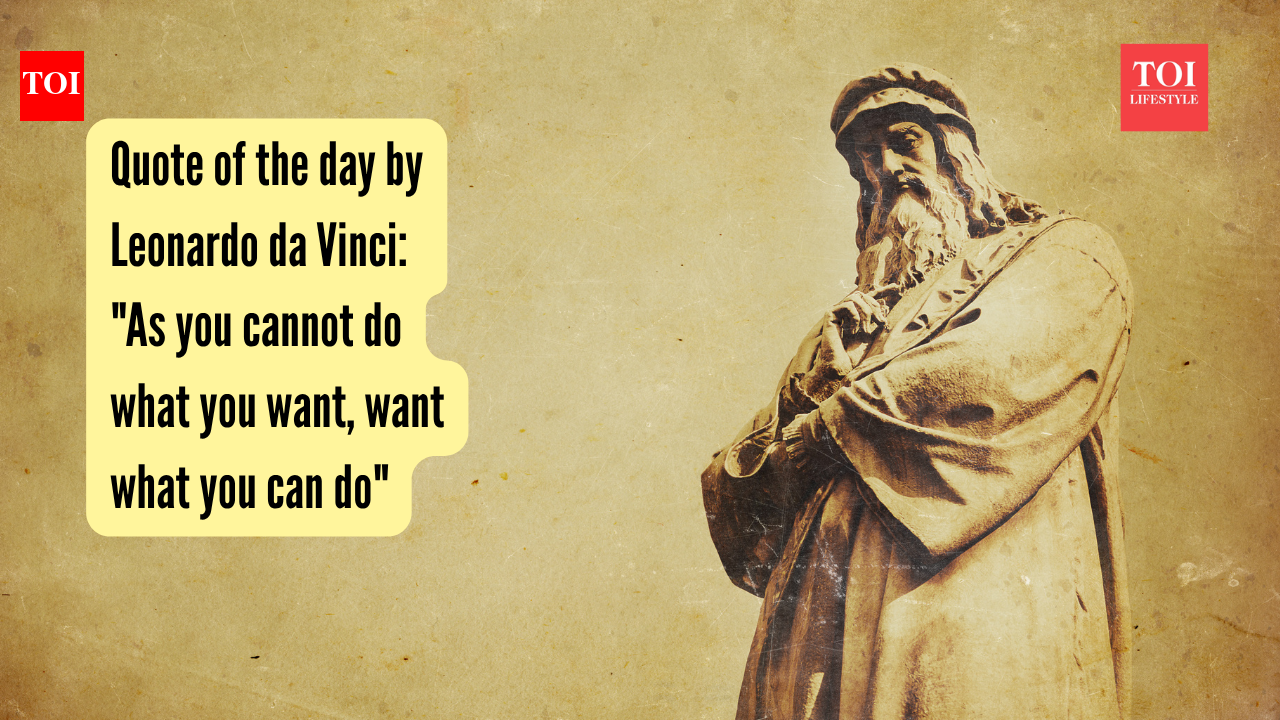
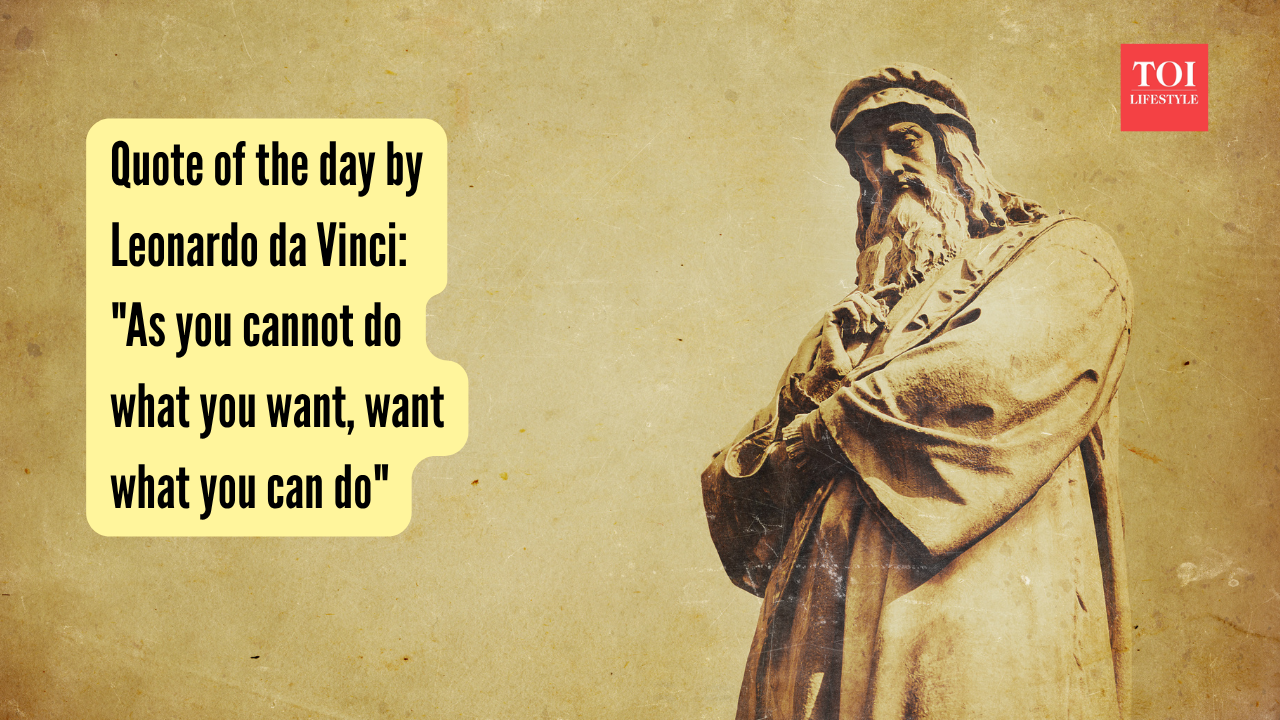
Disappointment often stems from the gap between our aspirations and reality. Leonardo da Vinci advised optimizing by focusing on what can be achieved right now rather than focusing on unattainable goals. This principle, in contrast to the frustration with flow, remains relevant today, especially amid the curated realities of social media, which urges us to divert energy into present possibilities.
We are often disappointed not by what life takes away from us, but by the gap, that empty quiet space, between where we are and where we want to be.We’ve all been there at some point in our lives, whether it’s because of a job we weren’t qualified for or a relationship that didn’t work out.We often plan ideal and dreamy versions of life that never happen. And in that state of mind, most of us keep wanting what we cannot have and keep comparing the present with the ideal that is not here yet, to such an extent that we feel stuck, and this leads to a blockage.Leonardo da Vinci lived in the 15th and 16th centuries without any of our modern tools or technology, and yet he created work that the world, even today, does not fully understand.He threw light on this beautiful idea through his wise words and suggested a way out.
Representative image (Photo: Canva)
What does quote mean?
Vinci does not tell us to give up our ambitions or to sit back and stop dreaming. Instead he offers practical advice, that when circumstances block your desired path, direct your energy towards what the present moment actually allows. Stop fighting the wall and try working with the open door.This is the difference between frustration and flow. Frustration comes from insisting on a specific outcome. Movement or flow comes from trying to do what is possible right now and then committing yourself to it.
This idea is still relevant today
We live in a time surrounded by social media, and often we see images and reels of other people’s careers, relationships, and lifestyles. Amidst this, we easily start comparing ourselves and it is natural to feel that we are lagging behind in some way.When what we want seems out of reach, whether it’s a promotion, an opportunity, or a position we envision, the modern tendency is often to grab for it and achieve it.But da Vinci’s words show another side. They ask us what can we really do today? Not how we imagined it, instead, what is the best we can do right now, with the current set of skills, or whatever we have.Because people who create meaningful things rarely do so when everything is under their control, they do so by diverting their energy elsewhere.
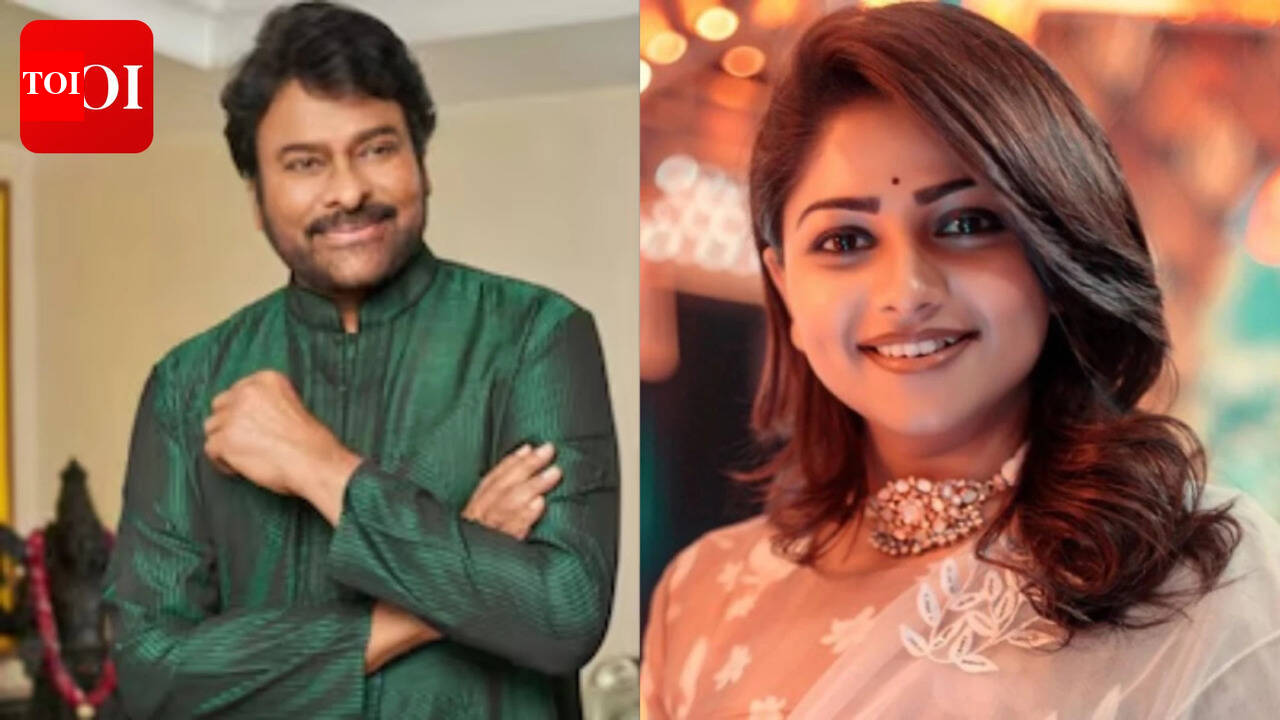
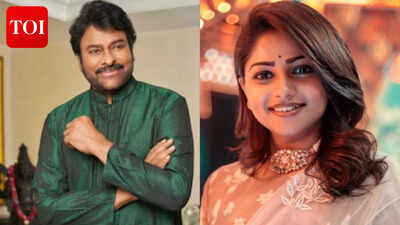
Megastar Chiranjeevi and director Bobby Kolli are working together on an upcoming large-scale entertainment extravaganza, tentatively titled ‘Mega158’ or ‘Chiru158’. The makers have started shooting for the film and if the latest reports are to be believed, a new cast is expected to join the sets.
Honey Rose reportedly opts out
According to a report in Cinema Express, Kannada actress Rachita Ram will be associated with this film. Earlier, Malayalam actress Honey Rose was reportedly signed to play an important role in the film. However, reports now suggest that she has walked away from the project due to scheduling issues and prior commitments.The team is currently shooting in Pollachi, Tamil Nadu. It is said that after Honey Rose’s exit the makers had approached Rachita Ram for her role. Now it is expected that she will join the team and shoot her part.
Cast of ‘Mega 158’
Talking about the cast members, the makers recently revealed Anaswara Rajan playing an important role in the film. It is expected that she will play the role of Chiranjeevi’s daughter. Apart from this, actress Priyamani is also expected to be seen as an important member.The film marks his second collaboration with director Bobby Kolli after the massive success of ‘Waltair Veerayya’. Earlier, the same media outlet had revealed that Bobby Colli has designed the film on a much larger scale than his previous projects. The story is said to include high-voltage moments and a powerful character of Chiranjeevi.The music is composed by S. Thaman.
Release date rumors
Hopefully the film is getting ready for Sankranti release. However, it should be pointed out that official announcements have not been made yet.
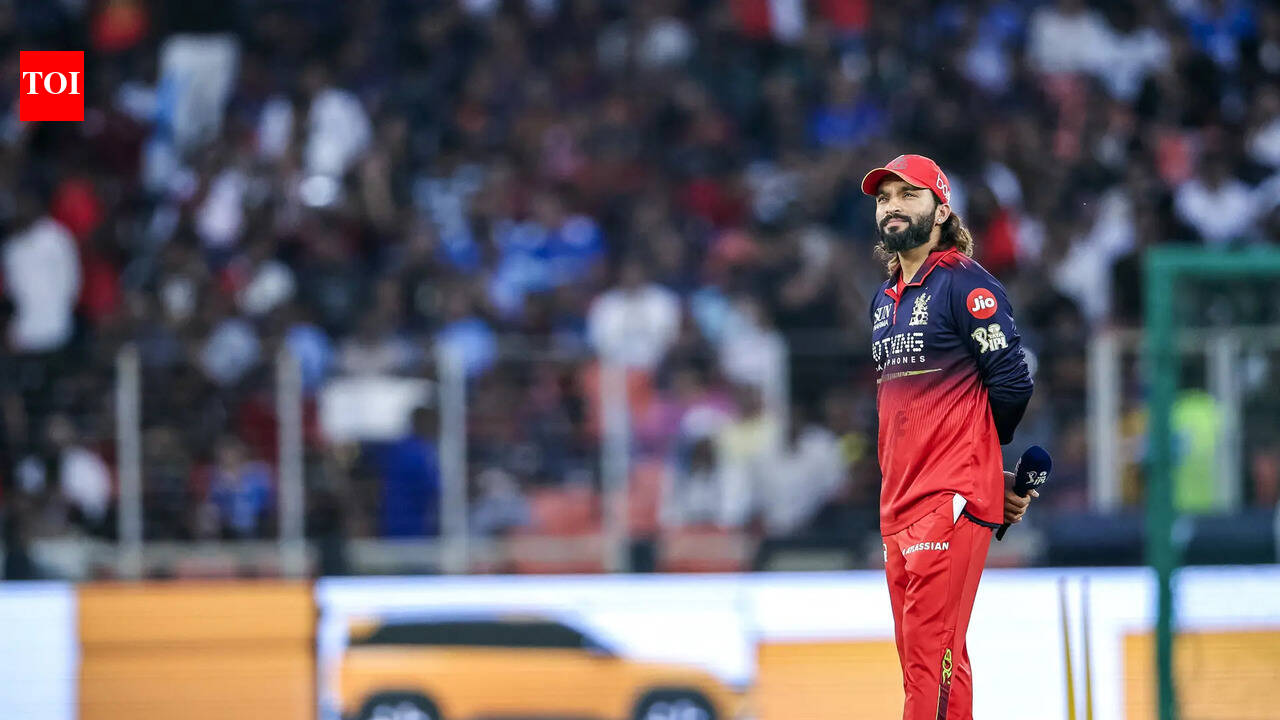
Royal Challengers Bangalore captain Rajat Patidar. (ANI photo)
Former Indian spinner Harbhajan Singh After the captain of Royal Challengers Bangalore has openly raised questions on the national selectors. Rajat Patidar He was left out of India’s latest T20I squad despite another stellar performance Indian Premier League Campaign. bcci The Indian squad for the upcoming T20I series against Ireland, England and the Asian Games was officially announced, with several notable changes attracting attention. Shreyas Iyer has been appointed captain in place of Suryakumar Yadav, while 15-year-old batting sensation Vaibhav Suryavanshi has earned his first senior India call-up. Tilak Verma has been made the vice-captain.Taking to social media soon after the team announcement, Harbhajan expressed his disappointment over Patidar’s exclusion and strongly endorsed the middle-order batsman’s ability.Harbhajan posted, “Sadly Rajat Patidar is not in the Indian team. What more does he need to do? Scored 501 runs, strike rate around 200. Unfair 💔 @rrjjt_01 Easily the best middle order in India. Proper striker with good technique.”
Patidar’s impressive IPL credentials
Harbhajan’s criticism is based on Patidar’s remarkable growth in the last two IPL seasons. The right-handed batsman not only established himself as one of the most destructive middle-order batsmen of the tournament, but also displayed strong leadership skills as captain.Patidar led Royal Challengers Bangalore to their first IPL title in 2025, ending the franchise’s 18-year wait for silverware. He followed that feat with another successful season in 2026, maintaining his impressive batting form and leading RCB to back-to-back titles.In IPL 2026, Patidar scored 501 runs in 15 matches with a strike rate of almost 200. His fearless approach against both pace and spin made him one of the most dangerous middle-order batsmen in the competition. His average during the season was 41.75 and he crossed the boundary 42 times.Indian team for Ireland and England T20I: Shreyas Iyer (captain), Abhishek Sharma, Sanju Samson, Ishan Kishan, Shivam Dubey, Tilak Verma (vice-captain), Nitish Kumar Reddy, Axar Patel, Washington Sundar, Varun Chakraborty, Ravi Bishnoi, Mohammed Siraj, Harshit Rana, Arshdeep Singh, Prince Yadav, Vaibhav Suryavanshi.Indian team for Asian Games: Shreyas Iyer (captain), Sanju Samson, Ishan Kishan, Shivam Dubey, Tilak Verma, Nitish Kumar Reddy, Axar Patel, Washington Sundar, Varun C, Ravi Bishnoi, Harshit Rana, Arshdeep Singh, Vaibhav Suryavanshi, Jasprit Bumrah.
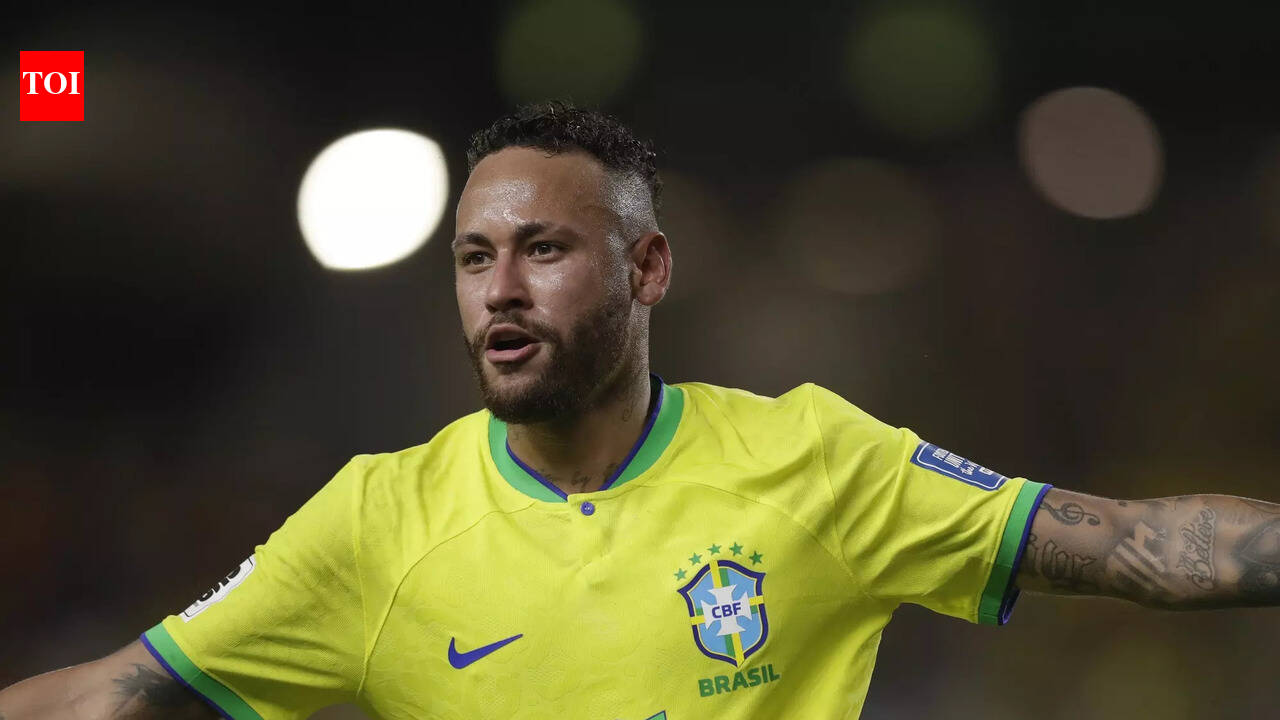
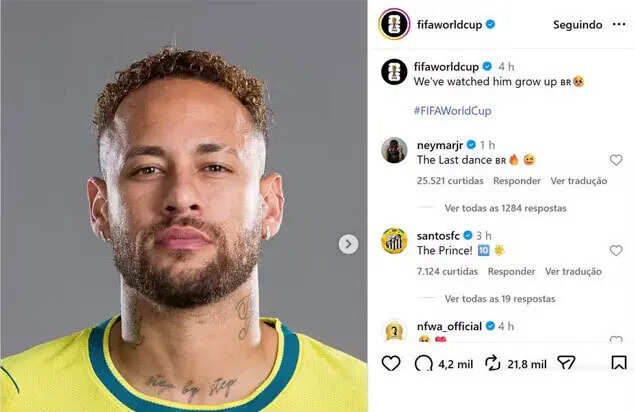
For a generation of Brazilian fans, Neymar has been the face of the Seleção. Now, with the FIFA World Cup 2026 around the corner, the country’s all-time leading scorer has hinted that the tournament could mark the end of his journey on football’s biggest stage.The 34-year-old Santos forward had an emotional reaction after responding to a FIFA social media tribute with a simple but filling message: “The last dance.” This phrase associated with Michael Jordan’s final season with the Chicago Bulls seems to confirm that he will be farewell at the upcoming World Cup in the United States, Canada and Mexico.Brazil, the only nation to have participated in every edition of the tournament, will compete in a record-extending 23rd World Cup as they seek a sixth title and their first since 2002.
A journey defined by talent and heartbreak
Neymar’s World Cup story has been one of dazzling brilliance hampered by brutal injuries. He burst onto the global stage in 2010 and became the poster boy of Brazil’s home World Cup in 2014, but his dream was cut short in the quarter-finals due to a back injury.Redemption came at the Rio Olympics in 2016, where he converted the winning penalty to give Brazil its first Olympic football gold medal. But subsequent World Cups brought disappointment. An injury-hit 2018 campaign ended in the quarter-finals, while his international career suffered a devastating blow in 2023 when he ruptured his anterior cruciate ligament during a World Cup qualifier against Uruguay.Since then, the former Barcelona and Paris Saint-Germain star has repeatedly struggled with fitness issues, with a calf strain now putting his availability for Brazil’s opening Group C clash against Morocco in jeopardy.
One last mission for Brazil’s record scorer
Despite battling injuries, Neymar remains Brazil’s all-time leading scorer with 79 goals in 128 matches and is expected to be part of a squad with a mix of experience and youth.With stars like Alisson, Casemiro, Marquinhos, Vinicius Junior, Raphinha and teenage sensation Andrique, Neymar will aim to end Brazil’s 24-year wait for World Cup glory.For Neymar, the focus is firmly on a final chapter. After years of talent, tears and unfinished business, the man who has carried Brazil’s hopes for more than a decade appears ready for one last dance.
At first glance, a fox and a jackal can look surprisingly alike. Both belonging to the dog family, they have pointed ears, long snouts and bushy tails. In most areas of Asia, Africa, and Europe, wildlife observers or even residents commonly confuse the two animals if they see one in the early morning, late evening, or at night. However, an experienced tracker has ways of distinguishing one from the other besides appearance. Here are some ways one can differentiate between the two.
Jackals have different ways of walking.
For one thing, they are more similar to wolves, coyotes, and domestic dogs than they are to foxes. Jackals have a long, thin body and long legs, making their gait similar to that of a wolf or a small village dog. Instead of looking fragile, jackals appear strong and capable.According to Britannica, jackals are fast-moving animals that actively hunt but also behave like scavengers. Thus, they are distinguished by long continuous walks as they patrol their territories and search for prey.Another difference between jackal and fox can be seen in social behavior. It is rare to see more than one fox at a time. In contrast, the jackal can be found roaming with its partner or relative.
body structure settles the matter
In cases where visibility is excellent, body structure becomes another important clue.For example, foxes are characterized by a slender body, narrow head, and very bushy tail. The bushy tail itself may have become one of the distinguishing characteristics of the fox and may also serve various purposes, such as balancing or signaling. The body of the animal resembles that of a cat. Jackals appear to be quite strong. Specifically, their legs are usually long, their bodies are slim but strong and their tails are not bushy.
due to common confusion
This is natural because foxes and jackals share similar ecological niches in different regions around the world. Both hunters are opportunistic, both are highly adaptable, and they both become active mostly at dawn and dusk. Among online wildlife tracking circles, the question of how to distinguish these animals from each other often arises, with experienced trackers asking for more details on tracks, sounds and behavior to be sure of their decision. All signals should be paid attention to.A small, clean print, a sharp bark and a beautiful walking pattern indicate that it is a fox. A large track, a howling pack and a steady pace suggest it is a jackal. When identifying wildlife, a single description does not reveal the whole truth about the animal. When tracks, sounds and behavior are combined we get a complete picture.
As Princess Lilibet celebrates her fifth birthday on June 4, 2026, Meghan Markle marked the occasion by sharing new photos of her youngest child on social media. Captioning the post with a white heart emoji, Meghan wrote, “Our dream girl. Happy 5th birthday, Lily.” The birthday post offered another rare and carefully compiled glimpse into the life of the Sussexes’ only daughter, prompting many fans to ask who Lilibet really is.Here’s everything we know so far about Princess Lilibet.
When was Princess Lilibet born and what is her full name?
The Sussexes welcomed their daughter on June 4, 2021, in Santa Barbara, California. Her full name is Lilibet Diana Mountbatten-Windsor. In their official announcement, Meghan and Harry explained that the name pays tribute to Harry’s mother Diana, Princess of Wales, and his grandmother Queen Elizabeth II, whose family nickname was Lilibet.Following the announcement, the royal family shared a congratulatory message, noting that Lilibet was Her Majesty’s 11th great-grandchild.
Does Lilibet have the title of princess?
Yes. As the granddaughter of the King of Britain, Lilibet has the title of princess, a right she received when King Charles III ascended the throne. Her parents officially referred to her as Princess Lilibet for the first time in March 2023. “The children’s titles have been their birthright since their grandfather became monarch. This matter has been resolved for the time being in line with Buckingham Palace,” a spokesperson for Meghan and Harry told the BBC at the time.“Her nickname in the family is Lily.
How is Princess Lilibet?
Over the years, both Meghan and Harry have shared small but revealing details about their daughter’s personality. Harry has told how much Lilibet reminds him of his late mother Princess Diana. “I think at the moment I see a lot of my wife in Archie, and I see a lot of my mother in Lily,” he said in his documentary series. “She’s just like Spencer. She has the same blue eyes.” Meghan said, “Blue, blue, blue eyes,” while Harry described her hair as “kind of golden red.”“During an interview on ‘The Drew Barrymore Show,’ Meghan was asked if the children had done anything that reminded her of Harry. He replied, “Some words they still say in a British accent.” “They’ll say zeh-bra, and they have these little moments where it comes out. He has a very American accent, but he says words that are exactly like him, and I think it’s adorable.”In October 2025, Meghan talked about a wellness routine she developed with Lilibet. “Our daughter, she’s four years old and she has such a strong personality and she’s incredible,” he shared. “And now she’s in this moment where I say, ‘What’s your rose and thorn?’ And she says, ‘My day was just a blast.'”
What are Princess Lilibet’s hobbies and interests?
Meghan has shared snippets of Lilibet’s daily life in their Montecito home, showing her in the garden, playing outside, cooking in the kitchen and even working in the family apiary in a beekeeper outfit.At the Sundance Film Festival in January 2026, where Meghan was promoting her documentary ‘Cookie Queens,’ she was asked if Lilibet might follow in her footsteps as a former Girl Scout. Meghan responded thoughtfully, saying, “I think we’ll just continue to figure out what feels right. For both of us working on this project, it’s been incredibly special as parents, to be able to see something as moms that our girls will be able to enjoy and watch, too.”“
What did Prince Harry say about Princess Lilibet as a child?
When Lilibet was only a few weeks old, Harry described her as a comfortable and content baby. He said, “We’ve been lucky so far; she’s very calm and seems happy to sit there while Archie is running around like crazy.” “Two is definitely a juggle.” In April 2022, he told People that Lilibet had just taken her first steps, adding, “Proud daddy, here.”
How Meghan Markle and Prince Harry celebrated Princess Lilibet’s fifth birthday?
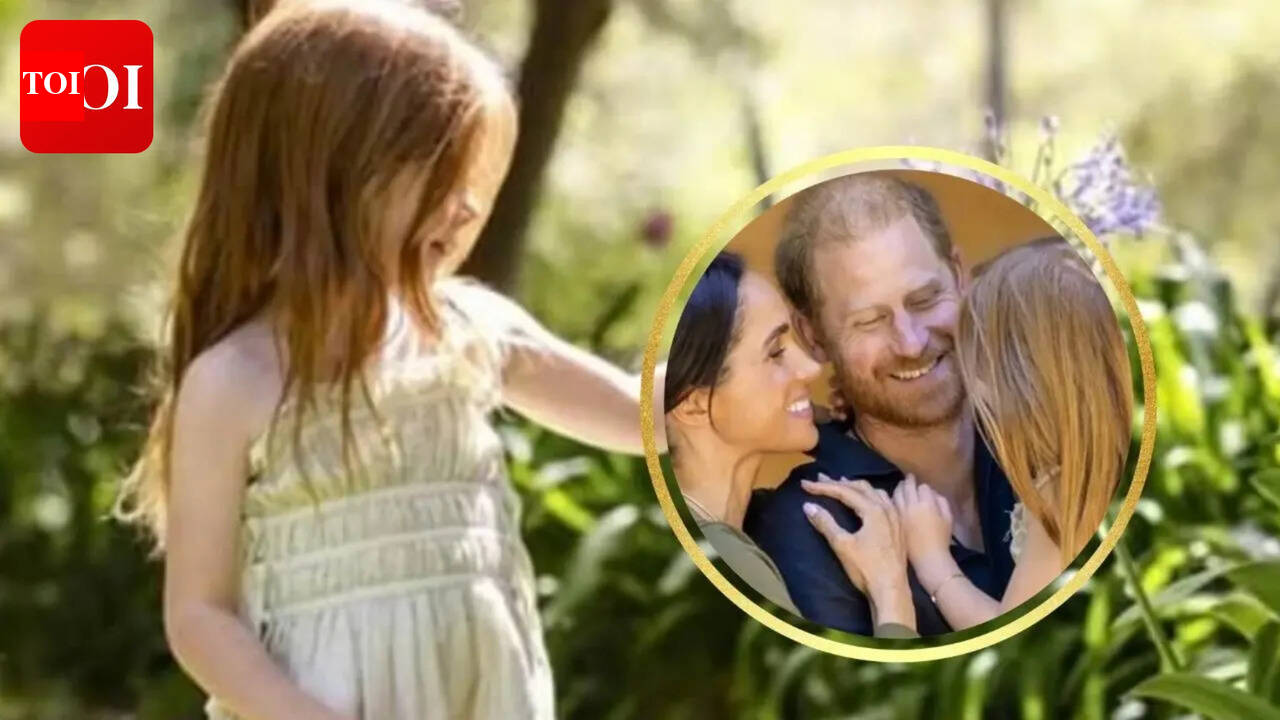
On June 4, 2026, Meghan shared two new photos of Lilibet to mark her five-year anniversary. In the first, the birthday girl was held by a smiling Harry as Meghan leaned in towards them both. In another, Lilibet was depicted in a beautiful green courtyard, reaching out to touch a flower, wearing a sleeveless white summer dress with a scalloped hem and lace detail. The comments section on the post was turned off, as has become customary for the couple’s family posts.
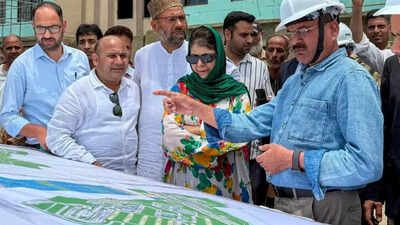
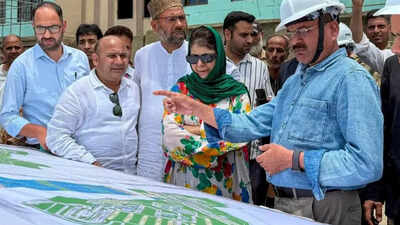
Srinagar: PDP chief visits mehbooba mufti His visit to Awantipora in Pulwama on Friday for an upcoming AIIMS and his review of the project with officials has sparked a political storm in Jammu and Kashmir, with the ruling NC alleging that the Center has taken this step at a time when it has intensified its demand for restoration of the state.National Conference (NC) spokesperson Tanveer Sadiq accused the BJP-led Center of using the PDP to create political backlash against the Omar Abdullah-led government. The allegations intensified when former CM Mehbooba spoke to Union Health Minister JP Nadda after the review and requested him to expedite the work.The PDP hit back, saying that a government with a comfortable majority should not feel threatened by a visit to a public health project site, and that it should be concerned about patients in Kashmir who are still waiting for access to a major healthcare institution.Jammu and Kashmir got two AIIMS under the Pradhan Mantri Swasthya Suraksha Yojana (PMSSY) in 2015. While the one at Samba in Jammu is operational, the Awantipora facility is under construction. Both projects started in 2019.The Awantipora project has repeatedly missed completion dates and the new deadline is December 2026. Visiting the site, Mehbooba recalled that her father Mufti Mohammed Sayeed, as CM, had conceived the project. This prompted the PDP – which counts the region as a stronghold – to accuse the Omar-led government of failing to effectively monitor and expedite the project.However, NC suspects a bigger conspiracy in Mehbooba’s visit. National Conference spokesperson Sadiq said, “When we passed an autonomy resolution in the Jammu and Kashmir Assembly after the 1996 elections, Delhi countered it by helping the PDP emerge as an alternative political force. Now when we have decided to go to New Delhi to protest for the restoration of the state, the Center has once again roped the PDP into it by arranging a briefing for Mehbooba.”Jammu and Kashmir’s Health Minister, NC’s Sakina Itu claimed that Mehbooba is working at the behest of the Centre. Itu said, “Which center of power in Delhi is directing these works? It is ironic that the people who caused the AIIMS project to proceed at an extremely slow pace are now trying to claim ownership of its progress. The fact is that the project is moving towards completion because of the commitment of CM Omar’s government.”PDP hit back at the claims. Party functionary and Mehbooba’s daughter Iltija Mufti recalled that the NC government had publicly criticized the location of the Awantipora project and had “cautiously avoided the review meeting from 2024 to delay the inauguration of the institute”.Pulwama PDP MLA Waheed Para accused Omar of not giving priority to the project. Like Iltija, Parra claimed that Omar had commented last year that the site was selected due to political considerations during the PDP’s tenure.People’s Conference chief and MLA Sajjad Lone criticized Mehbooba’s review, calling it “nothing less than a constitutional crisis”. Lone said, “I cannot believe that the CM has not reacted to an incident that further weakens the already weakened power structure of Jammu and Kashmir.”
Mira Andreeva was not herself on Saturday. Andreeva’s fans noted her early career that she often seemed to lack the emotional control necessary for consistent winning at the Grand Slam level.
While on tour as a teenager, she sometimes expressed frustration when matches seemed out of her control. Small dips in pace often create visible irritation, whether through body language, hasty decision-making, or moments of audible self-criticism between points.
Earlier this year at Indian Wells, he broke a racket during his third-round exit and expressed his frustration towards the crowd. A few weeks later, she also cried after losing to Marta Kostyuk in the final of the Madrid Open.
But Mira Andreeva who Moved to center court against Maja Chwalinska Was different. She was calm, almost immovable, remaining calm even when the momentum threatened to take her away. Nothing seemed to disturb its rhythm or clarity.
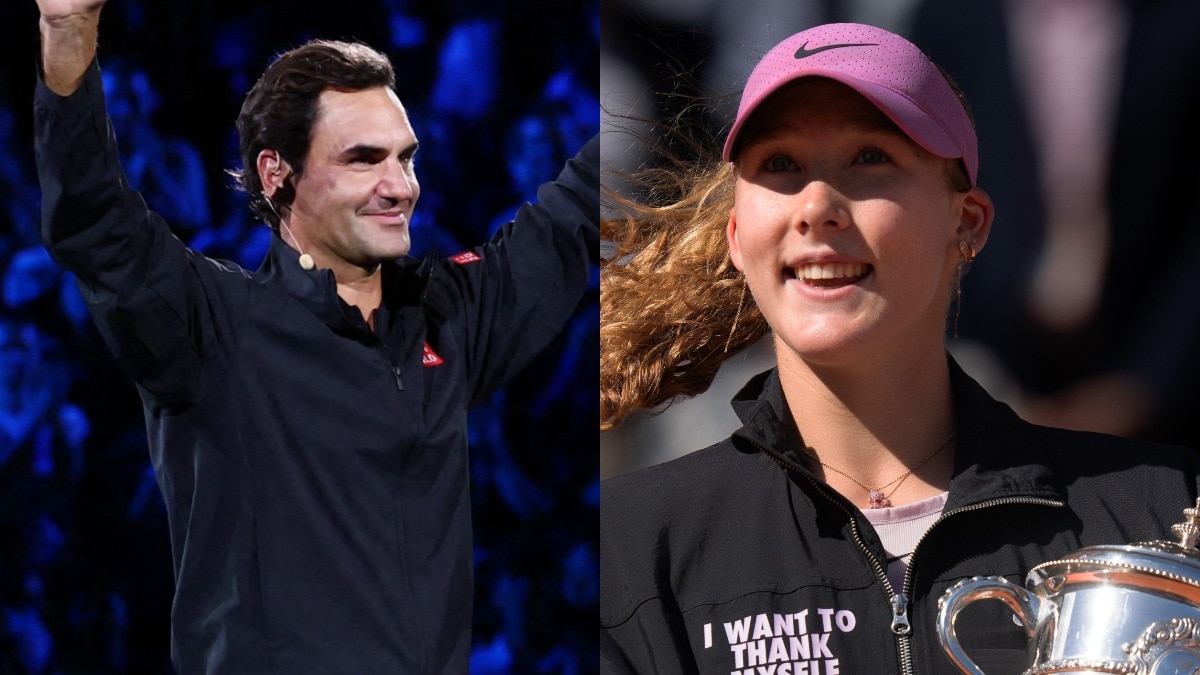
She was calm and patient, as if in a meditative state, showing no signs of nervousness even when Chwalinska broke her serve three times. On the big day, it almost felt as if Roger Federer took over the court through Mirra Andreeva, epitomizing his trademark calmness under pressure.
And why not? Meera, in a way, was trying to emulate her idol. Result: First Grand Slam title.
federer inspiration
Mira Andreeva said that she took inspiration from Roger Federer. Courtesy: Reuters
Federer is remembered for his cool, collected, ice-cold presence on the court, especially in high-pressure moments. However, early in his career, he admitted to being more emotional, sometimes losing control, throwing the racket and showing obvious frustration during matches.
Over time, he worked on refining his temperament and learned to channel those emotions in a more controlled and productive way. Federer has always been a source of inspiration for Mira. Seeing his composure under pressure reinforced the belief that a stable mindset can be as important as technical skills in achieving success.
Mira said after the match, “I’ve watched a lot of Roger’s matches here. Obviously I’ll never have the same aura – no one will have the same aura, but I wanted to try to imitate the way he behaves on the court, because I love watching how he played.”
Federer himself has described his mental approach as a balance between fire and ice: fire is his desire to win, and ice is his ability to accept mistakes and remain calm under pressure. At Roland Garros, Mira held that same duality, there was fire in her heart to finally taste Grand Slam success, and ice in her veins to carry her across the finish line.
mindset reset
Mira Andreeva changed her mindset with the help of her psychologist. Courtesy: Reuters
Controlling natural instincts is never easy, especially during adolescence when emotions run high. For most players, that instability often spills over onto the court under pressure.
However, for Mirra, this change felt less like a technical adjustment and more like an internal shift driven by inspiration. The Russian player, who has spoken openly about his struggles with emotions on the court, said his move toward calm, controlled behavior was not driven by tactical changes, but by a deliberate choice in mindset and temperament.
“Well, I wouldn’t say there was any big reset or something that I decided to completely change or change the approach to the matches. There was nothing like that,” Meera said.
Advice from her psychologist also helped Meira ahead of the high-voltage semi-finals and final, conditions that were unfamiliar to her, having never experienced success at that stage in a Grand Slam before.
Mira credited her psychologist, saying that she spoke to him in a 20 to 25-minute call before both the semi-finals and the final, and said that those conversations helped her unlock a strong fighting spirit within herself.
“I just decided that, as my psychologist says, you can always choose how you will be on the court and how you will play as well as who you will be as a person. So I just decided to choose to be a fighter,” Mira said.
the journey begins now
Mira Andreeva will now look to make an impact on grass at Wimbledon. Courtesy: Reuters
Till Saturday, Mira was not a Grand Slam champion. She won WTA 1000 titles in Indian Wells and Dubai last year, but a Grand Slam title is a different challenge altogether. When she defeated Aryna Sabalenka in the Roland Garros quarterfinals In 2024, her clay-court ability was already evident.
That promise has now turned into reality after two years. Becoming the youngest female player to win a French Open title since Monica Seles in 1992 underlines how far she has come since her Grand Slam debut in 2023.
But the challenge begins now. In less than a month, Mira will step into Wimbledon under completely different circumstances. Grass remains an unfamiliar surface for her, with no run beyond the quarter-finals in this event so far. Later this year, she also awaits the US Open, a tournament where she has never advanced beyond the third round.
There is still a lot left for the Russian teenager. Coco Gauff won her first Grand Slam at the US Open 2023 before adding the Roland Garros title last year, showing the value of versatility on different surfaces.
Mirra will now be expected to build on that same adaptability, developing into a player no longer defined by emotional vulnerability or inconsistency, but by flexibility and control, someone who is a threat on every surface she plays on.
Raghu Dixit, known for his folk-influenced festival sound, discusses his journey from microbiology to music, influenced by Bharatanatyam and oral traditions. He shares insights on composing for films vs. independent music, managing mental health, and staying authentic. Dixit also reflects on his marriage with Varijashree Venugopal and the deeply personal inspiration behind his new song ‘Amma’.
He is the man who made folk music feel like a celebration, raw and raw. Raghu DixitThe Bengaluru-born singer-songwriter, whose soulful compositions resonate in living rooms and concert stages alike, has spent decades crafting a sound that is distinctly his own. From the soaring romanticism of Banjara to the yearning wanderlust of Ambar, from the playful irreverence of Shugal Laga Le to the charming charm of bewakoofi, their music has a way of making you feel at home in your own skin. Trained in Bharatnatyam, schooled in microbiology, and inspired by the rich oral traditions of Indian folk, Raghu Dixit defies easy categorization, and perhaps, that is his strength. We sat down with the artist to talk music, marriage, mental health and his deeply moving new release Amma. Part…Before music became your full-time identity, you studied microbiology. Was there a defining moment when you realized that science was no longer enough and music was where you really belonged? I don’t think there was any dramatic turning point. Music was always present in my life, even when I was studying microbiology. Over time, I realized that whenever I was making or performing music, I felt completely alive. Alive in a way nothing else made me feel. Eventually, that feeling overcame me (smiles). You trained in Bharatanatyam for about 18 years. How has that discipline shaped the way you compose, perform, and even approach rhythm and storytelling today?Bharatnatyam gave me discipline long before music became my profession. When you train in classical dance for so many years, you develop a deep respect for rhythm, structure, discipline, practice. Even today, I think everything you see and hear on my stage comes from dance. Bharatanatyam teaches you that emotions are not just expressed through words, it actually lives in the space between them. That understanding continues to shape everything I create. You have carved a niche for yourself in independent music while also working in films and Bollywood. Like Raghu Dixit, how differently do you approach composing music for cinema versus composing purely musically?In films you are telling someone else’s story. Which in turn is a kind of sum total of his life experiences. The song has to serve the story, the character, the emotion of that particular moment on the screen. Whereas independent music is yours, you are you, your story. It comes directly from your own experiences, questions, and feelings. I enjoy both because they challenge different parts of me creatively. One teaches cooperation and restraint, the other allows complete honesty and independence. In good measure they are both incredibly satisfying professions.Over the years, you’ve spoken openly about dealing with creative blocks and mental health struggles. How has that journey evolved for you, and what has it taught you about maintaining creativity without losing yourself in the process?For a long time, I thought creativity should come from constantly pushing yourself. But eventually I realized that if you don’t take care of yourself emotionally and mentally, creativity also suffers. That difficult period taught me the importance of slowing down and being kind to myself. Being content is an incredibly difficult thing to do. This doesn’t just happen. You must complete it. And when you do that, the art flows naturally; This is not a job anymore. Today, I feel like the music that comes from me is much more honest.In the age of viral trends and loud music consumption, you’ve continued to be rooted in folk influences and live instruments. Have you ever felt pressure to reinvent yourself for a new audience, or has authenticity always been your greatest support?I believe development is important, but it should happen naturally. Not to satisfy some instinct or pursue helpless thoughts. That’s not my jam. Folk music and live instruments are not an aesthetic choice for me, they are deeply connected to who I am and where I come from. The audience may change, the stage may change, but honesty in music always finds its audience. I make music to satisfy myself, my creative urges, if people like it too, that’s a welcome bonus.You married a Grammy nominated singer and flutist Varijashree Venugopal Last October. How has sharing your life with someone who deeply understands music and artistry affected you personally and creatively?Vaari is undoubtedly a great artiste but she is the greatest companion. Sometimes. Duration. His work reflects his life, his existence. And it’s really an honor to be a part of it. Vaari is an extraordinary human being of immense depth, and it is always inspiring to be with that kind of artistry. Her world is very different from mine and I think it’s that connection that makes things so interesting and constantly inspiring for both of us.
Your latest release ‘Amma’ – what was the emotional or musical starting point behind the song, and what part of it feels most personal to you?The song started from a very quiet but extremely painful realization – that I had forgotten to acknowledge my mother when talking about the people who shaped my life. That moment stayed with me for a long time. Musically, I wanted ‘Amma’ to feel intimate and vulnerable, almost like a conversation, and a kind of confession rather than a performance. The most personal part of it is probably its honesty. It comes from a very real place. Over the past few days we’ve played it all around the world to all kinds of people, young and old, with different cultures, languages and musical tastes. The one thing that everyone had in common was that there were tears. It’s not just because of the lyrics, it’s the feeling. Mother means the same to all of us and somewhere deep down and the things I have said in the song are the same things we all want to say to our mothers. It is the most personal and the most universal at the same time.
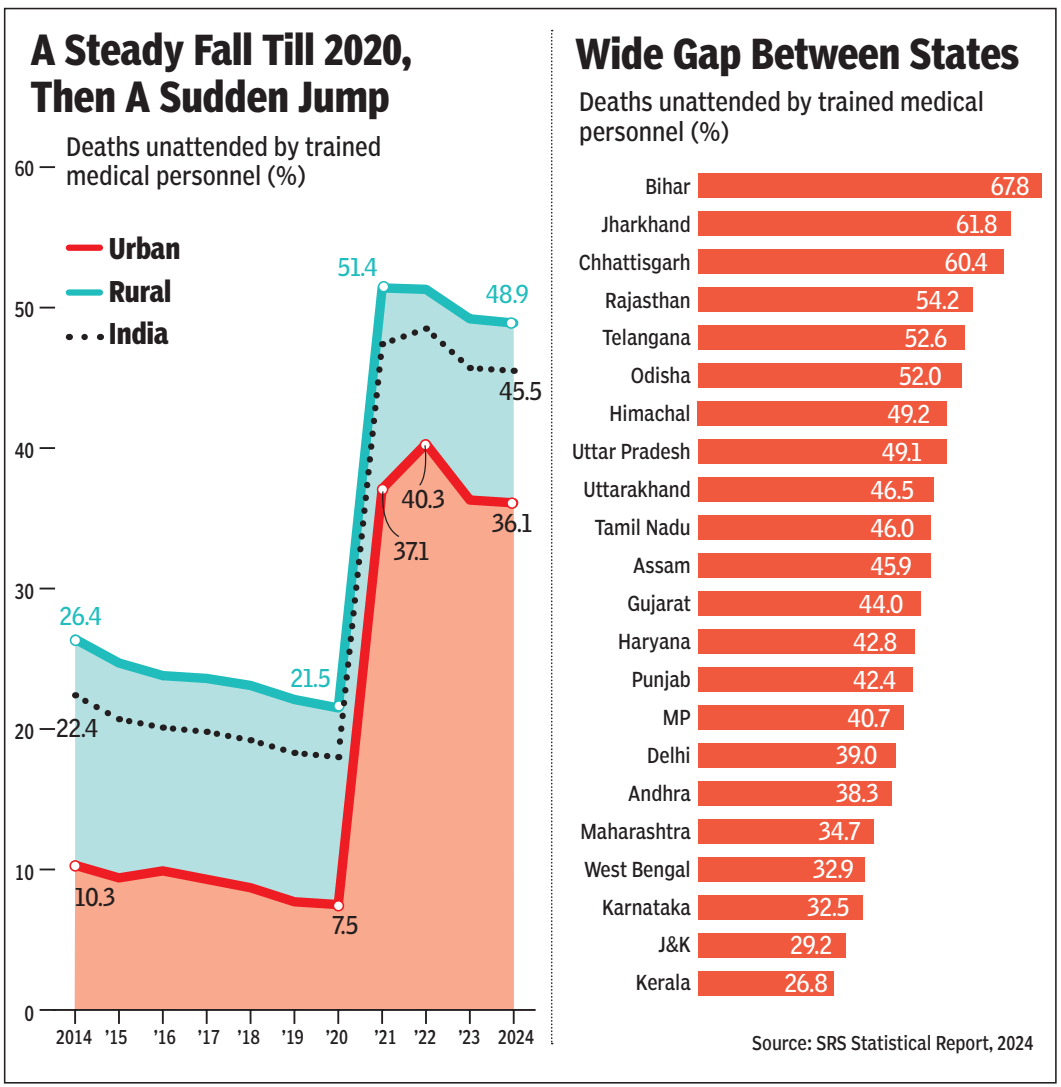
According to the latest Sample Registration System (SRS) statistical report, almost half of all deaths recorded in 2024 occurred without medical attention from a trained professional. Such deaths accounted for 45.5% in 2024 – more than double the 18% recorded in 2020 – and remain close to half of all deaths since 2021.This category includes people who did not receive any medical assistance at the time of death, or who were cared for only by an untrained person. In practice, this often indicates deaths occurring at home or outside formal medical care, although the place of death is not mentioned.The sudden and sustained surge is difficult to explain from published data alone. The increase in such deaths may reflect poor access to health care, high costs of treatment or weak enforcement of death reporting. But the scale and speed of the increase after 2020 also raises the possibility of changes in the way medical presence at death is classified or reported. TOI sought comment from the office of the Registrar General of India, which conducts the SRS, but did not receive any response.
Bihar tops in deaths without medical care
The rural-urban divide supports the possibility that access to health care plays a role. In 2024, the proportion of deaths without trained medical care was significantly higher in rural areas, 48.9%, than in urban areas, 36.1%.This pattern has been consistent since 2014 and is applicable in all states.
.
State-level data also shows wide variation. The proportion of deaths without trained medical care in 2024 was lowest in Kerala, at 26.8%, and Jammu and Kashmir, at 29.2%. The percentage was highest in Bihar at 67.8%, Jharkhand at 61.8% and Chhattisgarh at 60.4%. This trend is surprising as it comes after years of expansion in hospital infrastructure, health insurance schemes and public health programs across the country.Nearly a quarter of all deaths in 2024, or 24.7%, occurred in government hospitals, down slightly from the 27% recorded in 2014.From 2014, the share of deaths in government or private hospitals has steadily increased until 2020, when 30% of deaths occurred in government hospitals and 19% in private hospitals. Since then it has fallen.Overall, the share of deaths in government and private hospitals in 2024 was broadly similar to 2014 levels. But where medical help was received from a “qualified professional”, the proportion of deaths fell sharply – from 35% in 2014 to 14% in 2024.Public health experts say the findings underscore persistent inequities in access to health care, especially in rural and poor areas.