

Babban Khan, creator of blockbuster comic drama ‘Adrak Ke Panje’ passes away. india news
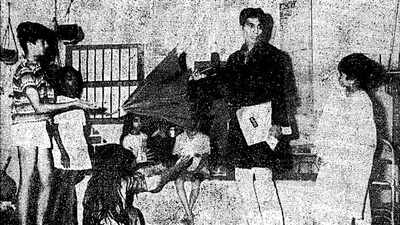
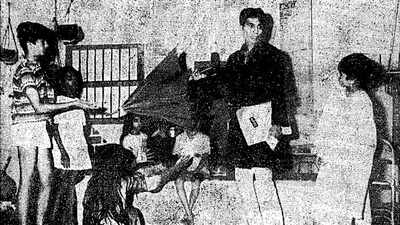
In August 1965, when India and Pakistan were engaged in a desperate war on the northern borders, a penniless 22-year-old young man wrote a play in a little over three hours under the street-lights of the old city of Hyderabad. By the time its final curtain rose in 2001, more than three and a half decades later, “Ginger Ke Panje” had been performed more than 10,000 times in more than 60 countries and in dozens of languages - often to full houses, and sometimes requiring lathi charge to control the crowd.Babban Khan, who wrote, produced, directed and starred in the central role of a bank clerk in that iconic and blockbuster comedy, died after a brief illness at a hospital in Hyderabad on Friday night. He was 83 years old.In the 1960s and 70s, family planning was the focus of government health policy. The government slogan, “Two or three children…enough”, was common on billboards and was a frequent subject of radio jingles. Later, this phrase became more strict “one or two”. “Ginger Ke Panje” (literally, Ginger’s Claws) addressed the problematic and provocative issue of family planning but in a funny and dirty way. Perhaps this was why the play – the title is an allegory of uncontrolled birth – caught the public’s pulse and tickled it.The protagonist clerk (Ramatu) has eight children and many debtors; From milkman to school master. Yet he never loses his lighthearted sense of humor and carefree zest for life. The set of the play was basic. Production costs were minimal. But like a hit Hindi film, ‘Adrak Ke Panje’ will get huge advance booking. The actor was also invited to Radio Ceylon’s popular programme, “S. Kumar’s Filmi Muqaddam”, which was usually reserved for Hindi film celebrities. In time, the play would also enter the Guinness Book of Records and be seen by film director Francis Ford Coppola, actor Rex Harrison, and thriller writer Frederick Forsythe, among others.A 1970 article in ‘The Illustrated Weekly of India’ stated, “Film comedian Johnny Walker said he had been making film audiences laugh for 15 years, but here was a play that made him laugh!”Babban was untrained in theater and had dropped out of college. ‘Ginger Ke Panje’ was born out of real life experiences and characters. His father, who worked in the fire department, died when he was six years old. “All my brothers and sisters died at an early age…I somehow survived to tell the tale,” the playwright told TOI in 2001.Speaking to TOI in 1995, the playwright revealed that he had sold his mother’s only piece of wedding jewelery for Rs 275 to finance the play. “I paid Rs 200 for theater rent, Rs 30 for printing tickets, Rs 2.50 for an umbrella and Rs 18 on material for the sherwani which was stitched by the tailor in exchange for a pass to the show,” he said. The first show held in September 1965 was a flop. But the second one was not; This never happened after that.Analyzing the play, Bilquiz Alladin wrote in the Weekly, “‘Ginger Ke Panje’ can hardly be called a play in the true sense of the word. There is no plot, no tense dramatic situation, and no conflict. It is a series of jokes from beginning to end. Yet one sits through it, laughing, and wonders why the end, which is really two hours away, has come so quickly. It is very Hyderabadi in essence and flavour, in location, in thought and manner, and in its every little joke. For lovers of old Hyderabad and its Urdu dialects, this play offers a glimpse of a now-lost, picturesque style of speech.The immense success of the play made Babban a millionaire at a time when beggars were happy with a donation of five paisa. In an interview with TOI in 1979, Babban Khan admitted to owning three houses in Banjara Hills, Hyderabad, selling his Mercedes to buy a Volkswagen, and decorating his house with Persian carpets, chandeliers and marble statues. By then, he had written another play “Gumbad ke Kabootar” (The Pigeons of the Dome) which dealt with corruption.In later years, Babban’s house in Shantinagar served as a training center for upcoming drama artistes and film actors. He trained the students personally. Hundreds of stage lovers and fans attended the funeral on Saturday. Cricket commentator Harsha Bhogle wrote on It ran for over 30 years and I wish I could look back at it now and celebrate the humor that comes naturally to Deccan speaking people.”(With inputs from Syed Akbar in Hyderabad)